
Military Barracks Roofing in Davenport, IA
Roof repair and replacement for military barracks and unaccompanied housing in Davenport, IA, sequenced around sleep, shifts, fire watch and winter weather.
A staff duty desk calls a little after six. A drip in the third-floor hallway has reached a bunk room, and the occupant has moved his gear down the hall. The housing manager wants to know whether the room is coming back this week or this quarter.
Barracks roofing in Davenport, IA is that question, answered with a walkthrough. We climb with the key holder, follow the water to where it gets in, and report back with photos and a straight answer: fix it now, keep an eye on it, or plan the larger job. What sets these buildings apart is who lives underneath. Every decision gets weighed against sleep, shifts and the number of rooms that stay available.
Rooms Taken Offline
In a barracks or a block of unaccompanied housing, a leak does not just stain a ceiling. It takes a room out of use. Wet gypsum, damp carpet and a musty smell mean the room is closed while the ceiling dries and gets cleaned, and mold does not wait for the budget cycle. Moisture that travels along the deck can wet several rooms before one stain shows.
An infrared moisture survey draws the wet area on a plan, so the housing office can close exactly what needs closing and nothing more. We follow it with a hands-on check: core samples, a moisture meter at the questionable corners, and a look at the drains above the worst of it.
Sleep, Shifts and Noise
Not everyone sleeps at night. Soldiers coming off a night shift, charge of quarters duty or a field exercise sleep in the daytime, and the roof is right overhead. Tear-off noise, compressors and boots on the deck carry straight down into the top floor.
We build the schedule with the housing manager. Loud work runs in the hours the building is emptiest, a tenant notice goes out a few days ahead, and the top-floor rooms that will be affected are named in advance. Morning physical training sets another limit, because a crew that loads out at the wrong hour blocks a parking lot full of people. Reroofing an occupied building works when everyone inside knows the plan.
Fumes, Flame and Air Intakes
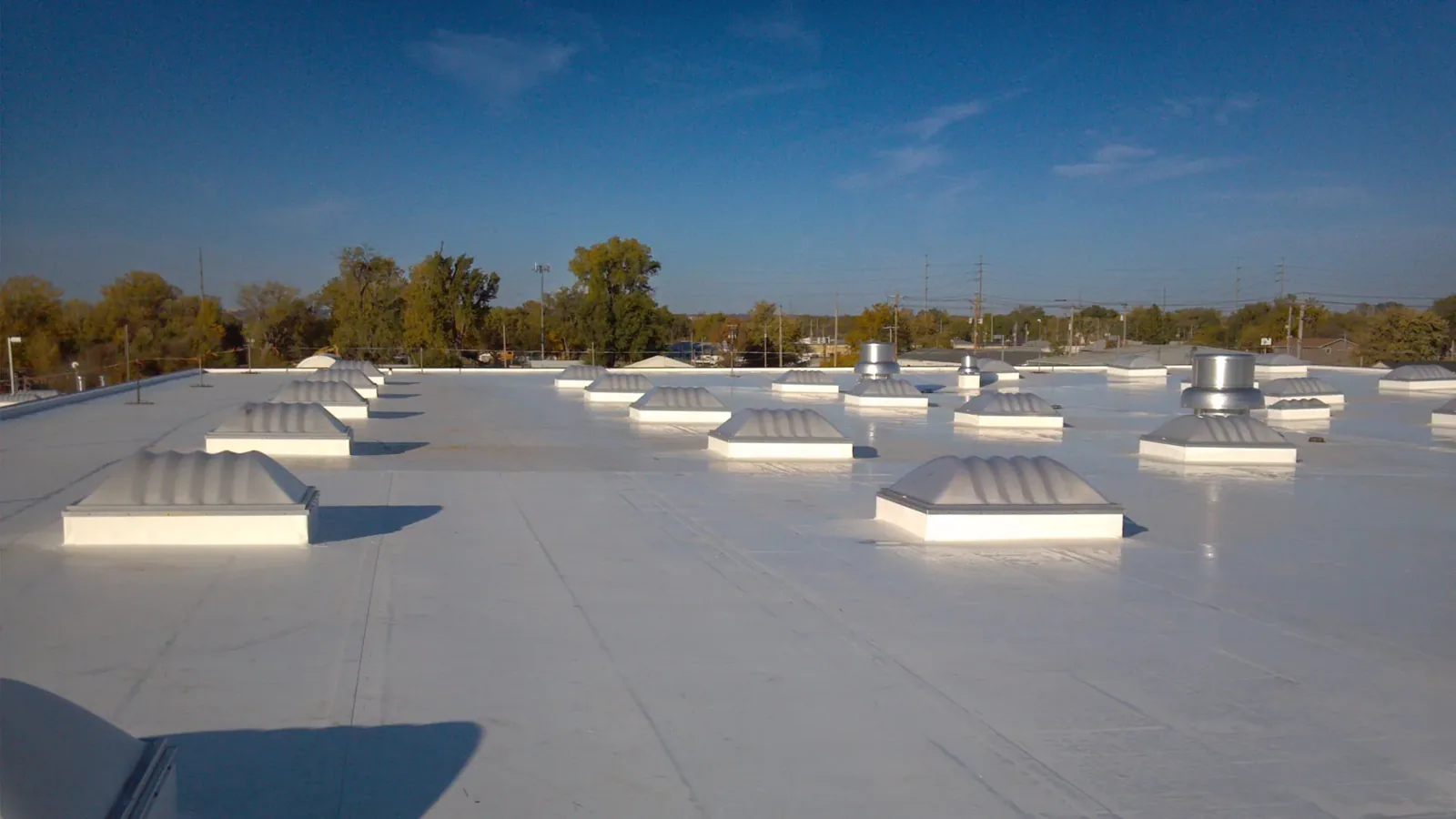
Hot work in a sleeping building gets extra care. Torch-applied roofing puts open flame close to ceilings people sleep under, so we favor heat-welded sheets or cold-applied systems on housing where the spec allows, TPO among them, and we keep a fire watch whenever any heat is used.
Adhesives and primers give off fumes that a roof-mounted air intake will pull into a hallway. We shield intakes, ask maintenance to shut down the affected units while we work near them, and keep solvents and propane away from windows and doors. Stairwell roof hatches are often the only way up, so we agree on the route and keep it clear of residents. Fencing and a spotter cover the entrance when material goes up.
Pitched Eaves and Flat Cores
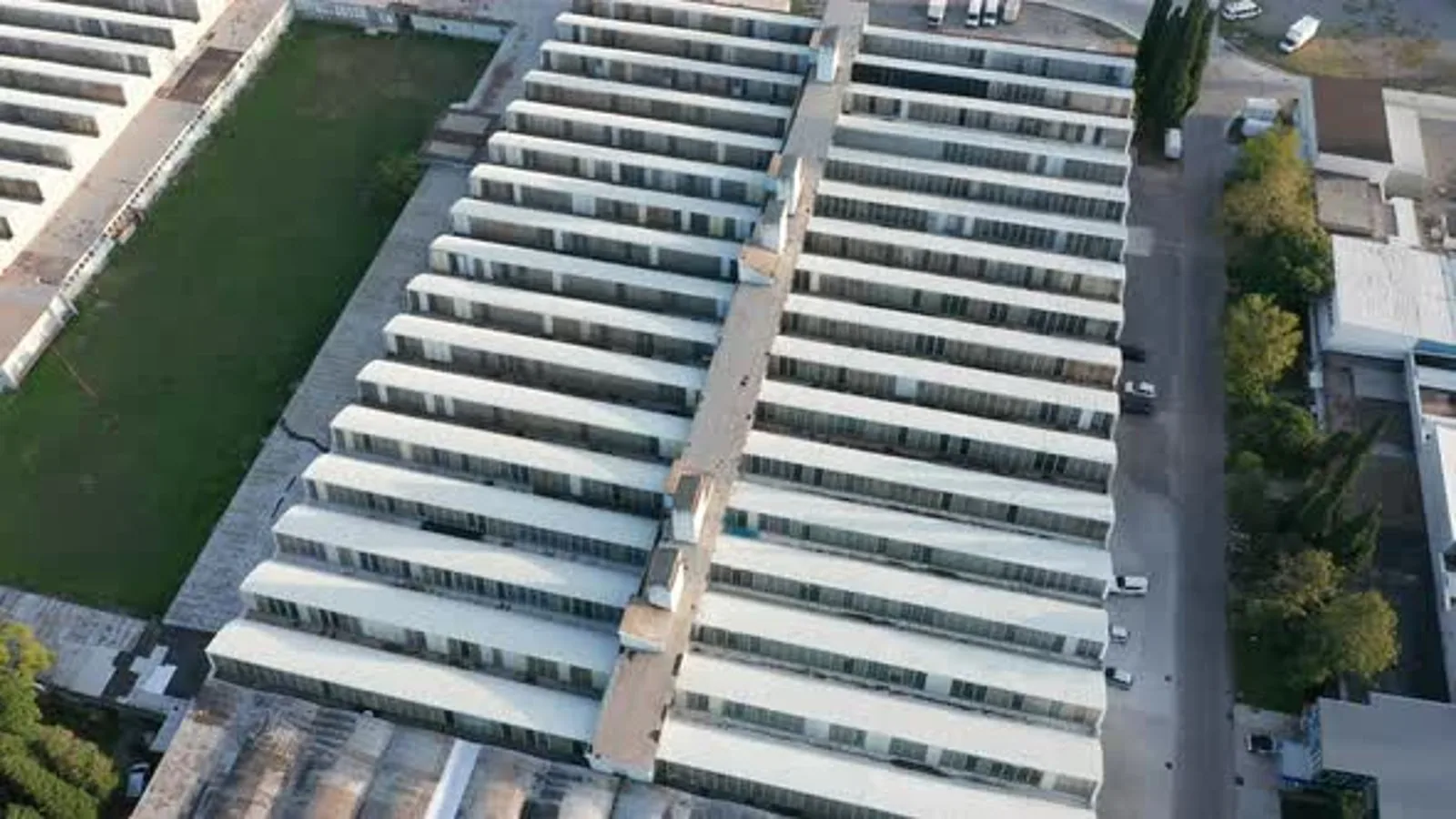
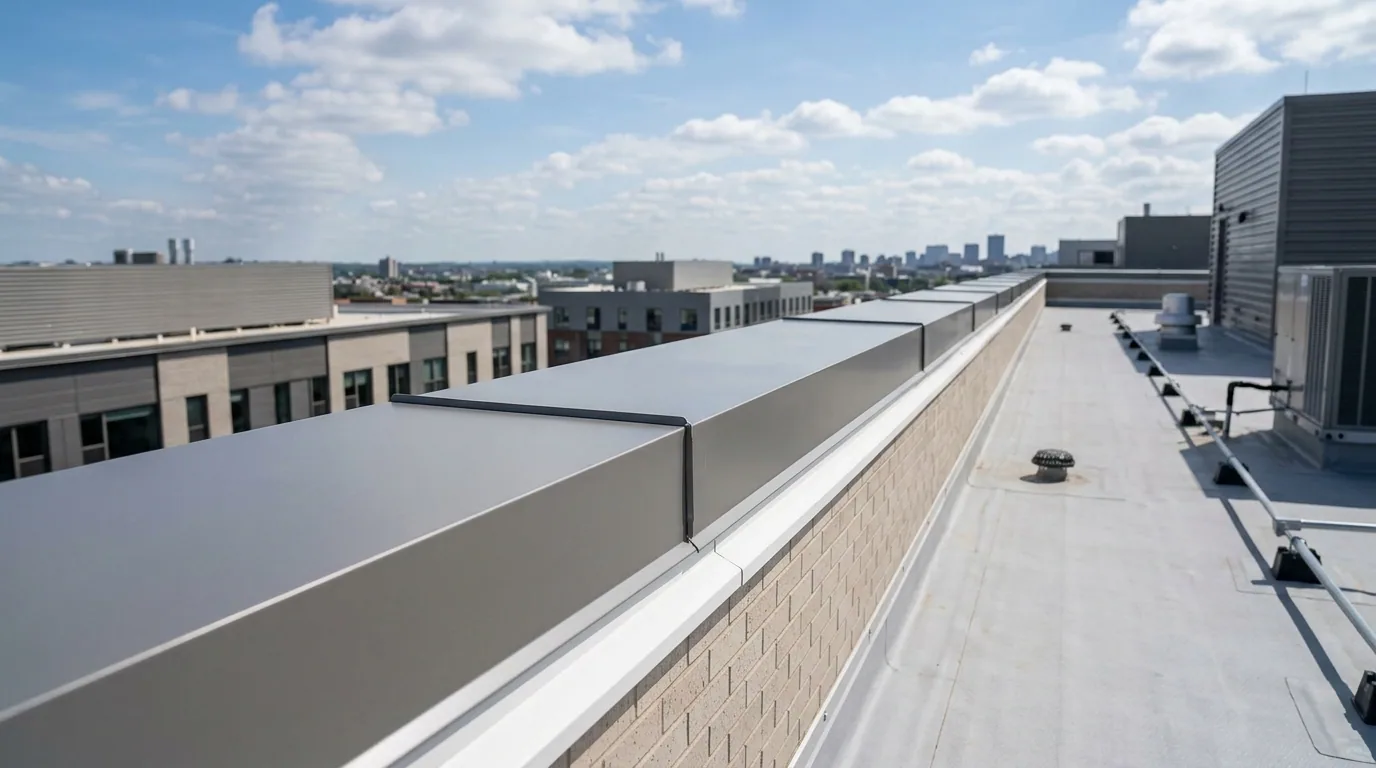
Many housing buildings mix roof types. A flat core may sit between pitched wings, with stair towers, hoist rooms and mechanical rooms rising above both. Every place where two roof levels meet is a flashing detail, and every one is a spot where snow drifts and melts onto the lower roof.
Eaves are the winter problem on the pitched sections. Ice builds at the edge, backs water under the covering and shows up as a stain in a room on the outside wall. Edge metal, gutters and snow guards do real work there, and snow and ice damage repair usually begins at the eave.
Weather Over the Island
Rock Island Arsenal, on the island between Davenport and Rock Island, offers both family and unaccompanied housing services. Occupied buildings still need a plan for weather-driven roof work. The August 10, 2020 derecho brought damaging winds that lasted 30 to 60 minutes over Davenport, Bettendorf and Scott County, with an 86 mph gust at Davenport Municipal Airport. On July 15, 2024 another derecho reached up to 100 mph.
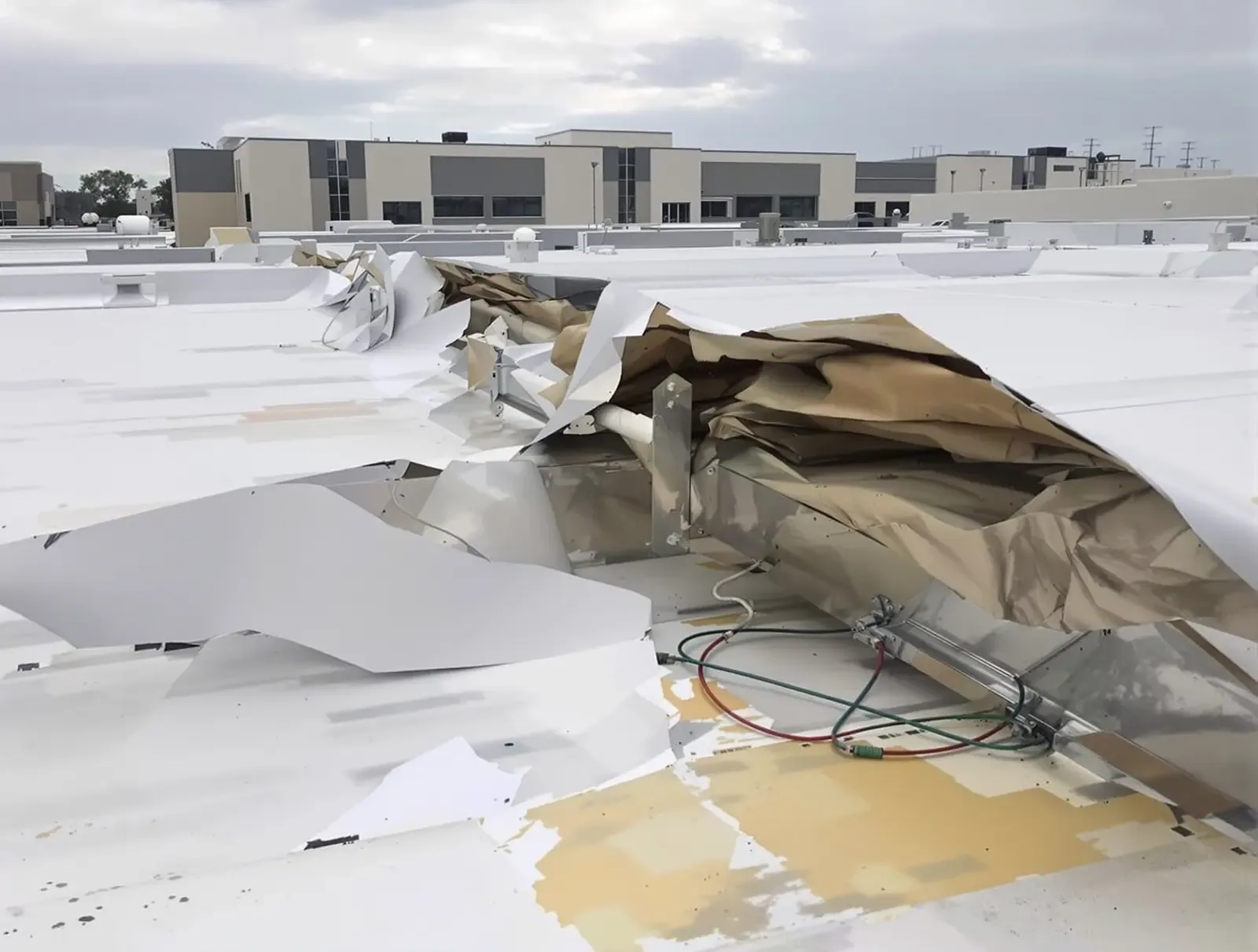
Wind lifts edges first. After a regional event, we check leading edges and fastener lines for movement before another rain tests them. A wind damage repair on these buildings covers the edge, then the field. The Quad Cities average over 36 inches of snow a year. In winter, a separate leak path can form when warm interior air reaches a cold deck and condenses. Between 111 F and -29 F, that swing opens every weak seam.
Spec and Handoff
Barracks work follows the Unified Facilities Criteria for roofing, with fire-rated assemblies, wind uplift ratings and submittals the spec spells out. We price to the spec and flag any detail that will not hold up through a Davenport winter before the work order is signed. Gate rules, badges and escorts work the way they do on any Army installation building job, and the Arsenal sits on an island between Davenport and Rock Island, Illinois, so crews and material plan around the gate before the day starts.
At the end you receive photos sorted by building area, a marked-up roof plan and a ranking across buildings. A manager holding several blocks can plan the next funding round from written condition reports.
Airfield buildings add equipment-clearance and long-span questions; the roof sequence for aircraft hangars covers those conditions.
Send the Work Order and the Room List
Send us the work order, the building number and the list of rooms that have been closed. We will set a walkthrough with the housing manager, go up with the hatch key holder, and come back with photos and a plain recommendation for each roof.
Questions About Military Barracks Roofing
A room is closed because of a ceiling leak. How fast can it come back into use?
Quickly when the source is found on day one. Stop the water with a temporary repair, dry the ceiling and decking, then clean or replace the damaged board. The roof repair itself may take an afternoon. The slow part is drying and clearance, so ask the housing office to book the room back only after the moisture readings come back dry.
Can a new membrane be torched down over a building where people sleep?
Where there is an alternative, use it. Heat-welded TPO or PVC and cold-applied adhesives keep open flame off the roof. If torch work cannot be avoided at one detail, plan a fire watch that lasts well past quitting time and check the deck and insulation for smoldering before anyone goes home.
Soldiers sleep days after night shifts. Can tear-off still happen above them?
Map the affected rooms first, then tell the people in them which days will be loud. Work the top-floor sections in short blocks, give night-shift residents a quiet day between blocks, and offer the housing office a list of vacant rooms for swaps. Noise cannot be removed from tear-off, but surprise can.
Residents complain that the top floor is cold and damp in January. Is that the roof?
Often, though not always. Cold, damp upper rooms point to wet insulation, missing insulation at the eave, or warm humid air leaking up into the attic or ceiling space and condensing on the underside of the deck. Check the ceiling hatches and light fixtures for gaps, look at the bath and dryer exhaust runs, and take moisture readings before anyone prices a new roof. Sometimes the fix is air sealing and a vent, not a membrane.
We have recently built housing and a few older blocks. Which gets attention first?
The older blocks, usually, but only after a moisture survey sorts them. Newer roofs get a first-year walk for lifted edges, loose fasteners and sealant that did not take. A dry older roof can wait while a wet newer one cannot, so let the readings pick the order.

Talk to a Davenport Commercial Roofer
Send the work order, the building address or a few photos of what you are seeing. We will set a walkthrough, go up with whoever has the hatch key, and tell you plainly what the roof needs.