
Distribution Center Roofing in Davenport, IA
Roof repair, recovery and replacement for distribution and fulfillment centers in Davenport, IA, phased around shift schedules and live sortation lines.
It is two in the morning and the night lead radios maintenance. Water is running down a column near the sortation line, and the trailers have to be loaded before sunrise.
That call tells you what a distribution roof is for. It keeps the floor dry while the building runs. In Davenport, IA the next step is simple: a work order, a walkthrough with your site manager, and a crew that goes up in daylight to find the opening. Photos reach your inbox the same day, with a short answer on what to do before peak season.
A Building That Does Not Close
Most owners can schedule a roof for a quiet week. A fulfillment building rarely has one. Shifts overlap, trucks arrive on a clock, and the busiest stretch of the year is exactly when a leak does the most harm.
So the schedule comes first. At the walkthrough we ask for the shift lines, the dock calendar and any blackout dates. We badge in, sit through the safety talk and agree who we call on each shift. The roof is then split into zones, and we open one zone at a time so the area over the active floor is never left uncovered at the end of a shift.
Reroofing an occupied building follows the same pattern: staged materials, a named contact on each shift, and a dry building every night.
Rooftop Units, Curbs and Added Load
Distribution buildings pick up equipment over the years. Make-up air units, exhaust fans, conduit runs, a new antenna mount. Each one is a hole in the roof or a weight on it.
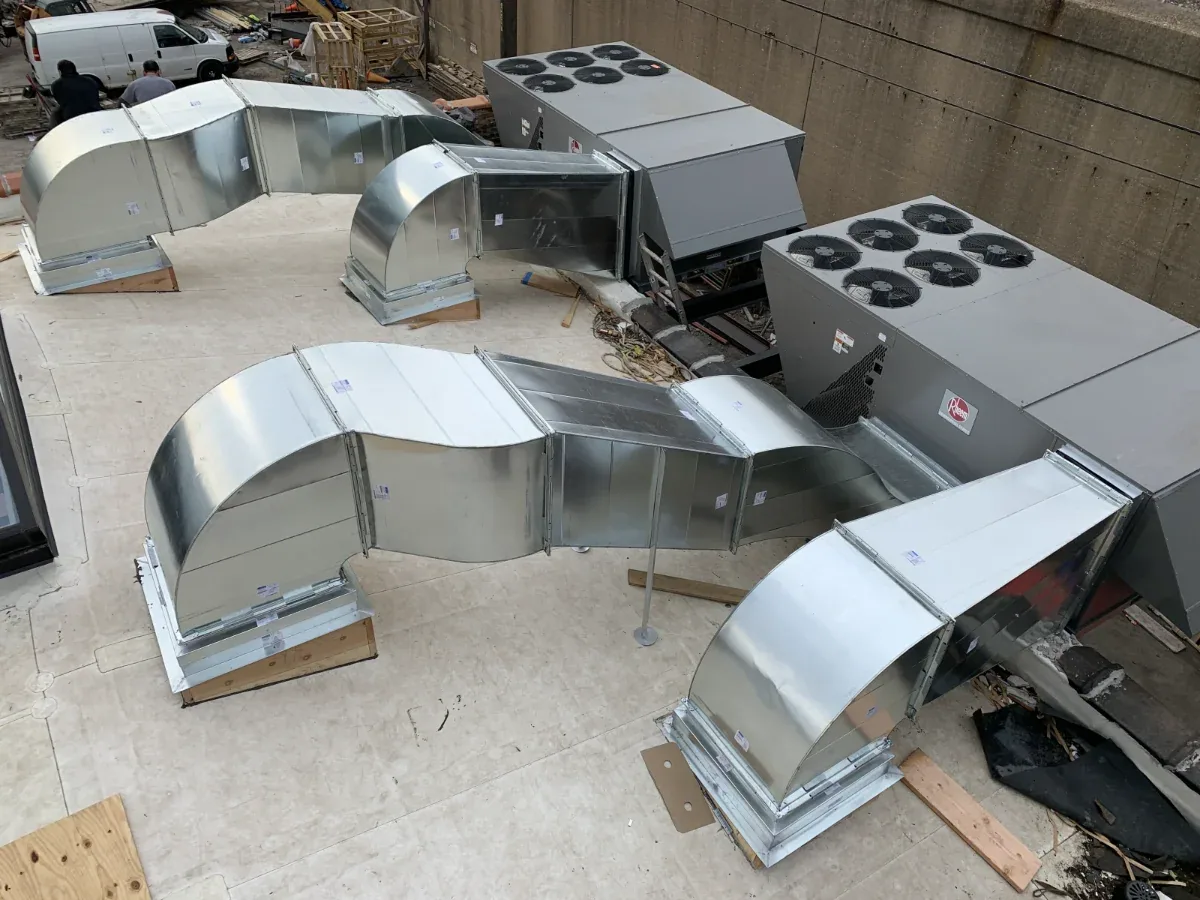
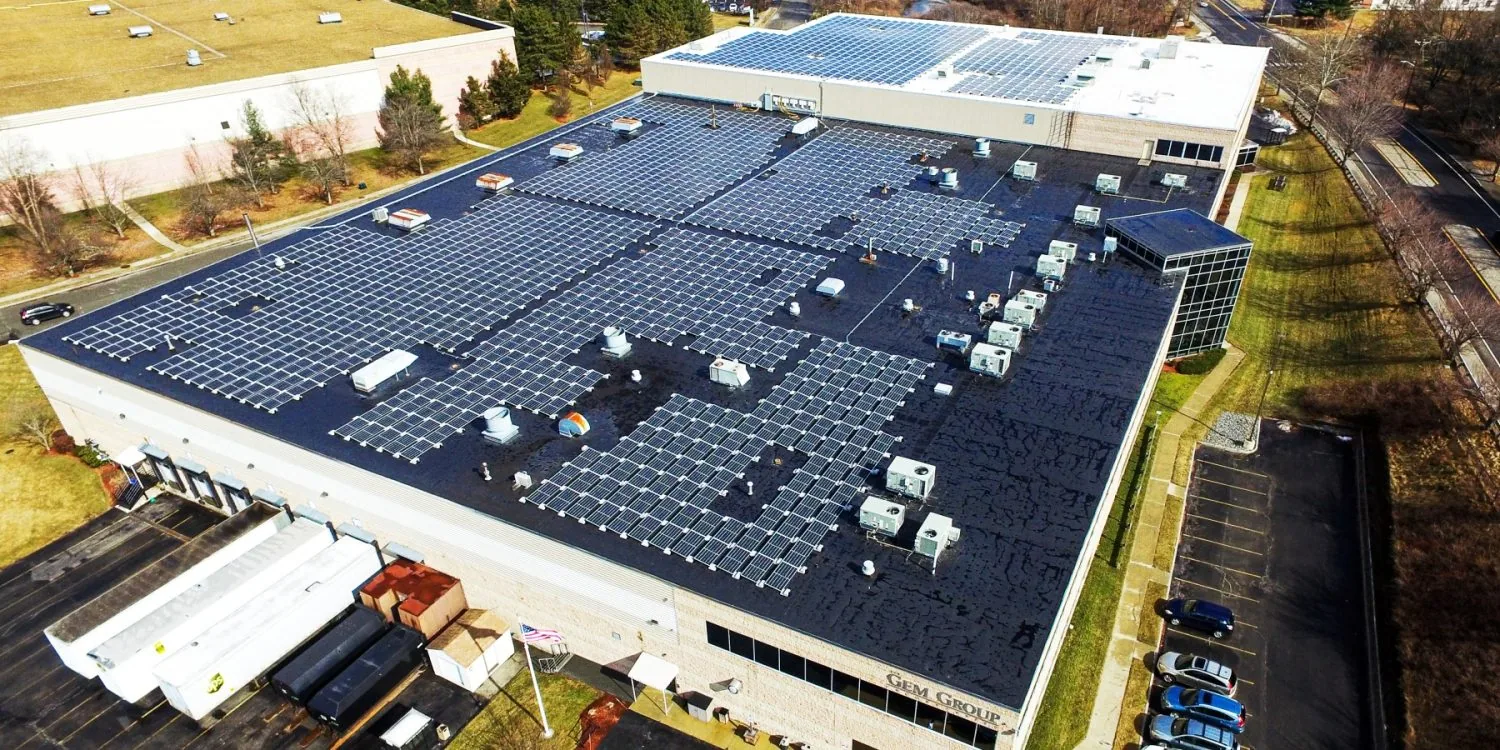
Automated buildings, such as the Amazon robotics fulfillment center in the Eastern Iowa Industrial Center, run equipment where a drip is more than a stained ceiling tile. We check every curb, every pipe boot and every conduit penetration, because that is where added equipment usually leaves a gap. A curb that sits low or has failed flashing gets rebuilt and re-flashed, the curb and equipment support work that added equipment calls for.
If you plan to hang solar on the roof, tell us before the membrane goes down. A solar-ready roof is built with the right insulation and attachment points from day one, and it costs less than reopening a new membrane to add them.
Snow Load and the First Thaw
A normal Quad Cities winter drops more than 36 inches of snow. On a long low-slope roof that snow does not blow away evenly. It piles against taller sections, rooftop units and parapets, and it sits there until the sun reaches it.
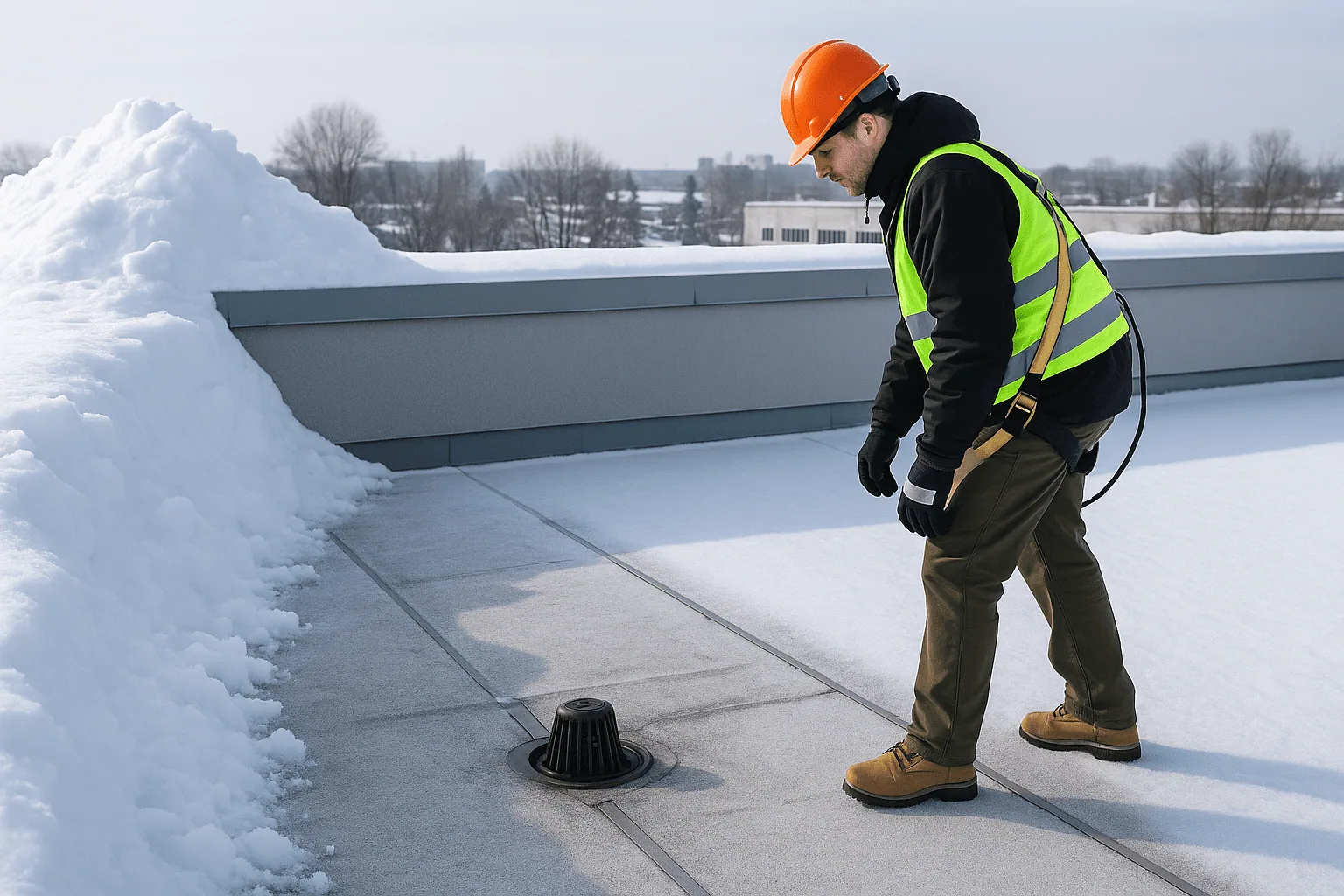
Then the thaw starts. Water runs to a drain that froze two nights ago, backs up under a lap and finds the first soft spot in the membrane. Davenport has touched -29 F, and a roof that swings from there to a warm afternoon moves a lot.
We clear and test drains before the cold, and we check the places where drifts build. Ice that stays on the roof can also pull at flashing and edge metal, the first sign of snow and ice roof damage.
When the Storm Hits the Night Shift
A derecho on July 15, 2024 sent winds up to 100 mph across the region, and ten tornadoes touched down in the National Weather Service Quad Cities area, one of them affecting Davenport. On July 11, 2025 an EF-2 tornado crossed the city from southeast of Blue Grass through Emeis Park to Kimberly Road and Fairmount Street.
After a storm, emergency roof repair begins with the exposed areas over active operations. We document the openings, plan temporary protection and prepare the information needed to scope permanent repairs. The first job is a dry-in over the active floor. After that we document what the storm did, with photos and measurements, for your insurer.
The paper trail matters. Adjusters ask for dates, locations and before-and-after photos. We hand you that record at the same time as the temporary repair.
Seeing the Whole Roof
A big fulfillment or sortation roof can take days to walk, and most of that time goes to ground that is perfectly fine.
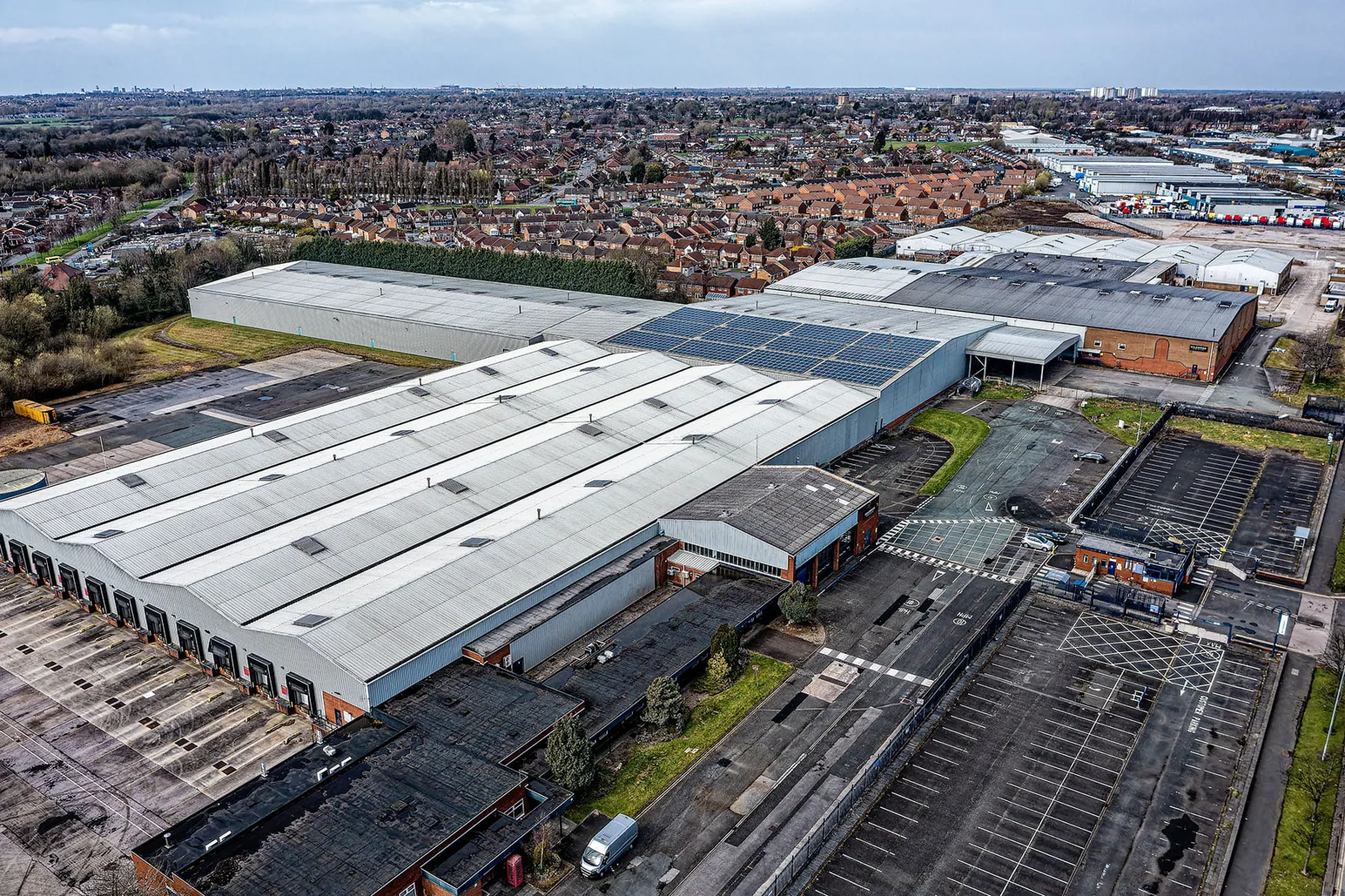
We start with a drone flight on a calm morning, flagged to your security team ahead of time. The imagery shows ponding, lifted seams, missing fasteners and debris at drains. Then we walk the spots that need hands, and where moisture is suspected we schedule an evening infrared scan with a few core cuts to confirm.
The result is a map. You see which sections are sound, which need repair and which are headed for replacement. With the map in hand, a capital request stops being a guess.
Planning Across Buildings
Logistics operators rarely have one building. Around the Eastern Iowa Industrial Center, Sterilite built a 2.5 million square foot manufacturing and distribution center at I-80 and Northwest Boulevard, and in Milan the John Deere parts distribution center is described as one of the largest warehouses in the world. The park's I-80 access and rail transload suit this kind of building.
If you run several sites, a single survey and a ranked list lets you spread the spending over a few years. That is how a multi-site roof program works in practice. A single building can start smaller, the way an owner of a warehouse or a nearby manufacturing plant would.
Send the Work Order, Then Set the Walkthrough
Send us the work order and your shift schedule. We will set a walkthrough with your site manager, go up in daylight and come back with a plan that keeps the building running.
Questions About Distribution Center Roofing
Can the roof work happen at night so the sortation line keeps running?
Night work is possible for some tasks, such as setting up, drying in and tying off a section, but heavy tear-off and welding go better in daylight when the crew can see the deck. We agree the split at the walkthrough. Noise limits, lighting and fall protection are all settled before the first night. Your site manager gets a daily summary so shift leads know what happened overhead.
We added rooftop units after the building opened. Should the roof be checked at those curbs?
Check them first. New curbs and pipe penetrations are the weak points on a roof that was fine when it was installed. We look for cracked flashing, sealant that has dried, and gaps where conduit passes through. If a curb sits low or ponds water, we may recommend raising it. Photos go to your facilities lead so the finding becomes a work order.
Our security team has questions about a drone over the building. What do they need?
Security needs the flight window, the operator, the aircraft and the area to be covered. We send those ahead of time, along with a plan for staying clear of the parking lot and the neighbors. If a part of the property is off limits, we mark it out of the flight plan. Some buildings prefer a walk with a camera instead, and that works too.
Open flame worries our safety manager because of the stock. Is there another way to work?
Torches are the concern, and they can be left out. Cold-applied adhesives and mechanically attached systems avoid open flame. Hot-air welding of single-ply seams still needs a hot work permit, a fire watch and a clear zone below, and we follow whatever your site requires. Tell us the rules at the walkthrough and we will plan the method around them.
How soon after a storm should we look at a building that seems fine from the floor?
Within days, before the next rain. Wind lifts seams and edge metal without leaving a stain on the ceiling, and hail bruises the membrane in ways that only show up later. A quick walk or drone pass finds the damage while it is still a small repair, and it gives you dated photos if a claim follows.
Talk to a Davenport Commercial Roofer
Send the work order, the building address or a few photos of what you are seeing. We will set a walkthrough, go up with whoever has the hatch key, and tell you plainly what the roof needs.