Commercial Roofing in Milan, IL
Commercial roofing in Milan, IL for warehouse and distribution buildings, with moisture surveys, repairs and phased replacements that keep operations running.
Water is on the floor near a dock door on second shift, a forklift lane is coned off, and a supervisor wants to know where it is getting in. Nobody wants to guess on a Tuesday night with trucks backing in.
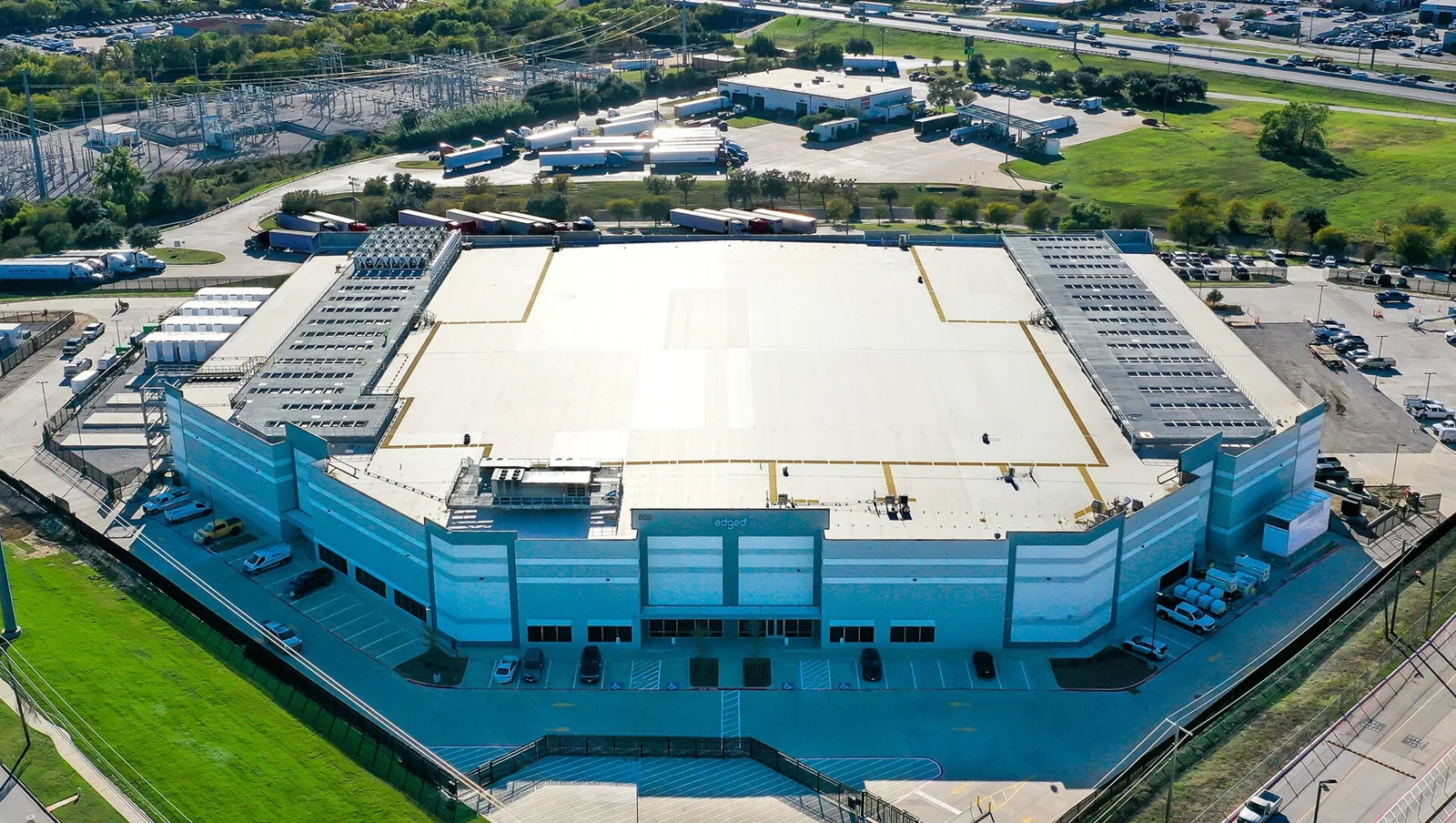
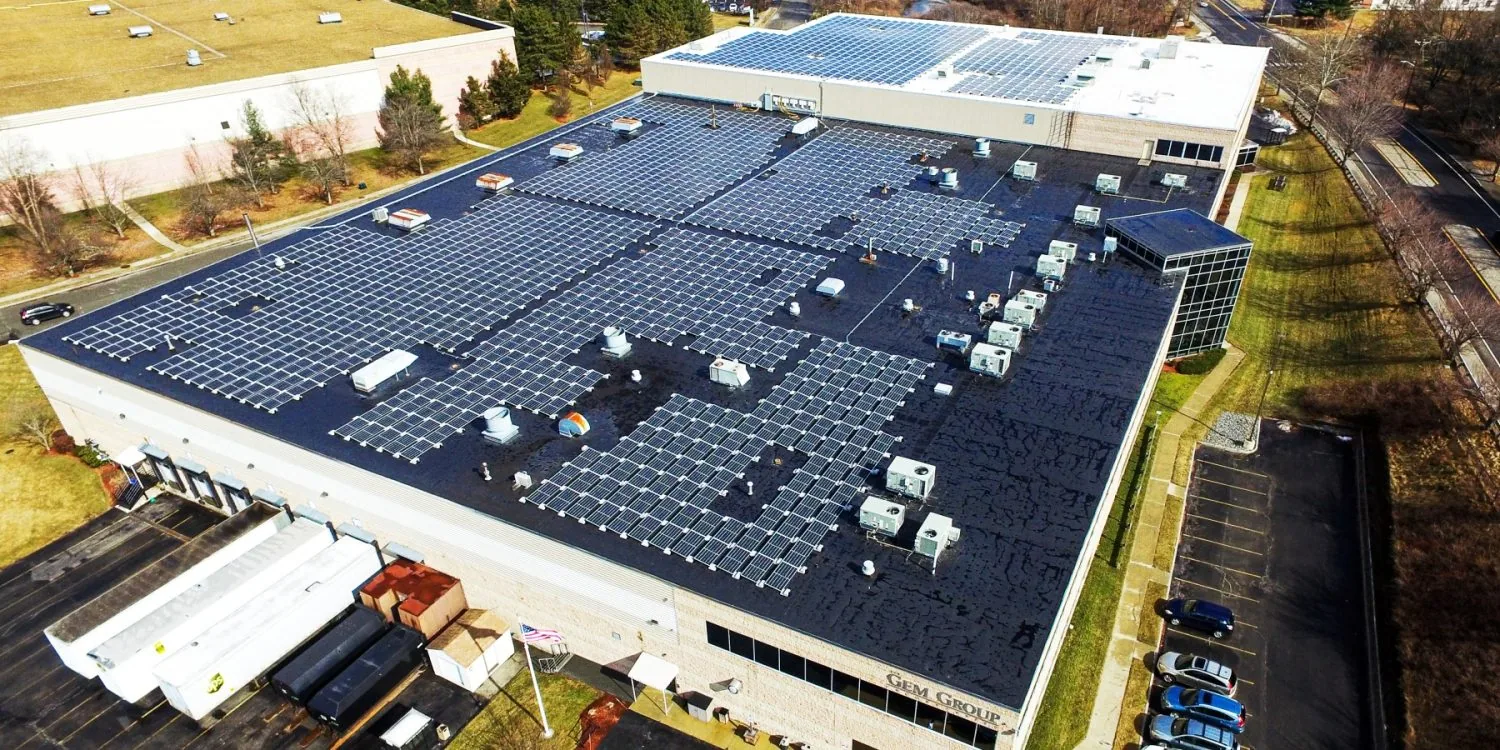
Milan, IL is home to the John Deere North American Parts Distribution Center, described as one of the largest warehouses in the world, and Eagle Food Centers, which was based in the village until it ceased operations in 2003, left large commercial buildings there. A roof over a building like that protects stock, racking and sprinkler lines, so a leak costs more than a ceiling tile. We start with a commercial roof inspection that names the source, and we plan the repair around your shifts.
Roofs Over Stock and Racking
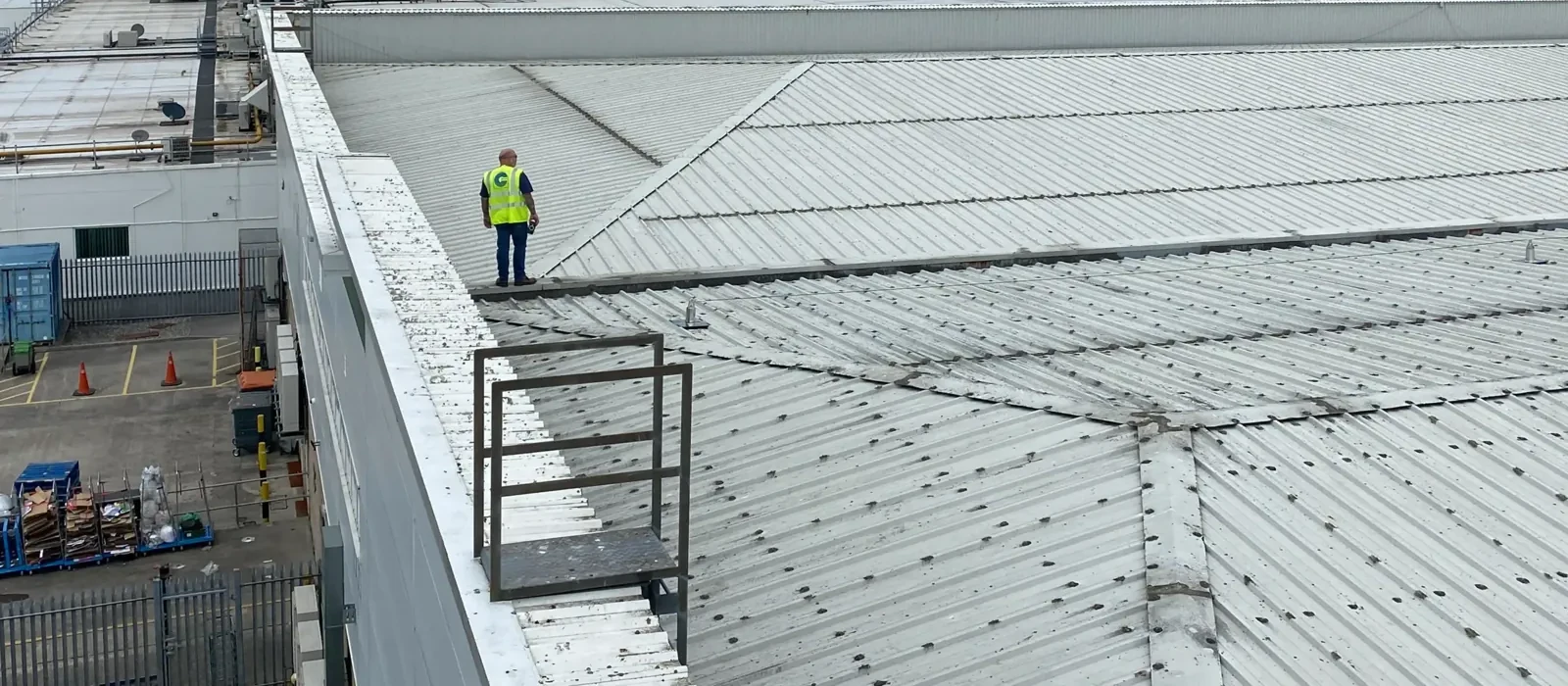
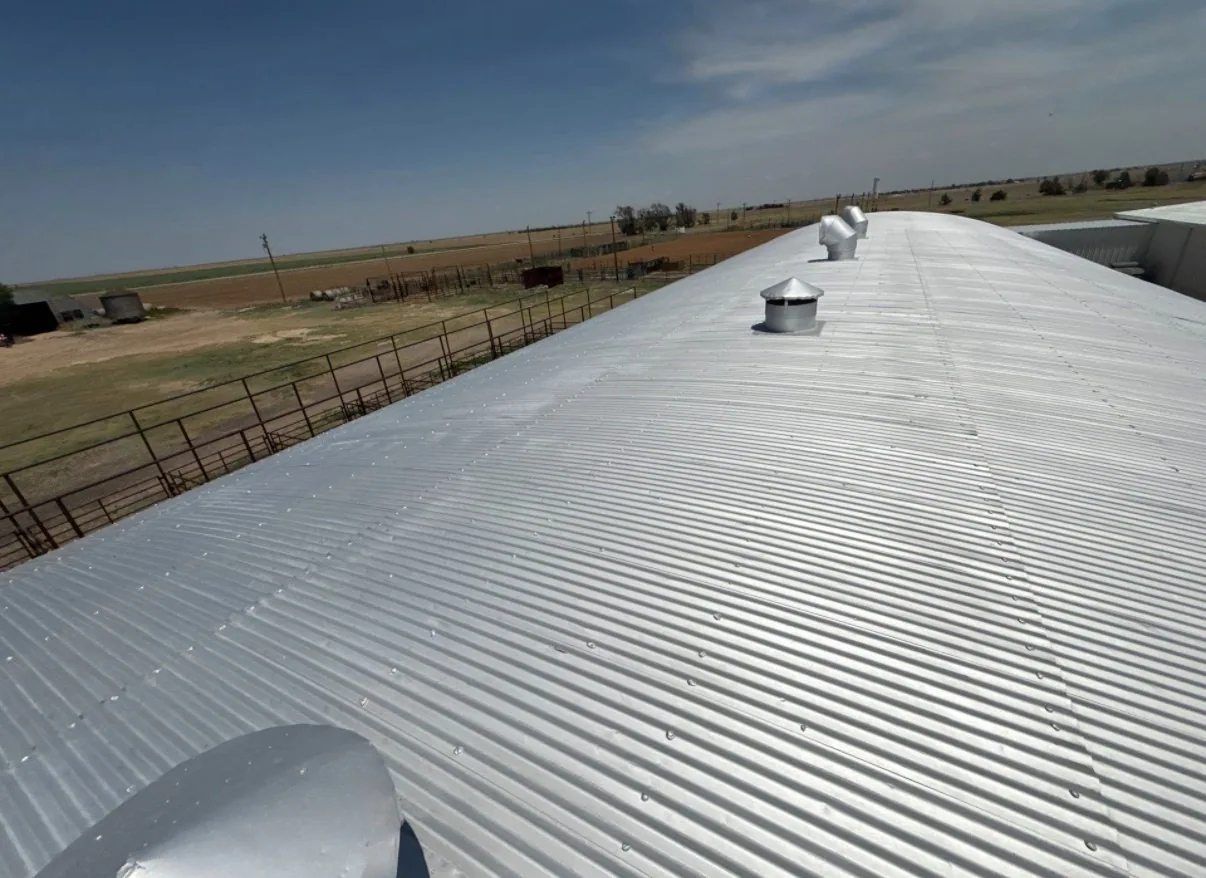
A distribution roof has one job: keep the inventory dry. The floor below is full of product, pallet racking and fire protection piping, so even a slow drip is a loss. We read these roofs from the outside in. First the dock-side edge, where trucks, wind and sun all push on the metal. Then the drains and scuppers. Then the rooftop units, the roof hatch and every vent or pipe that goes through the sheet.
Warehouse roofs tend to be long, simple fields with few features, and that makes the features matter. A curb with a split sealant joint or a drain bowl clogged with leaves will be the first thing to leak. We photograph each one and mark it on a plan, so your maintenance staff can find it from the ground and from the ladder.
On a distribution center roof or a warehouse roof the sequence is the same: find the leak before anyone writes the quote.
Large Buildings Changing Hands
When a retail company folds, its buildings outlast it, as Eagle Food Centers' did when it ceased operations in 2003. A building that changes hands or sits between tenants is where a roof surprise tends to live.
An empty building hides leaks. Nobody is inside to see a stain, a drain can sit blocked for a season, and a small failure grows quietly. If you are buying, leasing or reopening a large box, ask for the roof to be checked before the paperwork closes. A due diligence roof survey maps wet insulation, counts the repairs and gives a rough picture of the remaining life, in a written condition report a lender or a board can read without a roofer beside them.
Working Around Dock Hours
The roof job has to fit the building. We ask for the shift schedule, the dock schedule and the busiest delivery days before we set a start date. Tear-off and hoisting go in the quiet windows, and the loud work stays away from sorting and loading peaks.
Access is a short list. Who badges the crew in? Where do we stage material so trucks keep moving? Which stairwell or ladder goes to the roof, and who holds the hatch key? Foot traffic at shift change gets a clear path under any work zone.
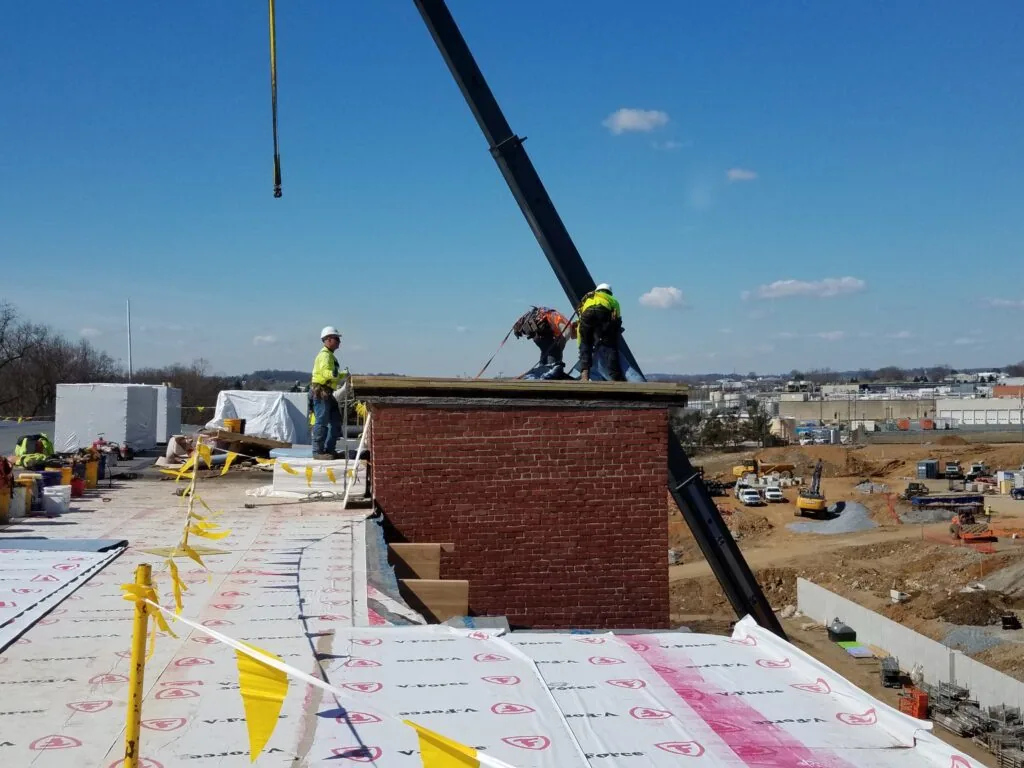
On a big roof we work in sections. Each section is dried in before the crew leaves, so a night storm never finds an open deck. When the job crosses several weeks, a one-page handoff goes to the plant manager at the end of each day. Phased work like this is how an occupied building reroofing gets sequenced.
Straight-Line Wind and Tornado Edges
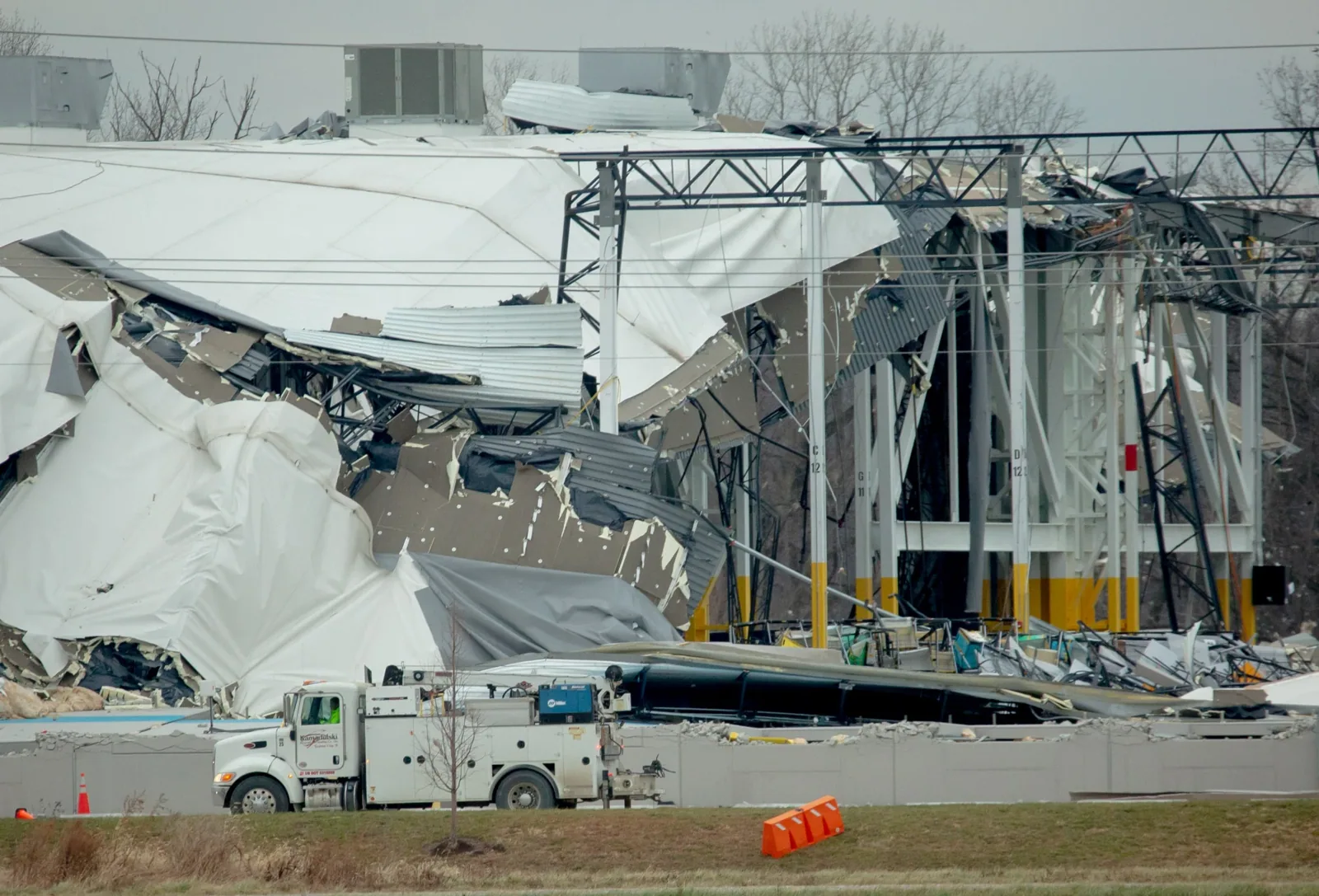
Two recent storms set the range for a flat roof here. The derecho of July 2024 brought winds near 100 mph to the region, and the July 2025 EF-2 tornado, rated at about 120 mph, crossed Davenport, IA. That tornado missed Milan, but the two storms show what this metro can throw at a flat roof.
Wind lifts a roof from the perimeter first. Where edge metal is loose or a membrane is poorly attached, uplift peels it back and then runs across the field. After a storm we check coping, edge metal, laps and fastener patterns, and we look at the ballast or the attachment under any torn area. A tornado damage repair starts with a temporary dry-in, and a seam repair follows once the membrane is dry enough to weld or bond.
Freeze, Thaw and the Seams
Snow in the Quad Cities averages over 36 inches a year, and Davenport's records run from 111 F down to -29 F. A membrane moves across that range, and each move tests every seam and flashing.
Meltwater that cannot reach a drain finds a seam. We look at the low points, the drain sumps and the scuppers, and we flush them. On a warehouse with wide spans, a small amount of ponding can mark the same area year after year, which points to deck movement or a drain set too high. Fixing the drainage costs less than replacing the membrane that sat in water.
Repair, Coat or Recover
The decision follows the moisture map. If the insulation is dry and the membrane is sound, a roof coating restoration can add years without a tear-off. If water is trapped in a few areas, we cut those out and patch. If the wet area is large, a recover or full replacement is the right answer.
Cost and timing follow the same few questions. How much of the roof is wet? How many layers sit on the deck? How many openings are in the field? How long can a section stay open while the building runs? You get the answers in a written scope. A building in Rock Island or Coal Valley gets the same written scope.
Set the Walkthrough
Send us the building address and the shift schedule, or tell us which dock door is wet. We will set a walkthrough that fits your operations and bring photos and a plain recommendation.
Questions About Milan
Water shows up at one dock door every time it rains hard. Where does the search begin?
At the roof edge directly above that door, and then at the nearest drain. Dock-side edge metal takes more abuse than the field, and a clogged drain in a heavy rain backs water under the flashing. We check both and then follow the slope uphill. A moisture scan tells us whether the water went further than the stain.
We lease a large box that has been quiet for a while. How do we know what the landlord's roof really needs?
Request a condition report before you sign, and ask for it in writing with photos. The report should name wet insulation, failed seams and clogged drains, and it should rank repairs by urgency. With that in hand, you can negotiate who pays for which repair and when.
Can a section of roof stay open overnight during a replacement?
Not as a plan. Each day's tear-off is dried in before the crew leaves, with temporary tie-ins where the new sheet meets the old. If weather is coming, we stop earlier in the day and button up the area. Tell us about night-shift activity underneath so the dry-in is built for the worst storm on the radar.
Does a derecho in Davenport mean my Milan roof needs a look?
Wind damage is local, but a storm that big is worth a walk. Check the edges, the rooftop units and the laps for anything lifted or torn. We can do the walk and send photos the same day, so you know if a repair is needed or if the roof is fine.
Roof surveys get expensive on a very large building. How do you keep the scope sensible?
We survey the full roof, because wet insulation hides, but we do it with an infrared scan, which is quick. Core samples are taken only where the scan says water is. The result is a plan with the wet area marked, which keeps the repair scope small and the budget honest.
Talk to a Davenport Commercial Roofer
Send the work order, the building address or a few photos of what you are seeing. We will set a walkthrough, go up with whoever has the hatch key, and tell you plainly what the roof needs.