
Tornado Damage Roof Repair in Davenport, IA
Tornado damage roof repair in Davenport, IA: safe access, deck and structure checks, emergency dry-in and a scope written for the rebuild and the claim.
The street is taped off past the debris line, and the property manager is on the phone from the wrong side of the tape. She cannot see the roof. She can see the debris line in the parking lot and a power pole leaning toward the building.
The first thing we tell her is to stay out until the utilities and the structure are cleared. The second is to send whatever photos she can get from the ground. In Davenport, IA, a tornado roof job begins with safety and a sequence, and the repair itself does not start until the building has been judged safe to stand under.
Where the Tornadoes Have Tracked
The EF-2 tornado that crossed Davenport on July 11, 2025 carried estimated 120 mph winds. It ran about seven miles, from southeast of Blue Grass through Emeis Park, and ended near Kimberly Road and Fairmount Street. Owners along that line should assume any building near it was exposed to flying debris, whether or not the roof shows damage from the ground.
The October 6, 2016 EF-1 tornado, with 115 mph winds, started at Credit Island in southwest Davenport and crossed I-80 near Middle Road in Bettendorf. It damaged the Scott County Jail roof.
The July 2024 derecho also brought 10 tornadoes to the NWS Quad Cities service area, including one affecting Davenport. Between 2016, 2024 and 2025, tornadoes here are recent history.
Clearing the Building First
Before anyone steps on the roof, a few things have to be settled. Power lines near the building are down or live until the utility says otherwise. Gas lines to rooftop units may be broken. Walls and parapets may have shifted, and the deck might be holding a load it was never designed for.
We work with the owner and the engineer, and follow the engineer's limits on what we can walk. Where the roof cannot be walked, a drone survey gives us a view of the whole surface in an hour, with no one stepping on a damaged deck.
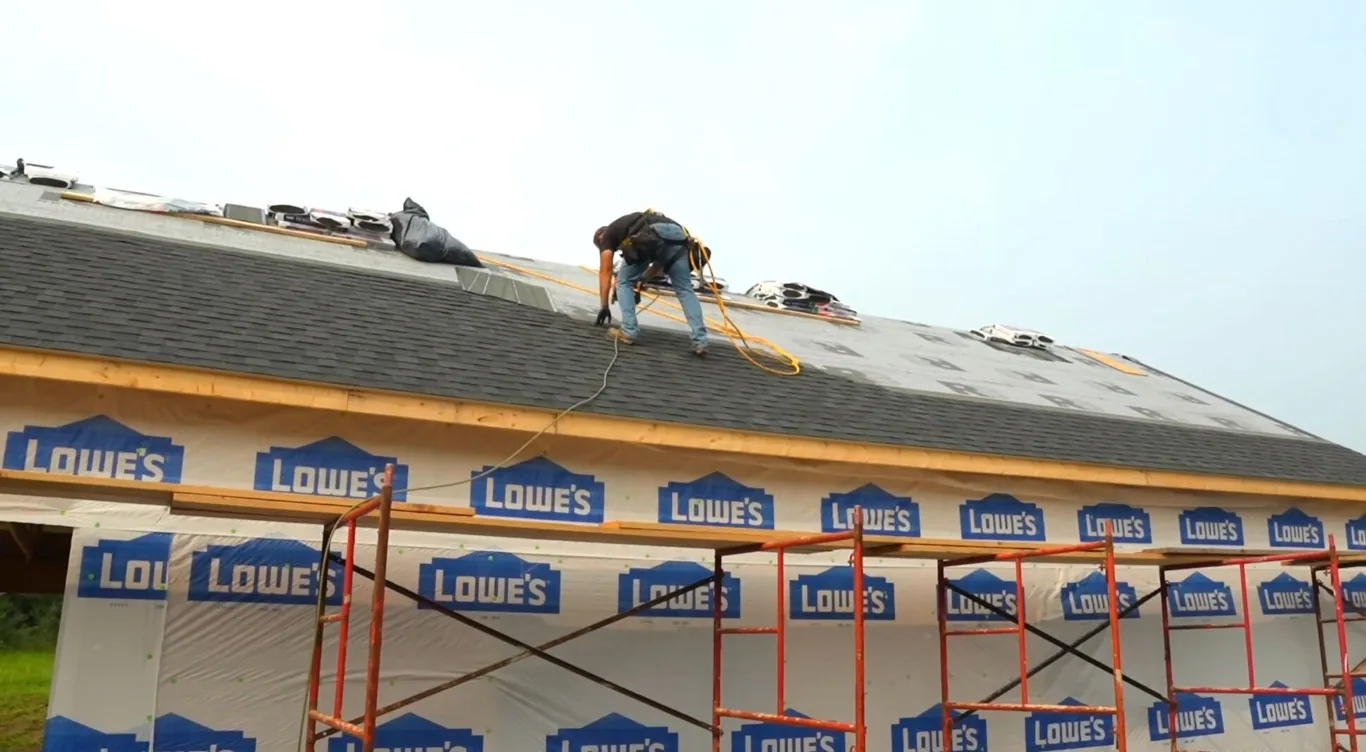
Once access is cleared, we mark safe routes, set up edge protection and brief the crew on what is open.
Uplift, Twist and Impact
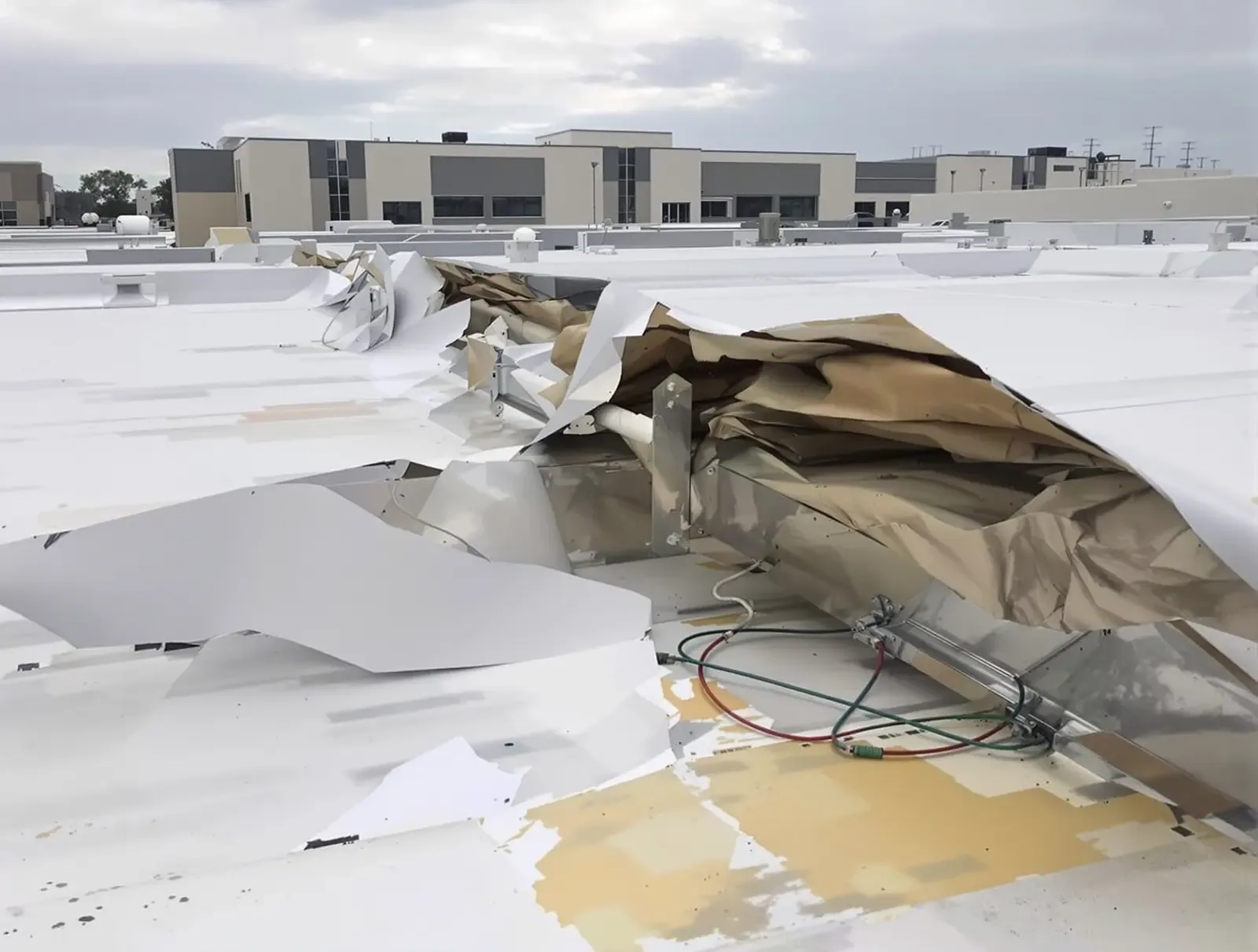
A tornado does three things to a roof at once. It lifts, it twists, and it throws things at it. Large sections of membrane and insulation can peel off in sheets, down to bare deck. Rooftop units can shift or leave the curb altogether. The deck itself can buckle, rack or tear away from its supports.
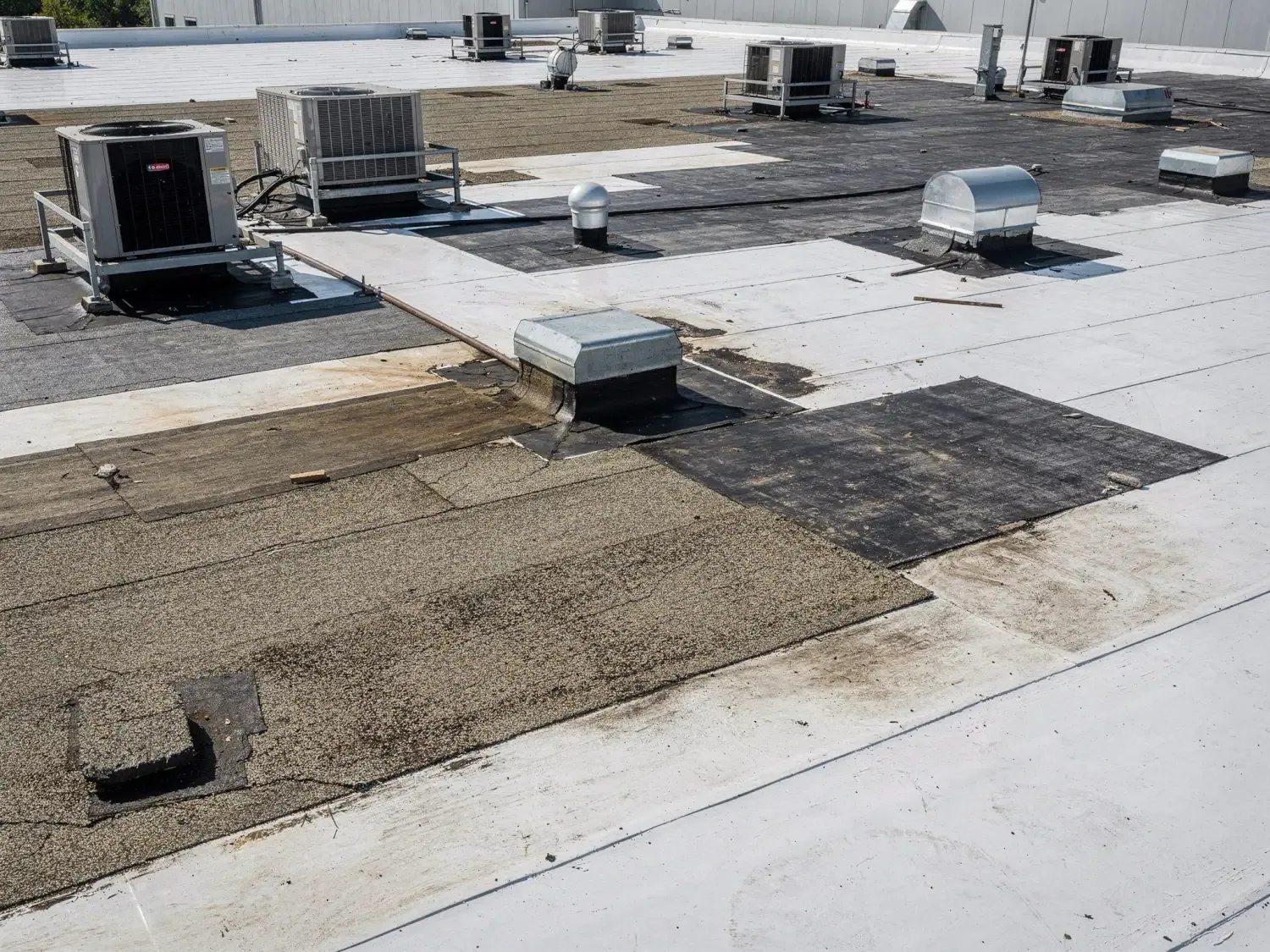
The debris is a separate injury. Wood, sheet metal and glass come down across the field and puncture it. Dragging debris off can rip more sheet. We clear carefully and photograph before moving anything, then work the damage as membrane punctures and tears.
The straight-line winds that precede or follow a tornado leave a different pattern, the one found on any wind-damaged roof.
Dry-In Before the Next Rain
The rain does not wait for the adjuster. Within a day or two, an open roof needs cover: tarps tied to the deck, temporary membrane, or patch panels over the largest openings. The goal is to stop water from reaching the interior, equipment and stock while the permanent scope is written.
On a large building, we start with the sections over the most sensitive spaces. A clinic, a server room or a production floor goes first. That triage guides an emergency roof repair: protect the most sensitive spaces first, then document the roof areas that need temporary cover.
Temporary work is done so it can be removed cleanly. A tarp screwed through a good membrane creates new holes.
Scope and Records for the Claim
A tornado claim is large, and the roof is one line of it. The documentation we produce is meant to hold up in the adjuster's review: dated photos before and after clearing, a roof diagram with every damaged area, measurements of missing material and the condition of whatever remains.
We also separate tornado damage from older wear and from earlier storms. A roof that took a derecho in July 2024 and a tornado in July 2025 has two storm stories on it, and the file should say which is which. Each finding stays tied to a date and a cause, the way a roof insurance claim file needs it.
Repair, Section or Replace
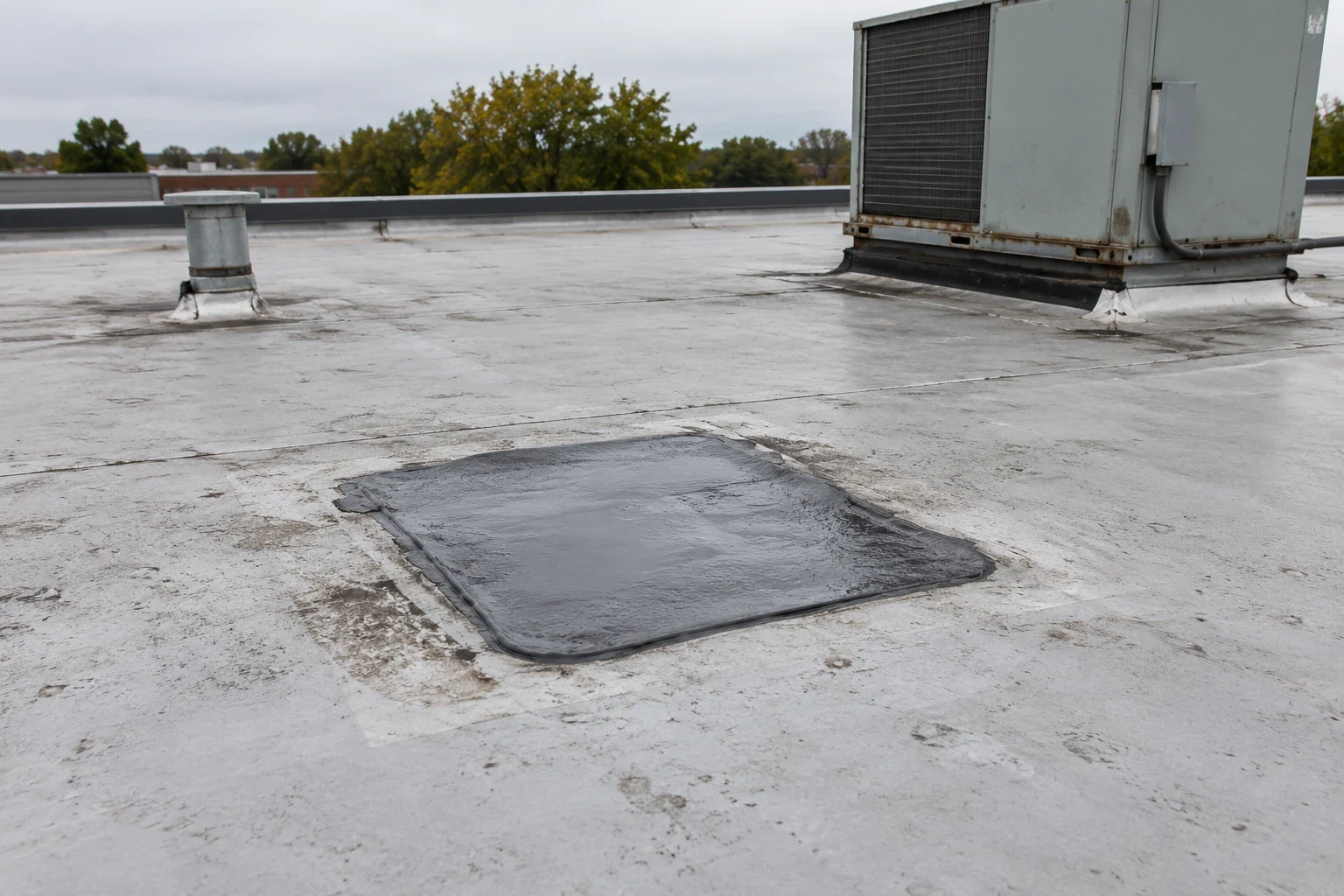
After the dry-in, the decision turns on how much roof is left. Scattered punctures and a few torn laps are repairs. A large share of the roof gone is a section replacement, with a tie-in to the sound part. A deck that has moved, insulation that is soaked throughout, or a membrane stripped across much of the field points to a full commercial roof replacement.
We lay out all three paths with the cost drivers beside each: how much deck needs replacing, how the schedule runs through winter, and how a partial repair affects the warranty. Then the owner and the insurer decide with the same numbers in front of them.
Bettendorf, Blue Grass and Camanche
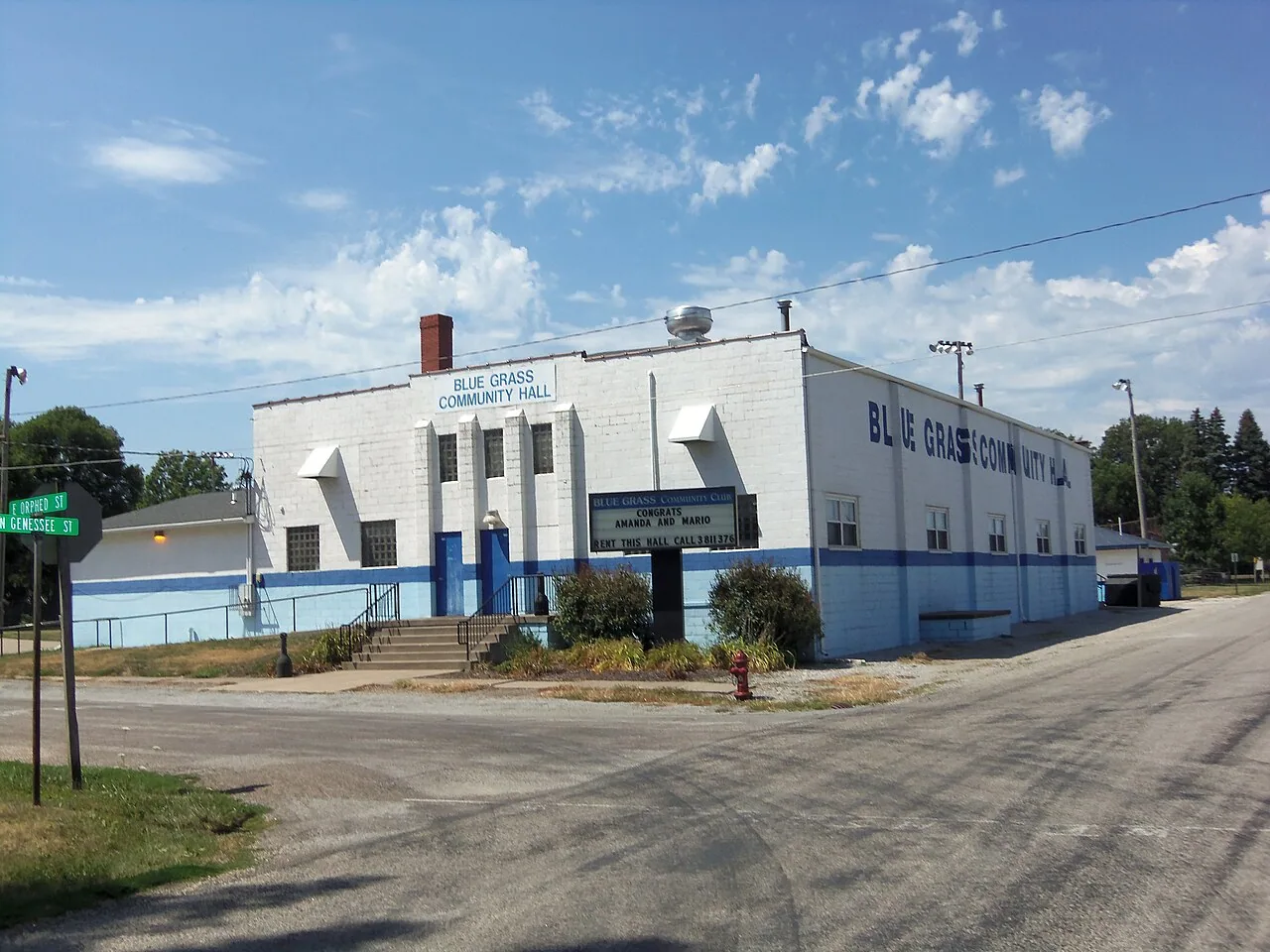
The 2016 tornado entered Bettendorf and crossed I-80 near Middle Road, where dense building stock and mature trees produced widespread roof damage. The 2025 storm began southeast of Blue Grass. Owners in Bettendorf and in Blue Grass each have a tornado track close to home, since the 2016 path crossed Bettendorf and the 2025 path began southeast of Blue Grass. An open roof costs the same to leave in either town.
On June 3, 1860, an F4 tornado destroyed or damaged nearly every building in Camanche. Kimberly Road, where the 2025 storm ended, is lined with retail, apartments and offices.
Send the Address and Where the Debris Fell
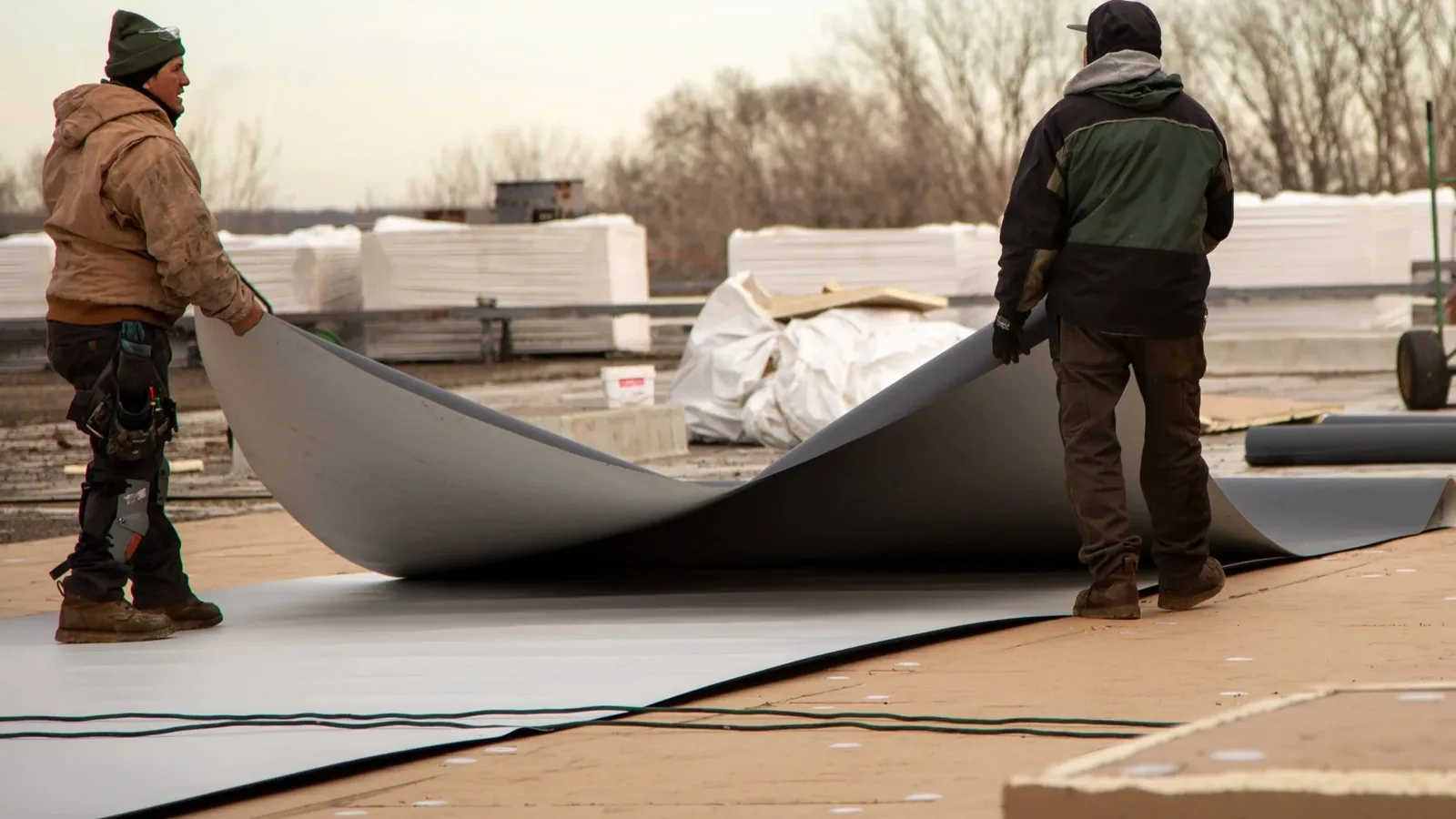
Send us the building address, the photos you have and the name of whoever can open the roof hatch once the site is cleared. We will review the roof access details, identify the dry-in needs and coordinate the first walkthrough.
Questions About Tornado Damage Roof Repair
A tornado passed half a mile from our building and the roof looks fine from the lot. Is a check still worth it?
A near miss still throws debris and lifts edges. Small pieces of metal and wood can land on a roof a long way from the center of the damage, and wind at the edge of a tornado can loosen flashing and coping without removing a single sheet. We walk the perimeter, the rooftop units and the drains first. If nothing turns up, you have a clean record for the file.
The membrane is intact but the deck looks bent. Can the roof stay as it is?
Not without an engineer. A bent or racked deck means the structure moved, and a membrane on top of it is only as good as its support. The sheet may hold for now, but fasteners may have pulled, insulation may have shifted and the loads on the steel may have changed. We stop and get the structural opinion before any new material goes down.
Who makes the call on repairing or replacing after a tornado?
The owner does, with input from the insurer and sometimes the lender. We supply the evidence and the options: what is damaged, what it would take to fix, and how the choices compare in cost and schedule. Where the building is leased, the lease may assign the responsibility, so bring the lease language early. We do not recommend a replacement unless the roof shows it needs one.
What temporary protection holds until the permanent work can start?
Tarps and patch panels, tied down properly, can last weeks if the opening is small. Larger openings get temporary membrane fastened to the deck. We inspect after each rain and each wind event, and re-tie anything that has worked loose. Temporary work should always be built to come off clean.
How do we separate this tornado from the derecho damage that came a year earlier?
With dates and photos. If you have post-derecho records, we compare them to what we see now, and look at age of repairs, weathering on exposed edges and the direction of damage. Tornado debris and uplift leave patterns that straight-line wind does not. Where we cannot tell, we say so in the report, and the adjuster decides how to treat it.
Talk to a Davenport Commercial Roofer
Send the work order, the building address or a few photos of what you are seeing. We will set a walkthrough, go up with whoever has the hatch key, and tell you plainly what the roof needs.