
Membrane Puncture and Foot-Traffic Damage Repair in Davenport, IA
Repair for punctured and worn commercial roof membranes in Davenport, IA: tool drops, storm debris and foot-traffic paths, patched to the membrane's own detail.
Somebody dropped a cordless drill on the roof in October and did not mention it. By January the ceiling tile under that spot has a brown ring, and the maintenance log says nothing about a roof visit since the unit service in the fall.
Punctures are the damage people cause themselves, or inherit from the weather. They are small, they hide, and they let water into the insulation for months before the building shows it. In Davenport, IA, we find them by walking the roof in a grid and checking the paths where trades travel, then we repair each one to match the membrane under it.
Worn Paths to the Rooftop Units
Look at any roof with mechanical equipment and you can see where people walk. A pale or scuffed line runs from the hatch to each unit. The membrane there has been stepped on, dragged across and loaded with ladders for years, and the surface is thin, crazed or worn to the reinforcing scrim.
Single-ply sheets are tough in the field but not meant for constant traffic, and a cold sheet is more brittle underfoot than a warm one. A boot print in January can crack what a summer step would not.
We mark the worn lengths, test the surface for scrim exposure, and recommend either local patches or walk pads along the route. The pads are cheap, and they stop a slow failure from becoming a work order.
Dropped Tools and Loose Hardware
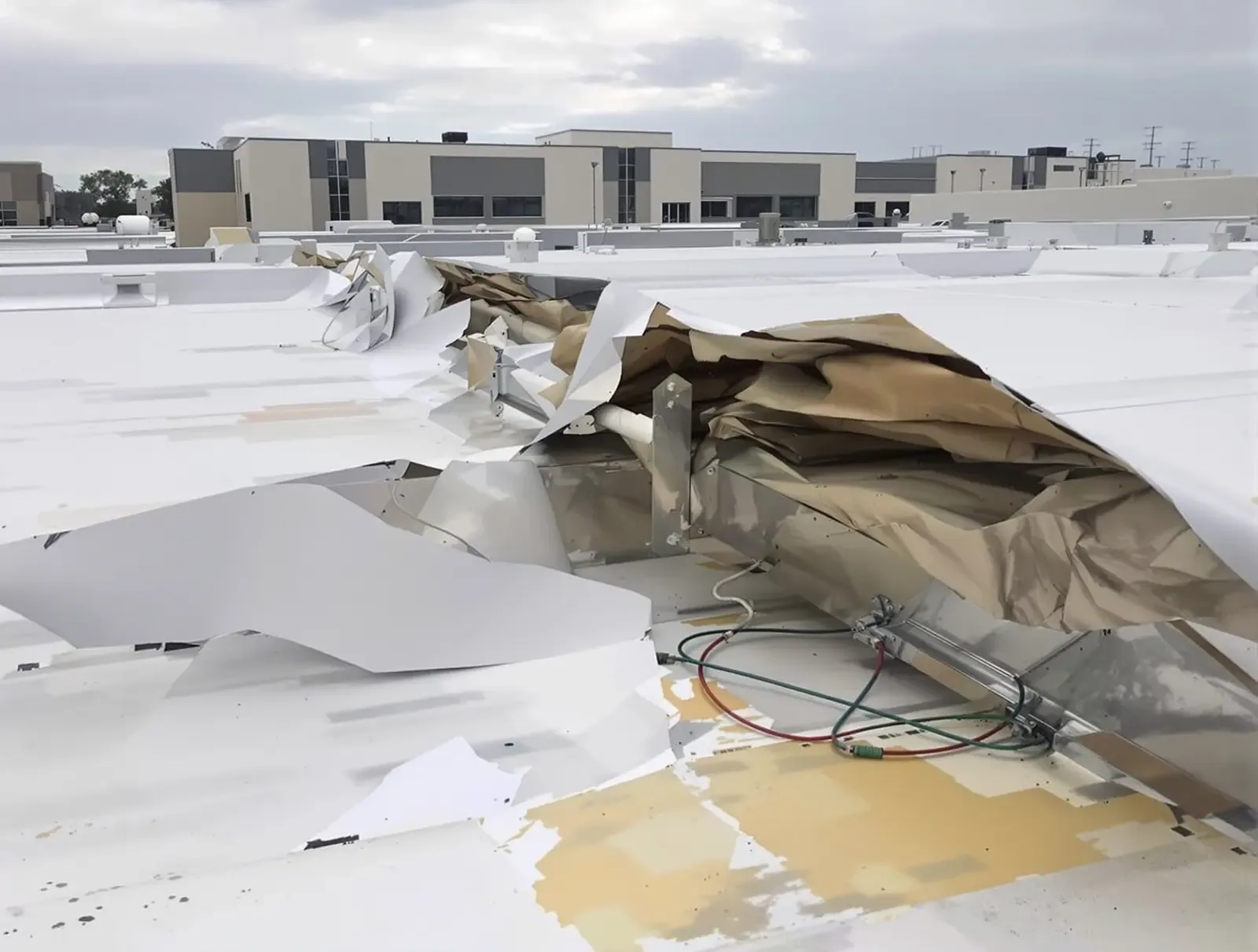
The sharp cases are different. A socket, a screw, a stray fastener or a sheet-metal off-cut can go through a membrane if it lands point-first or gets stepped on. Sometimes the cut is clean and tiny. Sometimes the hardware sits in place for months and works a hole through the sheet with every wind gust and every foot.
We sweep the roof before we repair, because the object that made one hole may be lying next to another. Then we flag everything with a paint dot and photograph it in place. The photos matter: they show which trade was on the roof and when, if you need to trace the damage to a service visit.
This is also when we check rooftop equipment curbs and supports for edges that have started to cut the sheet.
Storm Debris and What It Leaves Behind
Wind throws things onto roofs. Owners along the Brady Street corridor saw the July 2024 derecho bring down trees and power lines near 37th Street. After wind like that, the first job on a nearby roof is clearing limbs and loose metal. A branch that lands is only the beginning, because dragging it off can rip what the first impact missed.
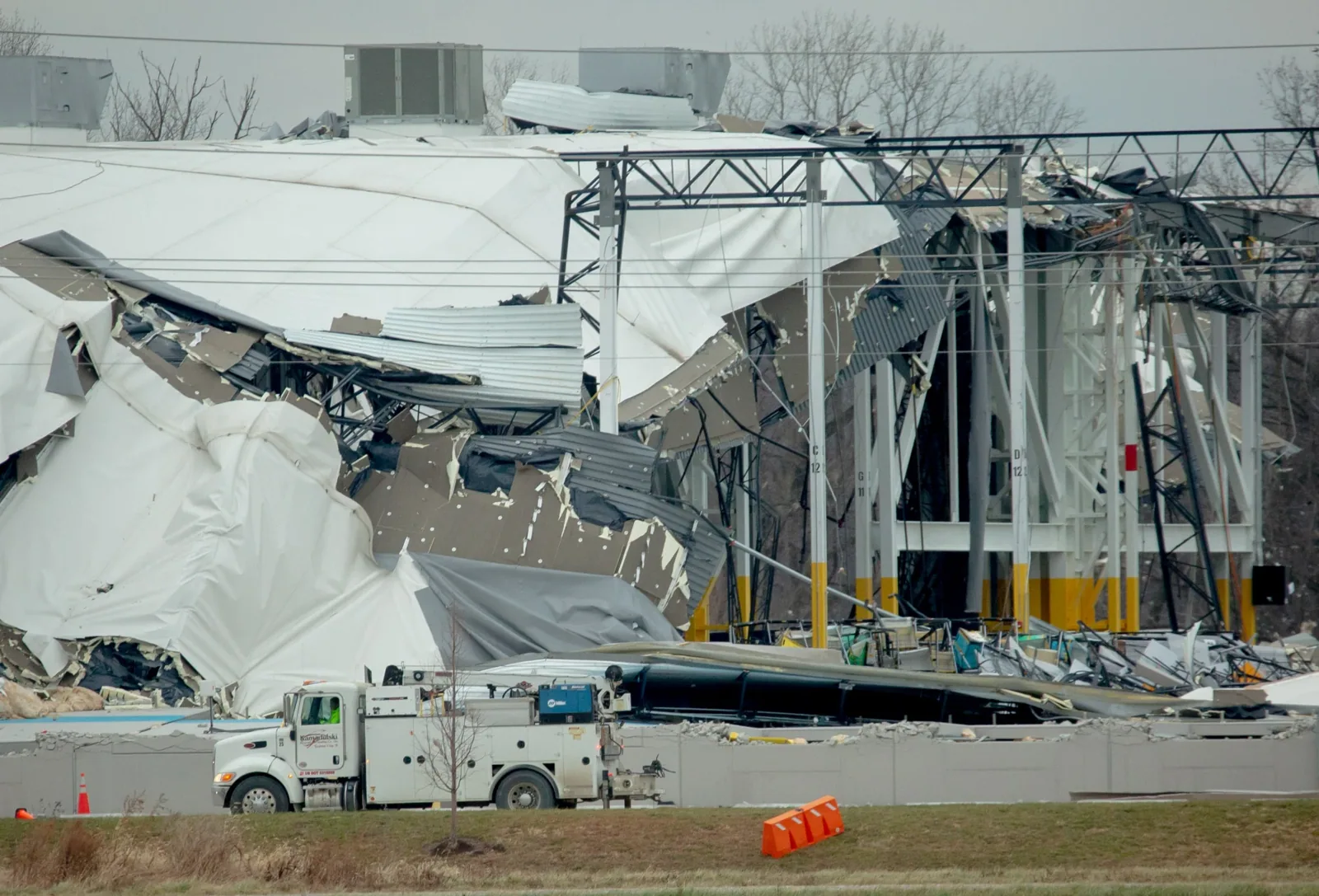
The October 2016 EF-1 tornado ran from Credit Island across I-80 near Middle Road and damaged the roof of the Scott County Jail. Storm debris is heavier and more ragged than a dropped drill, and a roof hit by a tornado is scoped differently from one hit by straight-line wind. Either way, the puncture list is only one part of the larger storm scope.
How Deep Did It Go
A scuff and a hole are not the same repair. We sort each find into three levels. A surface abrasion that has not reached the scrim needs a light fix, or only a watch. A cut through the membrane needs a patch. A cut through the membrane and into wet or damaged insulation needs a patch and a section of new insulation underneath.
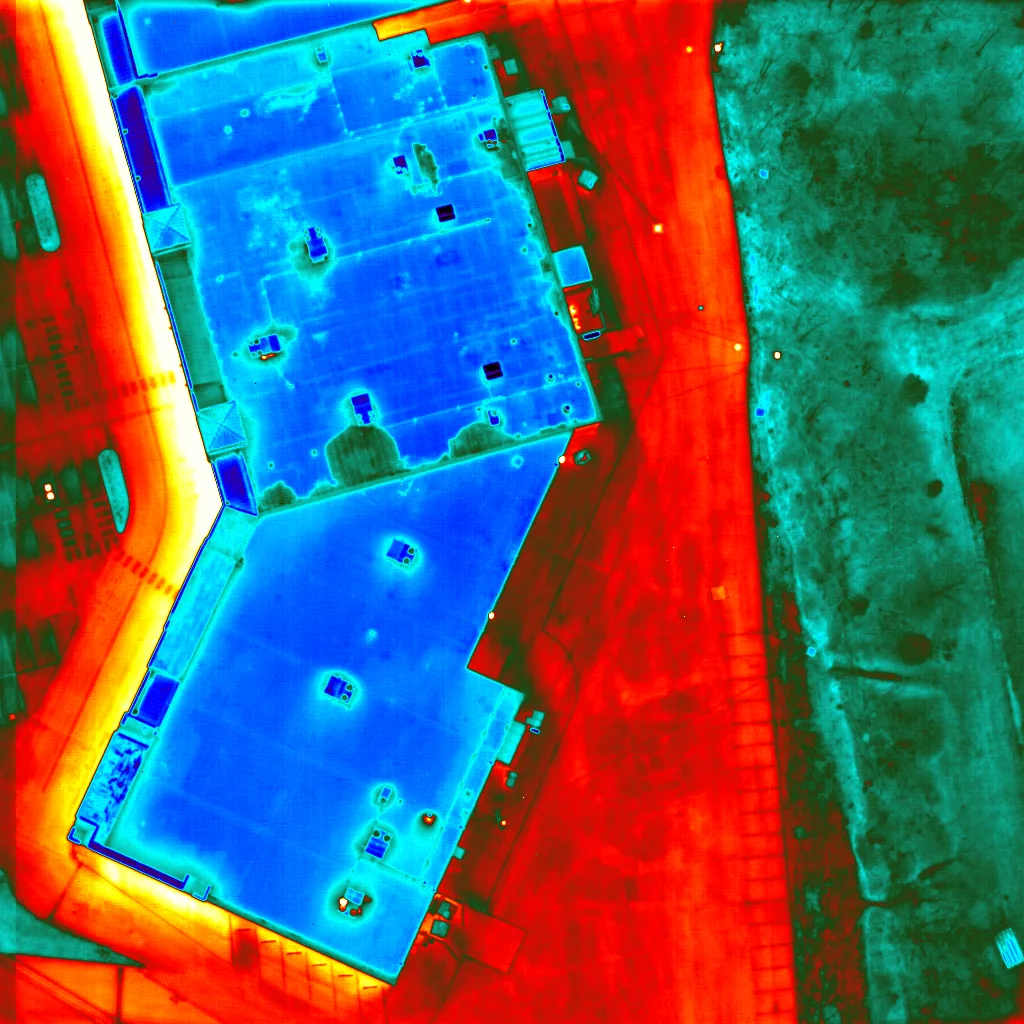
To tell the last two apart, we cut a small core near the puncture and test with a moisture meter. On bigger roofs, an infrared moisture survey maps where water traveled, which is rarely just under the hole. Water follows the deck, the laps and the insulation joints.
Skipping this step is how a patched roof leaks again in March.
Patches That Stay Put
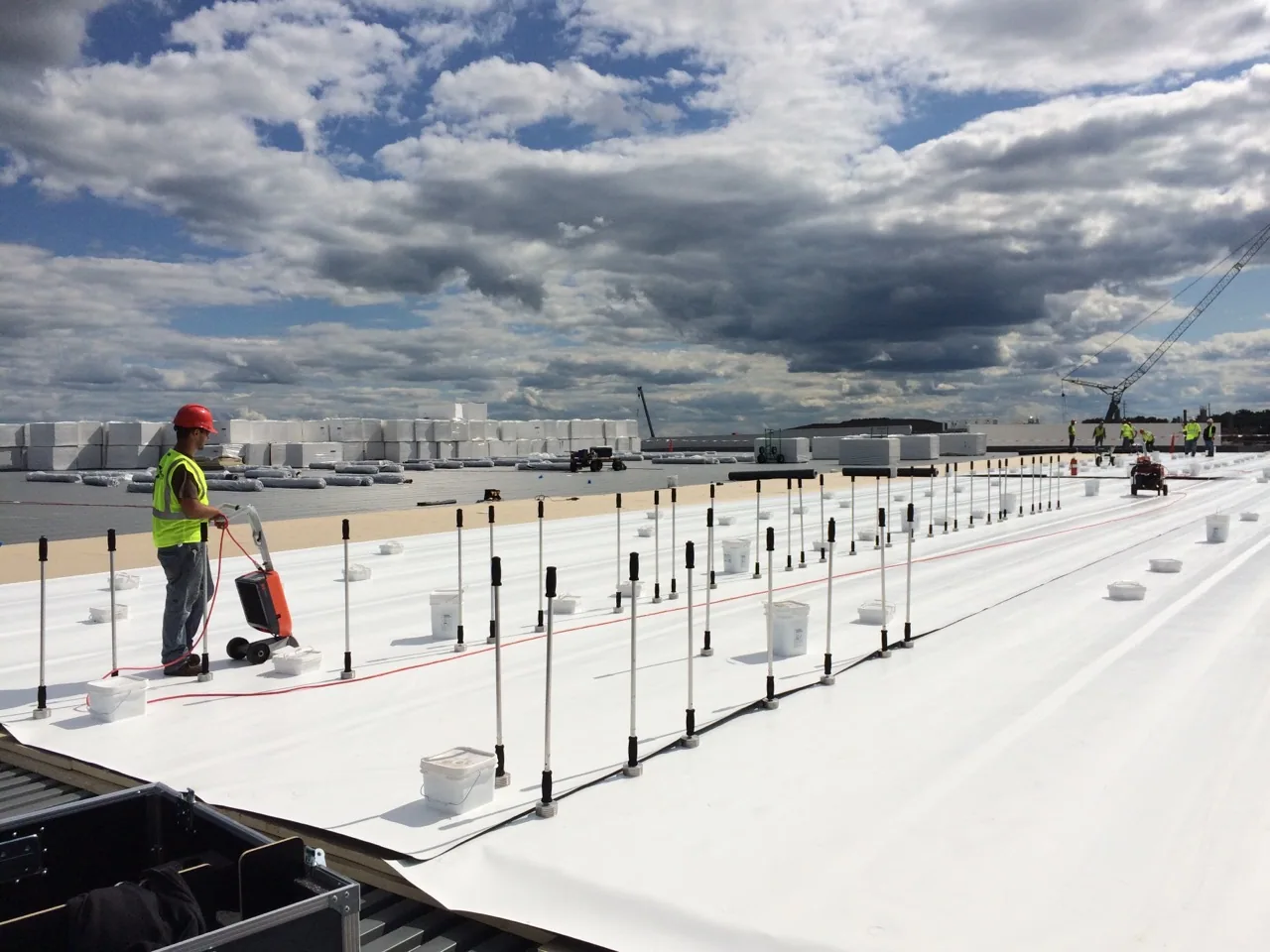
A good patch has round corners, extends well beyond the damage, and bonds to a clean, dry surface. On heat-welded membranes, the patch is welded around its entire edge and probed. EPDM gets a primed and rolled patch with tape or adhesive. Modified bitumen gets a new cap piece torched or cold-bonded across the cut. A PVC or KEE sheet gets a patch of the same product, since mixing materials is a quick way to a failed bond.
For the traffic paths, we set walk pads in line with the manufacturer's method, spaced so water can drain between them.
Where punctures keep recurring, preventive maintenance with scheduled sweeps pays off.
Roofs That Get Visited All Year
Genesis Health System is headquartered in Davenport and runs six locations with 760 licensed beds across the region. Hospitals and clinics carry heavy mechanical equipment, and that means vendors, filters, and monthly rooftop visits. A hospital roof with that many visits collects wear faster than a roof nobody climbs onto.
Campuses are the same way. Palmer College of Chiropractic has its main campus on Brady Street, and any college campus brings maintenance crews, contractors and equipment to its roofs throughout the year.
For these owners, we recommend a written roof-access rule: sign-in, walk routes, and a photo of the roof before and after any trade visit.
Send the Photo and the Roof Hatch Key Holder
Send us the work order and a photo of the hole or the worn path. We will set a walkthrough, sweep the roof for the next one and give you a written list of patches and pad locations.
Questions About Membrane Puncture and Foot-Traffic Damage Repair
A contractor dropped a tool, saw a cut, and covered it with a patch. Should we trust that patch?
Trust it only after someone checks it. Quick patches are often placed on a dusty or damp surface, or with the wrong product for the membrane. We probe the edges, check the material against the roof, and cut a core nearby if water may have gone in. If the patch is sound, it stays. If it is sitting on wet insulation, the repair is bigger than it looks.
Do we really need walk pads, and where should they go?
Anywhere crews carry weight or hardware across the sheet on a schedule. Typically that means the route from the hatch or ladder to each rooftop unit, plus the area around each service panel. We lay them out to follow the routes people already use, not the routes a drawing suggests. Leave gaps so water can run between pads. A pad that dams water is worse than none.
How can you tell whether a puncture got into the insulation?
By testing, not by looking. The membrane may show a tiny hole while the insulation beneath is soaked, or the reverse. We cut a small core beside the puncture and read it with a moisture meter, and on larger roofs we follow with an infrared scan. If the board is wet, it comes out and gets replaced before the patch goes on.
Our rooftop vendor visits monthly. Who is responsible when their tech damages the sheet?
That depends on your service contract, and many contracts say nothing about it. Add a roof-access clause that requires sign-in, walk routes and photos of the roof before and after each visit. When damage turns up, we can document it with dated photos, so you have the evidence to send the vendor. The dispute is between you and the vendor. Our photos keep the record straight.
After a storm, does a puncture belong on the insurance claim or the maintenance budget?
It belongs wherever the evidence points. A hole beside a fallen limb after a derecho supports a storm claim. A hole beside a hatch with no storm history points to wear. We document each one with photos, location, size and likely cause, and let the adjuster decide. Mixing the two in one scope slows the claim.


Talk to a Davenport Commercial Roofer
Send the work order, the building address or a few photos of what you are seeing. We will set a walkthrough, go up with whoever has the hatch key, and tell you plainly what the roof needs.