
Rooftop Unit Curbs, Equipment Supports and Pipe Supports in Davenport, IA
Curb flashing, unit changeouts and pipe supports on commercial roofs in Davenport, IA, checked on the roof and reported with photos the same day.
A ceiling tile is on the floor at the dock office and the maintenance tech has already checked the drain. It was clear. That leaves the one part of a roof that is cut open on purpose, the curb under the rooftop unit.
Curbs and supports go in when the equipment goes in. The membrane gets flashed up the sides by whoever holds the roofing contract that year, and then the unit gets set, piped and wired by someone else. In Davenport, IA those details take wide temperature swings, heavy snow and the occasional derecho. We treat the curb, the flashing, the support and the pipe runs as one assembly. You get photos the same day and a plain recommendation.
Where Units Meet the Membrane
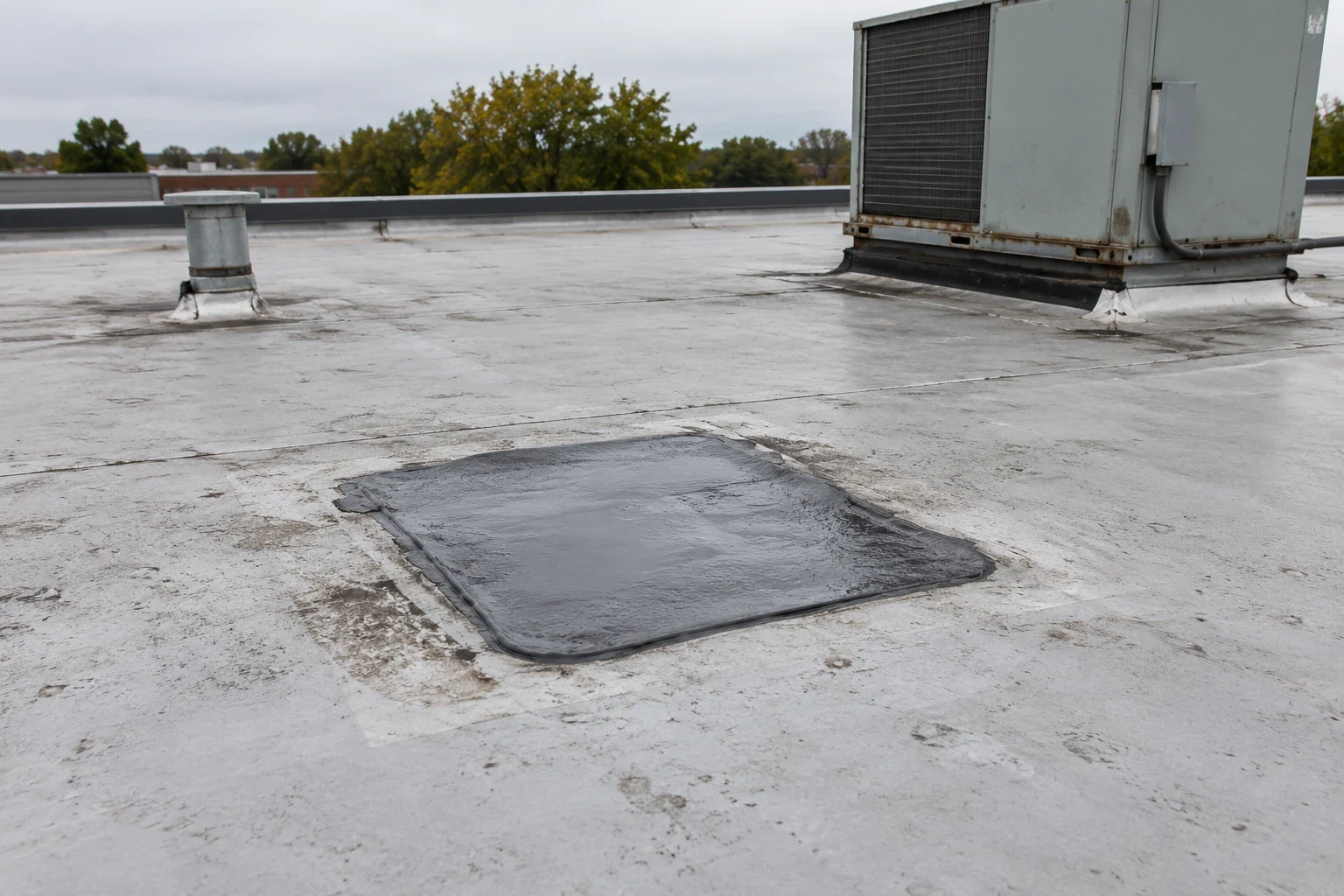
A curb is a raised frame, wood or metal, that carries the unit above the roof surface so water has somewhere to go besides inside. The membrane runs up the sides and gets tied off at the top with counterflashing or a termination bar. Every inch of that perimeter is a seam that has to hold through winter.
Davenport has seen a record high of 111 F and a record low of -29 F. Membrane pulls away from tight corners. Sealant at the top edge dries out and splits. Fasteners that held in July back out by February.
On the walkthrough we check these, in this order:
- The corners of the curb flashing, where the membrane is folded tightest.
- The top edge of the flashing and whatever seals it.
- The gap between the unit skirt and the curb, where wind-driven rain gets in.
- Ponding at the base, since standing water against a curb tests the flashing every day.
- Condensate lines that dump onto the roof surface.
Water that pools against a curb is a drainage question first. Clearing and correcting roof drains and scuppers sometimes fixes a curb leak without touching the curb at all.
Curb Height and Counterflashing
Flashing needs height. It has to stand above ponding water and above a drift of snow, or the first heavy melt finds the top edge. Short curbs fail first.
Here is how that happens. A roof gets more insulation and a cover board at the last replacement, or a new membrane goes over the old one. The curb stays where it was. The flashing that used to climb a comfortable distance now barely clears the surface.
The fix is a curb extension or a taller flashing detail, matched to the membrane already on the roof. A hot-air weld on TPO is not the same repair as torch-applied flashing on modified bitumen, so we write the membrane type down first.
Pipe Supports and Walk Paths
Gas lines, refrigerant lines, conduit and condensate drains cross a roof on supports. Some supports are pads, some are posts on small curbs, and some are nothing, just a pipe rubbing a hole in the membrane with every thermal cycle.
We look for three things. Does the support spread its load, or does it punch into the insulation? Is the base flashed, or only sealed with a bead that will crack? Is there a walk path nearby, or is the maintenance crew stepping across membrane every time they service a unit?
A puncture under a support is slow. The insulation below soaks and sags, and the leak shows up far from the cause. When a support has already worn through, the work is a patch, a new pad and a better base, the same steps as any membrane puncture repair.
Crane Day and Unit Changeouts
Much curb damage is not weather. It happens when a unit is swapped. The crane sets the new unit down, the old one gets dragged, and a corner of the curb flashing takes a gouge nobody sees from the ground.
Plan the lift with the roofer in the room. Boards go down where the rigging will travel, and existing damage gets photographed before the mechanical crew arrives. If the new unit has a different footprint, an adapter curb gets flashed before the unit is set, not after.
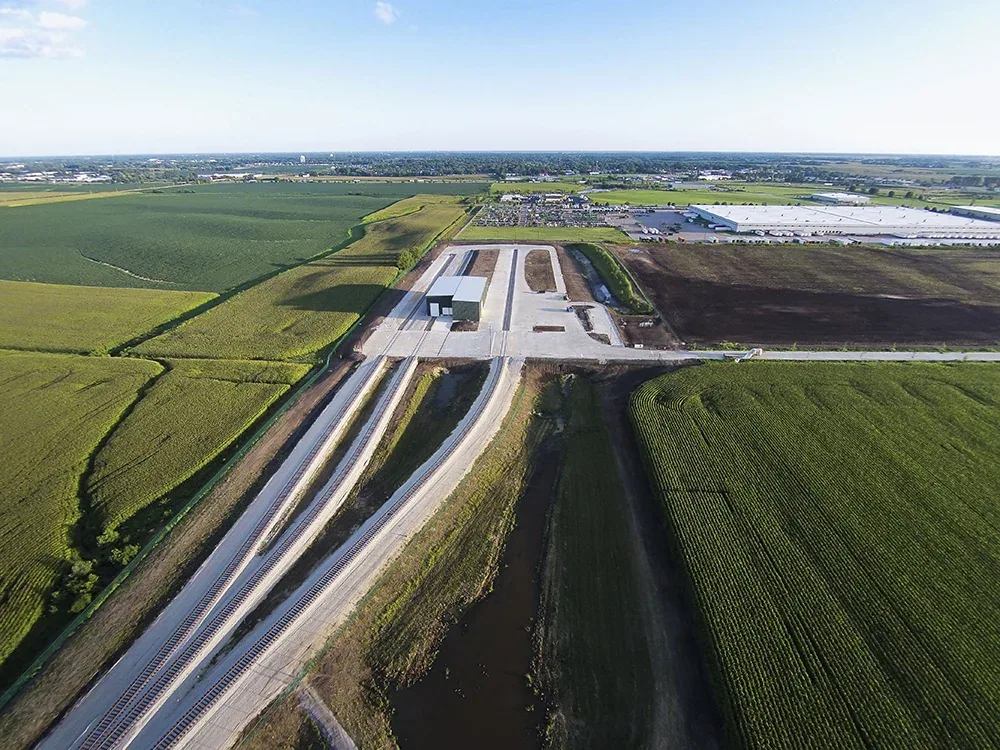
The city works from the 2021 International Building Code and Existing Building Code, amended locally. A new unit that adds weight should go past the building department before the crane date, since the structure has to carry it. On a plant roof in the Eastern Iowa Industrial Center, the lift is best set inside a downtime window the plant manager already plans around second shift and the production schedule.
Snow Drifts at the Equipment Line
Snowfall in the Quad Cities adds up to more than three feet in a normal year. On a flat roof it does not sit evenly. Wind packs it against every unit, every curb and every parapet, so the equipment line carries more load and holds more meltwater than the open field.
That drift does two jobs against the flashing. It pushes water up the curb face when it thaws, and it freezes into a block that can pry at the termination. Condensate that drains onto the roof freezes into a ridge that traps more water behind it. Snow and ice damage on a low-slope roof often starts at an equipment curb.
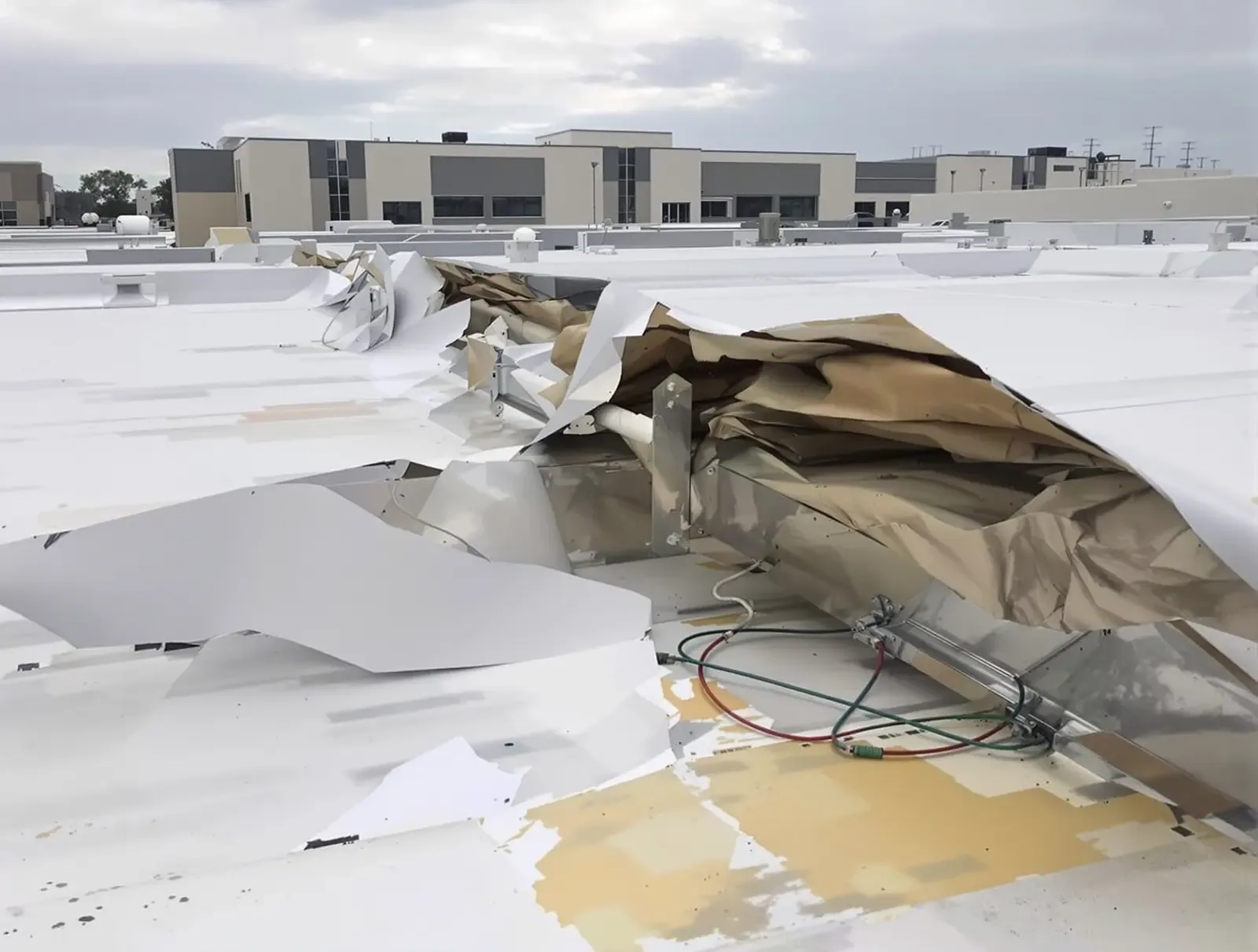
Wind is the other test. Gusts in the July 2024 derecho hit 100 mph in places around the region, and the July 2025 EF-2 tornado finished its seven-mile run near Kimberly Road and Fairmount Street. After a storm like that, check unit panels, straps and the screws that hold the skirt to the curb. A rocking unit works the flashing open. Wind damage repair includes the equipment line for that reason.
A Record for the Next Unit
The best thing you can hand the next facilities manager is a roof plan with every curb marked. Numbered. Photographed. With the unit tag, the membrane type and the date of the last flashing repair beside it.
That plan belongs in the roof condition report. When an HVAC contractor calls about a replacement, you can send the plan and the curb photos instead of climbing up to look. When an insurer asks what a storm changed, you have a before photo.
Send the Unit List
Send the work order, a roof plan if you have one, and the unit locations. We will set a walkthrough and put every curb and support in the report.
Questions About Rooftop Unit Curbs, Equipment Supports and Pipe Supports
Can the existing curb be reused when the new unit is a different size?
Usually the curb stays if the new footprint matches and the curb frame is sound, with a fresh flashing detail around it. If the footprint changed, an adapter curb gets built and flashed before the crane lifts the unit. We check the frame for rot or rust on the walkthrough so the mechanical contractor is not surprised on lift day.
Who should handle the flashing when the HVAC contractor sets a new unit?
Keep the roofer on the flashing and the mechanical contractor on the unit. The roofer needs to see the curb before the unit lands, and again once the connections are made, because piping and conduit often cross the membrane in ways nobody planned. A short joint walkthrough before the crane date settles who touches what.
The curb flashing looks fine, but the ceiling below still stains. Where else could the water come from?
Look at the unit itself before you blame the roof. A cracked drain pan, a plugged condensate line or a loose access panel can drop water onto the roof or straight into the curb opening. We check the unit housing, the condensate path and the penetrations around the unit, then trace the stain back along the deck.
Do pipe supports have to be raised when the roof is recovered?
Any support that sits on the old roof surface will end up lower than the new surface, so yes, they get raised or replaced as part of the recover. Skipping that step leaves lines resting on the new membrane. We list every support on the scope so the extra height is priced in from the start.
Can a curb leak wait until spring?
A small split can be sealed and watched through winter if the insulation under it is still dry. A curb with open flashing and wet insulation is a different call, since freezing water widens the gap. Send photos and we will tell you which one you have, and whether it needs a temporary dry-in first.


Talk to a Davenport Commercial Roofer
Send the work order, the building address or a few photos of what you are seeing. We will set a walkthrough, go up with whoever has the hatch key, and tell you plainly what the roof needs.