
Roof Insulation, Tapered Systems and Cover Board in Davenport, IA
Roof insulation, tapered systems and cover board for commercial roofs in Davenport, IA: code-minded thickness, drainage slope and hail-resistant protection.
The heating bill lands on the facilities manager's desk, and the January line is higher than last year. The building has not changed. The roof insulation has.
Most owners think about the membrane when they think about a roof. Underneath it, the insulation does the work that shows up on the utility bill, supports the membrane against foot traffic and hail, and shapes how water moves across the surface. For a building in Davenport, IA, where the temperature has swung from 111 F to -29 F on record, the layer under the membrane matters nearly as much as the layer you can see.
The Boards Under the Membrane
Commercial roofs commonly use rigid foam boards, and each type has strengths.
- Polyisocyanurate: high thermal value per inch, widely used under single-ply and modified bitumen, with performance that changes in very cold conditions.
- Expanded polystyrene: lighter and lower cost, often used in tapered packages and some metal retrofit systems.
- Extruded polystyrene: resists moisture, which suits protected-membrane and some below-grade conditions.
- Mineral wool and perlite: used where fire performance or a firm substrate matters.
We pick the board for the membrane, the deck and the use of the building, and we follow the manufacturer's rules for fastening or adhesive.
Code and Thickness
Insulation thickness is not a free choice. The city's code set includes the 2021 International Building Code and Existing Building Code, with Iowa's own Energy Conservation Code (Iowa Rule 661.303) alongside them, and a roof replacement can trigger insulation requirements.
We confirm what applies to your address before we price, since the answer changes with the scope of the work and the building use. A small repair rarely triggers anything. A full replacement or tear-off usually does. The proposal states the board type, the total thickness, the number of layers and the code basis, so the building department and your insurer see the same plan you do. The roof edge, parapet height and door thresholds all feel the extra thickness, so we check them early.
Tapered Insulation and Positive Drainage
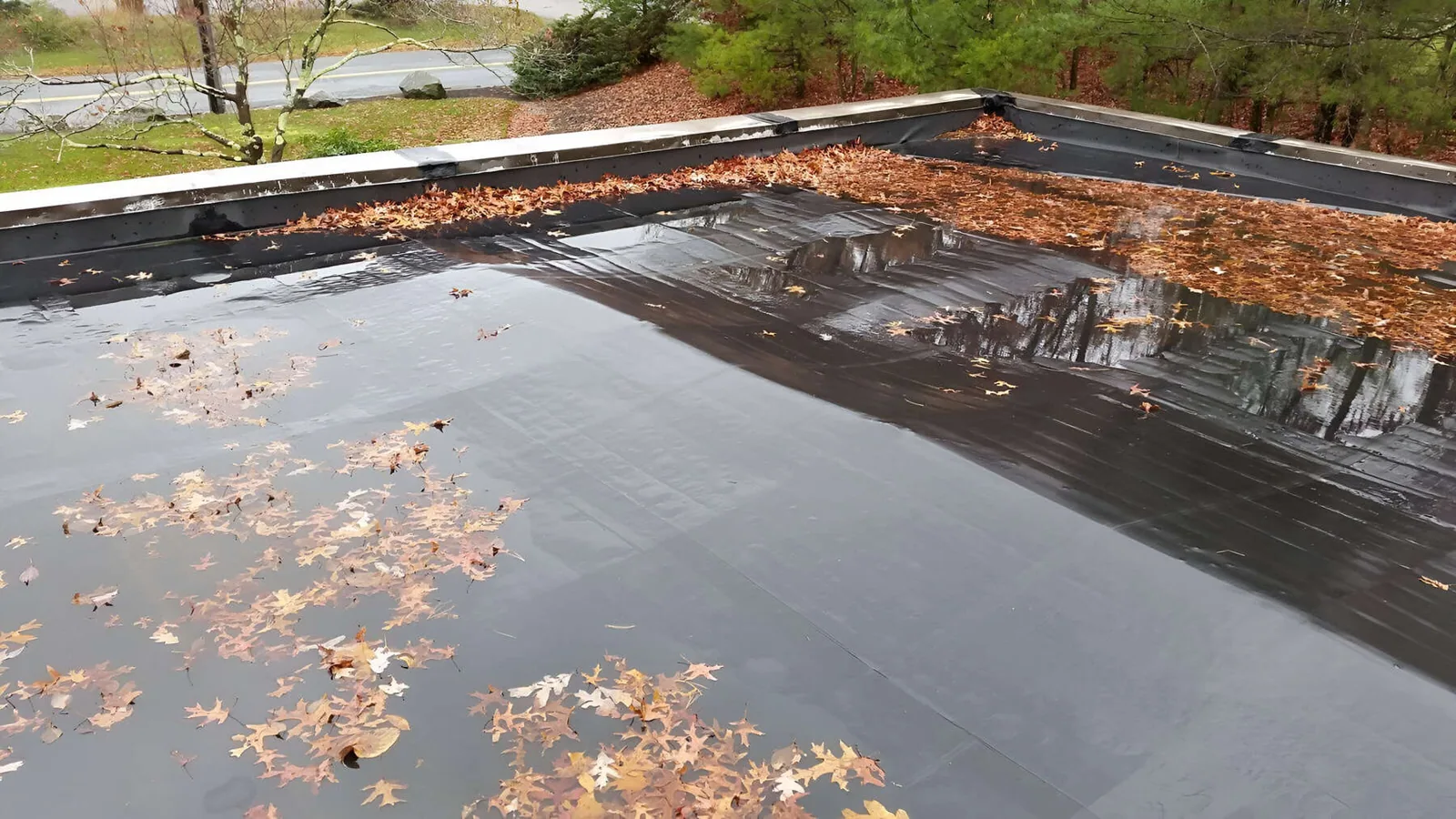
A flat roof is rarely flat on purpose. Tapered insulation builds a slope into the roof, so water runs toward drains and scuppers instead of sitting in the field.
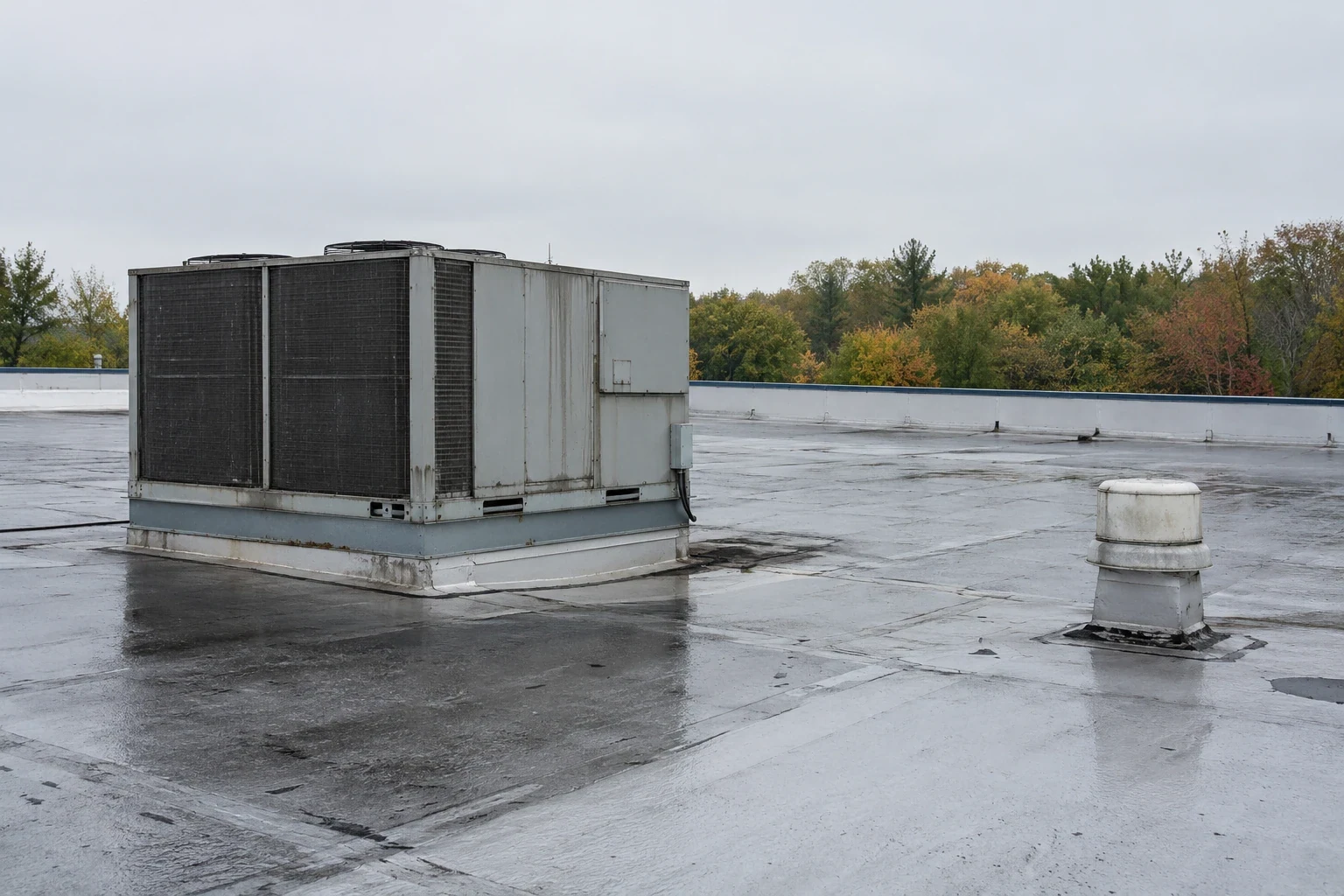
The system is laid out as a drawing: panels numbered by tapers, crickets between drains, and a slope that fits the drain locations. It is the cleanest way to cure chronic ponding on an existing roof when the structure cannot be changed, and it works with the layout of roof drains and scuppers already in place. We measure the existing slope with a level or laser, map the low areas and design the taper to fit. A well-designed taper adds thickness only where it is needed, so you do not pay for foam you do not use.
Cover Board: The Thin Layer That Earns Its Place
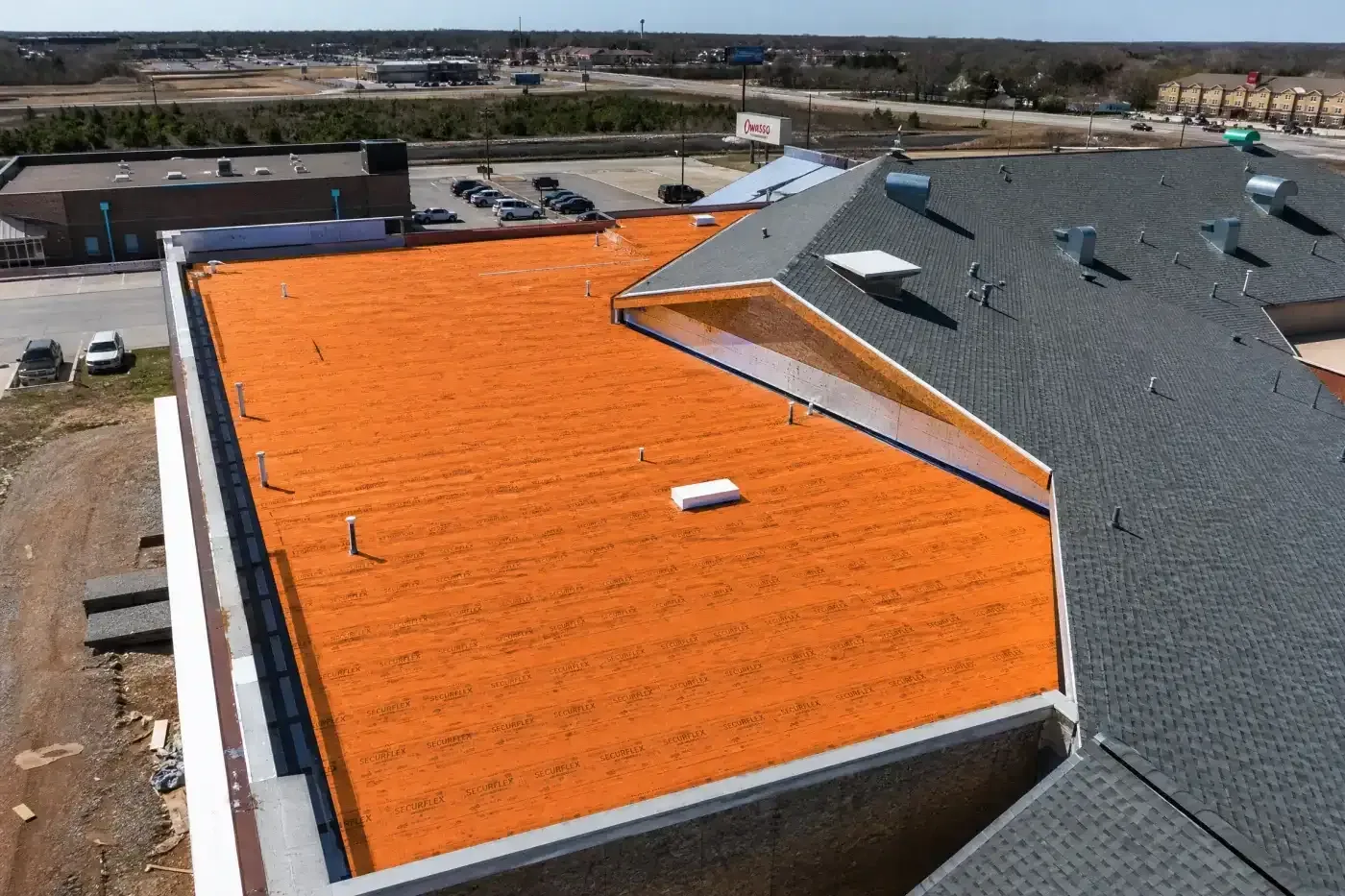
A cover board is a thin, firm panel between the insulation and the membrane. It looks like a small detail on a drawing and it solves several problems at once.
It protects soft foam from foot traffic and dropped tools. It adds hail resistance, which counts in a city where 133 hail reports have come in since 2004 from inside a 10 mile radius of the center, with baseball-size stones in April 2023. It gives adhered membranes a smooth, stable surface. And over an old built-up roof in a recover, it covers gravel and blisters. Gypsum, fiber-reinforced gypsum, high-density polyiso and mineral-based boards each behave a little differently, and we match them to the membrane's requirements.
Pulling Out Wet Insulation
Insulation that has taken on water loses its value and adds weight. It also holds moisture against the deck, where steel starts to rust.
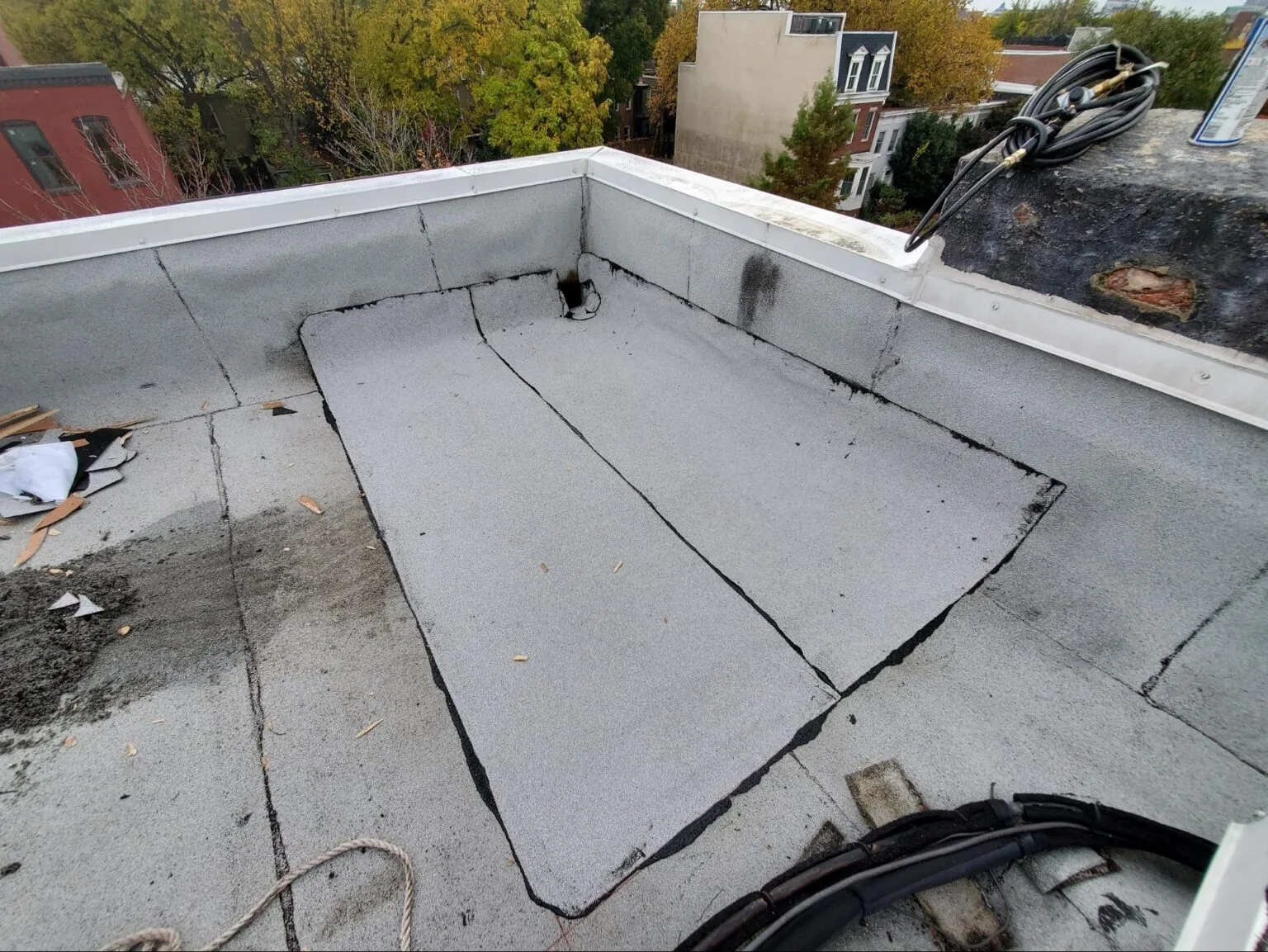
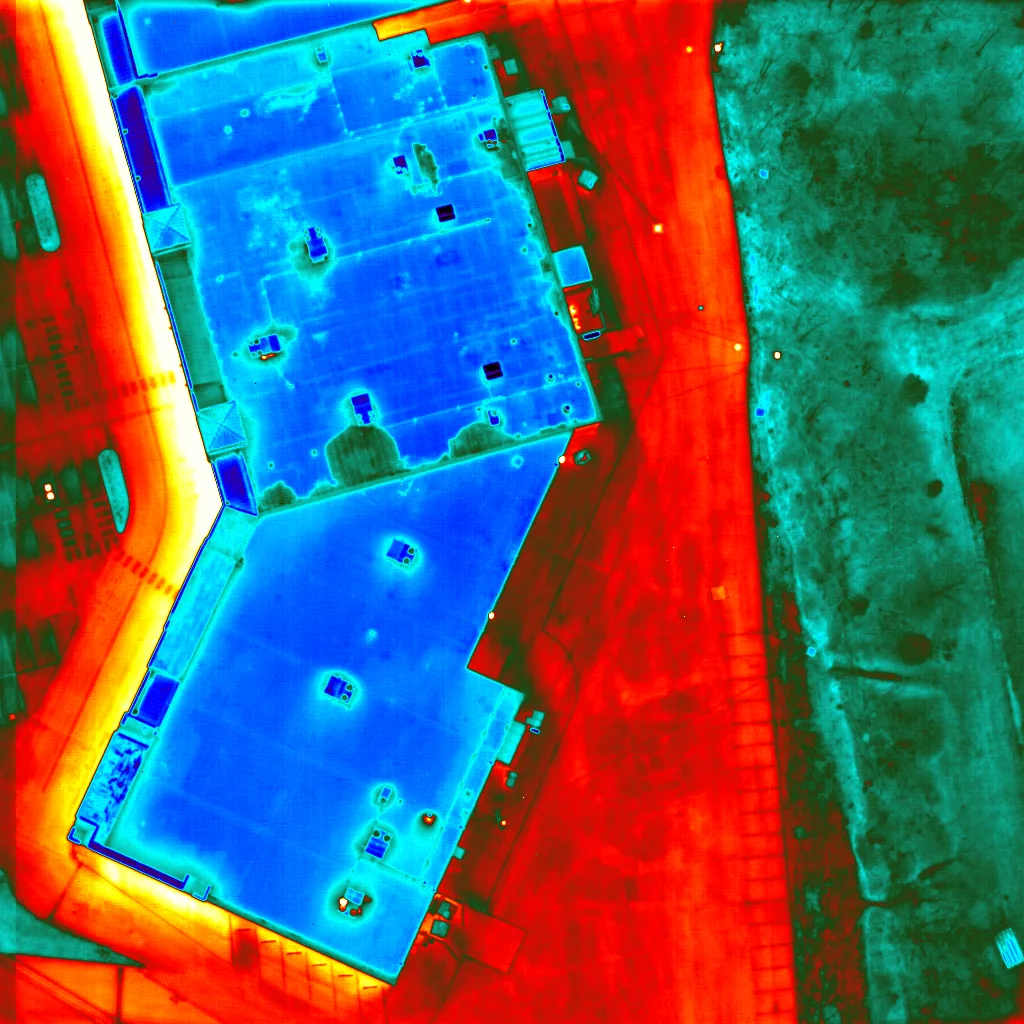
On a replacement we remove wet boards down to the dry layer and rebuild from there. On a recover, an infrared and core survey tells us how much to cut out first. We save what is dry when we can, but we do not bury damp foam under a new roof. The moisture map goes into the report, and we tell you how much insulation we replaced and why. Fastener pull-out and rusted deck are checked at the same time, since a new board on a corroded deck holds nothing.
Warm Buildings, Cold Buildings
Different buildings ask different things of their roof insulation. A warehouse kept at a mild temperature has modest needs. A food-processing plant or a cold storage building carries a large temperature difference across its roof, so vapor control and thickness matter more. Kraft Heinz built an automated meat processing plant in the Eastern Iowa Industrial Center on I-80, 382,157 square feet of it, and a food plant like that puts the same temperature questions on the roof over it.
Offices and apartments along Kimberly Road care about comfort and noise. We discuss the building's interior use with your facilities lead, because the answer to a cold, damp or noisy space is often found in the roof assembly.
Insulation selection is tied to more than an R-value. The existing deck, attachment method, recovery board and membrane all have to work as one assembly under wind and traffic loads. At a reroof, we map wet areas and establish whether the substrate is sound before adding thickness. Around drains and door thresholds, added height can create a new water or access problem if transitions are not designed. The scope should name layer sequence, fastening pattern and how each edge terminates.
We verify the finished transition height.
Send the Core Log or the Utility Complaint
Send the last roof report, the core results or the work order that started the question, and we will set a walkthrough to look at insulation condition, slope and the options for your building.
Questions About Roof Insulation, Tapered Systems and Cover Board
We are replacing the membrane only. Should we add insulation?
Look at the existing boards first. If they are dry, firm and meet the code on your permit, they can stay. If they are thin, crushed or wet, new insulation is the better move because the membrane is only as good as what supports it. We pull cores before the proposal so the choice rests on what is in the roof.
Does thicker insulation raise the roof so much that the doors and curbs are a problem?
It can. Added thickness raises the roof surface relative to door thresholds, curbs, scuppers and parapet tops, and every one of those needs a height check. We measure them during the survey, then plan raised curbs or new flashing heights, so the finished roof still sheds water properly.
Is a cover board worth the added layer on a new roof?
On roofs exposed to hail and foot traffic, it generally pays for itself in protection. It also gives certain membranes a better surface. On a protected roof with low traffic, it can be omitted if the manufacturer allows it. We lay out both options and tell you what we would pick.
Why does the manufacturer care what insulation I use?
Membrane makers test their systems with particular boards, fasteners and adhesives, and warranties follow those assemblies. Substituting an unlisted board can void coverage or reduce wind performance. We choose from the manufacturer's approved list and record the product data in your closeout package.
Can tapered insulation fix a roof that ponds in the middle of a bay?
In most cases, yes. A tapered package lifts the low spot and moves water toward a drain, as long as the deck can carry the added load. If the deck itself has sagged badly, we bring in an engineer first. The taper drawing shows every panel, so you can see where the thickness goes.
Talk to a Davenport Commercial Roofer
Send the work order, the building address or a few photos of what you are seeing. We will set a walkthrough, go up with whoever has the hatch key, and tell you plainly what the roof needs.