
Modified Bitumen Roofing in Davenport, IA
SBS and APP modified bitumen roofing in Davenport, IA: torch, mop and cold-applied methods, hail and granule loss, flashings and fire-safe planning.
The building engineer asks one thing before anything else: is anybody lighting a torch on the roof? It is the right first question for modified bitumen, and the answer shapes the whole job.
Modified bitumen is asphalt blended with polymer, reinforced with a fabric mat and rolled out in layers, usually a base sheet and a cap sheet. It is a thick, patchable and familiar roof, and on a low-slope building in Davenport, IA it suits an owner who wants real substance underfoot. It has its own rules about fire, moisture and weather. Those rules are worth learning before the bids come in.
SBS and APP, Rubber Versus Plastic
Two polymers split the market. SBS is rubber-like, so it stretches and recovers, which suits a city whose records swing from 111 F to -29 F. APP is plastic-like. It stiffens a little in deep cold but handles sustained sun and heat well.
In Davenport the winters set the terms, so SBS is usually the better fit. APP has a place on a roof with heavy sun exposure and little movement. The cap sheet carries mineral granules that shield the asphalt from ultraviolet light, and the base sheet below it adds a second line of defense. Two layers is the point, because one scrape rarely cuts through both.
Torch, Mop or Cold-Applied
The laps can be joined four ways:
- Torch-applied. A propane torch melts the underside of the roll as it is laid.
- Hot-mopped. Heated asphalt is mopped between plies.
- Cold-applied. Adhesive does the bonding, with no flame and no kettle.
- Self-adhered. Peel-and-stick sheets bond to a primed surface.
Where the building is occupied, or the framing under old masonry is wood, we lean toward cold-applied and self-adhered laps and keep open flame to the details that need it. When torch work is on the plan, we ask for a hot-work permit, put extinguishers at every work area and stay on site for a fire watch after the last flame is out. Check with your insurer too. Some carriers set their own rules for torch work.
What an Old Fire Teaches
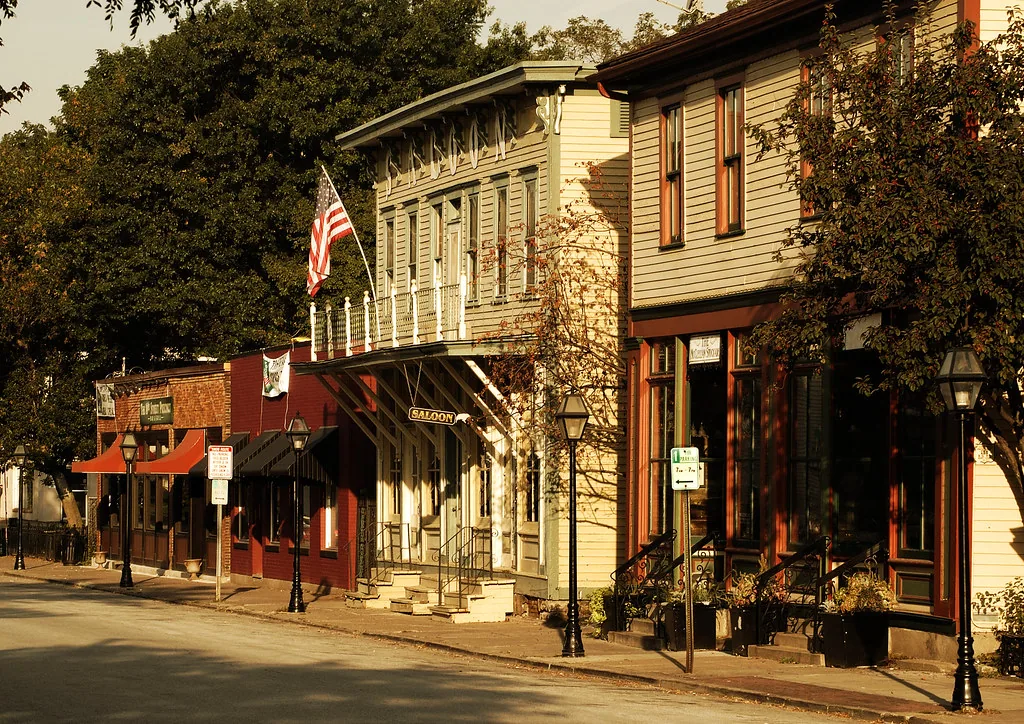
Along the Mississippi sits the Village of East Davenport, a National Register district of about 72 acres whose buildings mostly date between 1848 and 1910. In 1901 a fire took out 20 acres of it. That history is the reason masonry and wood-frame roofs of that age get a slow, careful inspection, and the reason open flame near them is never routine.
Downtown carries the same concern. The 1914 Hotel Blackhawk, the 1907 Davenport Hotel and the 1924 Union Station are historic masonry landmarks in a district where low-slope roofs dominate. On a job like that we walk the roof edge and look into the attic or the plenum before anyone opens a propane valve. A hotel roof over sleeping guests adds the reason to choose the quieter, cooler method. For work in the Village of East Davenport, that is the starting point.
Snow, Hail and Granules
A normal Quad Cities year brings over 36 inches of snow, a yard or more. A thick modified bitumen cap handles ice chunks, shovels and boots better than a thin sheet, which helps on roofs where HVAC technicians walk to the rooftop units all winter.
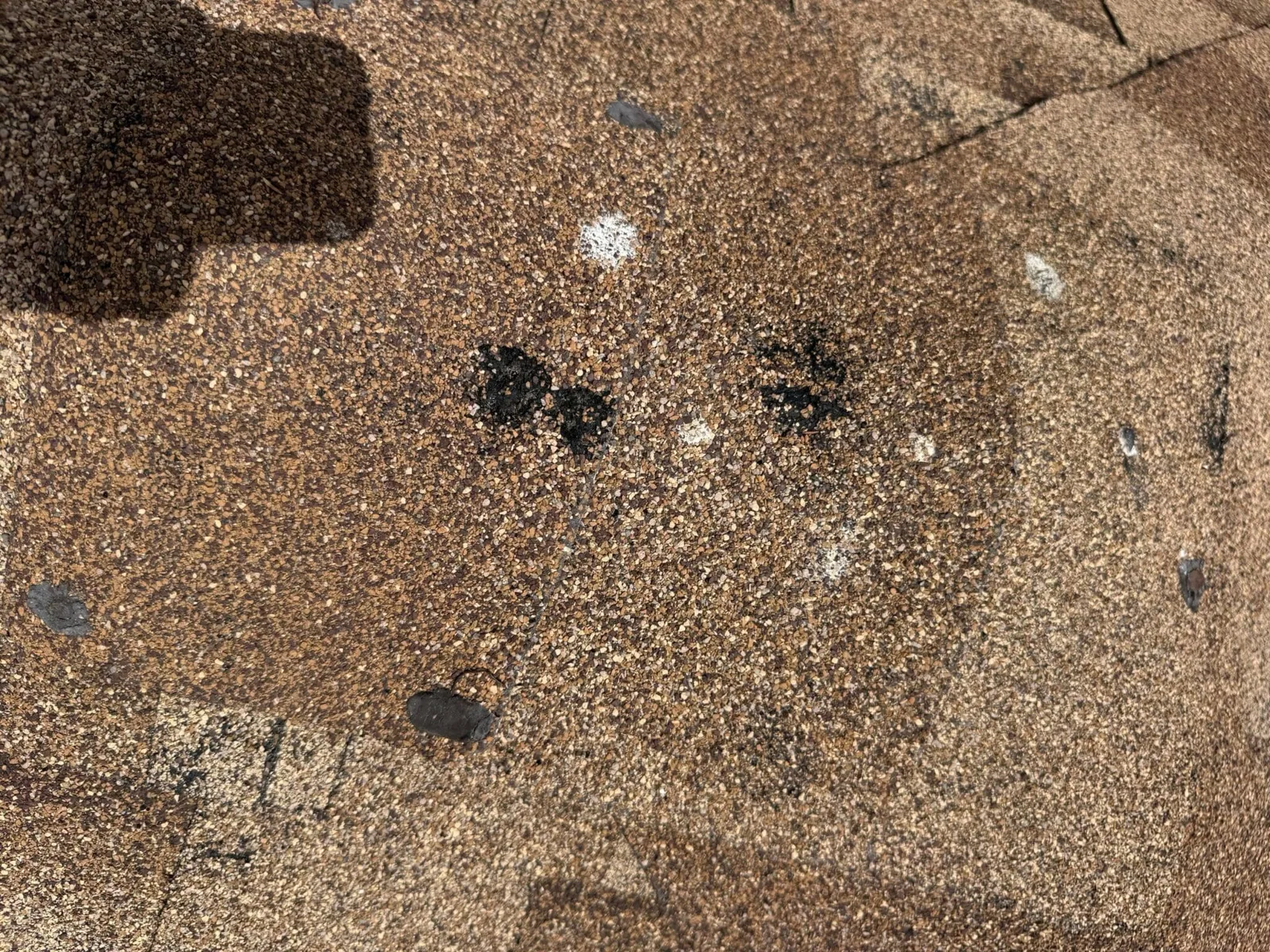
Hail is the quieter threat. Since 2004 the weather record has filled with hail, 133 reports near the city center, and baseball-size stones fell on April 4, 2023. A hit can knock granules off the cap sheet and leave raw asphalt for the sun to age. After a storm we check the drains and downspouts for loose granules, look for fractured spots in the mat, and run a moisture scan. The roof can look fine and still be spent. Photos and a written record from a hail damage repair give your insurer something to work from.
Blisters, Laps and Flashings
Moisture trapped between plies during installation turns to vapor in the sun and raises a blister. Small ones can be watched. A blister that has cracked open is a leak waiting for rain, and it gets cut out and patched.
Laps should show a thin bead of asphalt squeezed out along the edge. A dry lap can open in the first freeze. Flashings are the next trouble spot. Base flashings at walls and curbs take the movement, and the metal over them keeps water from running behind. A wind event like the July 15, 2024 derecho, with damaging winds of up to 100 mph across the region, tests edge metal and counterflashings before it tests the field. That storm also left trees and power lines down on Brady Street near 37th Street, and a falling limb is what gouges a cap sheet. We chase down any flashing failure and any gouge with the same weight we give the field.
Makers such as Soprema produce modified bitumen systems with matching flashing sheets, and we use the system details that go with the membrane.
A Cousin of the Built-Up Roof
Modified bitumen grew out of the layered asphalt tradition. A built-up roof stacks felts and asphalt, and a mod bit roof replaces much of that with factory-made sheets. If your current roof is built-up, many of its habits carry over, from how it ponds to where it blisters.
On a large flat-roof retail property such as NorthPark Mall on West Kimberly Road, torch rules matter most, because the stores below stay open. In an occupied building reroof, the tenant notice, the hot-work rules and the air-intake locations go on paper before the first roll is opened.
A dry modified-bitumen roof may qualify for acrylic roof coating restoration when the existing membrane and coating system are compatible.
Settle the Torch Question First
Send the roof plan, your insurer's rules on hot work if there are any, and a few photos of the cap sheet. We will meet the building engineer at the roof hatch and pick the method before bids are priced.
Questions About Modified Bitumen Roofing
Will torch work trigger our fire alarm or upset the building's insurance?
Call your carrier before the schedule is set. Many policies require a hot-work permit, a fire watch and extinguishers on the roof, and some carriers want notice of the dates. We bring the permit paperwork, we stand watch after the work stops, and when flame is a poor fit we price a cold-applied or self-adhered option so you can compare.
Is modified bitumen the better sheet for a roof with heavy foot traffic?
Thickness is the argument for it. A cap sheet with granules shrugs off boots and dropped tools better than a thin single-ply, so technicians walking to the rooftop units do less harm. That said, a good walk pad does more for any roof than the sheet choice. We lay pads on the routes your crews use and keep them away from the seams.
We have blisters on our roof. Do we repair them now or watch them?
Watch the small, unbroken ones and photograph them each spring so you can see growth. Cut out any blister that has cracked, any that sits on a seam and any over a drain. An open blister takes in water that wets the insulation underneath. We include a blister survey in our roof walks so the repairs come with a map.
How is a mod bit roof different from the built-up roof we have now?
They share a family tree. Both stack asphalt and reinforcing in layers, and both ask for good drainage and clean flashings. Mod bit uses factory-made sheets, so the thickness is more consistent and the install is faster. Moving from a built-up roof to a modified system is a normal upgrade, and we confirm the deck, insulation and drains first.
Can modified bitumen be repaired in the middle of winter?
Small repairs, yes, if the roof is dry and the material is warm enough to bond. Cold-applied adhesives and patches let us stop a leak in January, and we plan the larger work for a run of dry days. Cold stiffens the sheet, so we do not roll out new membrane in a hard freeze. A temporary dry-in buys time for the permanent job.
Talk to a Davenport Commercial Roofer
Send the work order, the building address or a few photos of what you are seeing. We will set a walkthrough, go up with whoever has the hatch key, and tell you plainly what the roof needs.