
Hail Damage Roof Repair in Davenport, IA
Hail damage roof repair in Davenport, IA: test squares, core cuts, bruised membranes and dented metal, documented for the claim and repaired properly.
A coffee cup of hailstones sits on the plant manager's desk, melting. He scooped them off the dock apron before the storm even finished. He wants to know what they did upstairs, and whether it is worth telling the insurance carrier.
The cup proves a storm happened. It does not prove anything about the roof. In Davenport, IA, we go up the same day or the next, walk the whole surface, and count the hits in measured test squares. Then we cut cores where the sheet looks bruised, since hail often damages what is under the membrane before the membrane shows it.
Davenport's Hail Record
Since 2004, hail reports within 10 miles of the Davenport city center have totaled 133. Two events stand out for the stone size: 2 inch hail on April 7, 2020, and baseball-size 2.5 inch hail on April 4, 2023. Both came in early spring, when roofs are coming off winter and membranes are still stiff from the cold.
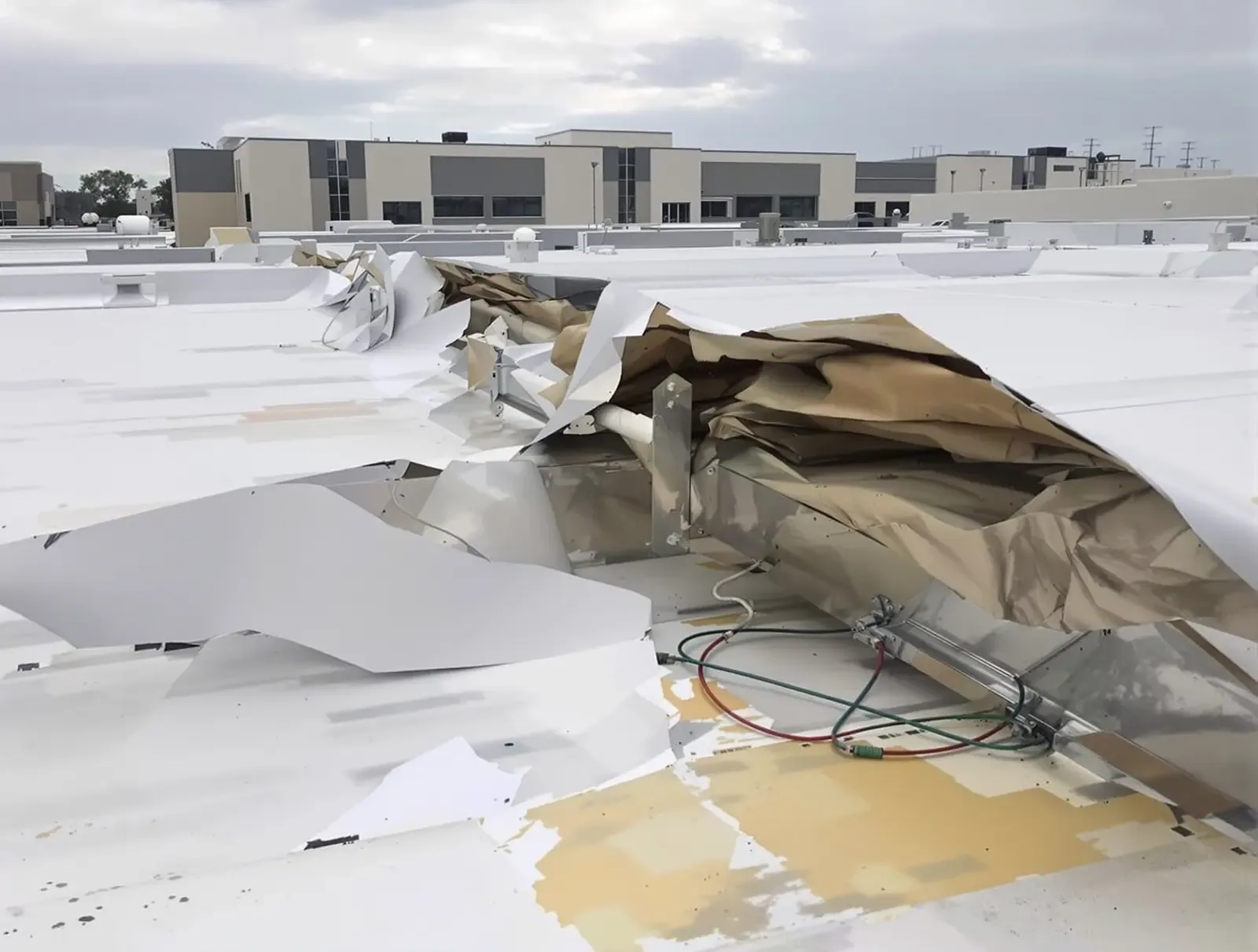
Stones of that size are large enough to fracture many roof systems, not only bruise them. A building that looks untouched from the lot may have a field of damage hidden in the pattern of the sheet. We treat every storm with stones in that range as a reason to get a roofer on the building, even if nothing is leaking.
What Hail Does to Each Roof Type
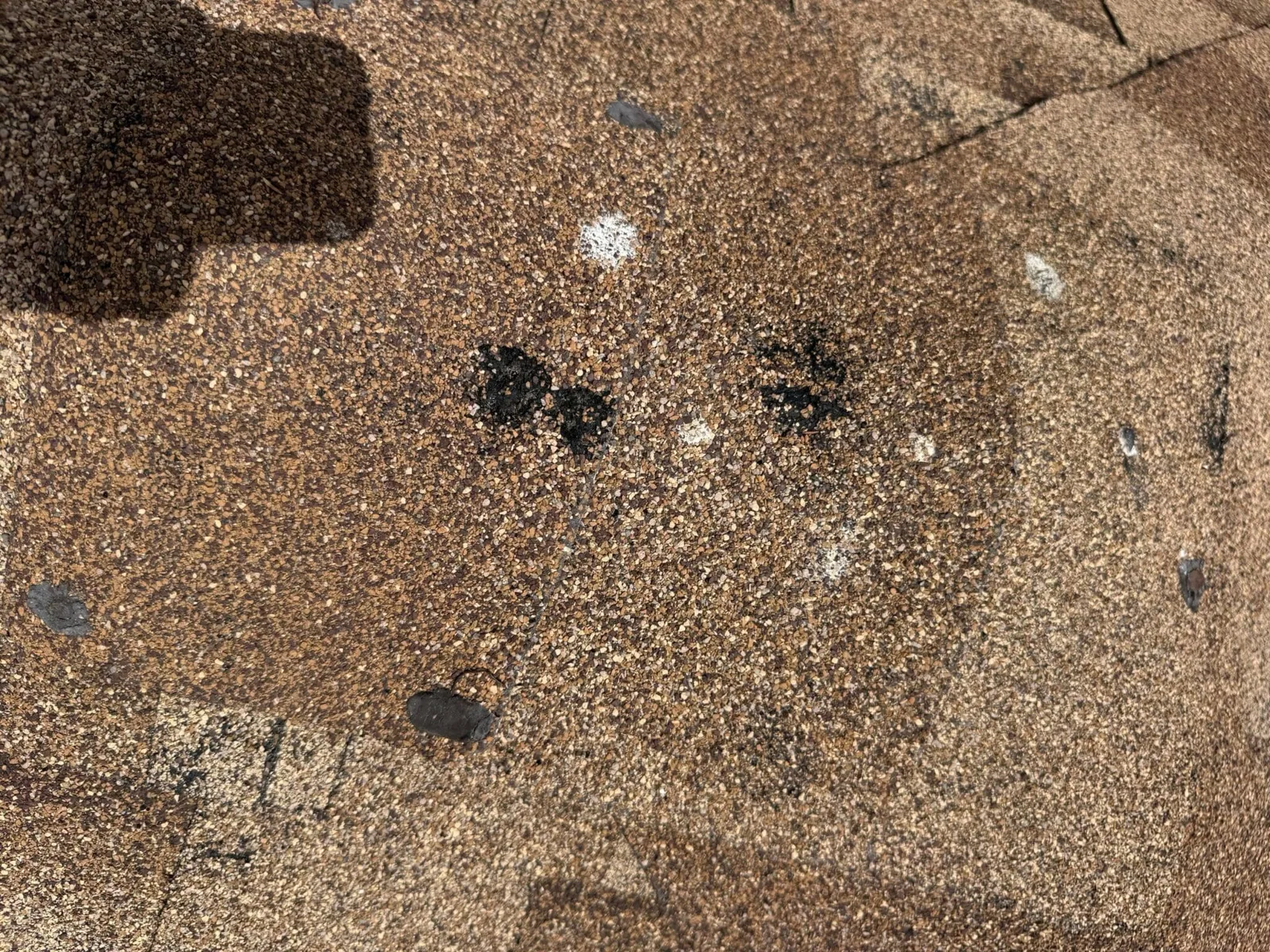
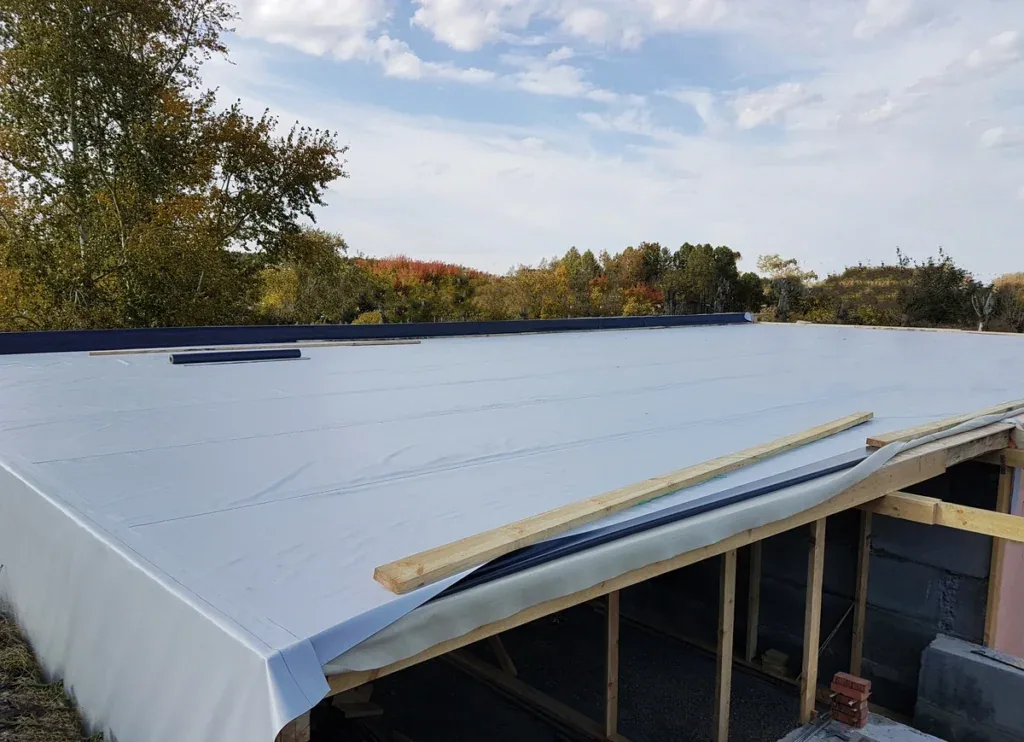
Each system takes the hit differently. Single-plies such as PVC and TPO can fracture over the reinforcing scrim, or crater where insulation under them is soft. EPDM dimples and, with a hard enough stone, splits. Modified bitumen and built-up surfaces lose granules and gravel, which exposes the asphalt below to sun. Coated roofs crack and flake at each impact.
Metal roofs dent. A dent in a panel may be cosmetic, or it may crack the paint and the sealant at a seam. We check both, because the owner's decision is not the same for each.
The pattern tells us which direction the storm came from. Hits clustered on one slope or one side of the units give us an orientation for the report.
Test Squares and Hit Counts
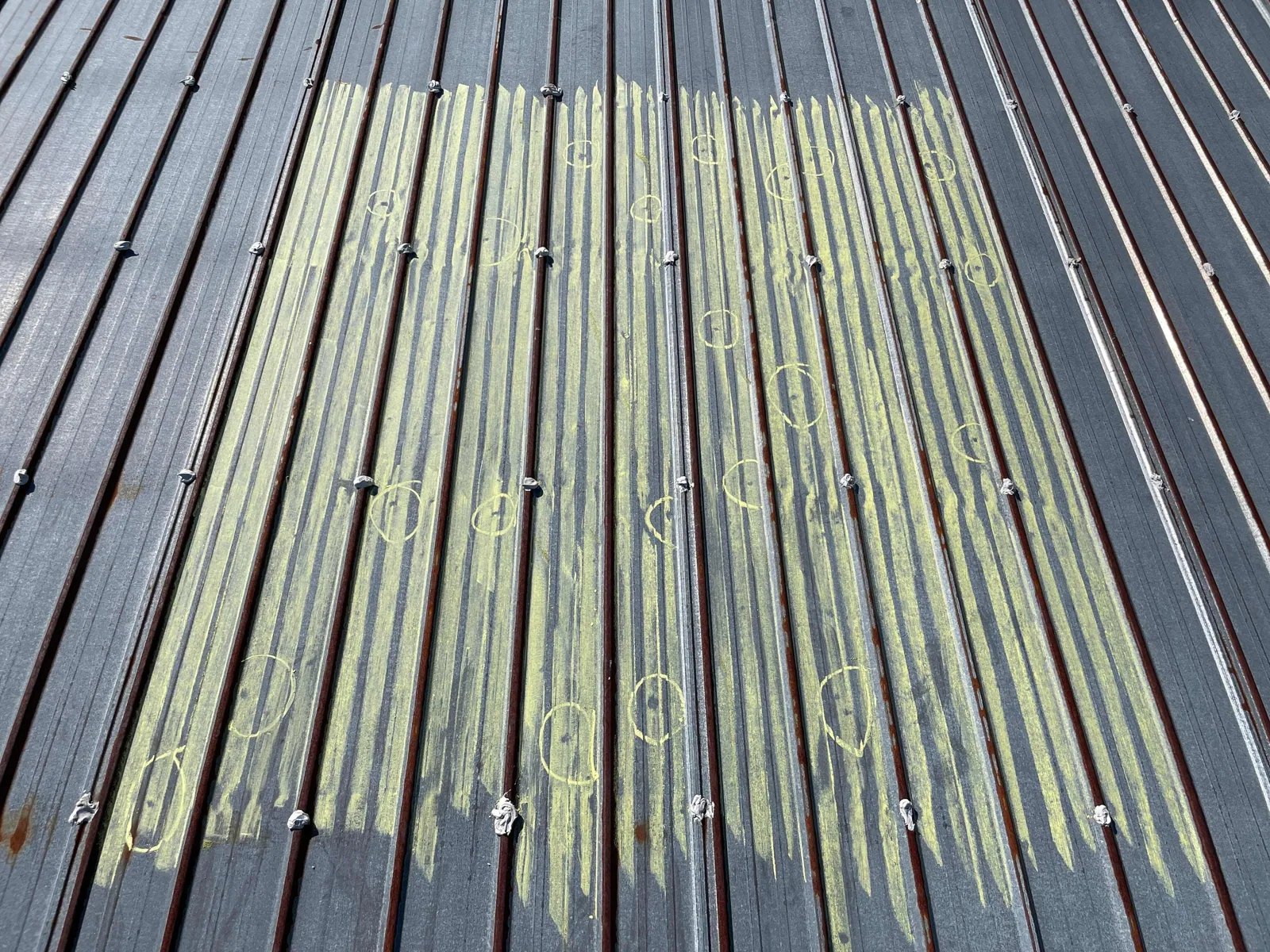
We measure a square on each section of the roof, mark it in chalk or paint, and count and photograph every strike inside it. Several squares across the roof, placed on different exposures, give a defensible read of the overall damage and show whether it is uniform or concentrated.
Then we make the distinction your carrier will make: hail damage versus wear. Blisters, UV cracks and old repairs are logged but separated. Each hit gets a size, a location and a condition label, such as fractured, bruised, granule loss or dent only.
The squares, the photos and the diagram make up the scope. The adjuster can check our counts against their own, which keeps the conversation about the roof.
Soft Spots Under the Sheet
The harm that costs the most is often below the membrane. A stone can crush the insulation board without breaking the surface, leaving a dish that holds water on the next rain. Over time the bruise opens and water follows.
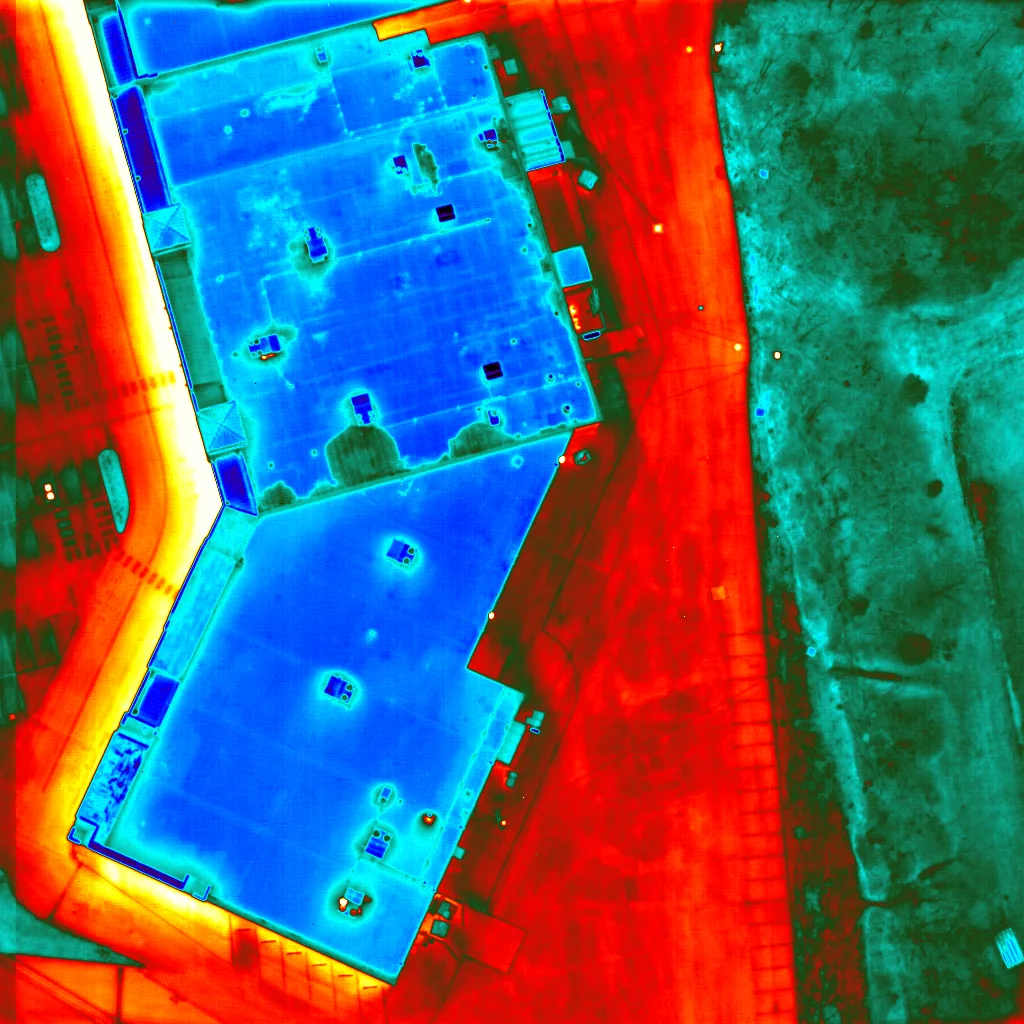
We find these with a core cut and a moisture meter, and a walk across the field to feel for soft spots. On larger roofs an infrared moisture survey shows where moisture has settled, which can be after a storm or a year later. A firmer substrate improves the odds, since cover board over the insulation gives a stone something harder to bounce off.
If the board is crushed or wet, the repair includes new board under the patch.
Wide Flat Roofs at NorthPark and in the Industrial Center
NorthPark Mall on Kimberly Road is a large flat-roof retail property on a single level, with two vacant large retail boxes. A flat roof like that takes hail across its whole surface, and the damage spreads across the field instead of collecting on one slope. Along the Kimberly Road corridor, any flat shopping center roof takes the same exposure to every storm.
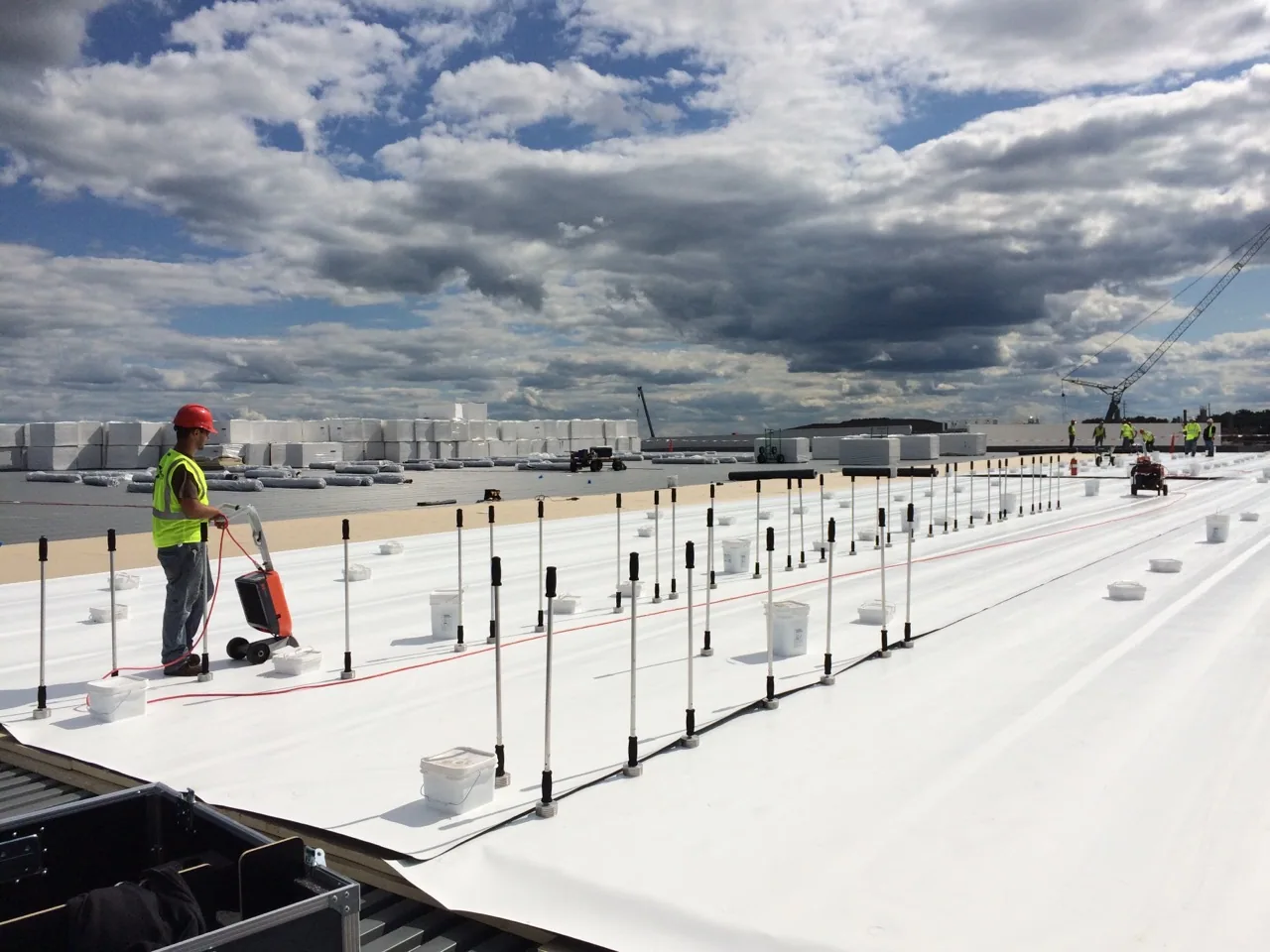
The industrial park includes large manufacturing and warehouse buildings. On an Eastern Iowa Industrial Center plant, we prioritize the sections over production first, then the dock side. We keep a separate hit map for each roof zone because metal screens, parapets and rooftop units can shield one area while leaving the next exposed. The closeout notes where the test squares were placed, what each showed and whether damaged insulation was removed with the surface repair. We also note which tenant spaces sit below each test area, so the repair sequence can protect inventory and keep the work route clear.
Report Timing and Records
Policies often set a window for reporting storm damage, and the window can be short. Read the policy and send the notice before the repair starts. Document first, repair second, and keep the file in that order when you pursue roof insurance claim assistance.
If the same event also brought gusts, the file should separate the two. The damage from wind sits at edges and corners, while hail marks the field. When a storm includes a funnel, the scope widens to tornado damage.
Send the Storm Date and a Walkthrough Time
Send us the building address, the date of the storm and any photos of stones or damage. We will walk the whole roof with you, count the hits and give you a written scope you can hand to your carrier.
Questions About Hail Damage Roof Repair
How large do hailstones have to be before a commercial roof is at risk?
Size is only part of the picture. Small stones can mark an older, brittle sheet, wind-driven stones hit harder than falling ones, and a firm substrate under the sheet makes a bruise more likely to crack. The 2 inch stones of April 2020 and the 2.5 inch stones of April 2023 were large enough to damage nearly any membrane. When stones reach golf-ball size or more, get the roof checked.
We have had no leaks since the April storm. Do we still need someone on the roof?
Yes, and soon. Hail often does its harm quietly. A fractured scrim or crushed insulation does not leak the first week. It shows up after a few freeze and thaw cycles, or when the next storm finds the weak spot. An early walk with test squares costs far less than a claim contested later because the damage could not be tied to the event.
Our roof is built-up with a gravel surface. Can hail even hurt that?
It can, though the damage looks different. Gravel protects the asphalt well against small stones. Large stones displace gravel, bruise the felts and fracture the plies underneath, mainly where the gravel is thin. We sweep a section clear and look at the membrane, then compare it to an undisturbed area. Blisters that predate the storm are logged separately so they are not mistaken for hail.
The rooftop units and the metal flashing are dented. Is that only cosmetic?
Sometimes. A shallow dent in a housing is cosmetic, and your carrier may treat it that way. But dents that crack paint, open a seam or bend a drip edge allow water in. Condenser fins bent by hail also cut cooling efficiency. We separate cosmetic dents from functional damage in the report and let you and the adjuster agree on which is.
How long do we have to report hail damage to the insurance carrier?
Check the policy first, because the notice period is set there, and it varies from policy to policy. Do not wait for the leak. Photos, dates and the roof scope should be in the file before anything is repaired. We can compile that package quickly after our walk, so the claim does not depend on memory.


Talk to a Davenport Commercial Roofer
Send the work order, the building address or a few photos of what you are seeing. We will set a walkthrough, go up with whoever has the hatch key, and tell you plainly what the roof needs.