
Shopping Center and Strip Retail Roofing in Davenport, IA
Roof repair, recover and replacement for strip retail and shopping centers in Davenport, IA, with tenant notice, night work and one roof record per row.
A property manager forwards three emails before nine in the morning. The nail salon says water on the counter. The vacuum shop two doors down says nothing, which is worse. The third unit is vacant and nobody has been in it since February.
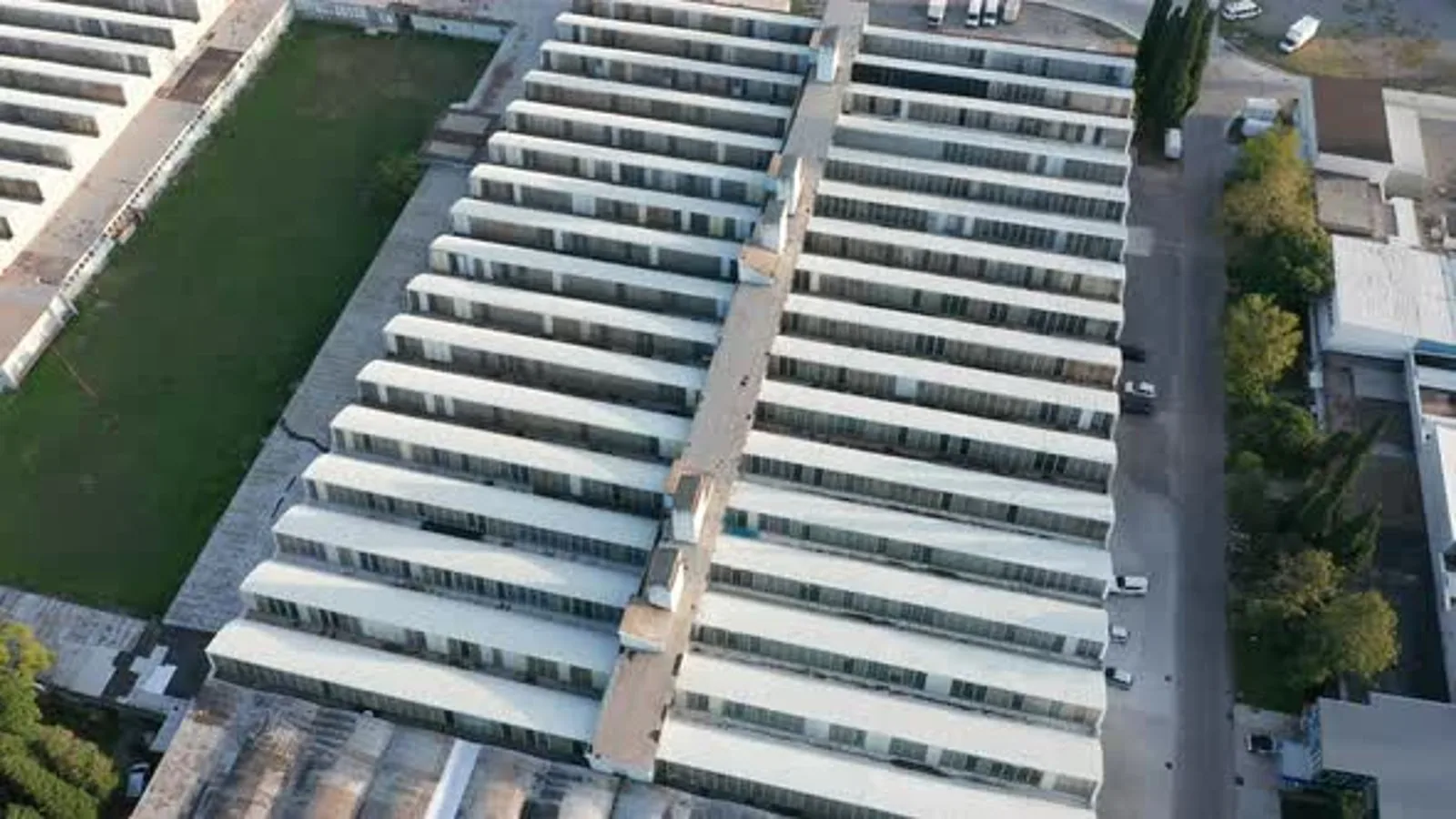
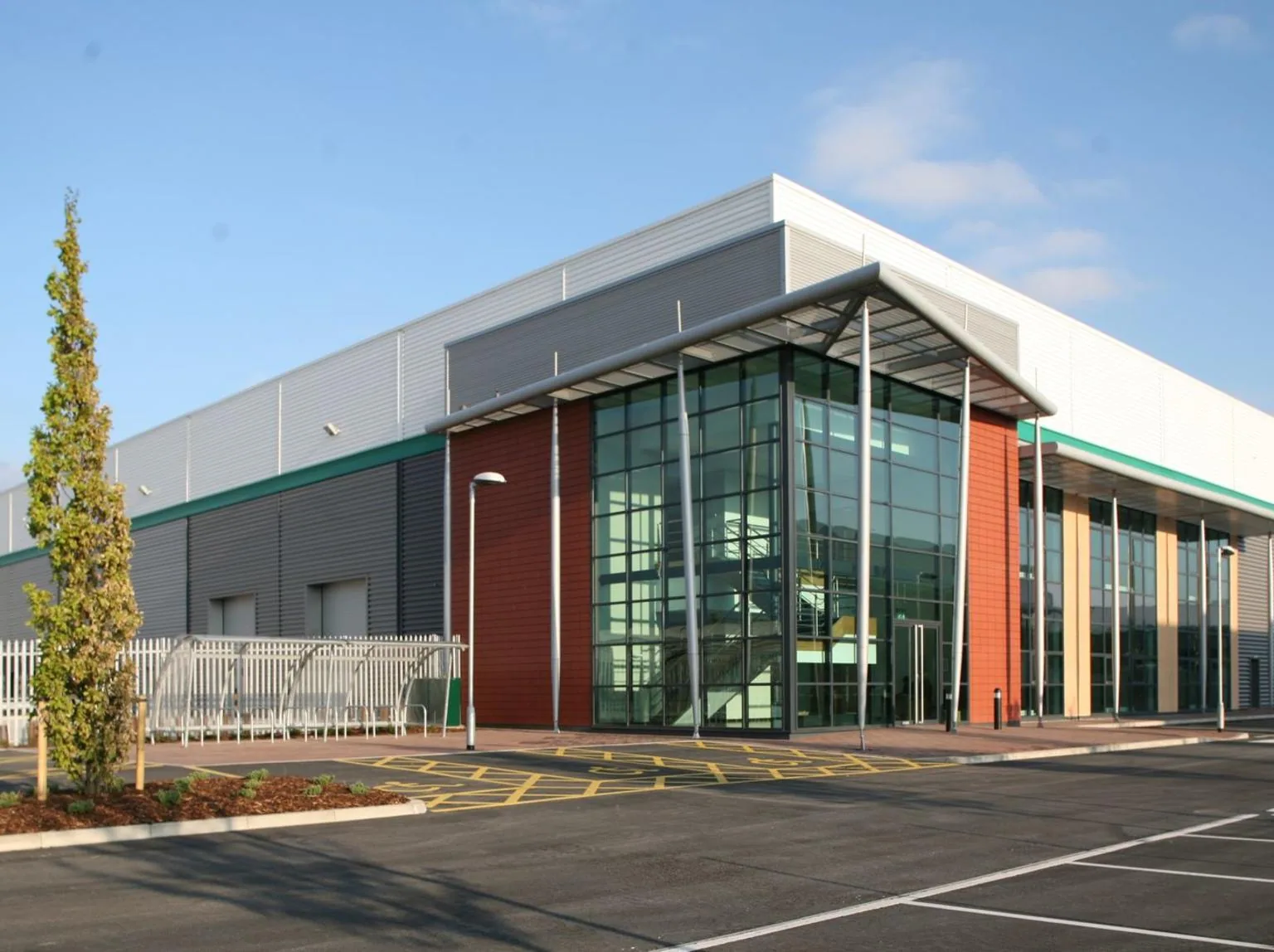
Strip retail in Davenport, IA fails in a row, not a spot. One roof runs over many leases, so a leak in one bay raises a building-wide question. We start with a walkthrough from the front parapet to the back dock, tenant by tenant, and write down what each space sits under. Then we tell you whether the problem is a flashing, a unit curb or the membrane itself.
One Roof, Many Leases
The roof belongs to the landlord, and the water lands on the tenant. That split is where most strip-center disputes start. A tenant sees a stain and calls the owner. The owner calls the roofer. The roofer finds a rooftop unit that the tenant installed, serviced by a contractor the owner never met.
We sort leaks by source before we sort them by unit. Water that enters at a shared parapet is the landlord's problem. Water that enters at a tenant's curb may be a lease problem. Either way, the repair gets documented with photos that show where the water came in, so the property manager can answer both the tenant and the owner from one record.
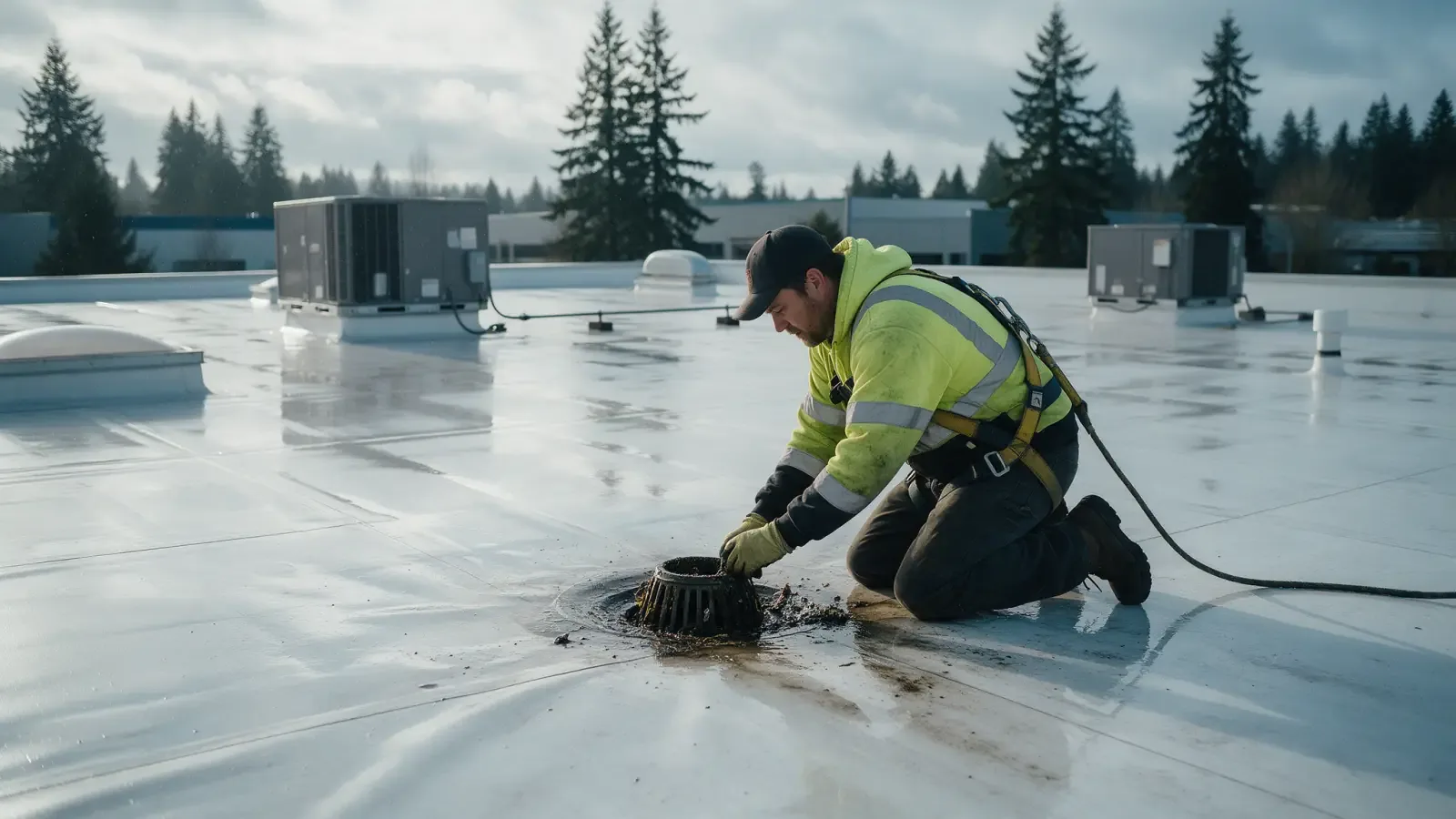
Water under the membrane in one bay can travel along the insulation and show up three units down. That is why a commercial roof leak repair in a row of shops often needs more than the visible spot, and why we check for wet insulation before we promise a repair will hold.
Rooftop Units Added Tenant by Tenant
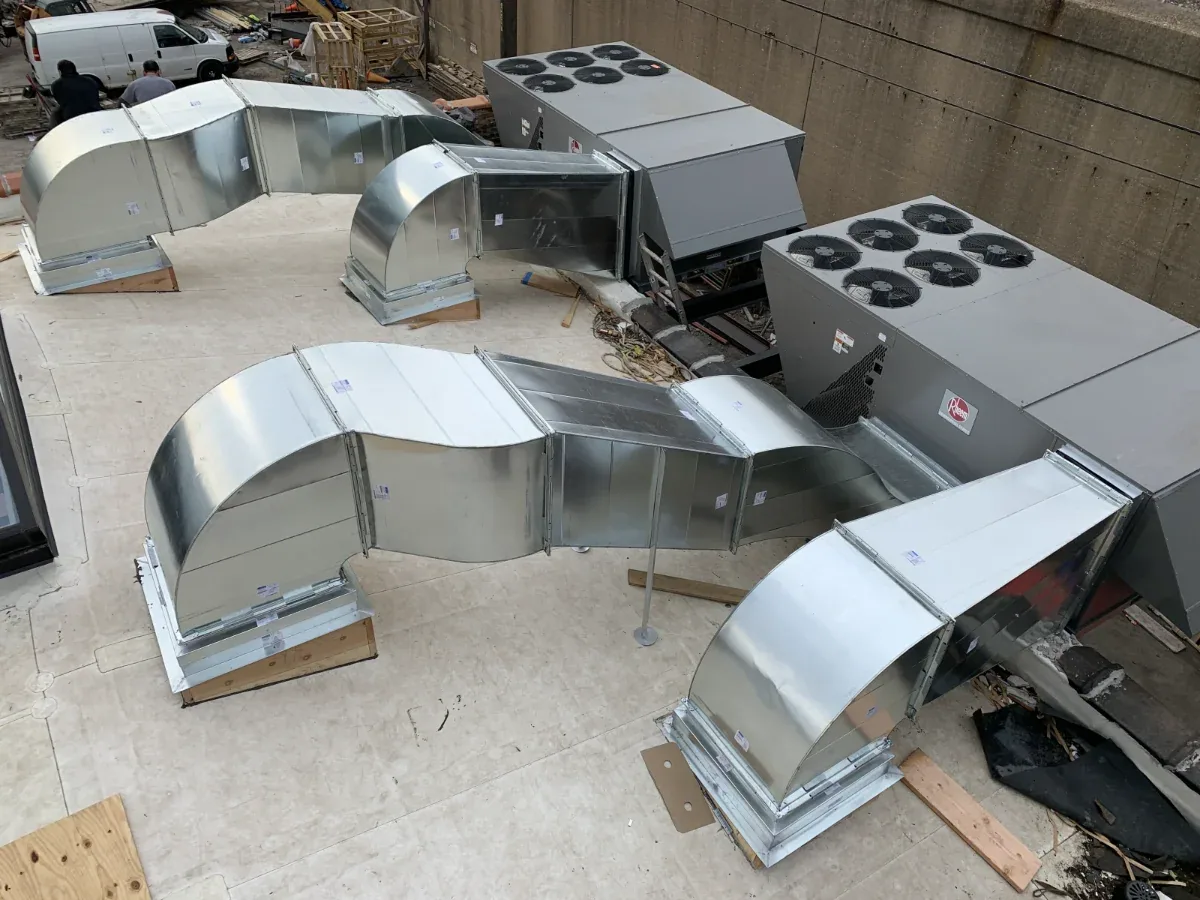
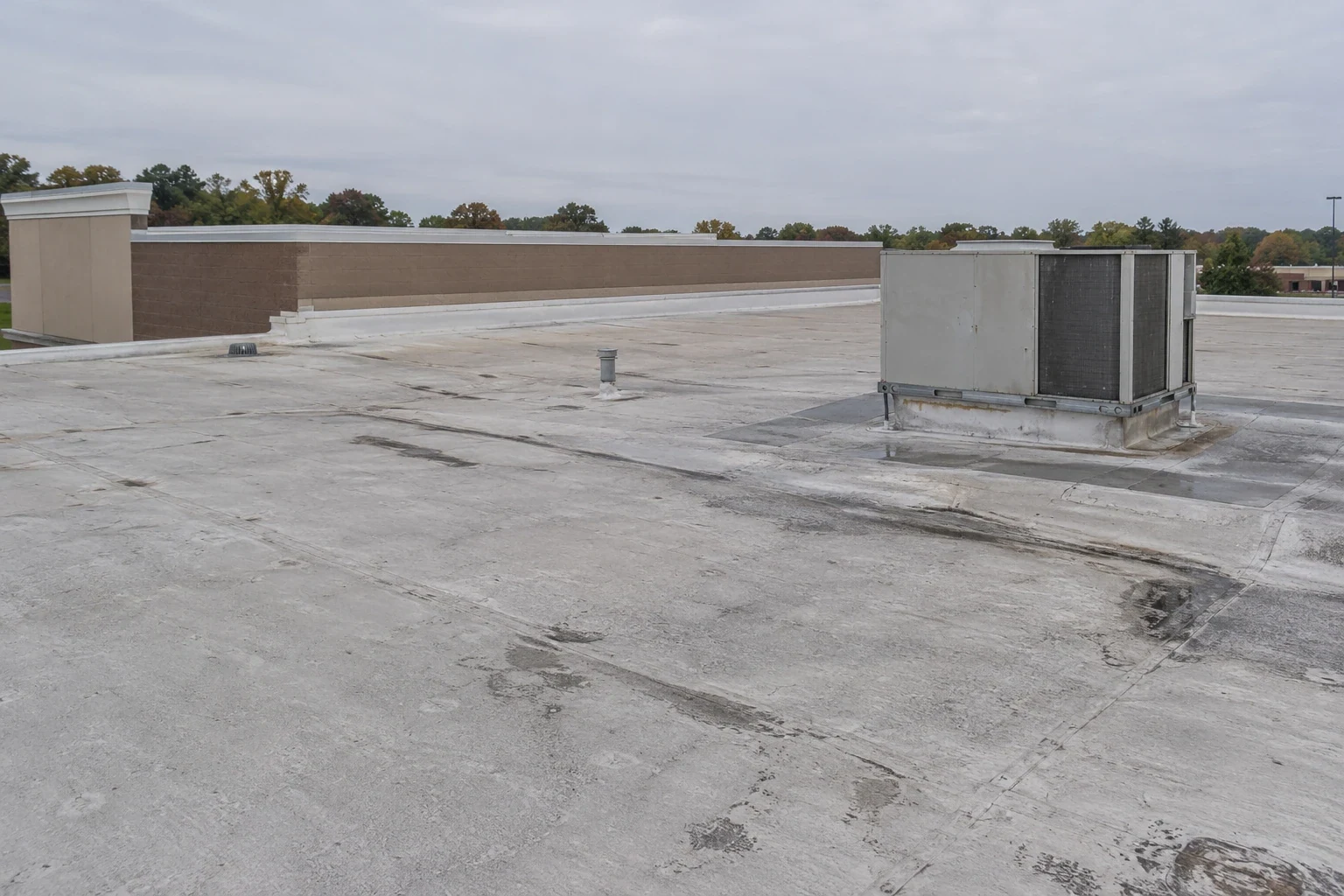
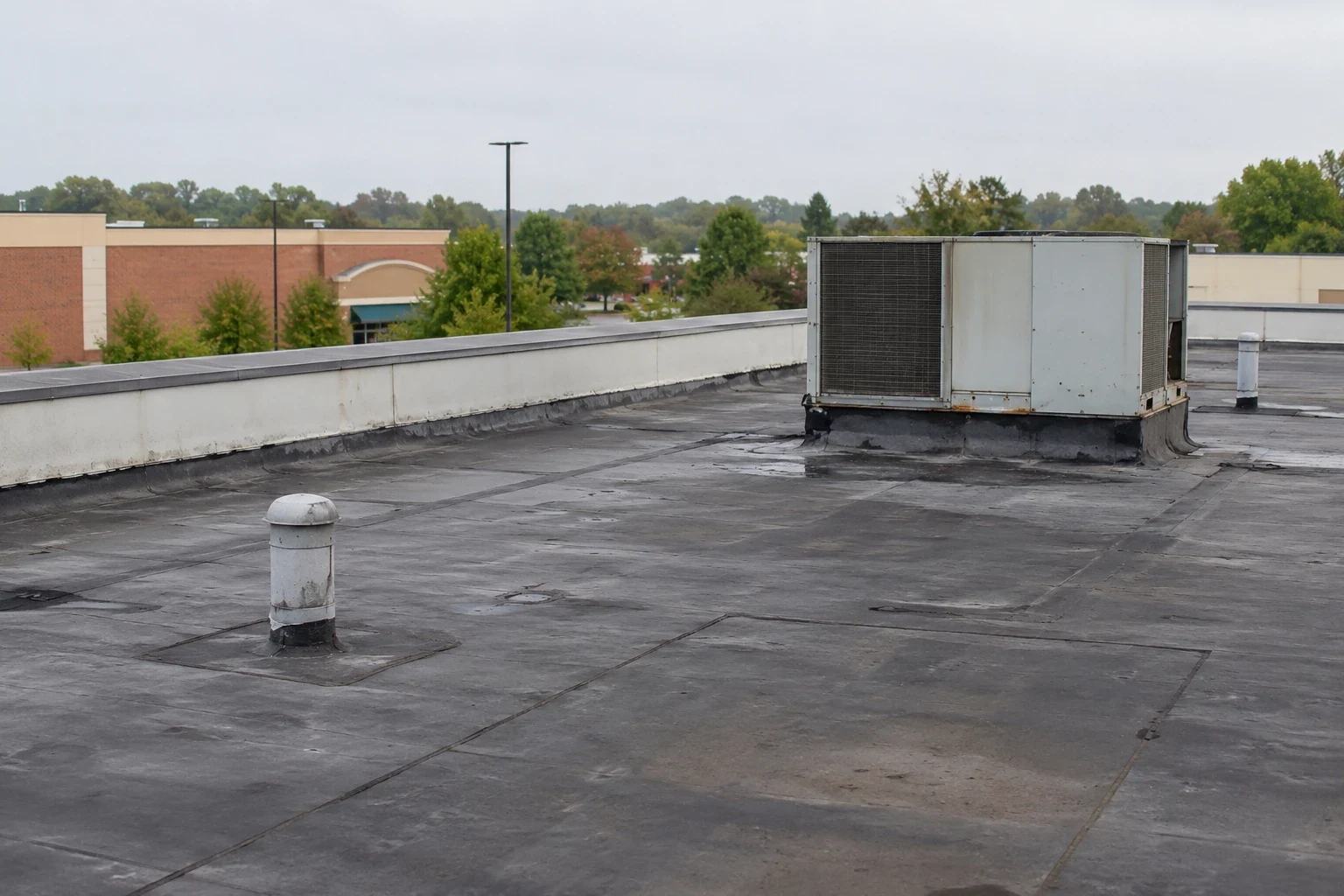
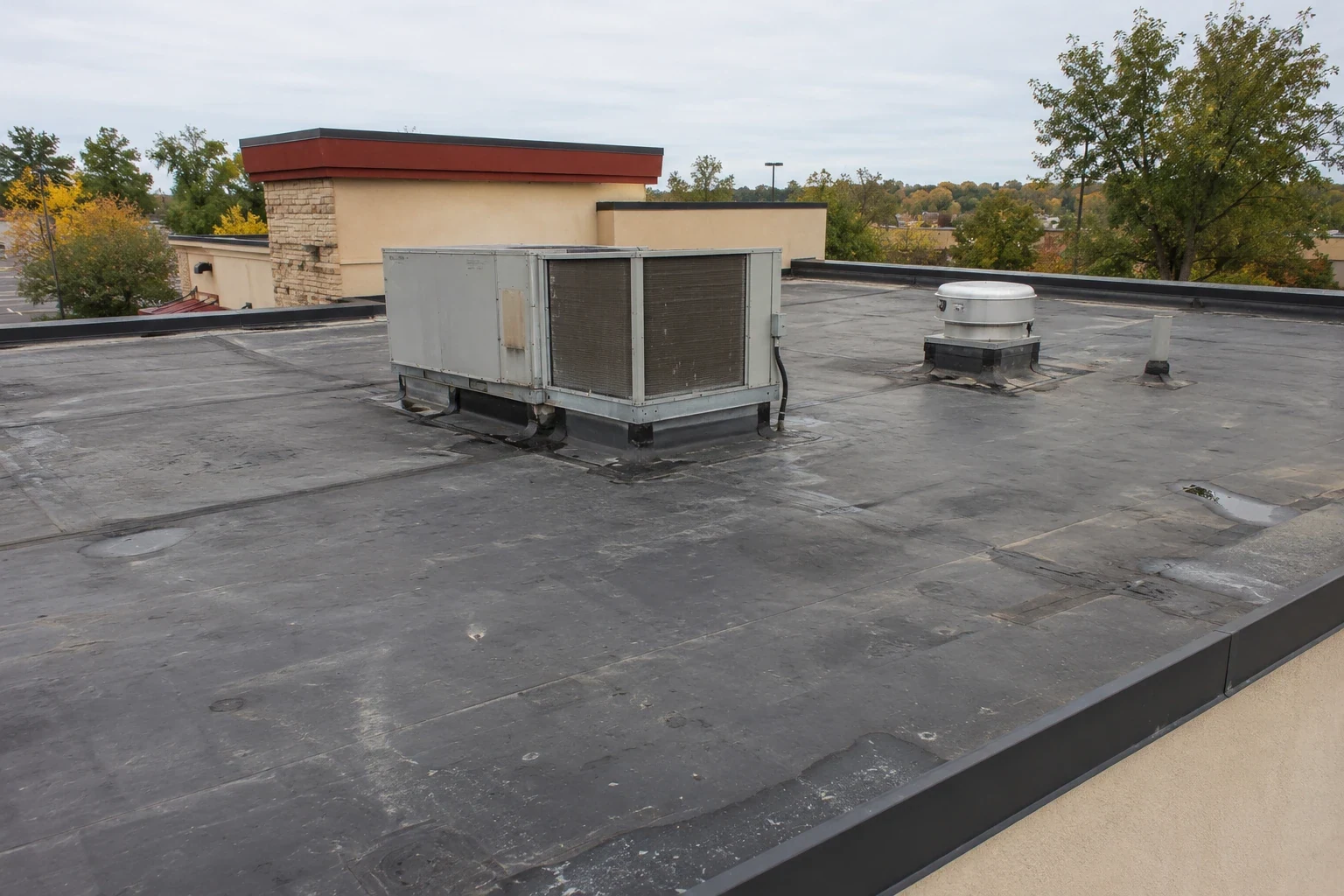
Few strip centers keep their original mechanical plan. A restaurant moves in and adds exhaust. A clinic replaces the air handler. A telecom company mounts an antenna. Each addition cuts the membrane or sets a new weight on it, and each contractor leaves a little behind: loose screws, mismatched sealant, a curb with no flashing at one corner.
- Unit curbs without proper counterflashing, and condensate lines that spill onto the membrane.
- Gas lines and conduit running across the field with no pads under them.
- Abandoned units and capped pipes left in place with old sealant.
- Foot traffic paths worn into the membrane between the access ladder and the nearest unit.
We map every penetration and mark who owns it. If it is abandoned, we recommend removal. If it is active, we reflash it or ask the tenant's contractor to correct it. The same sequence applies at every rooftop equipment curb and support, and it keeps years of small patches from becoming the roof's biggest problem.
Empty Bays and Deferred Roofs
Kimberly Road (U.S. 6) is a heavily developed commercial arterial, about 6.1 miles through central Davenport, lined with retail, apartments and offices. NorthPark Mall, a 1,074,000 square foot enclosed mall on Kimberly Road, has two vacant major-tenant spaces. Healthy tenants beside empty space is common on a retail corridor, and the same holds for a big-box store that goes dark.
Empty space is where roof trouble hides. Nobody is inside to see a stain. The HVAC is off, so condensation changes. A small leak runs for weeks, and the first sign is mold on ceiling tile you were about to hand to a new tenant. We recommend a roof walk for every vacant bay, with a quick look inside at the ceiling grid, before the next lease is signed.
A roof survey also gives a lender or buyer a real condition rating. That helps real estate investors who hold retail property.
Parapets, Canopies and Sign Bands
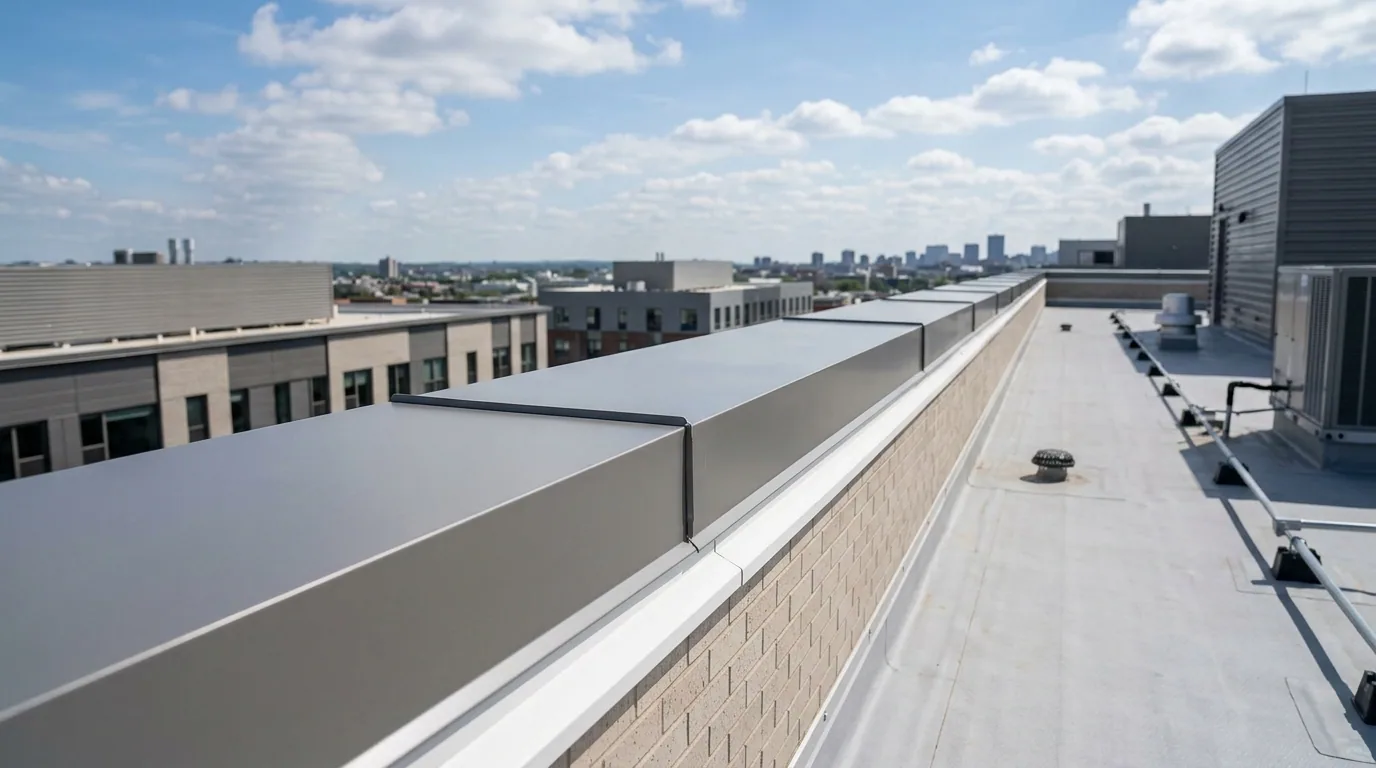
Retail roofs carry more edge detail than most. The parapet in front hides the roof from the parking lot, the canopy over the sidewalk sheds snow, and the sign band holds a row of mounts that go straight through the wall. Every bolt is a leak path if the sealant dries out.
Look at the front wall during a heavy rain and you can often see where water gets in: a coping joint that has opened, a sign bracket whose caulk has cracked, a scupper that runs into a sidewalk. We check edge metal and coping early, because a failed edge lets wind get under the membrane at the corners, where uplift is strongest.
Wind matters here. A derecho on July 15, 2024 pushed damaging winds as high as 100 mph through the area. Edge metal that was tight in June can be loose in July, and the roof under it keeps leaking until someone looks.
Business Hours and Tenant Notice
Tenants run on their own schedules. A salon wants the loud work done before opening. A restaurant wants nothing overhead during lunch. A pharmacy wants no odors near its intake. We send a written tenant notice before the work starts, with dates, hours, what to expect and a name to call.
Parking is part of the job. We stage materials in the least-used corner, keep fire lanes clear and block off only the spaces needed for hoisting. On a long tear-off we split the roof into sections and close each one the same day, so a storm does not catch an open deck.
A grocery store, a pharmacy and a restaurant each have rules about food and air. We talk to their managers first and build the schedule from those limits.
Where the 2025 Tornado Ended
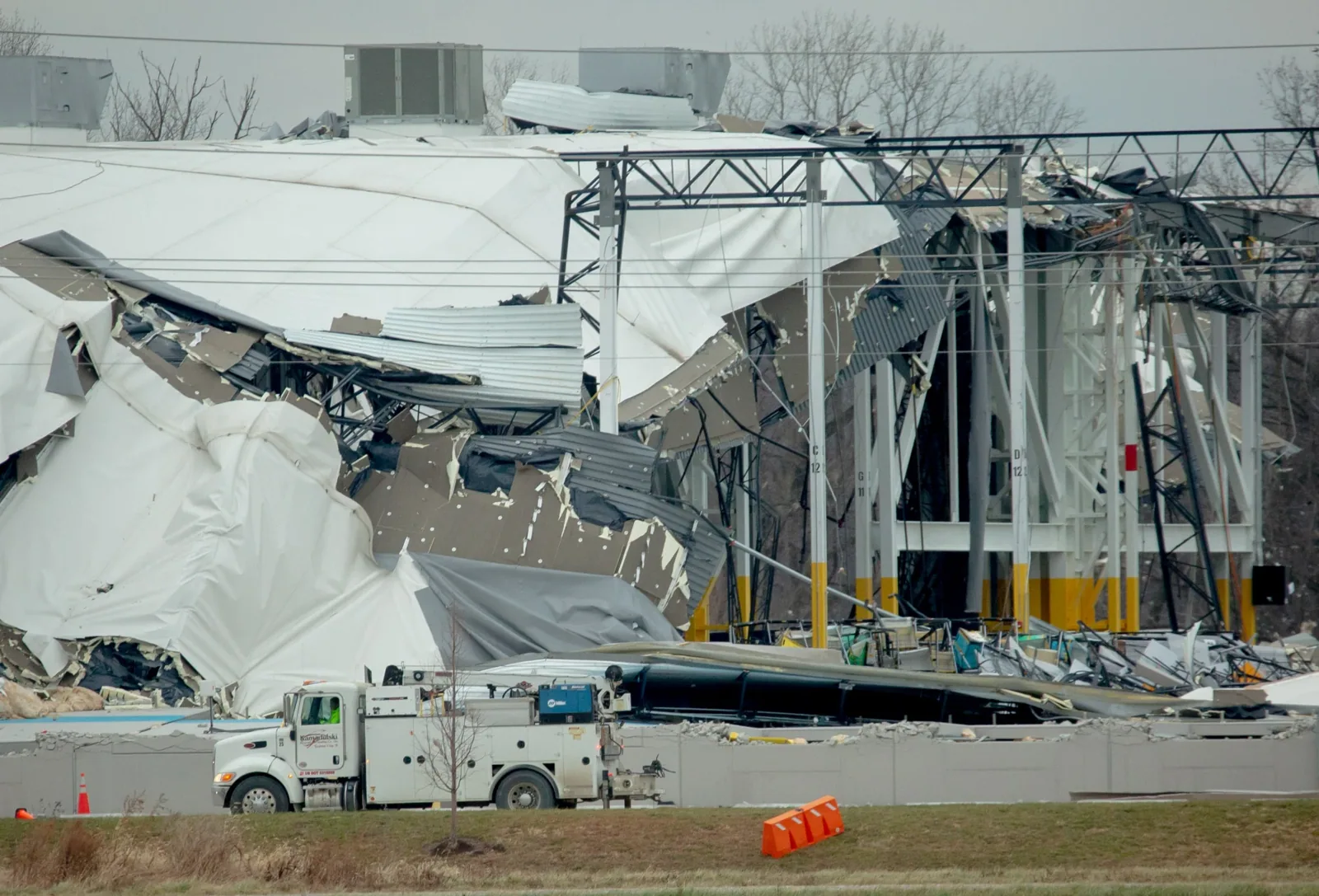
The EF-2 tornado of July 11, 2025 tracked seven miles across Davenport, packing an estimated 120 mph, and ended close to Kimberly Road and Fairmount Street. The damage follows a narrow and uneven path.
After a storm like that, we look at the front and rear edges first, then the units, then the field. Flying debris punctures membrane, and wind lifts flashing off parapets. If the damage is limited, tornado damage repair may be all that is needed. If the membrane is torn or the insulation is wet, the roof moves into replacement. Either way, photos taken the same day make a claim simpler. Retail strips along Kimberly Road and on Brady Street sit in the same weather, .
Send the Tenant List or Set a Walkthrough
Send us the site plan, the tenant list and the work order that started the call. We will set a walkthrough with your property manager, go up from front to back and give you a plain recommendation for the whole row.
Questions About Shopping Center and Strip Retail Roofing
Who pays when a tenant's rooftop unit causes the leak?
The lease answers that, but our report helps settle it. We photograph the curb, the flashing and the damage, and note whose contractor last touched the unit. With that record the property manager can bill the tenant, or ask the tenant's HVAC firm to correct the work, without arguing about what happened.
We have twelve leases and a roof near the end of its life. How do we keep the stores open?
Work in sections and close each one in the same day. Tenants get notice with dates and hours, loud work is scheduled before opening, and any store with food or air rules gets a conversation first. A full replacement on a strip usually runs in phases from one end to the other, so only a few bays are affected at once.
Is it worth coating a strip center roof instead of replacing it?
Sometimes, if the insulation is dry and the membrane is sound. A moisture survey tells you that. If the roof passes, a silicone or acrylic coating can extend its life and cost less than a new roof. If the survey finds wet insulation, a coating only hides the problem, and you will pay for the real fix later anyway.
A bay has been vacant since winter. Do we need a roof check before leasing it?
Yes. Empty bays are where slow leaks go unnoticed. We walk the roof over the space, then ask your property manager to look at the ceiling grid, the insulation and the walls under the nearest drain or unit. A new tenant moving in under a wet ceiling becomes a lease dispute in the first month.
Can you fix a roof at night so customers never see the crew?
Many repairs and some tear-off steps can be done after close. Noise limits, lighting and neighbor concerns shape what is practical, and some materials need daylight and dry weather to cure. We plan the loud, messy steps for off hours and keep the daytime work quiet and tidy.
Talk to a Davenport Commercial Roofer
Send the work order, the building address or a few photos of what you are seeing. We will set a walkthrough, go up with whoever has the hatch key, and tell you plainly what the roof needs.