
Restaurant Roofing in Davenport, IA
Roof repair, grease-resistant membranes and reroofing for restaurants in Davenport, IA, scheduled between prep and service so the kitchen stays open.
Friday at four, the kitchen manager spots a drip above the pass and does the math on the dinner rush. Two hours to doors. A pan can catch it for now, but a pan does not tell anyone where the water is coming in.
Restaurant roofs in Davenport, IA take a beating that office roofs never see. Hood fans throw grease, make-up air units pump heat, and the walk-in condensers run all year. The roof is small compared with a warehouse, but it carries a lot of penetrations for its size. We go up with the manager, look at the fan discharge first and trace the leak backward from the kitchen ceiling.
Where the Grease Lands
Every exhaust fan on a restaurant roof drops a little of what it pulls out. Over months, the fat collects on the membrane downwind of the fan, then bakes in the summer sun. A cheap, thin membrane does not hold up well to that. It swells, softens and tears at the seams, and the damage spreads along the path of the wind.
The first fix is containment. A grease catch on the fan, a clean-out schedule from the hood cleaner and a walk pad where the technician stands all slow the spread. The second fix is material. Where grease reaches the field, a membrane made to resist fats and oils lasts far longer than one that is not. A PVC roof is the usual choice near kitchen exhaust, with the rest of the roof left alone if it is sound.
Hood Fans, Make-Up Air and Walk-In Condensers
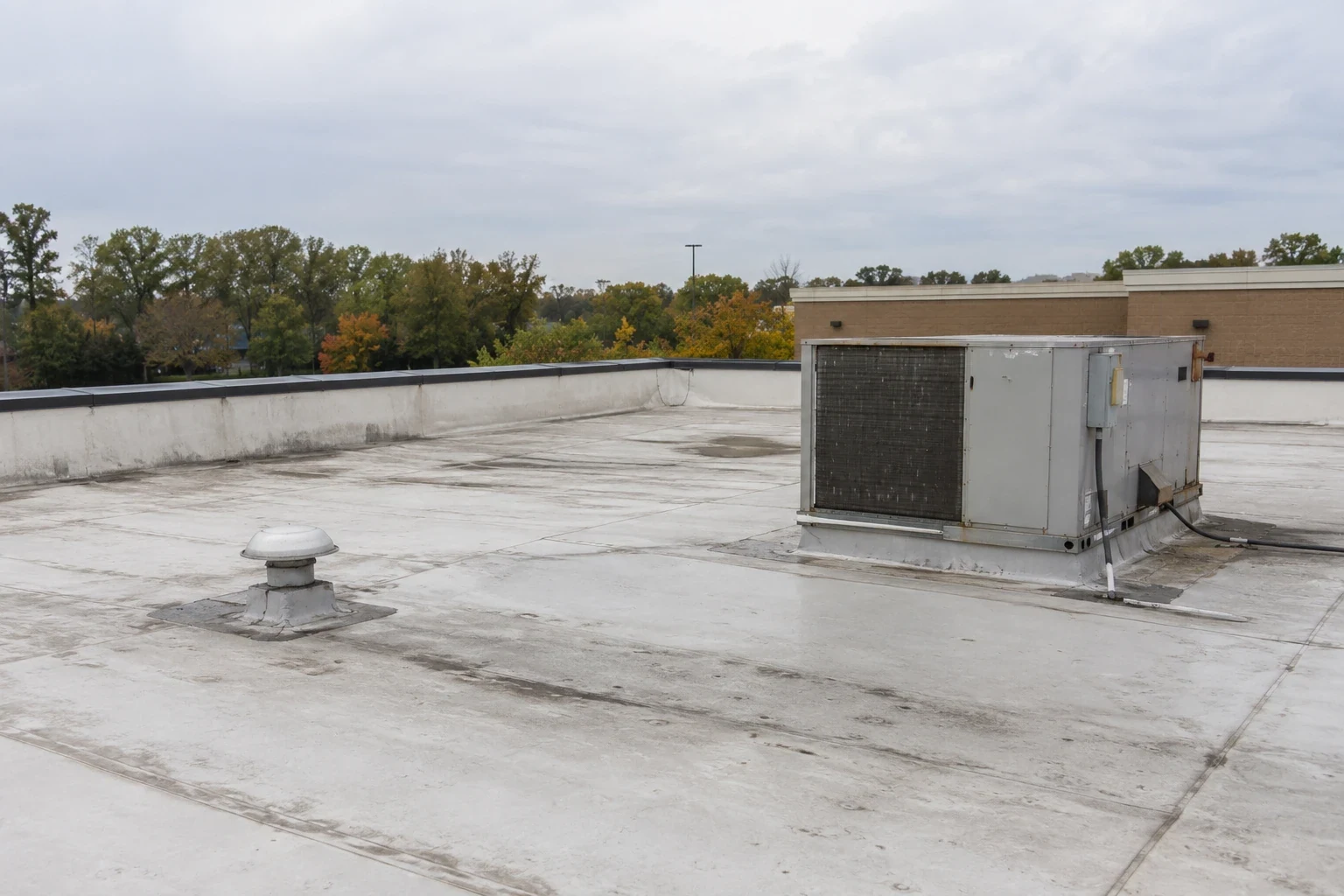
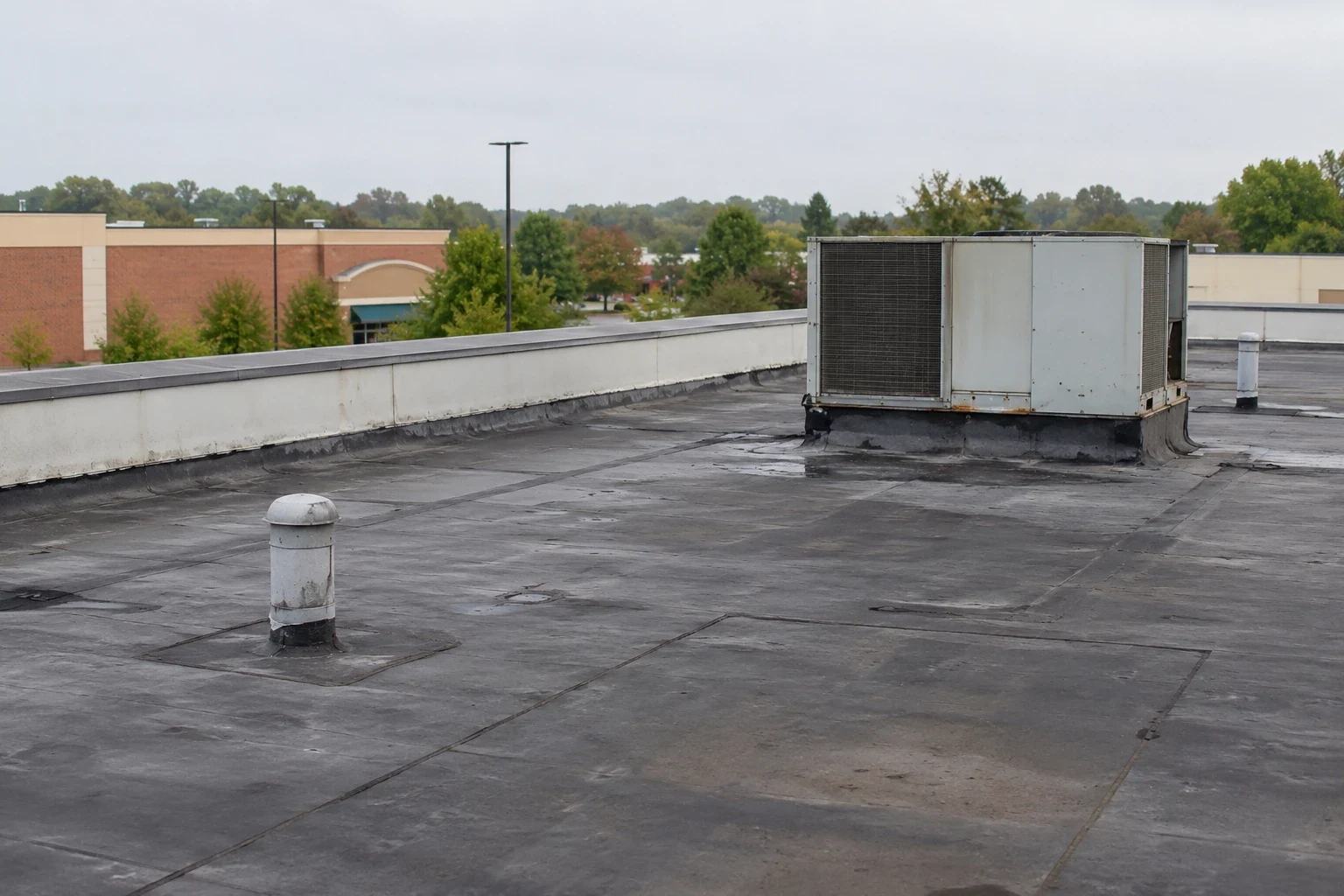
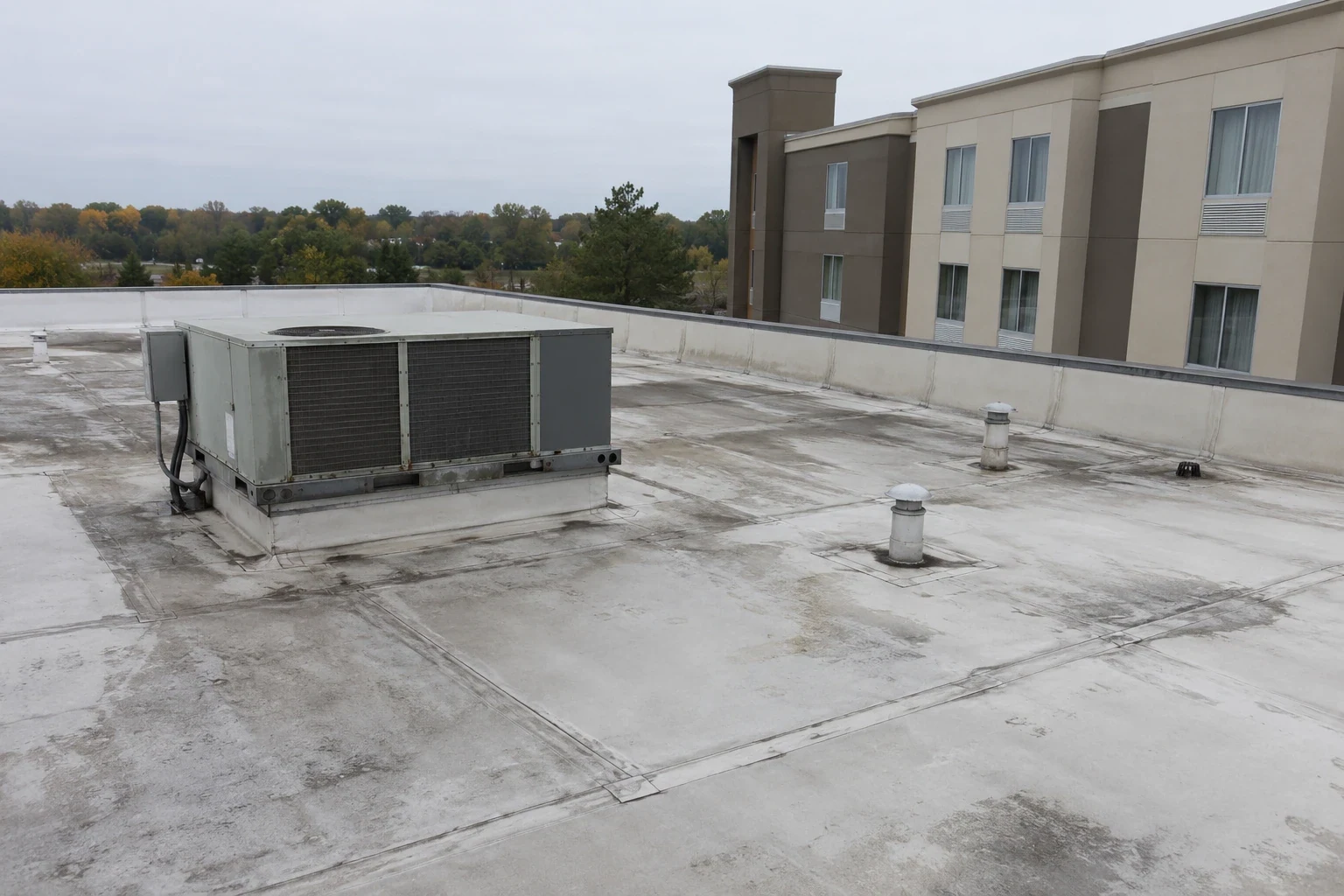
A restaurant roof holds a short list of equipment, and each item has its own way of leaking. The exhaust fan has a hinged base that wears out. The make-up air unit sits on a curb that was flashed once, years ago. The walk-in condenser has refrigerant lines that run across the membrane on blocks, and the blocks have started to cut the surface.
- Exhaust fan bases: hinge wear, gasket condition and the sealant at the curb.
- Make-up air and rooftop units: curb height, panel screws and drain lines.
- Walk-in condensers: line blocks, rail feet and electrical conduit.
- Hood exhaust ducts: penetration flashing and any sag in the run.
The 2021 International Fire Code, which Davenport has adopted, covers hood and duct clearances, so we do not cut new openings or add hot work without checking with the kitchen first.
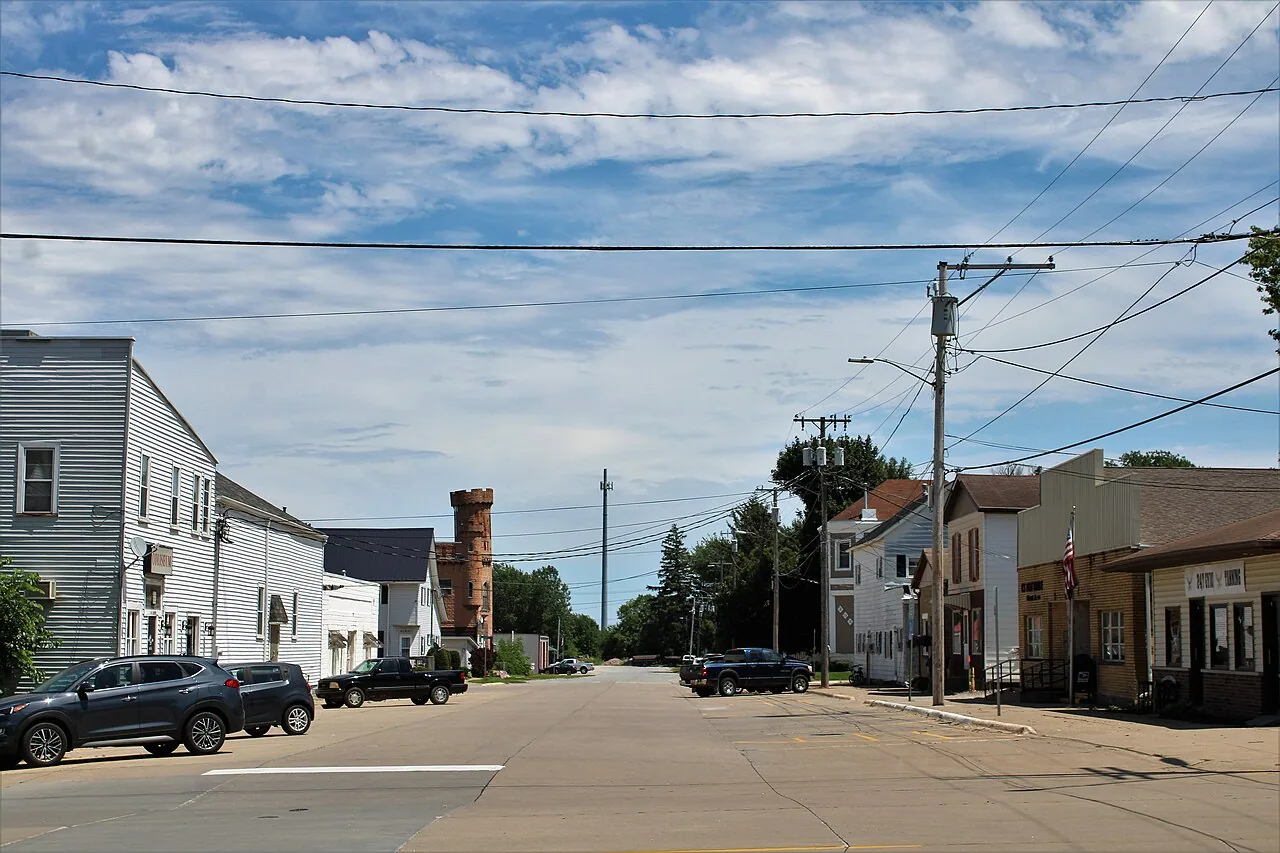
Historic Shops in the Village of East Davenport
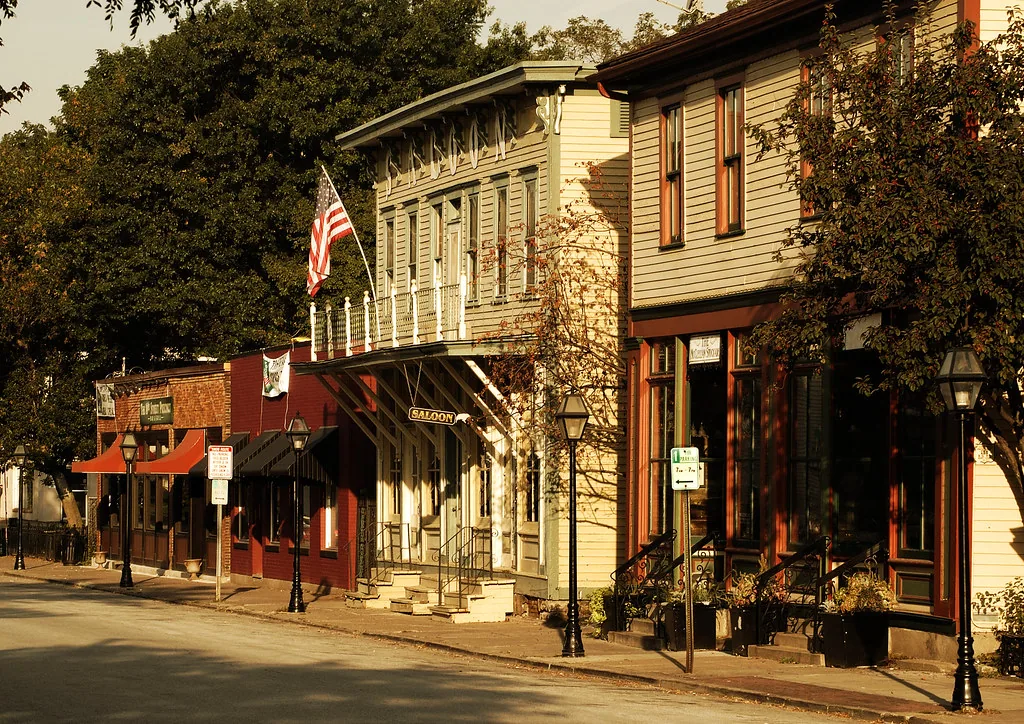
In southeast Davenport, on the Mississippi, the Village of East Davenport is a National Register historic district of 72 acres, with buildings dating mostly from 1848 to 1910. Its historic structures now house specialty shops, restaurants and theaters. A fire in 1901 burned through 20 acres of the village, a loss of $1.25 million, and the older masonry and wood-frame roofs in the village are worth a slow, careful look.
An old building asks different questions than a pad-site restaurant does. The roof may sit low behind a parapet, with a back slope that drains to a single scupper. The wall may be old brick, soft at the mortar, with a coping that has loosened. Flashing into old masonry needs a counterflashing cut into the mortar joint, not a surface bead of sealant. A historic restaurant building with a leaking parapet is a masonry problem as well as a roof problem, and the repair has to address both.
For roofs of this kind, modified bitumen is often a practical fit, since it handles tight details and low slopes.
Interstate Exits and Late Hours
Some restaurants close at ten. Others never really close. The I-80 interchange at Walcott is a cluster of restaurants, motels and truck facilities, home to the Iowa 80 Truck Stop, billed as the world's largest. A kitchen that serves late has no quiet window, so every step has to fit around the grill and the customers.
Roofs at an interchange tend to stand in the open. A typical Quad Cities year piles up over 36 inches of snow and Davenport has dropped to -29 F, so an exposed roof loses edge metal first, then seams. We look at those two before anything else.
For restaurants in Walcott and elsewhere along I-80, the kitchen sets the schedule. We set the loud steps for the slowest hour and keep the access path away from the dining room door.
Between Prep and Service
Most restaurants have a dead hour or two between the lunch cleanup and dinner prep. That is the work window. We plan around it, working morning to early afternoon on roofs that sit over the dining room, and later in the day on roofs over the kitchen.
The kitchen manager gets a short list before each visit: where we will be on the roof, what noise to expect, which fan we will shut down and for how long. Fans that serve the hood stay on when the grill is on. If a fan has to be off for a repair, we schedule it for a time when the cooktop is cold. Prep areas stay covered while we work.
An emergency leak during service is a different call. An emergency leak plan identifies a safe temporary dry-in, protects the kitchen below and schedules permanent work for an approved operating window.
Small Roofs, Big Decisions
A restaurant roof is rarely huge, so the decision to patch or replace is closer than it is on a plant. A patch is cheap compared with a new roof, but a roof with many penetrations can absorb patch after patch. We write the history of each repair on the roof plan, so the owner can see when the patching has gone far enough.
Owners with several locations get the same checklist at each store, and restaurant chains can compare conditions across the group. A grocery store has the same exhaust and refrigeration concerns, and so does a hotel with a restaurant on the ground floor. A small commercial roof repair done well can hold for years when the details around the fans are handled first.
Send the Work Order or Set a Walkthrough
Send us the address and tell us where the water shows up, whether it is over the dining room, the pass or the fryer. We will set a walkthrough with your kitchen manager, go up between prep and service and come back with a plain recommendation.
Questions About Restaurant Roofing
Why does the roof over our kitchen look worse than the rest of the building?
Grease and heat from the hood fans concentrate in one area. The fat bakes into the membrane, softens it and shortens its life. The rest of the roof may be fine. Repair or replace the grease-stained section with a membrane made for it, add a catch on the fan and keep the hood cleaner on a schedule.
Can the fans stay on while you work around them?
Yes, with care. The hood exhaust has to run any time the grill is hot, so we work around it and keep our hot work away. If a fan has to be shut down for a repair, we schedule it for a time when the cooktop is cold and notify the kitchen manager first.
We lease the building. Who handles the roof when the landlord is slow?
Start with the lease and a roof report. A report with dated photos and a plain explanation gives the landlord something specific to approve. We can write it for you to forward, so the conversation moves from complaint to scope. If the leak is active, an emergency tarp can protect your equipment while the lease question gets sorted out.
Is a historic brick building harder to roof?
It is more careful work. Masonry needs proper counterflashing, and old parapets need sound coping. Access can be tight. The roof itself is usually small and low-slope, so the work is manageable once the masonry has been inspected.
A leak showed up right under the fryer. How do we deal with it safely?
Do not put a ladder or tarp near live equipment. Shut down what you can, put a catch pan outside the splash zone and call us. We go up, trace the water to the fan base or the duct penetration and seal it from above. The kitchen opens again when the area is dry and clean.
Talk to a Davenport Commercial Roofer
Send the work order, the building address or a few photos of what you are seeing. We will set a walkthrough, go up with whoever has the hatch key, and tell you plainly what the roof needs.