
Grocery Store Roofing in Davenport, IA
Roof repair and replacement for supermarkets and grocery stores in Davenport, IA, with food-safe staging, refrigeration awareness and doors that stay open.
The night stocker finds a puddle at the end of the frozen aisle and radios the manager. By the time the manager is there, the puddle has company: a slow drip from a ceiling tile above the dairy case. Nobody can close the store. Nobody can shut off the cooler. The roof has to be fixed while the milk stays cold.
That is grocery roofing in Davenport, IA. The store sells all day and often all night, the refrigeration load never rests, and a leak above food is a health department problem as well as a maintenance one. We start with a walkthrough that includes the stockroom, the cooler penthouse and the roof, so the water path is clear before we cut anything.
Condensers, Refrigerant Lines and Vibration
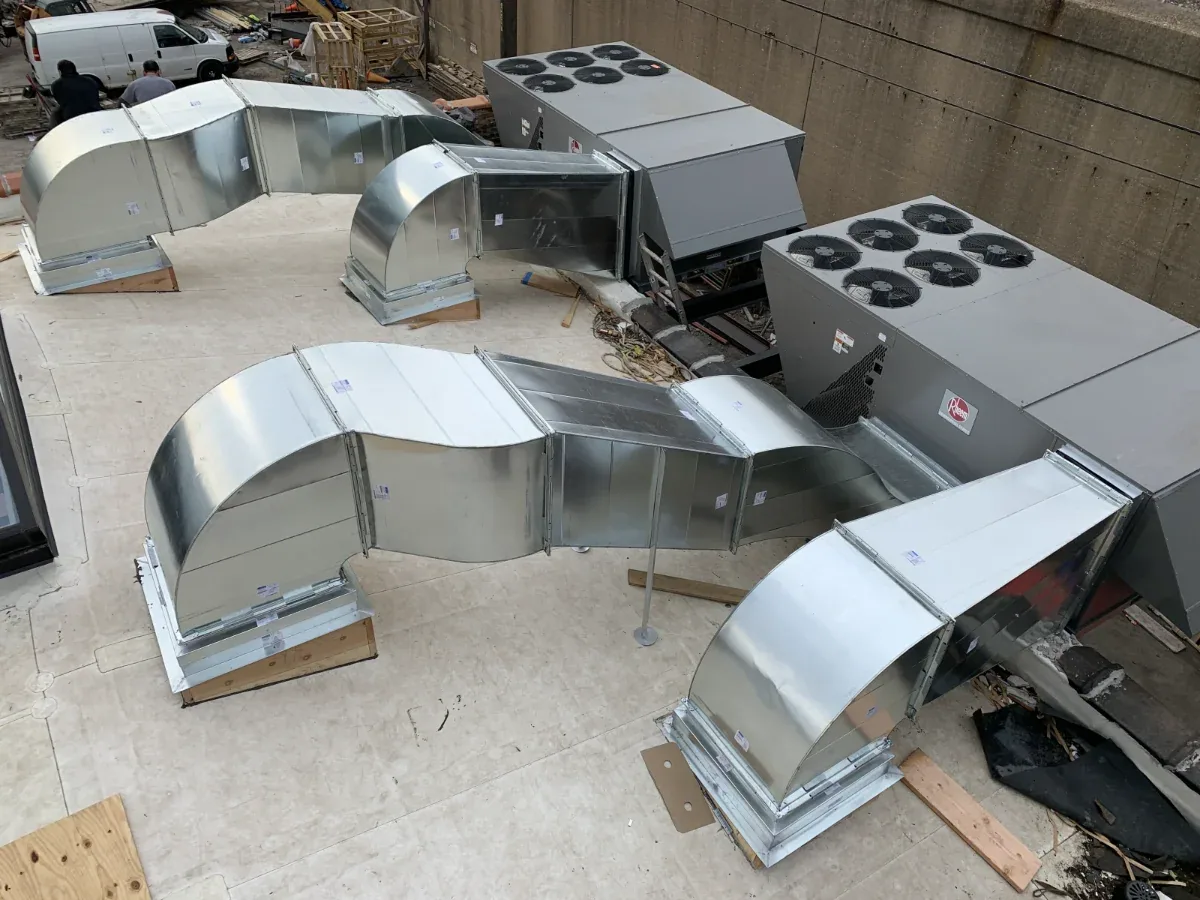
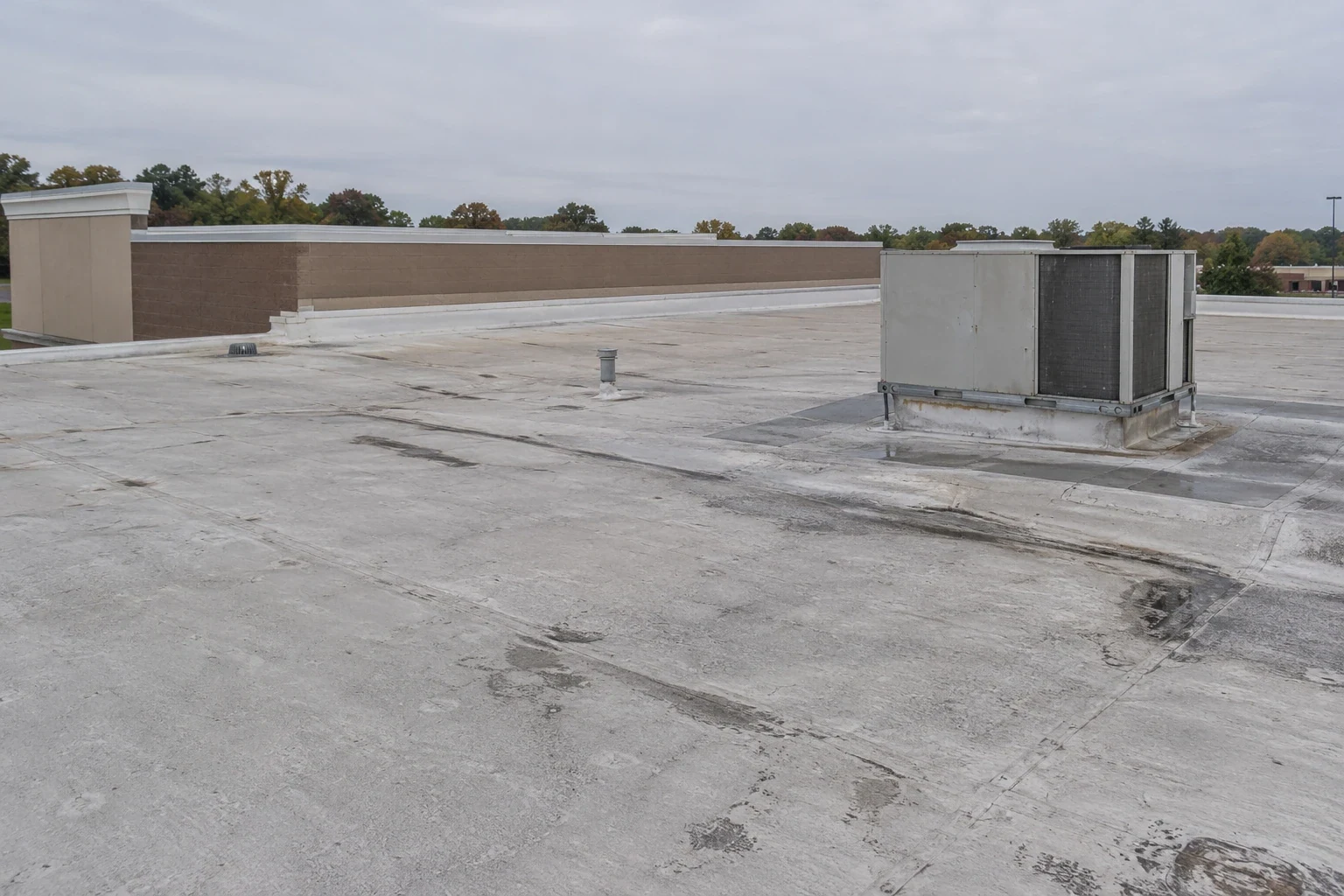
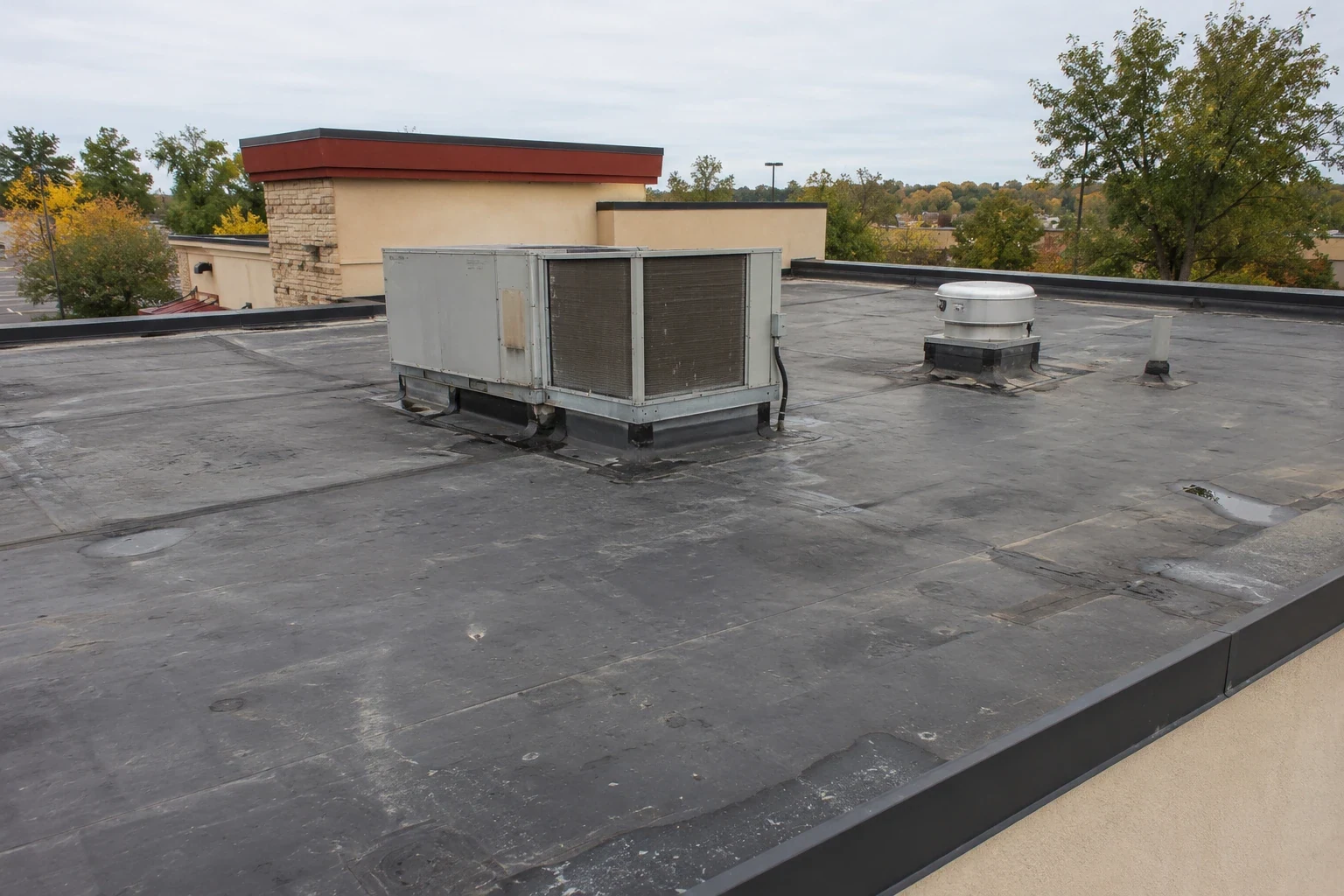
A supermarket roof carries more mechanical load than most retail roofs. Condensers for the coolers and freezers sit on rails or stands, refrigerant lines run across the field, and rooftop units serve the sales floor. All of it runs constantly, and constant vibration works on pipe supports, rails and flashing.
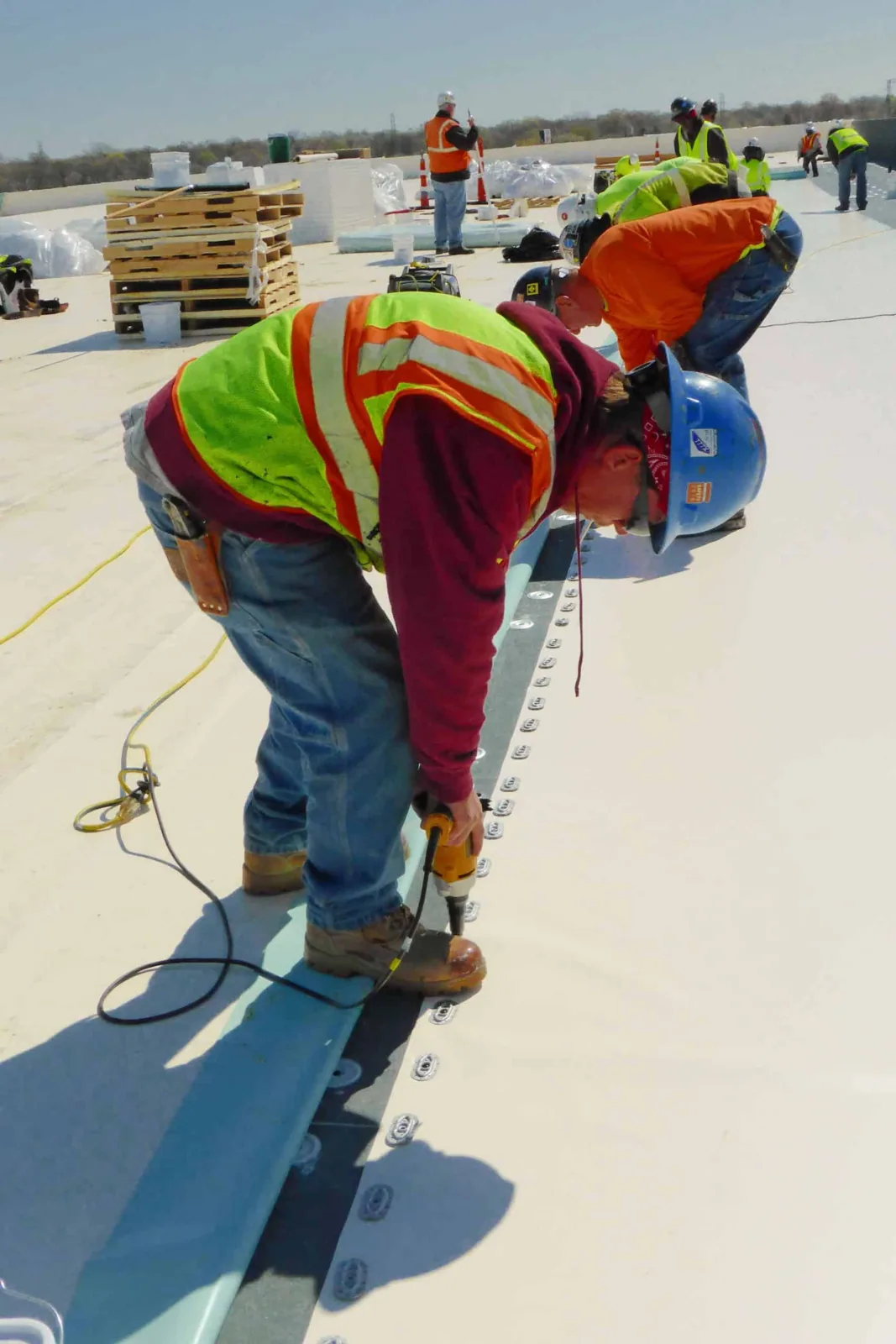
We check the details that vibration attacks first: pipe boots that have cracked, rail feet where the membrane has worn, sealant at conduit entries. Hot-air welded patches are quick, but the real repair is often to replace a support so it stops grinding on the roof.
- Condenser rails and legs: wear plates, flashing and membrane condition.
- Refrigerant and glycol lines: supports, insulation, pitch and drip paths.
- Control conduit: boots, seals and loose clamps.
- Service paths: walk pads between access and equipment.
Rooftop equipment curbs and supports get repaired together with their flashing, since changing one without the other leaves a leak path.
Wet Insulation Over the Cooler
The coldest rooms in a grocery store are the ones where a roof leak does the worst damage. A cooler or freezer under a wet roof forms ice, and ice puts pressure on the walls and ceiling of the box. Wet insulation also loses its R-value, so the compressor works harder and the energy bill rises, even when nothing is dripping.
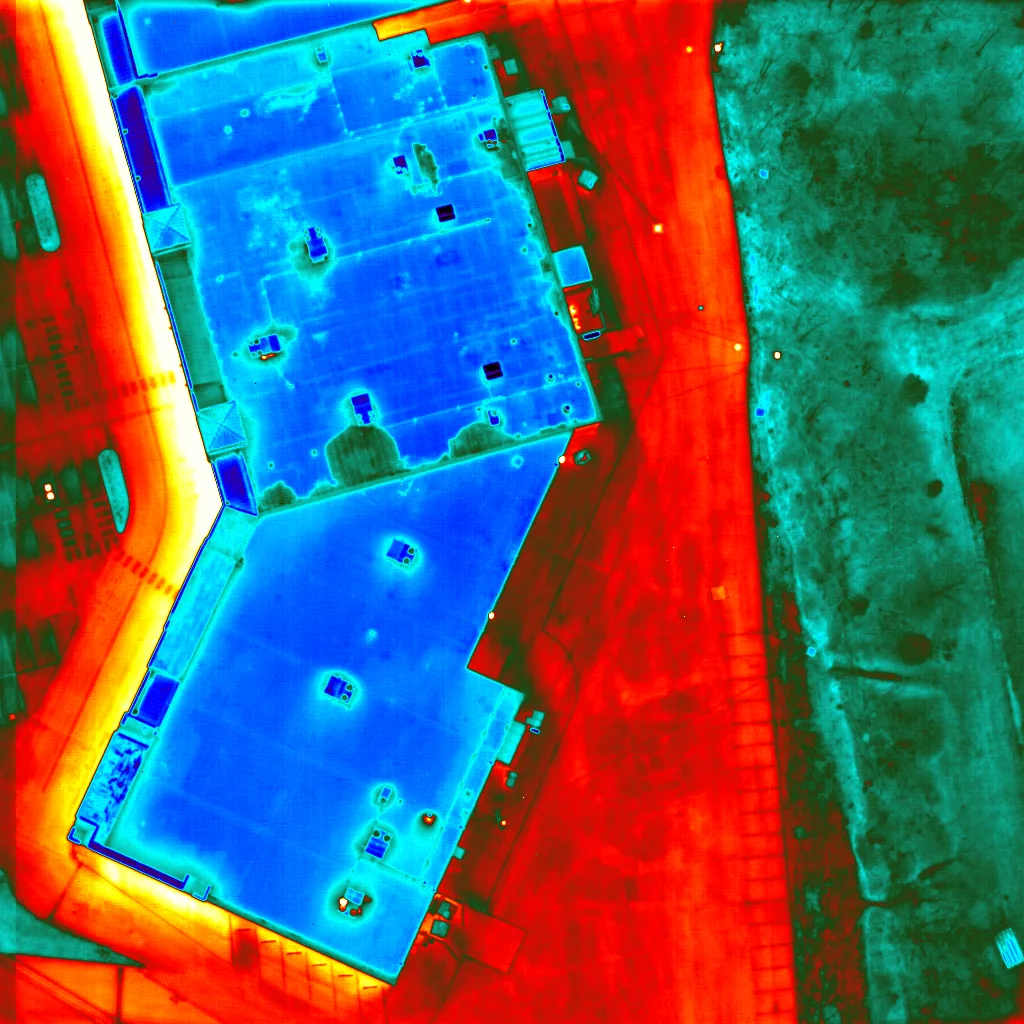
An infrared moisture survey is the right first step for any roof with refrigeration under it. It shows where the insulation holds water, and cores confirm what the scan suggests. In a store, we usually mark the survey on a floor plan, so the manager can see what is above the dairy wall, the produce cooler or the receiving dock.
Water can travel along the deck before it drips, so the stain on the ceiling and the entry point on the roof may be a long way apart. Repairs go where the survey says, not where the stain appears.
Keeping Dust, Fumes and Debris Out of the Store
Roofing makes dust. Tear-off throws grit, old adhesive smells carry, and a dropped fastener can land anywhere. In a food store, none of that is acceptable above open product. We protect the building in layers.
Before the work starts, we locate every air intake and cover the ones near the work. The store covers or relocates open product in any aisle under a work area, and we close off the ceiling plenum where we can. Tear-off is done in small sections, with debris lowered in covered chutes and not thrown. At the end of each shift, we sweep the roof, check the drains and magnet-sweep the area for loose fasteners. Hot work, when it is needed at all, follows the 2021 International Fire Code that Davenport has adopted.
The store manager can stop the work at any point. That authority is part of every plan.
Overnight Crews and Open Doors
A grocery store has a shape to its day. Deliveries come early, the deli and bakery start before the doors open, and the evening rush fills the lot. Roof work finds the gaps: the middle of the morning for staging, the mid-afternoon lull for hoisting, and sometimes overnight for the steps that need quiet.
We agree on a delivery route that keeps trucks away from the work. Dumpsters, hoists and staging stay out of the fire lane and away from the customer entrance. A flagger handles the lot when a crane or lift is on site. If a store runs twenty-four hours, the plan has a night version and a day version.
An emergency roof repair call follows its own rules. For a leak, the repair plan identifies the affected department, protects inventory and keeps the permanent work aligned with the store's operating rhythm.
Bakery, Deli and Kitchen Exhaust
Fryers, ovens and rotisserie units put grease on the roof. Fat drifts from the exhaust fan, settles on the membrane and slowly softens some materials. It shows as a discolored patch around the fan, sometimes with swelling or loose seams nearby.
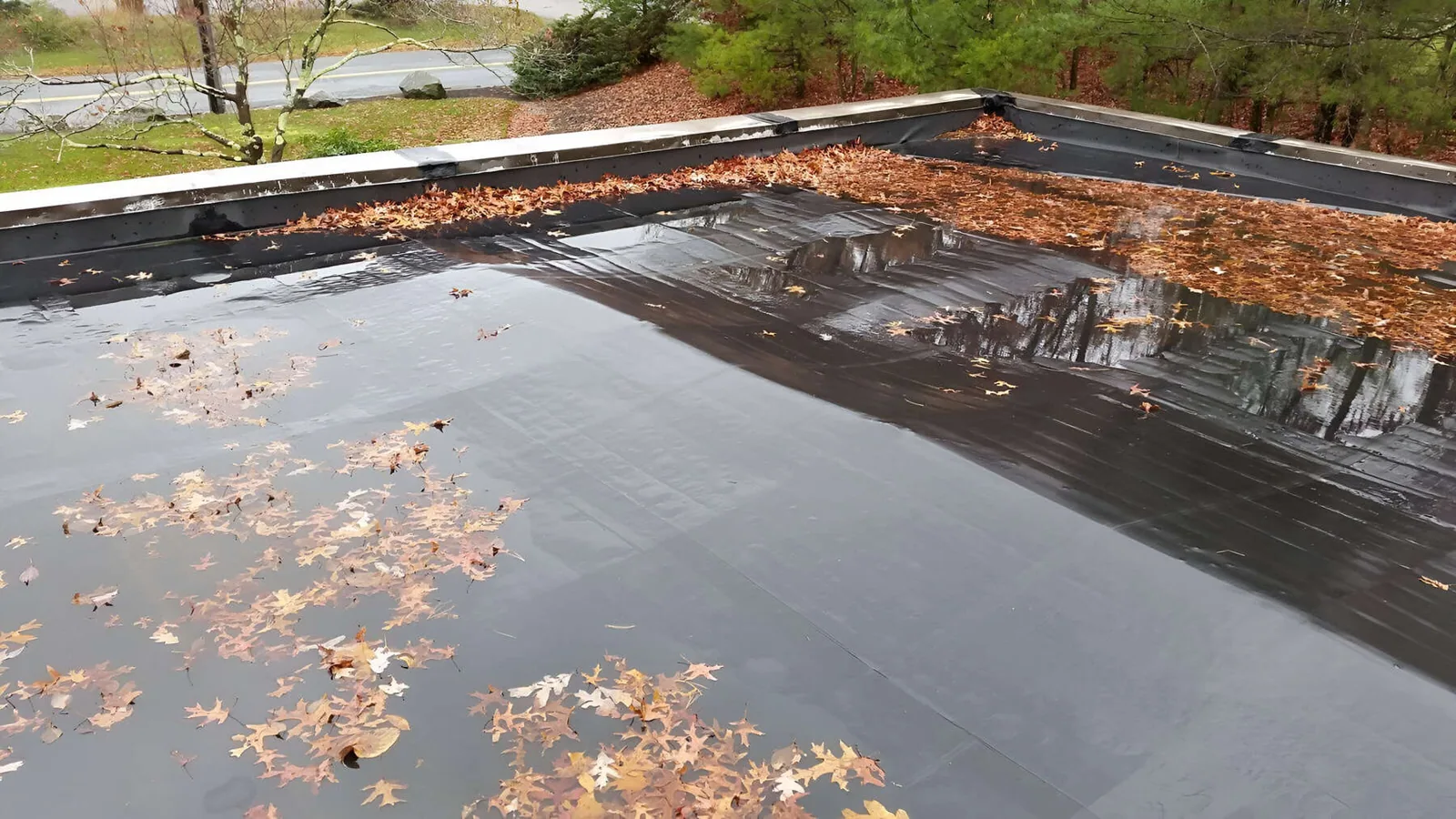
Where the exhaust is heavy, a KEE membrane is made for the job, since it is designed to resist fats and oils. Around the fan we add a grease trap or catch pan if the unit does not have one, and a walk pad so the technician does not step in it. Ponding near the exhaust is a second concern, since standing water carries grease further across the membrane. A ponding water repair may involve tapered insulation or a new drain nearby.
Ice at the Drains, Wind on the Corridors
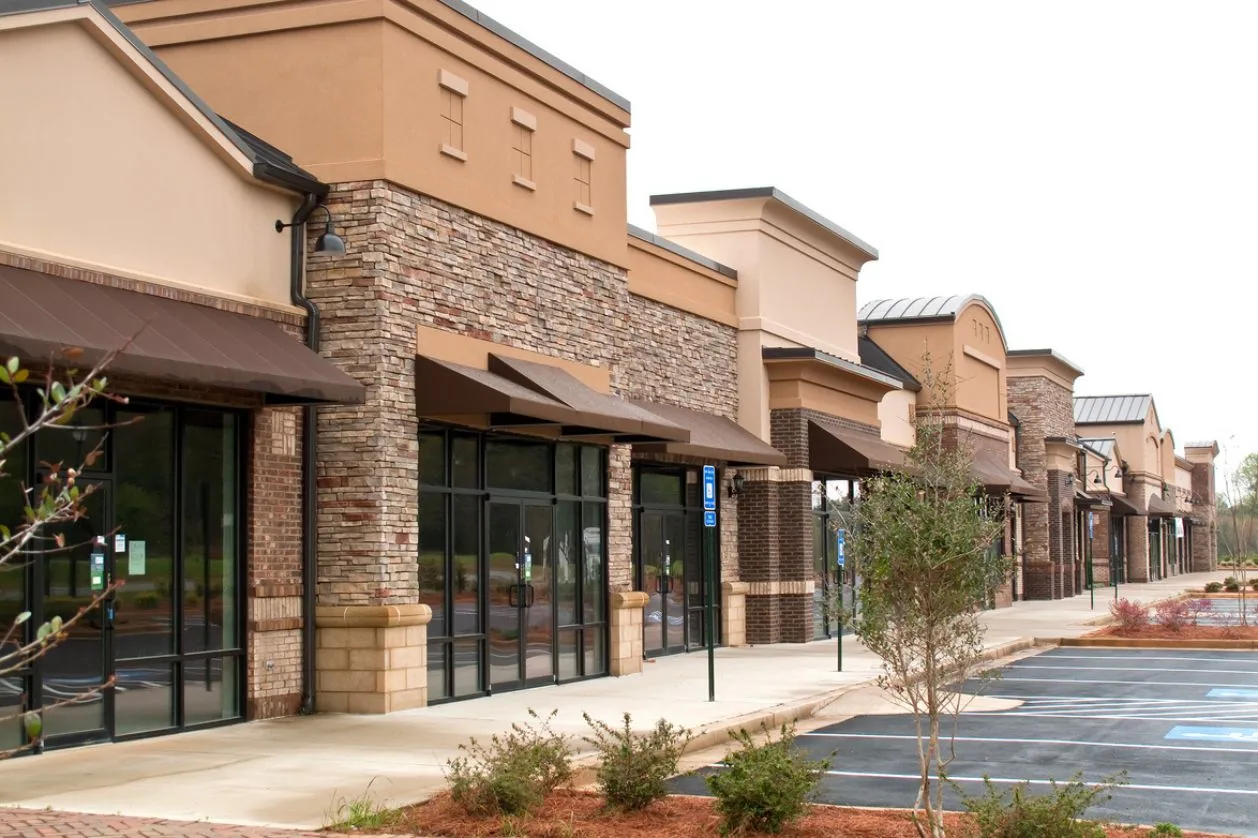
Brady Street (U.S. 61 Business) runs from downtown Davenport north to I-80 past retail developments, and Kimberly Road lines its 6.1 miles with retail, apartments and offices. Stores on both corridors take the same weather. Over 36 inches of snow falls in a typical Quad Cities year, and when a thaw refreezes at the drains, water backs under the membrane.
A storm that knocks out power, as the July 2024 derecho did when it downed trees and power lines on Brady Street, can put a grocery store on generator. A roof leak over electrical gear is a much bigger problem then. The August 2020 derecho brought an 86 mph gust to the airport, and its damaging winds lasted 30 to 60 minutes. The retail developments along the Brady Street corridor, big-box retail and restaurants all need the same checks. For retail chains, one shared report keeps each store’s open repairs visible.
Send the Work Order or Set a Walkthrough
Send us the work order or the address, and tell us where the leak showed up. We will meet your store manager at the roof hatch, walk the roof and the stockroom together, and give you a plain plan that keeps the doors open.
Questions About Grocery Store Roofing
A leak showed up over the dairy wall. Do we have to pull product?
Move whatever is directly below the drip and cover what is nearby, then call us. A drip over a case is a food-safety issue, so the store manager should decide what stays on the shelf. We can stop the entry from above, as soon as we are on the roof, and that is what lets the dairy wall go back to normal.
Can the work be done without closing a single aisle?
On most roofs, yes. The key is to work from above and seal the ceiling plenum and the air intakes. Interior protection is limited to the aisles directly under the work, and only when the manager asks for it. If the building has an open deck or exposed insulation, the plan changes, and we talk about aisle closures before the first day.
Our condenser rails sit on the membrane. Will they hold up through a reroof?
Usually the rails come up and go back down on new flashing, which is the right moment to correct their height and slope. The refrigeration contractor handles the lines and we handle the roof, so the two schedules overlap carefully. Plan for the cooler contractor to be on site for the lift and the reset.
Does a grease-stained membrane need replacing?
Not necessarily. Test the stained area first. If the membrane is still flexible and the seams hold, a catch pan and a cleaning schedule may be enough. If the surface is swollen, soft or peeling, the patch around the fan should be replaced with a grease-resistant sheet, and the rest of the roof can stay.
How do we stage a reroof when the store runs around the clock?
Pick the quietest four hours for the steps that need silence and run the rest during daylight with a flagger. Hoisting and tear-off are timed around the delivery schedule. We set up the plan with the store manager, the receiving lead and the district facilities contact so nobody is surprised by a crane in the lot.

Talk to a Davenport Commercial Roofer
Send the work order, the building address or a few photos of what you are seeing. We will set a walkthrough, go up with whoever has the hatch key, and tell you plainly what the roof needs.