
Emergency Commercial Roof Repair in Davenport, IA
Emergency commercial roof repair in Davenport, IA: storm damage assessment, tarping and dry-in, with photos for your insurer and a plan for the permanent fix.
The phones start before the wind has fully died down. A derecho goes through, the plant manager walks the floor with a flashlight, and somewhere in the dark there is water on a production line.
That is the work emergency roof repair is designed to address: stop active water, make the roof safe, record what happened, and set up the permanent repair. In Davenport, IA the job is simple to say and hard to do well: stop the water coming in, make the roof safe, record what happened, and set up the permanent repair.
What to Tell Us on the First Call
Short answers are fine. We need a few things to send the right crew and materials:
- The address and the name of the person who can get us on the roof.
- Where the water is entering, and what is below it.
- Whether anyone has already tarped or patched.
- Any machinery, stock or electrical gear at risk.
- Whether power is out or the building is closed.
If you can send photos from the ground or from a window, send them. A picture of the damage lets us bring the right tarps, lumber, sealants and membrane the first trip, rather than making a second one.
Tell us about access too. A locked roof hatch or a badge-only gate costs time we cannot afford during an active leak, so name the person who can open it.
Safety Before Speed
A storm-damaged roof is not a safe roof. Wet membrane is slick. Wind-lifted decking can fail under a boot. Skylights can be broken and hidden under debris, and power lines may be down near the building.
Our crew walks the access route first, looks at the structure and decides which areas are safe. If the roof deck is compromised, we work from the edge or from a lift, or we wait until a structural engineer clears it. We also ask you to keep your own people off the roof. It is not a delay. It prevents a second emergency.
Electrical is the other hazard. Wet rooftop units, damaged conduit and broken light fixtures can all be live. If you can shut power to the affected area from your panel, do it before we arrive, and tell us what you shut off.
Tarping and Dry-In
The emergency scope is to keep the building dry until real repairs can start. Depending on what happened, that can mean:
- Heavy tarps secured with battens and sandbags or fasteners, never loose.
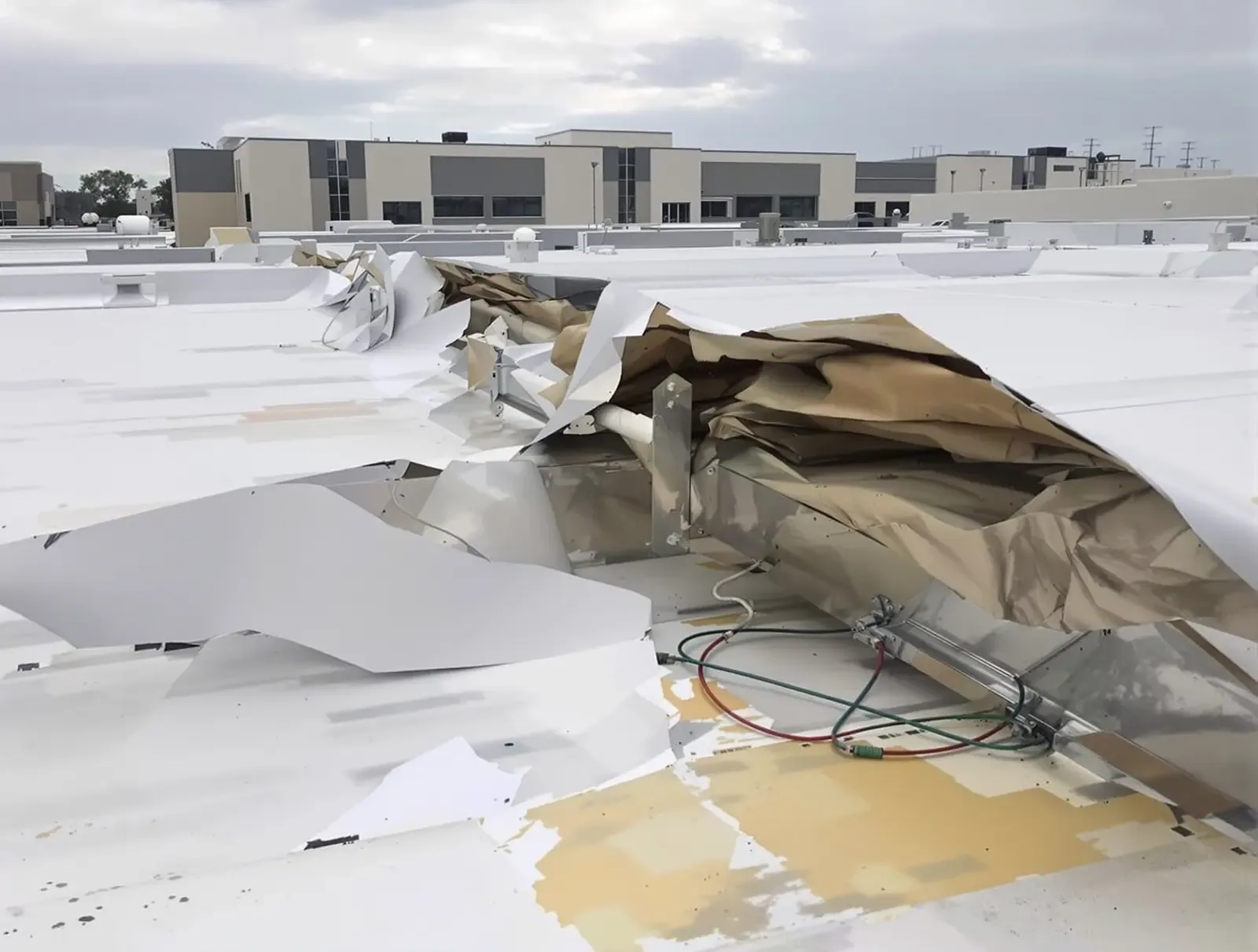
- Temporary patches and sealants over torn membrane.
- Plywood or other cover over open decking.
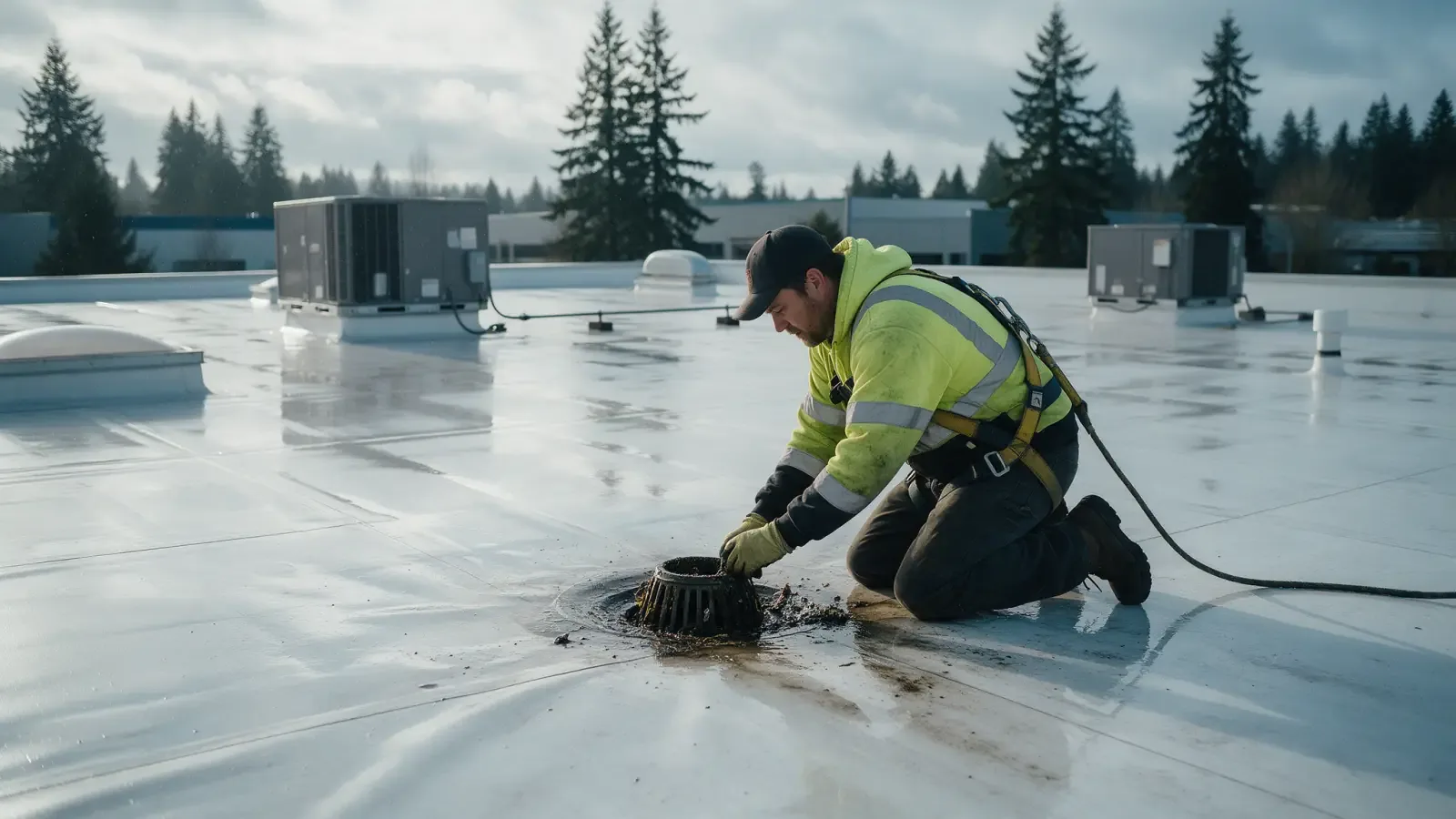
- Debris removal from drains so water can leave the roof.
- Board-up around broken skylights and hatches.
We photograph the roof before and after. Then we tell you how long the temporary work is expected to hold, since a tarp in a Davenport winter does not last as long as a tarp in June.
On large flat roofs, the biggest gain usually comes from drains and low spots. Water that cannot leave a damaged roof piles up on the weakest section, so we clear it first and sweep standing water away from the opening before we place any cover.
When Many Buildings Are Hit at Once
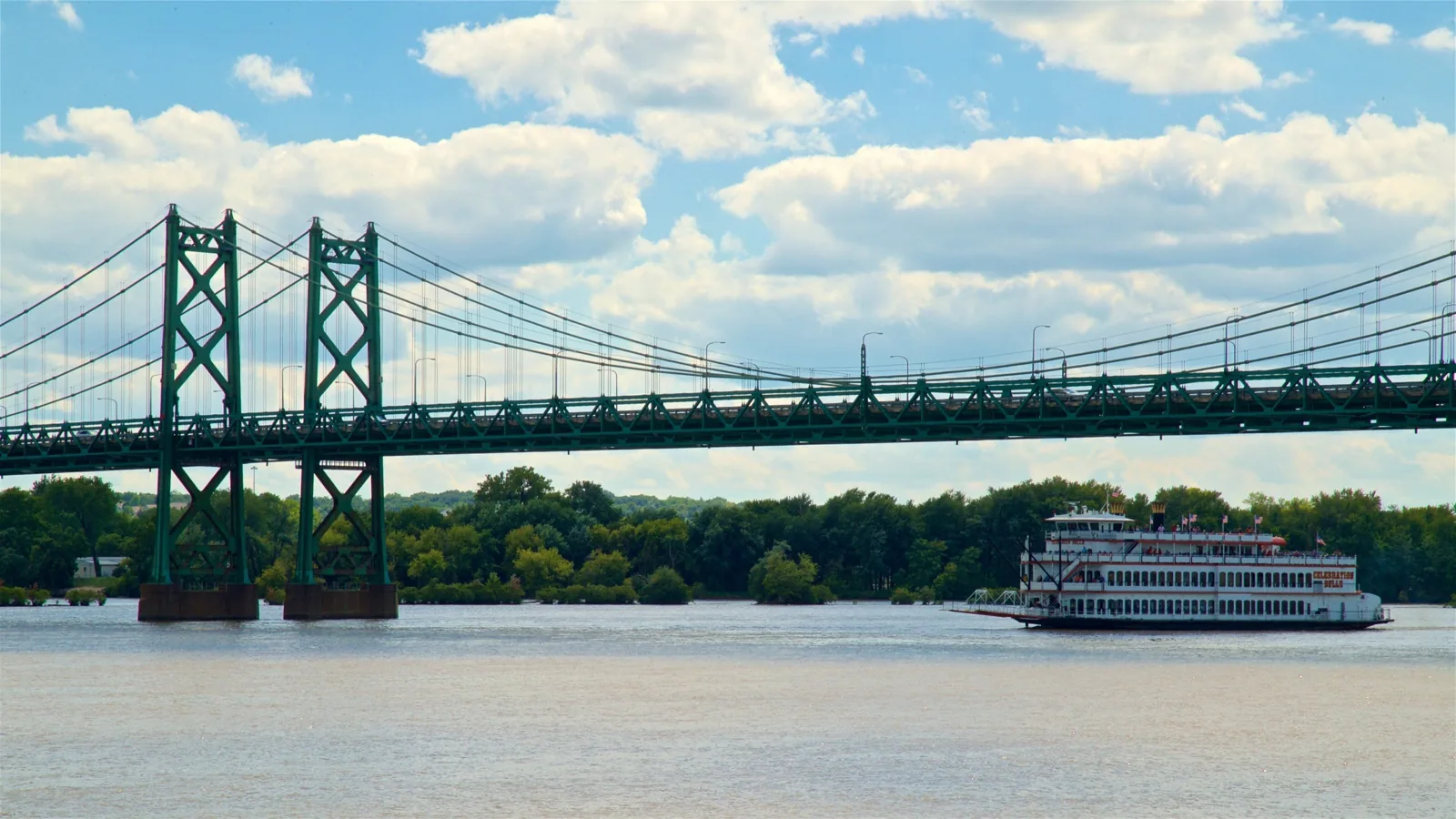
Davenport has seen how big a storm can get. The August 2020 derecho put an 86 mph gust at Davenport Municipal Airport and damaged roofs across Scott County, from Davenport to Bettendorf. A second derecho on July 15, 2024 sent damaging winds as high as 100 mph through the metro. In July 2025 an EF-2 tornado cut a seven-mile path across the city.
After storms like these, every roofer is busy. We triage. Open roofs and active water over equipment come first, then buildings with partial damage, then roofs that can wait for inspection. If you are a property manager with several sites, tell us which buildings matter most, since a multi-building storm damage roof repair gets sequenced the same way. Where wind lifted the edges, the work is that of any wind-damaged roof.
Photos and Paper for the Claim
If the damage may be an insurance claim, the first hours matter. We take dated photos of the damage, the temporary work and the surrounding areas. We write down what was found and what was done, in plain language, with no guesses about cause that we cannot support.
Keep your receipts and do not throw away damaged materials until the adjuster has seen them, unless they are a safety risk. We can meet the adjuster on the roof, and a roof insurance claim moves faster when the adjuster sees the damaged materials as they came off.
From Tarp to Permanent Repair
Once the water is stopped, we write up the permanent scope. It might be a planned repair of membrane and flashing, a section replacement, or in worse cases a full replacement. We also check for hidden water in the insulation, since a roof that looks dry on top can hold moisture below for months. A leak that keeps showing up after the storm is a commercial roof leak repair job of its own, traced back to the source.
A safe first response starts with conditions below as well as above. We identify the active leak, isolate electrical or process equipment exposed to water, and choose a temporary cover that will stay put until a permanent repair is safe. After a derecho or tornado warning has passed, loose edge metal and rooftop debris can make an apparently simple leak unsafe to reach. The handoff records what was stabilized, what could not yet be inspected, and the next access window.
Call Now, Send Photos After
If water is coming in, call. Tell us the address, who has the roof hatch key and what is at risk. Photos can follow while the crew is on the way.
Questions About Emergency Commercial Roof Repair
Do you really answer at night and on weekends?
Emergency work prioritizes active water over equipment and open roofs. Share what is affected and who can provide roof access; the first visit focuses on temporary protection and clear notes for the permanent repair scope.
Should we call the insurance company first or you?
Call us first if water is coming in, since the first priority is stopping the damage. Then call your carrier and report the loss. Most policies require you to protect the property from further damage, and temporary repairs are usually part of that. Keep our photos and any invoice for your claim file.
How long will a tarp or temporary patch last?
It depends on the size of the opening, the wind and the weather. A well-secured tarp can hold for weeks, but wind and freeze-thaw wear on it. We tell you our best estimate on the day and recommend a date for the permanent work. Do not treat a temporary dry-in as the end of the job.
Can you work in the rain, snow or wind?
We do what is safe. Dry-in work can happen in wet weather when the roof can be accessed safely, but we do not work in high wind, lightning or on icy surfaces. If we cannot get on the roof, we look at what can be done from the inside, such as catching water and protecting equipment, and return as soon as conditions allow.
What if the storm also damaged the structure or the deck?
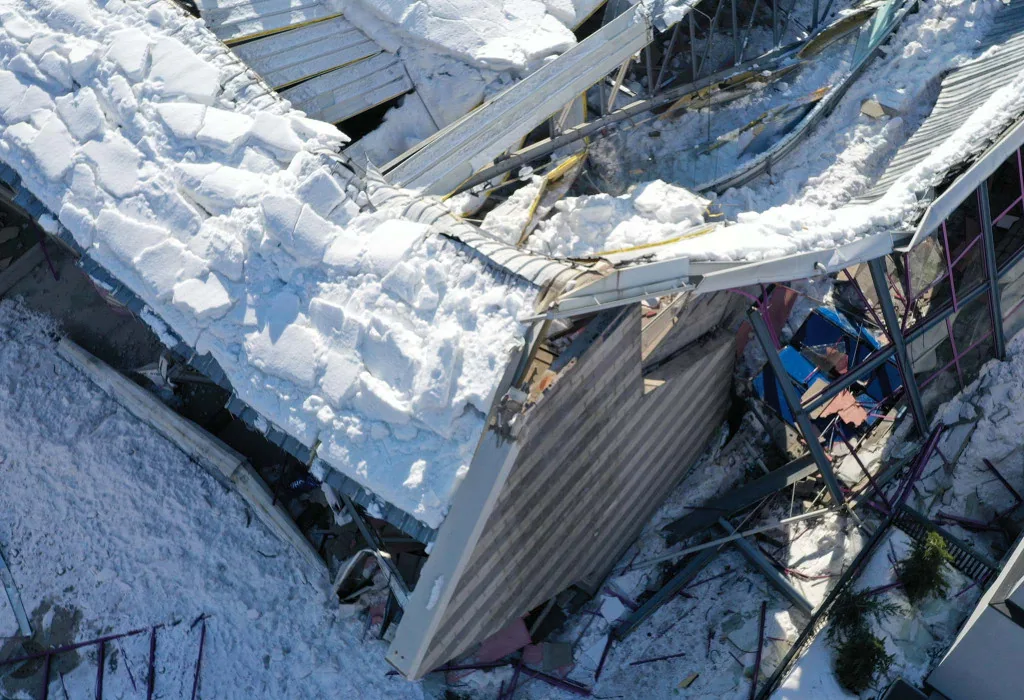
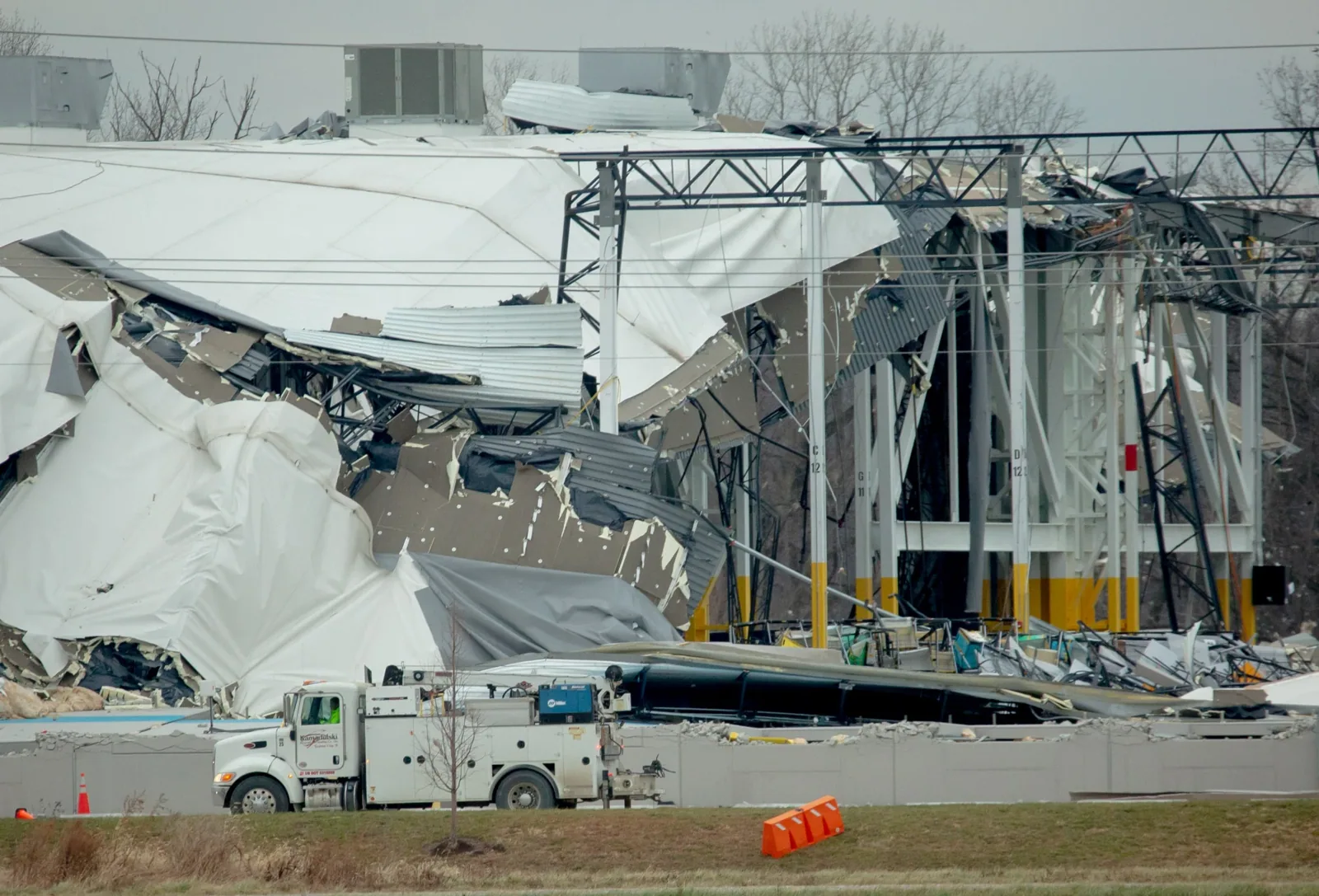
Then the first thing we do is stop and report it. If the deck is bent, soft or torn, we cover what we safely can and tell you that a structural review is needed. We do not put new roofing over a damaged deck. Plan for a short delay while the engineer or building official looks at it. On a tornado-damaged roof, where debris impact is likely, that check is routine.
Talk to a Davenport Commercial Roofer
Send the work order, the building address or a few photos of what you are seeing. We will set a walkthrough, go up with whoever has the hatch key, and tell you plainly what the roof needs.