
Storm Damage Roof Repair in Davenport, IA
Storm damage assessment and repair for commercial roofs in Davenport, IA: wind, hail and tornado triage, deck and insulation checks, and clean records.
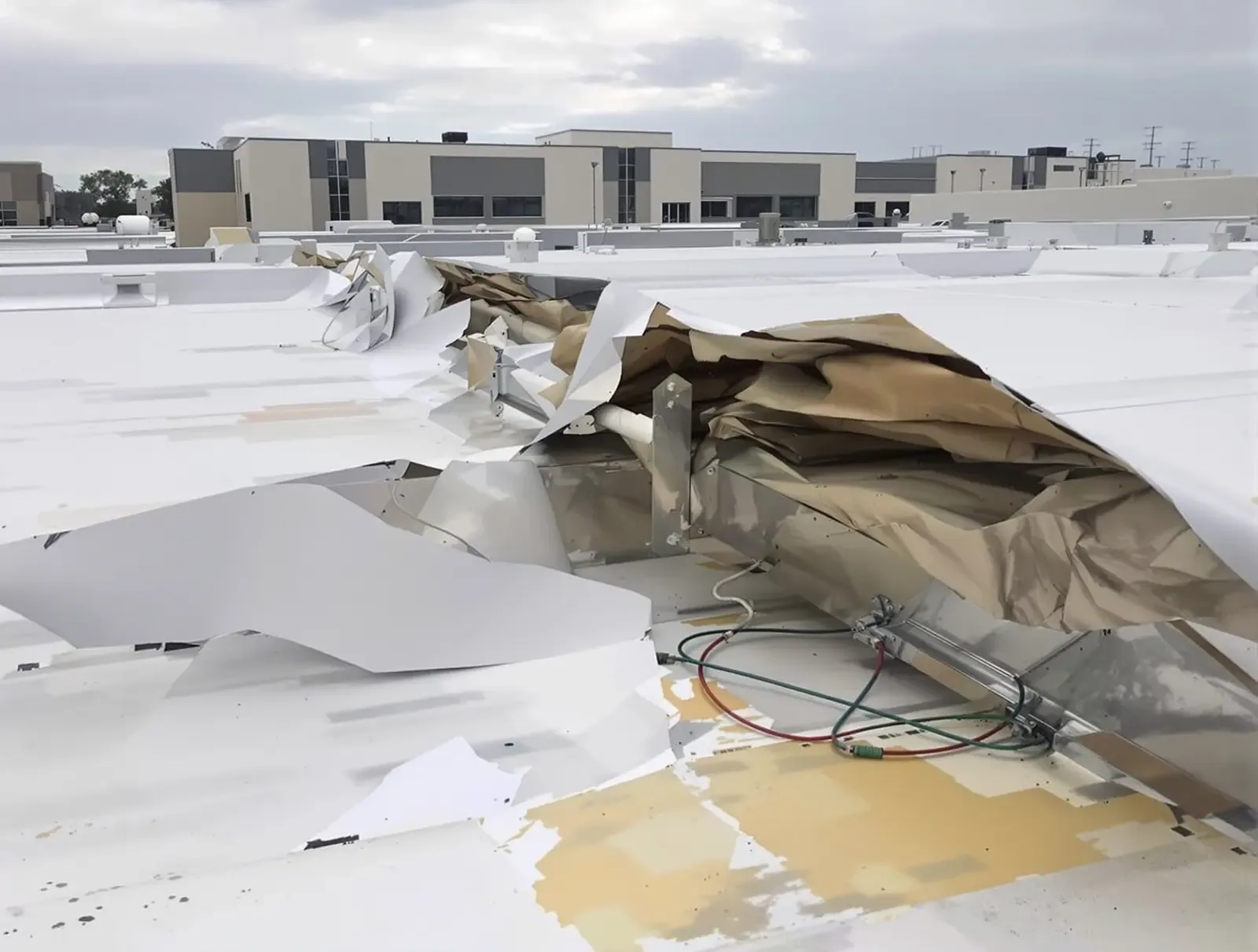
The sirens quit, the power comes back, and the first photo arrives by text: a corner of membrane folded back like a page. Nobody has been on the roof yet. Everybody wants to know how bad it is.
That is the first job after a storm in Davenport, IA. Not repair. Assessment. We go up, find every spot the weather touched, make the building safe, and give you a written scope you can use for the repair and for your insurer. The work in the days that follow depends on how well that first walk goes.
Four Kinds of Weather, Four Kinds of Damage
The roof tells us which storm hit it, if we read it right.
- Straight-line wind peels edges and corners, lifts flashing and pulls fasteners. At Davenport Municipal Airport the August 2020 derecho registered 86 mph, and the July 2024 derecho carried winds up to 100 mph across the region.
- Hail bruises membrane, cracks coatings and dents metal. Hail reports near the city center number well over a hundred since 2004.
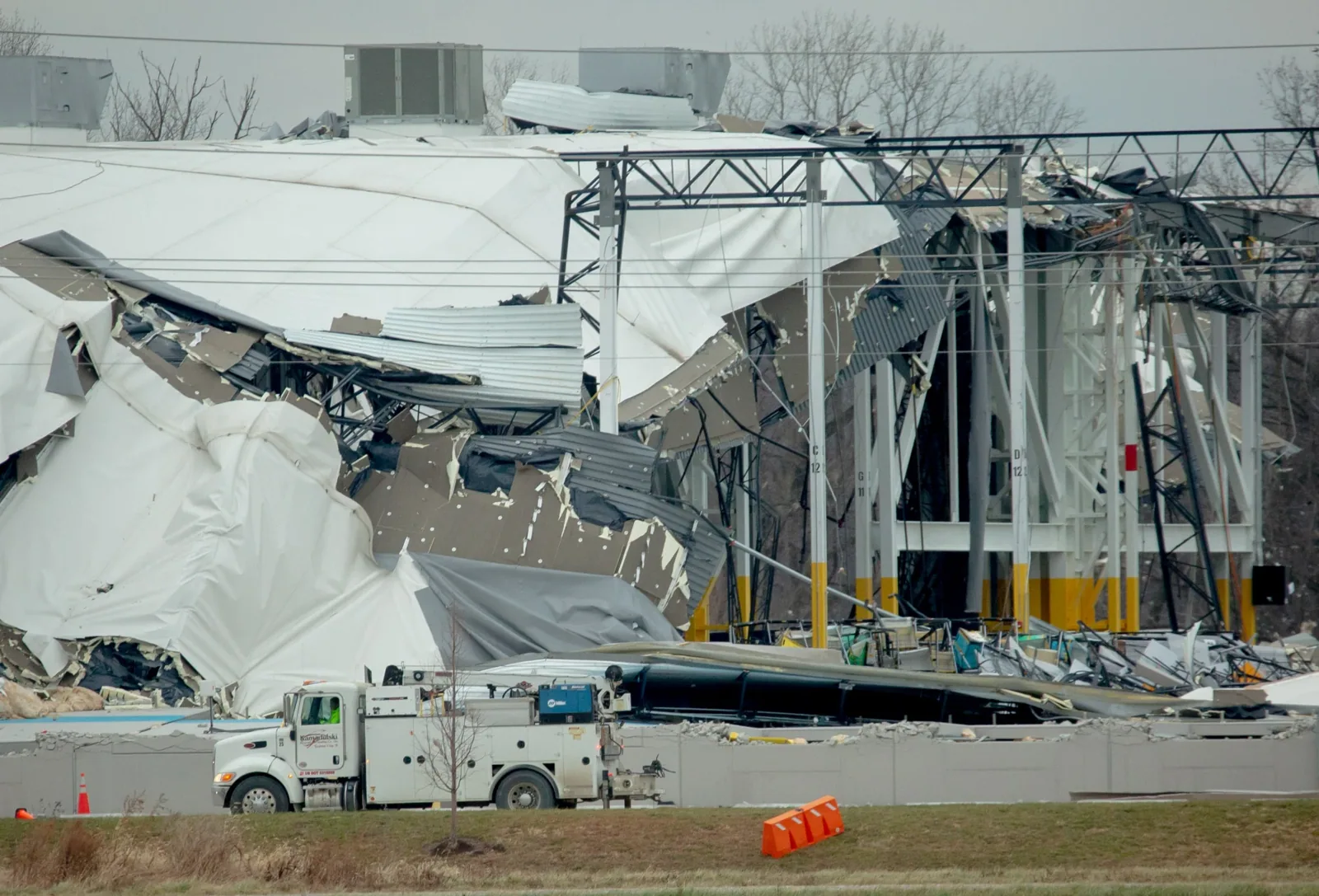
- Tornado adds flying debris, punctures and sections of roof deck lifted off the building.
- Snow and ice load drains, pull on edge metal and stress seams that were already marginal.
Each one leaves a different pattern, and each pattern points to a different repair. A roof that has taken more than one of these needs the findings sorted by cause before anyone writes a scope.
The Assessment Walk
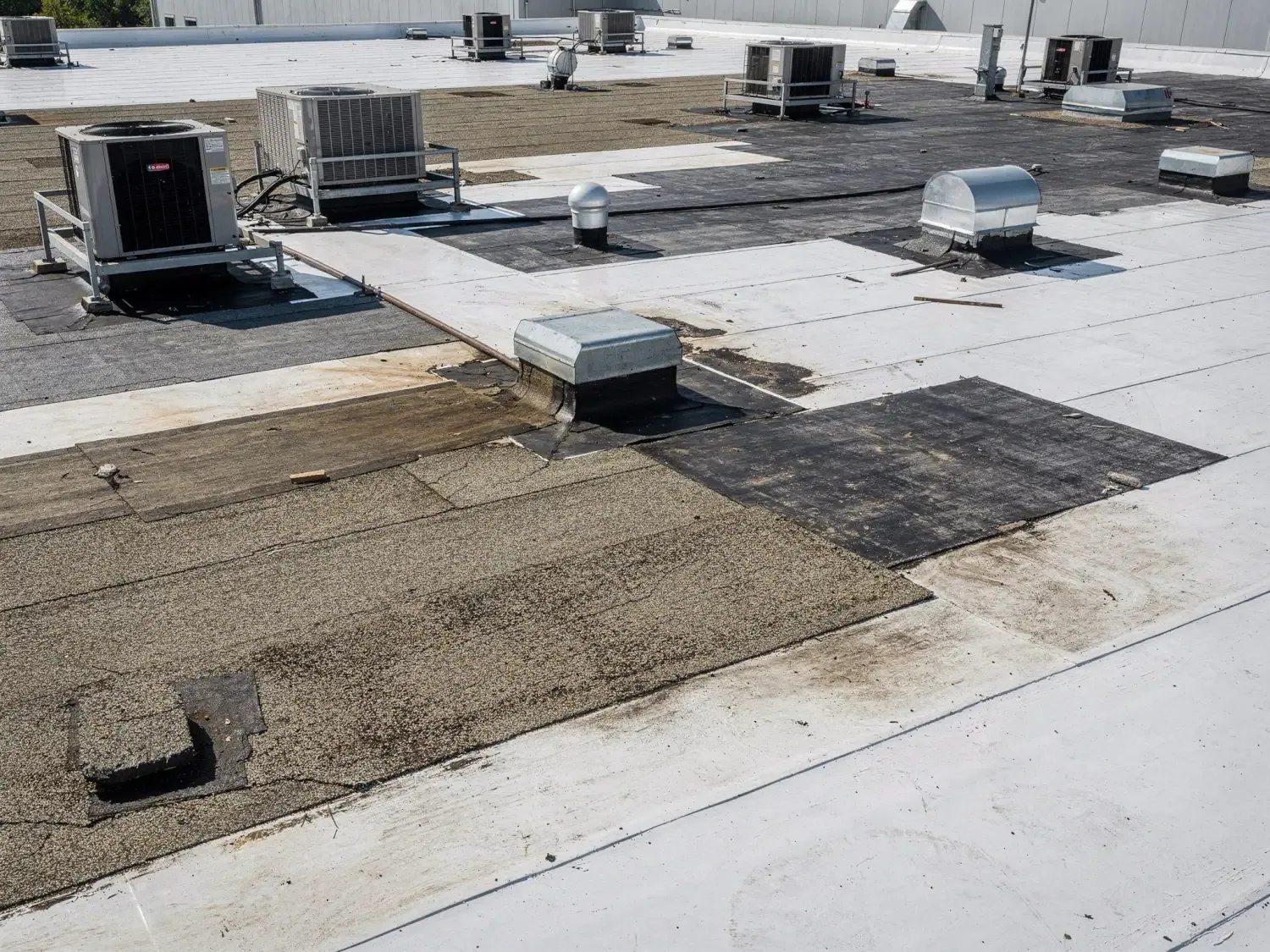
We walk the roof in a set order so nothing is skipped: perimeter first, then penetrations, then the field, then every drain. At the perimeter we look for displaced coping, peeled edge metal and torn membrane at the parapet. At penetrations we check for cracked boots, shifted curbs and rooftop units that moved on their rails.
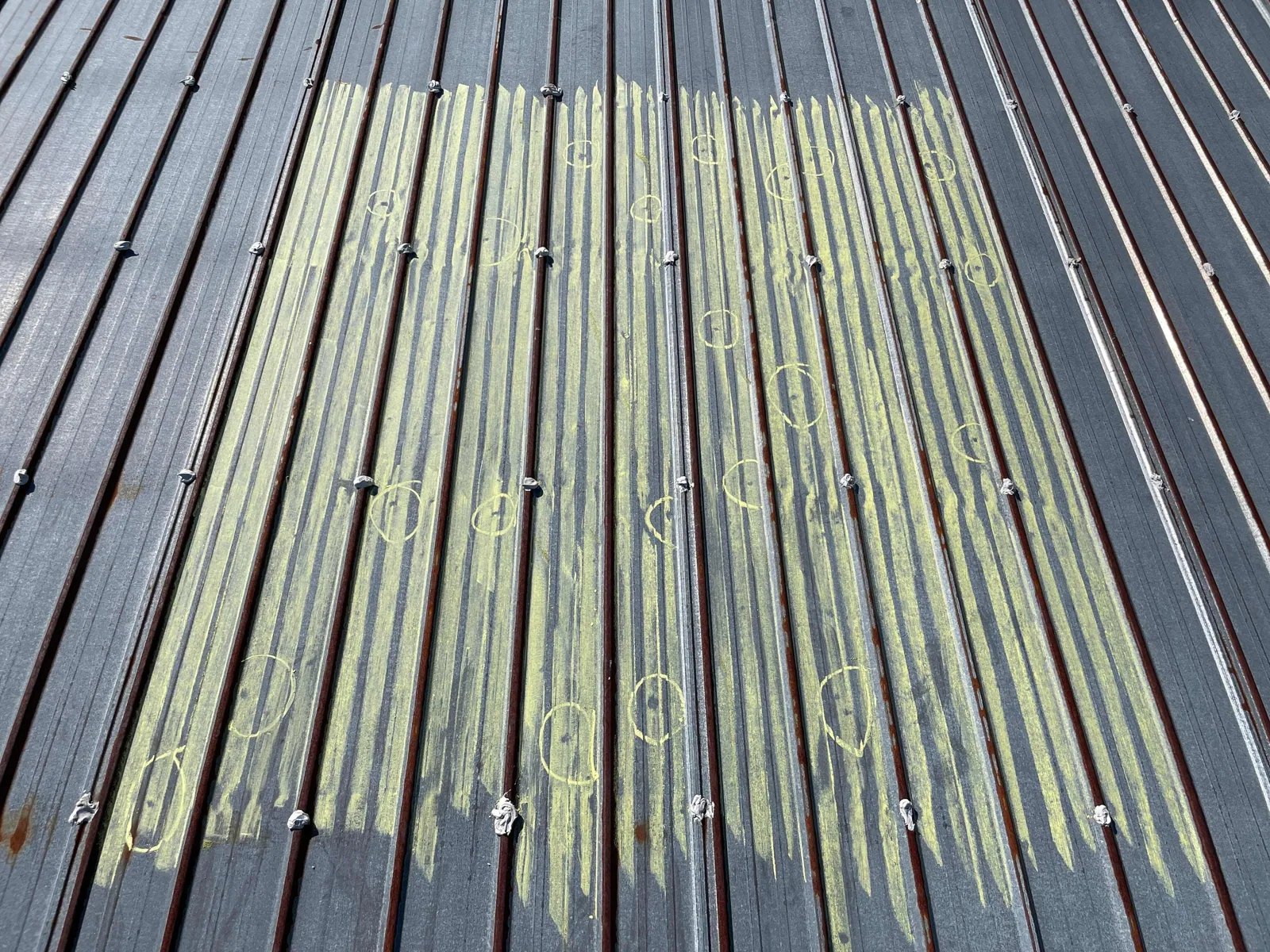
When the roof is too large or too unsafe to walk quickly, a drone survey gets us a first look in an hour, and then we walk the areas that matter. Every finding gets a photo, a location mark and a note. Hail damage is checked by test squares across each slope, so the count is not a guess.
Insulation and Deck Under the Damage
What we see on top is half the story. A torn membrane lets water into the insulation, and wet insulation looks like dry insulation from above.
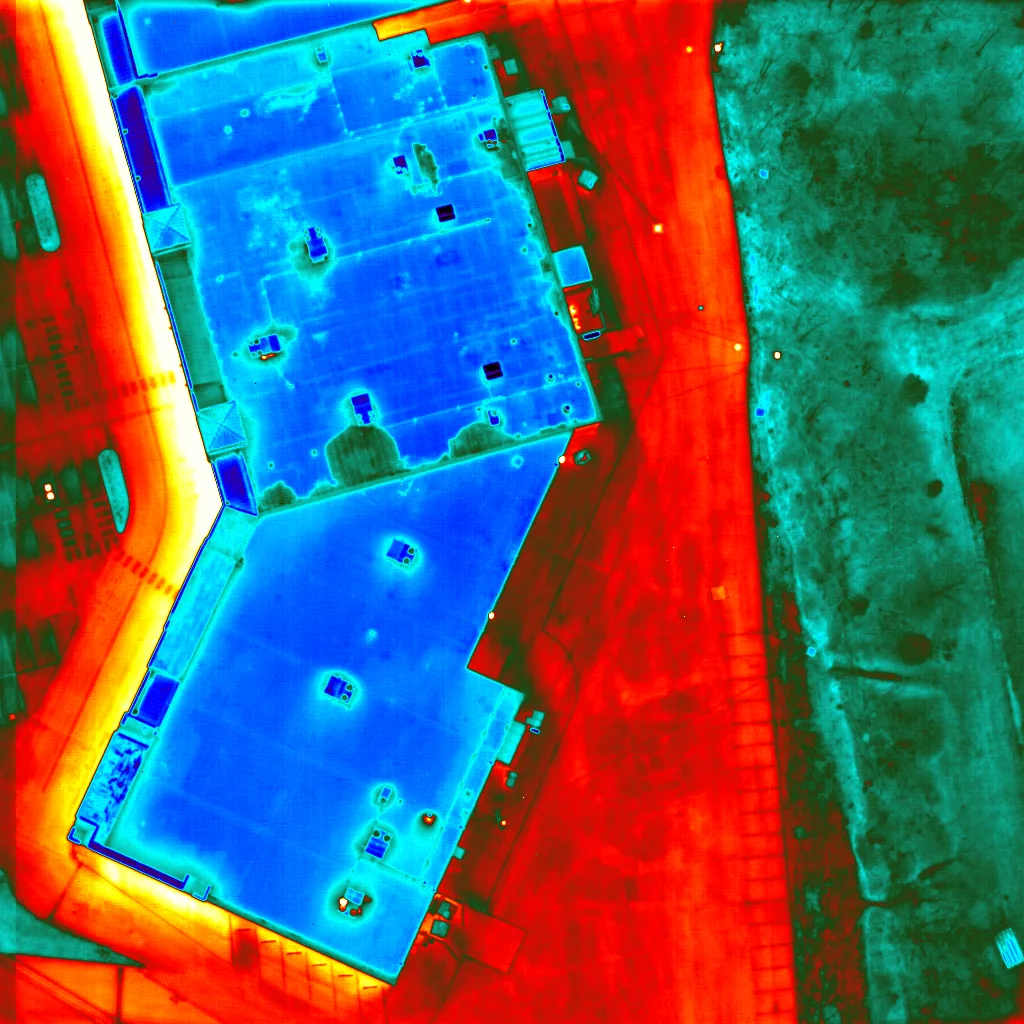
On storm jobs we cut small cores near each opening and test with a moisture meter, and where the roof is large we follow up with an infrared scan once conditions allow. We also look at the underside of the deck from the interior, since a tornado or a hard wind event can bend or lift steel deck even where the membrane looks intact. If the deck is distorted, we flag it for the building engineer before any new roof goes on top.
Temporary Dry-In, Then the Permanent Scope
Water first. If the roof is open, we cover it with tarps, patch panels or temporary membrane, and we tie the edges down well enough to survive the next front. The goal is a building that stays dry while the scope is written.
Once the full picture is in, the permanent repair is sized to the damage. Sometimes that is a few wind repairs at edges and flashings. Sometimes it is a hail-bruised field that needs a section replaced. And sometimes the roof is finished, and the right answer is a replacement. We lay out all three and the cost drivers behind each, so you can set the choice against your budget and your policy.
Where the Tornadoes Have Gone
Davenport has taken direct hits, and the paths are well documented. On July 11, 2025 an EF-2 tornado with estimated 120 mph winds began southeast of Blue Grass, cut through Emeis Park and ended near Kimberly Road and Fairmount Street, roughly seven miles on the ground. The October 2016 EF-1 ran from Credit Island across I-80 near Middle Road in Bettendorf and damaged the roof of the Scott County Jail.
For a building on or near those lines, we pay more attention to debris impact and to small punctures along the leading edges. If your property sits along Kimberly Road, post-storm walks should include the lower roof levels where debris collects. After the first walk, a tornado-hit roof gets its own plan, starting with the deck and working up, which is the work of a tornado damage repair.
Photos, Measurements and Proof
By the time the adjuster arrives, we want you holding a package: dated photos of every damaged area, a roof diagram with locations marked, core results, and a written description of what each finding is and how it likely happened. It helps the adjuster and it helps you.
We separate storm damage from older wear, since insurers will do the same. Work on a roof insurance claim follows the same rule: document, separate, and stay available through the inspection and the scope review.
After the weather clears, preserve the condition before moving loose material. Photograph the roof by section, capture close views of lifted seams and edge metal, and note any interior leak that appeared during the same period. A roof map helps separate fresh impact or wind damage from older open maintenance items. Temporary dry-in comes before permanent scope when water is still entering. Keep damaged components until the inspection record is complete, then price repairs by area and by urgency.
Send the Photos, We Will Send the Crew
Text or email the first photos from the site, along with the address and who holds the roof access. We review the roof access details and the photos, then coordinate an assessment walk when weather and site conditions allow.
Questions About Storm Damage Roof Repair
The adjuster says the roof is fine from the ground. Should we still get a roofer up there?
Get a roofer up. Hail and wind damage on a low-slope roof often cannot be seen from the ground or the parking lot. We document the roof from the surface, with test squares and photos, and we give you a report you can hand the carrier if the field adjuster and the roof do not agree.
How soon after a storm do we need the roof checked?
As soon as it is safe to get up there, and sooner if anything is leaking. Open membrane lets in rain with the next shower, and insulation soaks up water quickly. A quick walk within the first days also keeps the timeline clean for a claim, because new damage from later weather is easy to separate from the storm.
Our roof is only a few years old. Can hail still hurt it?
Yes. Single-ply membranes can be bruised or fractured by large stones even when they are new, particularly over firm insulation, and coatings can crack. Age matters less than stone size and wind speed, which is why we test across the whole slope instead of only where we see something obvious.
Do repairs after a storm change the warranty?
They can, if the repair is not done to the manufacturer's details. We follow the published repair procedures for the membrane on the roof and record what we did. Send the warranty paperwork with your first call, and we will line up the temporary work and the permanent repair with what it requires.
What if a dozen buildings in our portfolio were hit?
Send us the address list ranked by the buildings with active leaks. We triage in that order, tarp the open roofs first, and run the assessment walks as crews free up. Tell us who at each site can hold the roof hatch key and badge us in, and the schedule moves much faster.

Talk to a Davenport Commercial Roofer
Send the work order, the building address or a few photos of what you are seeing. We will set a walkthrough, go up with whoever has the hatch key, and tell you plainly what the roof needs.