
Wind Damage Roof Repair in Davenport, IA
Wind damage repair for commercial roofs in Davenport, IA: derecho edge failures, billowed membrane, loose coping and a written scope for your adjuster.
The call comes at nine at night, an hour after the derecho moved through. The night supervisor can hear something banging on the roof, and the glow from the dock lights shows a loose flap of membrane lifting and dropping. Nobody goes up in the dark. Nobody should.
That is how a wind repair starts in Davenport, IA. We talk the building safe over the phone first: what is open, what is wet, who holds the roof hatch key. Then we go up at first light and read the damage from the corners inward, one edge at a time.
How the Wind Moves Across a Roof
Wind does not load a roof evenly. It hits the wall, climbs the parapet, and speeds up as it rolls over the corners and along the perimeter. That is where uplift is highest, so that is where we start every wind walk, then the edges, then the field.
The duration matters as much as the speed. In the August 2020 derecho the airport gauge read 86 mph, and NWS Quad Cities documented damaging winds lasting 30 to 60 minutes over Davenport, Bettendorf and Scott County. A roof under that load flexes again and again. A fastener that held through the first gust can still be backing out by the last one.
In July 2024 another derecho swept the region with damaging winds reaching 100 mph. Owners who patched in 2020 and moved on should treat their edges as unfinished business.
Edge Metal, Coping and Cleats
Most wind repairs start with a piece of metal that is no longer where the installer put it. A coping cap is lying in the lot. A drip edge has peeled up and curled. The continuous cleat behind the fascia pulled out of the wall.
Once the edge metal lets go, the membrane under it has nothing holding it down, and the next gust finds the loose edge of the sheet. So the repair is more than resetting a cap. We check how the cleat was fastened, whether the substrate behind it is sound, and whether the membrane edge was torn when the metal moved.
Where the original metal was light-gauge or poorly fastened, we replace it with edge metal detailed for the wind zone. The edge metal, coping and gutters on a run get re-fastened together, so one weak cap does not undo the new one next to it.
Billowed Sheets and Fastener Rows
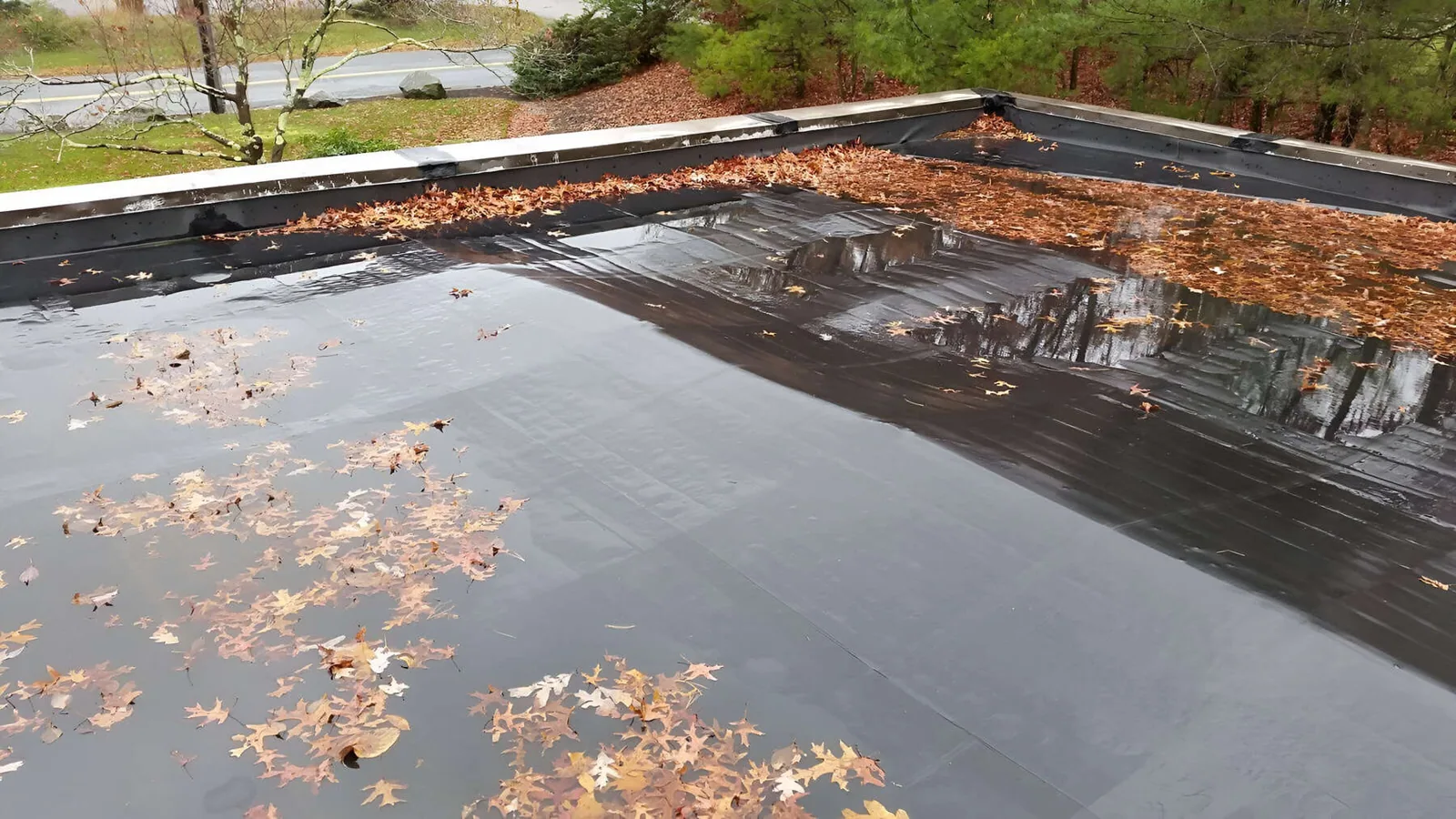
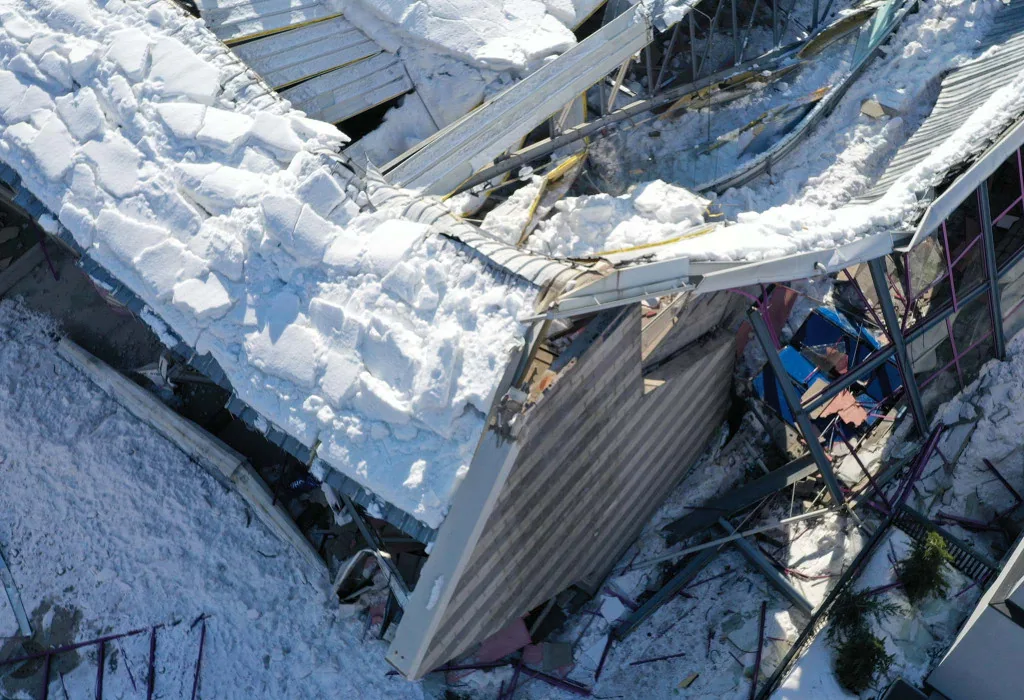
The field of the roof tells a different story. On a mechanically attached single-ply such as TPO, wind lifts the sheet between fastener rows and lets it snap back. You see ridges that run parallel to the rows, torn plates, and fasteners standing proud of the deck.
Fully adhered sheets fail a different way. The membrane peels off the substrate in a long tongue that starts at an edge or a seam. Ballasted roofs lose stone at the corners first, and bare patches of membrane show up under the missing gravel.
If the lift reached the insulation, the board underneath may have shifted or broken. We press the surface and look at the cover board and insulation before we decide whether a repair is a patch or a section.
Debris, Units and Punctures
A wind event leaves things on a roof that were not there the day before. Branches, sheet metal, plywood, pieces of other buildings. After the July 2024 derecho, trees and power lines were down on Brady Street near 37th Street, and a building along the Brady Street corridor can end up with a limb through the sheet.
We sweep the roof and then look under what we removed. Debris hides cuts and gouges. Rooftop units are worth a second look too: a unit that has shifted on its curb pulls the flashing apart, even if the housing looks fine from the ladder.
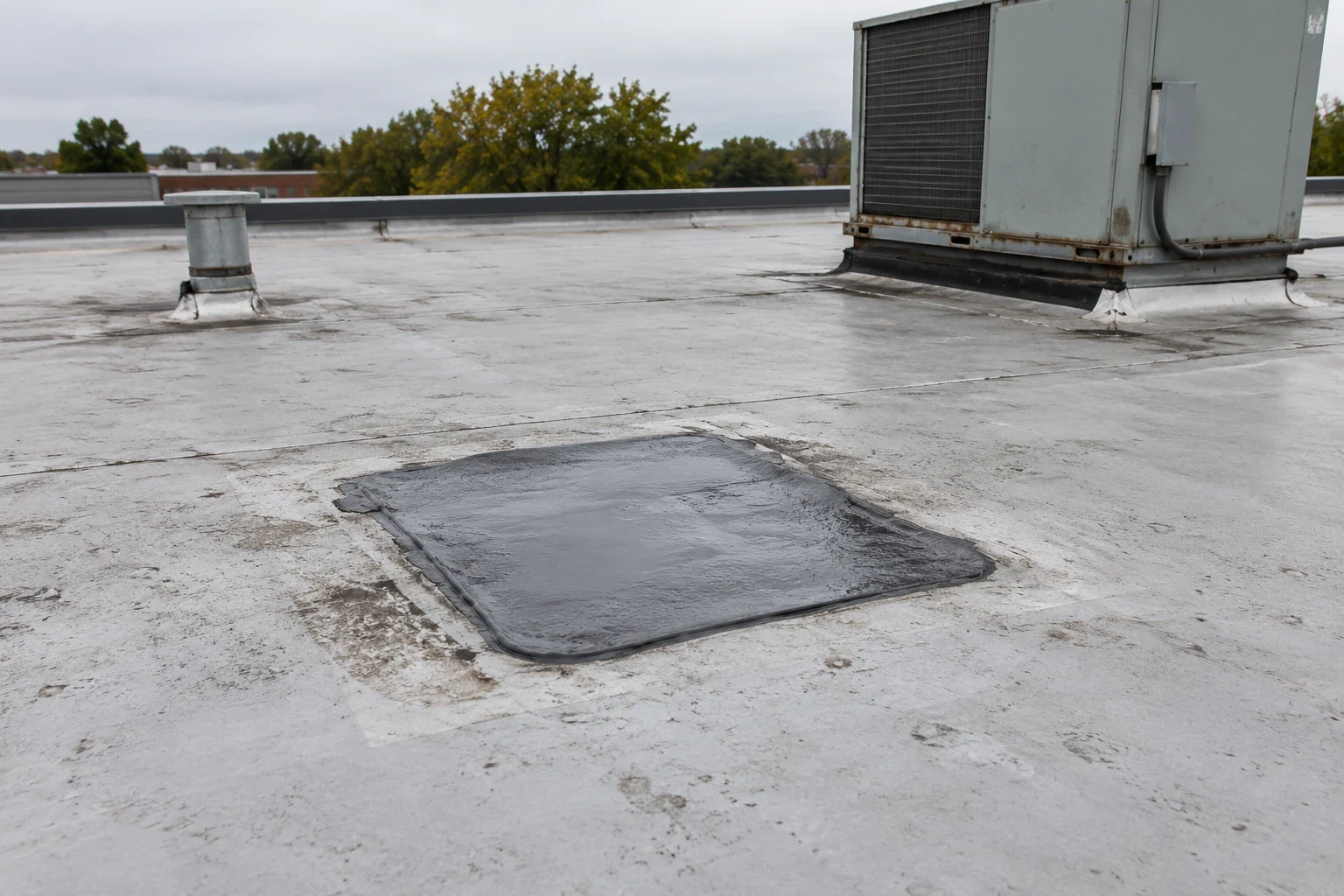
A limb or a length of sheet metal that lands hard leaves a membrane puncture that needs its own repair.
Big Low-Slope Buildings in the Industrial Center
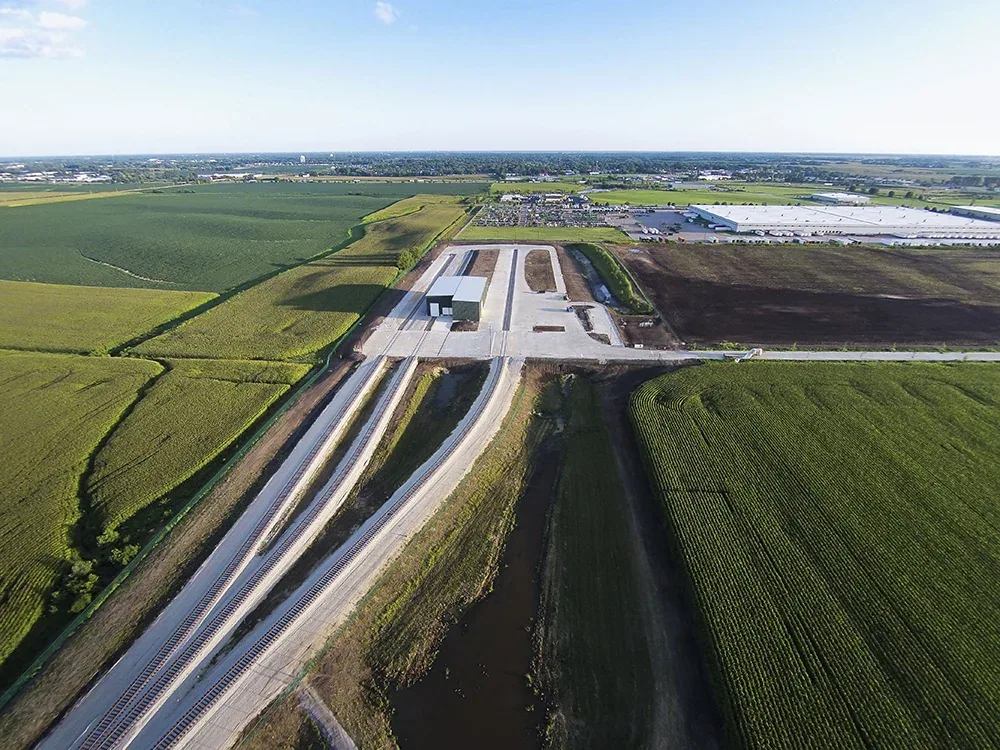
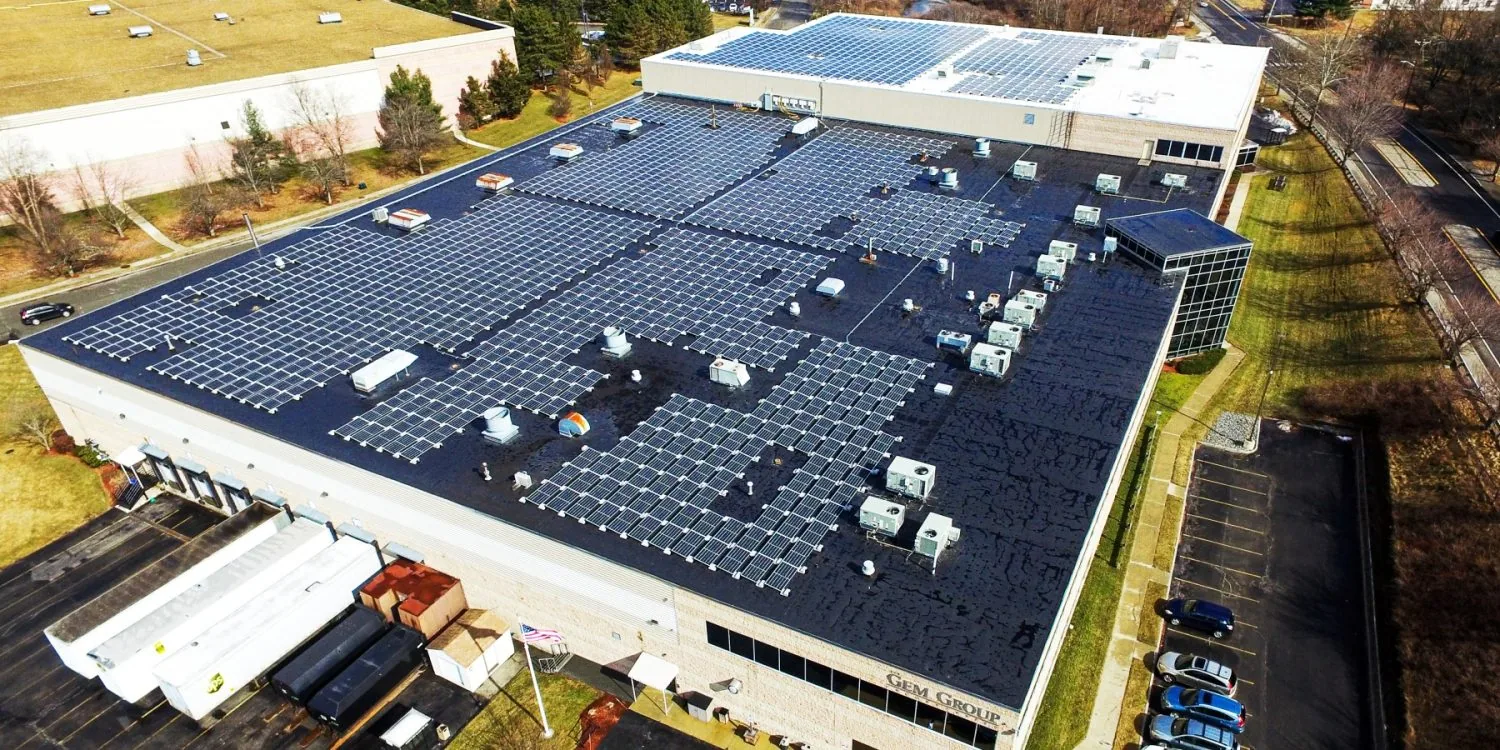
Large low-slope manufacturing and warehouse buildings fill most of the Eastern Iowa Industrial Center along I-80. Long perimeters mean a lot of edge metal, and edge metal is where a derecho gets its grip.
For a plant in the Eastern Iowa Industrial Center, we plan the wind walk around the production schedule. We badge in, take the roof hatch, and cover the perimeter in the first hour so any open edge gets a temporary tie-down before second shift arrives.
The same approach applies to any warehouse roof with a long dock side. The tall wall faces the wind, and the edge above it takes the beating.
Holding the Roof Until the Repair
When the membrane is open, water is the priority. We fasten loose sheet down, cover exposed insulation, and strap or screw edge metal back to the wall so the building survives the next line of storms. Wet insulation gets cut out and set aside for the adjuster.
The temporary work is photographed with the same care as the permanent work, because the claim file starts there. If the damage is widespread, our emergency response triages the buildings with active leaks first.
The permanent scope follows once the roof is dry: a list of repairs by location, a diagram, and a separate line for any wear that was there before the wind. The same list carries into the wider storm damage repair scope.
Record any hail marks separately from lifted edges; the inspection sequence for hail damage roof repair helps keep those causes distinct.
Send the Work Order or Set a Walkthrough
Send us the address, a photo of the loose edge, and the name of whoever holds the roof hatch key. We will walk the perimeter with you, mark every lifted detail, and give you a plain list of what to fix first.
Questions About Wind Damage Roof Repair
The roof looks fine from the parking lot after a derecho. What would a wind check find that we cannot see from the ground?
Plenty. From the ground you see the coping line and maybe a loose gutter. On the roof we find sheet that lifted and settled back, fasteners that pulled up out of the deck, and seams that opened a fraction without leaking yet. Those defects take a few rainstorms to show up inside. A walkthrough right after the storm costs a morning. Finding it through a stained ceiling in February costs a good deal more.
A run of coping blew off but nothing is leaking. Can the repair wait for next year's budget?
It can wait for a budget cycle only if the edge is secured in the meantime. Bare wall tops let water into the masonry or the wall cavity, and an unprotected membrane edge is the first thing the next storm lifts. We can set a temporary cover and strap the loose metal now, then price the permanent coping as a planned item. Put the temporary work on the work order so it is on record.
We patched after the August 2020 derecho and the July 2024 storm hit the same roof. How do we separate old damage from new?
Photos and age. We compare the current condition against whatever records you have from the earlier repair, then look at the patches themselves: weathering on an old patch is easy to tell from a clean tear. Anything we cannot date, we mark as unknown rather than guess. Your adjuster will want the same separation, so we write it into the scope from the start.
Our plant runs three shifts. How do you get edge repairs done without closing a bay?
Most edge work sits at the perimeter, outside the production zone, so the crew works from lifts and the roof hatch and stays out of the aisles. We ask the plant manager which truck courts and doors need to stay clear, stage materials on the opposite side, and put a spotter on the ground when we hoist. Interior ceilings below the repair are rarely touched.
How does wind repair work get coordinated with the roof manufacturer's warranty?
Read the warranty before anyone cuts the sheet. Many manufacturers want repairs done with their own materials and details, and some want written notice of storm damage within a set window. We pull the paperwork, follow the published repair procedure for the membrane on the roof, and keep the photos that show the work was done to it.
Talk to a Davenport Commercial Roofer
Send the work order, the building address or a few photos of what you are seeing. We will set a walkthrough, go up with whoever has the hatch key, and tell you plainly what the roof needs.