
Roofing for Real Estate Investors and REITs in Davenport, IA
Roof surveys, capital planning and repair for investors, REITs and owners holding commercial property in Davenport, IA, written for acquisitions and reviews.
The offering package says the roof was redone. It does not say when, with what, or who looked at it afterward. Closing is three weeks out and the lender wants a number.
That is the moment an owner or asset manager calls a roofer. For investors buying or holding commercial property in Davenport, IA, the roof is a line item that can move a deal. We go up, check what is really there, and hand you a plain writeup: what is sound, what is wet, what is coming due, and what the work would involve. You decide with facts in the file.
The Survey Before Closing
A seller's roof history is a starting point. We treat it that way. A diligence visit has four steps:
- Walk the whole roof, not just the part near the hatch.
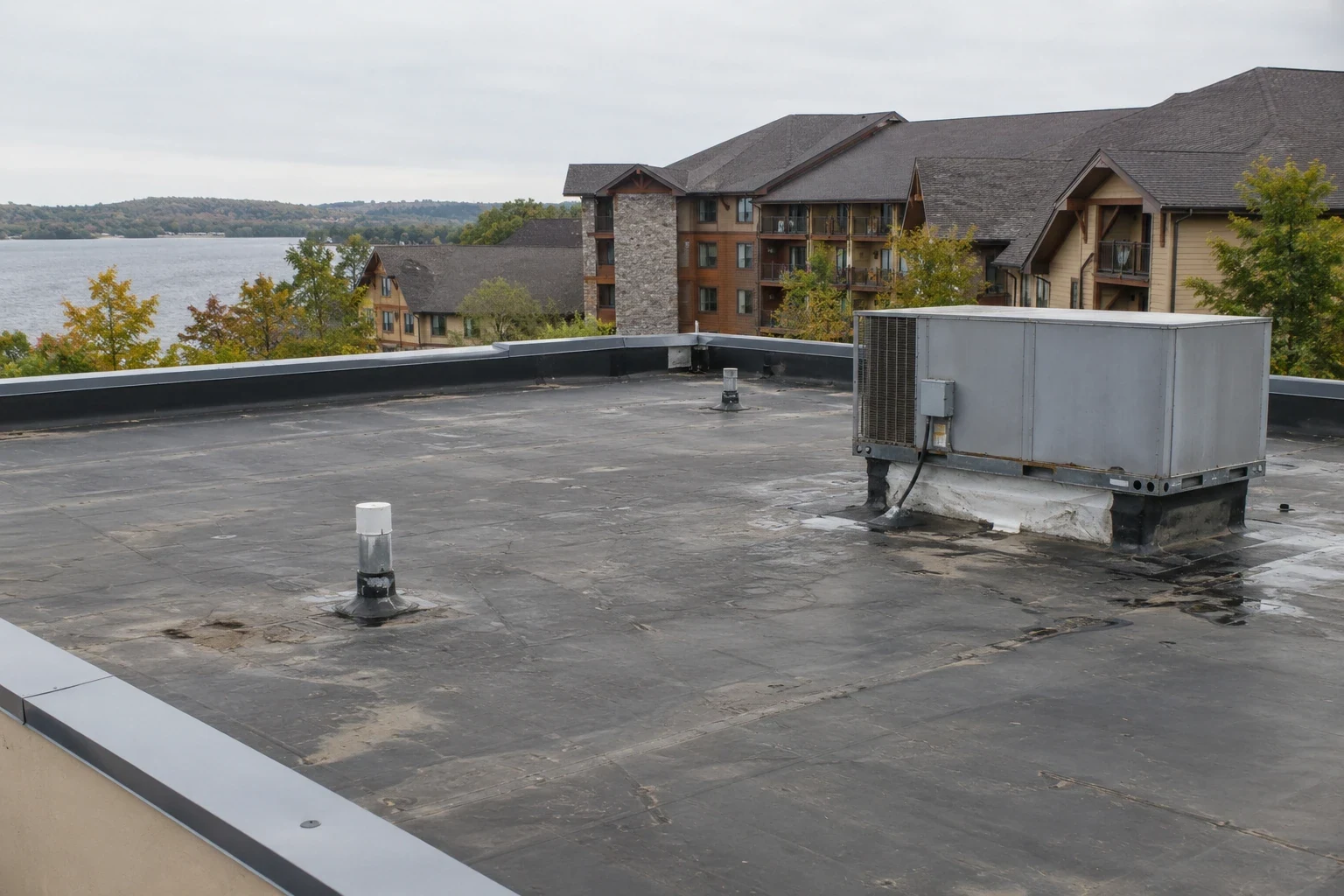
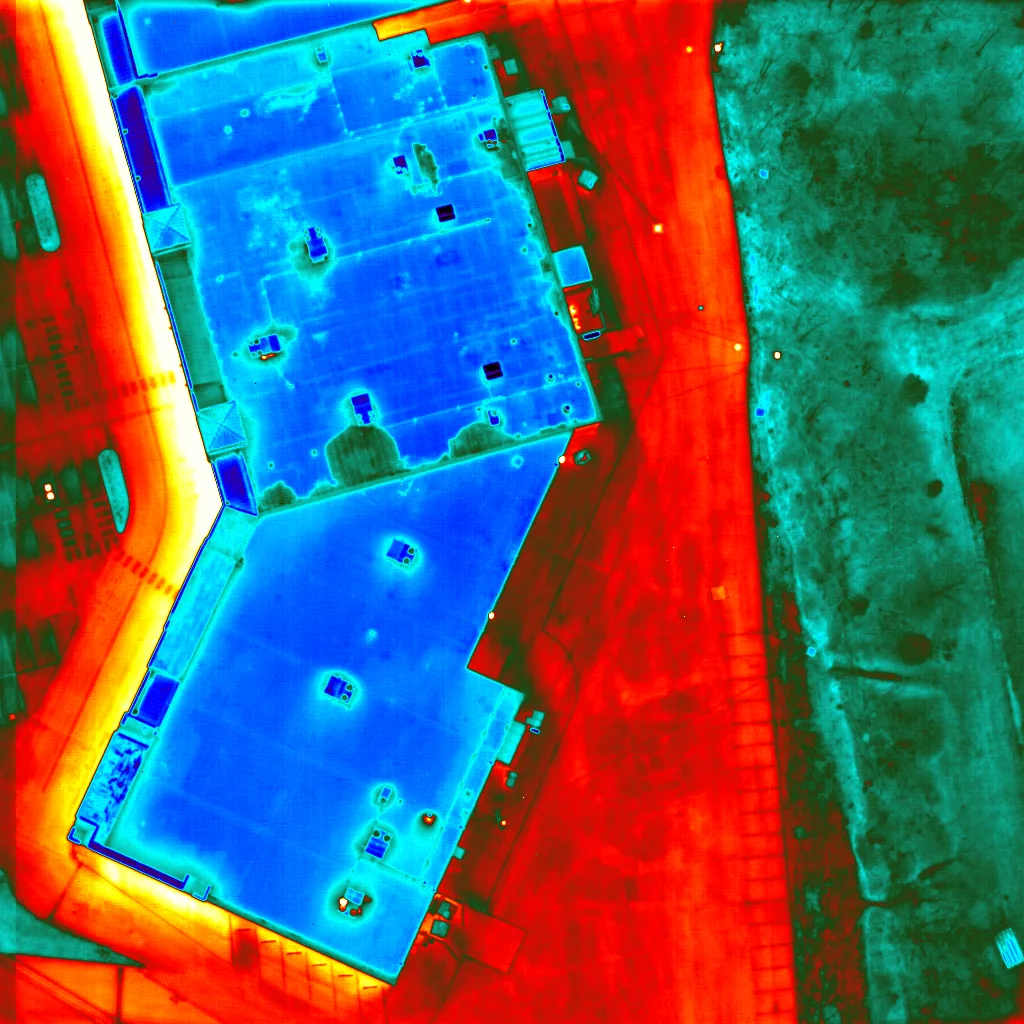
- Run an infrared moisture survey at the right hour of the day to find wet insulation.
- Cut a few cores to confirm layers, deck and moisture.
- Write it up with photos, locations and a rating.
The result is a due diligence roof survey your lender, your counsel and your asset manager can read in one sitting. Short windows are normal. Tell us the closing date and we will work back from it.
If the survey finds wet insulation, we mark its edges on a roof plan so the buyer can price a partial tear-out against a full replacement before the deadline.
Empty Boxes and Unseen Leaks
NorthPark Mall on West Kimberly Road is a 1,074,000 square foot single-level enclosed mall with two vacant large boxes next to Dillard's, JCPenney and Von Maur. Vacancy raises a roof question that has nothing to do with the weather. Nobody is inside to see a drip.
A leak into an empty space runs for weeks. Insulation stays wet, the deck takes it, and the first sign may be a tenant complaint next door. If you hold or are buying a vacant big box on the Kimberly Road corridor, schedule a roof walk on a rainy day and again after the first thaw. Empty does not mean quiet.
Ask who has been inside the vacant space this month and who has checked the drains over it. If the answer is nobody, put that on the first-week list. A vacant box also needs its roof drains and rooftop unit curbs checked, since the building systems still shed water into them.
Industrial Park Holdings on I-80
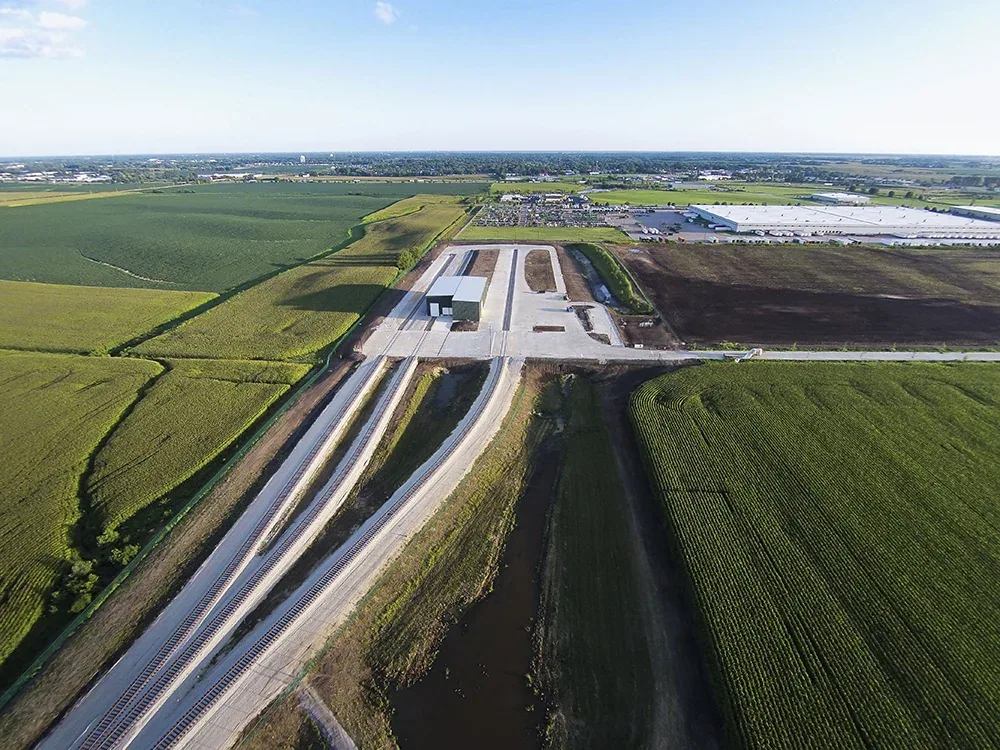
Out on Interstate 80 in northwest Davenport, the Eastern Iowa Industrial Center covers 346 acres of light industrial ground, with an on-site rail transload facility. Amazon's fulfillment center in the park sits on a 158-acre site, and Sterilite's plant beside it has about 2.5 million square feet of manufacturing and warehouse space.
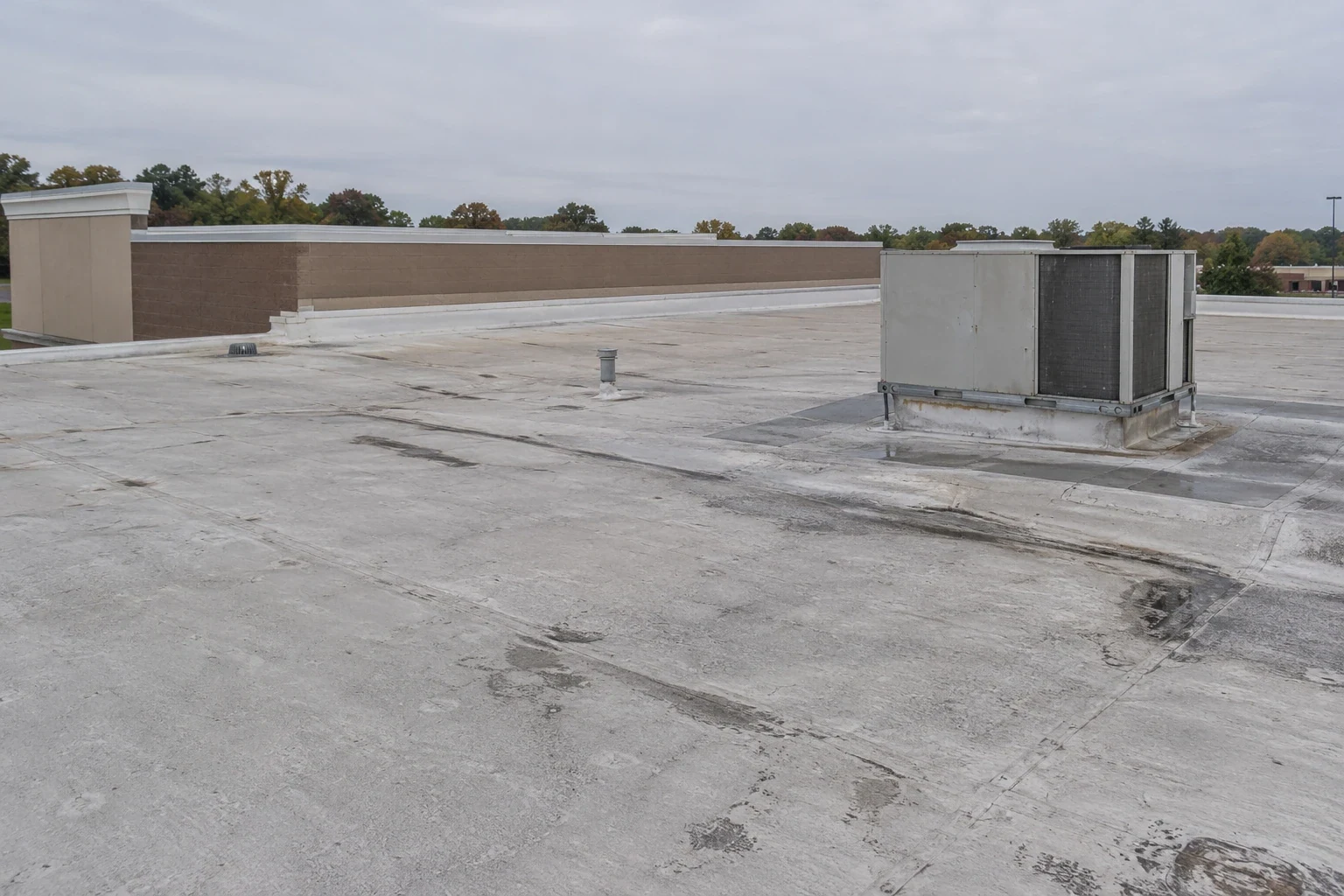
For an investor, size changes the exposure. A small leak under a roof with racking and product below it becomes a tenant claim fast. Most of what we check on these Eastern Iowa Industrial Center buildings is the unglamorous part: drains, seams, perimeter edges and the penetrations tenants add after move-in.
Lease Language and Who Pays
Roof cost lands somewhere in the lease. Sometimes it is a pass-through. Sometimes it sits with the landlord as capital. Sometimes it is split by cause. Our reports help with that last case because we record what we find: a ponding area from a clogged drain, a torn field sheet beside a unit, a patch with the wrong material.
Tenant-added equipment is a classic source of that argument. A new unit goes on a curb or support that was never flashed properly, and the leak starts there. When the photos show who touched the roof and when, the lease conversation gets shorter. We do not read your lease for you. We give your counsel and your asset manager the roof facts to read it against.
Capital Plan for the Hold Period
A hold period in Davenport comes with weather. The city center has 133 hail reports within ten miles since 2004, including 2.5 inch stones on April 4, 2023, and the derecho of July 2024 pushed gusts up to 100 mph across the region. Plan for repairs, not just replacement.
A good roof capital plan splits the portfolio three ways. Roofs to replace in the hold, roofs to maintain, and roofs where coating restoration can extend service life because the insulation is dry and the membrane is sound. The third group is where a coating can save the most capital, and it only works when the moisture survey says so.
A portfolio report is useful only if its ratings mean the same thing at each property. We separate active leaks, near-term capital work and routine service, then attach the same evidence fields to every asset: roof area, system, observed condition, photo, recommendation and timing. For an acquisition, keep confirmed conditions separate from assumptions that still need opening or testing. The resulting schedule lets ownership compare risk across buildings without mistaking a recent patch for remaining roof life.
Send the Address and the Closing Date
Send the property list, the closing or refinance date and any seller roof papers. We will set the walkthrough around your deadline and deliver the survey in a form your lender and your asset manager can both use.
Questions About Real Estate Investors and REITs
We are under contract on a flex building with a seller-provided roof report that is a few years old. Is it enough?
Treat it as background and have the roof walked again before the diligence period ends. Reports go stale after a hard winter or a storm, and a seller's report was written for the seller. Ask for the original installation papers, any warranty and the repair invoices. Then have us scan and core the roof so your file shows its current state. If the seller's report and ours disagree, you have a negotiating point with photos behind it.
A tenant says the roof leaks and wants rent credit. How do we establish what is actually wrong?
Send someone up before anyone argues. We walk the roof, mark the entry points, check the insulation under the damp spot and photograph everything with locations. The report tells you whether water enters through membrane, flashing or something the tenant installed. It also shows how long the condition likely existed. That record works for the landlord and the tenant alike, and it keeps the repair moving while the paperwork catches up.
How do we compare roofs across properties when the data comes from different vendors?
Do not compare the old reports. Walk the roofs once with one method and rate them on one scale. We use the same photo format, the same rating and the same cost-driver notes across buildings, so the asset manager reads a single table instead of six styles of report. The first round costs time. Every later year is an update, not a restart.
After the 2020 derecho a few of our properties took claims. How do we know whether old repairs still hold?
Start with the edges and the patches. Wind-opened perimeters and lifted flashing tend to show up first, and emergency patches from that season were often temporary by design. We inspect each repair, mark ones that have aged out and note any area that was never reopened. If a claim file exists, we line the photos up against it, and an insurance restoration contractor on the file can work from the same set. Any gap becomes either a covered item or a planned repair.
Can you support a portfolio refinancing on a short clock?
A short clock is workable if the schedule is real. Give us the building list and the deadline. We run walks in the order that matters most to the lender, usually the oldest roofs and the largest ones first, and release findings as each one finishes so counsel is not waiting on the last building. Access goes faster when your property management team lines up hatch keys and tenant notice ahead of our arrival.
Talk to a Davenport Commercial Roofer
Send the work order, the building address or a few photos of what you are seeing. We will set a walkthrough, go up with whoever has the hatch key, and tell you plainly what the roof needs.