
Roof Coating and Restoration in Davenport, IA
Restore a sound commercial roof in Davenport, IA with a silicone or acrylic coating after moisture testing, seam repair and a clean substrate.
Chalky membrane, a few patched seams, and a capital budget that cannot cover a tear-off this year. That is the walkthrough where somebody asks about coating.
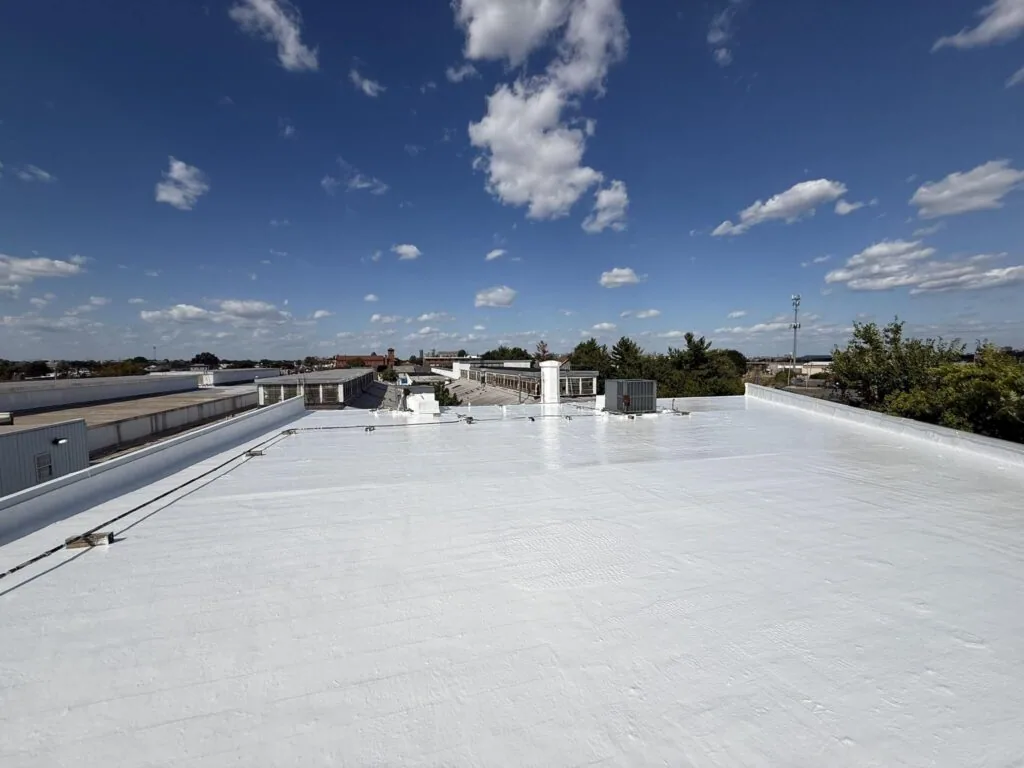
It is a fair question. A coating system can turn a sound but tired roof in Davenport, IA into a sealed, reflective surface, and it can add years of service without pulling off a single layer. The word that matters is sound. A coating is a new surface over the roof you already have. If that roof is wet or failing, the coating hides the problem for a season and then lets go.
Roofs That Qualify
We say yes to a coating when four things line up.
- The insulation and deck are dry or nearly dry.
- The existing membrane is still bonded and not splitting across the field.
- Flashings, penetrations and edge metal can be repaired to hold the coating.
- The roof is not holding water for long stretches after rain.
Run that list on a retail building along the Brady Street corridor or an office building off Kimberly Road and the answer can come back split: one section passes, another fails. When that happens, we price the sections separately.
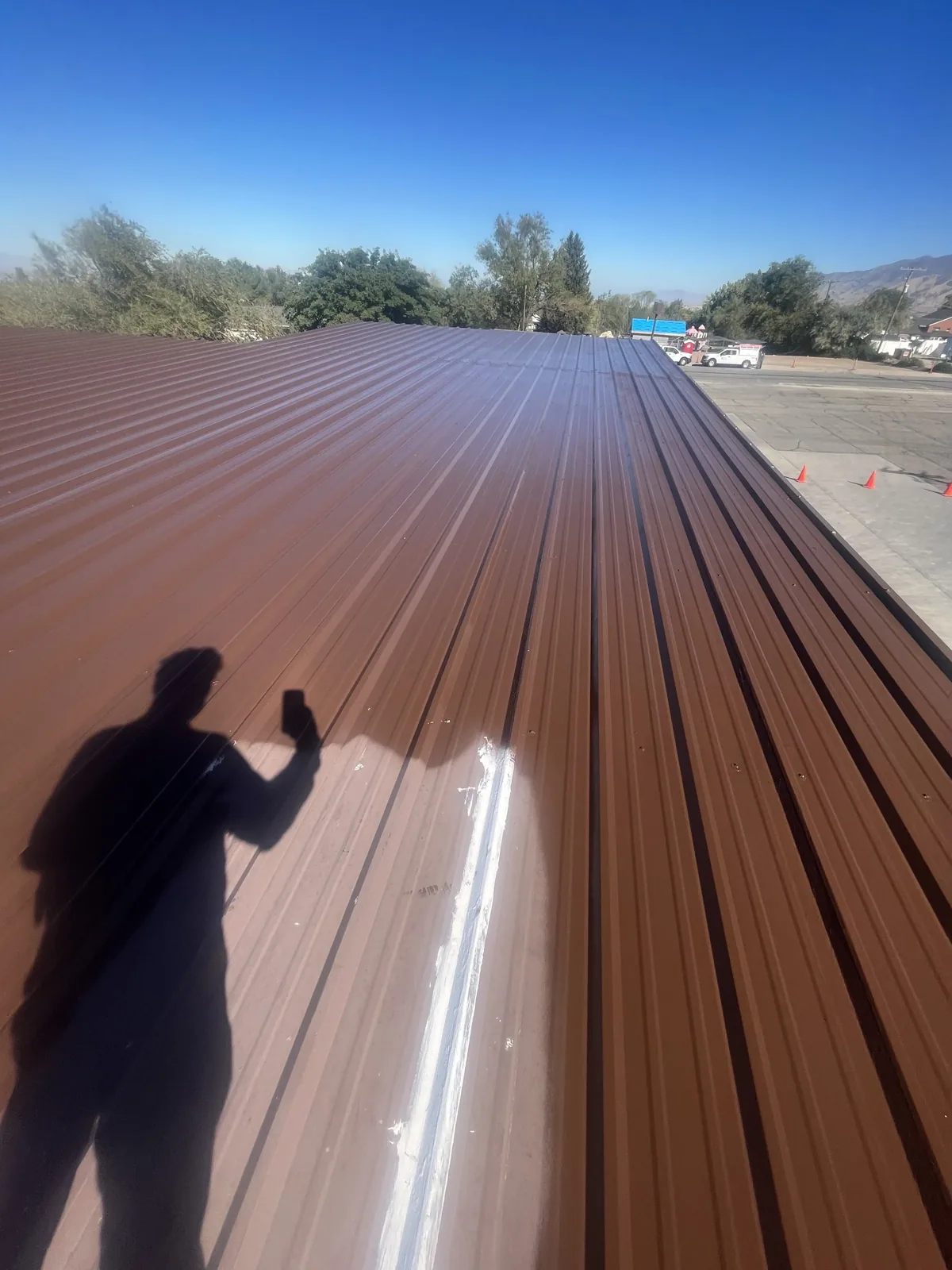
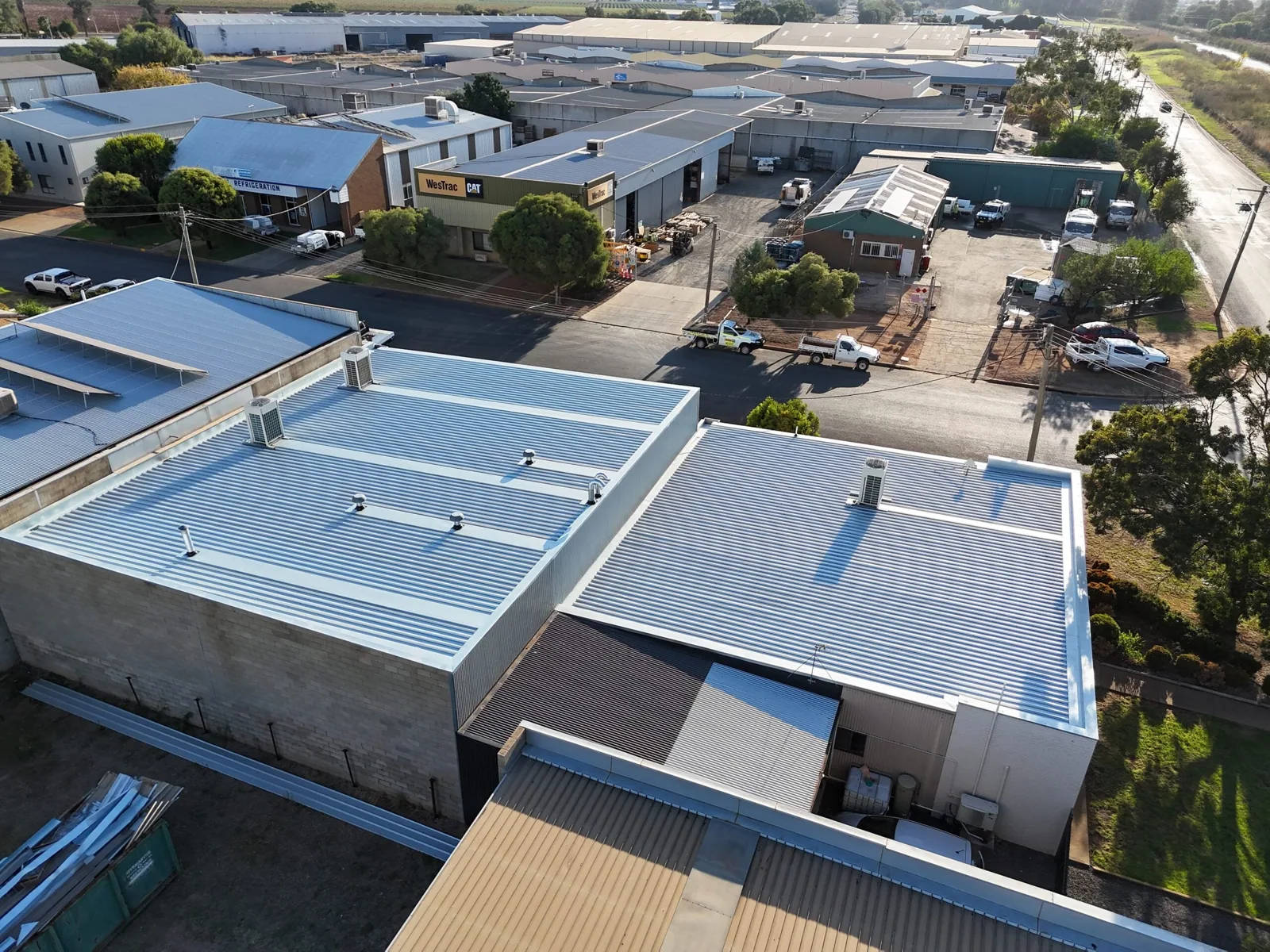
Metal roofs with sound panels and failing fastener seals are good candidates. So are aging single-ply, modified bitumen and built-up roofs with surface wear but a healthy structure. Roofs that fail the list get a straight answer and a price for a recover or replacement instead. Nobody should pay for a coating that is covering up a bigger bill.
Wet Insulation Comes First
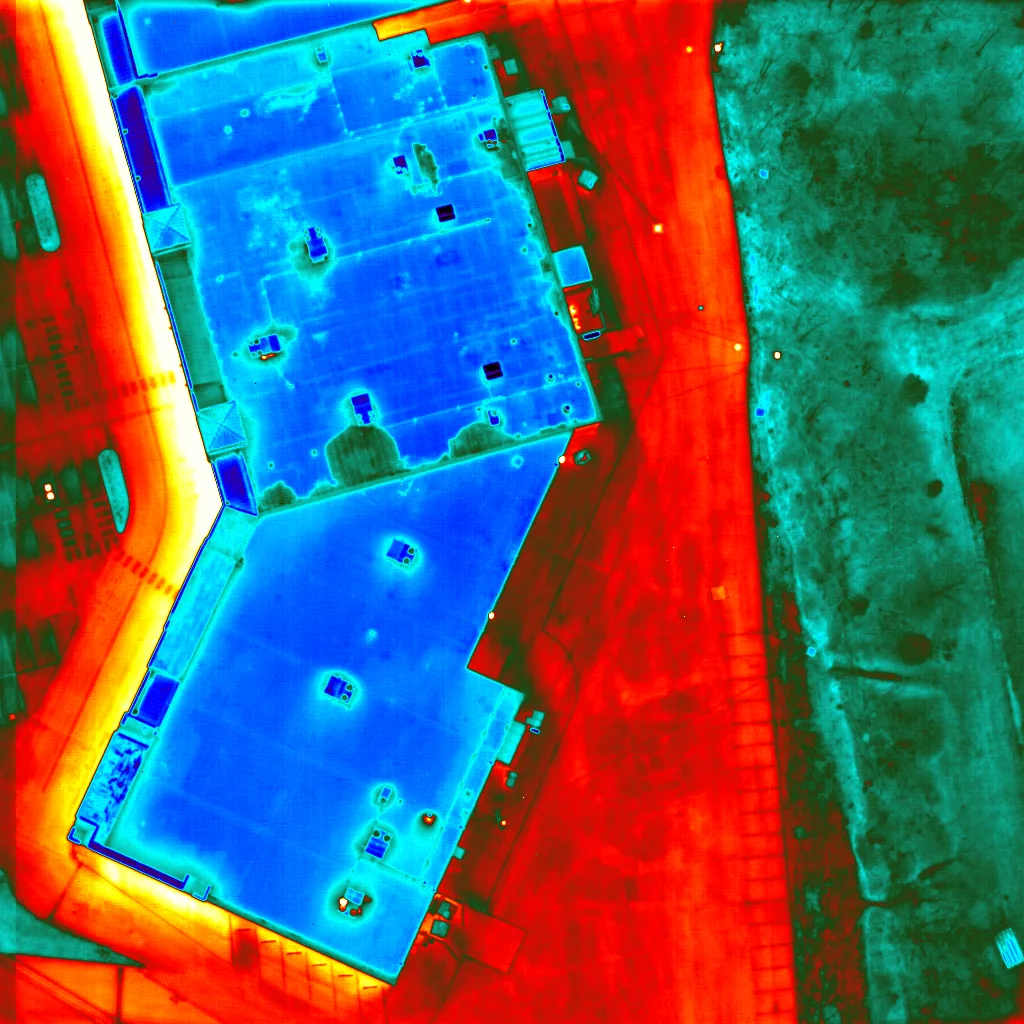
We do not price a coating until we know what is under it. An infrared moisture survey and a few core cuts show where water has gotten into the insulation, and that map decides the scope.
Small wet areas are cut out and replaced before coating begins. Large ones mean the coating is the wrong tool, and we say so in the report. The cost of finding out is small compared with coating a roof that holds water in its layers. Wet insulation under a coating cannot dry out, and freezing in January makes the trapped water push on the membrane from below.
Silicone or Acrylic
The two main choices behave differently on a Quad Cities roof.
Silicone coatings shed ponded water well and stay flexible through the cold. They suit roofs with low spots that stay wet after a storm. They also attract dirt more readily, and a later recoat needs a compatible product. Acrylic coatings are easier to recoat and cost less to install, but they do not like standing water and need a roof that drains well.
Before choosing, we look at drainage, the existing membrane, what the roof sees from rooftop equipment, and how the owner wants to maintain it later. Then we recommend one and explain what it would take to recoat.
Prep Is Most of the Job
The crew spends more time on preparation than on the coating itself, and that is how it should be.
- Pressure wash to remove dirt, chalk and biological growth.
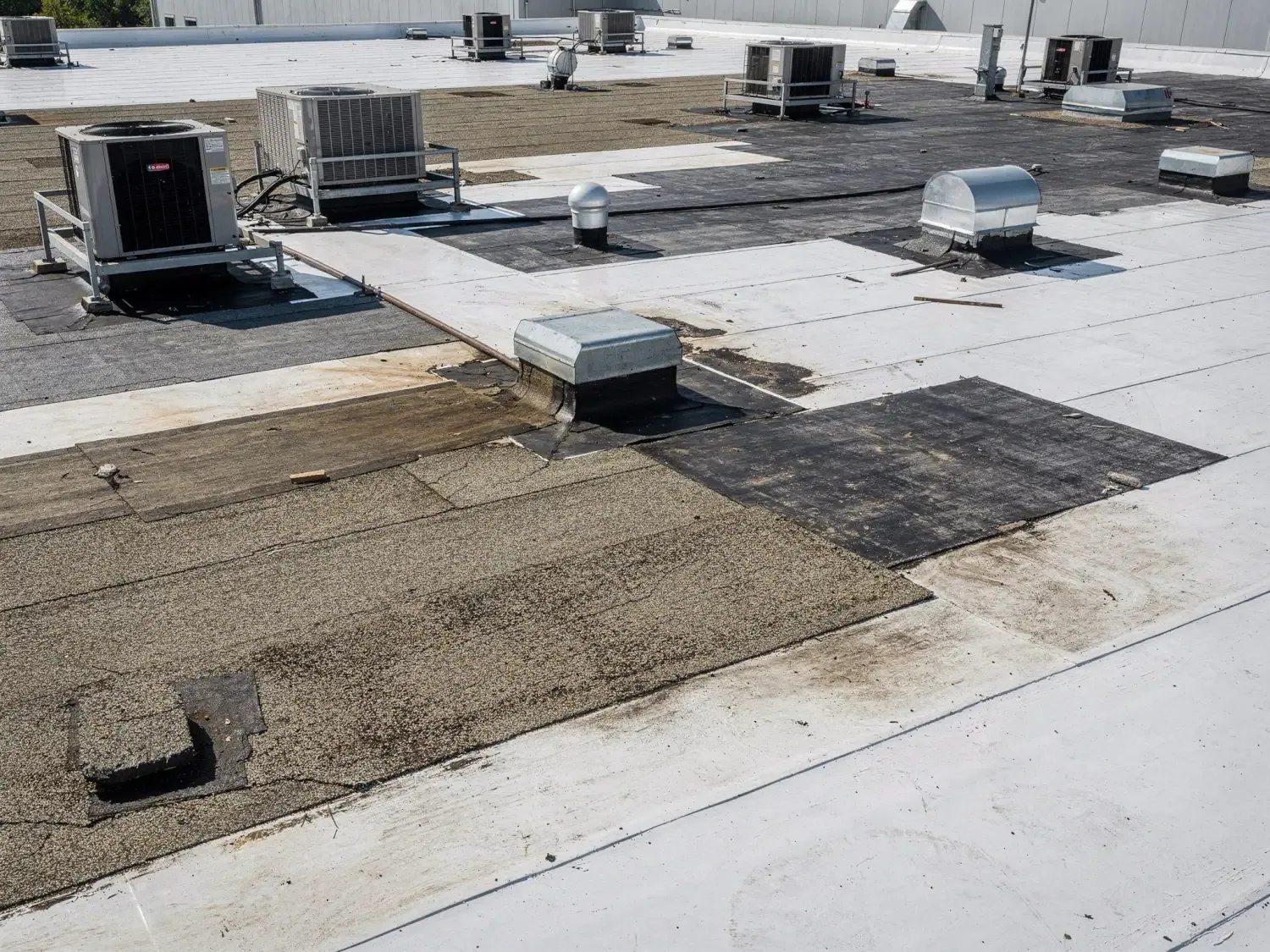
- Repair seams, splits and blisters with compatible materials.
- Reinforce flashings, pipe boots and curb corners with fabric and base coat.
- Replace failed sealant and loose fasteners.
- Prime where the manufacturer requires it.
A coating bonds to what it is put on. If the surface is dirty or the repairs are rushed, the coating peels in sheets. We photograph the roof before and after prep, so you can see the condition of the substrate that the coating covers.
Weather Windows and Thickness
Coatings need dry surfaces and mild temperatures to cure. In this part of Iowa, that means late spring through early fall, with a plan for the afternoon thunderstorm that arrives half an hour after the crew finishes a section.
We schedule coating in sections that can be tarped or finished quickly, and we check dew point and surface temperature before each day starts. Thickness is measured as the work goes on. A coating that is applied thin will still look fine on day one, but it wears out faster under UV and the swing between Davenport's record high of 111 F and record low of -29 F. Mil readings and wet-film checks go into the closeout record.
What the Coating Buys, and What It Does Not
A coating can extend service life, reduce rooftop heat and seal a lot of small leaks at once. On a warehouse in the Eastern Iowa Industrial Center, that can defer a replacement by years and spread the cost across budget cycles.
It does not repair hail impact damage or make a failed deck sound. After a storm like Davenport's baseball-size hail of April 2023, we inspect a coated roof the same way we inspect any other, and a coated roof still belongs on a maintenance schedule. We present it to the owner as a bridge, and the closeout report says what comes next: a maintenance coat, or a planned replacement.
Before coating, confirm the system can accept the primer and that the substrate will hold it. We check adhesion in representative areas, document wet insulation and verify that old silicone, asphalt residue or loose coating will not compromise the bond. Product chemistry matters at transitions and repairs; a coating that adheres to one field may not tie into every flashing. The proposal should state preparation, reinforcement locations, dry-film target and how ponding or structural movement will be handled separately.
We mark the test areas on the roof plan.
Send the Roof Plan, Set the Core Cuts
Send the last inspection report or the roof plan, and we will schedule the survey and cores that tell you whether a coating makes sense. If it does not, we will say so and price the next option.
Questions About Roof Coating and Restoration
Our roof has three layers of old built-up. Is a coating even possible?
It can be, if the top layer is bonded and dry. Multiple layers add weight and hide moisture, so we cut cores through every layer before recommending anything. If the cores come back dry, a coating over a smooth or gravel-surfaced built-up roof is a legitimate option. If they come back wet, we talk about a tear-off.
Our tenants share the air handlers on that roof. Will they smell the coating?
Not much, if the intakes are handled. Silicone and acrylic products have low odor compared with solvent-based materials, but we still walk the air intakes with your building engineer and shut down or cover the ones near the work area. A tenant notice goes out before each phase starts.
How long before we need to recoat?
That varies with the product, the thickness applied, and how much foot traffic and equipment service the roof sees. We do not promise a number. We inspect a coated roof each year, record the surface condition, and tell you when the wear pattern says a maintenance coat will pay off.
Will the coating lower our cooling bill?
A reflective white coating cuts the heat the roof absorbs, which usually helps on a building with large cooling loads, such as a distribution center with conditioned office space. We would not put a number on the savings without your utility data. Ask for an energy comparison and we will explain what the roof surface can and cannot change.
What if the coating fails early?
Early failures nearly always trace to prep, moisture or application conditions. That is why we document the substrate, the weather and the thickness. If a failure shows up, those records tell us whether the problem was in the product or the process, and the repair plan starts from facts instead of finger-pointing.
Talk to a Davenport Commercial Roofer
Send the work order, the building address or a few photos of what you are seeing. We will set a walkthrough, go up with whoever has the hatch key, and tell you plainly what the roof needs.