
Acrylic Roof Coatings in Davenport, IA
Acrylic roof coating systems in Davenport, IA: reflective restoration for sound roofs, drainage limits, application windows and simple recoating.
It is late September and the capital plan is already locked. The roof is old but sound, the surface has gone gray and chalky, and the building runs hot every July. Somebody in facilities asks if a fresh coat can carry it one more cycle.
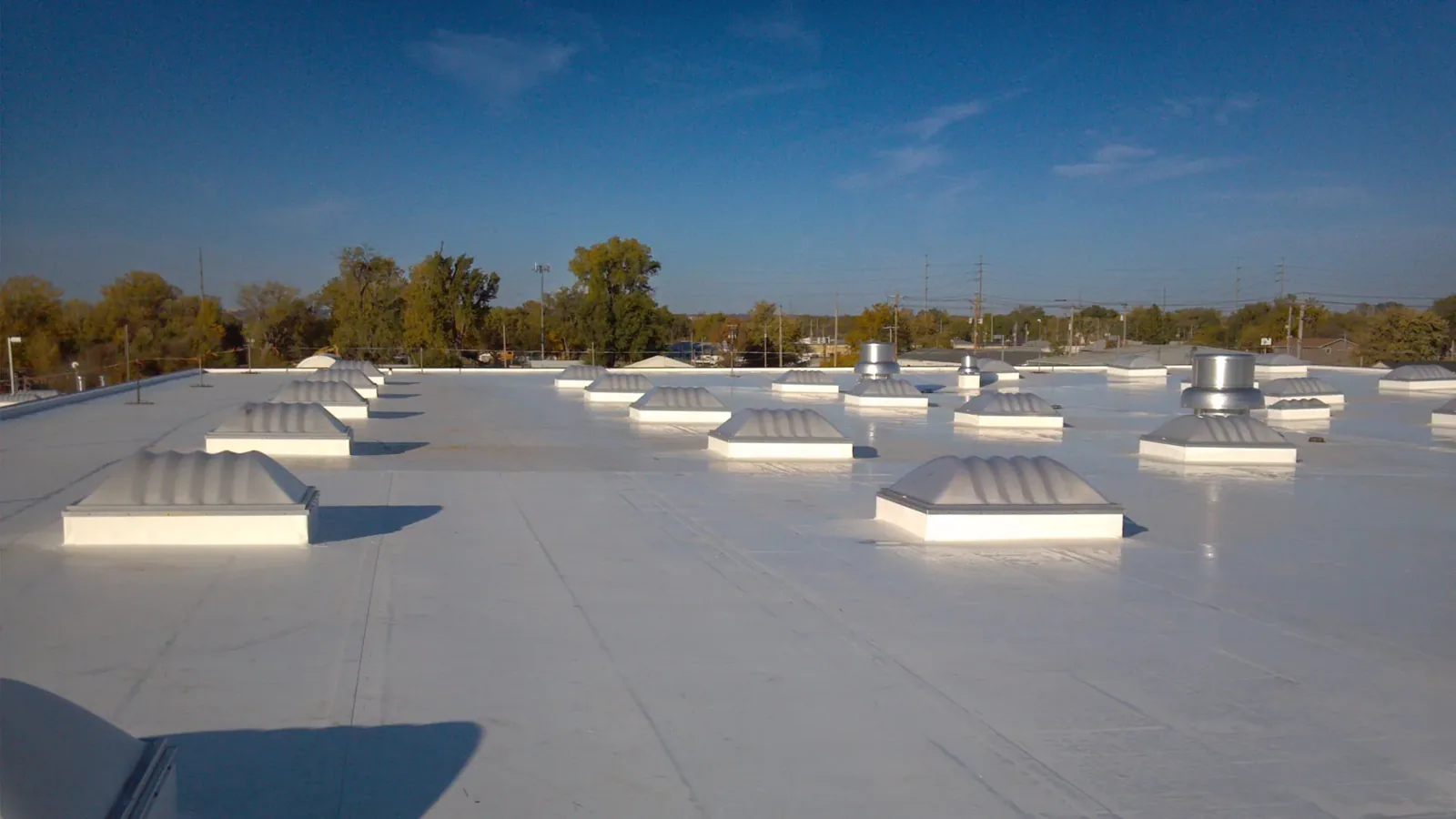
Often it can. Acrylic is a water-based coating that dries into a white, reflective film right over the existing membrane. It is the lightest-touch restoration we install in Davenport, IA, and it is the easiest to maintain later. It also has firm limits, and the first step is finding out which side of them your roof sits on.
A Dry Deck and a Clear Forecast
Because acrylic is water-based, water is its enemy until it sets. Rain on a fresh coat washes it off the roof, and a night near freezing can ruin film that has not cured. Our window in the Quad Cities is the stretch of mild, dry days between spring and the first hard cold.
We watch the forecast through the day before and the day after, then start early so the first coat sets while the sun is still high. The deck has to be fully dry, so a roof that held dew at dawn waits for the sun. A crew that rushes acrylic gets a coating that peels and a repeat bill.
What Acrylic Does Well
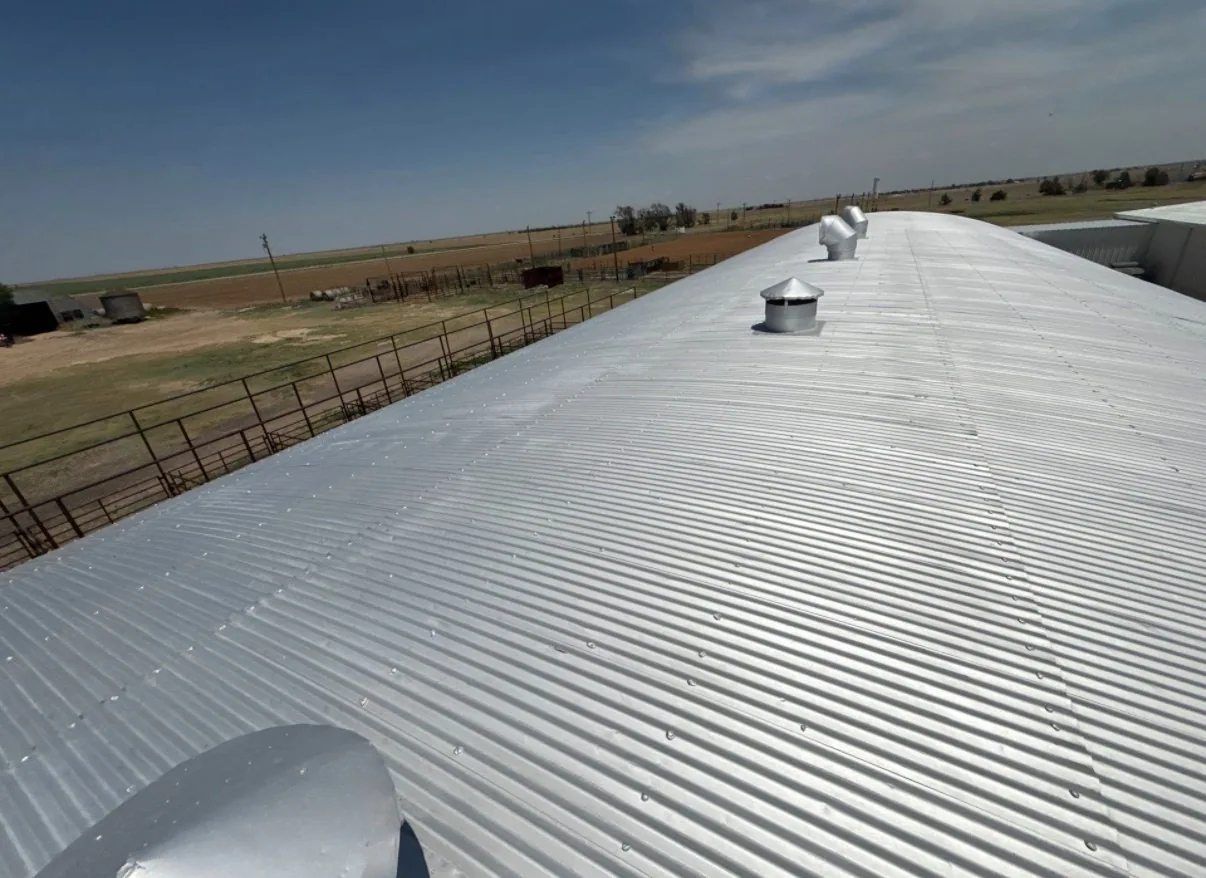
The white film reflects sunlight, which keeps the roof surface cooler and reduces the load on rooftop units in summer. That is the same logic behind cool roof installation, applied to a roof you already own.
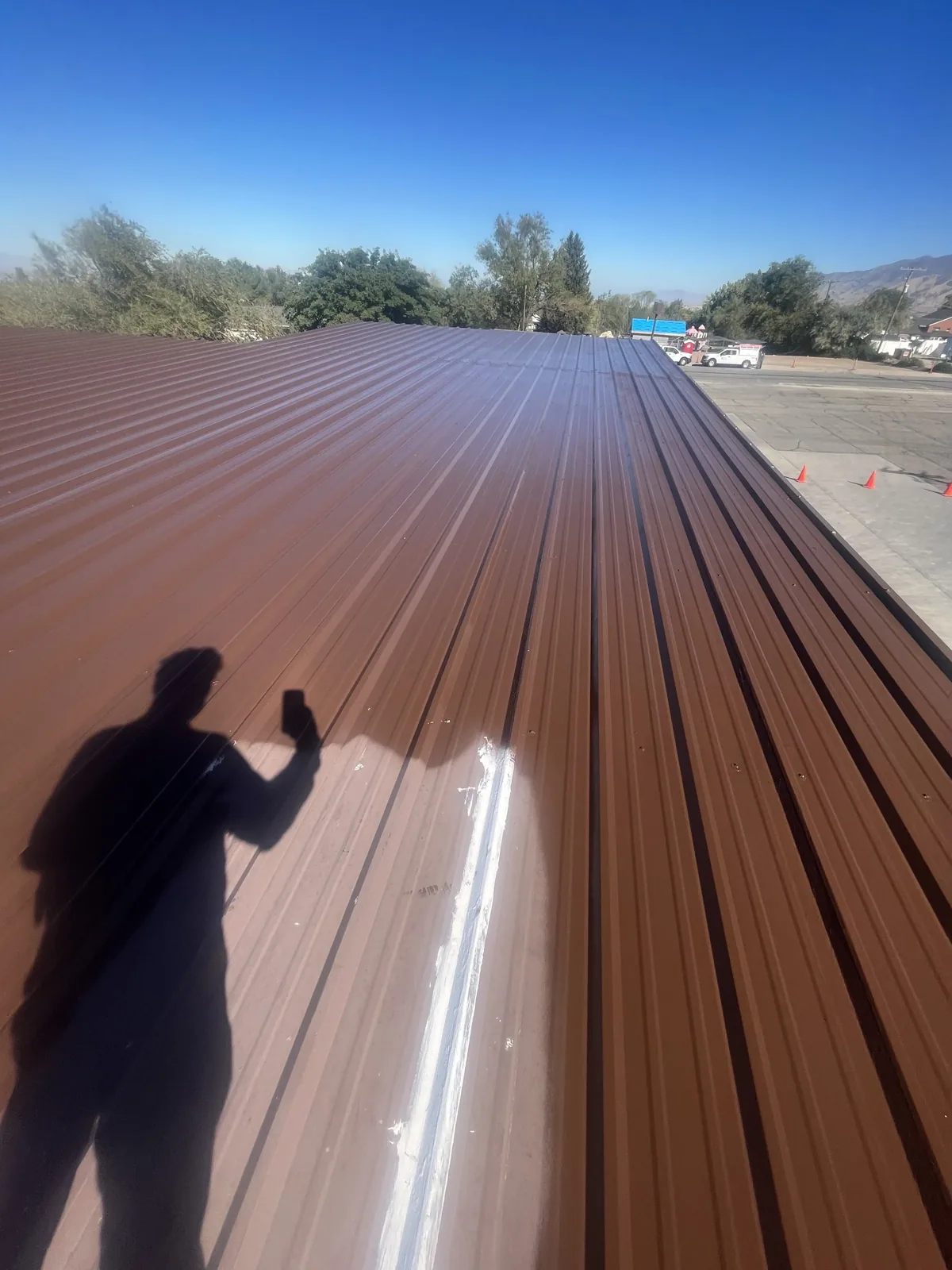
It also has a mild smell, which matters on an occupied building with fresh-air intakes close to the work. It bonds to many surfaces, including metal, modified bitumen, built-up roofs and cured foam, and it lets a little vapor through, so trapped moisture has a way out. Best of all, the next recoat is simple. Wash, repair, and roll on another film. Acrylic is also one of the protective coatings used over spray foam.
Drainage Decides It
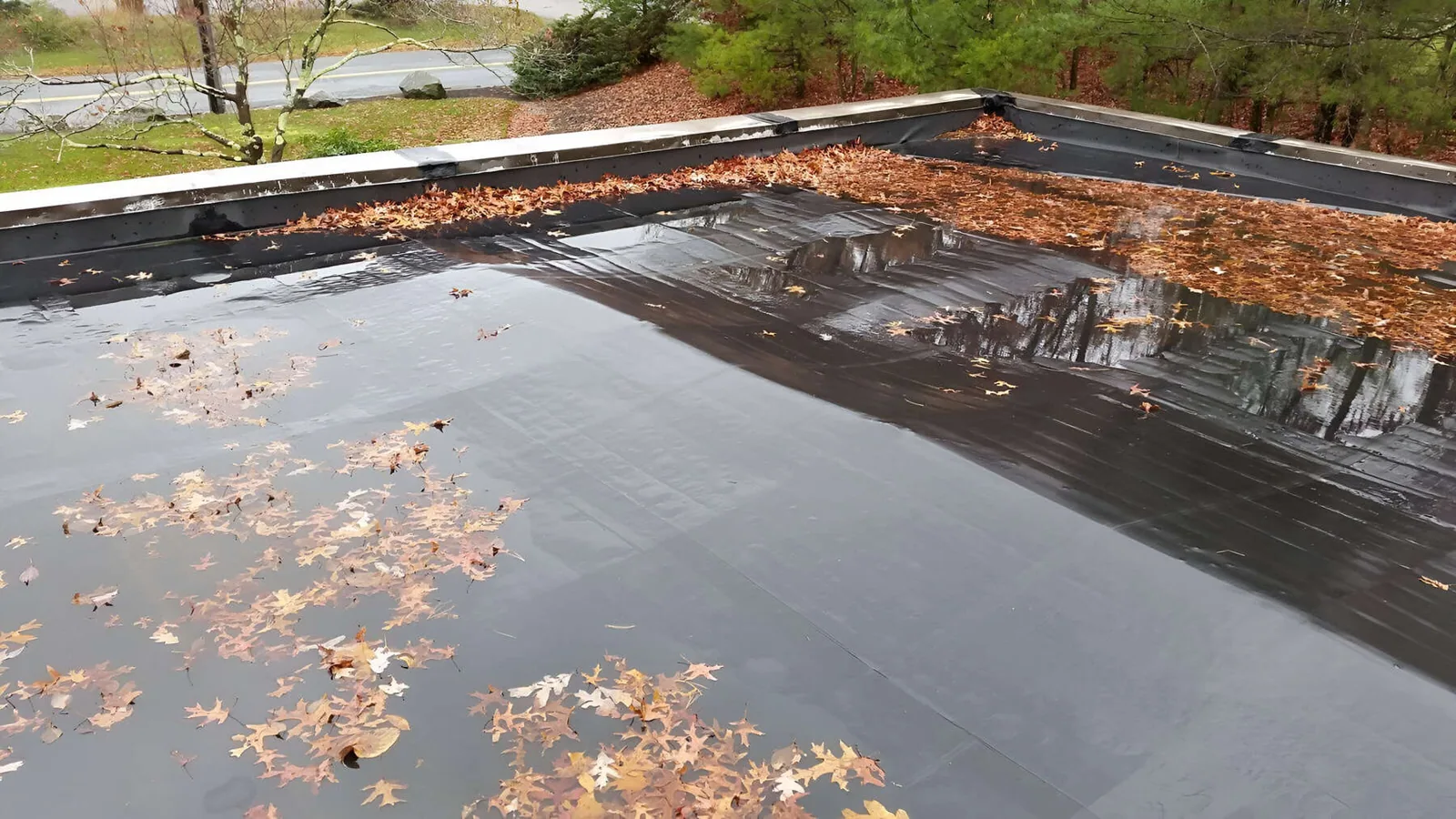
This is where acrylic stops. Standing water softens the film. A bay that holds a puddle for more than a day or two can blister, whiten and lose its bond.
So we walk the roof after a rain, or right after a hose test, and mark every spot that holds water. Short-lived puddles near a drain are manageable. Persistent ponds are not. In those cases we look at added drains, tapered insulation, or a different coating. Silicone tolerates standing water far better, and a roof with real ponding water problems often belongs there. Acrylic on a roof that ponds is a choice we will talk you out.
Washing, Repairs and Primer
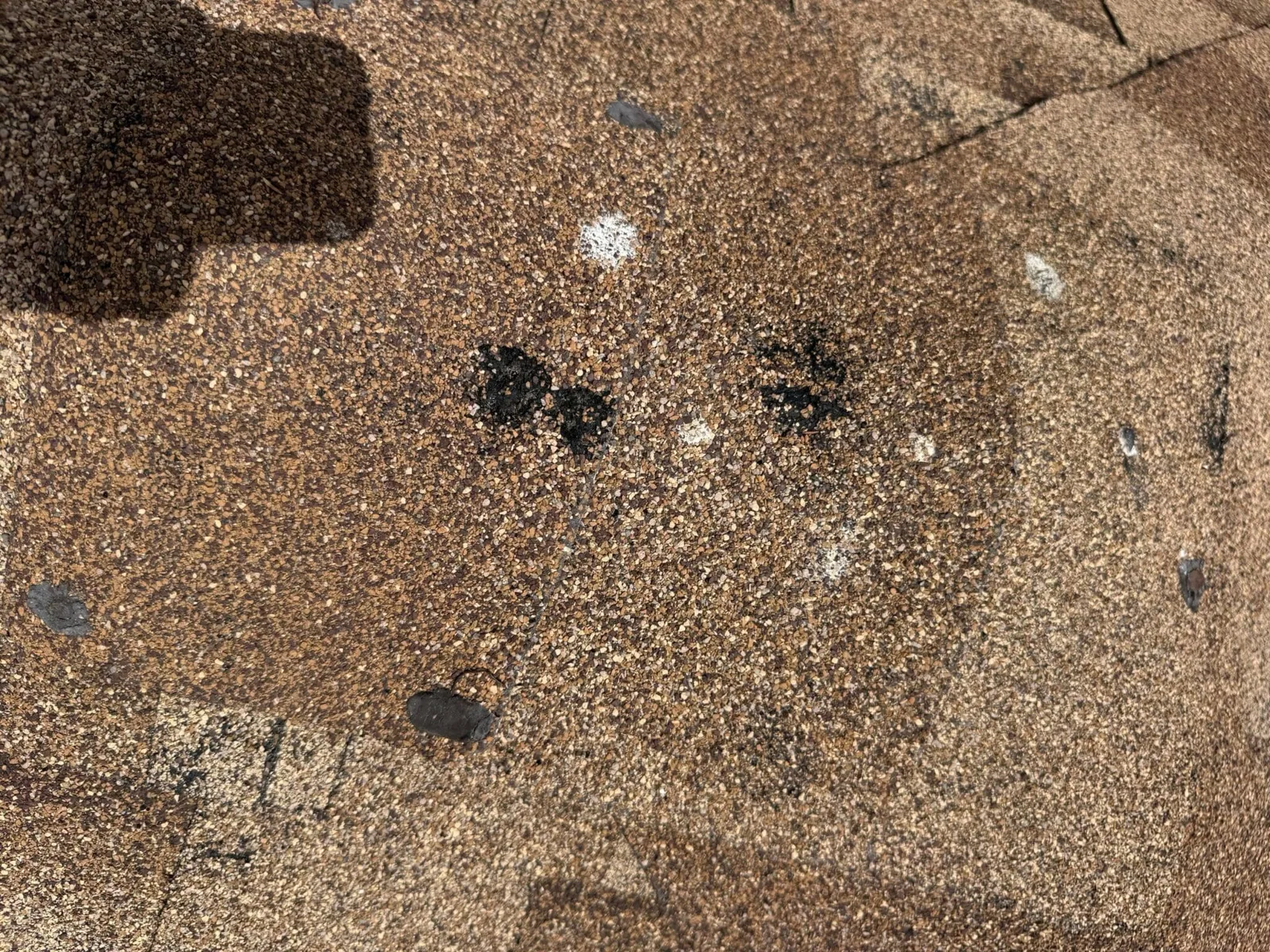
The coating is only as good as the roof it sticks to. We start by power washing off dirt, chalk and any mildew, which grows readily on shaded or damp parts of a roof near the river. Then comes the repair list: open seams, backed-out fasteners, cracked sealant, failed flashing, and punctures from past service calls.
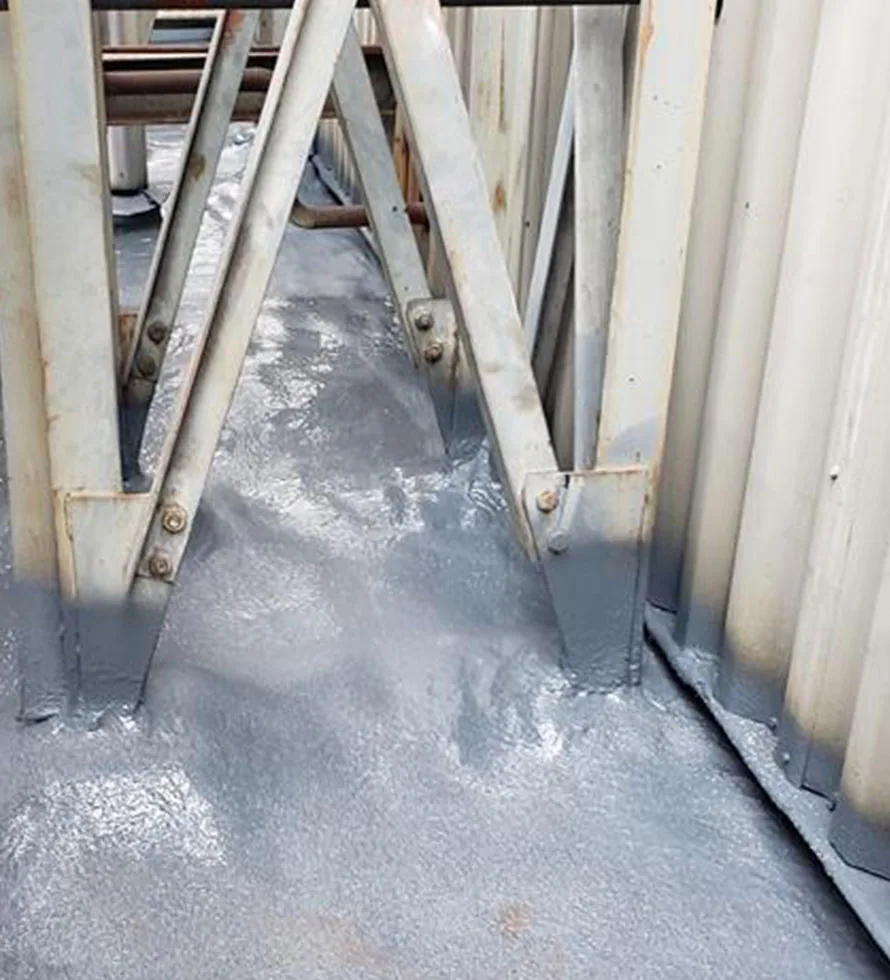
Where the surface is weak or porous, we use a primer. Where it moves, we set reinforcing fabric into the first coat. A small test patch goes down before pricing, so we know how the film grips before a whole roof depends on it. The patch result and the repair list go in the proposal with photos.
Applying It in Coats
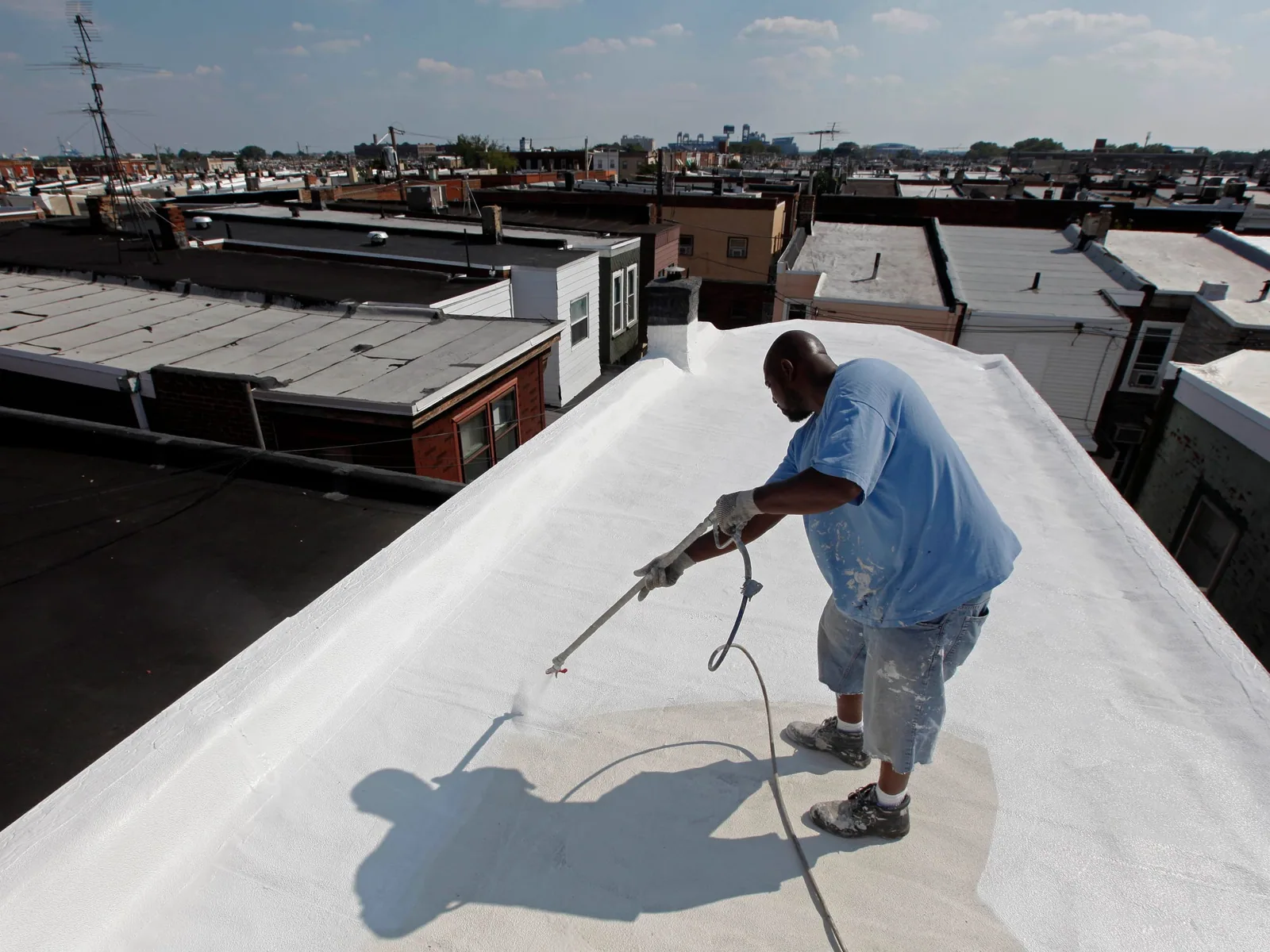
Acrylic goes on by spray or roller in two or more coats. Each coat has to dry before the next one, and the total thickness matters more than the number of passes. We measure the dry film, not just the gallons used. Too thin a film wears early. Too thick a film in one pass cracks.
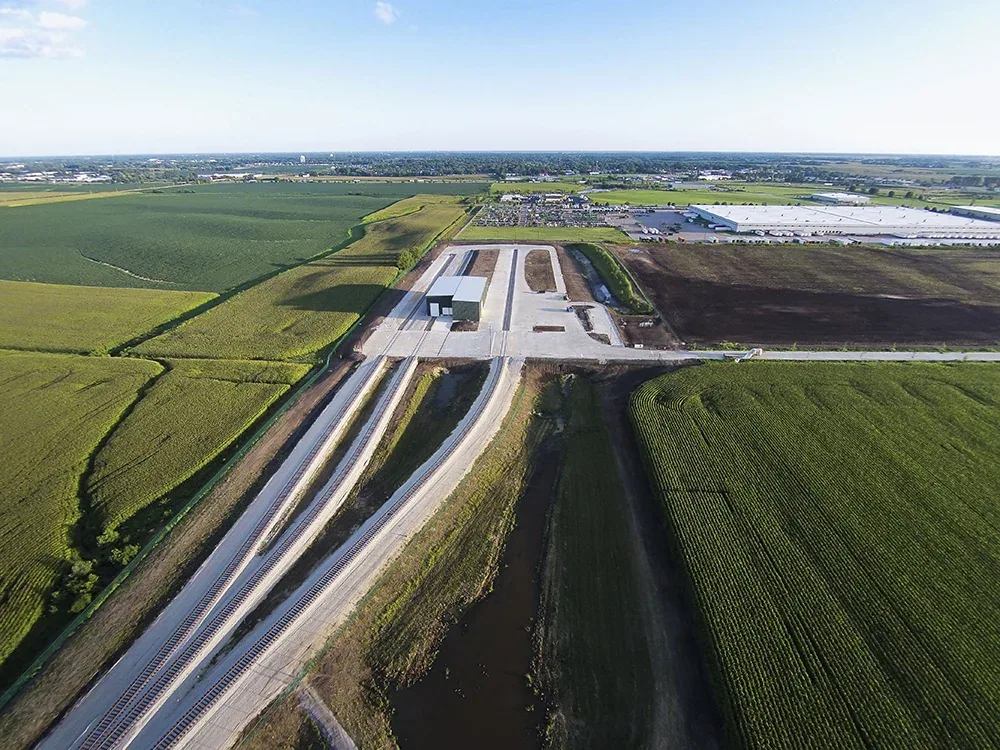
On a large roof, we work in sections so each is finished before the afternoon turns. A big building in the Eastern Iowa Industrial Center is coated in stages, with the lift and the access route agreed in the work order. Intakes get covered when needed, and the low odor keeps second shift in the building comfortable.
Hail, Trees and Winter Wear
Acrylic is a thin film. It protects against sun and water, and it does little against impact. Davenport has logged 133 hail reports within 10 miles of the city center since 2004, including baseball-size stones on April 4, 2023, and two-inch hail on April 7, 2020. Stones that size will bruise a coated roof. On a hail-damaged roof, the work begins with finding each hit and sealing it before the next freeze.
Debris is the quieter threat. When the July 2024 derecho came through, it downed trees and power lines on Brady Street near 37th Street, and branches dragged across a roof will scratch a coat. After any storm, we recommend a quick walk. From minus 29 F to 111 F, the coating also flexes with the membrane every season, and freeze-thaw cycles find any weak edge.
The Recoat Cycle
You get photos before and after, the prep list, the film thickness and a plain schedule for the next look. We suggest a walk each spring, since that is when winter damage shows, and a rinse in the fall. A coating that is checked is a coating that gets a small, planned recoat, not a surprise. That rhythm is the heart of a good roof coating restoration plan, and the same walks double as preventive roof maintenance for the rest of the roof.
Pick a Walkthrough Date
Send us the last inspection report, or the photo your maintenance lead took of the worst spot. We will walk the roof with you, put down a test patch and tell you straight whether acrylic is the right coat.
Questions About Acrylic Roof Coatings
How soon after the crew leaves can it rain?
Set time depends on the air. In mild, dry, breezy weather the film is rain-resistant within hours, and it keeps curing for days afterward. We start early, finish a section before the afternoon, and stop if the forecast turns. If a shower does catch a fresh coat, we inspect the washed area and recoat it before moving on.
Our roof has a few low spots that hold water for a day. Is acrylic out?
Water that clears within a day or so is usually workable. Water that stays for several days is not, and we will say so. We mark every low spot after a rain, check the drains, and look at adding a drain or a small taper before coating. If the ponding is built into the deck, silicone may be the better fit.
Does a coating add strength to an old roof?
It adds protection, not structure. The film shields the membrane from sun and water and bridges small cracks, but it cannot hold a loose seam together or dry out wet insulation. That is why we repair first and cut cores when moisture is suspected. A coating over healthy roof is money well spent. A coating over a failed roof is money spent twice.
Will the coating stand up to hail like the April 2023 storm?
Small hail, usually. Baseball-size hail, no, and neither will most roofs without some bruising. Acrylic is a thin film, and big stones can crack it and the membrane below. After a storm like that, we walk the roof, mark the hits and seal them quickly, because water finds a cracked film at the next rain.
What will a white coating do to our cooling load?
A white surface sends sunlight back instead of soaking it up, so the roof deck and the rooftop units work in cooler air. How much that saves depends on insulation, equipment and how the building is used, and we will not promise a number. Ask your engineer to look at the unit schedules before and after, so you have actual figures for the next budget.

Talk to a Davenport Commercial Roofer
Send the work order, the building address or a few photos of what you are seeing. We will set a walkthrough, go up with whoever has the hatch key, and tell you plainly what the roof needs.