
Spray Polyurethane Foam Roofing in Davenport, IA
Spray polyurethane foam roofing in Davenport, IA: substrate checks, spray day control, protective coatings and recoat planning for plants and warehouses.
The maintenance lead calls after the first hard freeze. The same corner of the break room is dripping again, and the roof above it has been patched more times than anyone wants to count.
That is usually when spray polyurethane foam, or SPF, comes up. It goes on as a liquid and cures into one continuous layer of rigid insulation, with no sheet edges to open and no field fasteners to back out. In Davenport, IA it fits some buildings very well and others not at all. We find out which one you have on a walkthrough, with the deck dry and the details in front of us.
What Gets Sprayed
Two liquid components run up separate hoses and meet at the spray gun. They react, expand and set within seconds into closed-cell foam that bonds straight to the surface underneath. The crew builds thickness in passes and checks each pass before the next one goes on.
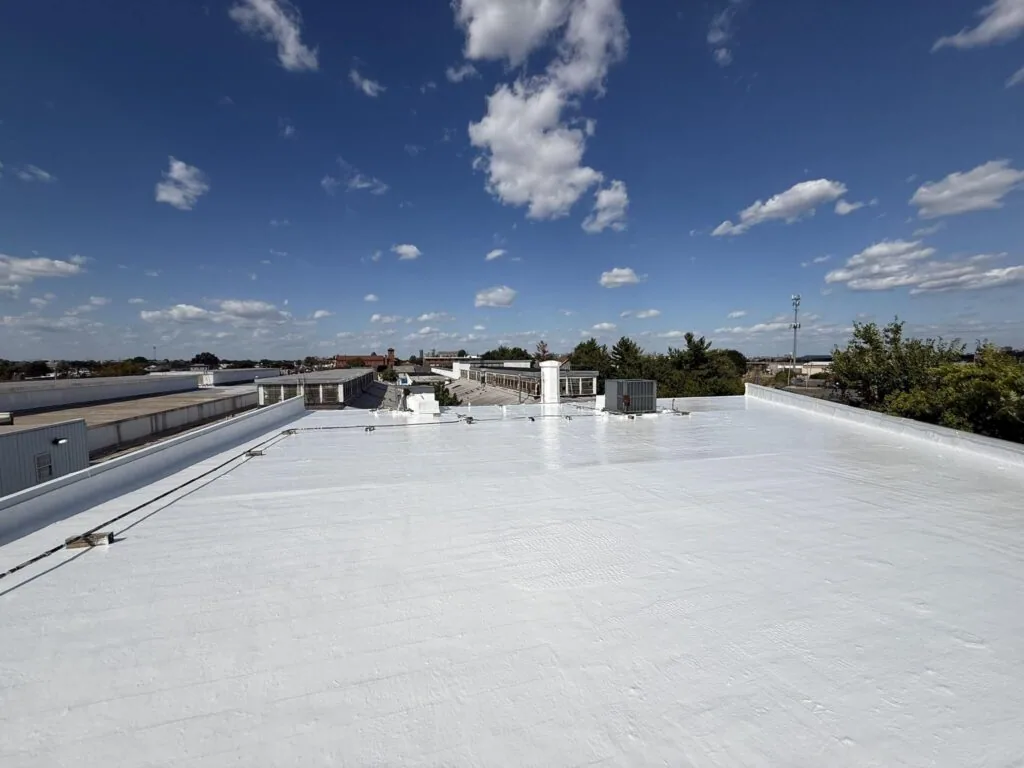
That does two jobs at once. The foam is the insulation, and it is also the waterproofing, because it runs unbroken across the field, up the walls and around every curb, pipe and conduit support. There is no seam to weld and no lap to glue. Processing buildings and cold storage rooms ask about foam for exactly that reason: one material handles the heat loss and the water. A light-industrial park such as the Eastern Iowa Industrial Center, where Kraft Heinz built a meat processing plant, is where that question comes up.
What foam is not is a finished roof. Raw foam is soft, and sunlight breaks it down. It needs a coating over it, and that coating is half of the system.
Reading the Existing Roof
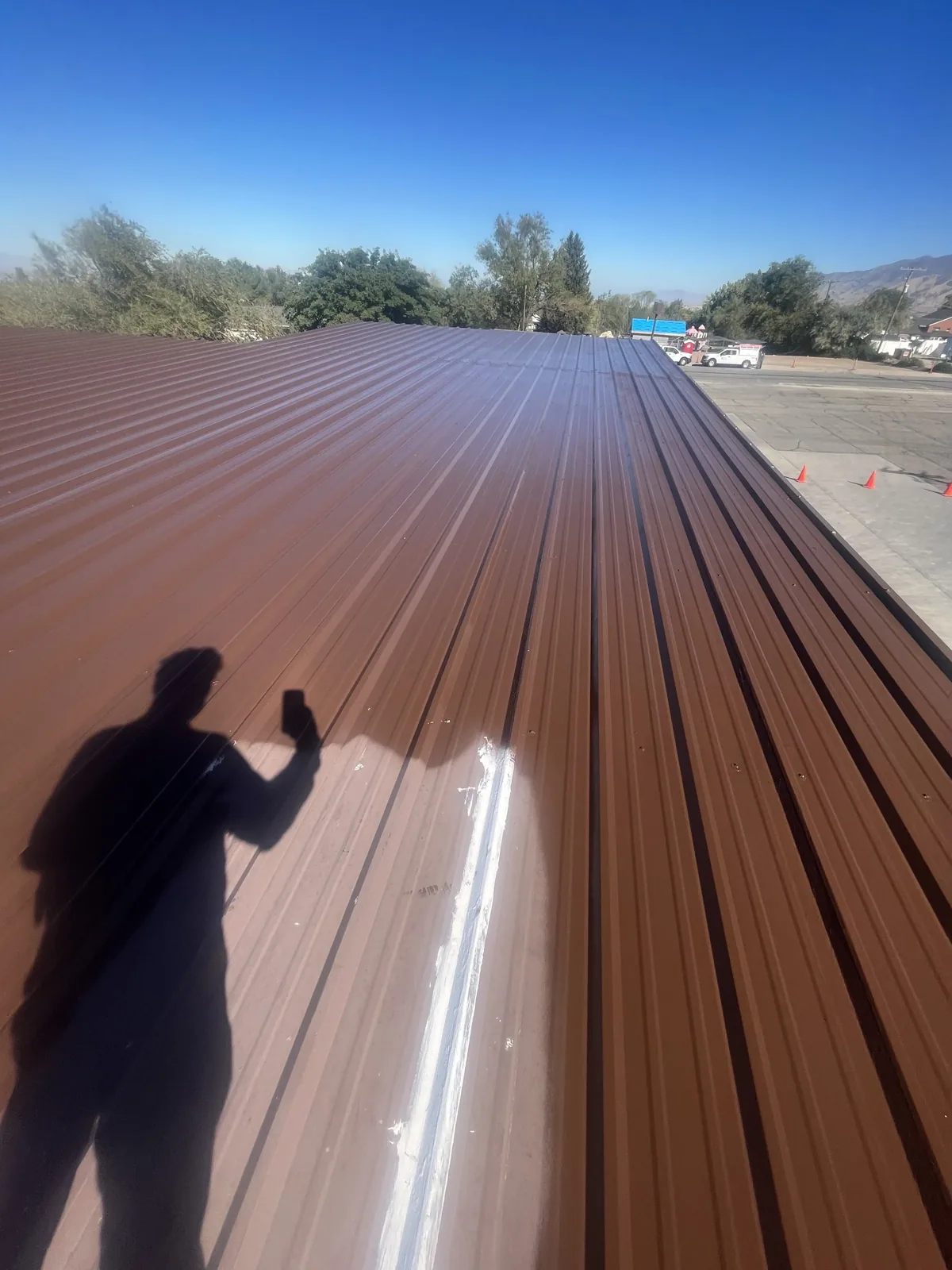
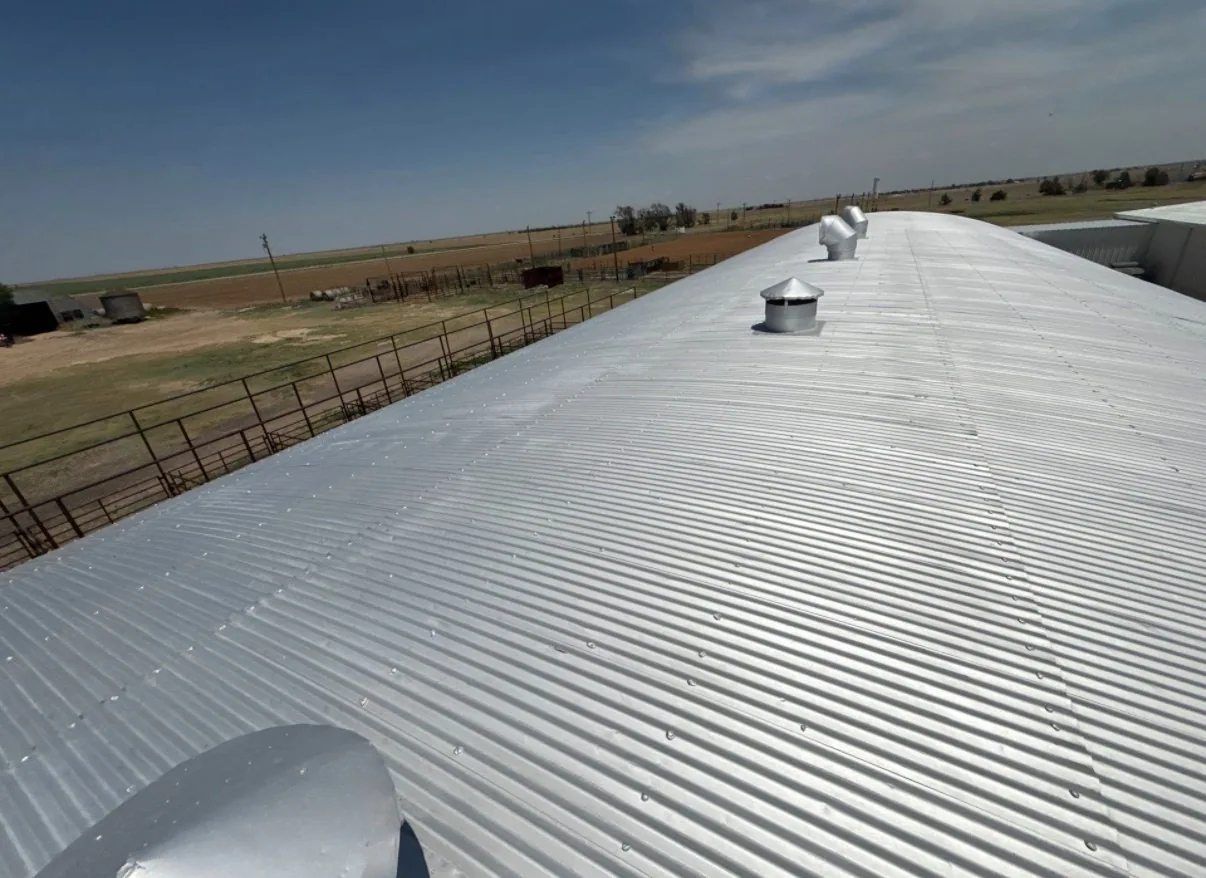
Foam bonds to whatever is under it, so we start there. Metal panels, old built-up roofs, modified bitumen and concrete decks can all take foam when they are sound, clean and dry. Loose gravel gets swept off. Rust gets treated. Blisters get cut open and dried.
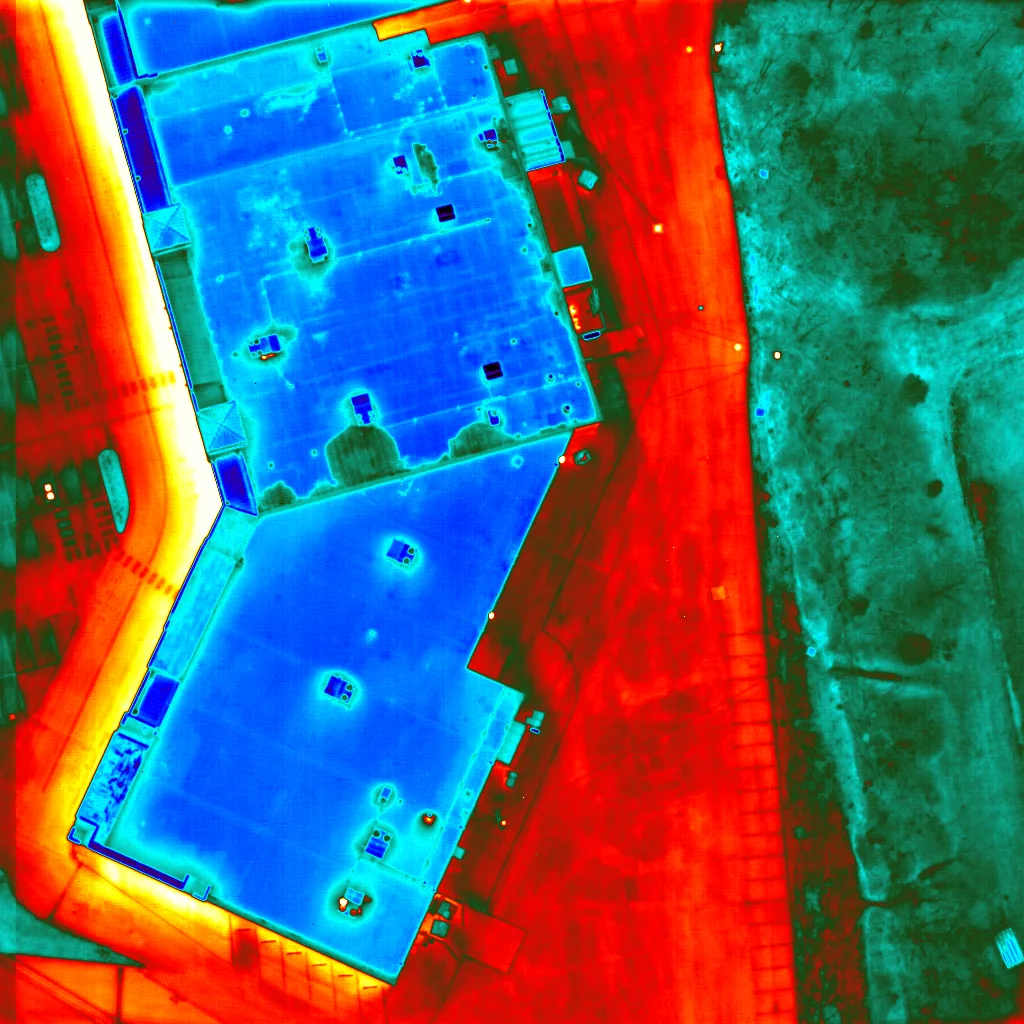
Dry is the hard requirement. Spray over wet insulation and the water stays trapped, and the new foam lets go of the wet layer within a few seasons. So before anyone prices foam, we run an infrared moisture survey and cut cores where the scan runs cold. Small wet patches are cut out and replaced first. If the wet area spreads across most of the plan, we say foam is the wrong tool and price a tear-off instead.
The same walkthrough catches the ordinary problems: drains packed with debris, flashing pulled loose, and curbs that sit too low for the thickness of foam about to go around them.
Spray Day and Site Control
Spray day is the most visible day of the job, so it gets the most planning. Foam wants a dry deck, moderate air temperature and low wind. Wind carries a fine mist, and mist that lands on cars in the lot or on glass next door ruins an afternoon for everybody. We watch the forecast, hang wind screens, mask what needs masking, and stop when the gusts build.
The work order needs three answers before we mobilize. Which rooftop units can be shut off. Whose fresh-air intakes get covered, and for how long. Where the tenant notice goes up. Spray vapor should never be drawn into the building, so on a plant running second shift the plant manager usually picks the window. Crews work in respirators, the roof is closed to everyone else until the foam cures, and the hatch stays closed to others until our handoff.
The Coating on Top
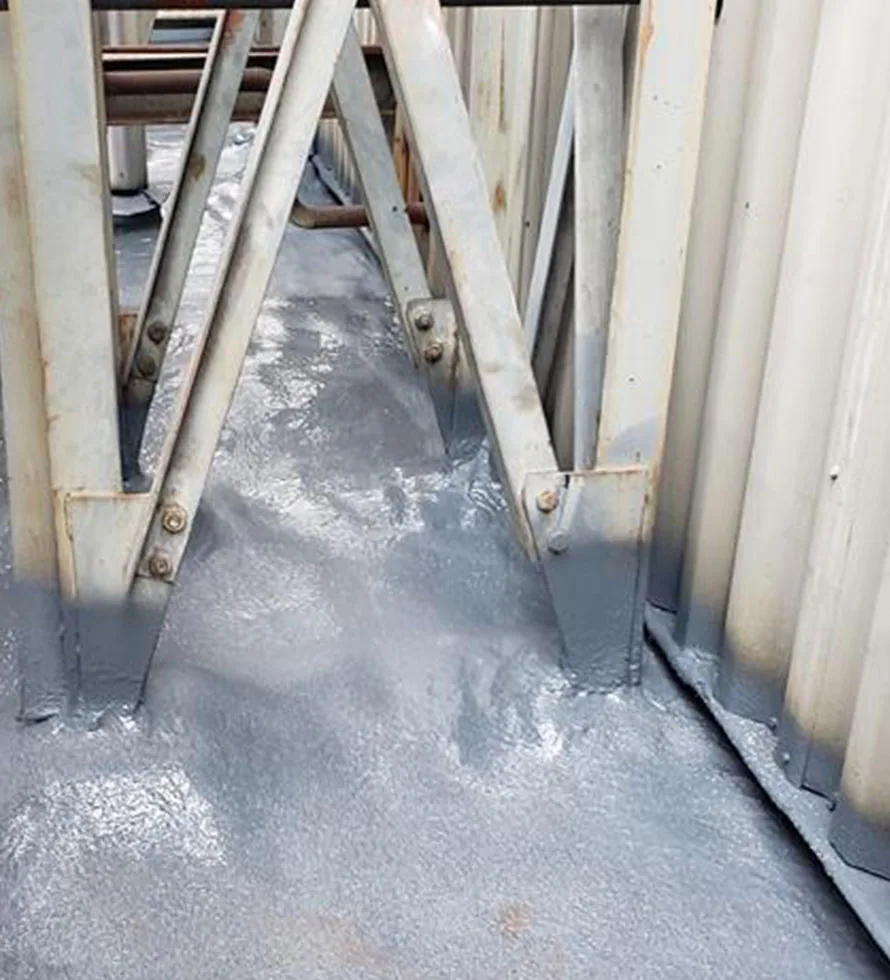
The coating shields foam from ultraviolet light, water and foot traffic. Two common choices are silicone and acrylic. Silicone tolerates standing water better. Acrylic is simpler to recoat and cleans up well. Some systems use a urethane base coat with granules for extra wear.
The gap between spraying the foam and coating it matters. We do not leave foam bare overnight when rain or dew is possible. And where the maintenance crew crosses the roof to reach rooftop units, we add walk pads along that exact path, since a dropped tool or a hard heel can dent foam.
Hail, Derechos and Freeze-Thaw
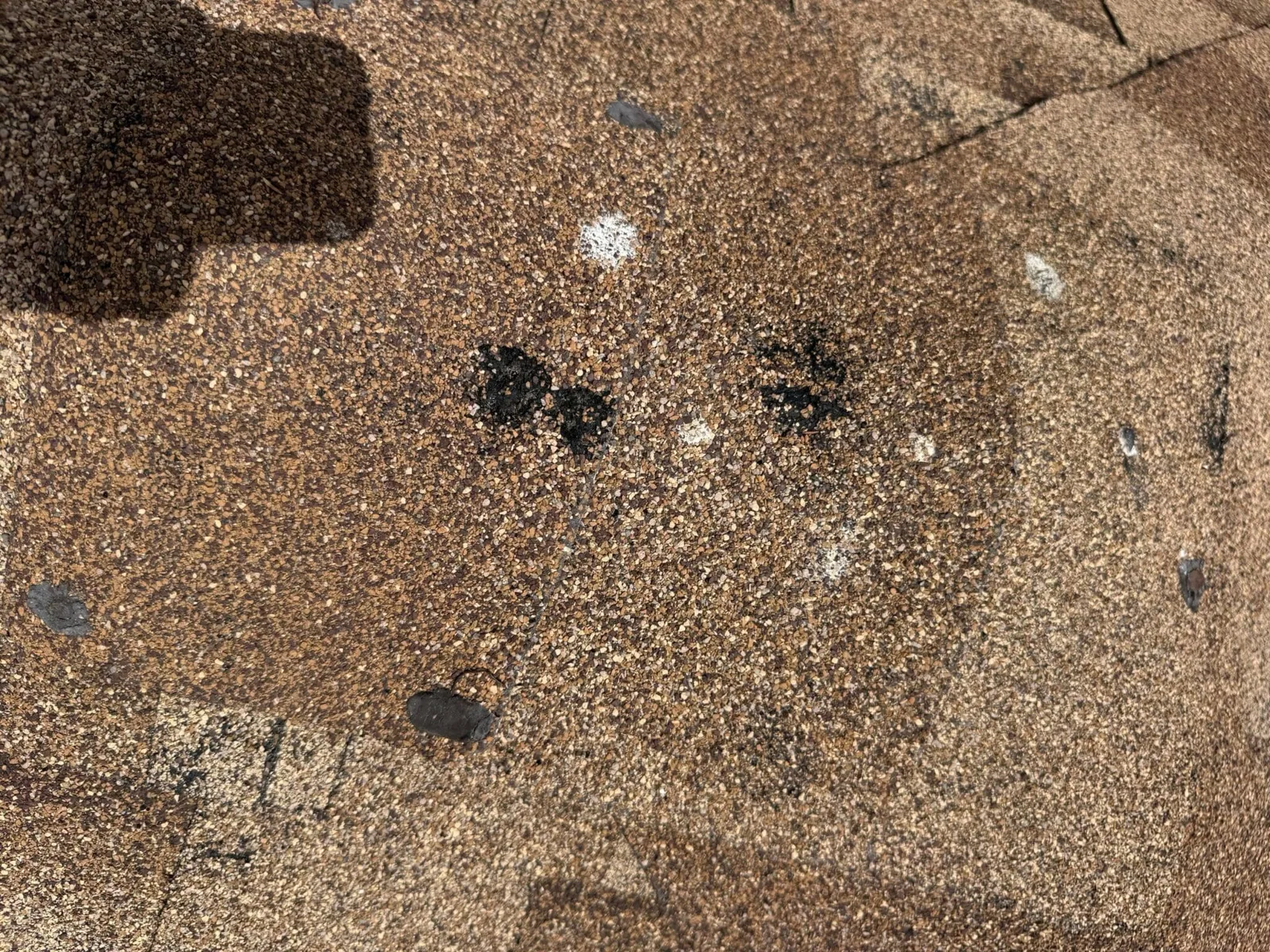
Foam is light, but it is not hard. Hail has been reported 133 times within 10 miles of the city center since 2004, and baseball-size stones fell on April 4, 2023. A stone that dents foam and cuts through the coating opens a path for water. That is why a foam roof gets a look after every hailstorm, not only at the yearly walk. Hits found early are patched with foam and coating. Finding every impact is where hail damage repair starts on a foam roof.
Wind is a better story. Foam is bonded across the whole deck, so there is no sheet to billow and no field fastener to loosen. The August 10, 2020 derecho pushed an 86 mph gust across Davenport Municipal Airport. A bonded layer gives wind very little edge to grab, though we still check perimeter metal and parapet terminations, because that is where wind goes looking.
Davenport has seen 111 F and minus 29 F, and the coating has to flex with the deck through that whole range.
Slope, Ponding and Winter Drains
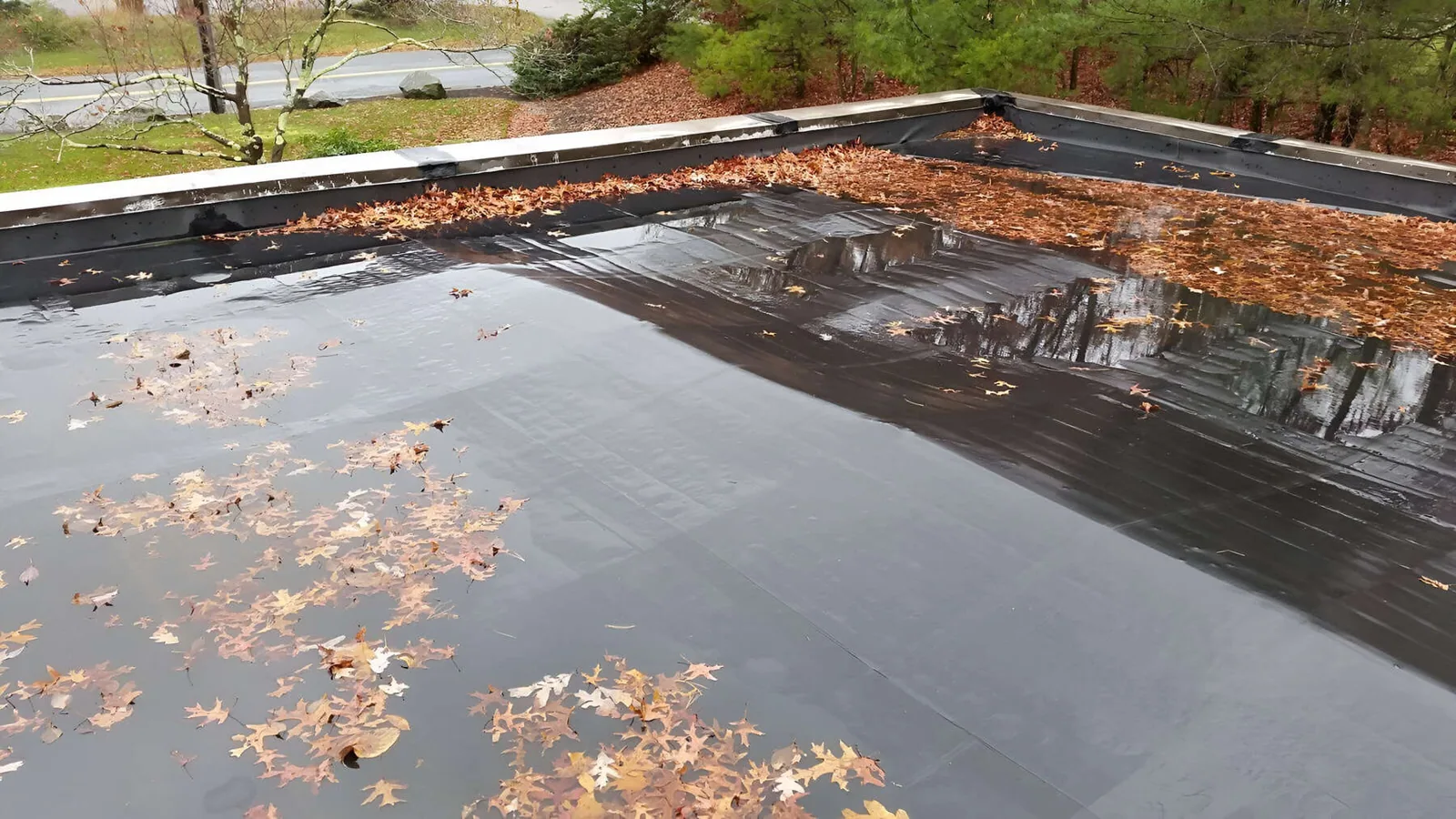
Foam can be sprayed in tapered thicknesses, which lets us build slope toward the drains. On a roof that holds water after every rain, that is one of the better reasons to choose it. When slope alone does not clear it, the ponding water has to be fixed at the drain and the deck.
Foam does not fix a deck that sags between supports, and it does not fix a drain that freezes shut. A drain sump full of ice holds water against the coating through a thaw, so clear drains in November matter as much as the foam does.
Recoats and the Handoff
At cure, we provide photos, thickness readings and a punch list by curb and drain. Each winter, we record chalking, thin spots, pinholes or lifted edges before foam is exposed. Planned roof coating restoration protects the surface. A follow-up roof inspection confirms the coating and identifies repairs early.
Send the Roof Report
Send us the last roof report or a photo of your worst drain. We will set a walkthrough, pull cores if the roof calls for them, and tell you plainly whether foam fits your building.
Questions About Spray Polyurethane Foam Roofing
Our rooftop units are packed close together with piping between them. Does foam suit a roof that crowded?
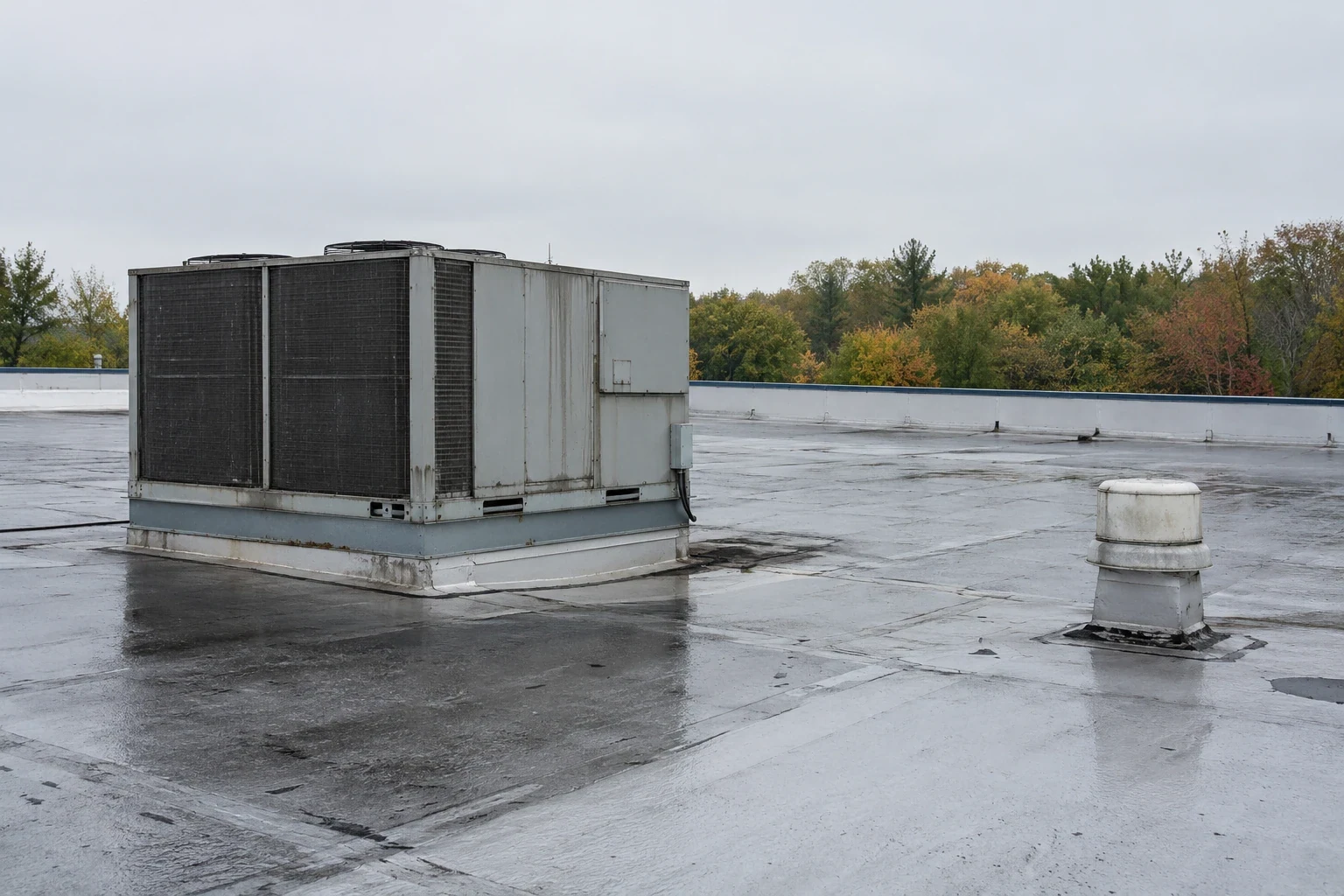
Often it is the best fit. Foam flows around curbs, pipe supports and conduit and sets as one piece, so the flashing at each penetration is the same material as the field. We raise any curb that sits too low for the added thickness and protect equipment before spraying. Every route to the units gets walk pads, because boots and tools dent foam.
Can foam go over our old gravel-surfaced built-up roof?
Sometimes. Moisture decides it. Gravel roofs often hide wet insulation, so we cut cores before anyone talks about spraying. If the layers are dry and well bonded, the gravel is removed, the surface is cleaned and foam goes on without a tear-off, which also means fewer dumpsters crossing your lot. If the cores come up wet, we price a replacement and show you the cores.
What should we tell tenants about spray day?
Give them a plain notice a few days ahead: the date, the hours, which units will be off, and a phone number for questions. Ask people to move cars from the downwind side of the lot.
How do we know when the coating needs attention?
Plan on a walk after every winter and after any hail. We check for chalking, thin spots, pinholes and lifted laps at curbs and edges, and we photograph each finding. A recoat is usually scheduled once the surface starts to wear, long before the foam shows through. Exposed foam is the failure to prevent, since sunlight will break it down fast.
Is foam the right choice for a roof that ponds after every rain?
It is worth a look, but it is not automatic. Tapered foam can pitch water toward the drains, and we can add drains where the layout allows. If the deck itself deflects between supports, slope may only move the problem, and the structure needs a look first.

Talk to a Davenport Commercial Roofer
Send the work order, the building address or a few photos of what you are seeing. We will set a walkthrough, go up with whoever has the hatch key, and tell you plainly what the roof needs.