
Silicone Roof Coatings in Davenport, IA
Silicone roof coating systems in Davenport, IA for ponding roofs: adhesion testing, seam prep, cure windows, winter limits and long-term recoating.
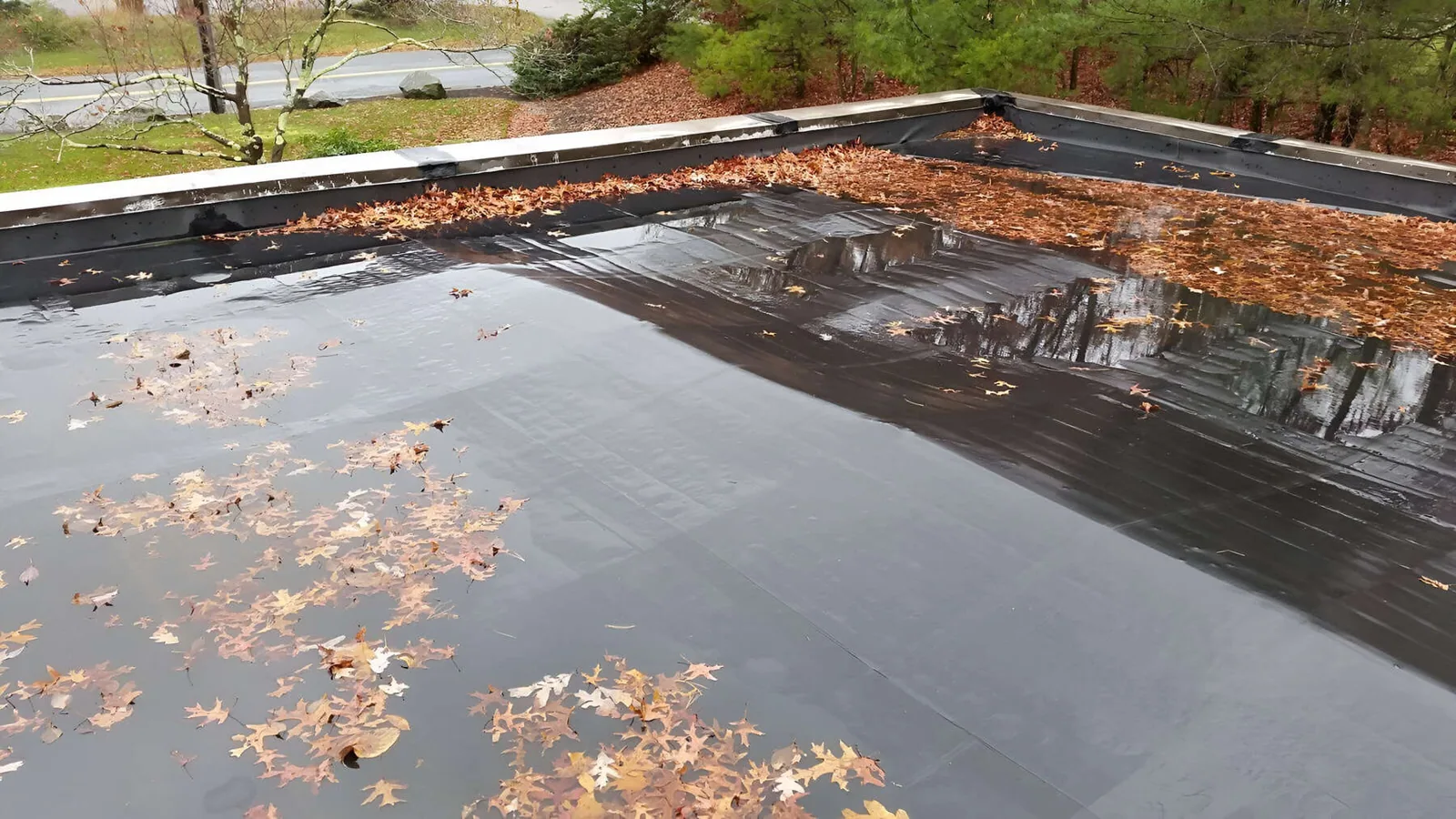
A property manager on Kimberly Road sends over a photo with a work order. The roof above the back corridor holds a shallow pond for days after every storm, and the membrane itself still looks whole. A tear-off is not in this year's budget.
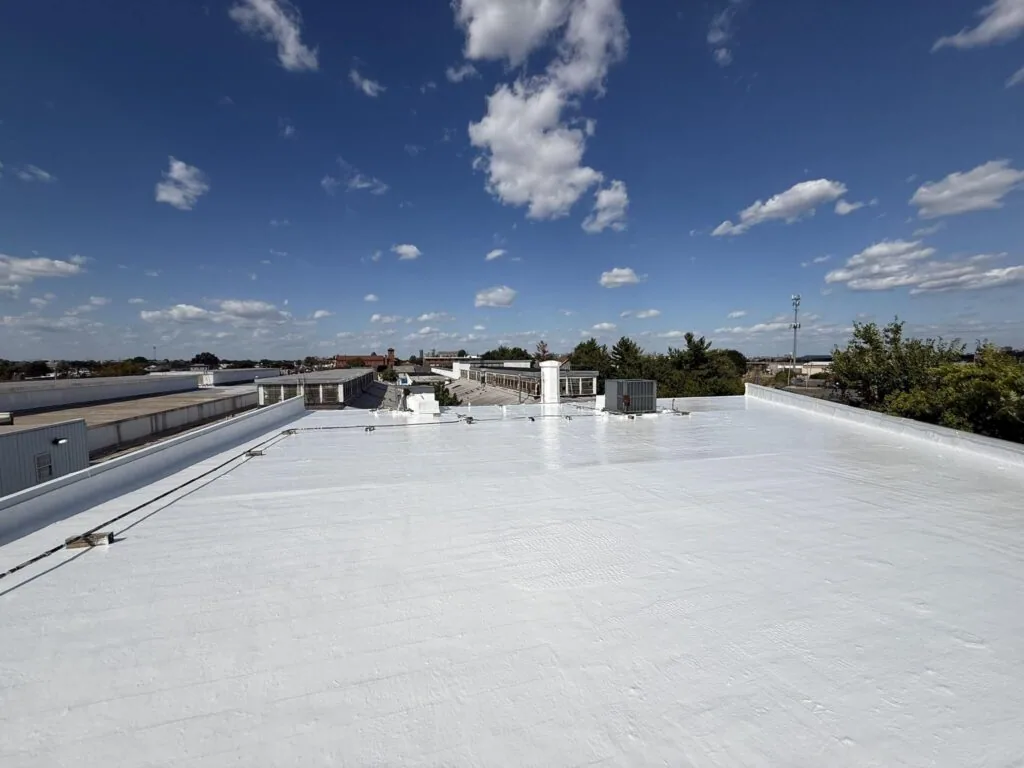
Silicone coating is made for that conversation. It cures into a flexible, waterproof skin over the existing roof, and unlike most coatings it ignores standing water. In Davenport, IA we price it only after we know what is underneath, because a coating can restore a sound roof but cannot rescue a soaked one.
Why Ponding Roofs Get Silicone
Most coatings dislike sitting in water. Some acrylics soften and let go when a bay stays wet for days. Silicone does not break down under water, which is why it is the usual answer for low spots, tired decks and flat sections that never quite drain. Large low-slope buildings like those in the Eastern Iowa Industrial Center give water a long trip to the nearest drain, and the middle of a bay is where ponds tend to start.
That does not make ponding harmless. Standing water adds weight, grows algae and gives a clogged drain a place to back up. Silicone buys tolerance, not a cure. If the roof can be re-pitched or given another drain, we price that too, and the ponding water fix can run ahead of the coating.
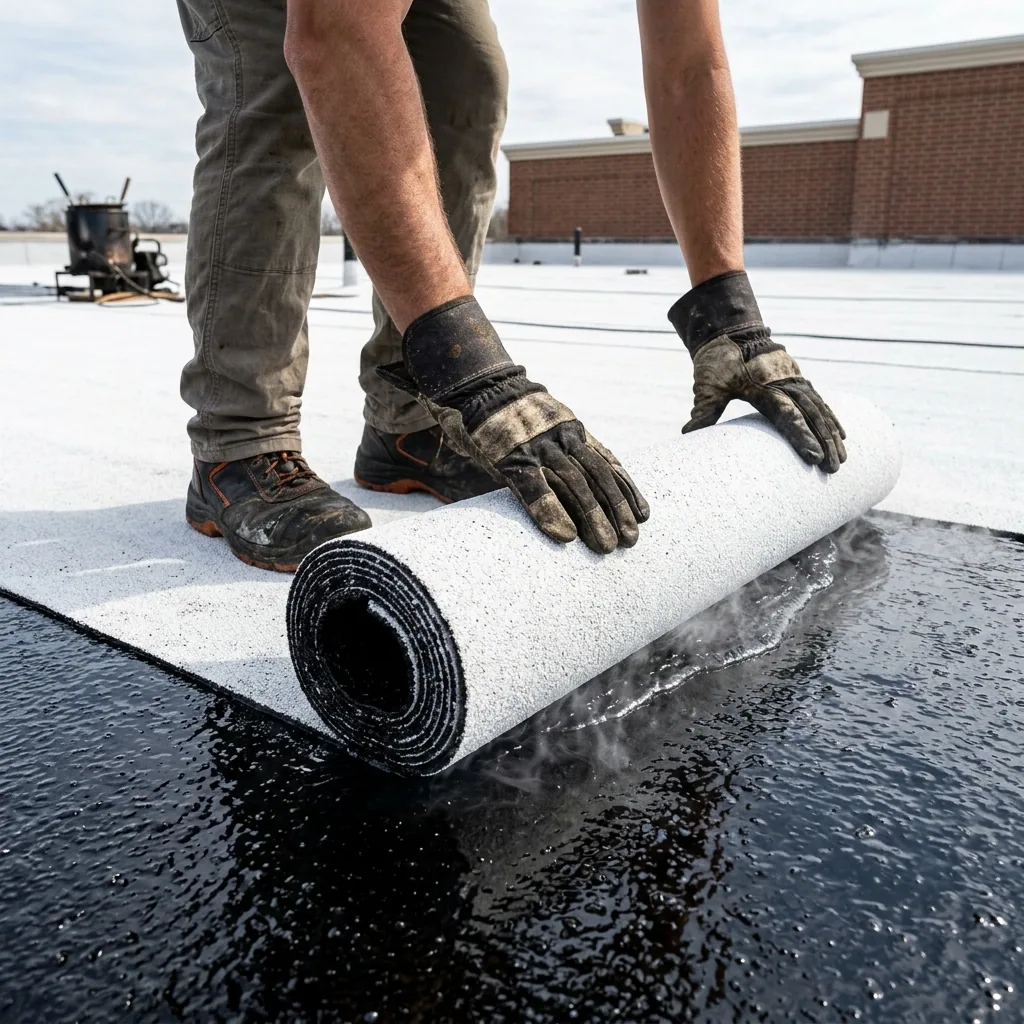
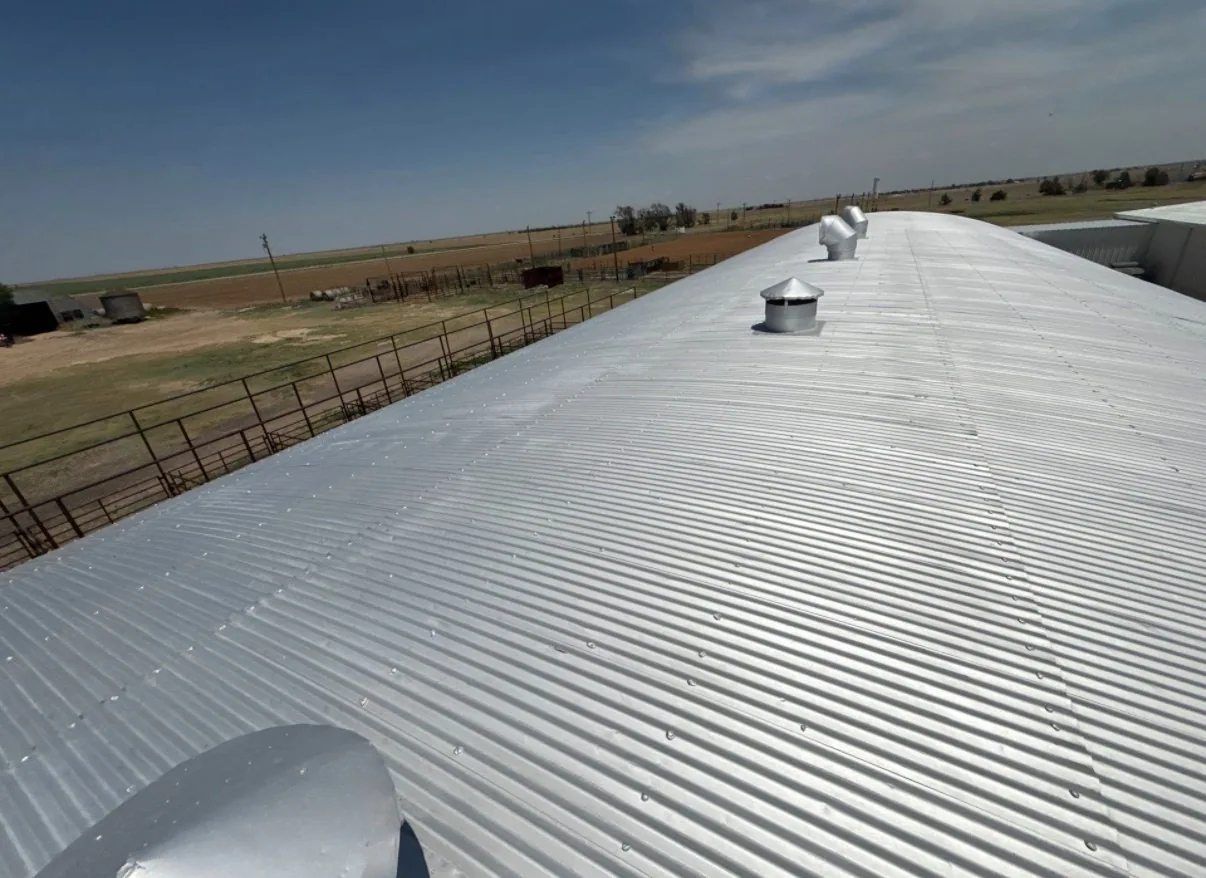
It bonds well to aging modified bitumen, built-up roofs, metal panels and many single-ply membranes once the surface is clean and primed.
The Adhesion Patch
Silicone sticks to a lot and loses its grip on a few things, so we test before we price. A crew cleans several spots, rolls on a small patch, lets it cure, then pulls on it. Where the pull is weak, a primer goes on. Where it is still weak, the plan changes.
The test matters most over chalky single-ply, old coatings, and the stained areas around exhaust vents. Oil, dirt and old sealant residue are the usual culprits. The result goes in the proposal with photos, so the scope reflects what your roof did on the day, not what a product sheet promises.
Seams, Fasteners and Low Spots
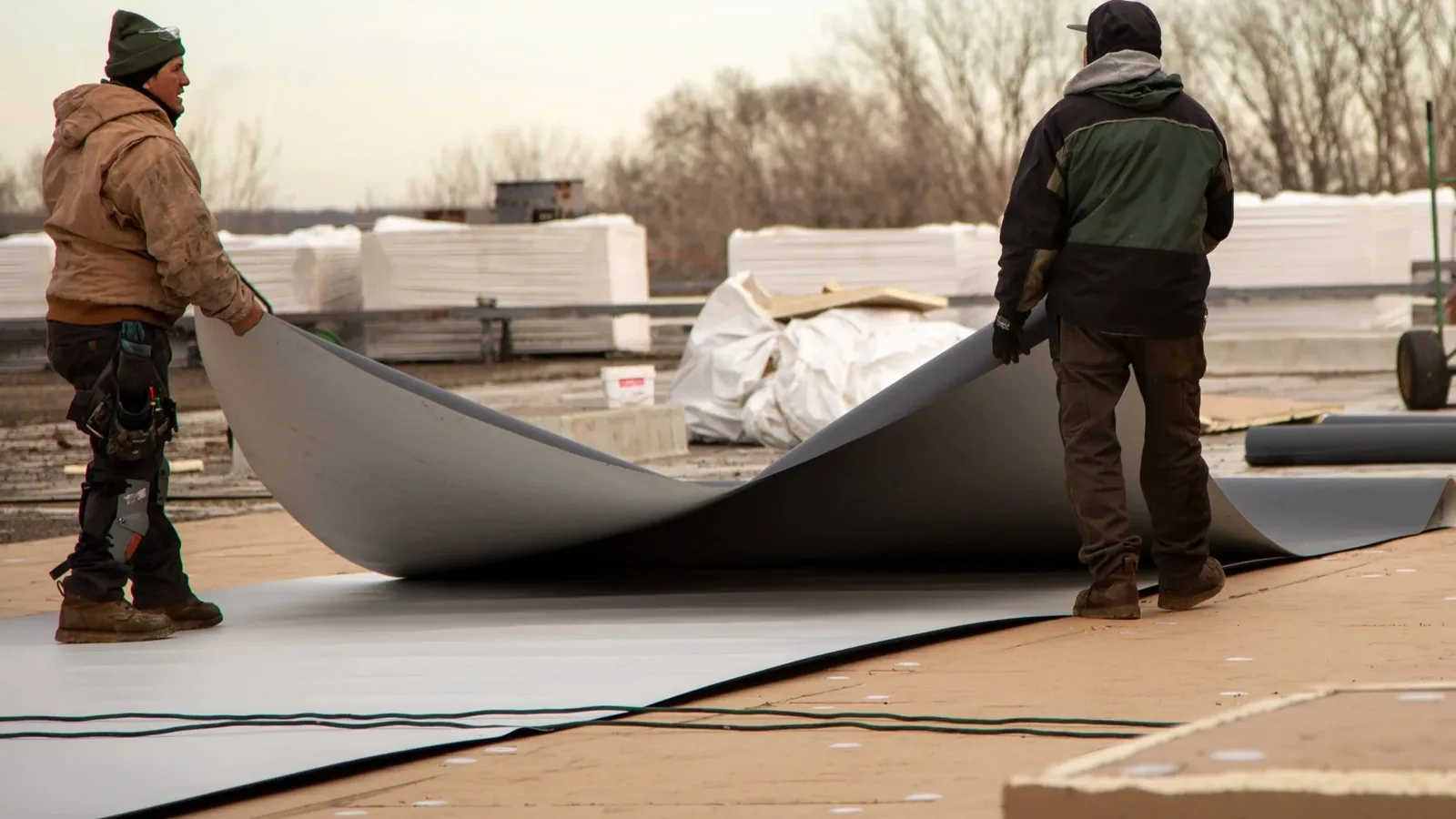
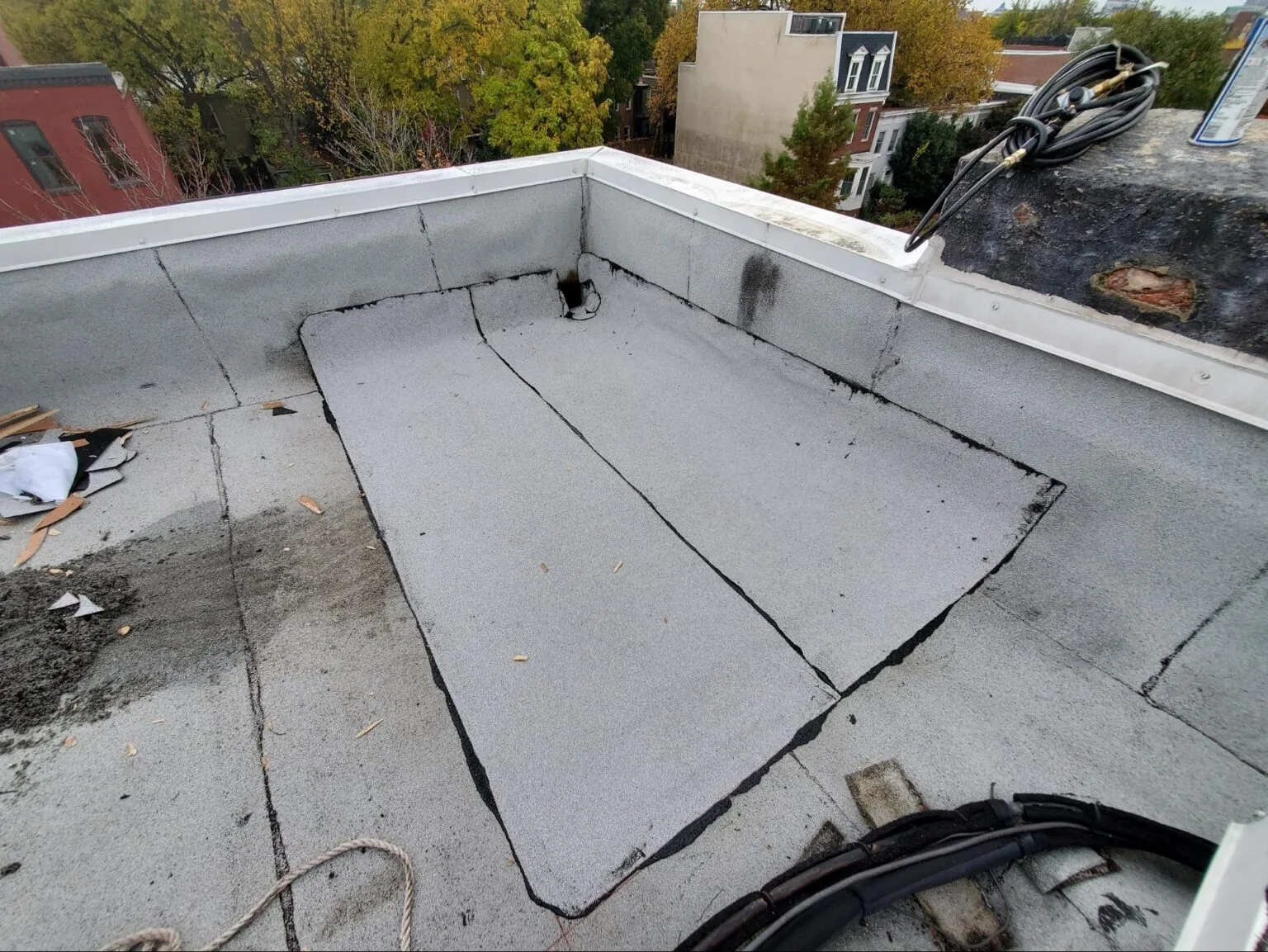
A coating over a problem is just a smooth problem. The repair comes first. Open laps get sealed. Backed-out fasteners get reset or replaced. Cracked flashing is cut out and redone, and blisters are opened and dried. Where the surface moves, we embed reinforcing fabric so the film bridges the joint instead of splitting along it. The list of seam failure repairs is often longer than the owner expects.
Then the roof is power washed and left to dry completely. Silicone does not tolerate a damp deck. A clean, dry surface and the right primer decide whether the coating holds for years or peels in sheets.
Spray Day and the Cure Window
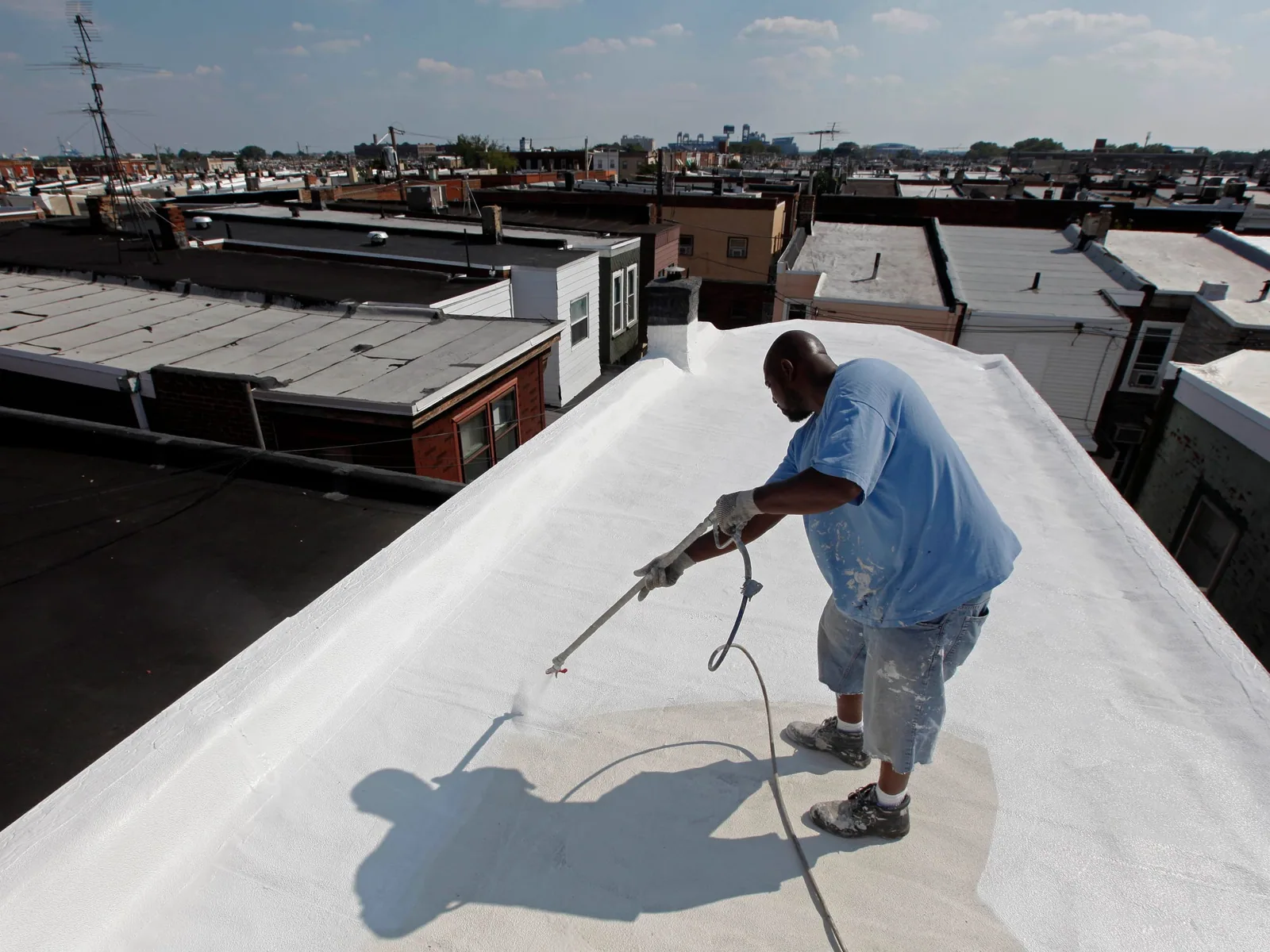
The coating goes on by spray or roller, usually in two passes. We check wet thickness with a gauge as we go and look the first pass over for pinholes before the second one covers it. Silicone cures by drawing moisture from the air, so a humid morning does not stop it. Rain in the first hours does, because it washes uncured film off the surface.
On a single-level retail property, a crew coats in sections, one bay at a time, so the roof is never left open to a surprise shower. Overspray is the other concern. Wind carries it onto cars and glass, so we mask, watch the gusts and hold up when they build.
Fresh silicone is slick. Access gets agreed in the work order: who badges us in, which roof hatch gets opened, which rooftop unit intakes get covered, and when tenants see the notice.
River Humidity, Ice and the Coating Season
The Mississippi puts moisture in the air, and in spring and fall that means dew sitting on a roof well into the morning. A deck that is damp at nine o'clock is not ready for coating, so the useful working hours are shorter than the calendar suggests. Winter shuts the season down altogether, and the Quad Cities average over 36 inches of snow a year.
Silicone stays flexible in the cold, and Davenport has recorded lows of minus 29 F. The weak point in January is a frozen drain, not the coating. We clear and check roof drains and scuppers before any coating job so ice has less water to hold.
One more limit is wind. The July 15, 2024 derecho brought winds up to 100 mph, and the July 11, 2025 EF-2 tornado crossed the city from Emeis Park to Kimberly Road. Coating does not add uplift resistance to a membrane that is loose or torn, so roofs in those paths are inspected and repaired before anyone sprays.
Dirt, Slip and Recoating
Cured silicone attracts dirt, and a dirty surface reflects less sun. A rinse each year keeps it bright. It is also slick when wet, so we lay walk pads on every path to a hatch or rooftop unit.
The bigger choice is the long one. Almost nothing bonds to cured silicone except more silicone, so the next coat will be silicone too. That is the main difference from acrylic coatings, which are simpler to change later. Reflective finishes also help with summer heat, which is a reason owners ask about cool roof installation. We record thickness and condition in the handoff file, so the next coating restoration starts from facts.
Send a Photo of the Pond
Send the work order and a photo of the standing water. We will set a walkthrough, run the adhesion patch and the moisture check, and tell you whether silicone suits that roof.
Questions About Silicone Roof Coatings
Will silicone stop a leak that comes from wet insulation?
It seals the surface and nothing below it. Wet insulation under the membrane stays wet, keeps losing heat, and can push moisture back up through the coating as vapor. That is why we cut cores before we price. Small wet areas get replaced, and widespread wet insulation points to a tear-off, not a coating.
If we start with silicone, can we switch to another coating later?
Not easily. Cured silicone resists almost everything except more silicone, so recoating means staying with it. If the owner wants flexibility, that is a reason to look at acrylic instead. If the roof ponds and the owner is fine with the commitment, silicone is a reasonable choice, and we write the decision into the file for whoever runs facilities next.
Is a silicone roof slippery for our maintenance crew?
Wet silicone is slick enough to matter, especially on the way to rooftop units. We add walk pads along each route and mark the ladder landing at the hatch. Ask the crew to wear rubber soles, to stay off the surface during frost or dew, and to report any pad that lifts.
We had hail and wind last season. Do we coat now or inspect first?
Inspect first. A storm can open seams and bruise the membrane in ways a coating will cover but not fix. We walk the roof, mark hail hits and loose edges, repair them, and then decide whether coating still makes sense. The scope and photos also support an insurance claim if the damage qualifies.
What part of the year can a silicone job be done in Davenport?
Spring through early fall, on days with a dry deck and mild air. Morning dew and cold nights can push a start back, and a front can end a day early. We book sections, not the whole roof, so a weather hold on one bay does not stall the rest. Ask early, because the good weeks are few.
Talk to a Davenport Commercial Roofer
Send the work order, the building address or a few photos of what you are seeing. We will set a walkthrough, go up with whoever has the hatch key, and tell you plainly what the roof needs.