
Ponding Water Roof Repair in Davenport, IA
Ponding water correction for flat commercial roofs in Davenport, IA: finding low spots, clearing drains, adding slope and protecting the membrane in winter.
Thursday morning the facilities lead texts a photo from the roof hatch. It rained on Monday. The puddle is still there, and a dark ring of silt marks where it stood at its widest. He asks if that is normal.
A roof that holds water for days is not draining the way it was built to, and in Davenport, IA, that water has a winter ahead of it. We start with a walkthrough in dry weather and again after a rain, because the second visit shows the problem the first one hides. Then we sort the cause: a blocked drain, a sagging deck, or a roof that was never sloped enough to begin with.
Reading the Water Line
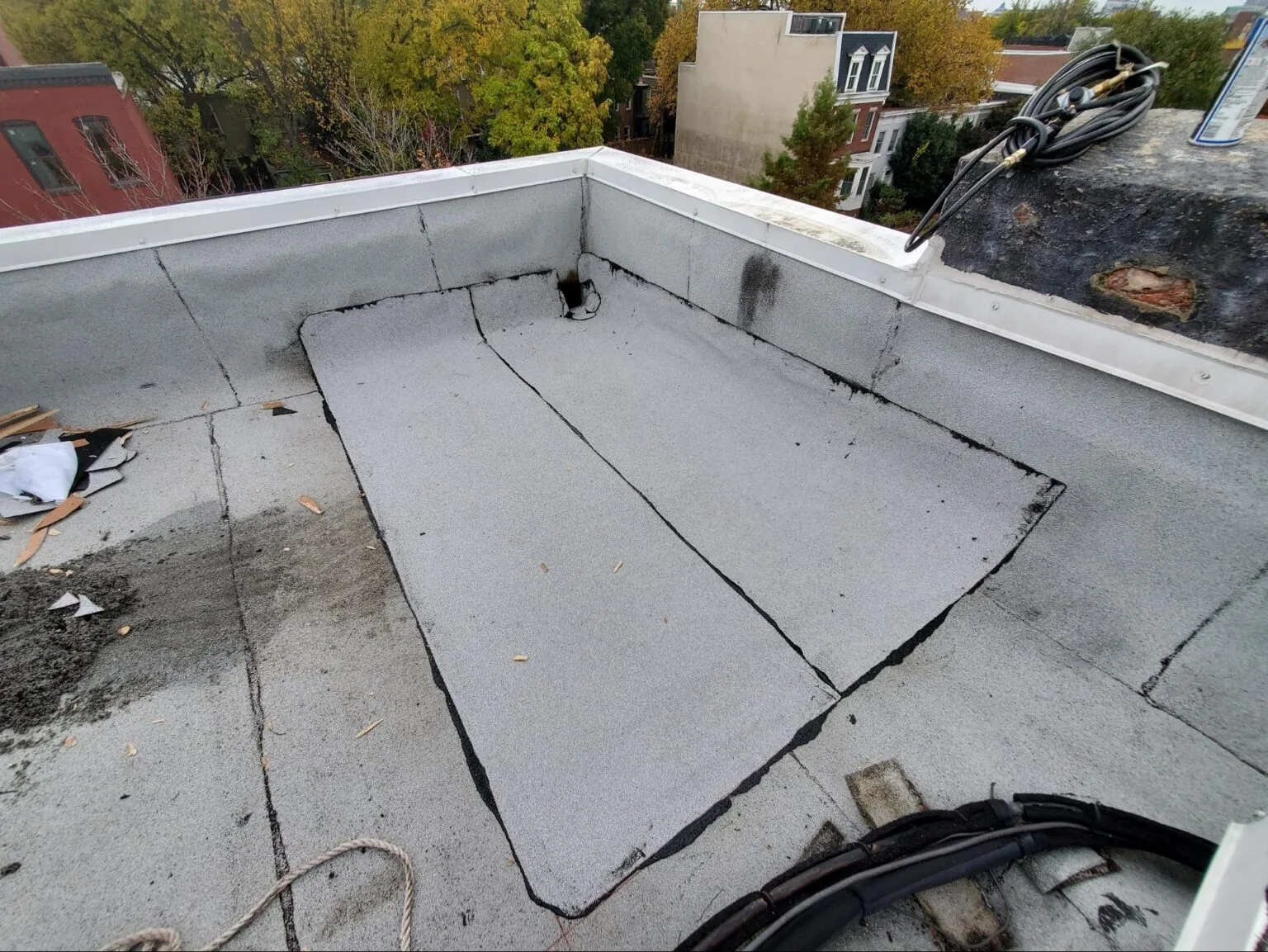
A roof tells you where the water sits even after the water is gone. Look for a band of dirt, algae or chalky residue around a low spot. Look for membrane that has gone dull or gritty inside the ring while the surrounding sheet is still clean. Those marks show the true size of the pond, which is often larger than the puddle on the day you look.
We mark the outline with paint and measure its depth against a straightedge. A shallow film that dries by afternoon is a different problem from a pond that stays two days after the last rain. Water standing at that length starts to cost the roof: seams soften, debris settles, and the membrane takes UV and thermal stress that a draining roof never sees.
Why the Roof Holds Water
Ponding almost always has one of three causes, and the repair is different for each. The first is a drain that is clogged, set too high, or too far from the low point. The second is a deck that has deflected under load, so the roof dips between columns or beams. The third is insulation that has compressed or gotten wet and flattened under foot traffic.
The older the building, the more likely it is a combination. Additions get tied into the original roof at slightly different heights. A rooftop unit gets added mid-span and the deck sags next to it. We check the surface with a level and then look at the structure from below when the ceiling allows it, since the answer is sometimes in the steel, not the membrane.
Drains, Scuppers and Sumps
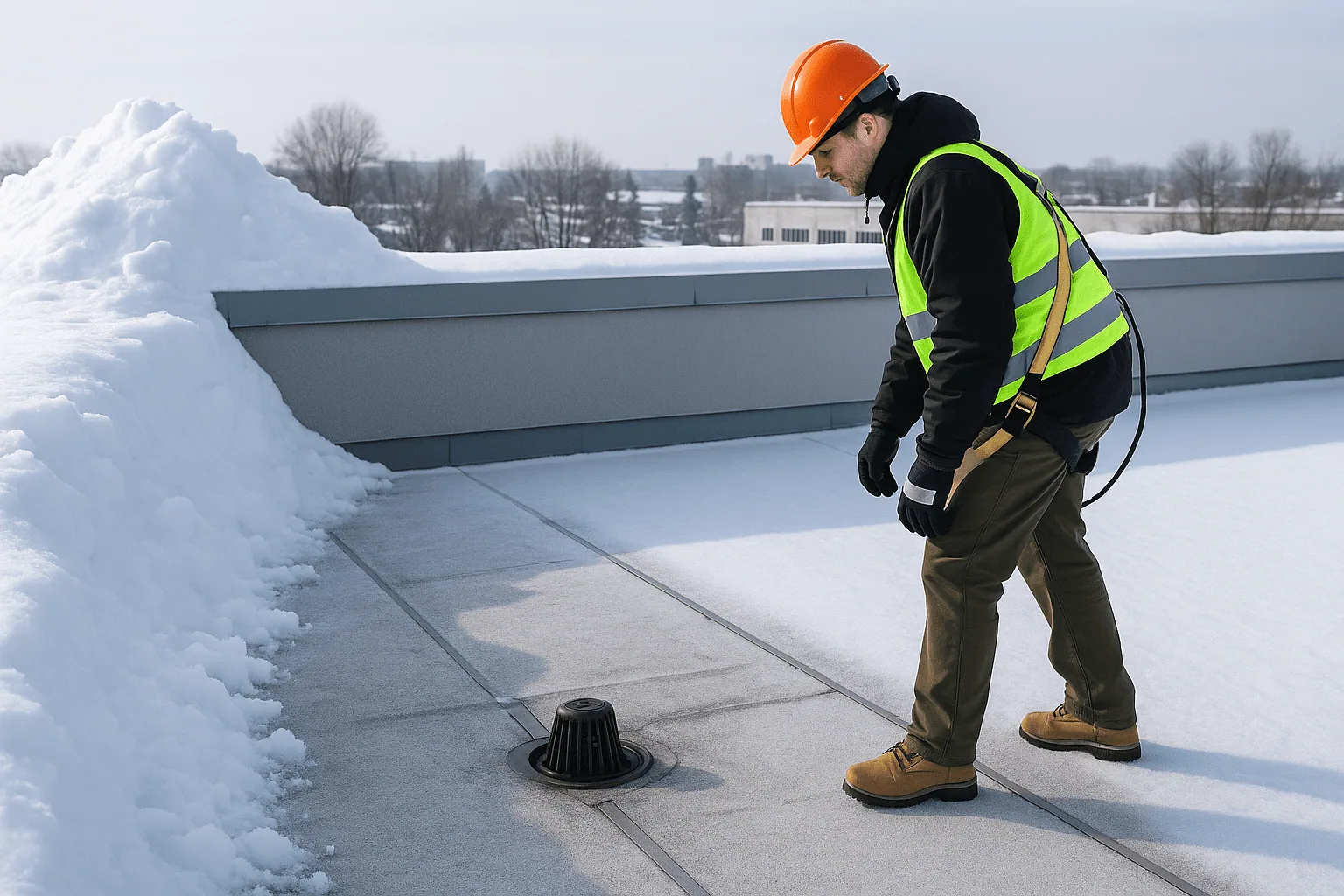
We clear and flush every drain before we judge the slope. Leaves, gravel and a plastic bag can hold a pond in place on a roof with perfectly good pitch. Then we check the drain bowl and clamping ring: a ring set above the membrane level lifts the sheet and creates a dam around the opening.
If the drains work and the roof still ponds, the options include adding a drain at the low point, cutting a new scupper through the parapet, or lowering an existing sump. Adding or resizing roof drains and scuppers also means checking overflow capacity, which the code requires and which many older roofs lack.
What a Pond Does in January
Snow here totals more than three feet in an average year, and January brings the most, around 10 inches. A dip in the roof collects more of it, then collects the meltwater, then freezes. The water that sat in a puddle in October is a sheet of ice by December, and it expands in the seams.
Freeze and thaw is hard on a membrane that has been wet for weeks. Davenport has recorded a high of 111 F and a low of -29 F, so every spot on a roof flexes through a wide range. A low area that holds water cycles even more. Ice dams around a blocked drain can also back water under the flashing, which shows up later as snow and ice damage at the flashing.
Fixes From Least to Most Disruptive
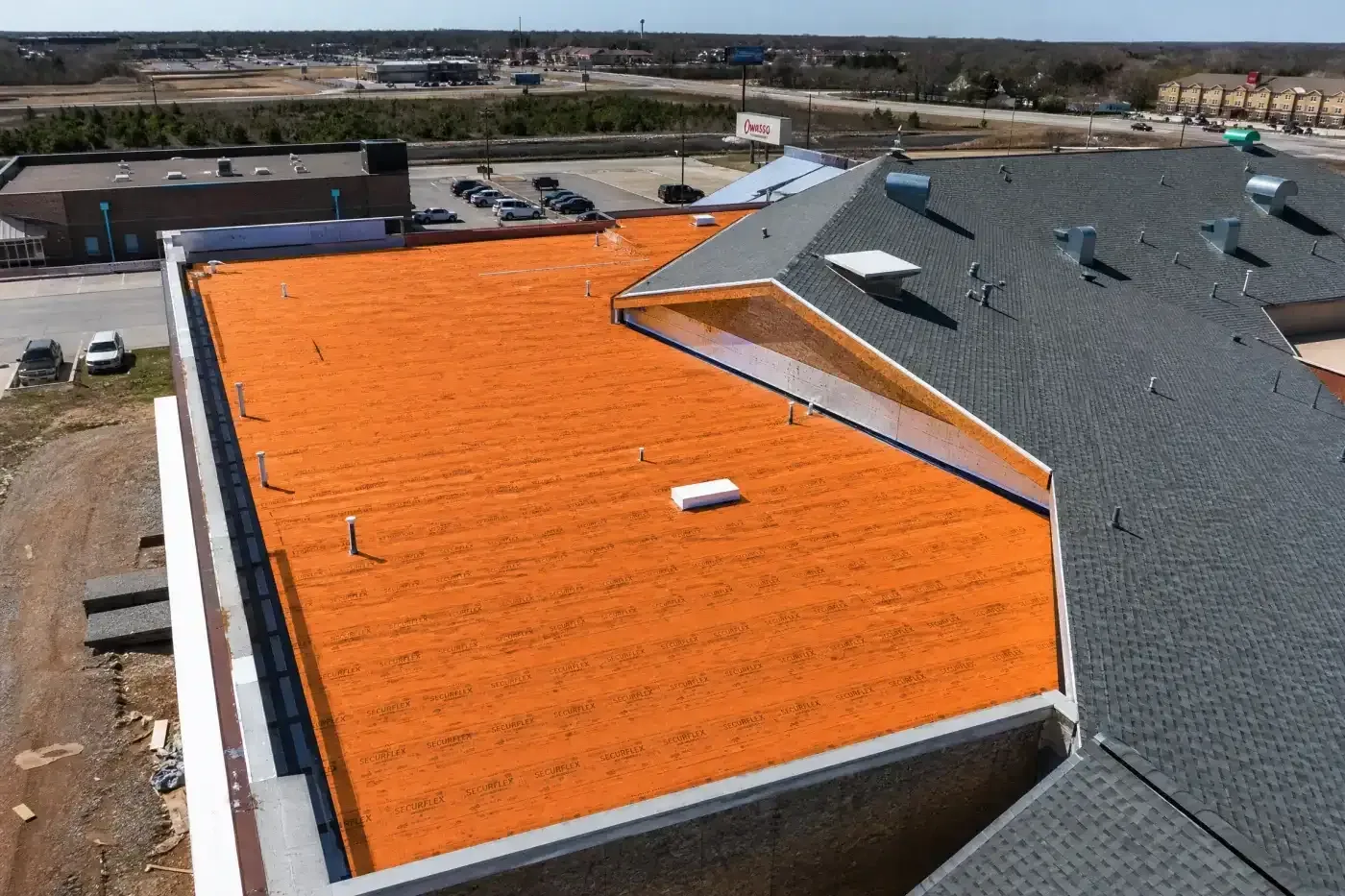
Start with the cheapest correct answer. Clearing a drain, resetting a clamping ring or adding a scupper is a day of work. Tapered insulation crickets behind rooftop units can send water to a drain without touching the rest of the roof. Where the dip is broad, a tapered system laid over the existing roof reshapes the surface, and the work is closer to a roof recover than a patch.
The heaviest fix is a tear-off, with the deck corrected from below. We recommend that only when the deck itself has moved or the insulation is soaked. Slope is built up from tapered insulation and cover board, laid so every section of the roof falls toward a drain.
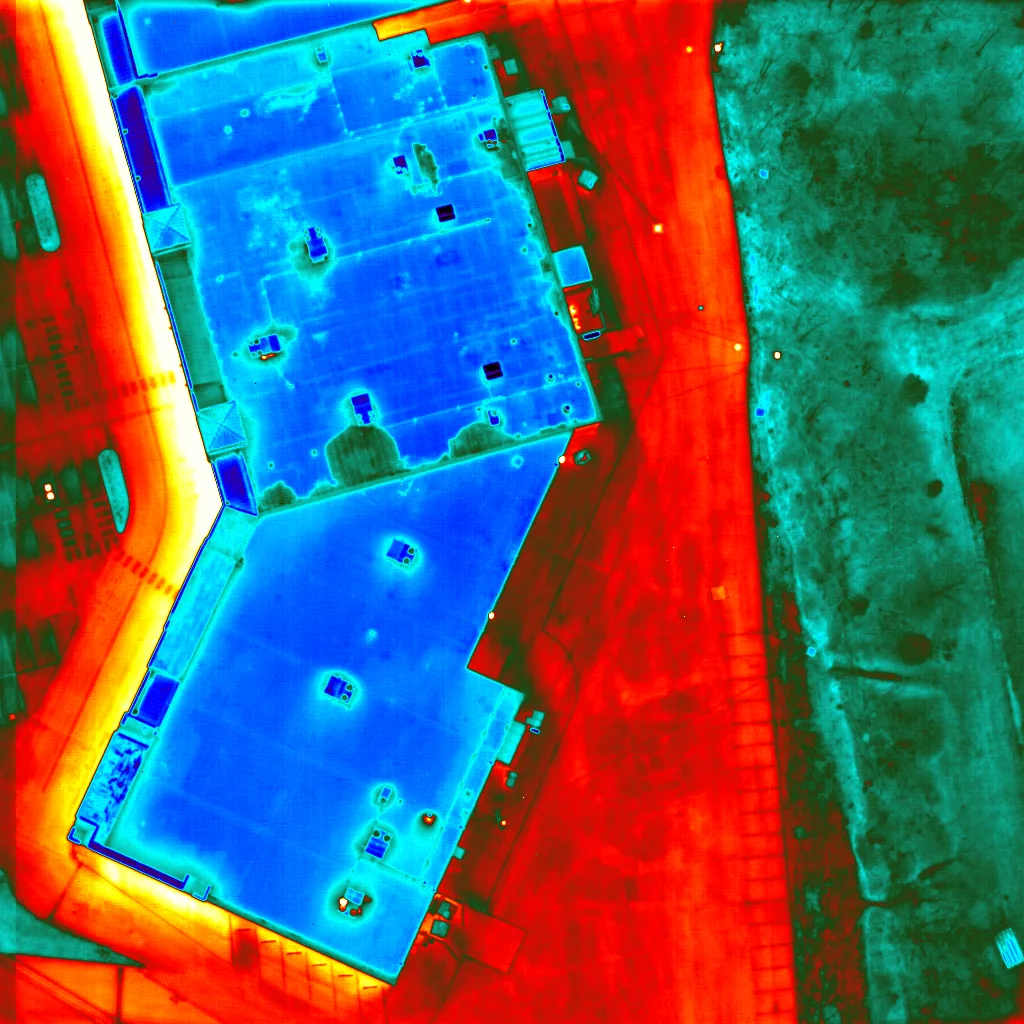
If wet insulation is a possibility, we run an infrared moisture survey before pricing anything.
Kimberly Road and NorthPark Mall
The commercial stretch of Kimberly Road (U.S. 6), about six miles from I-74 to I-280, is lined with retail, apartments and offices. NorthPark Mall on Kimberly Road is a single-level enclosed mall, a large flat-roof retail property with two vacant large-format boxes. A flat roof over a mall carries many drain lines and tie-ins, and one blocked line can pond water over a storefront.
For owners along the Kimberly Road corridor, we map ponds in the dry months, keep a drain log, and schedule the correction ahead of the busy retail season. The needs of a shopping center roof are different from a plant, but the first step is the same: find where the water sits.
If a puncture or open lap is also present, document it separately under tornado damage roof repair so drainage correction and storm damage do not get blended.

Send a Photo of the Puddle
Send us the building address and a picture of the low spot, taken a couple of days after rain. We will set a walkthrough, mark the pond, and tell you whether it is a drain, a deck or a slope problem.
Questions About Ponding Water Roof Repair
How long does water have to sit before it counts as ponding and not just a slow roof?
Forty-eight hours after the last rain is the usual line. Water that is gone by the next afternoon is draining, just slowly. Water still there after that mark is ponding, and that is when it begins to cost you. We photograph the roof the morning after a rain and again two days later, which gives you a clean before-and-after for the file.
The puddle forms in the same place every spring. Is that a drain problem or a deck problem?
Check the drain first, because it is the cheaper answer. If the drain is clear and the bowl sits flush with the membrane, the cause is probably the deck or the insulation. We lay a level across the area and look at the steel from inside the building. Deck deflection tends to repeat in a pattern between columns, while a drain issue shows up as a pond that radiates from the opening.
Can we add slope without tearing the whole roof off?
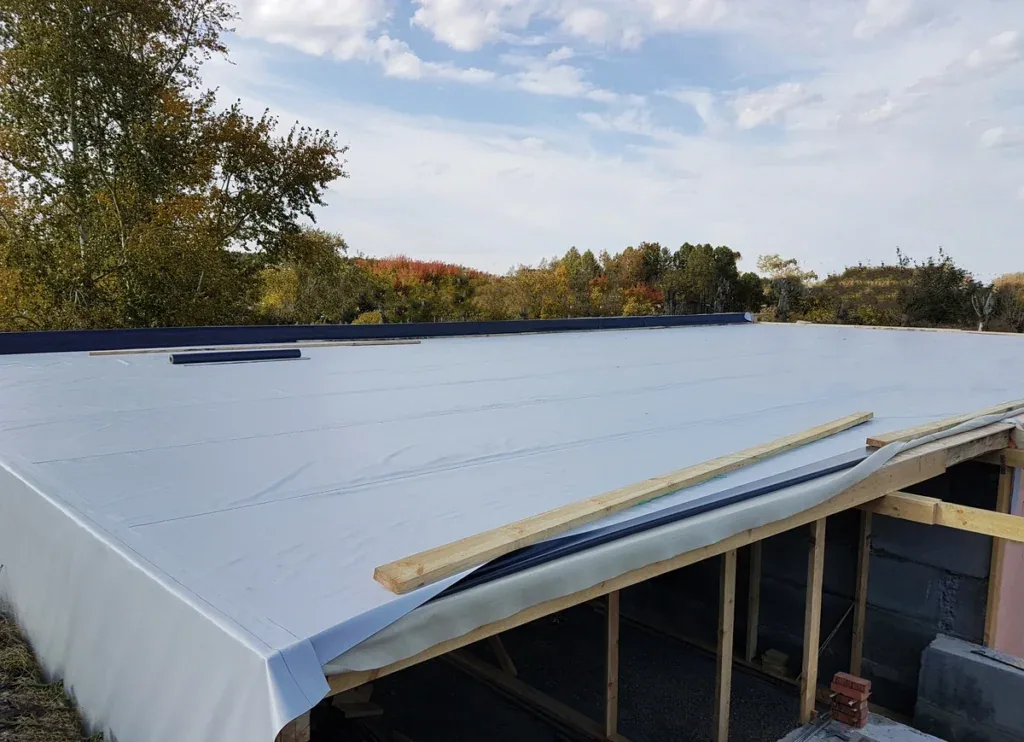
Often, yes. Tapered insulation can be installed over a sound existing roof, then covered with a new membrane, as long as the old layers are dry and the building can carry the weight and the added height at the parapets and walls. Core cuts and a moisture scan tell us whether it is an option. If they show wet insulation, the plan changes.
Does ponding water void the membrane warranty on our roof?
Some warranties carve it out, and some set a limit on how long water may stand. Pull the warranty document and look for the word ponding before you decide anything. If the exclusion applies, fixing the drainage can protect what is left of the coverage. We read the language with you and write the repair so it matches the manufacturer's published details.
Is a drain retrofit realistic on an older masonry building downtown?
It can be, but it takes planning. On an older masonry building, the kind that dominates Downtown Davenport, interior drain lines often run through finished space, and the parapet may allow a scupper instead of a new interior drain. We trace the existing piping before we cut anything. A new through-wall scupper can solve ponding where a drain cannot, and it avoids opening ceilings.
Explore Related Roofing Work

Talk to a Davenport Commercial Roofer
Send the work order, the building address or a few photos of what you are seeing. We will set a walkthrough, go up with whoever has the hatch key, and tell you plainly what the roof needs.