
Commercial Roof Leak Repair in Davenport, IA
Find and stop active commercial roof leaks in Davenport, IA. We trace the water to its source, repair it properly and confirm the roof stays dry.
Water on the floor under the third bay, a stained ceiling tile on a Monday morning, and nobody can say where it started.
Here is the thing about a leak: the spot where the water drips is almost never the spot where it enters the roof. Water travels along the deck, down a column or through the insulation before it shows up inside. Our job at a Davenport, IA building is to follow it back to the opening, fix that, and prove the roof is dry.
Where the Water Shows Up
We begin inside, with whoever knows the building. Where is the stain? When did it first appear? Does it show after rain, after snowmelt, or after the rooftop units cycle? Those answers narrow the search before we ever go up.
Pattern matters. A stain that appears only after a thaw points at ice, a clogged drain or a failed edge. A stain that shows during any hard rain points at an open seam or flashing. A stain that comes and goes without rain might not be a roof leak at all. Condensation from ductwork and failed HVAC drain lines look a lot like roof leaks, and we rule them out first.
If your crew has taken photos of the stain over time, send them. A ceiling tile that has been wet and dry six times tells us more than one clean snapshot.
Tracing the Source
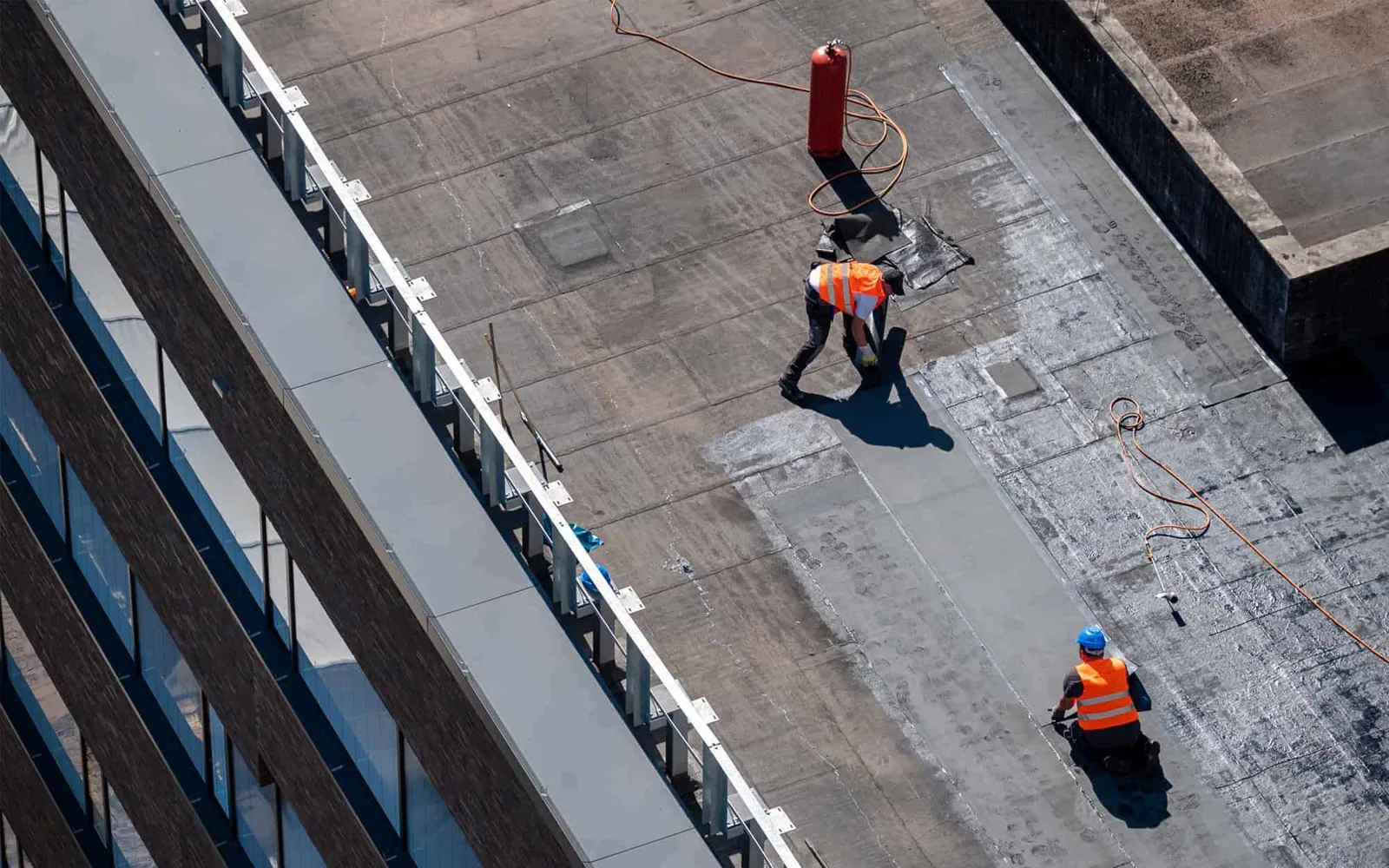
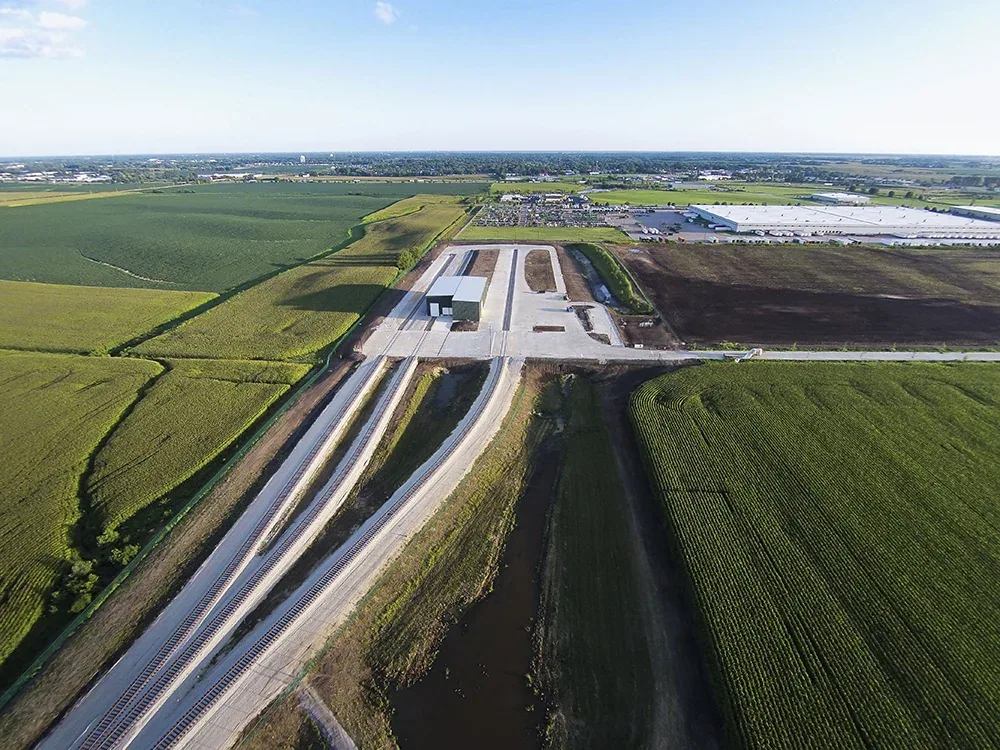
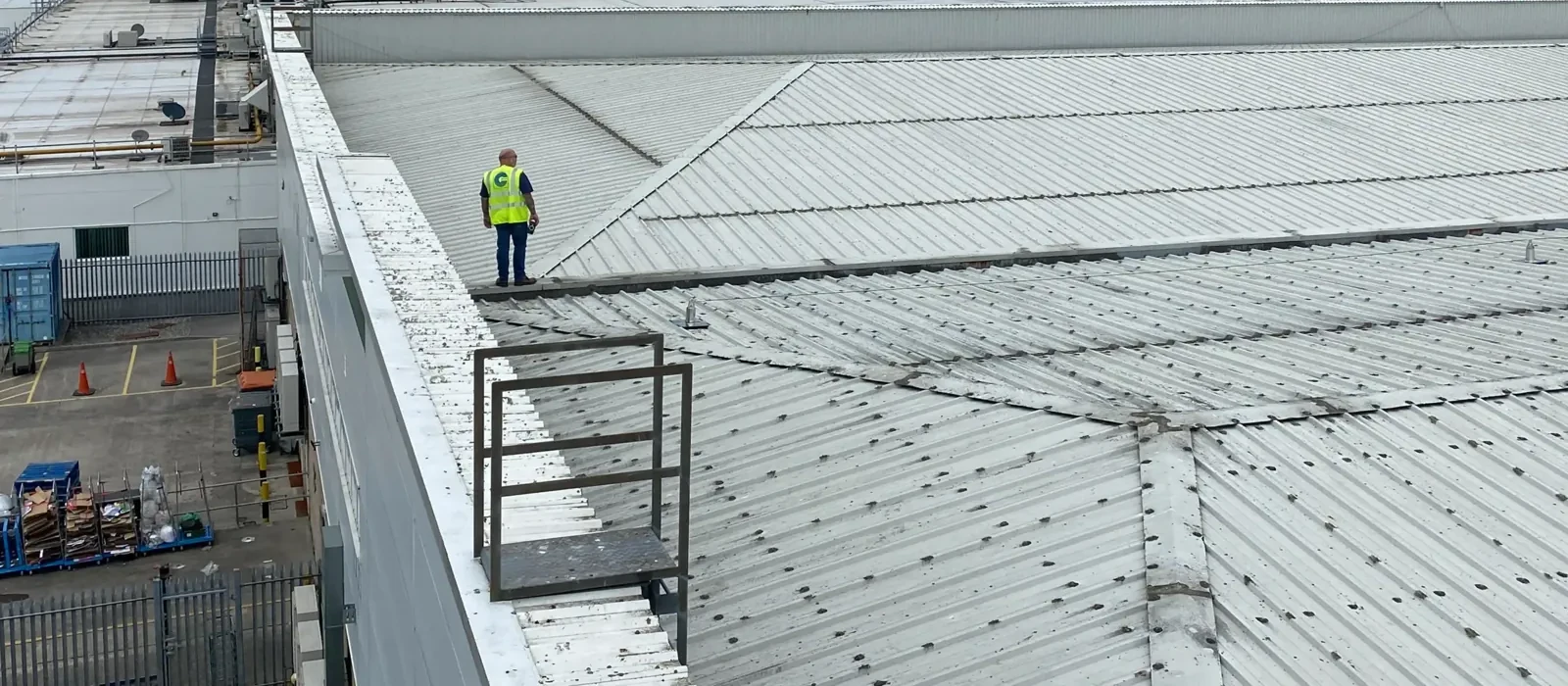
On the roof, we work uphill from the stain. Water flows down slope, so the opening is above and usually to the side of where it shows. On the large low-slope manufacturing and warehouse buildings of the Eastern Iowa Industrial Center along I-80, that uphill walk can cover a long way. We look at each detail in that path, including seams, curbs, penetrations, drains, walls and edge metal.
When the eye is not enough, we use tools:
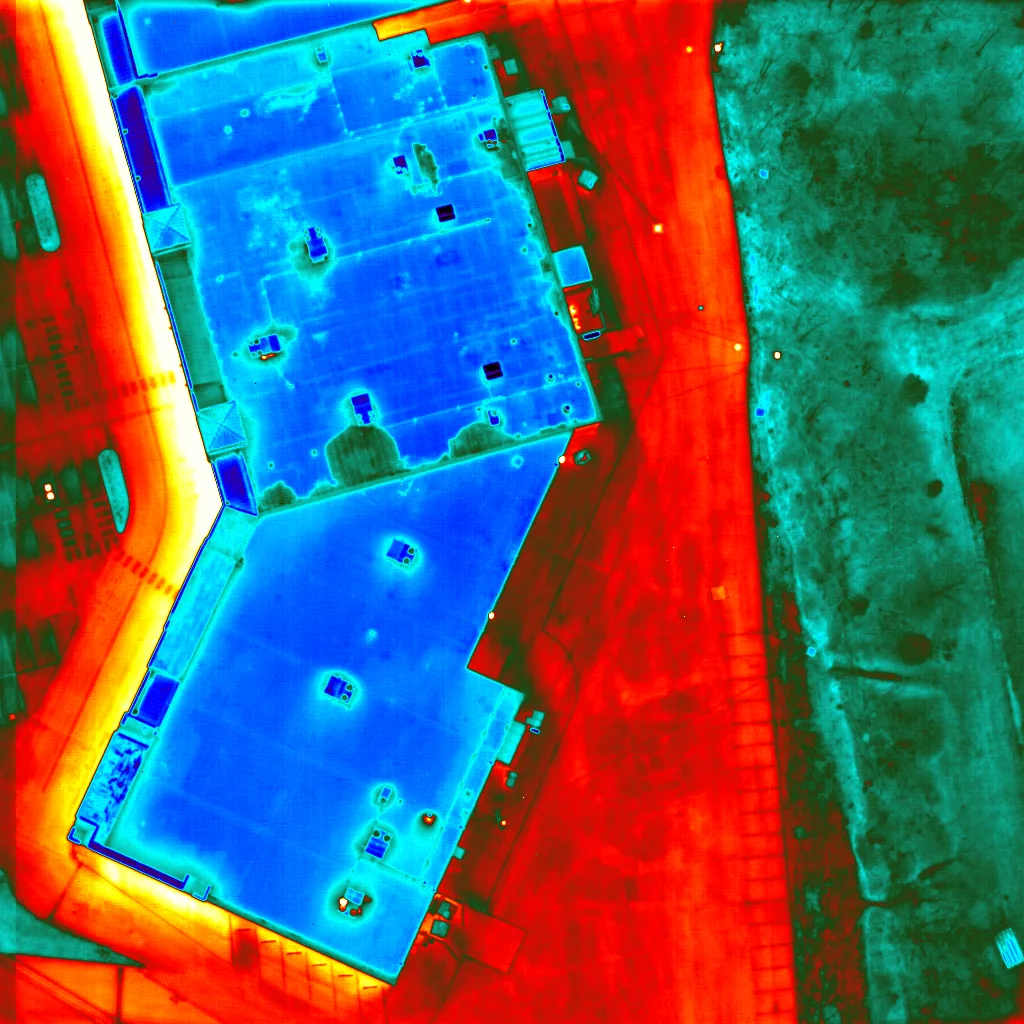
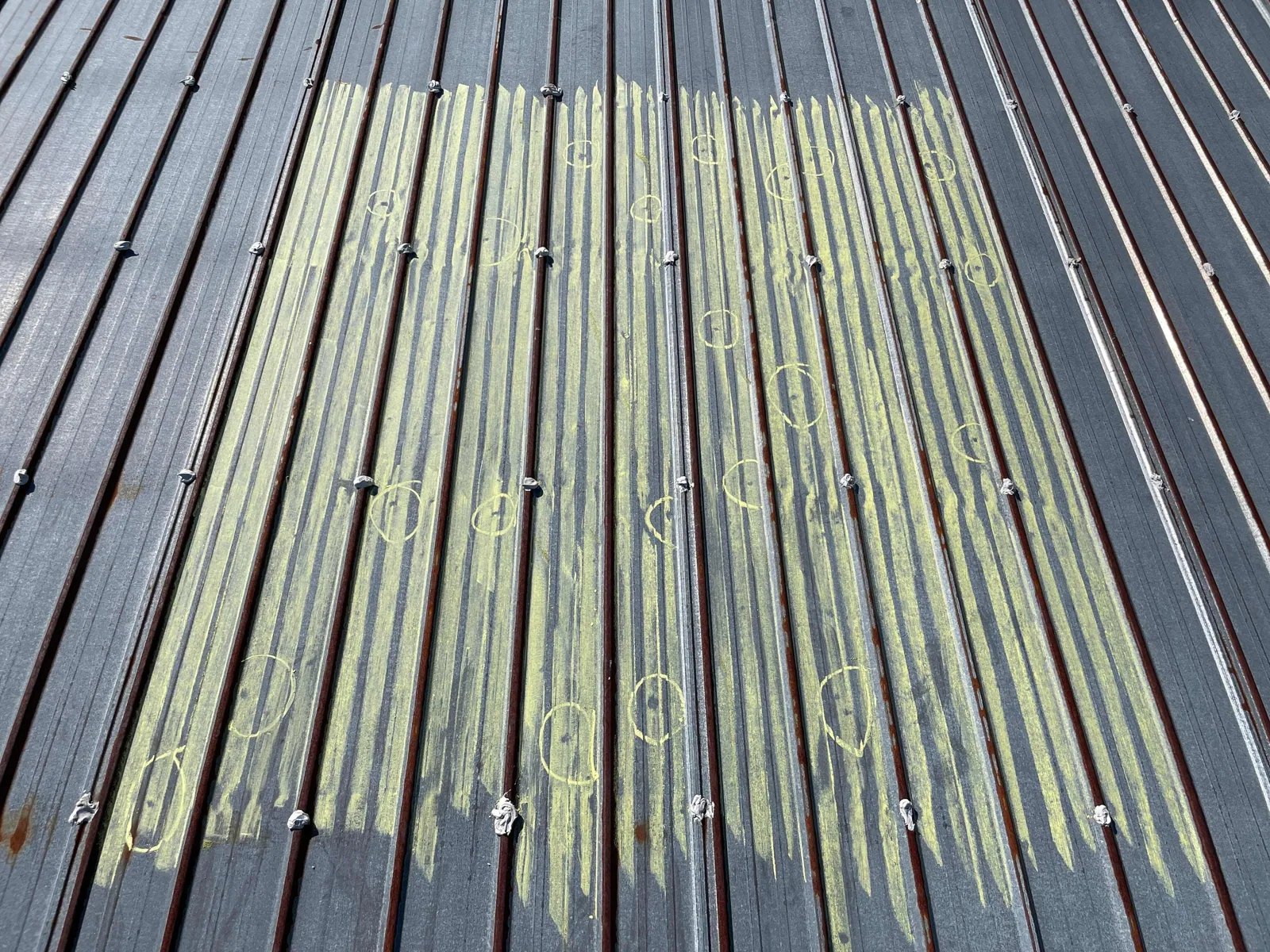
- Infrared imaging to find wet insulation, through an infrared moisture survey.
- Controlled water tests, section by section, with someone watching the interior.
- Moisture meters and core cuts to map how far the wet area has spread.
A controlled water test is slow, but it is often the only way to separate two possible sources.
Drains and Winter Ice
In a Davenport winter, drains explain more leaks than torn membrane does. The Quad Cities average over 36 inches of snow a year, and January alone averages about 10 inches. That snow melts, refreezes at the drain and dams the water behind it. The water finds the lap or the flashing and pushes through.
We check drain bowls, strainers, scuppers and gutters on every leak call. Clearing them is the first step. Then we look at why they clogged, whether the drain is set too high, or whether the roof is ponding. Ice that keeps returning to the same edge is a snow and ice damage problem, and a drain set too high is a job for roof drain and scupper work.
Temporary Stop, Permanent Fix
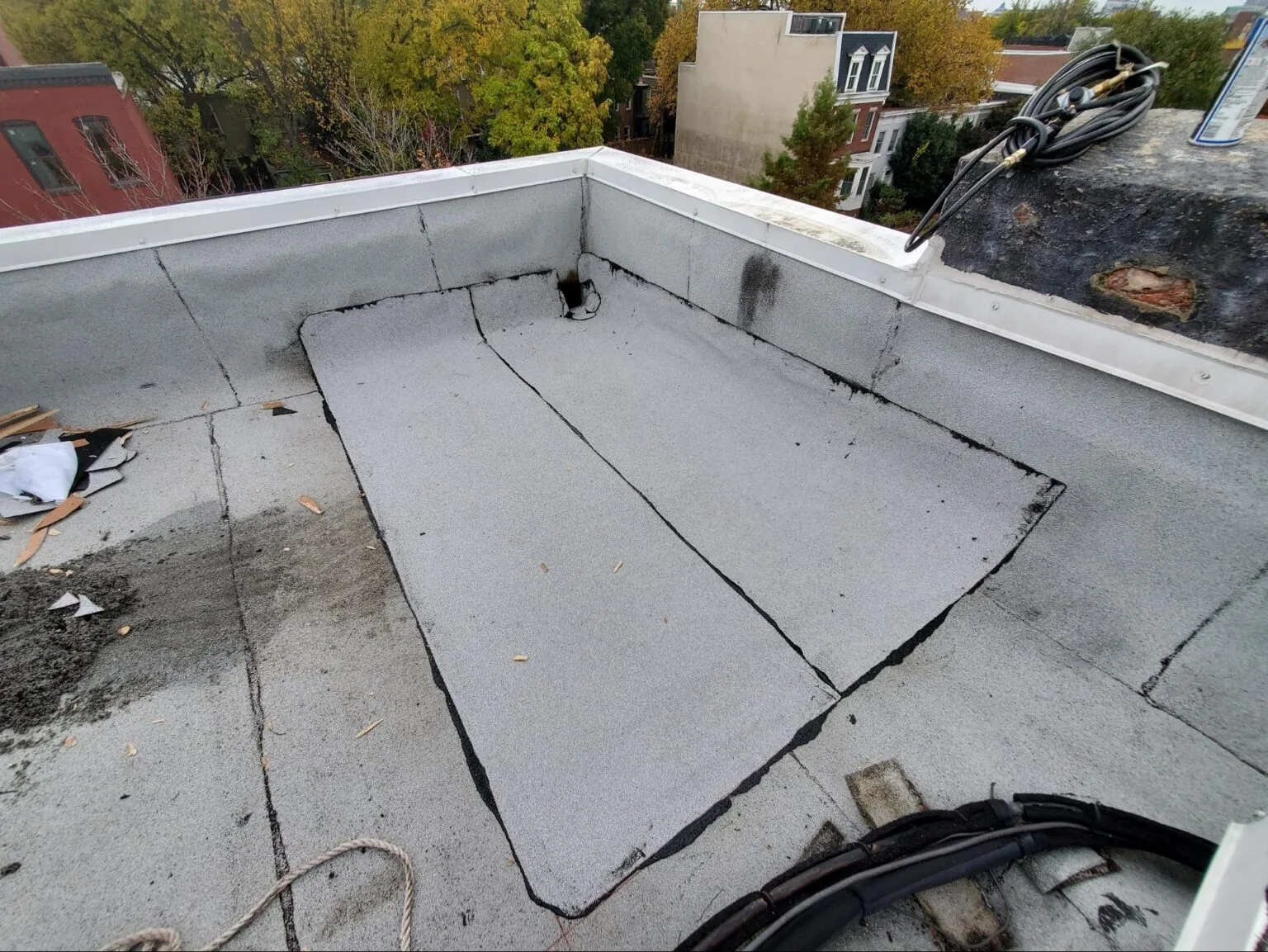
If water is coming in now, the first job is to stop it. That might mean a temporary patch, sealant, a tarp or a pitch pan. We tell you plainly which parts of the work are temporary.
The permanent fix follows when the weather allows. It could be a replaced flashing, a re-welded seam, a new curb detail or a section of new membrane. If the leak keeps returning to the same area, we look for the pattern, such as a low spot, a failed drain or wet insulation spreading under the surface. A larger scope becomes a planned commercial roof repair, built from what the tracing found.
Confirming It Is Dry
A leak call is not finished when we leave the roof. It is finished when the interior stays dry through the next real rain.
We ask you to tell us after the next storm, or we check back ourselves. If the stain returns, we reopen the search. A repair that does not stop the leak is not done, and we do not bill it as done. Photos of the opening, the repair and the surrounding area go in your file.
For buildings with several leaks in different places, we keep a running list by bay and column line. That list tells you whether you have a series of small problems or one big one, and it saves your maintenance crew from chasing the same stain twice.
Interior Damage and the Record
Water does damage you may not see. Insulation soaks and stays wet. Ceiling grids rust. Mold can start in warm, humid spaces. We point out what we notice so your facilities team can inspect it.
If the leak is tied to a storm, document it right away with dated photos and a written description. We provide a plain report of what we found on the roof, which helps when you talk to your insurance carrier. If the loss turns into a claim, roof insurance claim assistance starts from those same photos and that same description. Older masonry buildings in downtown Davenport have their own habits, with parapets and mortar joints where water can hide for a long time.
Inside, mark the first stain and the time it appeared, then note whether equipment was running or a drain had backed up. Those details help us compare the interior symptom with the roof path. Water can travel along a deck flute or insulation joint before it shows. On the roof, we trace uphill from the matching bay, test nearby seams and check penetrations before opening a large area. The work order should separate the confirmed entry point from any secondary wet materials.
Send the Work Order
Send us the work order with where the water showed up and when it started. If it is coming in now, call and say so, and we will move you to the front of the line.
Questions About Commercial Roof Leak Repair
The leak only happens in heavy rain. Does that make it harder to find?
It can, but it also helps. Heavy rain only is a clue: wind-driven rain points at walls, edges and flashings, while ordinary rain that overwhelms a slow drain points at drainage. We look at the details that match the pattern, and if needed we run a controlled water test on dry days. Tell us the direction of the wind during the last bad leak, since that narrows the search quickly.
Can we just seal the spot ourselves until you arrive?
A small temporary patch with the right product is fine, and a tarp over an obvious opening makes sense. Avoid piling roof cement over everything. Layers of mastic hide the true opening, trap moisture and make a permanent repair harder. If you are unsure, photograph it and send the picture to us first.
How do you know the insulation is wet and not just the membrane?
Infrared imaging shows temperature differences that suggest moisture, and we confirm with a moisture meter and, where needed, a core cut. Wet insulation holds heat differently from dry insulation after the sun goes down. That is why we scan in the evening on clear days. Once we know how much is wet, we can tell you if a repair will hold.
What if the leak is coming from a rooftop unit?
Units leak in several ways: through the curb flashing, through a drain line, or from condensation. We check all three. If it is the curb, we re-flash it. If it is the unit, we tell you and coordinate with your HVAC vendor so the roof and the mechanical work are fixed together.
When is a leak a sign the whole roof is finished?
When the leak points to widespread wet insulation, repeated failures in different areas, or a membrane that is cracked across the field. One leak at one failed detail is a repair. Several leaks in several bays after a hard winter is a pattern. We lay out the evidence and explain what a full roof inspection would add.


Talk to a Davenport Commercial Roofer
Send the work order, the building address or a few photos of what you are seeing. We will set a walkthrough, go up with whoever has the hatch key, and tell you plainly what the roof needs.