
Warehouse Roofing in Davenport, IA
Warehouse roof repair, recovery and replacement in Davenport, IA, planned around dock traffic, racking and shipping schedules, with photos the same day.
The dock lead sends a photo at six in the morning. A pallet near the north wall has a wet corner, and a drop of water is hanging off the sprinkler line above it. Nobody can say which bay it came through.
That is how a warehouse roof problem usually shows itself: stock is at risk before anyone knows where the roof gave way. For a building in Davenport, IA, we treat it as a facilities job. You send the work order. A walkthrough gets scheduled, and we go up with the person who holds the hatch key. By the time you are back at your desk there are photos in your inbox and a short answer on what the roof needs.
Long Spans, Few Interruptions
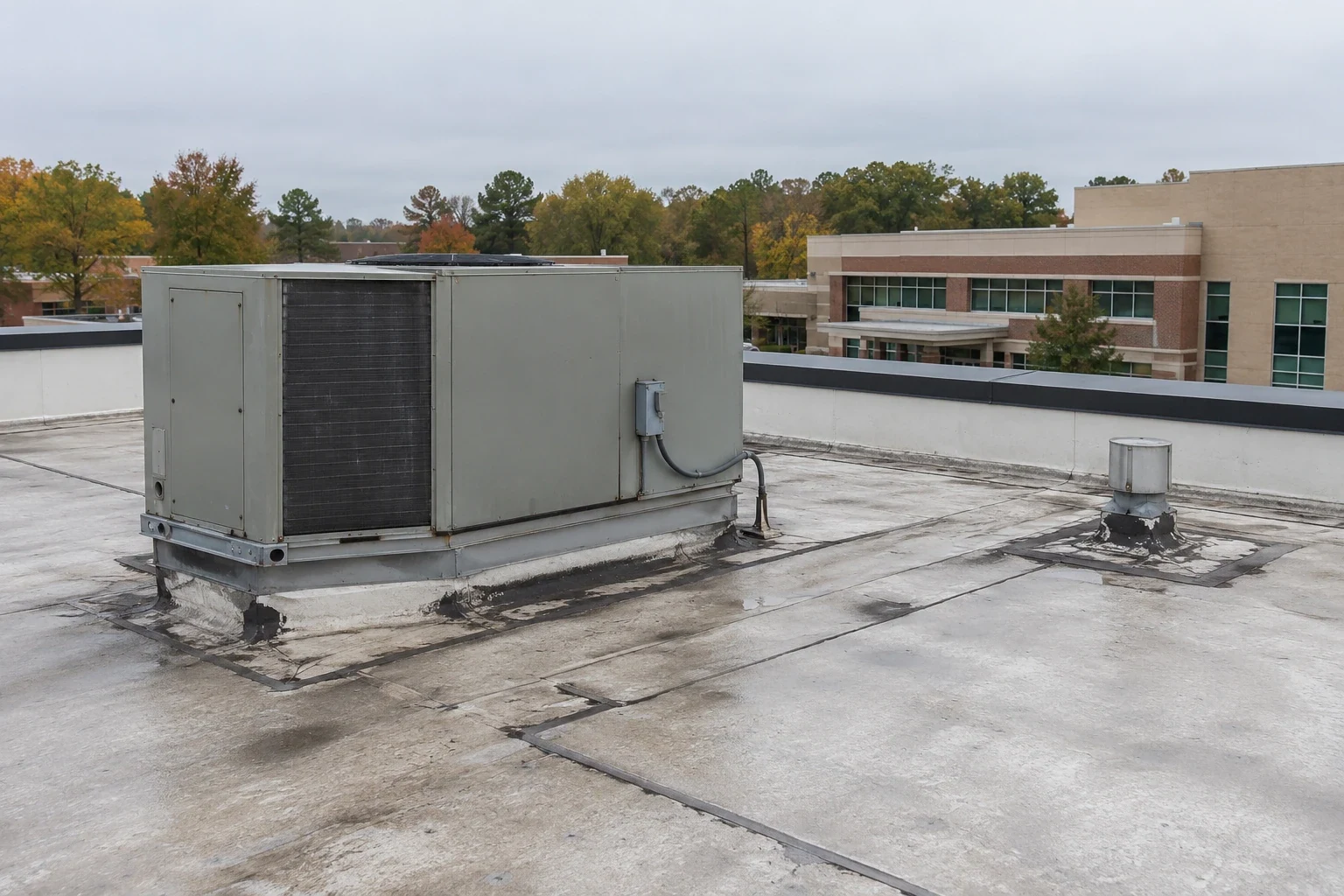
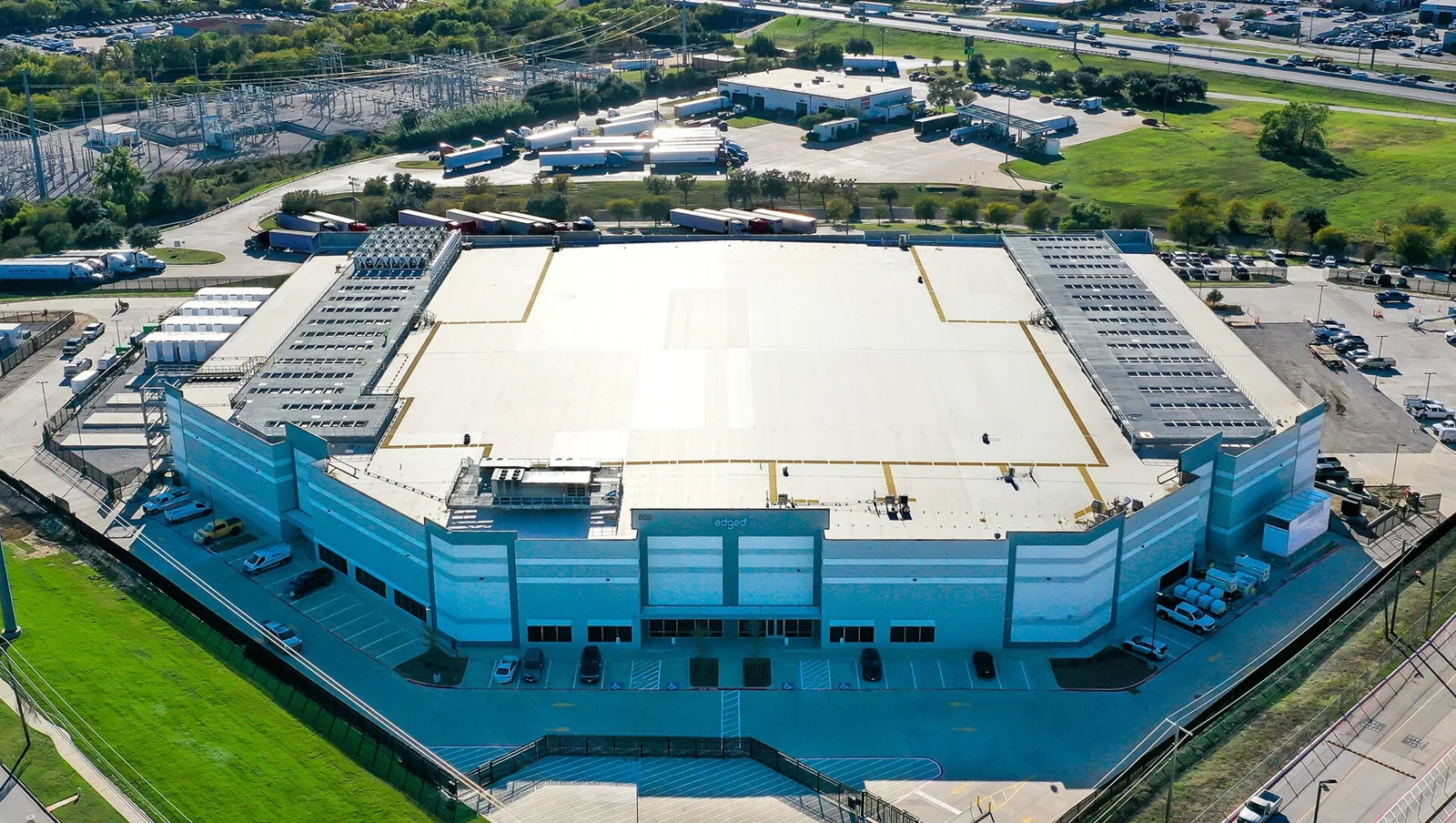
A warehouse roof is mostly open field. There are fewer rooftop units than on an office, and fewer jogs and setbacks.
Davenport records run from 111 F down to -29 F. Over that range a long run of TPO, EPDM or any other single-ply stretches and pulls back at every wall. Mechanically attached systems can see fasteners work loose under that cycle, and the first sign is often a ridge in the sheet that follows a fastener row. We walk those rows and press on the laps.
Few penetrations means the trouble hides at the edges, the drains and the odd skylight or smoke vent. We start there.
Drains, Scuppers and Ponding
Snow totals in the Quad Cities run past 36 inches in a normal year, and January carries the most. A warehouse roof has to carry that load, shed the melt, and not hold it in place.
We check every drain and scupper first. In a Davenport winter, ice in the drain line is a more common starting point than a torn sheet. The line freezes, the water backs up behind it, and the first thaw pushes it under a lap or past a flashing.
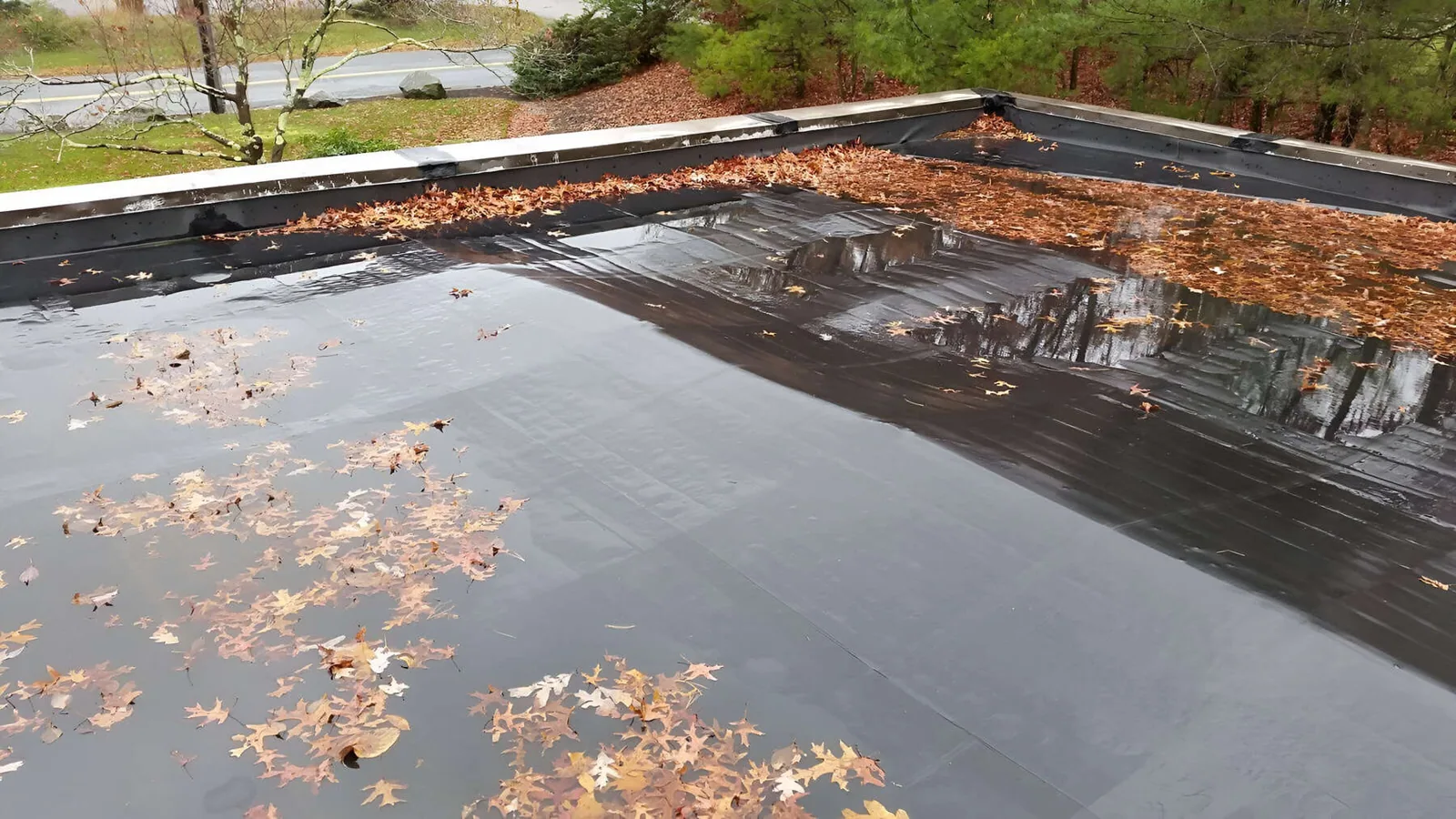
Then we look between the columns. Warehouse decks deflect a little under load, and water collects in the low spots. A shallow pond that stays for days after a rain is a sign of drainage that is not working. The fix may be a new drain, tapered insulation or just a cleaned sump. Standing water calls for ponding-water roof repair, and a failed outlet means replacing the drain or scupper.
Edges After a Derecho
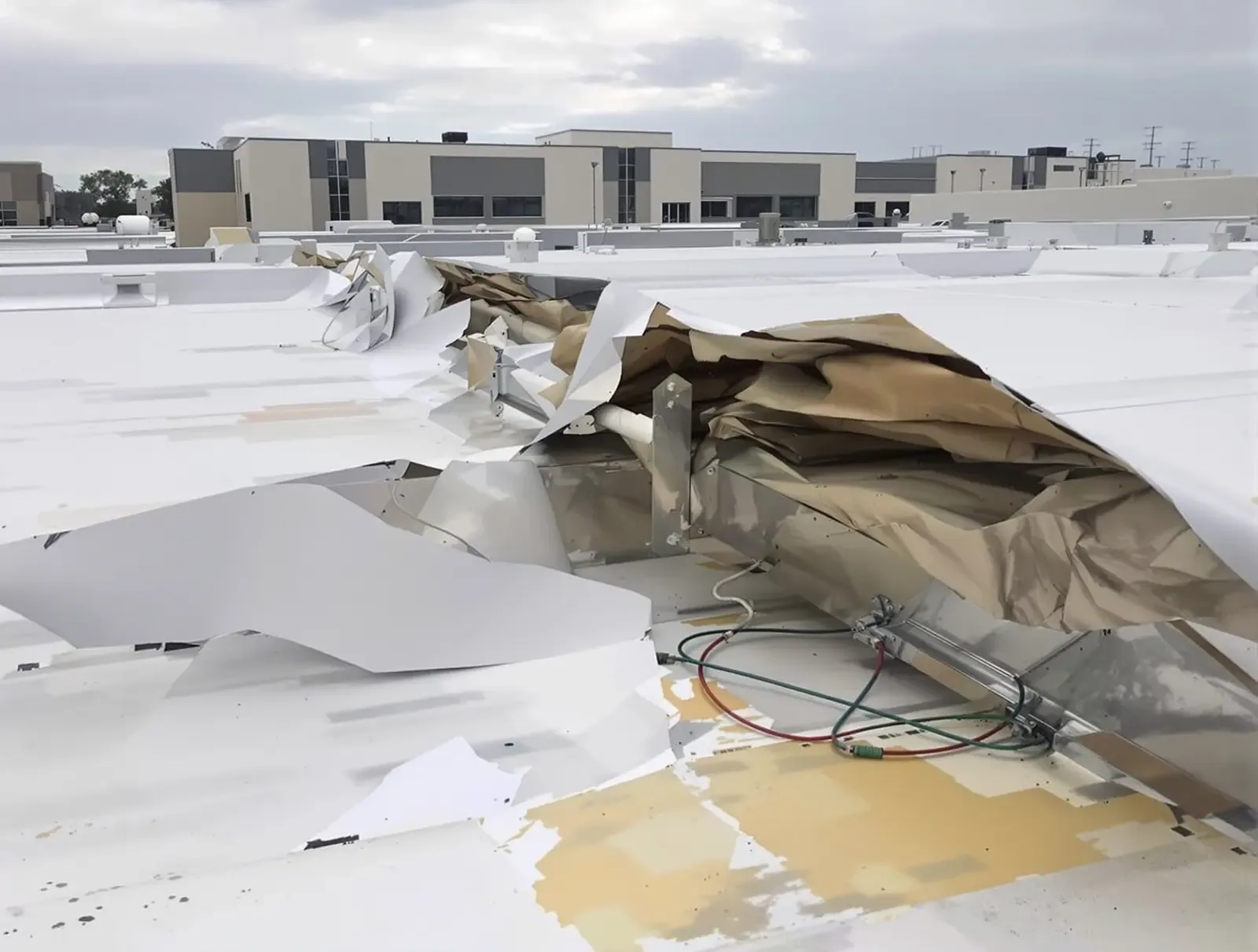
In August 2020 a derecho gusted to 86 mph at Davenport Municipal Airport, and winds kept up their damage over the area for 30 to 60 minutes. In July 2024 another derecho carried gusts up to 100 mph across the region. Wind pulls hardest at corners and perimeters, so the damage on a big low-slope building starts there.
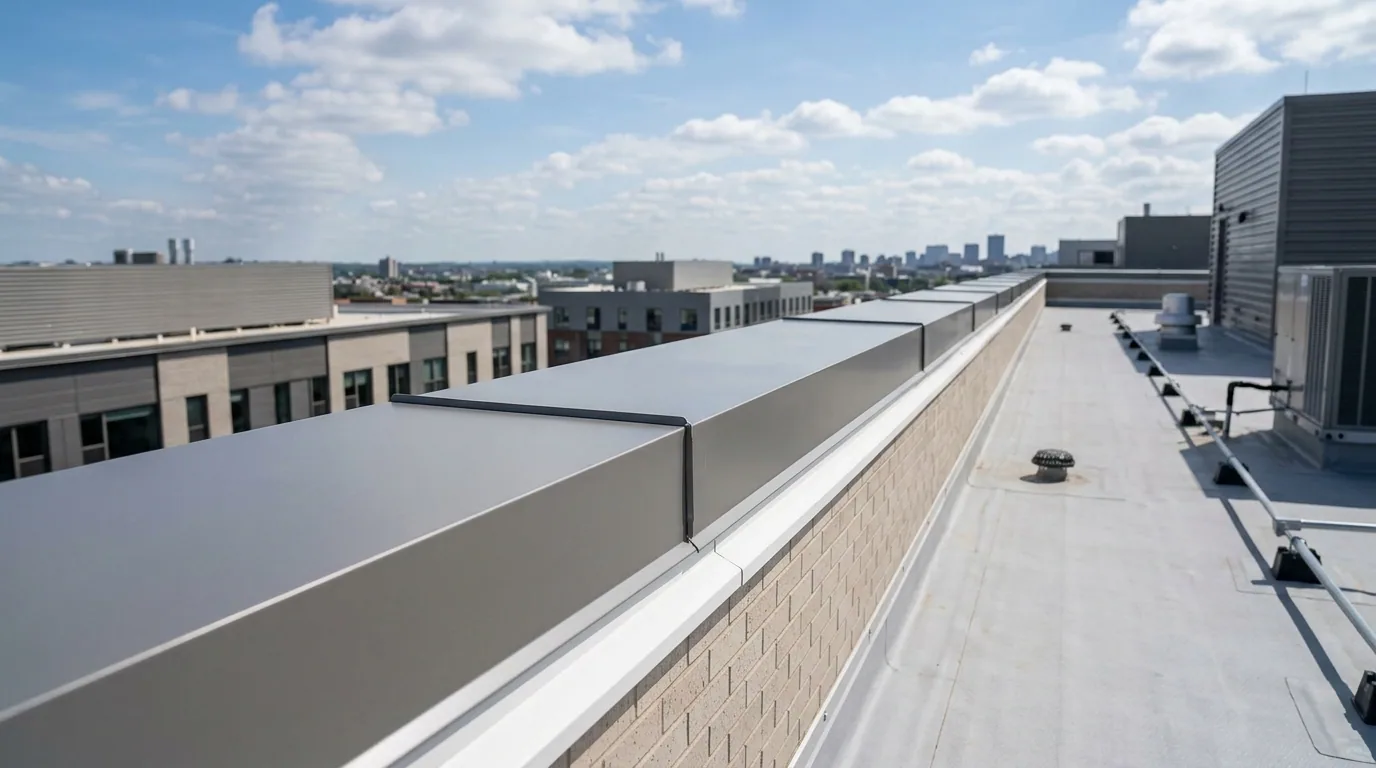
We check the edge metal, the coping, the drip edge and the perimeter fastening. Loose metal lets wind get under the sheet. Loose copings and gutters get reset or replaced as edge metal work, and lifted membrane is handled as wind damage repair.
Hail is part of the same walk. Hail is common here too, with 133 reports logged inside a 10 mile radius of the city center since 2004 and baseball-size stones on April 4, 2023. We look for bruised membrane, cracked cover board and dented metal, and we photograph it for the adjuster.
Working Around Dock Traffic
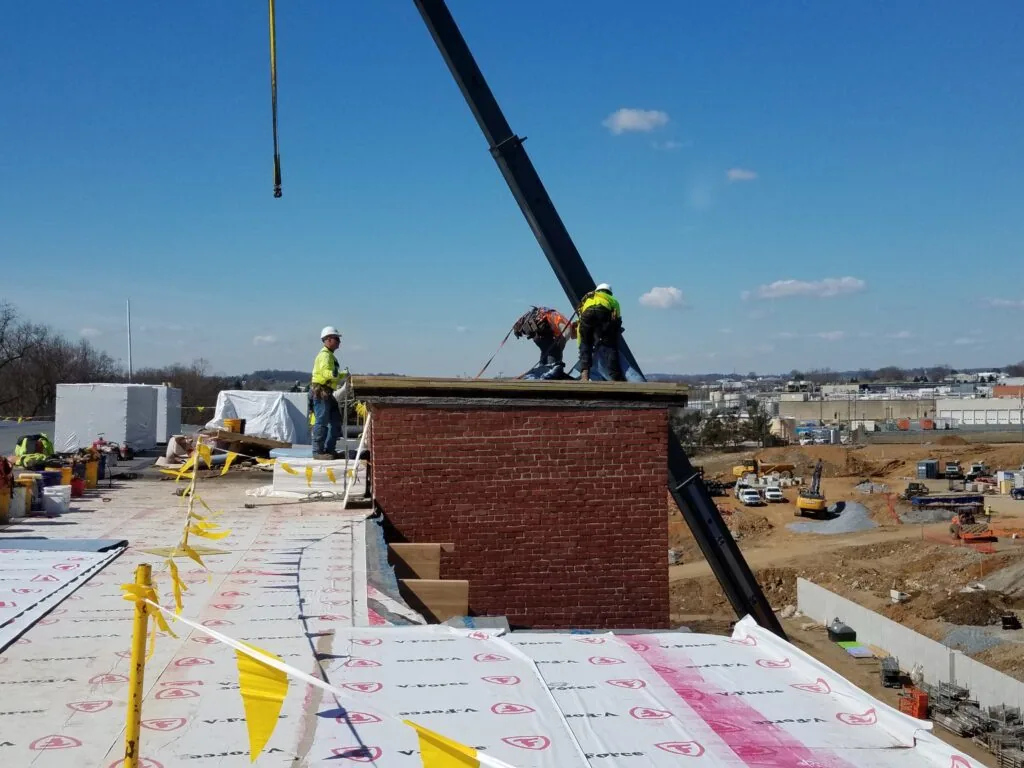
A warehouse does not stop for a roof. Trucks back in, forklifts cross the apron, and second shift starts at the same time the crew wants to be loading the lift.
We plan the job around the dock calendar:
- Material staging goes on the side of the building away from the aprons and the truck court.
- Hoisting and crane picks are set for the quiet hours, with a spotter on the ground.
- Roof access is by ladder, hatch or a lift placed where it will not block a door.
- Open edges get fall protection before anyone steps off the ladder.
In a shared building we also send the tenant notice, so the neighbor next door is not surprised by a noise at seven in the morning. The methods for reroofing an occupied building carry straight over to a working dock.
Patch, Recover or Replace
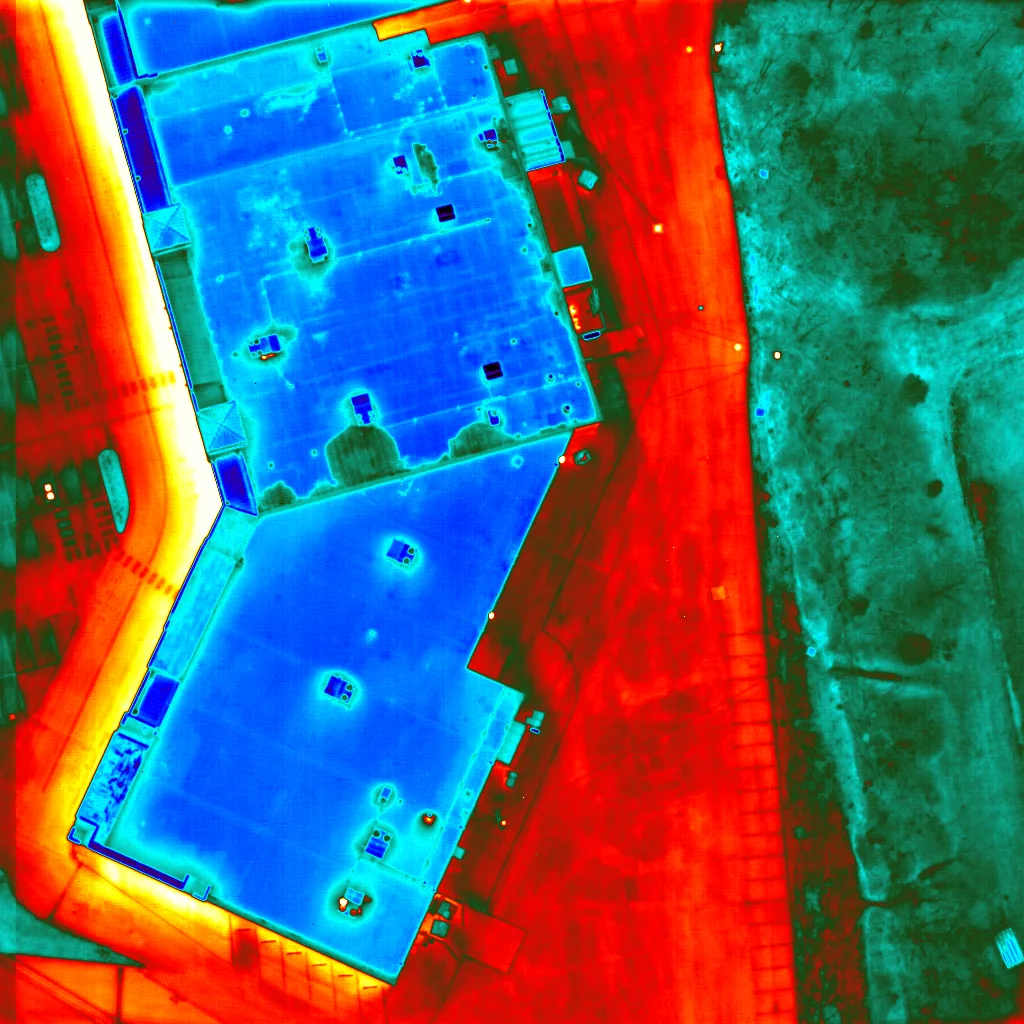
The decision turns on what is wet under the membrane. A roof can look dry on top and hold water in the insulation, and that is where an infrared moisture survey pays for itself. The scan maps the wet spots and cores prove them out.
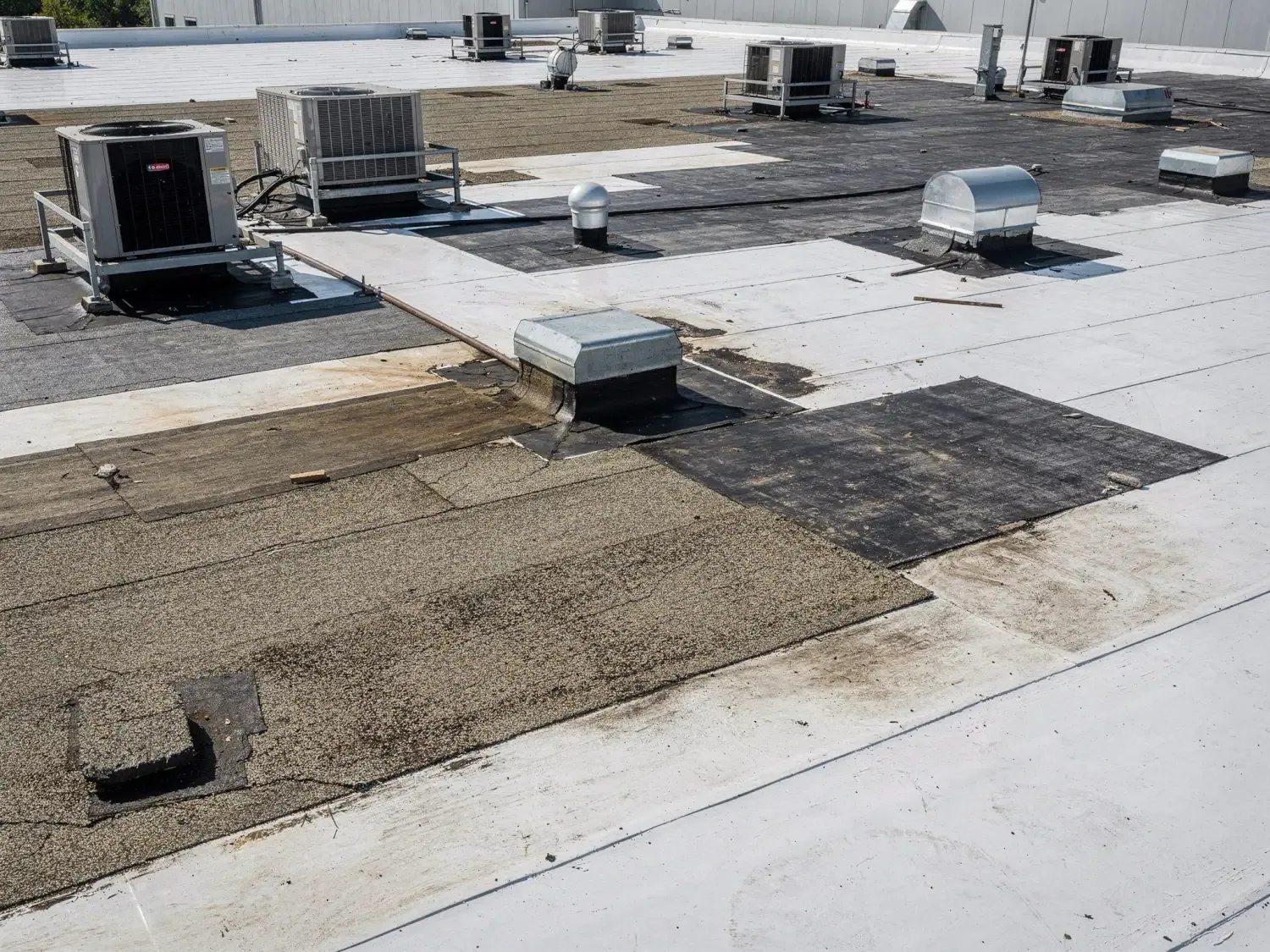
If the damage is local and the insulation is dry, a repair holds. If the wet area is spread across the field, a recover may work when the existing layers pass inspection. Otherwise it is a tear-off and a full replacement.
Davenport adopted the 2021 editions of the International Building Code and the International Existing Building Code, amended locally, and a reroof has to meet them. Cost follows the deck, the insulation depth, the drain count and how far the schedule has to bend around operations.
The Handoff
When the crew leaves, a written close-out arrives with photos of the finished work, the state of the drains and edges, and a short list of what to watch. For a building in the Eastern Iowa Industrial Center or along Brady Street, that record lets the next walkthrough start where the last one stopped.
Put the next walk on the calendar now. A spring and fall walk, with the drains cleared and the edges checked, costs far less than a wet pallet. A building that ships around the clock has the scheduling problems of a distribution center, and a refrigerated one adds the vapor questions of cold storage.
Send the Work Order or Set a Walkthrough
Send us the work order, a photo of the wet spot or the address of the building. We will set a walkthrough around your dock schedule and come back with a plain recommendation.
Questions About Warehouse Roofing
Product is racked right under the wet spot. Can we move it, and should we stop shipping from that bay?
Move what you can reach safely, and tarp the rest if a pallet jack cannot get to it. Keep the aisle under the drip clear so nobody slips. Shipping from other bays can go on. If water is still coming in, call us before the work order is typed up, and we will send a crew to dry in the opening while you finish the paperwork. Photos of the wet stock help your insurance later.
Only one bay of our multi-tenant building leaks. Does the whole roof have to be walked?
Walk all of it. Water runs along the deck and through the insulation, so the bay that drips may be far from the opening. A full walk also shows whether the neighbor's section is about to fail the same way. We send the report to whoever manages the roof, and your tenant notice covers the days we are on the deck.
Our warehouse has an older built-up roof with a gravel surface. Can it be recovered?
Gravel changes the plan but does not end the option. It has to be swept or vacuumed so the new layer does not sit on loose stone, and we need a core to confirm the existing layers are dry. If the cores come back wet, the wet section comes out. A survey before bidding tells you which way it goes, and a tear-off is the answer when it does not pass.
How do you keep the dock doors open for trucks while the roof work goes on?
We stage materials away from the aprons, schedule lifts for the hours your dock is slowest, and put a spotter wherever a pick crosses a path. Walkways under the work area get covered or closed for the shift, never left half-protected. You tell us the busy windows at the walkthrough, and the schedule is built from that, not the other way around.
We patched after the 2020 derecho and moved on. How do we know what the wind left behind?
Start with the perimeter. Lifted edge metal, a creased sheet at a corner and fasteners that backed out are the usual leftovers. We also pull a few cores to check for wet insulation under areas that were patched. The result is a map of what is sound, what needs repair and what should be watched, so the next storm does not find the same weak spot.
Talk to a Davenport Commercial Roofer
Send the work order, the building address or a few photos of what you are seeing. We will set a walkthrough, go up with whoever has the hatch key, and tell you plainly what the roof needs.