
Edge Metal, Coping, Gutters and Downspouts in Davenport, IA
Edge metal, coping, gutters and downspouts for commercial roofs in Davenport, IA: wind-rated attachment, sealed joints and ice-aware drainage at the perimeter.
A downspout at the south wall has been frozen solid since January. Icicles hang over the employee entrance, and facilities has put out cones. Nobody put a roofer on the list because it looks like a gutter problem.
It is a perimeter problem, and the perimeter is where a commercial roof is most exposed. Edge metal, coping, gutters and downspouts hold the membrane down at its weakest line and move water off the building. In Davenport, IA the edge sees ice, thermal swing and derecho wind, so it deserves its own look on every roof walk.
What Counts as the Edge
The edge has several parts, and each does a different job.
- Drip edge and fascia: the metal at the roof edge that sends water clear of the wall and covers the membrane termination.
- Gravel stop: a raised flange that holds ballast or finishes a built-up edge.
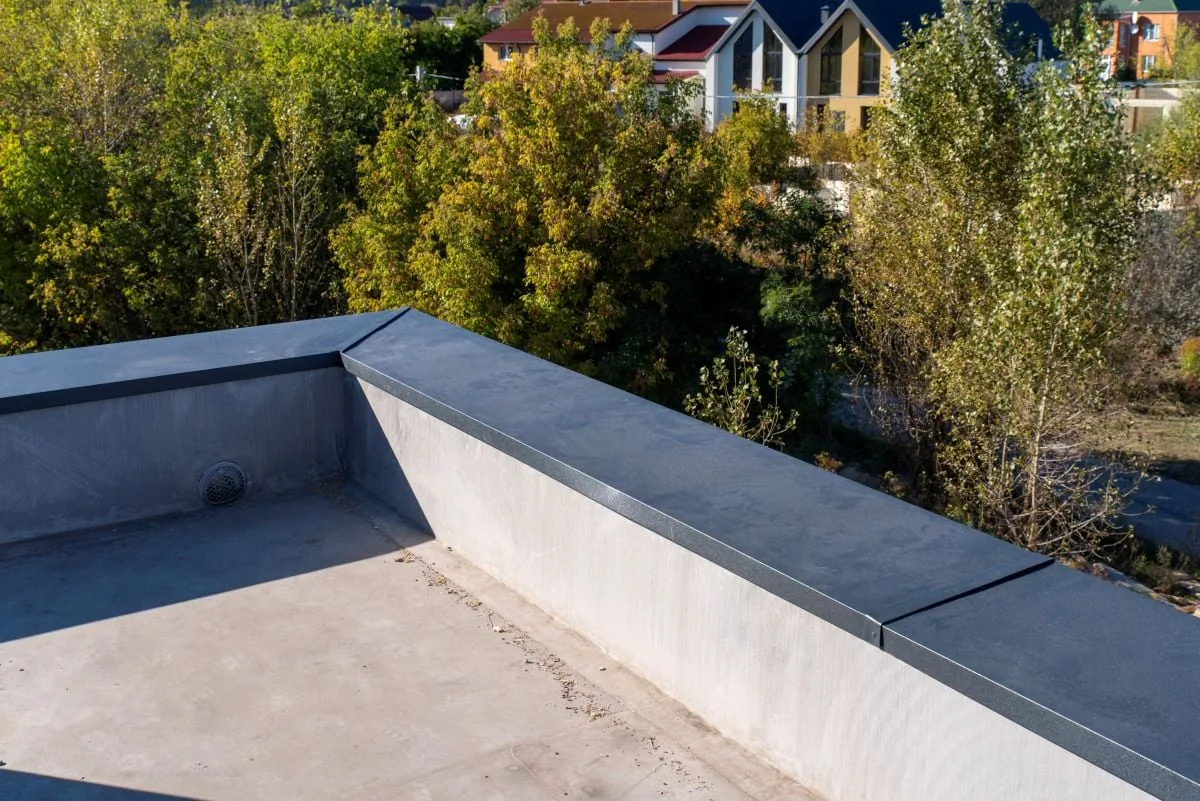
- Coping: the cap over a parapet wall, sloped to shed water onto the roof.
- Gutters and leaders: the collection and downspout system that carries runoff to grade or the storm line.
We note which of these a building has, what the metal is made of, and what condition the sealant, fasteners and joints are in. A single failed joint in coping can let water behind the wall for a full season before a stain shows up inside.
Cleats, Fasteners and Wind Load
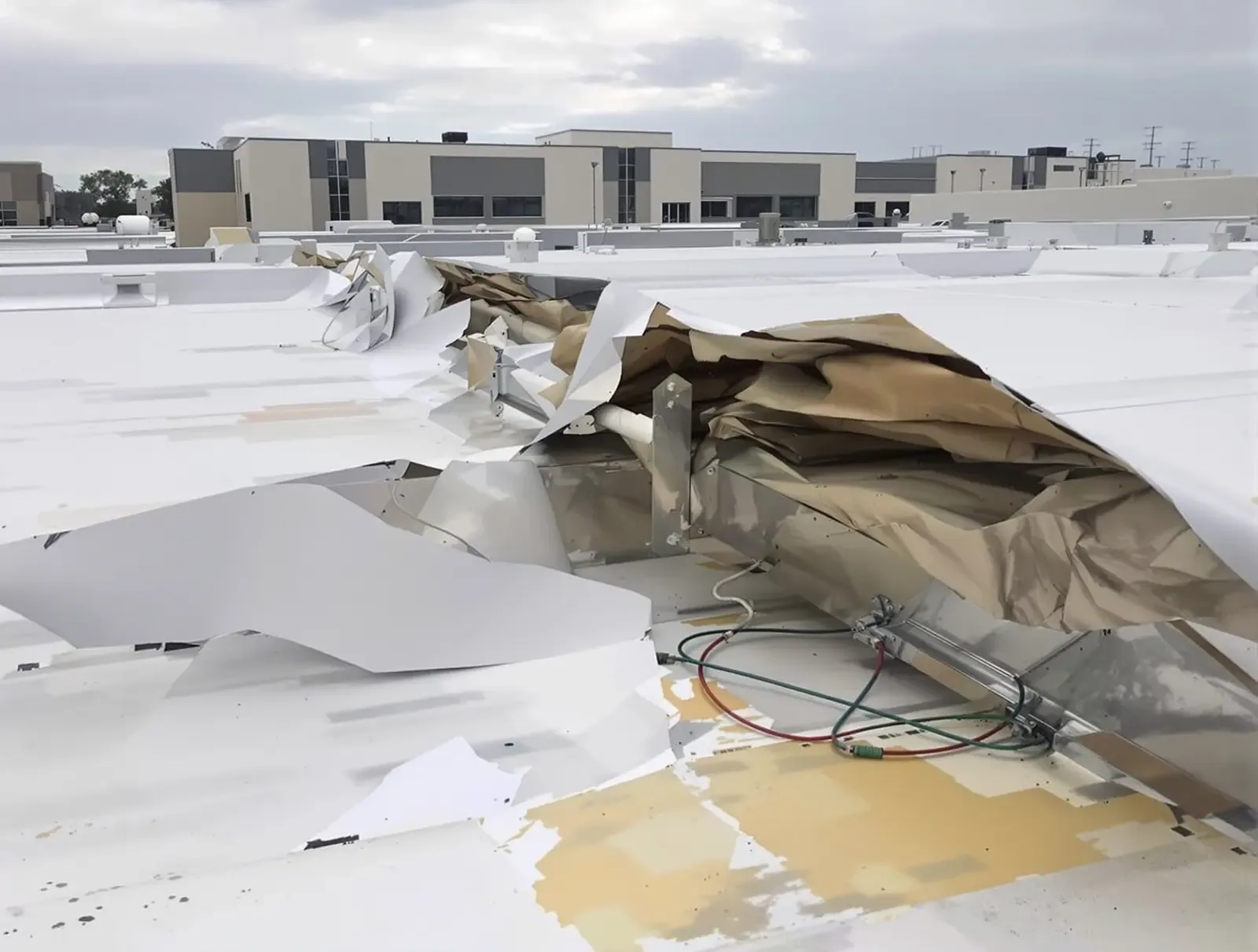
Edge metal fails by being pulled off. Once a piece lifts, the membrane under it lifts too, and wind gets under the roof.
The corners and perimeter zones of a roof see the highest uplift, and the derecho winds the region has recorded, up to 100 mph in July 2024, make attachment a priority. Good edge systems use continuous cleats or a hook strip along the base, so the metal locks in place instead of relying on face fasteners alone. They are tested and rated for uplift, and they are installed to the building's design wind speed. We check the rated system against the code and the membrane manufacturer's details before we order metal, not after. When wind damage has already pulled a section loose, the replacement uses the better attachment, not the original one.
Coping on Parapets and Older Masonry
Parapet walls give coping a second job: protecting the wall itself. Water that gets into the top of a masonry parapet freezes, expands and breaks mortar joints year after year.
That matters across the older stock in downtown Davenport, where the historic district holds masonry landmarks such as the 1907 Davenport Hotel and the 1924 Union Station. It matters in the Village of East Davenport, where buildings date mostly from 1848 to 1910 and, after a 1901 fire, the older masonry and wood-frame roofs warrant a careful look. On masonry we check the coping joints, the sealant, the wall below and the termination bar at the membrane. Often the coping needs resetting, and sometimes the wall needs a mason before the new metal goes on.
On the island between Davenport and Rock Island, the Arsenal's original 19th-century limestone shop buildings are a National Historic Landmark, and any roof work on masonry of that kind follows the same rule: protect the wall first, then finish the roof edge.
Gutters, Leaders and Ice
A gutter that works in July can fail in January. Ice builds in the trough, pulls the gutter off its hangers, or backs meltwater under the edge. Downspouts crack when water freezes inside them.
We look at slope, hanger spacing, joints and outlet size, and we check where the leader discharges. A downspout that drops onto a walkway turns into an ice patch by morning. Where entries and sidewalks sit under the roof edge, the better fix is often to move the water away from the entry, or to route it into the storm line, rather than to hang a larger gutter. In some cases the building does better without a gutter at all, with the membrane draining toward interior drains instead. We will say so when that is the case.
Where Metal Meets Membrane
The edge is only as tight as its connection to the roof. The membrane has to be terminated cleanly under or over the metal, with a sealant joint that can flex with the temperature.
Thermal movement is real. Davenport's record range runs from 111 F down to -29 F, and a long run of metal expands and contracts across all of it. We set expansion joints in long runs and use cover plates where joints cross, so the seal does not tear every winter. If the membrane has pulled back, a flashing failure repair restores the termination before the metal is reinstalled. On many jobs the membrane edge gets a fresh strip of reinforcement under the new metal.
Scope and Sequence on a Working Building
Edge work happens at the building's perimeter, so safety and access come first. We set up protection at walkways and entries, keep the sidewalk clear, and plan around deliveries.
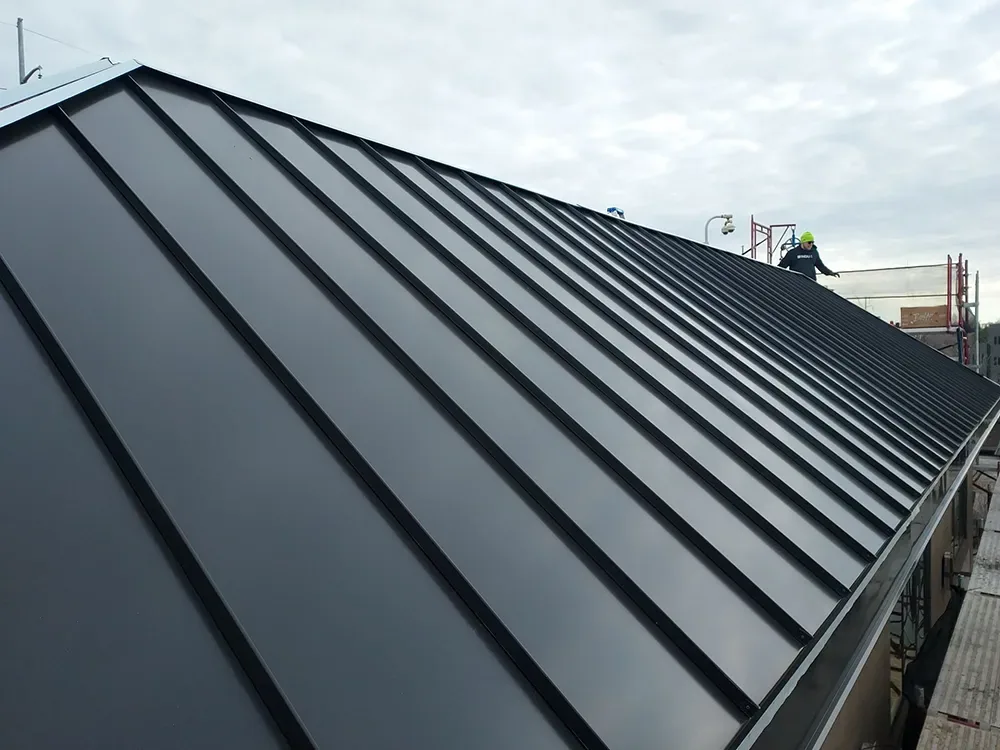
A full edge replacement is often part of a bigger project such as replacement, a recover or a standing seam metal roof. On a Brady Street retail frontage or a plant off I-80, a standalone job can be done in sections, a few walls at a time, with the membrane protected at the end of each day. The report afterward lists every run that was replaced, the metal and gauge used, and how it was attached.
Before setting a replacement boundary, a commercial roof inspection documents how far the edge failure runs and whether the field is affected.
Send the Photo of the Edge
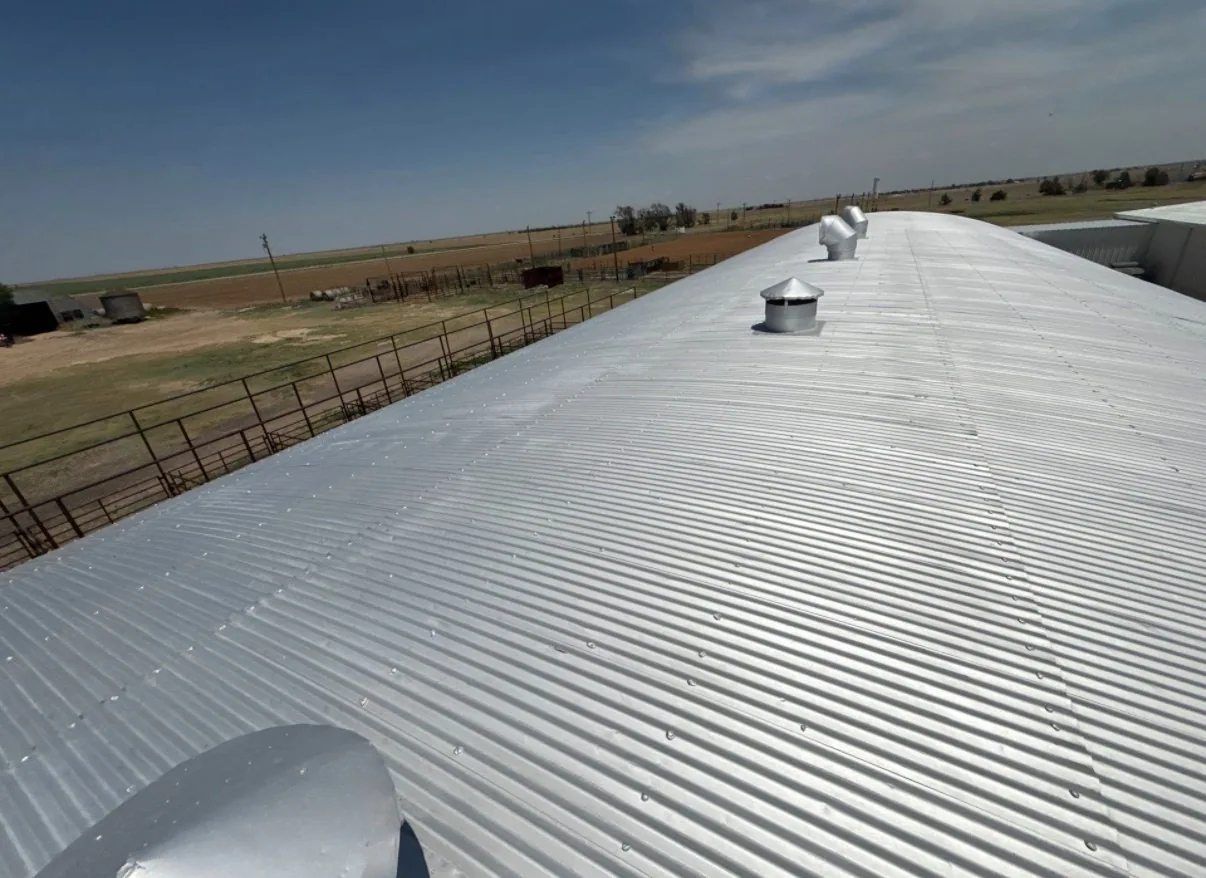
A photo of the loose coping, the frozen downspout or the stained wall is enough to begin. Send it with the building address, and we will set a roof walk to check the whole perimeter.
Questions About Edge Metal, Coping, Gutters and Downspouts
Our coping caps are loose on only one side of the building. Is that a bigger problem?
Usually it is the windward side, and that is the clue. The side that took the load shows you how the rest of the system will fail next. Check the whole building, because the other walls often have tight-looking joints with fatigued fasteners. We would reset the loose run and test the others.
Can we replace only the damaged sections of edge metal?
Often yes, if the existing system is a standard profile and the attachment is sound. Matching the profile and color takes some care, and the new sections should be tied to the old ones with proper laps. If the metal is old and thin, replacing the whole run avoids a patchwork that fails at the seams.
Why does ice form at one downspout and not the others?
That leader probably runs through a cold spot, has less fall, or empties onto a surface that holds water. Sun exposure plays a part too. We trace the path from the roof outlet to the ground and fix the weak point, whether that is a short extension, a rerouted pipe or a drain tied into the storm line.
What metal is best for coping in this climate?
Prefinished aluminum and galvanized or coated steel all perform well when detailed correctly, and the real difference is thickness and joint design. Near the Mississippi, river humidity and the freeze-thaw cycle push us toward heavier gauge and better coatings. We match the choice to the wall and the budget.
Do we need a permit for edge metal work?
Reroofing work and edge changes can need a permit from the building department, and the city enforces the 2021 building and existing-building codes with local changes. We confirm what applies for your address and pull the permit when the job calls for one.
Talk to a Davenport Commercial Roofer
Send the work order, the building address or a few photos of what you are seeing. We will set a walkthrough, go up with whoever has the hatch key, and tell you plainly what the roof needs.