
Office Building Roofing in Davenport, IA
Roof repair, replacement and maintenance for Davenport, IA office buildings, with tenant notice, quiet-hour scheduling and photo reports for owners.
The property manager forwards a tenant email with a photo of a brown ceiling tile. The subject line reads: third time. Nobody upstairs has seen water on the roof.
Office roofs are judged from the inside. A tenant sees the stain long before an owner sees the defect, and the owner hears about it on a Monday. In Davenport, IA the first step is the work order, then a walkthrough with the property manager. We go up with the roof hatch key, photograph what we find and give you a recommendation in plain terms. The tenant gets an answer, and you get a plan.
From Ceiling Tile to Roof Plan
The brown tile is a symptom, and it is usually not under the leak. Water runs along the deck, down a wall cavity or along a conduit before it drops. We mark the stain on a floor plan and then walk the roof above it and the area around it.
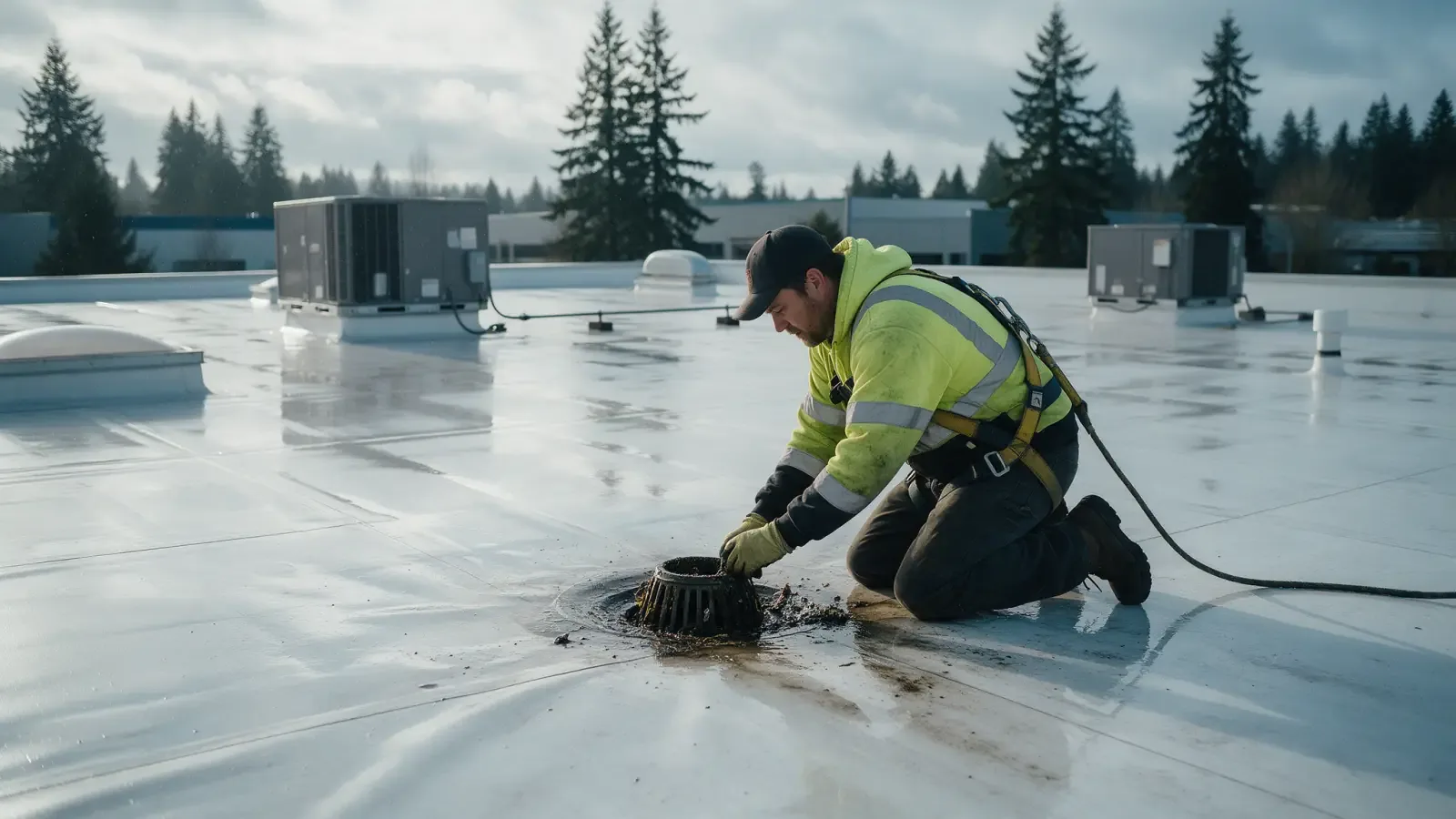
The usual suspects on an office roof are the rooftop unit curbs, the plumbing vents, the drain bowls and the base of the parapet walls. A brown tile after a heavy rain points to flashing. One that appears in winter points to ice at a drain. Tracing the water to the opening, making a temporary stop and then scheduling the permanent fix is the core of commercial roof leak repair.
A second visit after the next rain confirms that the ceiling stays dry.
Rooftop Units and the Contractors Who Service Them
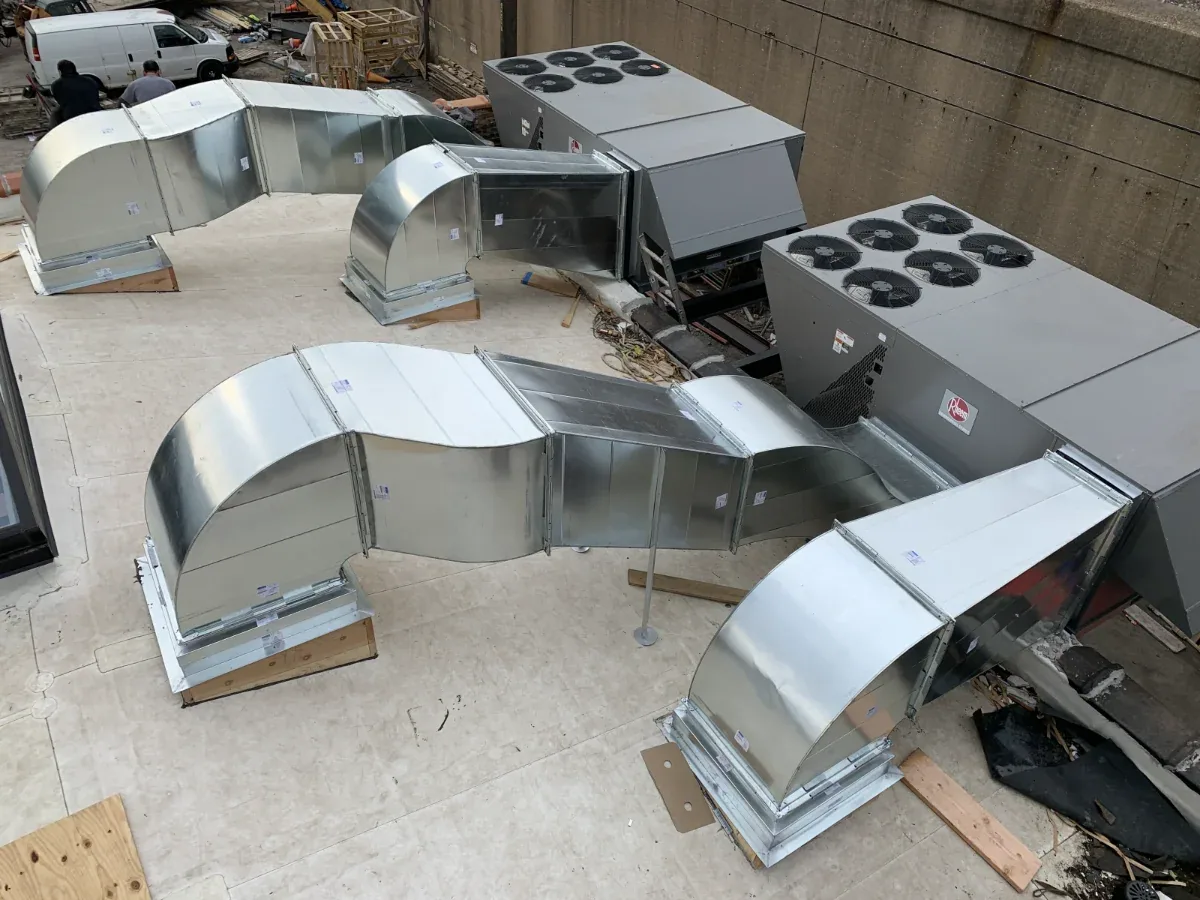
Office roofs get steady foot traffic from HVAC technicians. A filter swap here, a belt change there. Each trip is a chance for a dropped tool, a dragged hose or a loose panel left on the membrane.
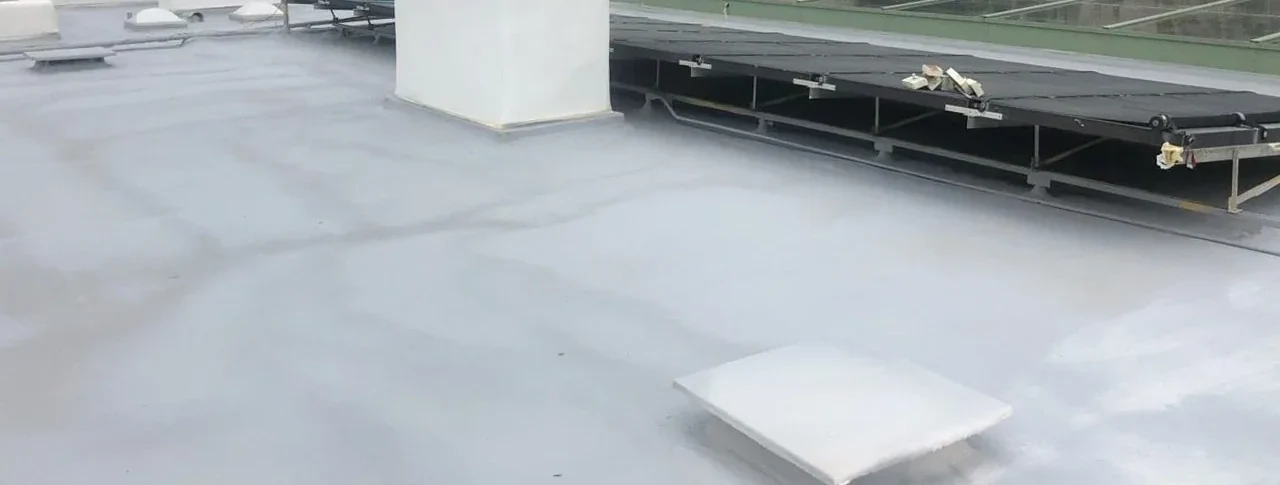
We recommend a roof log by the access door. Technicians sign in, note what they did and report any damage. When the membrane around a unit is worn, we add walkway pads from the hatch to each curb. When the unit is replaced, the curb and its flashing are rebuilt before the new one is set.
If a unit sits on a curb that is too low, water can run into the seam and under the cap. We raise it, flash it and let the HVAC contractor set the unit.
Parapets and Brick Faces Downtown
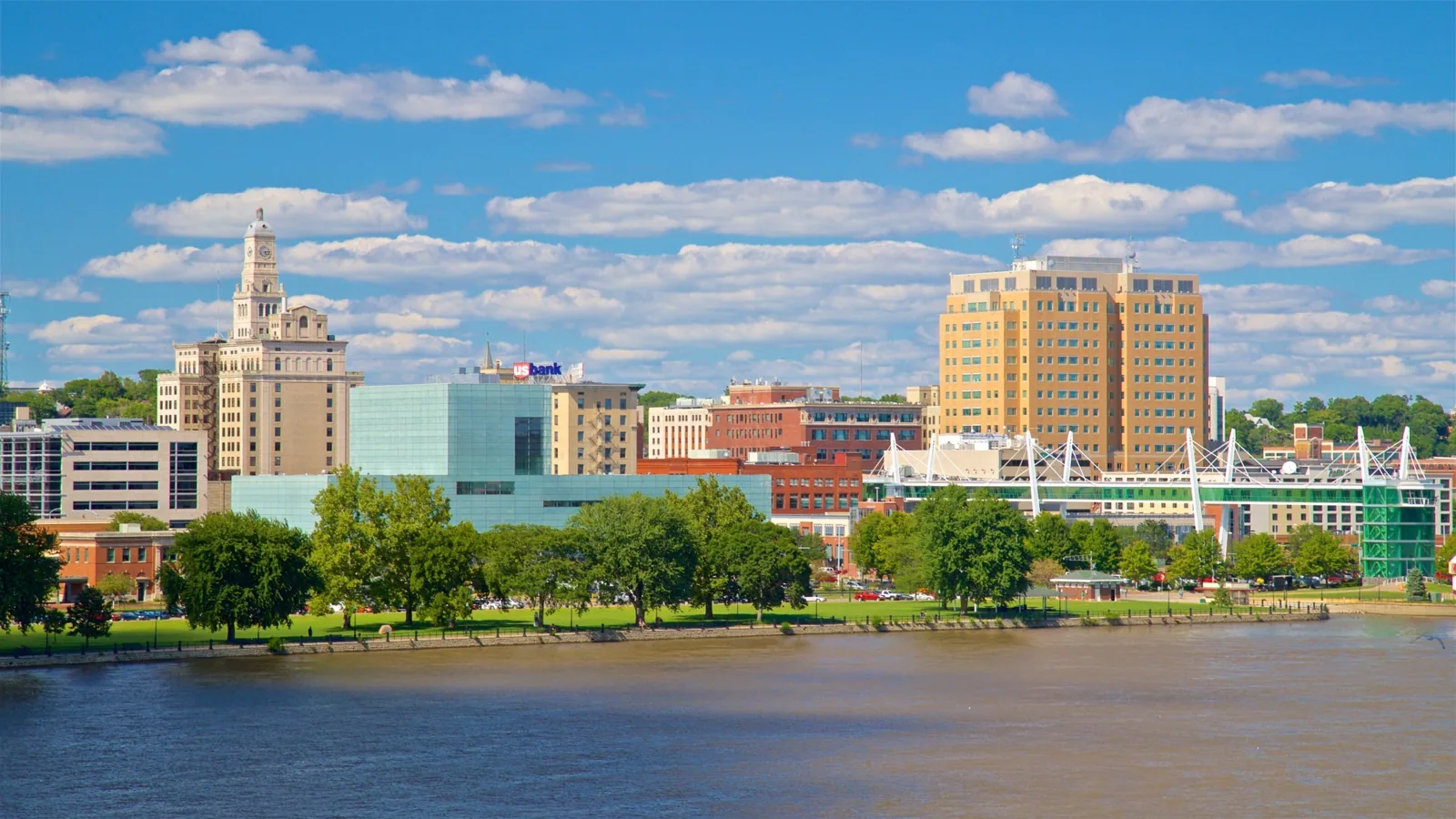
Downtown Davenport holds historic masonry buildings, including the 1907 Davenport Hotel, the 1914 Hotel Blackhawk and the 1924 Union Station, and its commercial historic district covers 49 acres between 2nd and 5th Streets. Older masonry buildings bring their own roof questions.
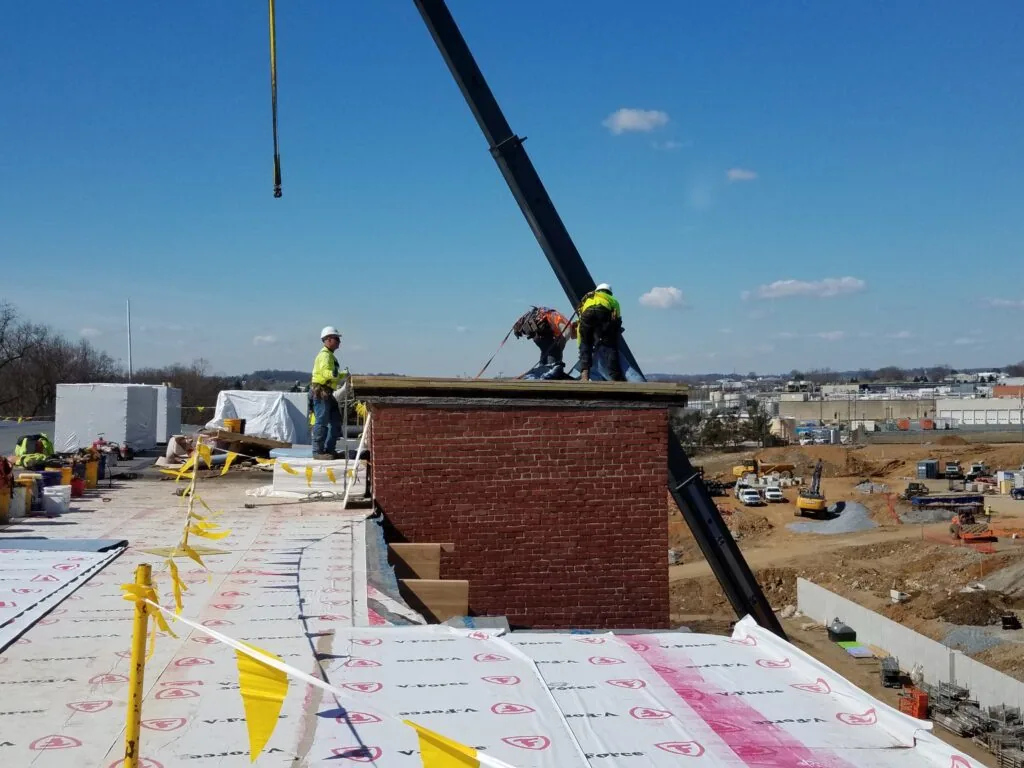
Parapet walls are the first. Brick takes in water through failed mortar, and that water runs down behind the roof edge. The coping, counterflashing and wall flashing are the details that stop it, and they need to be checked every year. The roof above a historic wall often has more edge than field, so edge work tends to be a large share of the cost.
For buildings in downtown Davenport, we walk the wall tops as carefully as the roof field. Any repair to a historic structure should leave the face alone and fix the flashing behind it.
Tenant Notice and Quiet Hours
People work under the roof. That sets the schedule.
Notice goes out at least a week ahead with dates, hours and the area affected. Noisy work like tear-off and fastening is done early, before the building fills up, or on a weekend if the lease allows. Fumes and odors are managed with intake covers and low-odor adhesives where possible. Material staging stays away from entrances and loading zones.
An office building with a single point of contact makes this easier. Name one person for tenant questions, and we send them a daily summary. The same pattern works for any occupied building reroofing project, and offices are among the easiest to schedule when notice is clear.
Offices Along Kimberly Road and Brady Street
Kimberly Road (U.S. 6) is a heavily developed commercial arterial of retail, apartments and offices that runs about 6.1 miles through central Davenport. Brady Street runs from downtown north to I-80, passing retail developments and industrial parks. An office building on either street takes the same weather as its neighbors.
That weather is not mild. On July 11, 2025 an EF-2 tornado crossed Davenport and ended at Kimberly Road and Fairmount Street. The derecho of July 2024 carried winds up to 100 mph. Low-rise office roofs with rooftop units take wind at every edge, and a lifted coping can mean a small leak months later.
The Kimberly Road corridor mixes offices with retail, NorthPark Mall among it, so a storm that crosses the corridor reaches an office roof and a shopping center roof alike.
Reserves, Lenders and the Five-Year View
Office owners answer to someone: lenders, investors, an association. They want to know what the roof will cost and when.
We give them a condition report with photos, a ranked list of work and a rough timeline for each section. That report feeds roof capital planning, so the repair this year and the replacement in five years are on the same page. Cost follows the roof area, the amount of equipment, the access to the roof and how much of the tear-off must be hauled out through an occupied lobby.
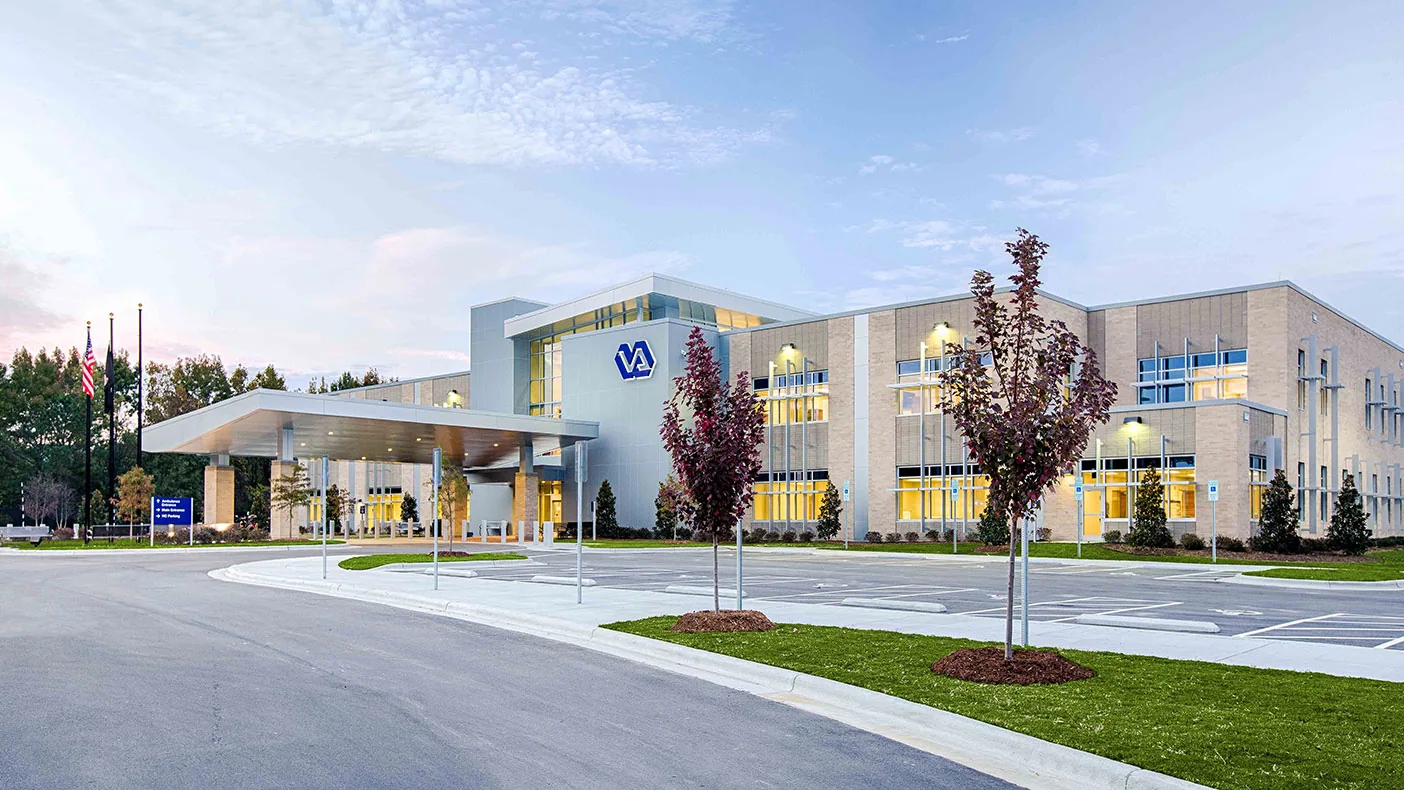
Management companies use the same report across a portfolio, ranking every building on one list, which is how property management companies spread roof spending over several years. When clinics lease part of the building, the roof rules get stricter, as in medical office buildings.
Send the Tenant Email and Set a Walkthrough
Send us the work order, the tenant email or a photo of the stain. We will set a walkthrough with the property manager and come back with a plan and a notice schedule.
Questions About Office Building Roofing
A tenant says the ceiling leaks only when the wind blows from the west. Does direction matter?
Direction is a clue. Wind-driven rain pushes water sideways into walls, copings and flashing on the exposed side. A drip that tracks the wind usually points to a parapet, a wall joint or a curb on that side. We check the west wall first, then work around. A leak that appears with any rain from any direction tends to be a drain or membrane problem instead.
The HVAC contractor is on the roof every quarter. Who is responsible if the membrane gets damaged?
Settle that with a roof log and photos. We photograph the roof before and after a major service visit, and the log shows who was up and when. If a puncture shows up, the record tells you whether it came from foot traffic, a dropped tool or age. Responsibility is a lease and contract matter, but the photos make it a short conversation.
What do we tell tenants, and when?
Send the notice a week ahead. It should name the dates, the hours, the noisy phases and a contact for questions. We provide the schedule and a one-page summary you can attach. Follow with a reminder two days before, and a short note when the work is done. Tenants who know what is coming tend to call the property manager less.
Our lender wants a roof reserve study. What do you need from us?
Give us the leak history, any past roof reports and access to the roof. We walk it, take photos, estimate the remaining life of each section and list the work in order. The report names what to fund now and what to defer. Lenders usually want the age of the roof, the type of membrane and the condition of the flashing, so we make sure those details are on the first page.
The building has older and newer roof sections. Do we replace all of it at once?
Not necessarily. A newer section may have years left while an older one is failing. We split the roof by condition and plan each part separately, then check where they meet, since the joint between old and new is a common source of leaks. You might replace the weak area now and schedule the rest for a later budget year.
Talk to a Davenport Commercial Roofer
Send the work order, the building address or a few photos of what you are seeing. We will set a walkthrough, go up with whoever has the hatch key, and tell you plainly what the roof needs.