
Commercial Roofing in the Village of East Davenport, Davenport, IA
Commercial roof repair and replacement for historic masonry and wood-frame shops, restaurants and theaters in the Village of East Davenport, Davenport, IA.
The owner hands over a shoebox. Inside are receipts for three patches, a photo of an old leak and no drawings. Nobody can say who patched what, or when.
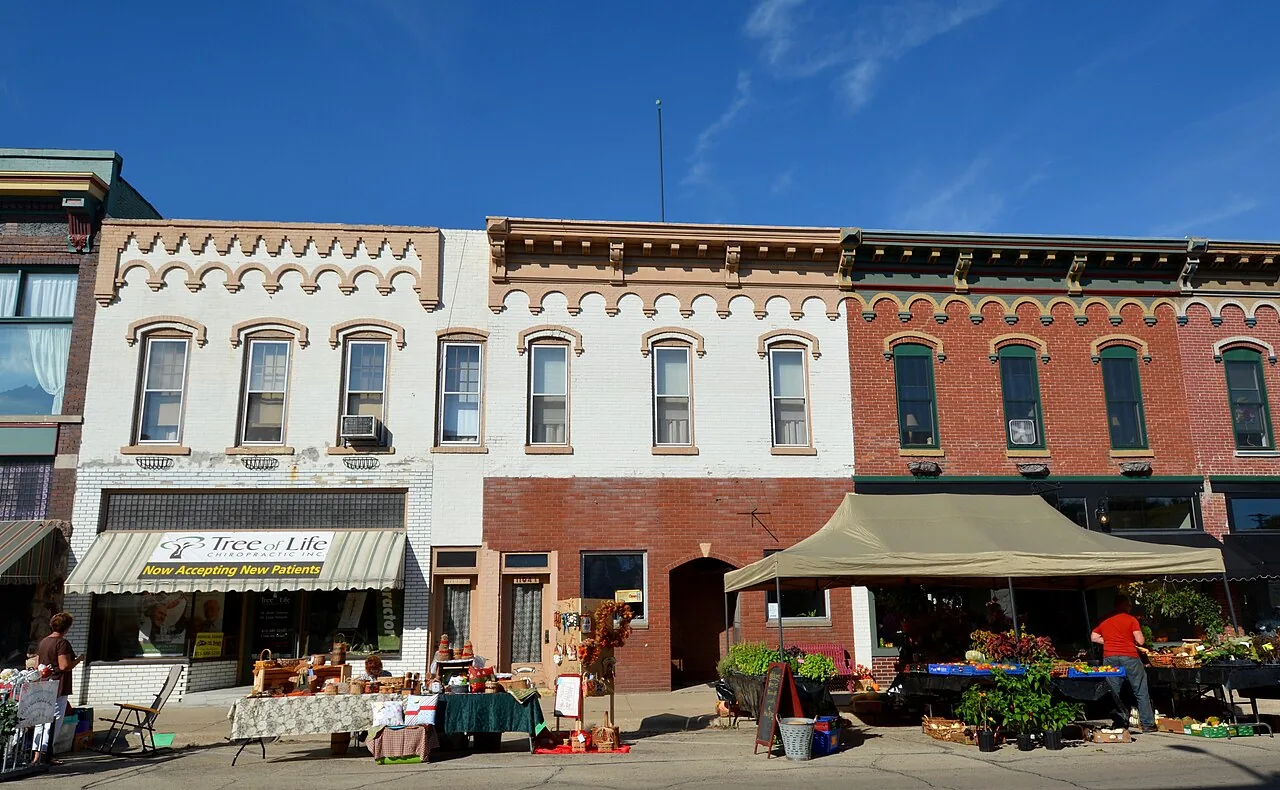
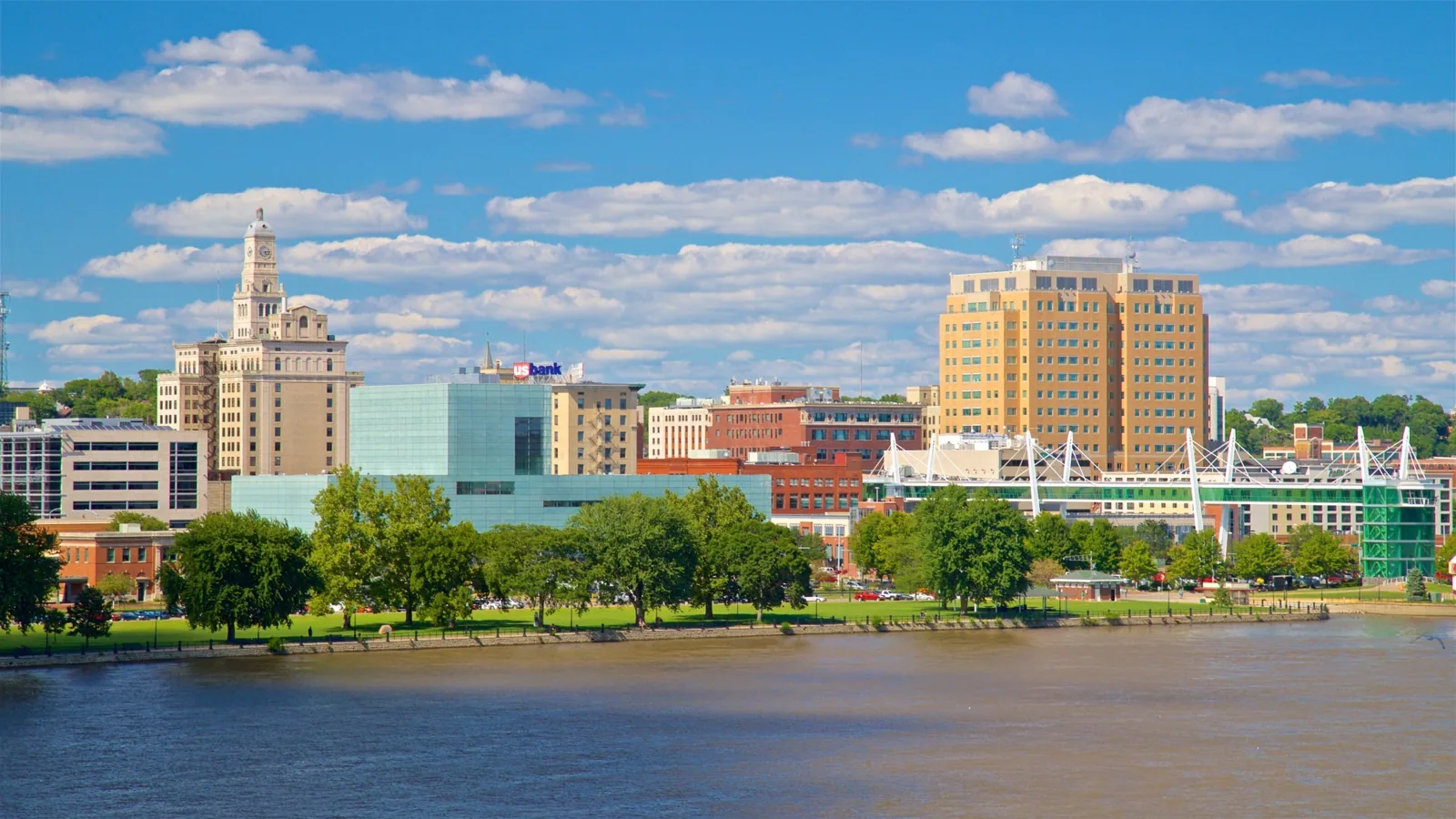
That shoebox is a fair picture of roof work in the Village of East Davenport. The village is a 72-acre National Register historic district in southeast Davenport along the Mississippi River, and most of its buildings date from 1848 to 1910. Today they hold specialty shops, restaurants and theaters. We start with a commercial roof inspection that builds the missing record: layers, deck, drainage, and every place water has already been.
Reading an Old Roof
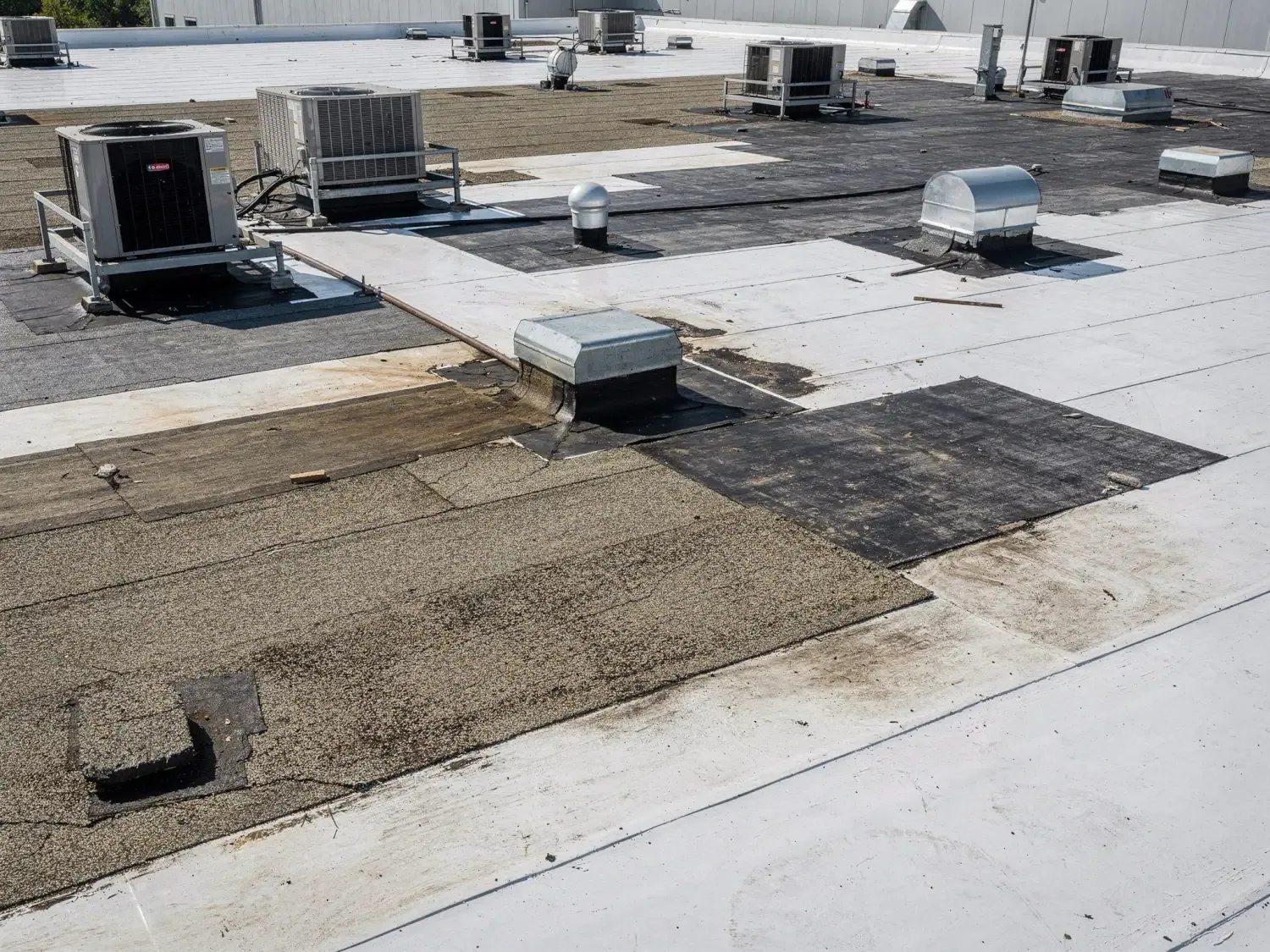
Old roofs hold their history in layers. We look at the surface, then we probe or cut a small core to see what lies beneath: one membrane, or several stacked over the years, with insulation that may be wet or crushed. Each added layer adds weight, and the deck below it was built for a different load. A core also shows the deck itself, which on a building from the village's 1848 to 1910 era may be wood.
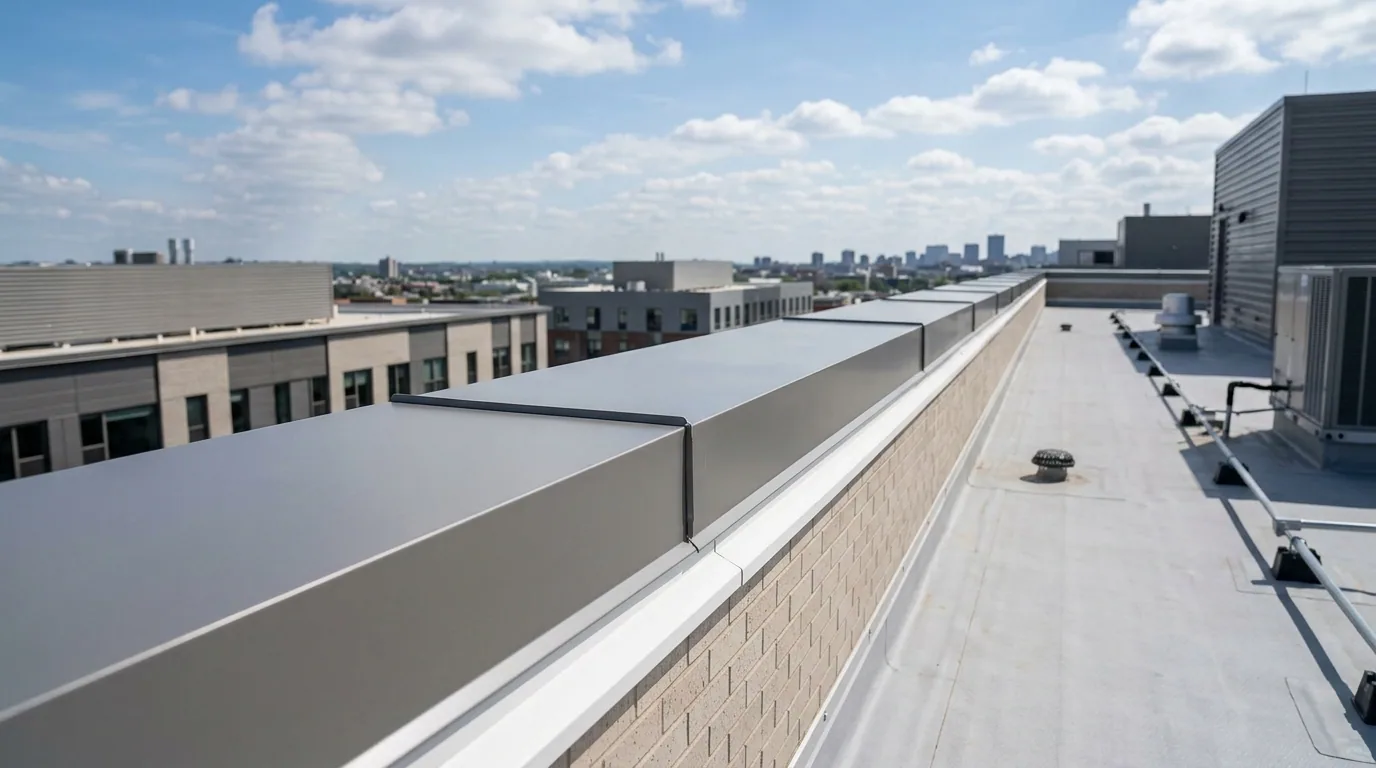
Then we look at what sticks up. Chimneys, parapets, cornices, skylights and old vent stacks each have a flashing, and on an old building a flashing has often been touched more than once. Mortar is the other weak point. Open joints in a parapet let in water that never shows on the roof surface. We mark every joint, then say plainly which ones need a mason and which need a roofer.
What the 1901 Fire Teaches a Roofer
A fire in 1901 destroyed 20 acres of the village and caused $1.25 million in losses. That history is why older masonry and wood-frame roofs here warrant careful inspection, and it changes how a roof crew works. Open flame on a wood deck is a risk, so torch-applied systems are usually a poor choice on a building like this. Adhered, mechanically attached or cold-applied systems are the safer starting point, and any hot work is cleared with the owner and the building official before it begins.
Where fire has already touched a building, a fire damage roof repair starts with the deck. Charred or weakened framing has to be found and replaced before a new membrane goes on. We also keep a fire watch, a charged extinguisher and a clean roof at the end of every shift. Where old buildings share walls, one stray spark is not a small problem.
Shops, Restaurants and Theaters
The village holds specialty shops, restaurants and theaters, and each use leaves a different mark on the roof. A restaurant sends grease and heat up through an exhaust fan, which stains and softens the membrane around it. A theater has a tall volume and a lot of people below, so a leak is both a repair and a safety question. A small shop may share a roof and a party wall with the next one, which means water that enters one door shows up in the next.
We keep a list of every rooftop item and who it belongs to. For a restaurant roof, grease trays and fan curbs get checked every visit. For a row of shops, one written scope covers the whole roof so two owners are not arguing over a seam. A tenant notice goes out ahead of the work, with the hours, the access path and a phone number.
River Air, Freeze-Thaw and Wind
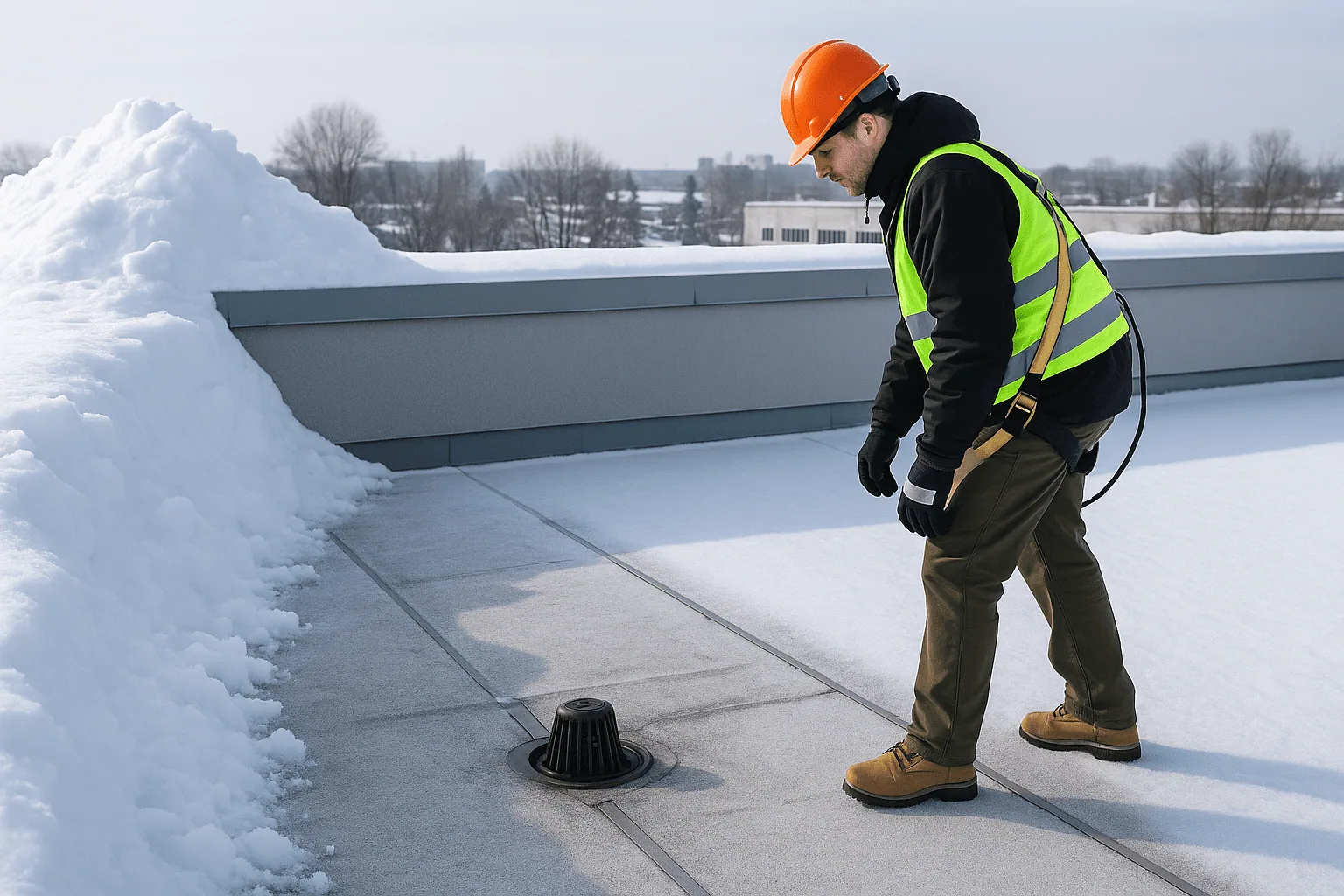
The village sits along the Mississippi, and river humidity keeps old materials damp. Brick and mortar absorb water, freeze, and push apart at the joints. Davenport has seen -29 F and 111 F, and a typical Quad Cities winter brings more than three feet of snow. A parapet cap that is slightly open in October is a crack by March.
Wind is the other test. A derecho in July 2024 sent winds up to 100 mph across the region, and Davenport Municipal Airport logged an 86 mph gust in the August 2020 derecho. Where they exist, old chimneys, cornices and loose coping are the first things to go, and they land on the street. After a storm, we check these first, then the coping and edge metal, and then the field. A winter ice problem at a gutter or drain gets the same ranking.
Choices on an Old Building
The options are repair, restore, recover or replace, and old buildings narrow them. A recover adds weight, so the deck gets checked first. A tear-off shows what is underneath, including surprises. The city's 2021 International Existing Building Code, amended locally, is what a larger scope on an older building is reviewed against. Because the village is a historic district, ask before ordering anything that shows from the street. Any commercial roof replacement plan here leaves room for that question.
Cost follows the number of layers, how much deck needs replacing, how much masonry needs work and how hard the roof is to reach. A narrow lane or a ladder-only hatch makes a simple job slower. Downtown Davenport, with a historic district of its own, raises the same questions. Photos come back the same day, along with a recommendation to repair, to watch or to plan the larger project.
When street access changes from one property to the next, document the lift location and delivery window on each work order. Along the Brady Street corridor, coordinate those details with the building’s operating hours.
Send the Address and What You Have
Send us the address, whatever records you have and a photo of the problem. We will set a walkthrough around your tenants and come back with a plain recommendation.
Questions About Village of East Davenport
Our building dates from the 1890s and we have no roof drawings. Can you still price the work?
Yes, once we have been up. We walk the roof, cut a core or two, probe the deck and photograph every flashing. The result is a written description of what is there, which stands in for drawings. We price repairs from that. For a full replacement we give a range with the deck condition spelled out, because wood can hide surprises until the old layers come off.
Can a torch-down roof go on a wood-frame building here?
We would steer you away from it. A torch puts open flame on or near a wood deck, and a smoldering fire can start hours later. Adhered, mechanically attached and cold-applied systems avoid that. If torch work is the only fit, it needs the owner's written approval, a fire watch after the last flame and a check of the deck with a thermal camera before we leave.
A restaurant fan drips grease onto our roof every week. Is that a roofing problem?
It becomes one. Grease softens many membranes and eats sealants, and it also makes the roof slippery for the next person who goes up. A grease tray under the fan outlet, a cleaning routine and a compatible patch around the curb solve most of it. We check the membrane for swelling or softening there on every visit.
Does being in a historic district mean the city will review a reroof?
It might, depending on what changes. Ask the city and any preservation contact before ordering material, and tell us what they say. Work on a flat roof hidden behind a wall usually raises fewer questions than a change to a cornice or visible edge. We can match existing profiles and colors. Put the answer in writing so the plan is settled before the crew arrives.
How do you tell rotted wood decking from stained decking before the tear-off?
We probe it. A screwdriver or an awl sinks into rotted wood and glances off sound wood. An infrared scan shows wet areas from above, and from below we look at the underside through an attic hatch or a ceiling opening where there is one. The tear-off then confirms it. Plan for some deck replacement on any old wood roof, and have the unit price agreed ahead of time.
Talk to a Davenport Commercial Roofer
Send the work order, the building address or a few photos of what you are seeing. We will set a walkthrough, go up with whoever has the hatch key, and tell you plainly what the roof needs.