
Data Center Roofing in Davenport, IA
Roof repair and replacement for data centers in Davenport, IA, with escorted access, equipment-yard care and a dry building at the end of every shift.
The badge request goes in two days before the walkthrough. Name, company, vehicle, escort. Nobody walks onto this roof without all four.
That tells you how the building treats water. A data hall has no tolerance for it, so the roof is handled with the same care as the power feeds below. In Davenport, IA we start with the work order and a walkthrough with your facilities lead, then go up with an escort and a camera. Afterward you receive photos, a list of what we found, and a clear call on what can wait and what cannot.
Water Over the Racks
A drip over a server aisle is not a nuisance. It is an outage waiting for a bad day. For that reason a data center roof gets inspected more often than most, and repairs are done before a small defect is allowed to become a wet one.
We look at the membrane, the seams, the flashing and the drains in that order, and we pay special attention to places where pipe, conduit and cable pass through the roof. Any hole is a risk. Each is photographed, sealed and logged on the roof plan.
When the building has leak sensors under the deck, we work with the facilities team so alarms are expected and not confused for real leaks. Where it does not, a replacement is the time to talk about adding a layer that senses moisture early.
Escorts, Badges and Photo Rules
Security shapes every day on site. The crew arrives on a posted list, signs in and follows an escort from the gate to the roof hatch. Tools and materials are checked at the door. Photography is limited to the roof surface, and we hold it.
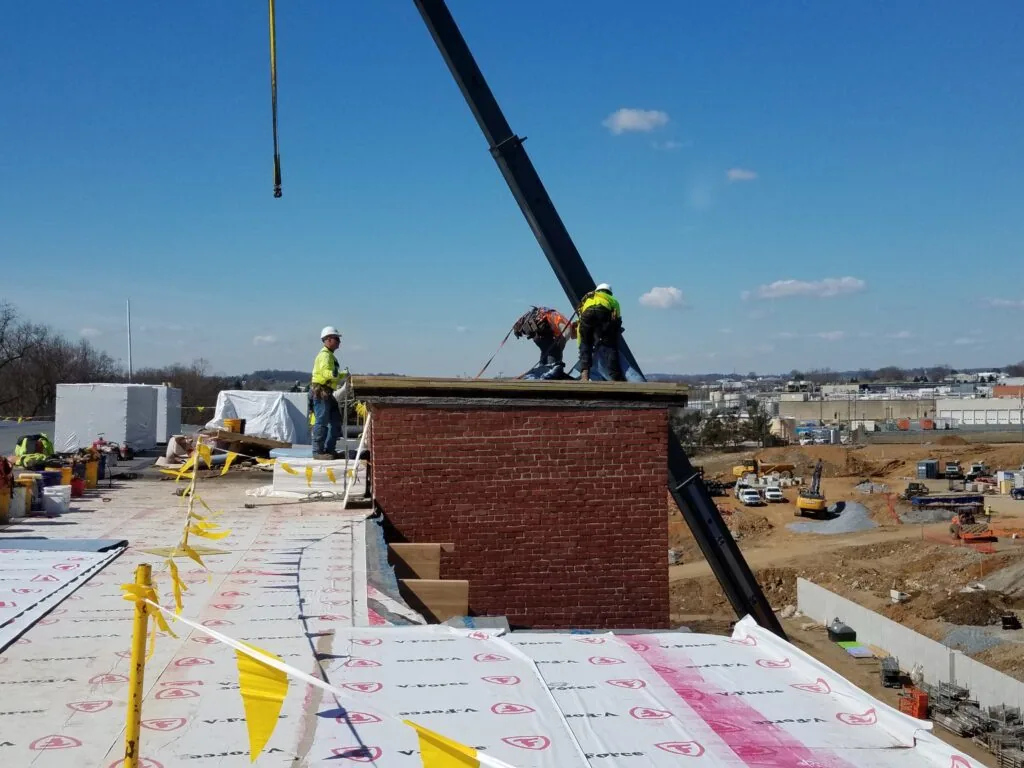
Any torch or welder on the roof needs a permit and someone watching for sparks. Lifts and crane picks are scheduled with the operations lead, so nothing crosses a secure area at the wrong moment. We carry method statements and safety plans in a binder that stays with the escort.
The same discipline applies to any occupied building reroof, but data centers add more paperwork. We plan for it from the first day, not the fifth.
Chillers, Generators and Dunnage
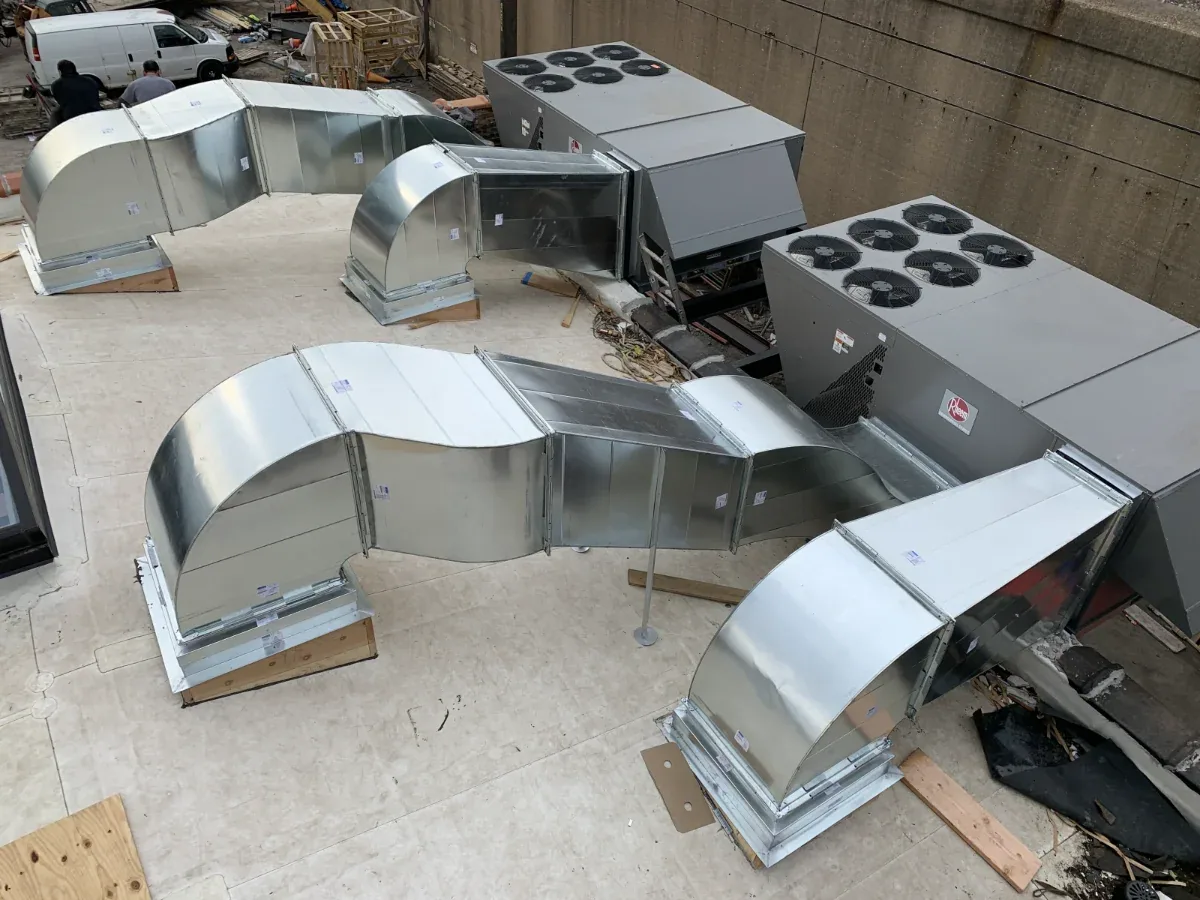
A data center roof carries a lot of hardware. Cooling units, exhaust fans, conduit trays and sometimes generators sit on steel dunnage over the membrane. The more equipment, the more roof is unwalkable and the more places water can get in.
We check each support for flashing at the feet, sealant at the bolts and wear at the contact points. If a unit moves, the curbs and supports beneath it must be rebuilt or reflashed before the new unit sits down. Condensate lines and drain pans are checked too, because a plumbing leak at height ends up looking like a roof leak below.
Walking routes get protected with pads, so maintenance staff can reach every unit without wearing through the sheet.
Traffic, Puncture and Cover Board
On a quiet roof, a membrane lasts. On a roof where technicians go up every week, it gets hit by tool drops, dragged hoses and dirty boots. That is why many data center roofs include a hard board between the insulation and the sheet.
A cover board adds puncture resistance, helps the membrane resist hail and gives a more even surface under the sheet. We also lay walkway pads from the roof door to each unit, and we mark the ones that are heavily used.
The design is simple: protect the places people actually walk. Everything else stays untouched.
Hail, Derecho and Tornado
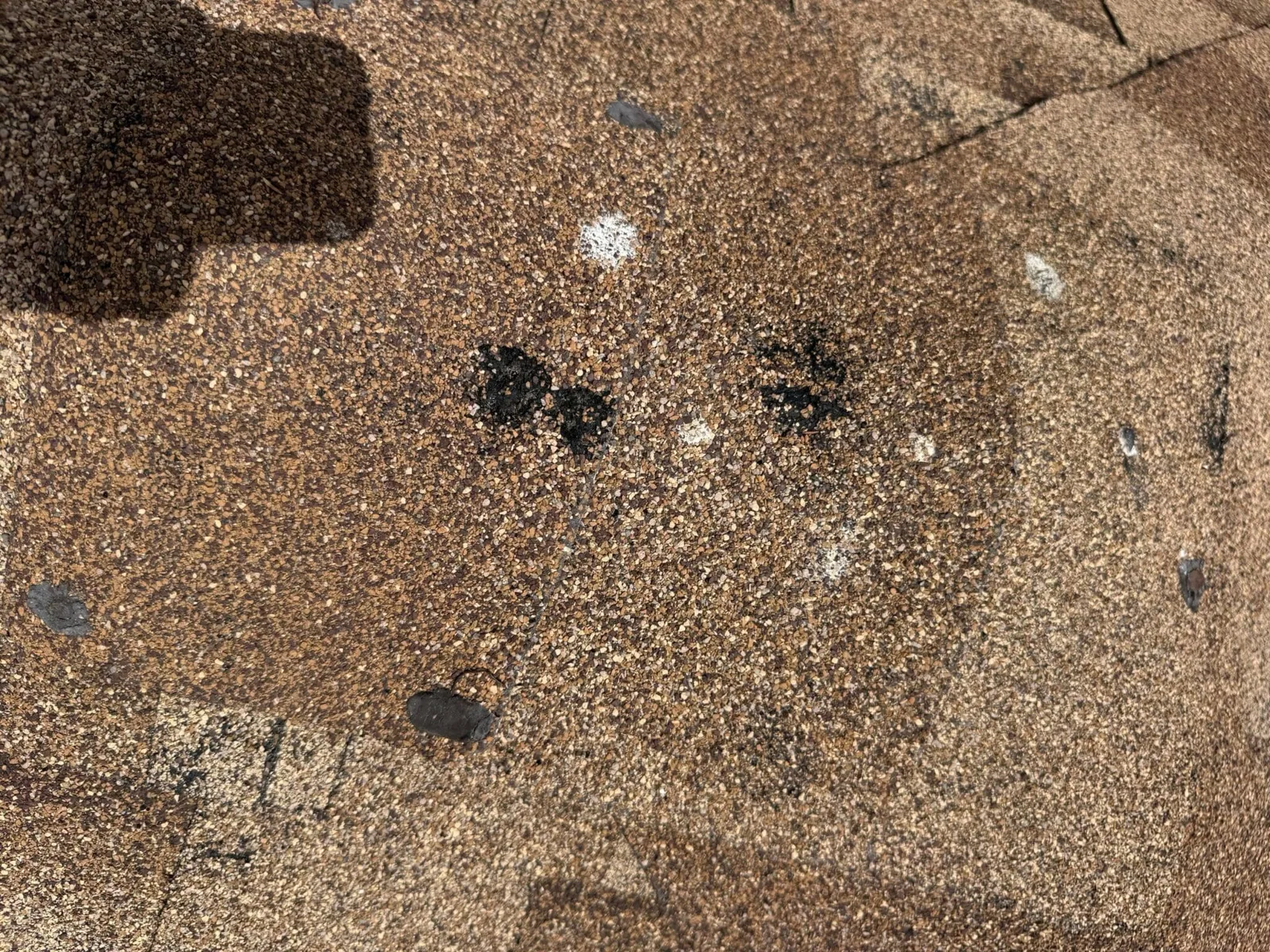
Hail reports tell the story: 133 within 10 miles of the city center since 2004, and 2.5 inch stones on April 4, 2023. Hail bruises membrane and dents coils, so after a storm we examine both. Findings go into a hail damage repair scope with photos for the adjuster.
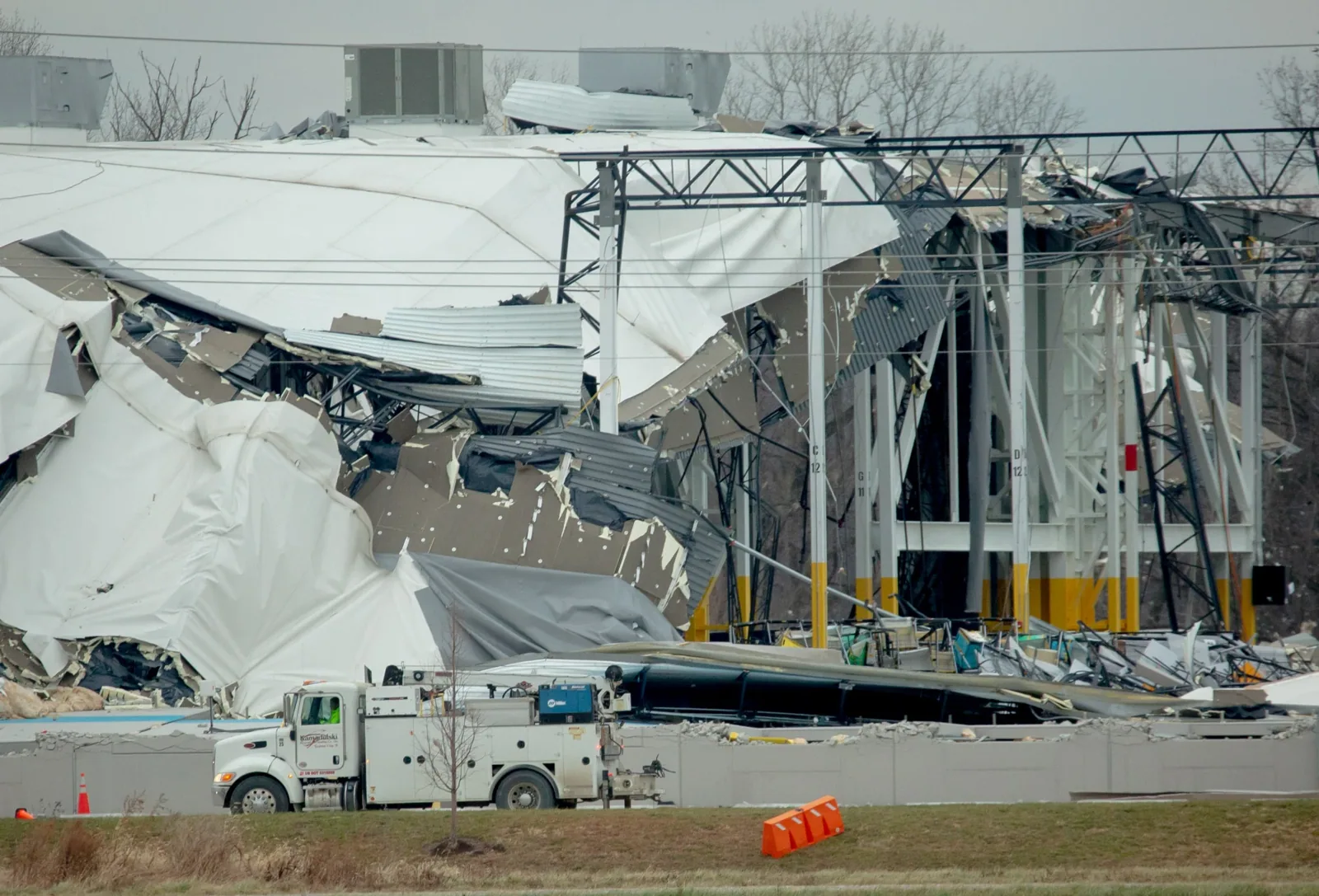
Wind is the other test. At Davenport Municipal Airport the August 2020 derecho gusted to 86 mph, and the derecho of July 2024 reached 100 mph somewhere in the region. Then on July 11, 2025 an EF-2 tornado crossed Davenport on a path that ended at Kimberly Road and Fairmount Street, near the Kimberly Road corridor. A low, broad roof with rooftop equipment takes wind at the perimeter and at every unit. After a tornado we check the edges and equipment first and the quiet areas second, since an unseen lifted edge is the one that fails in the next storm.
A Proposed Campus on Hillandale Road
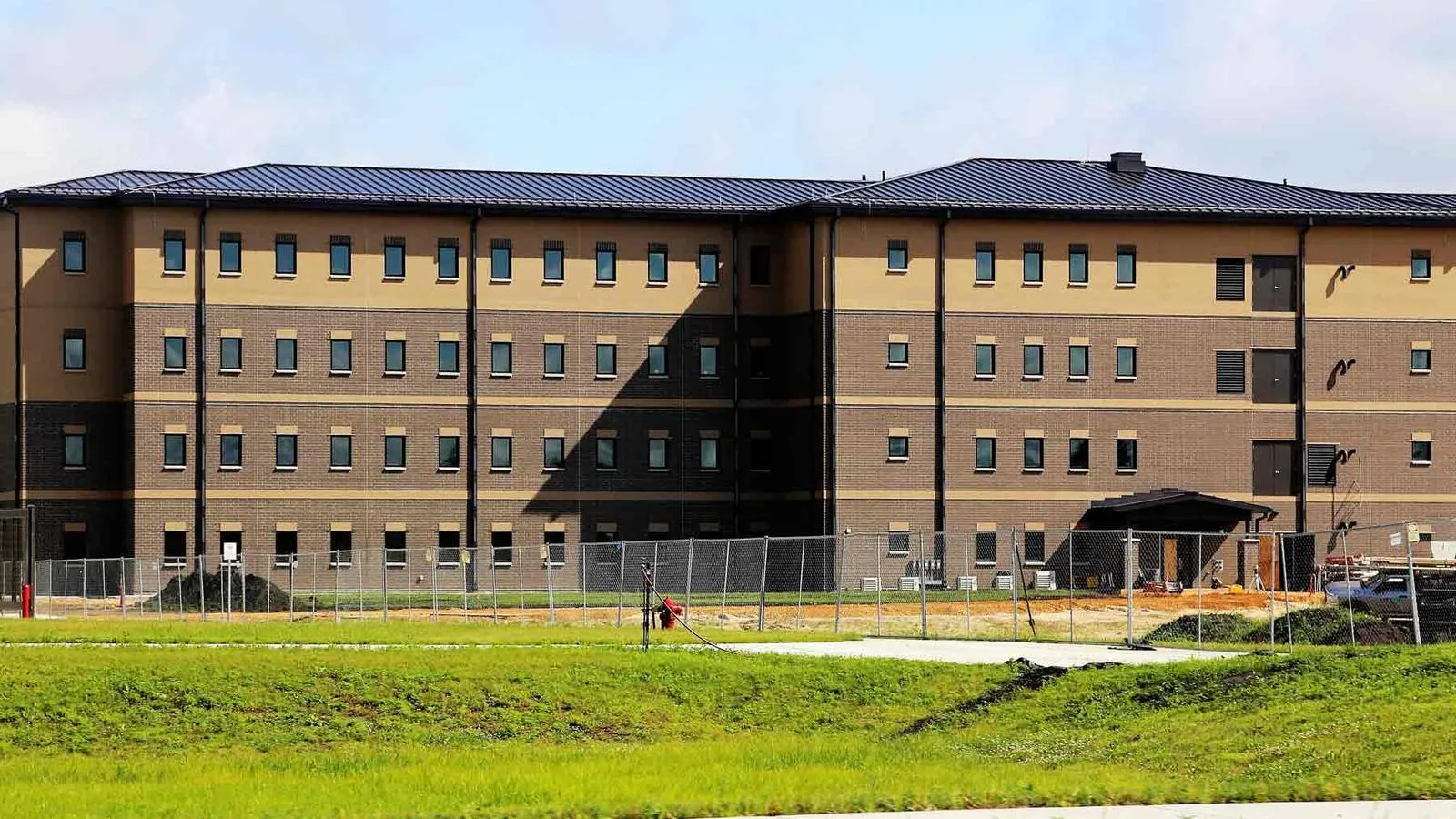
A proposed data center campus from Vemerald LLC at Hillandale Road and Enterprise Way would cover about 328 acres, with roughly 715,000 square feet of data halls and ancillary buildings. If it goes ahead, roof decisions made in the design phase will affect the building for years.
The best time to talk to a roofer is before the roof is drawn. Slope, drains, equipment pads and walkways are all cheaper to place correctly on paper. Once the roof is down, its warranty conditions, notice dates and repair rules included, need someone watching from day one. Hospitals have similar uptime demands, and office buildings with mixed tenants have their own, and both set rules for access and notice.
Send the Work Order and the Access Rules
Send us the work order and the badge and escort requirements. We will set a walkthrough with your facilities lead and plan the roof around the security rules.
Questions About Data Center Roofing
Our insurer wants a method statement before any roofer goes up. What goes in it?
Expect it to cover the work sequence, the access route, the escort plan, hot work controls, fall protection, material staging and the plan for sealing the roof at the end of each shift. We also include emergency contacts and a stop-work procedure. Send us the insurer's requirements ahead of time and we will build the statement to match them, so it is ready when the badge requests are approved.
Can the roof be replaced while the data hall is live?
It can, in sections. We open an area no larger than the crew can dry in during one shift, replace what is under it and close it. Penetrations over critical rooms are handled first and with extra layers of protection. Your operations lead signs off each section before the next opens, and a daily report shows what was done and what is planned.
How do you keep dust and debris out of the air intakes on the roof?
We map the intakes before the first cut and agree where the work can go on without drawing material into them. Some areas get covered, some units are shut down for short periods with the operations team, and cutting is done with vacuum collection. A sweep at the end of each shift keeps loose grit from blowing across the roof and into a filter.
Lightning protection runs across our roof. Who handles that part?
The lightning protection contractor owns that system, and we work around it. Our job is to protect the conductors and bases during the roofing, restore the flashing around them and leave the system as we found it. We coordinate dates with their crew, so the cables are tested after we finish, and the test results go into your records.
Can a moisture-sensing layer be added during a reroof?
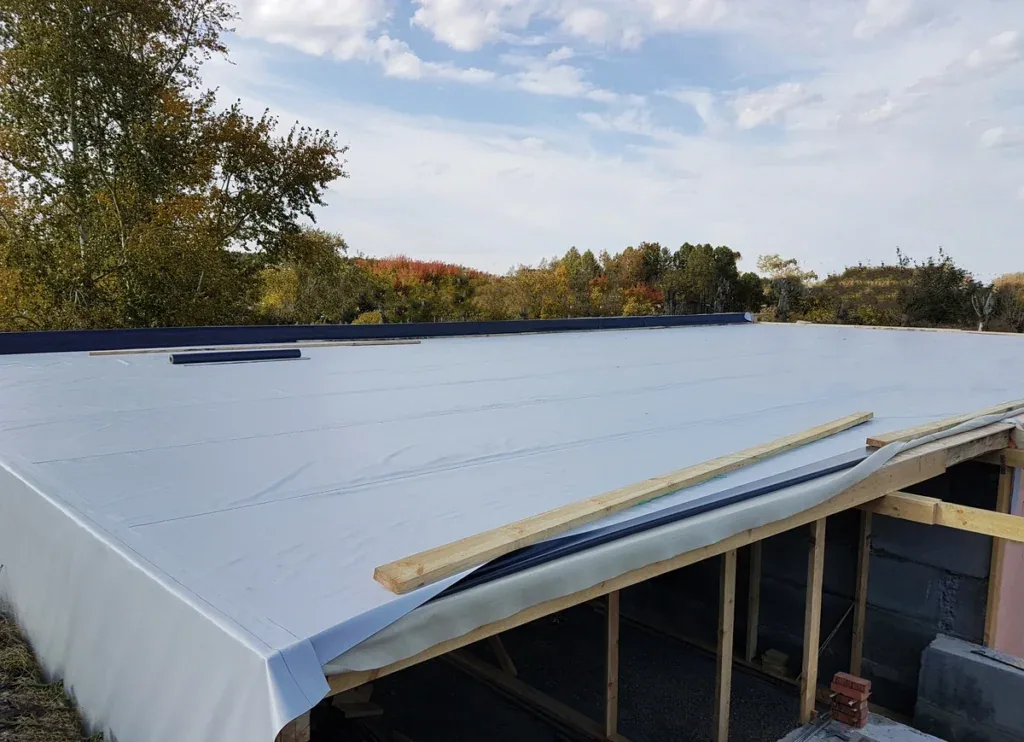
A sensing layer can go in below the membrane when the roof is open. It is laid in a grid with leads brought to a monitoring point, and it flags moisture before it reaches the ceiling. We coordinate the layout with your controls team and test it before the membrane covers it. Adding it later means opening the roof again, which is why the decision belongs in the replacement plan.

Talk to a Davenport Commercial Roofer
Send the work order, the building address or a few photos of what you are seeing. We will set a walkthrough, go up with whoever has the hatch key, and tell you plainly what the roof needs.