
TPO Roofing in Davenport, IA
TPO single-ply roofing for Davenport, IA plants, warehouses and retail: welded seams, wind attachment, cold-weather limits and what to probe on an older roof.
The bid sheet says TPO. The plant manager wants to know why that sheet, and why not the black rubber he saw on the building next door. Fair question.
TPO is a white single-ply membrane laid over insulation, with every seam welded by hot air into one continuous skin. It is a common pick for flat commercial roofs, and for a building in Davenport, IA it often earns the spot. It also has weak points, and you should hear them before you sign. We read a TPO roof the same way new or old: seams first, then flashings, then drainage. The black rubber alternative is EPDM, and we will say where it wins.
The Sheet and the Weld
Picture the roll as two jobs in one. A thermoplastic top layer takes the sun. A polyester scrim buried inside keeps the sheet from tearing when the roof moves.
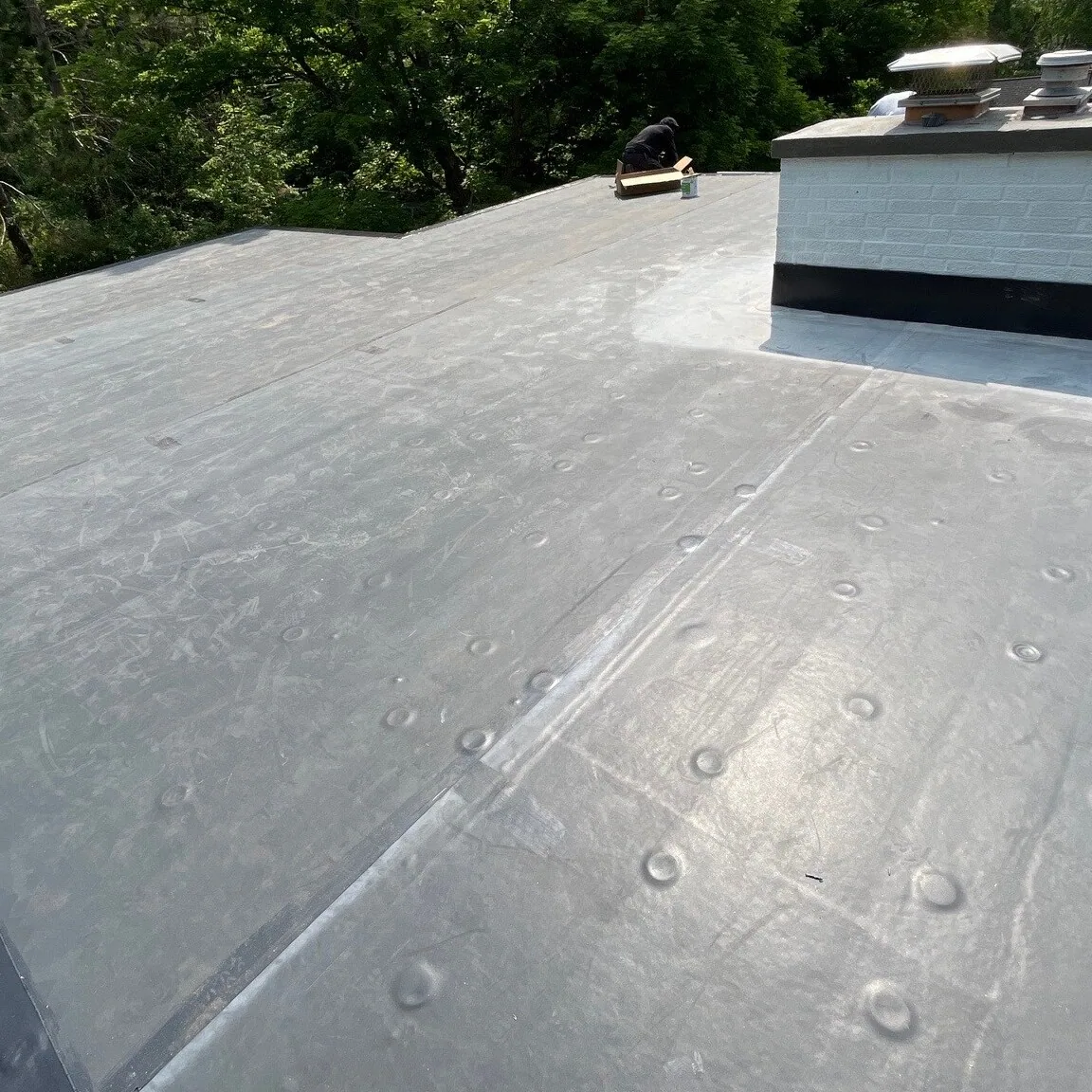
Seams are where TPO is won or lost. Hot air fuses the overlap so two sheets become one, and a good weld leaves a clean, even bead along the edge with no gaps. We probe every inch of seam with a pick after welding. A weld that looks fine from the roof hatch can still lift under a screwdriver.
The white surface bounces heat back, which keeps the space below easier to cool in July. The city's adopted codes include the state energy code (Iowa Rule 661.303), which reaches down to the insulation under the sheet, so we size the two together instead of treating the membrane as the whole roof.
Heat, Cold and the Seam Line
The thermometer here has touched 111 F in summer and sunk to -29 F in winter. A roof living with that spread is moving all year. The sheet stretches in summer, draws tight in January, and the stress lands on seams, fasteners and the flashing that climbs walls and wraps curbs.
TPO takes that cycle well when there is slack left at every vertical edge. It takes it badly when a crew pulls the sheet tight against a parapet on a warm afternoon, and the first hard freeze tries to shrink it. We build in relief at terminations, and we hold welding when the cold gets deep enough to spoil a bond. A rushed winter weld is the first seam to open, so we would rather wait a day.
Attachment and Wind
Two methods hold the sheet down. Mechanical attachment puts fasteners and plates along the seam overlap, which is quick and sensible on big open fields. Full adhesion bonds the sheet to the cover board, which quiets flutter and spreads the load across the whole surface.
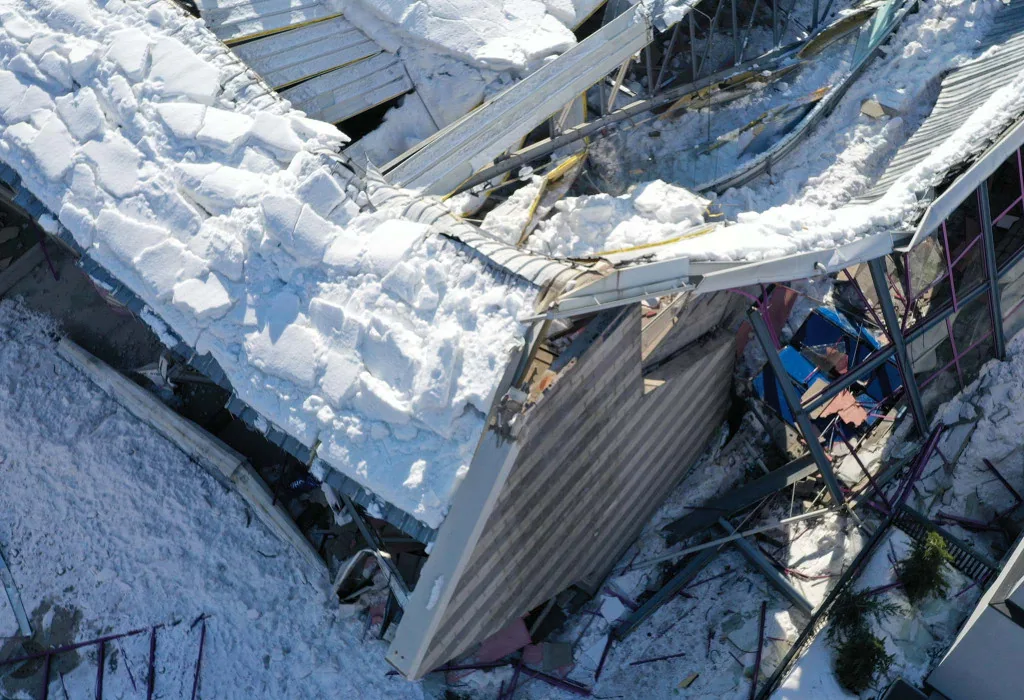
Wind is what picks between them. The derecho of July 15, 2024 sent winds as high as 100 mph through the area. Almost a year later an EF-2 tornado tore across Davenport and came to rest by the corner of Kimberly Road and Fairmount Street. No one designs a membrane for a tornado core. But corners and perimeters take the highest uplift in any straight-line blow, so those zones get tighter fastener spacing or full adhesion. The pattern follows the building height, its exposure and the city's adopted 2021 International Building Code.
If a gust lifts a seam, document the opening and protect the interior below while the roof is assessed. A temporary dry-in preserves the area for a permanent repair plan.
Where TPO Roofs Go Wrong
Four spots account for most of the trouble on older TPO:
- Seams that never fully fused, or fused and then opened where the roof flexes.
- Hand-welded flashings at curbs, pipes and walls, where the field sheet is cut and sealed by hand.
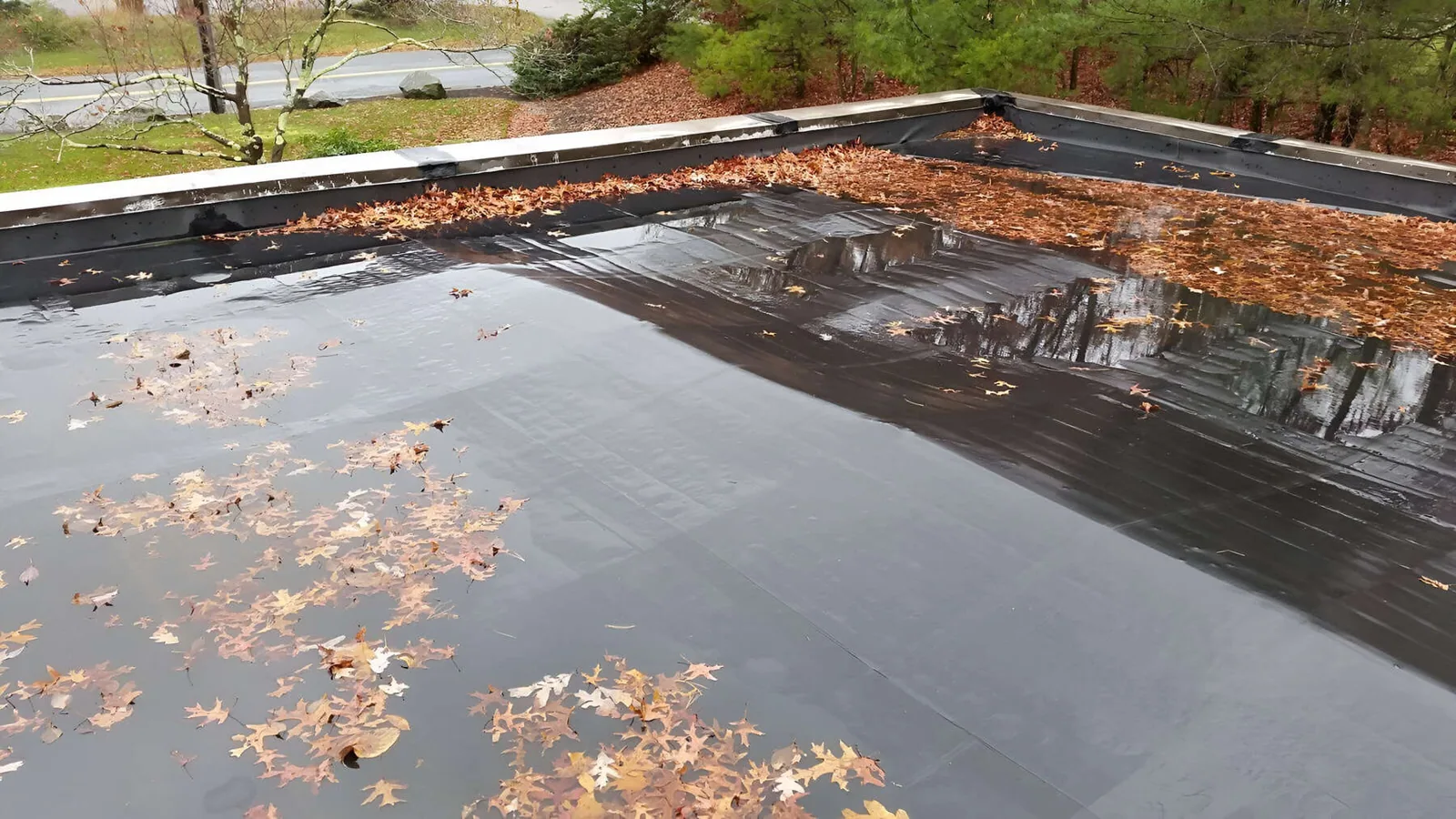
- Ponding at low spots, which wears the surface and loads the seams. Ponding water needs added drains or tapered insulation, not more welds.
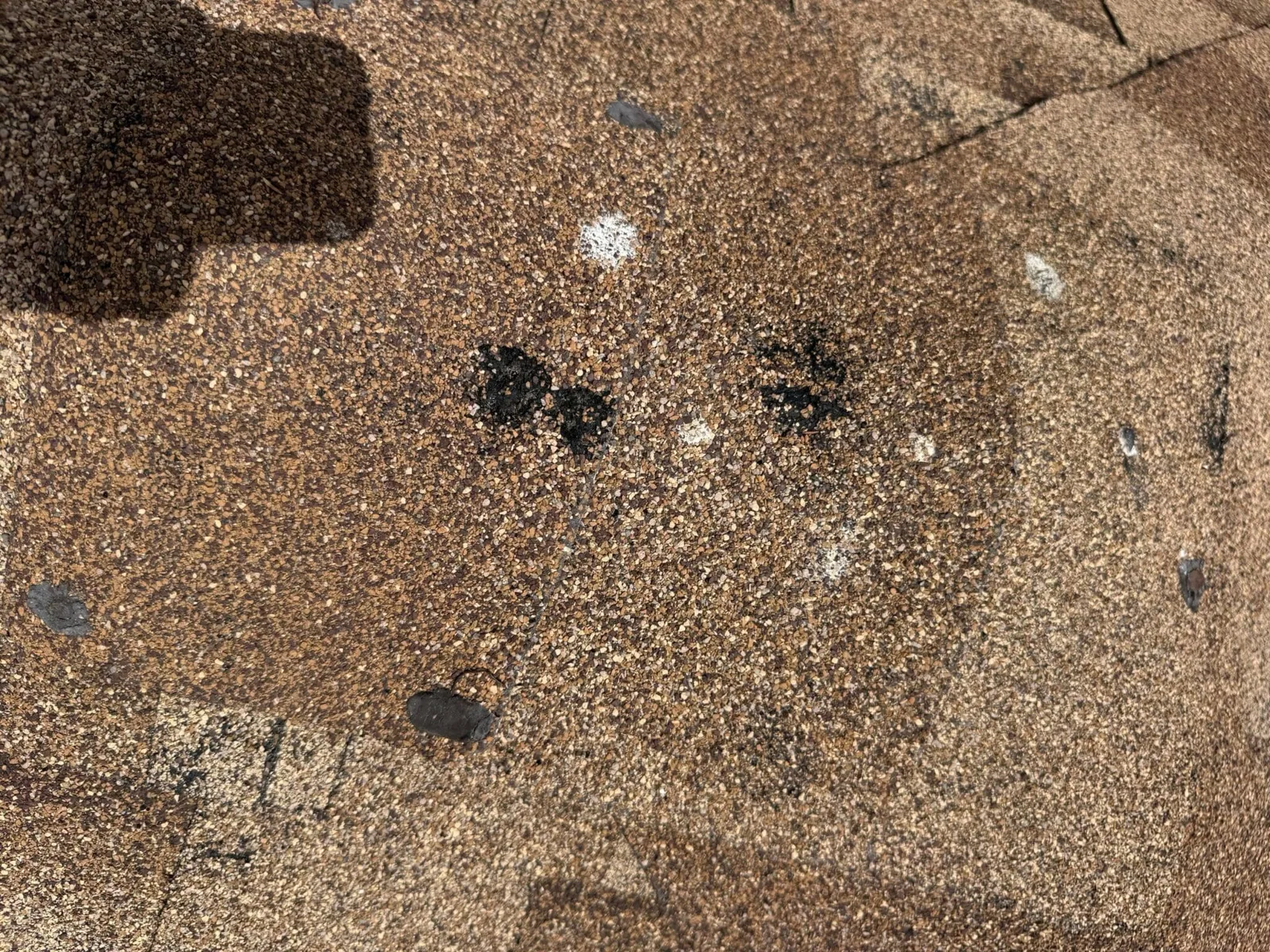
- Impact damage. Hail is common in this part of Iowa: 133 reports within 10 miles of the city center since 2004, and stones as wide as 2.5 inches on April 4, 2023. One that big can bruise the sheet and crush the insulation beneath it, and the roof may not leak until the next season.
A probe walk finds the first two. Moisture scanning finds the last one. We put both in the report with photos.
The Install on a Working Site
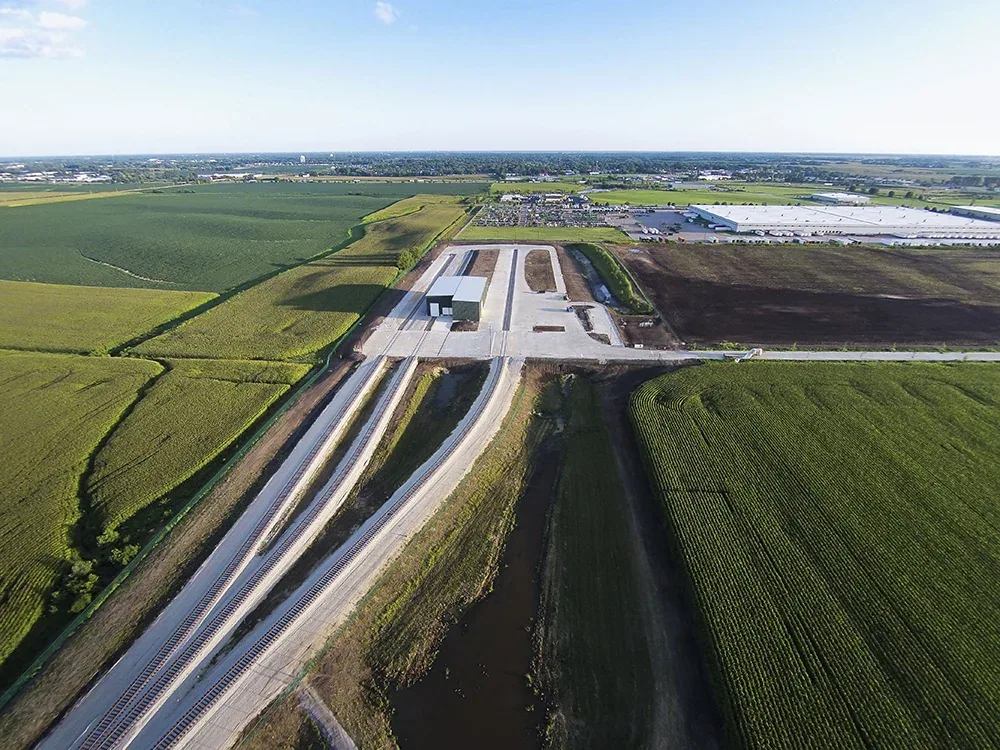
Out on I-80 in northwest Davenport, the 346 acres of the Eastern Iowa Industrial Center are filled mostly with big, low-slope plants and warehouses. On a low-slope roof with a wide open field and few penetrations, a single-ply sheet goes down fastest, and that is where TPO earns its place.
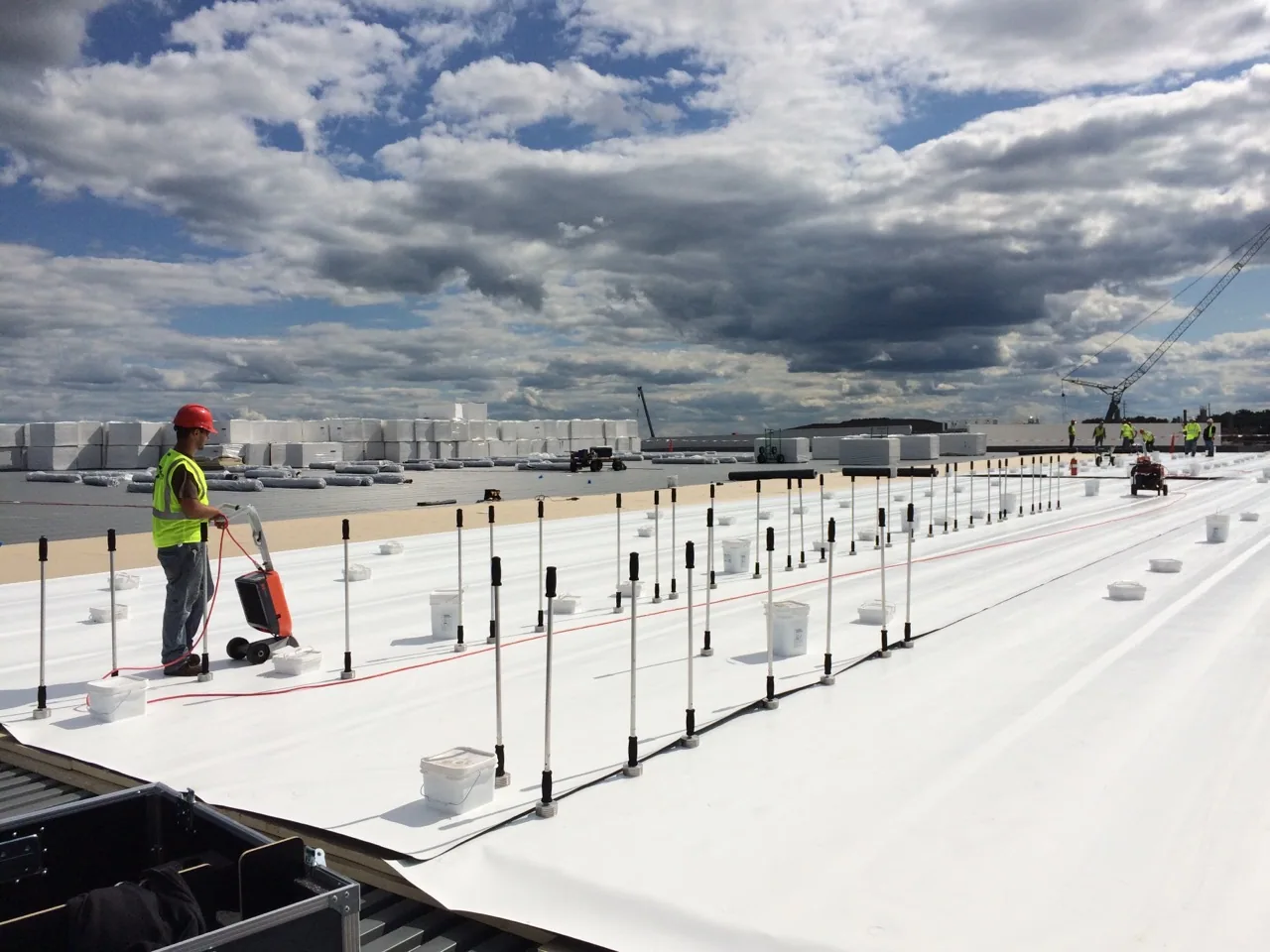
The day starts with access. We badge in, get the safety talk and check the production schedule so the lift and the dumpster stay clear of the dock during second shift. Then we agree on which rooftop units can drop for flashing work, and which have to run. At the end of each shift the open edge is sealed so a surprise storm cannot get under the new sheet.
You get the walkthrough, the photos and a punch list at the handoff, and the seam probe results go into your file. That sequence suits a warehouse roof or a plant at the Eastern Iowa Industrial Center alike, since the order of work follows the building's schedule.
Reading an Older TPO Roof
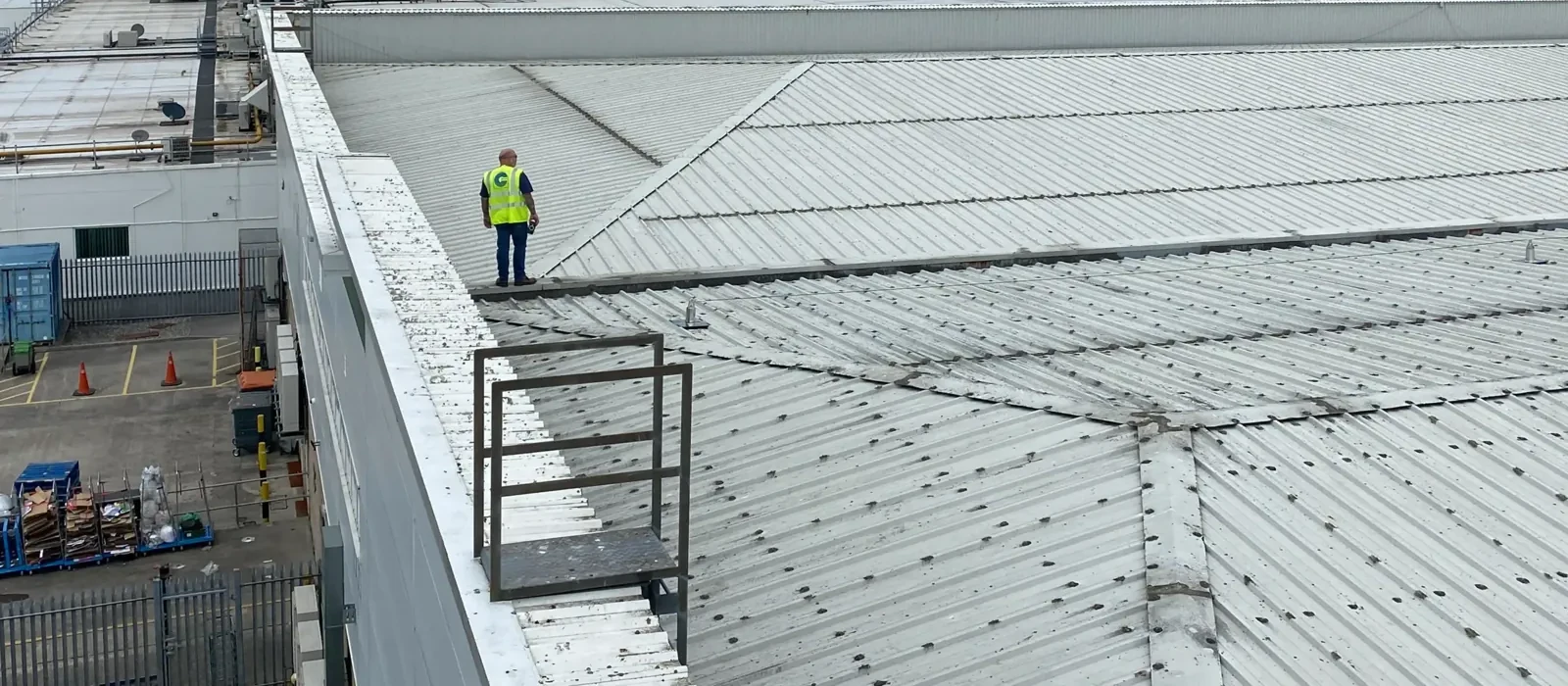
Age alone does not condemn a TPO roof. Condition does. We walk it after the freeze has gone out of the ground, probe seams at random and along every flashing, and look for chalking, dirt-darkened patches that signal pooling, and loose edges.
Isolated seam failures are a repair. A roof with seams opening across many bays, or with wet insulation under them, is a different conversation. A roof inspection sorts the two, and after a hard blow a storm damage repair crew does the same walk with a claim file
Bring the Bid Sheet
Send the bid sheet or the last roof report and tell us which building it covers. We will set a walkthrough, probe the seams and give you a plain answer on whether TPO is the right sheet for that roof.
Questions About TPO Roofing
Does a white TPO roof make our heating bill worse in a Davenport winter?
Reflectivity matters most in July. In January, heat loss through the roof is governed by the insulation, and a snow-covered roof of any color looks white anyway. The better recommendation is to spend your attention on the insulation thickness and the cover board, and to confirm the build-up against the Iowa energy code the city has adopted. We can lay the options out at the walkthrough.
How can I tell whether the welds on our existing TPO roof are still sound?
Have someone probe them. A pick run along the seam edge will catch any weld that never bonded, and it takes no special equipment. Do it each spring, once the freeze-thaw cycle is over, and photograph anything that lifts. If more than a handful of seams open in one area, stop patching and ask for a full survey, because the cause is usually movement or moisture, not bad luck.
Our roof holds water by the south drains. Is TPO still the right sheet?
It can be, once the water has somewhere to go. TPO tolerates standing water better than it tolerates repeated heavy foot traffic over it, but ponding still dirties the surface and works the seams. We fix the slope first, with tapered insulation or an extra drain, then choose the sheet. Pricing the sheet before the drainage is how owners end up paying for the roof twice.
Is PVC a better call for a plant with kitchen or process exhaust?
Where grease is involved, usually. Fats, oils and some chemicals can attack a TPO surface where they settle, and a PVC membrane is formulated to resist them. If the exhaust is occasional, TPO may be fine with extra attention at the discharge points. We look at what is actually venting, how close it is to the roof, and whether the fan has a grease catch before recommending either one.
What should we do after hail if the roof shows no holes?
Walk it and scan it before the next rain, because bruised membrane and crushed insulation hide well. Document each hit with a photo and a coin or ruler for scale, and keep the date of the storm handy. Hail damage repair starts with that same record, since the insurer will ask for it and the insulation may need cutting out even if the sheet looks whole.
Talk to a Davenport Commercial Roofer
Send the work order, the building address or a few photos of what you are seeing. We will set a walkthrough, go up with whoever has the hatch key, and tell you plainly what the roof needs.