
Commercial Roofing in Downtown Davenport, IA
Commercial roof repair, restoration and replacement for downtown Davenport, IA, masonry buildings, from flashing and parapet checks to event-night scheduling.
The voicemail comes from a tenant on the top floor of an old brick block near 3rd Street. Water ran down the inside of the north wall overnight, and the plaster now carries a tide line.
That is an ordinary start for a roof in the downtown district. Downtown's commercial historic district spans 49 acres from 2nd to 5th Streets with 33 contributing buildings, and historic masonry under low-slope roofs sets the pattern. A low-slope roof cannot be read from the sidewalk, so nobody watches it age. We go up with a commercial roof inspection, read the walls and the membrane together, and give you a plain call on what the water is doing.
Walls That Work as Roof Edges
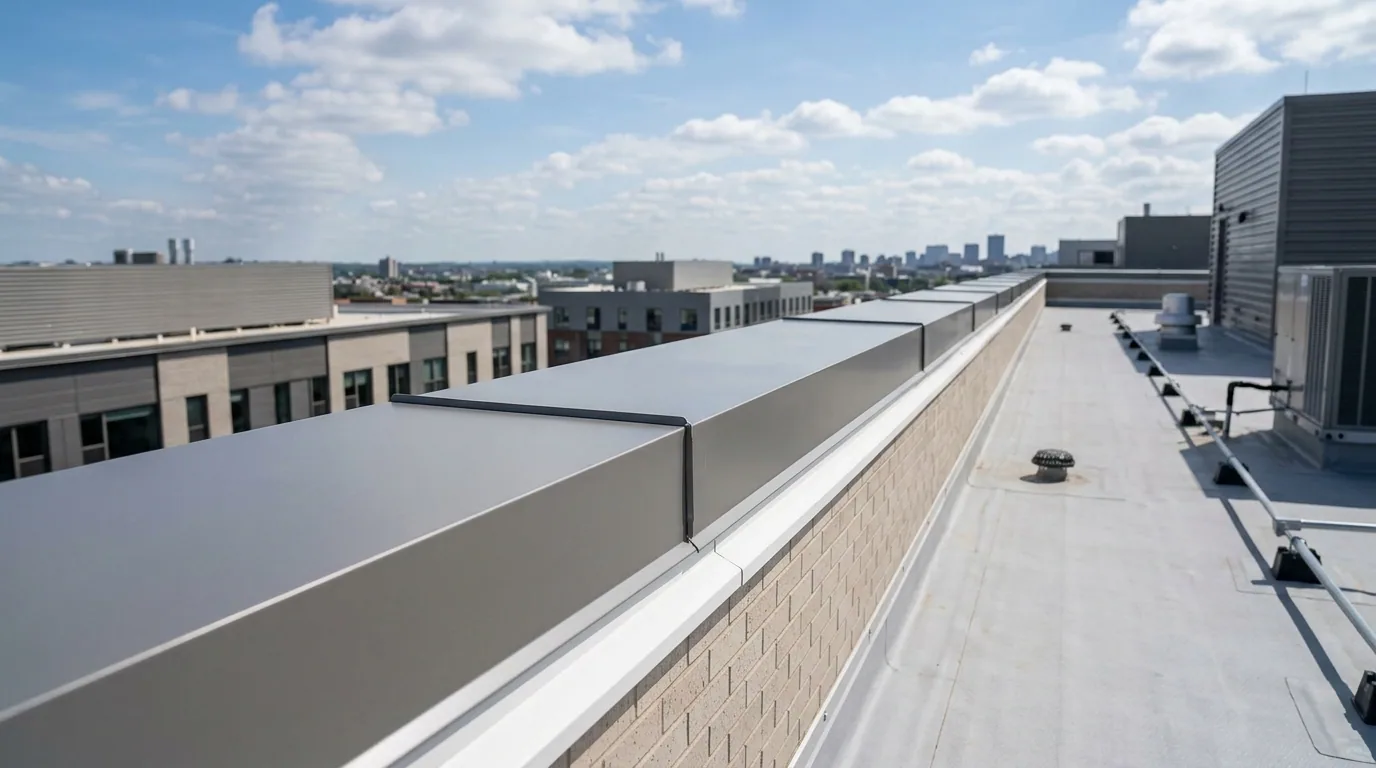
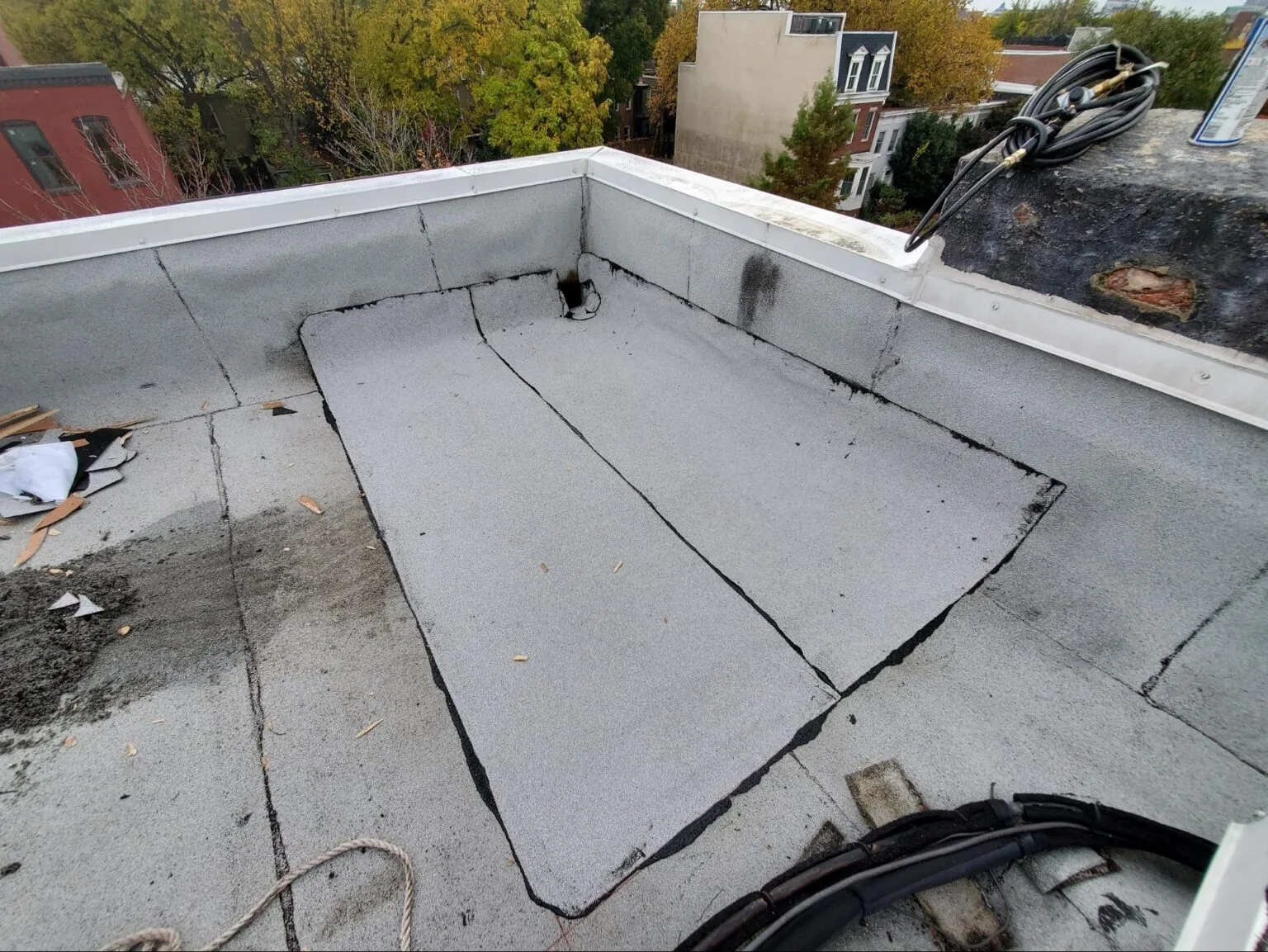
On a masonry building the wall is part of the roof. Water running off the membrane ends at the wall, and the joint where the two meet decides whether it stays outside. We look at the base flashing first, then the counterflashing set into the brick above it, then the mortar around both. Open joints, cracked sealant and flashing that has pulled off the wall are the usual finds.
Then the top of the wall. Coping stones and metal caps shed water off a parapet, and when a cap joint opens, the water drops into the wall instead of off the roof. It can travel a long way before it shows as a stain, so a mark on plaster may start far above it. We trace it with moisture readings and, where it helps, a drone. Fixes run from re-setting coping and edge metal to rebuilding a flashing detail, and the cost follows how much wall has to be opened.
Landmark Buildings, Plain Questions
Downtown's landmarks include the 1907 Davenport Hotel, the 1914 Hotel Blackhawk, the 1924 Union Station and the 1931 Art Deco Adler Theatre building. The 1895 City Hall and Scott County Courthouse are contributing buildings too, and the district joined the National Register of Historic Places in 2020. Before we price a scope on a building like that, we ask two things. Can the roof edge be seen from the street? Does the owner carry a preservation or review obligation?
The answers shape the cap profile, the edge metal, the color and the material. The city works from the 2021 International Existing Building Code as locally amended, and a larger scope on an older building gets checked against it. We settle the plan with your architect or the city before material is ordered. A public building adds procurement steps on top.
Show Nights and Tenant Floors
The RiverCenter and Adler Theatre form a 100,000-square-foot venue complex in the downtown core. A venue lives on an event calendar, and a leak on show night is the worst kind. So the roof schedule starts with the calendar. Tear-off, fastening and equipment lifts go on days with nothing booked. Hot work stays out of areas with a historic ceiling or sprinkler line below.
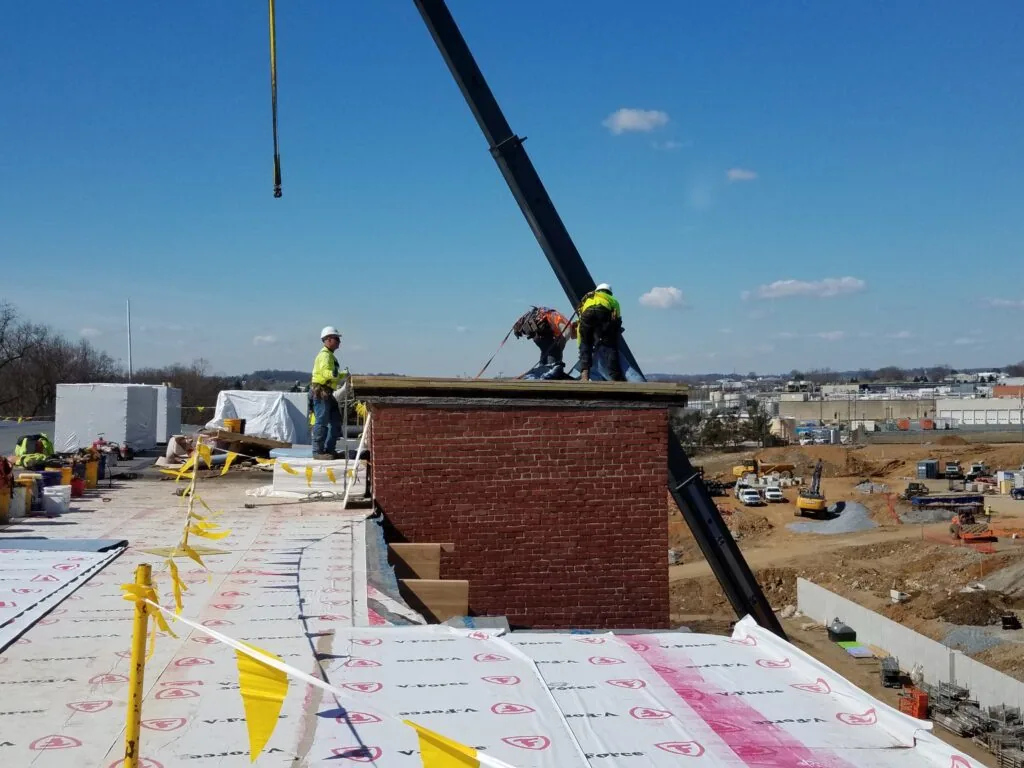
Offices and ground-floor shops get the same care. A reroof on an occupied building starts with a tenant notice that says which door, which hours and which floors will hear the work. Material goes up by hoist or crane when the street can take a staging truck. We ask for the roof hatch key and the name of the person who meets the crew, and write both on the work order.
After the River Came Downtown
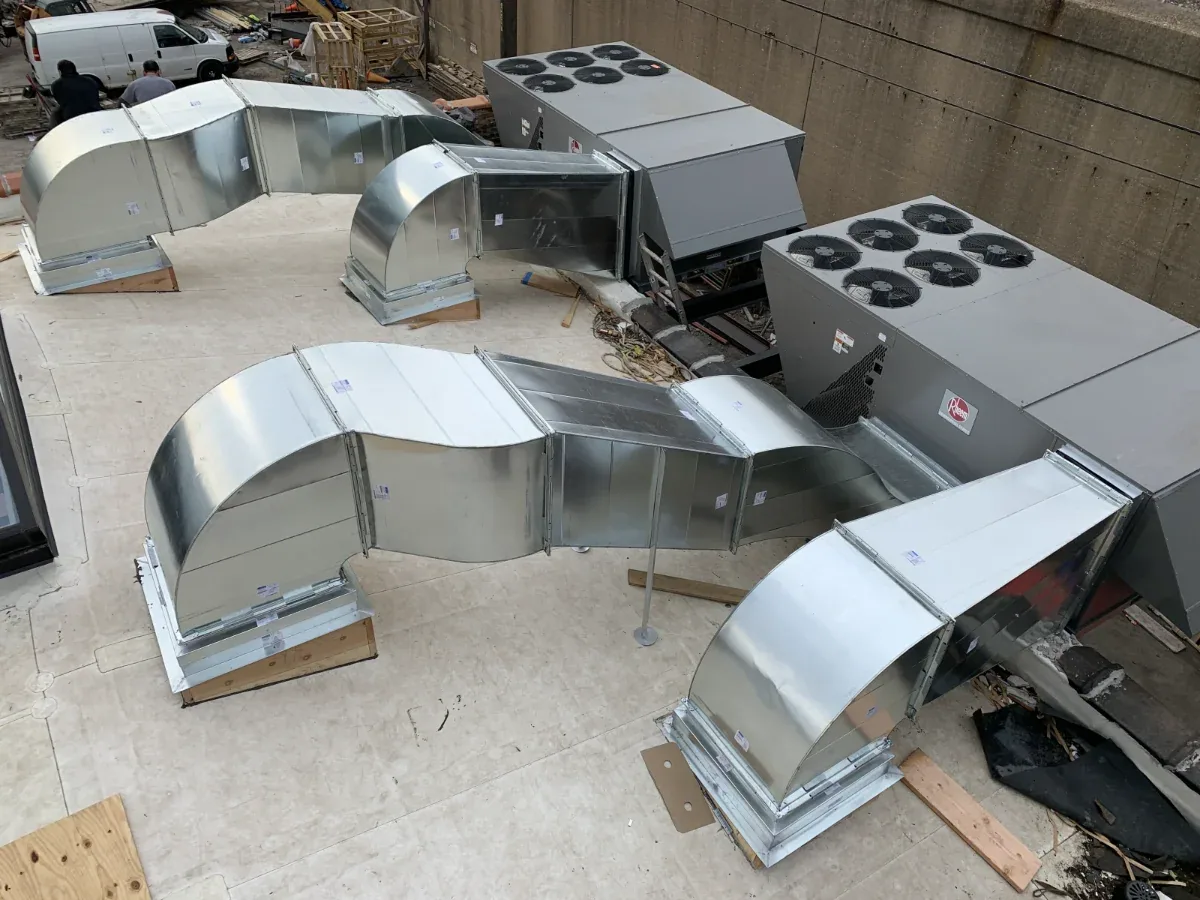
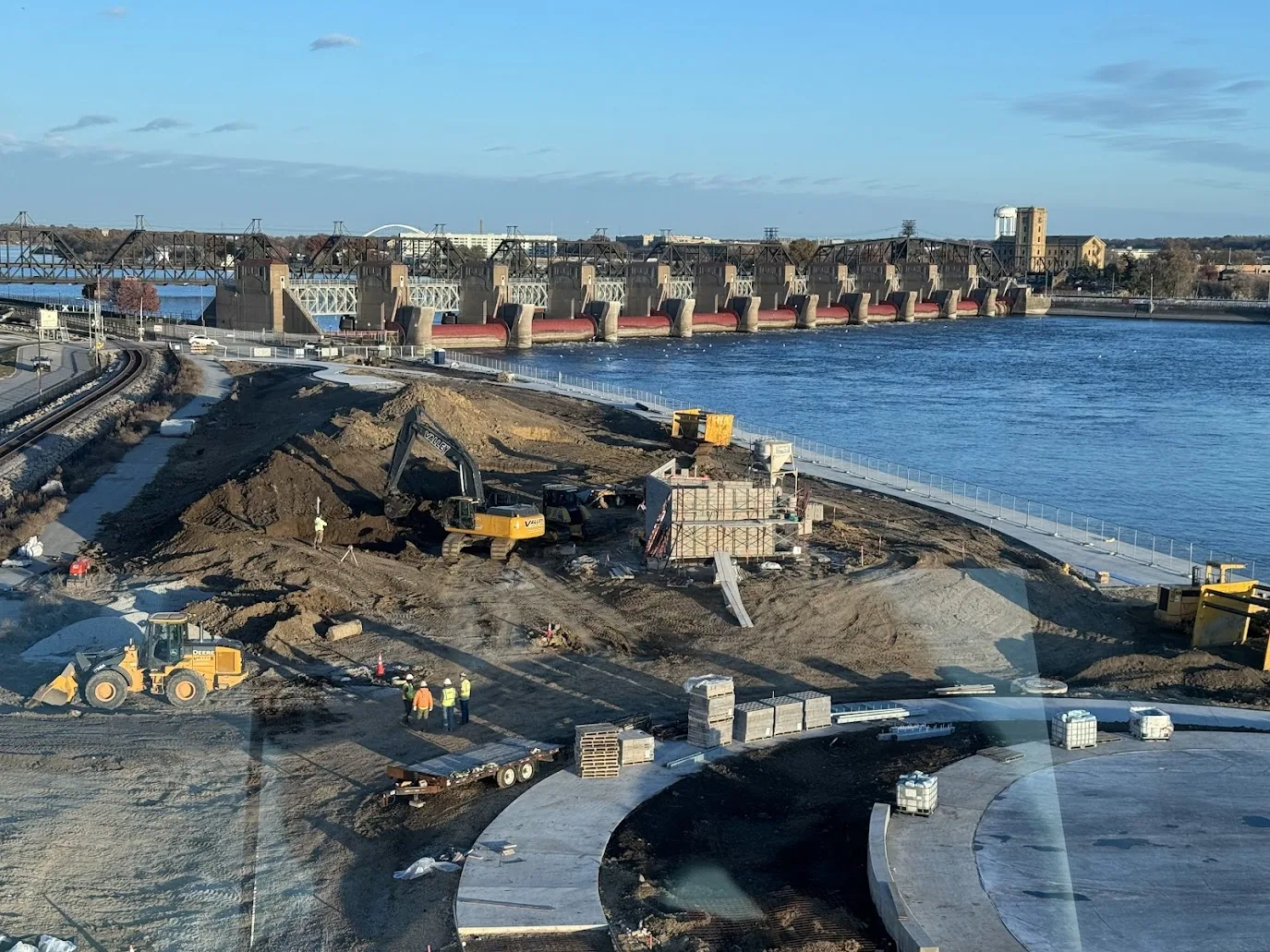
In April 2019 a temporary flood barrier failed at River Drive and Pershing Avenue, and about 15 square blocks of downtown went under roughly 6 feet of water. The Mississippi crested at a record 22.7 feet that year, and Davenport has no permanent flood wall. A roof does not sit in floodwater, but the recovery reaches it. If rebuilding moves mechanical equipment up onto the roof, the roof takes on new load, new curbs and new penetrations.
We check each one: the structure under the unit, the curb and support detail, the drain closest to it and the path the service tech walks. Along the riverfront, flood exposure comes on top of ordinary roof weather, and a small leak beside a relocated unit can spread under the membrane unseen until spring.
Winter Between the Parapets
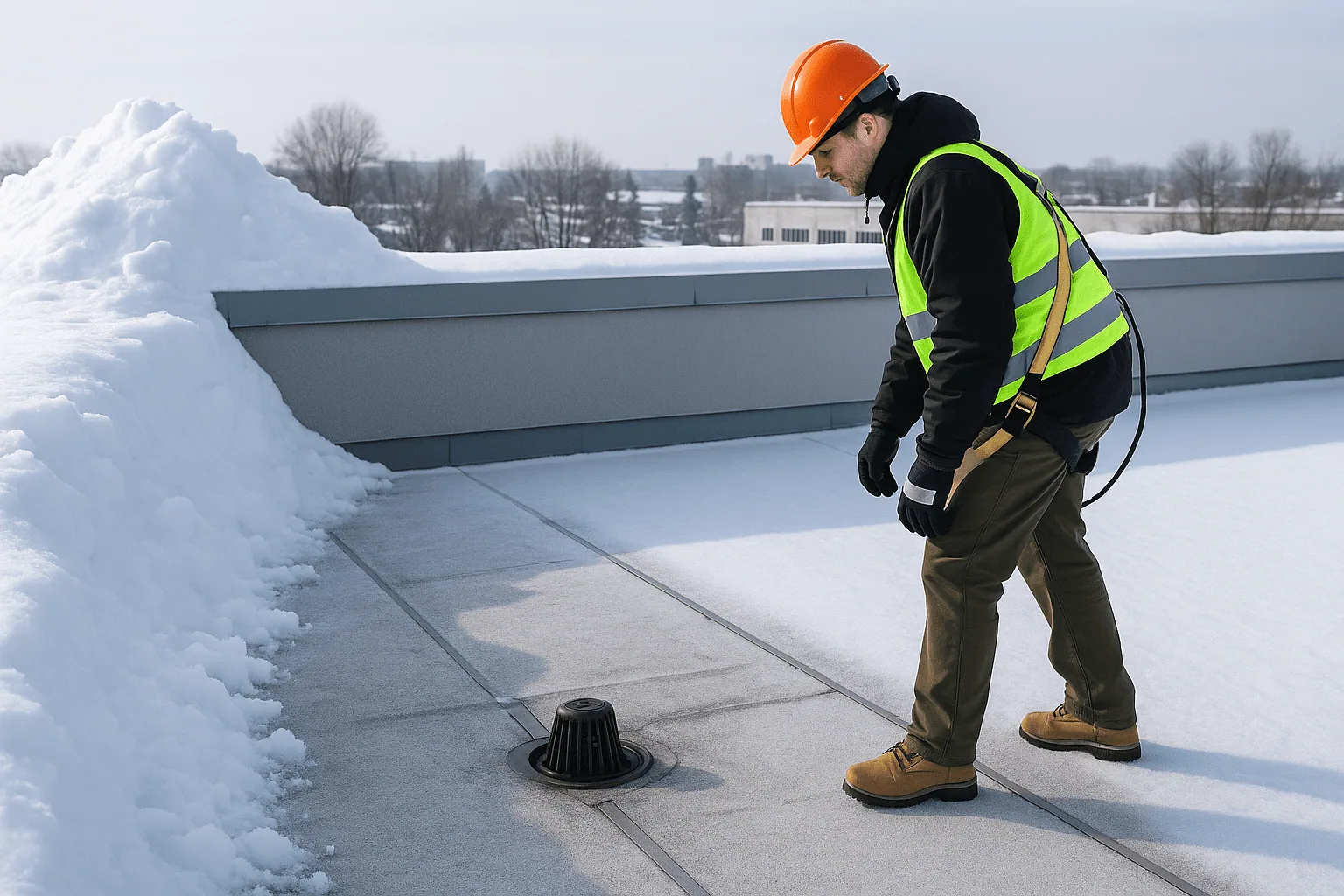
Snow adds up to more than three feet in an average Quad Cities year, and January supplies about 10 inches of it. Davenport records run from 111 F to -29 F, so a membrane stiffens and shrinks in January and softens and swells in July. On a flat roof edged with masonry, wind packs the snow against the wall, and the meltwater runs to the lowest point. That point should be a drain. Sometimes it is a seam.
We flush each drain and scupper and look for the staining that says it froze. A frozen outlet sends water across the field and up behind the flashing. Where ice has already worked into a seam, the snow and ice damage repair comes first and the bigger plan second.
Repair, Restore or Replace
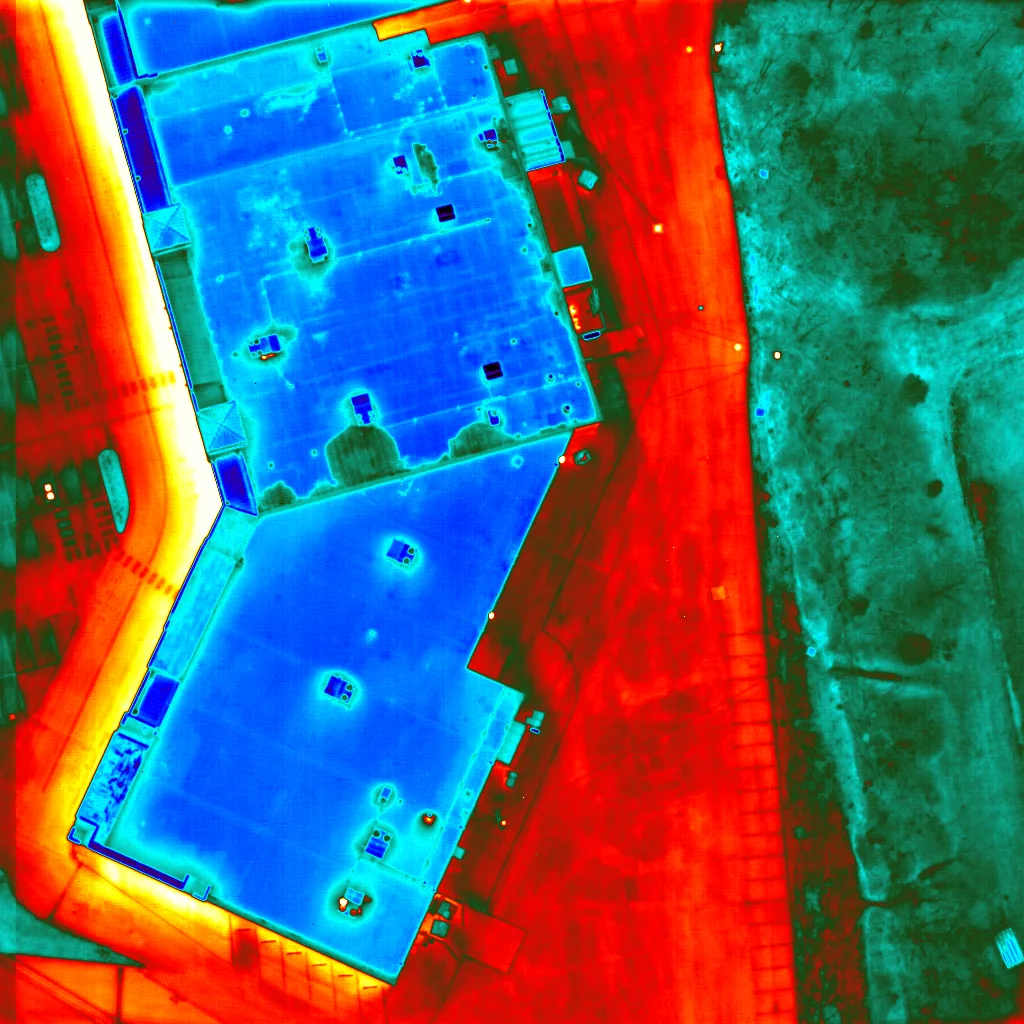
Four paths, and the building picks among them. Repair when the problem is one flashing, one seam or one drain. Restore with a roof coating when the membrane is sound but tired. Recover or replace when the insulation is wet. An infrared moisture survey draws the wet area on a plan, and a few cores confirm it.
Cost and timing follow a short list. How much wall has to be opened? How deep is the wet insulation? Where can a lift or hoist stand, and for which hours? How many drains, curbs and penetrations does the field carry? Downtown access can weigh as much as square footage. A full replacement takes longer than a recover, and winter limits what adhesives and welds can do. Same-day photos rank work for this season or next budget. Coordinate access on Brady Street.
Send the Address and the Stain
Send us the address, a photo of the stain and the room it showed up in. We will set a walkthrough around your tenants and your event calendar, and come back with a plain recommendation.
Questions About Downtown Davenport
The stain is on the second floor, but the roof is four stories up. Where do we start?
Start at the wall above the stain, not the ceiling. Water follows brick, plaster and framing before it drips, so the entry point is often higher and to one side. Send us the floor, the room and the date of the last rain. We will check the parapet cap, the base flashing and the nearest drain, then confirm with moisture readings. Patching the ceiling first only hides the trail.
Our building is inside the National Register district. Does that limit what goes on the roof?
It can limit what shows. The district is on the National Register, and an owner may have review duties tied to visible changes, tax credits or an easement. Ask your preservation contact or the city before anything is ordered, and give us the answer in writing. We will match edge metal, caps and color to it. Flat roof surfaces hidden behind a wall usually leave more room.
We moved air handlers up to the roof after the 2019 flood. What belongs in the roof file?
Keep the install date, the curb drawing, the flashing detail and photos of the base before the unit was set. Note where the condensate goes. We add a walkway check and a drain check to the file, because new foot traffic wears a membrane faster than weather does.
Our tenants run weekend events. Which days should the crew take?
Take the quiet midweek days for noisy work and keep weekends clear. We ask for the event calendar up front, plan tear-off and lifts around it, and dry in every section by the end of the shift. If a show lands on a day when a section is open, we cover it before the doors open. Send the calendar with the work order and we will plot the job around it.
A buyer wants the roof checked before closing on a brick building. What do we hand over?
Hand over a written condition report with photos, an infrared moisture map where the budget allows, a list of repairs ranked by urgency, and a rough view of when replacement will be due. Give us the access window and the roof hatch location. The buyer gets facts about drains, flashing and wet insulation to negotiate with.
Explore Related Roofing Work
Talk to a Davenport Commercial Roofer
Send the work order, the building address or a few photos of what you are seeing. We will set a walkthrough, go up with whoever has the hatch key, and tell you plainly what the roof needs.