
Commercial Roofing in Davenport, IA
Commercial roof repair, inspections and replacement in Davenport, IA, planned for occupied buildings, storm exposure and local operating schedules.
Overnight water changes the work order. We start below, note what cannot get wet and trace the path back to the roof. The first walkthrough records the leak, the drains and the access rules.
Davenport puts that work over downtown masonry, offices, retail along Kimberly Road and production space in the Eastern Iowa Industrial Center. Each building changes the roof questions. Downtown walls and additions need close inspection at transitions; retail access follows tenant hours; a plant scope has to fit the production schedule. One city, different work orders.
A roof that sees wind, snow and hard freezes
The August 2020 derecho left a strong wind reading at the Davenport airport: 86 mph, the highest official report in the immediate Quad Cities that day. The National Weather Service documented roof damage in Davenport, Bettendorf and Scott County during the same storm, with damaging winds lasting between 30 and 60 minutes. Repeated pressure works at corners, parapets and loose edge metal, so we check those transitions before the roof field.
Winter has its own pattern. The Quad Cities average more than 36 inches of snow in a year, and Davenport’s recorded low is well below zero. Freeze and thaw cycles widen small splits at seams and metal joints, while snow can cover a drain before anyone sees the ponding. A roof inspection ahead of winter marks drains, seams, curbs and prior repairs before a ceiling stain appears.
Different roofs across one city
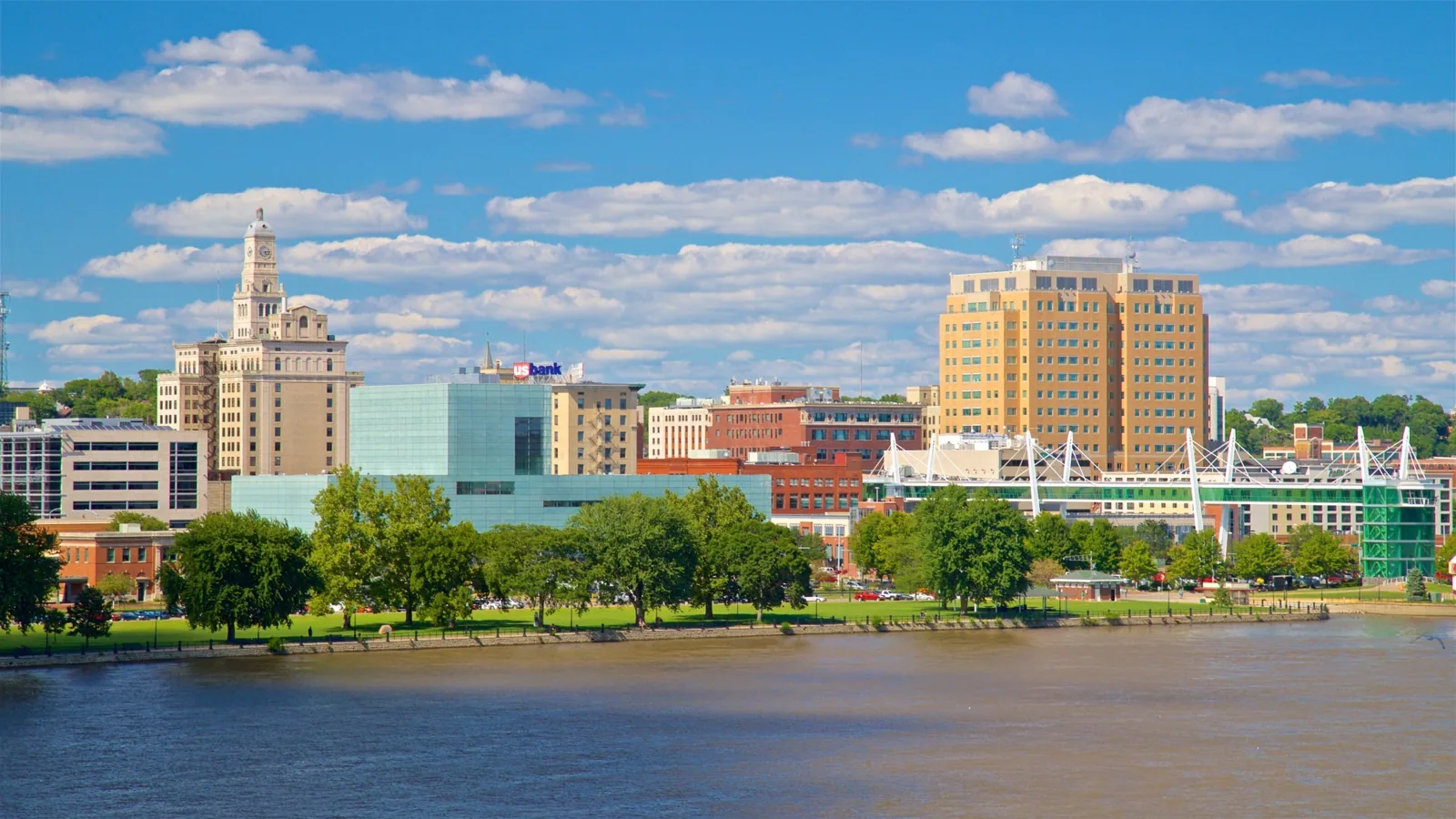
On a downtown property, age and adjoining walls may matter as much as the membrane. The historic commercial district contains contributing buildings from several periods, and additions do not always move with the original structure. We check the transition where one roof meets another, how the parapet is capped and whether a newer flashing repair bridges a joint that still moves. The downtown area also has river flood exposure, making a clear overflow path worth documenting.
Kimberly Road is a developed commercial arterial through central Davenport, with retail, apartments and offices along the corridor. NorthPark Mall is one large property there, but the corridor itself includes different owners and building types. On a retail roof, we map each tenant’s operating hours, then place noisy work, deliveries and temporary protection around loading areas and entrances. A Kimberly Road roof plan must respect each property’s owner and schedule.
At the Eastern Iowa Industrial Center, a broad industrial park on I-80, logistics can shape the roof sequence. Truck paths, rail activity, outdoor equipment and production schedules affect where a lift can sit and when material can arrive. We document those site limits before choosing between a repair, a recover system or a full replacement.
What we mark on the first walk
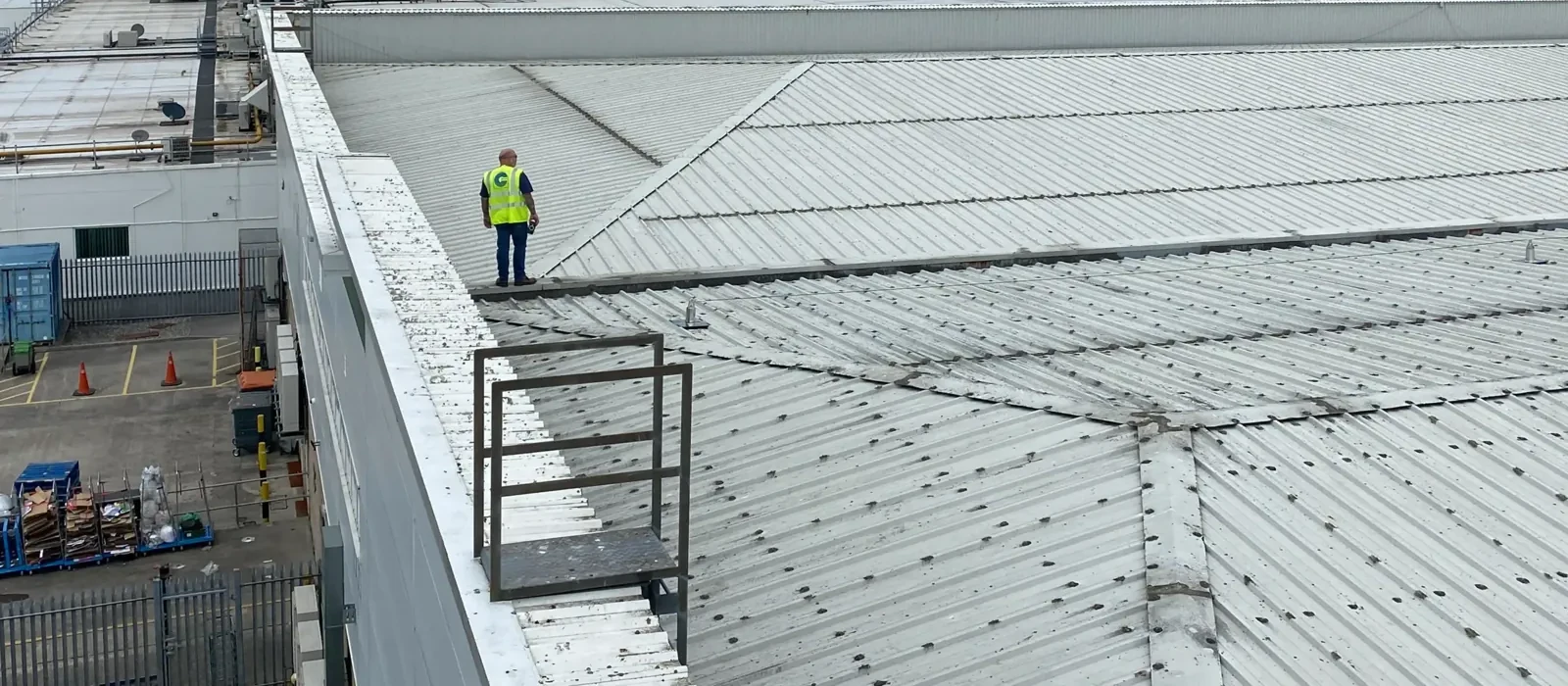
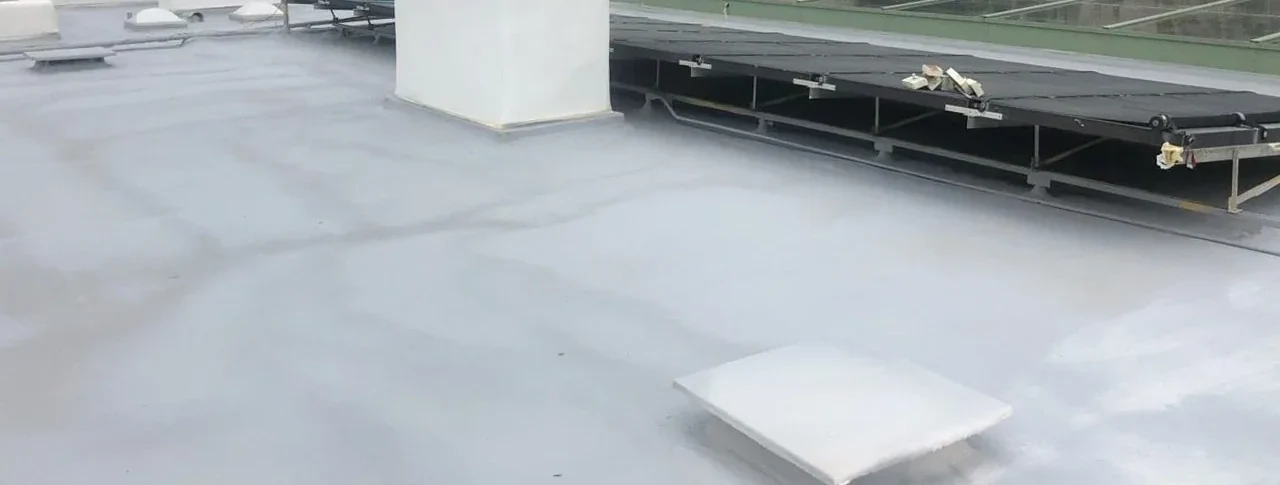
We do not start with a guess about the system. The walk begins at the roof edge and follows water toward the drains. We photograph seams, penetrations, curbs, pitch pockets, wall transitions and the places where previous work changes material. If the roof is metal, we look at fasteners, laps, clips, panel ends and the movement allowed at each attachment. If it is a membrane, we check seam bond, punctures, patches and any area that feels soft underfoot.
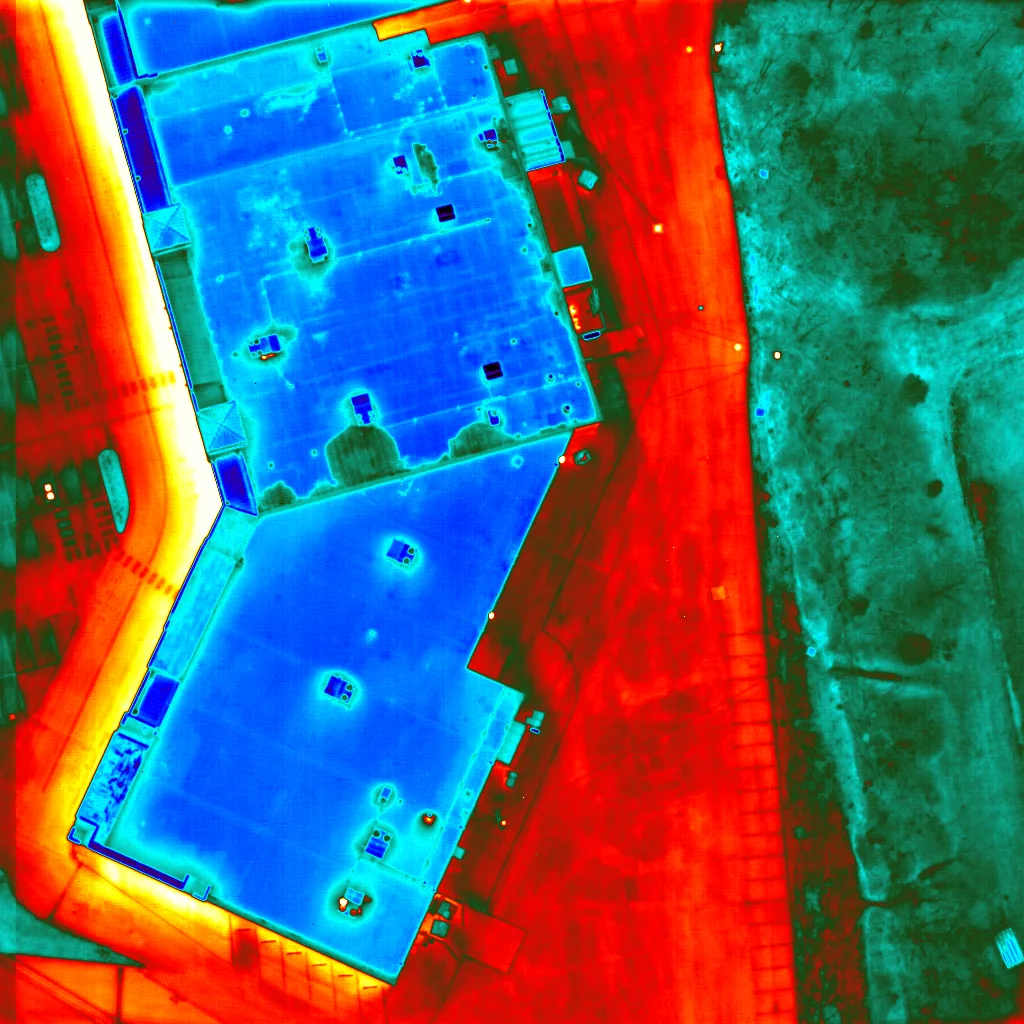
Drainage gets its own pass. We note strainers, scuppers, overflow openings and the low points that collect debris. A blocked drain and failed seam can wet the same room, so we trace the path instead of patching only the stain. When moisture may be trapped below the surface, an infrared moisture survey or carefully placed test cuts can show whether a recover is suitable or wet insulation needs removal.
Each finding goes onto a roof plan with photos. The owner can see which items are urgent, which can be monitored and which belong in a future capital scope. A written condition report is useful when several buildings have to compete for the same budget.
Repair, restore or replace
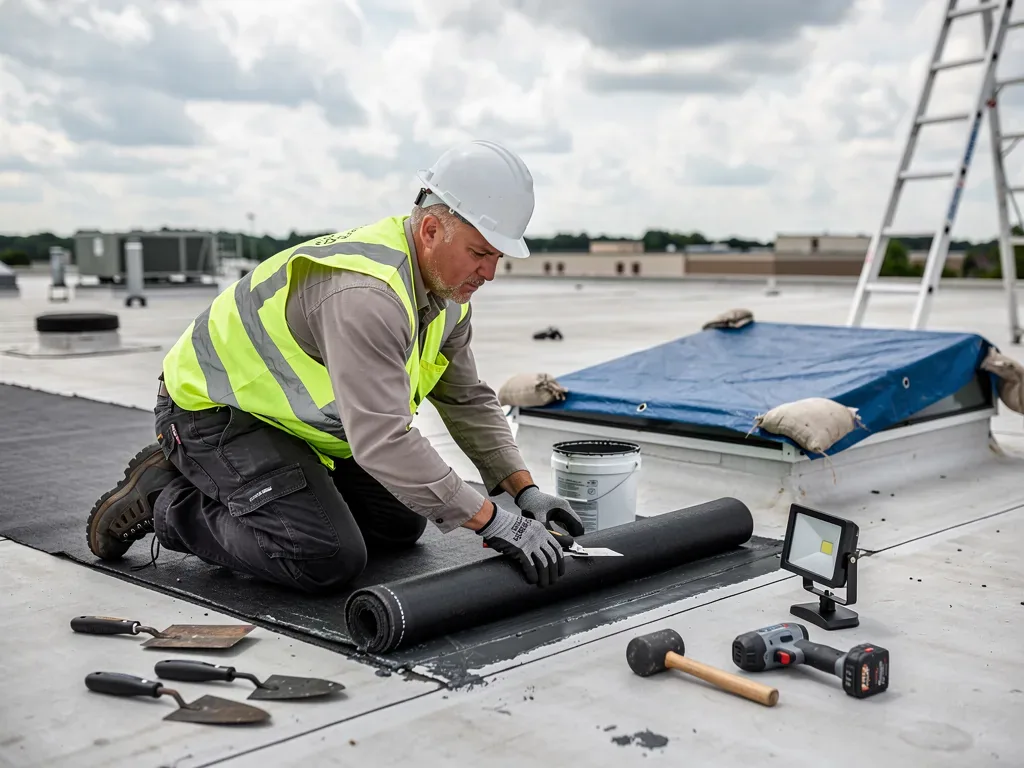
A localized leak does not automatically call for a new roof. If the surrounding membrane is sound and the insulation is dry, we can repair the seam, penetration or edge that has failed and return to the rest of the system later. If the surface remains stable but the roof is aging, a coating or restoration may extend its service life when the assembly is a good candidate. We explain preparation, adhesion checks, drainage work and exclusions first.
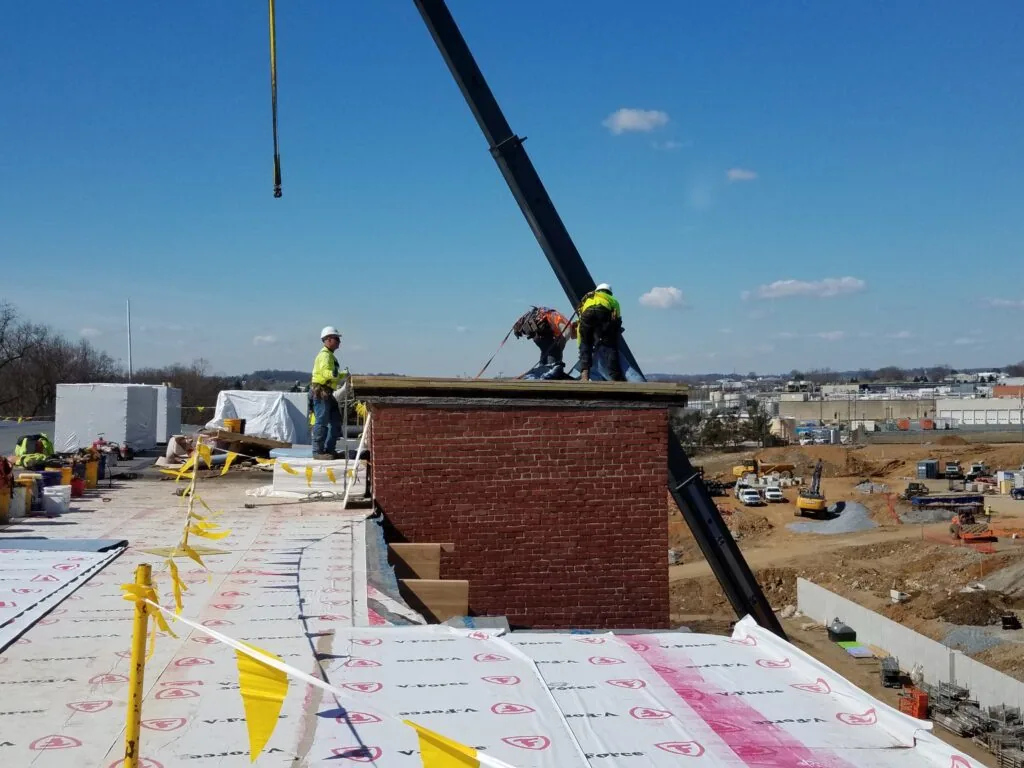
When the existing roof has widespread wet insulation, repeated failures or too many incompatible patches, replacement may be the cleaner route. A recover is possible only when the existing assembly, attachment and added load allow it. We compare tear-off, recover and restoration against roof capacity, disruption and phasing options. On a busy occupied building, temporary dry-in and interior protection belong in the scope, not as an afterthought.
Cost and timing depend on access, roof height, material handling, the number of penetrations, concealed conditions and the amount of insulation or deck repair. We identify those variables before the owner approves a start date.
Keep the building open while the roof changes
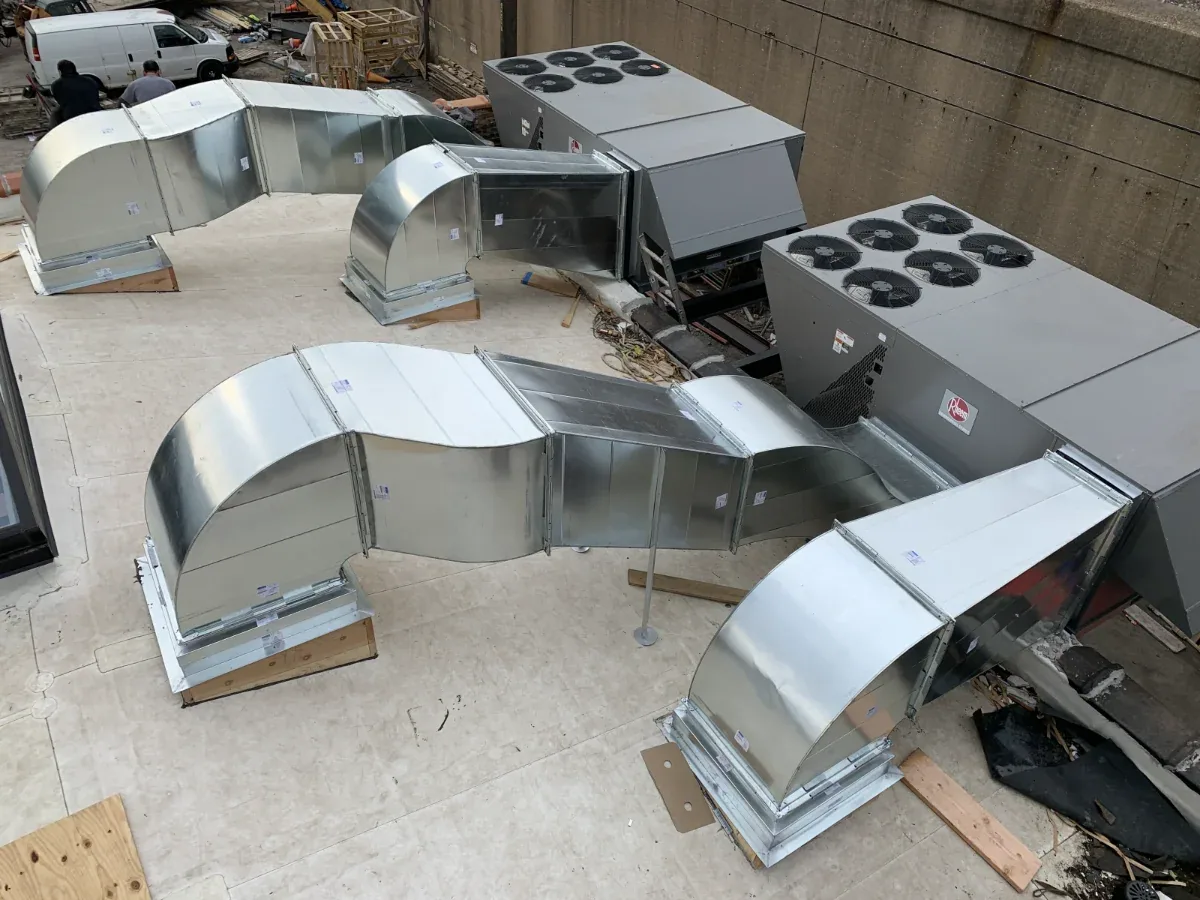
Commercial work often takes place above people, inventory or equipment that cannot simply move. We set daily dry-in limits and coordinate noisy work with the space below. If a building has rooftop units, we protect service clearances and plan flashing around the equipment instead of crowding it with new material. A curb and support review helps catch movement and drainage problems where equipment meets the roof.
On a multi-building campus or a group of properties, the schedule can be staged by building, exposure or operating calendar. A daily log records open areas, dry-in and inspections due. When a storm claim is involved, date-stamped photos and a repair map help connect the roof condition with the work that followed. The record supports capital planning across the next budget cycle.
A documented scope for local review
Davenport applies the 2021 building and existing-building code editions with local amendments. Requirements depend on the building and work proposed. We document the assembly and proposed work, then coordinate permit questions before mobilization.
For a larger replacement, we set out the tear-off limits, protection, substrate repairs, insulation, attachment pattern, membrane or metal system, edge details and cleanup plan. The owner sees how concealed deck damage could change the price and what approval is needed. A clear scope is easier to schedule and maintain.
From the industrial center to the Village of East Davenport, the roof deserves a plan tied to its real building, use and drainage.
Put a roof plan on the calendar
Tell us what the roof is doing, which areas are occupied and what the next deadline looks like. We will inspect the system, document what needs attention and give you a clear path for the work.
Questions About Davenport
The leak appears after wind, but only in one room. Where do you start?
We start at the roof area above that room, then trace seams, curbs, wall transitions and drainage uphill from the stain. Wind can open an edge far from the interior symptom. We photograph the likely paths, test the suspect detail and repair the confirmed failure before suggesting broader work.
Can you tell whether a roof is ready for a recover?
We check the existing attachment, insulation, deck condition and total added load before recommending a recover. Wet insulation or a loose assembly can make a new layer the wrong choice. If testing shows the roof is dry and secure, we can compare a recover with restoration and replacement in the same written scope.
How does snow change a commercial roof inspection here?
Snow can hide a drain, seam or area of ponding, so we look at the roof before and after the season when access allows. We record drain condition, overflow routes and any damage left by freeze and thaw. Davenport’s cold-weather record makes those checks practical, not cosmetic.
What happens if a deck repair is discovered after tear-off?
We pause at the affected area, photograph the condition and mark the repair quantity. The owner approves the added work before we install over it. That keeps the new assembly supported and gives the final closeout a record of what changed from the original scope.
Can work be phased across several Davenport properties?
Yes. We can sequence buildings around access, tenant hours, loading areas and weather exposure. A roof plan groups urgent repairs first and keeps future replacement areas visible, so a property manager can align the work with capital budgets without losing track of open conditions.
Talk to a Davenport Commercial Roofer
Send the work order, the building address or a few photos of what you are seeing. We will set a walkthrough, go up with whoever has the hatch key, and tell you plainly what the roof needs.