
Planned Commercial Roof Repair in Davenport, IA
Planned repair of commercial roof membrane, flashing, seams and details in Davenport, IA, scoped from a hands-on walkthrough with photos the same day.
A plant manager sends a photo of a lifted seam near the north dock. Nothing is dripping yet. He wants it fixed before it does.
That is the right call. Planned repair costs less than emergency repair, and it keeps small defects from turning into wet insulation. For a Davenport, IA building, we treat a repair like any other facilities job: a walkthrough, a scope in writing, a window that works for operations, and photos when we are done.
Scoping From the Roof
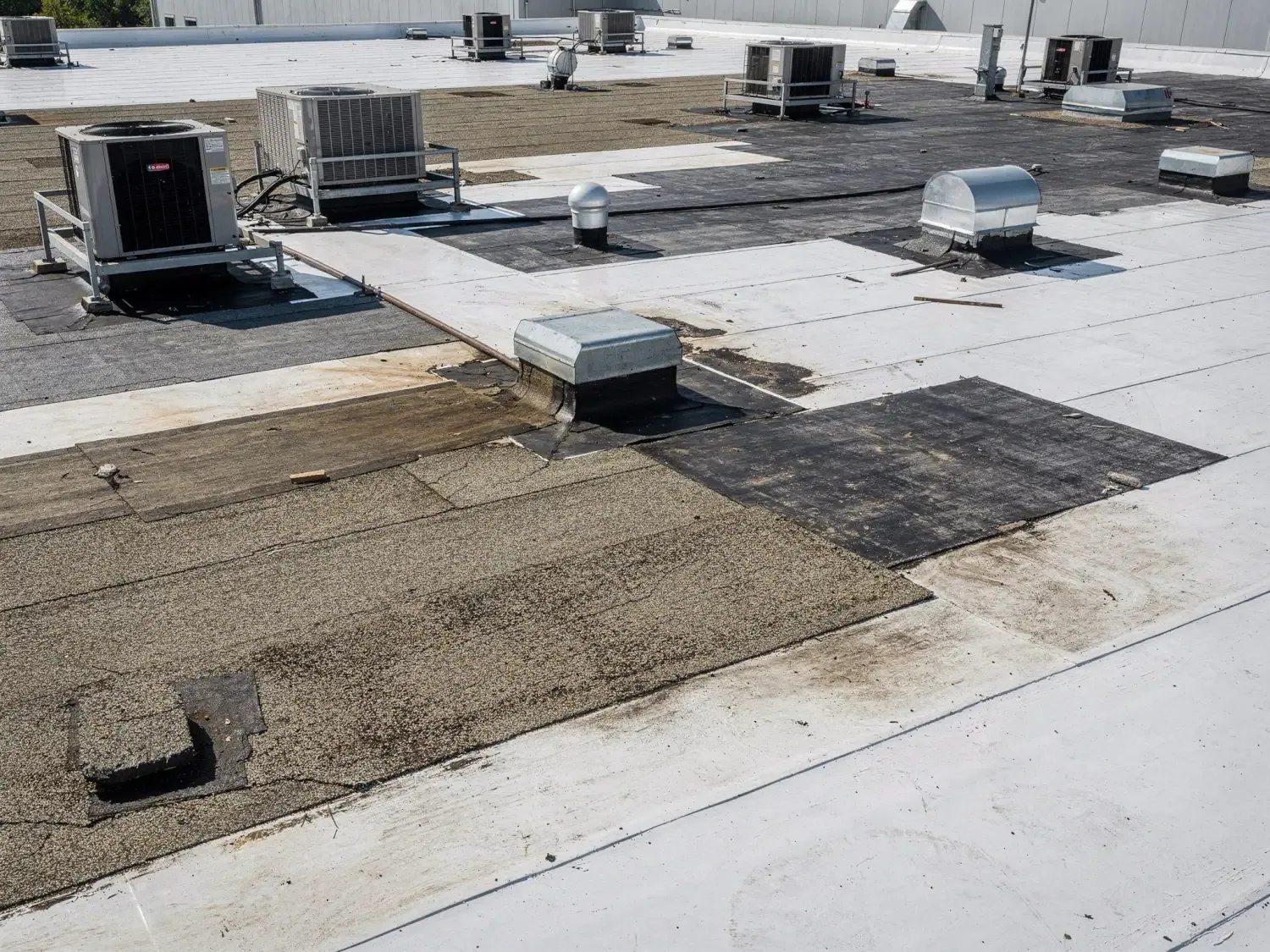
A repair starts with finding everything that needs it, not just the spot that was reported. We walk the whole roof, or the whole area under the work order, and mark each defect with paint and a photo.
What we look for:
- Open or lifted seams and laps.
- Cracked, shrunken or split flashing at walls, curbs and edges.
- Punctures from foot traffic, tools or dropped hardware.
- Clogged drains, loose scupper liners and ponded areas.
- Sealant that has dried out around pipes and conduits.
The written scope lists each item by location, so you can approve all of it, some of it, or add it to next quarter's budget.
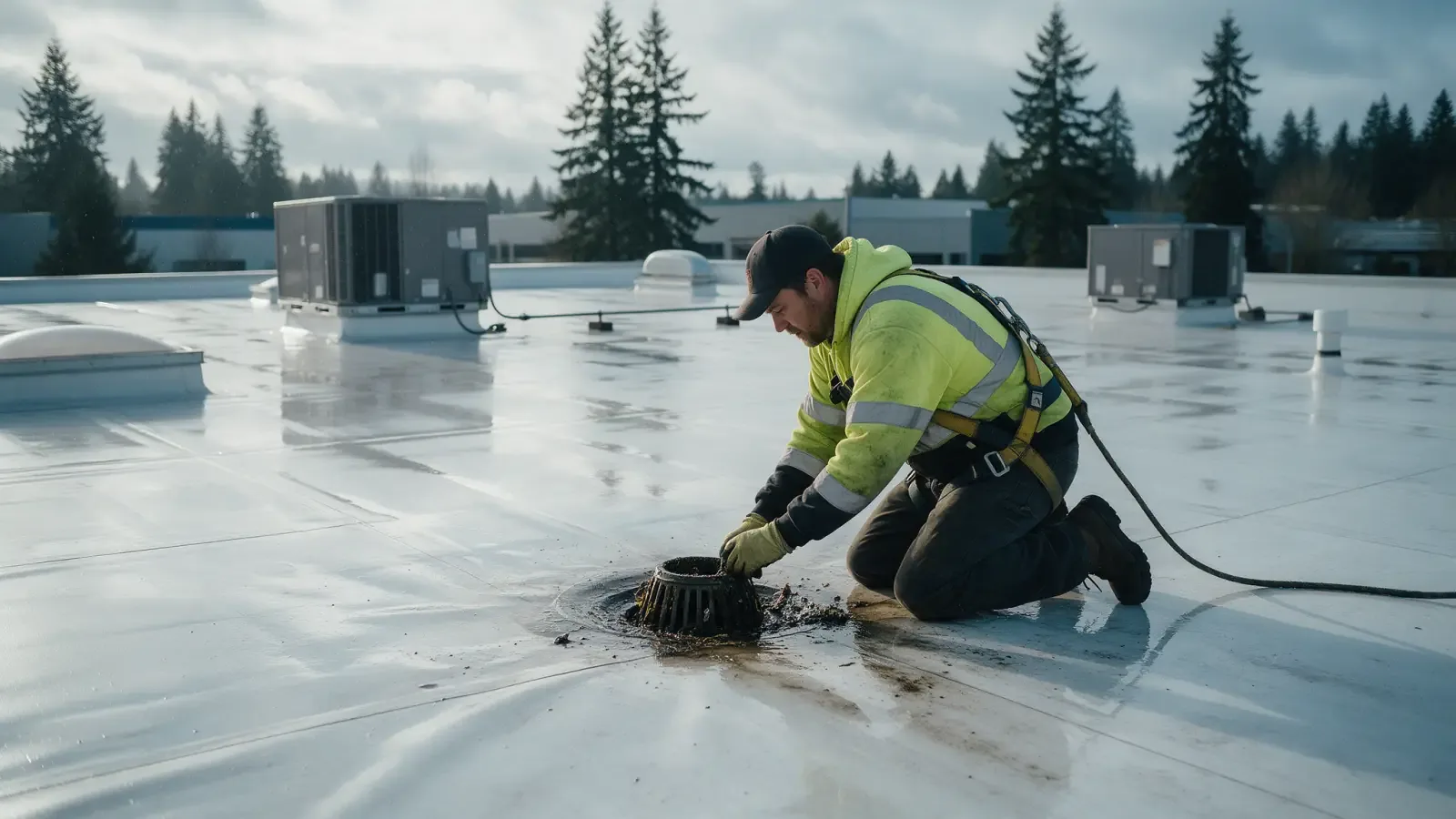
Drains get a hard look first. Debris, leaves and ice at a drain cause more trouble than their size suggests, and clearing them is the cheapest repair on any roof.
Membrane and Seam Work
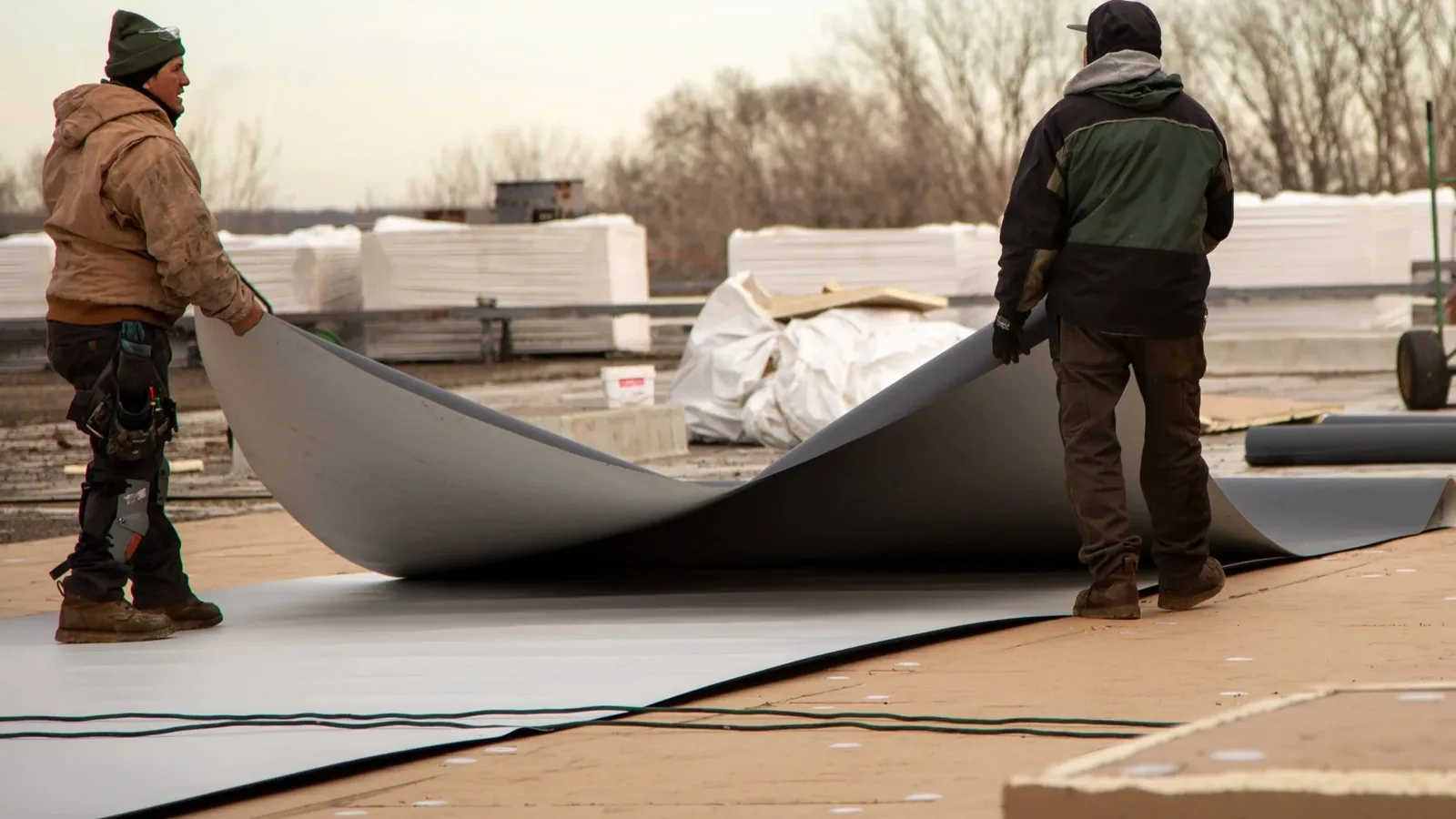
The repair method depends on the membrane. Heat-welded single-plies such as TPO and PVC can often be re-welded once the surface is cleaned. EPDM seams are usually repaired with splice tape or new adhesive. Modified bitumen gets torch or cold-applied patches, and built-up roofs need careful work around blisters and ridges.
The classic repair mistake is a patch over a dirty or wet surface. It looks fine for a month. Then it lifts. We clean, dry and prep every area, and we cut out membrane that is already saturated rather than cover it. Open laps and split welds are the usual start of seam failure repair, and the patch has to match the membrane under it.
Where the membrane is thin, chalking or worn through to the scrim, we say so. A patch there buys months, not years, and you should know that before you approve it.
Walls, Edges and Terminations
More roof leaks start at the edges than in the field. Walls move. Metal expands and contracts with the heat and cold. The Davenport range runs from a high of 111 F to a low of -29 F on record, and flashing takes every degree of that swing.
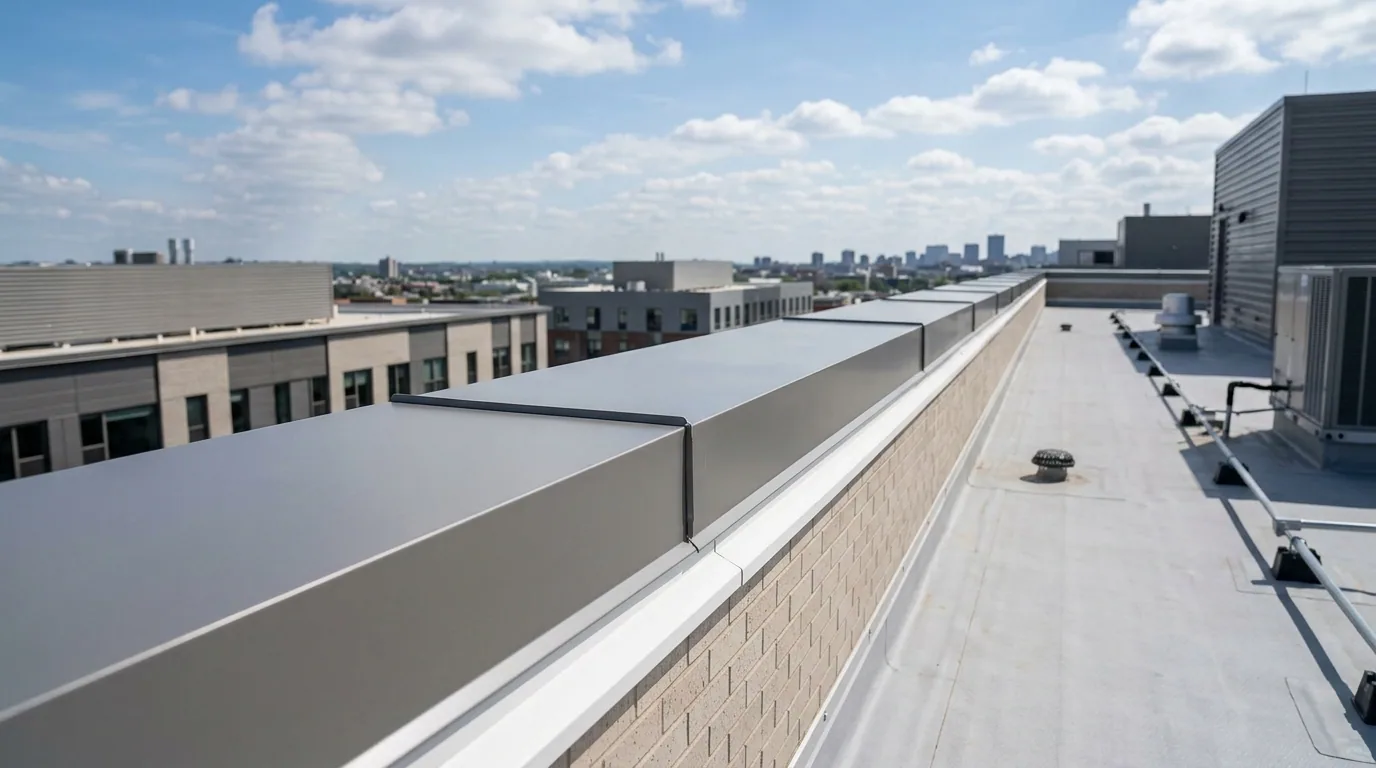
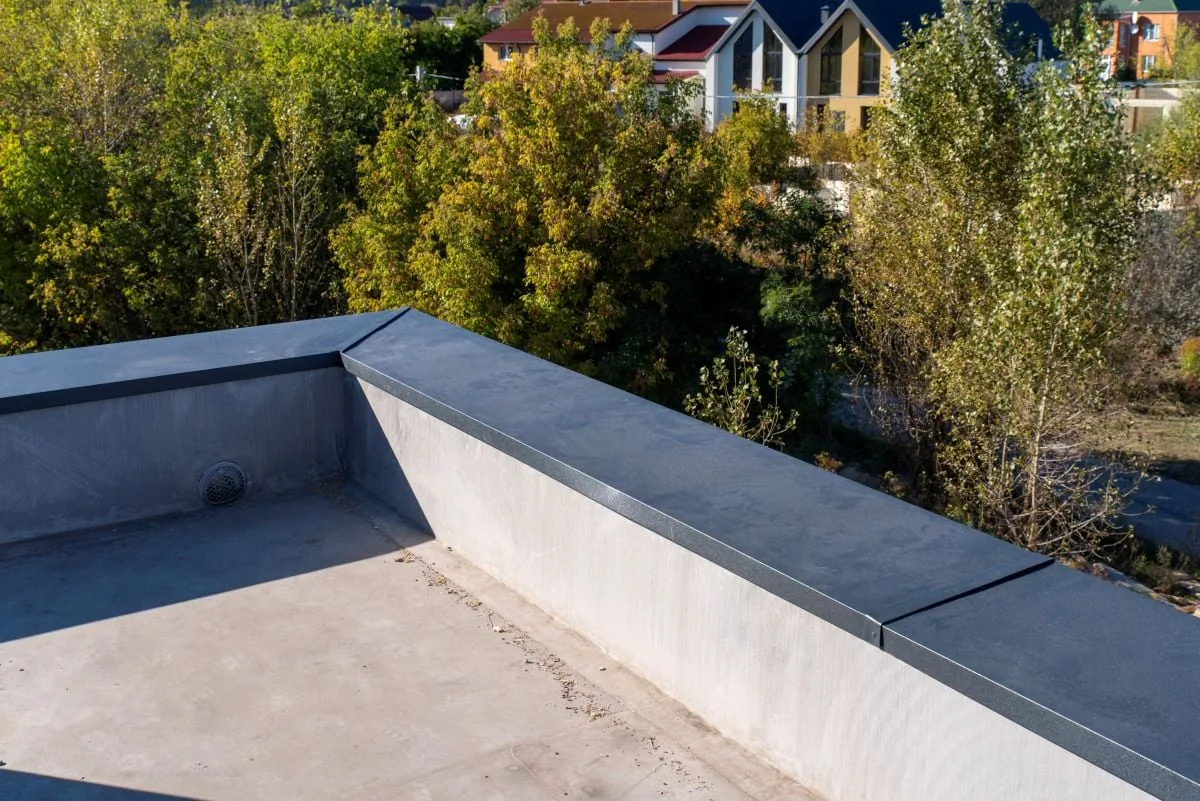
We check counterflashing, termination bars, sealant beads, coping joints and the base flashing at every parapet. Failed pieces get replaced, not smeared over with mastic. Where the flashing is original to a much older roof, we may recommend a new detail rather than another patch. Shrunken sealant and loose terminations are the common causes behind flashing failure repair.
Curbs, Pipes and Rooftop Units
Every penetration is a possible leak. Rooftop units get replaced and nobody reflashes the curb. A new conduit goes through the membrane and gets a dab of sealant. Over a few years those details open up.
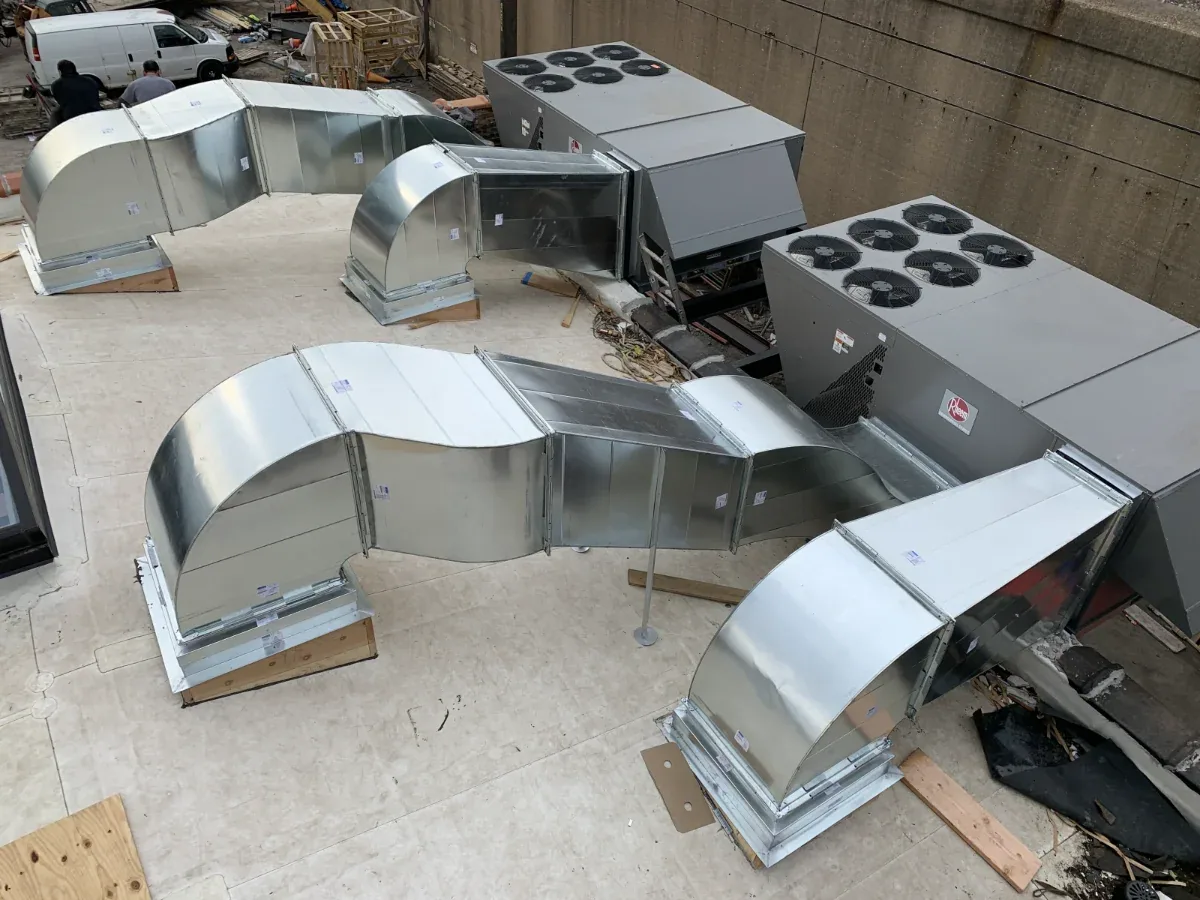
We re-flash curbs, replace pipe boots, and fit pitch pans with proper pockets where a boot will not work. When a unit needs to be lifted to reach the curb, we coordinate with your HVAC vendor so the roofer and the mechanical crew are not arriving on different days. Larger work, such as rebuilding a curb or resetting a support frame, falls under rooftop equipment curbs and supports.
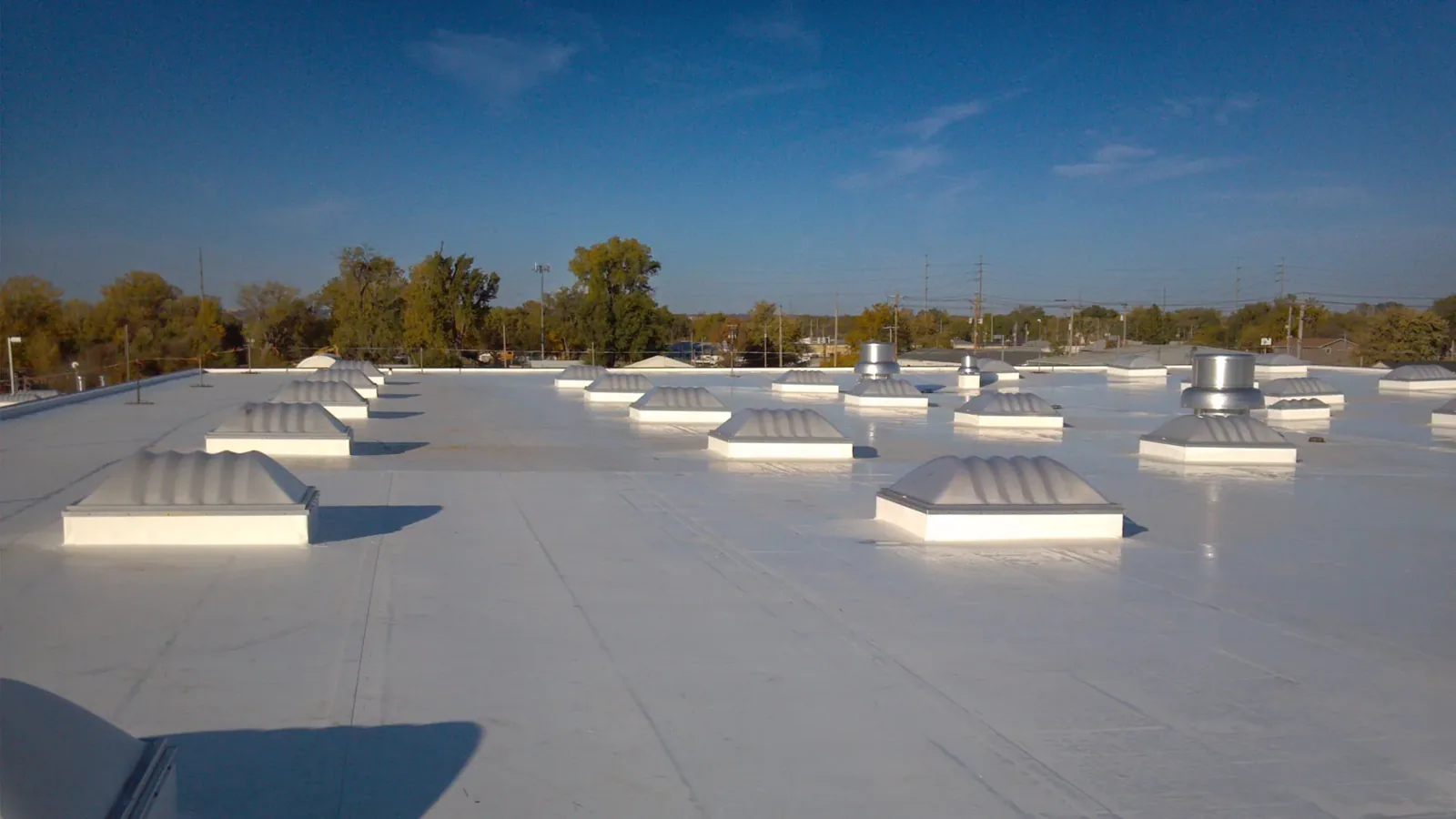
Roof hatches, vents and skylight curbs get the same treatment. A hatch with a worn gasket will let in water every spring, and the fix is an hour of work if somebody catches it in time.
The Repair Window
Repairs need a dry day and decent temperatures. Adhesives and sealants have limits, and cold weather from late fall to early spring narrows the window.
We schedule around the weather and around your building. Retail on the Kimberly Road corridor usually wants work finished before the doors open. A plant, in the Eastern Iowa Industrial Center or anywhere else, wants it clear of the busy shift. A clinic may want it on a weekend. We ask which hours work and plan the crew to match.
If a repair cannot wait for good weather, we do a temporary dry-in now and schedule the permanent fix for the first workable day.
Tell us about holiday shutdowns and inventory counts. A quiet week is the best time to get on the roof, and we would rather book it early.
Records and Next Steps
After the repair, you get photos of each fixed item, a short list of anything we saw but did not touch, and a plain statement of what the roof has left. Sometimes the right answer is that repairs are running out of road, and a full replacement should be planned. Other times the answer is a maintenance schedule through preventive roof maintenance, with drains and flashings checked every season.
Every item on the list carries a location tag that matches the roof plan, so the next person on your team can find it without asking us.
A repair ticket should close with a location, cause and next check, not just a line that says the leak is fixed. We photograph the opening before work, show how the patch ties into sound material, then return the area to service with nearby drains and penetrations checked. If water has travelled below the deck, the repair record should name that limit. It lets the next shift see what was corrected and what still needs watching.
Send Photos or Set a Walkthrough
Send us the work order and a photo or two. If you would rather see it in person, set a walkthrough and we will meet you at the roof hatch with a scope in hand by the end of the visit.
Questions About Planned Commercial Roof Repair
When is a repair enough, and when does the roof need replacing?
A repair is enough when the damage is local, the insulation is dry, and the membrane has useful life left. Replacement comes into play when wet insulation is widespread, when seams are failing across the roof, or when the cost of repairs over the next few years will pass the cost of a new roof. We walk the roof, survey for moisture if needed, and give you the numbers side by side.
Can you repair a roof with an unknown membrane type?
Yes. We identify it by looking at the surface, the seams, the attachment and a small sample if needed. Mixing incompatible materials is how repairs fail, so we confirm the membrane before we choose a patch. If the roof has been repaired many times by different crews, we map those repairs too.
How fast can you get a repair scheduled?
For a planned repair, we typically walk the roof and send a scope soon after you call, then schedule the work around weather and your operations. If water is coming in, tell us up front and the job becomes leak repair, which starts with finding the source.
Will repairs affect the manufacturer's warranty?
They can. Many manufacturers want repairs done with their materials and methods, and some want to be notified. We read the warranty terms with you before work starts and match the repair to them. If there is no warranty, we still use compatible materials from the same system family.
Do you repair roofs we did not install?
Yes. A roof installed by another contractor gets repaired the same way, and so does a roof nobody has any records for. We start with the walkthrough and photos, then write up what we find in plain terms, whoever installed the roof.
Talk to a Davenport Commercial Roofer
Send the work order, the building address or a few photos of what you are seeing. We will set a walkthrough, go up with whoever has the hatch key, and tell you plainly what the roof needs.