
Occupied Building Reroofing in Davenport, IA
Reroofing in Davenport, IA with tenants, patients, students and shifts still inside, phased by section, dried in every night and closed out each day.
The tenant notice goes out on a Thursday. By Friday morning the clinic at the end of the building has called twice, the accountant upstairs wants to know about noise, and the property manager is holding a work order that says the roof cannot wait until summer.
Reroofing over a working building is mostly a planning job. The roof comes off in pieces, and each piece has to be closed before the crew leaves. In Davenport, IA we plan the sequence with you before a single fastener is pulled, and we write it down so everyone from the front desk to the plant manager knows what is happening above them.
The Tenant Notice and the First Meeting
The notice comes first. A good one says what days the crew is on site, what part of the roof is open that week, what noise to expect and who to call. It goes out early enough that tenants can move their own schedules.
Then we sit down with the people who run the building. For a medical or office tenant, that may be the practice manager. For a plant, it is the plant manager and the production schedule. For a school or college, it is the facilities director and the calendar. The questions are always the same:
- Which rooms cannot take noise, dust or odor, and when?
- Where are the air intakes?
- Who owns the roof hatch key, and who signs the work order?
- Where can we stage material and park the lift without blocking a fire lane?
What comes out of that meeting is a one-page plan. We would rather argue about it before the job than during it.
What Falls and What Drops
Tear-off makes dust, grit and the occasional drop of debris. A metal deck can shake ceiling tile loose when fasteners are driven. If the roof is a built-up assembly, the old gravel and asphalt are loud and messy.
The answer is protection at both ends. On the roof, we run debris chutes, covers over drains and sweeping at the close of each shift. Inside, the tenant covers or clears sensitive areas, and we ask for exam rooms, server rooms and food areas to be shut or draped for the days directly below the work.
Odors are the other concern. Adhesives, primers and hot work give off fumes that can travel into an air handler. We cover or shut down intakes within reach of the work, and we run the schedule so the strongest-smelling steps fall on the quietest hours. If you can recover a roof instead of tearing it off, noise and dust drop sharply. A roof recover is not always possible, but it is the first option we check.
Phasing the Roof
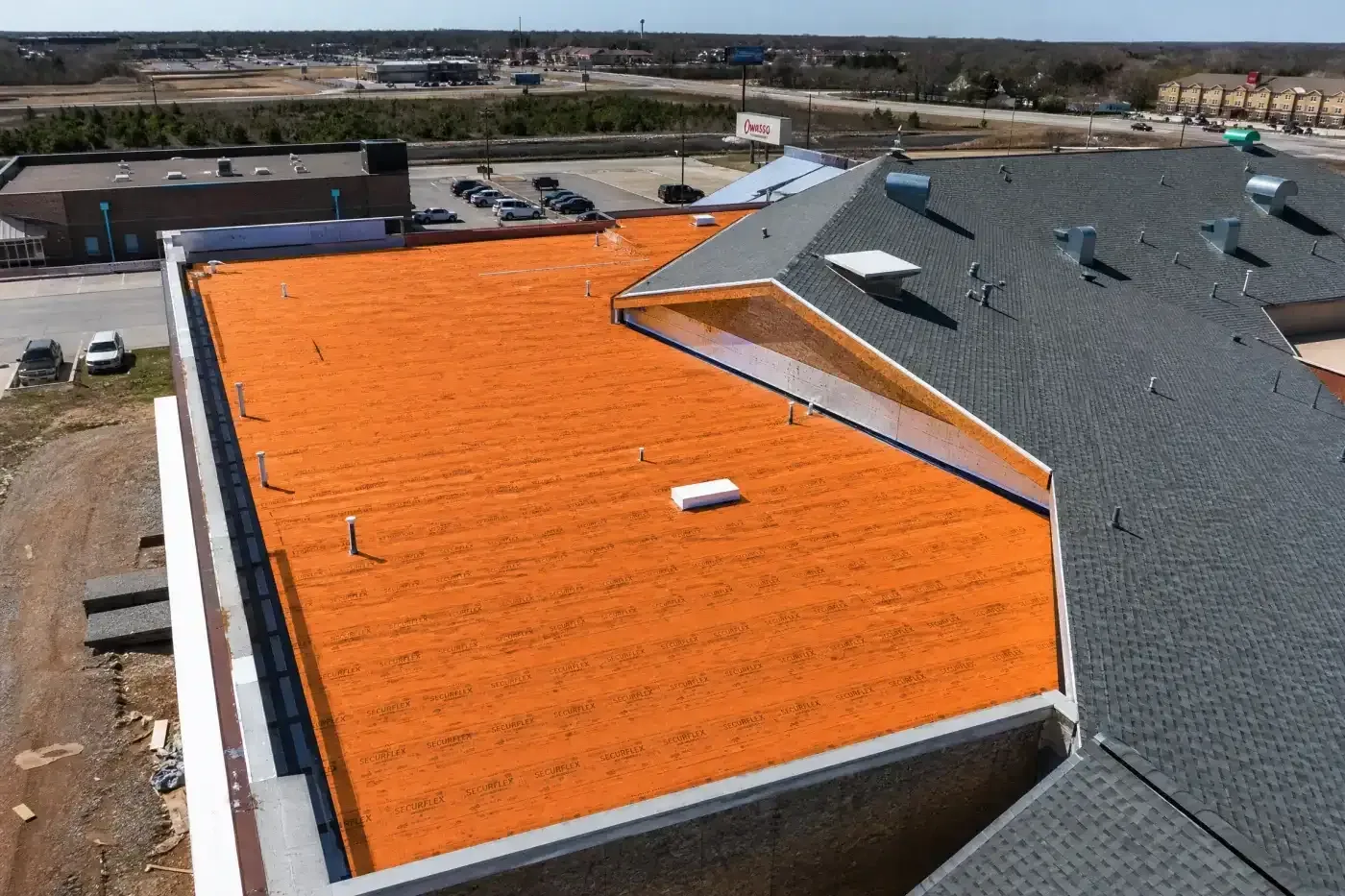
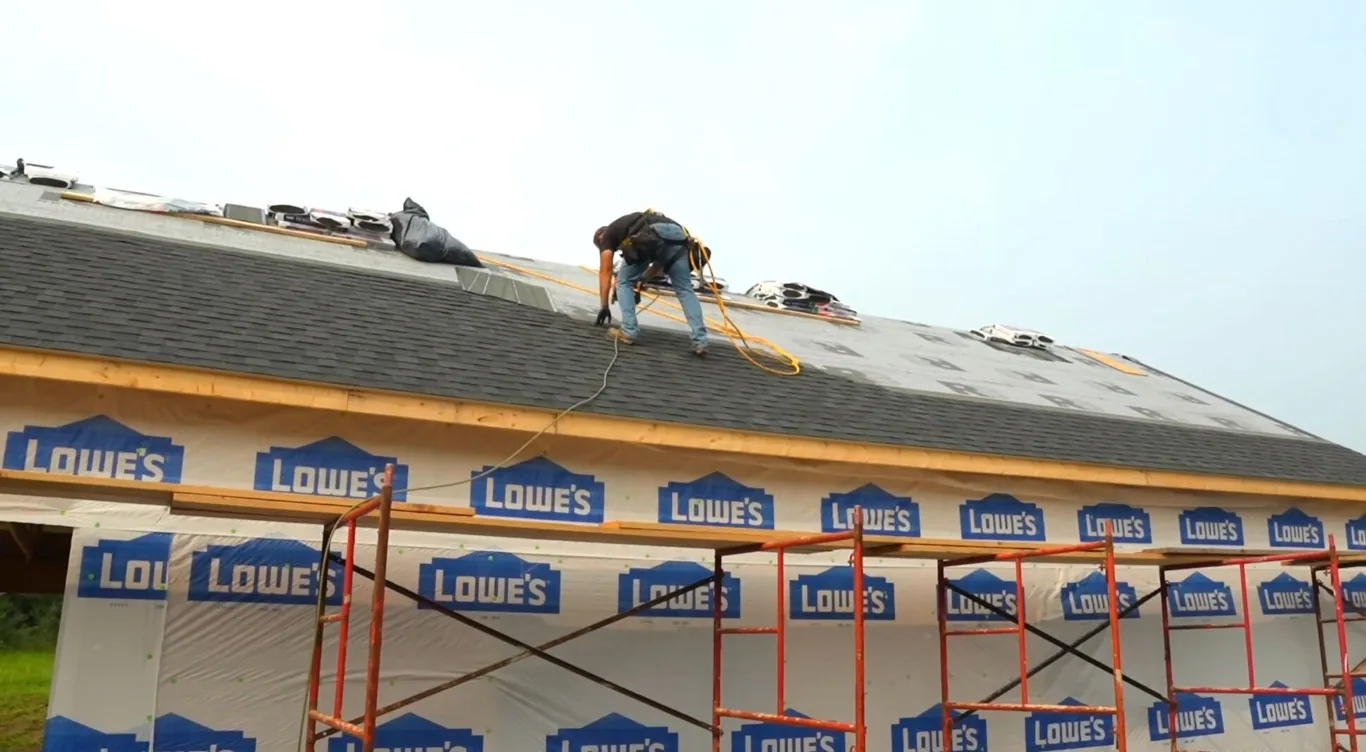
We never open more roof than we can close the same day. The roof is split into sections, sized to what the crew can tear off, replace and seal before dark. At the end of each day, the new membrane is tied into the old one at a temporary seam, so rain or snowmelt cannot find a way in overnight.
On a large low-slope roof, sections follow the building, not the other way around. An end that covers a loading dock or a clinic may go first or last. A section that sits over a product line is scheduled for a planned production stop. A hospital or senior living wing may need to follow the engineer's air-handling plan.
This is the core of any commercial roof replacement over a working building. The tear-off is the easy part. The discipline is in the daily dry-in, and we check it with a flashlight at the end of every shift.
Noise, Quiet Hours and Sensitive Floors
Some buildings cannot take daytime noise at all. Genesis Health System runs six healthcare locations with 760 licensed beds, so the clinic and hospital roofs in its network are a major building class around here. On a care campus, the roof team works around patient areas and the engineer's air-handling plan. Planning for a hospital roof starts with the quiet floors.
A campus has its own calendar. Palmer College of Chiropractic sits on Brady Street, and a college roof is easiest to do between terms, with notice for any classes that stay in session. Planning for a college or university roof follows that pattern.
Retail is the other case. NorthPark Mall on West Kimberly Road is a single-level enclosed mall with a large flat roof over stores that stay open to customers. Work over the shopping floor tends to be pushed to early mornings and to the months when foot traffic is lighter, and the plan keeps materials out of customer view.
Winter Holds and Storm Days
In Davenport the weather keeps its own schedule. The Quad Cities average more than three feet of snow a year, and a roof half open cannot take a surprise storm. We check the forecast every morning and shorten the open area when snow, ice or wind is in the next day or two. Cold slows adhesives and welds, so some steps wait for a warmer window.
Big storms test the plan. A derecho in July 2024 pushed winds toward 100 mph through the area. If a storm hits a roof that is partly done, we dry in what we have, then walk the temporary edges before we resume. When an open roof takes damage, emergency roof repair comes from the same crew that has the plan in hand.
Daily Closeout and Handoff
At the end of each shift, the crew sweeps, closes the temporary seam, checks the drains and photographs the open section. The tenant contact gets a short update. When the last section is done, we walk the whole roof with the property manager, and the photos go into the file.
For owners with several buildings, a property management portfolio can use the same one-page plan for every site.
Send the Work Order and the Tenant List
Send the work order, the building contact and any lease or quiet-hour terms. We will set a walkthrough and come back with a phased plan on one page.
Questions About Occupied Building Reroofing
How do we keep dust and grit out of exam rooms and offices under the tear-off?
Shut or drape the rooms directly below the work for those days, and we will tell you which days. Ceiling tile over sensitive areas can be sealed or removed ahead of time. On the roof we use covers, chutes and daily sweeping. If a room cannot be shut, we move the loudest steps away from it.
What happens if it snows on a section that is already torn off?
That is why sections stay small. Anything open gets dried in with a temporary seam before the crew leaves. If snow is forecast, we shorten the area we open or hold the tear-off until the weather clears. The temporary edge is checked before work resumes.
Some of our leases set quiet hours. How do we plan around them?
Send us the lease terms or the hours. We build the daily schedule around them and put the noisy steps outside those windows. Early mornings, evenings and weekends can all carry the work, but each one affects crew cost and tenant disruption differently, and we show you both before you choose.
Who communicates with tenants during the job?
You do, with our help. We write the notice and the daily update and give it to your property manager or building contact. Tenants should hear from someone they already know. Our site lead handles the roof and is available to talk through any urgent issue directly.
Can part of the roof be done now and the rest next year?
If the new section is tied off cleanly and the remaining roof is stable. We label the split on the roof plan and tie the new membrane into the old with a proper termination, not a patch. A phased budget is common when a building has several roof levels.
Talk to a Davenport Commercial Roofer
Send the work order, the building address or a few photos of what you are seeing. We will set a walkthrough, go up with whoever has the hatch key, and tell you plainly what the roof needs.