
Commercial Roofing at the River Drive Waterfront, Davenport, IA
Commercial roof repair, restoration and replacement along River Drive in Davenport, IA, with river humidity, flood exposure and winter ice in mind.
The call comes on a Monday after the river came up. A property manager has a stained ceiling tile, a lower level that was already under a flood watch, and no way to tell which problem belongs to the roof. The first job is to pull those two apart.
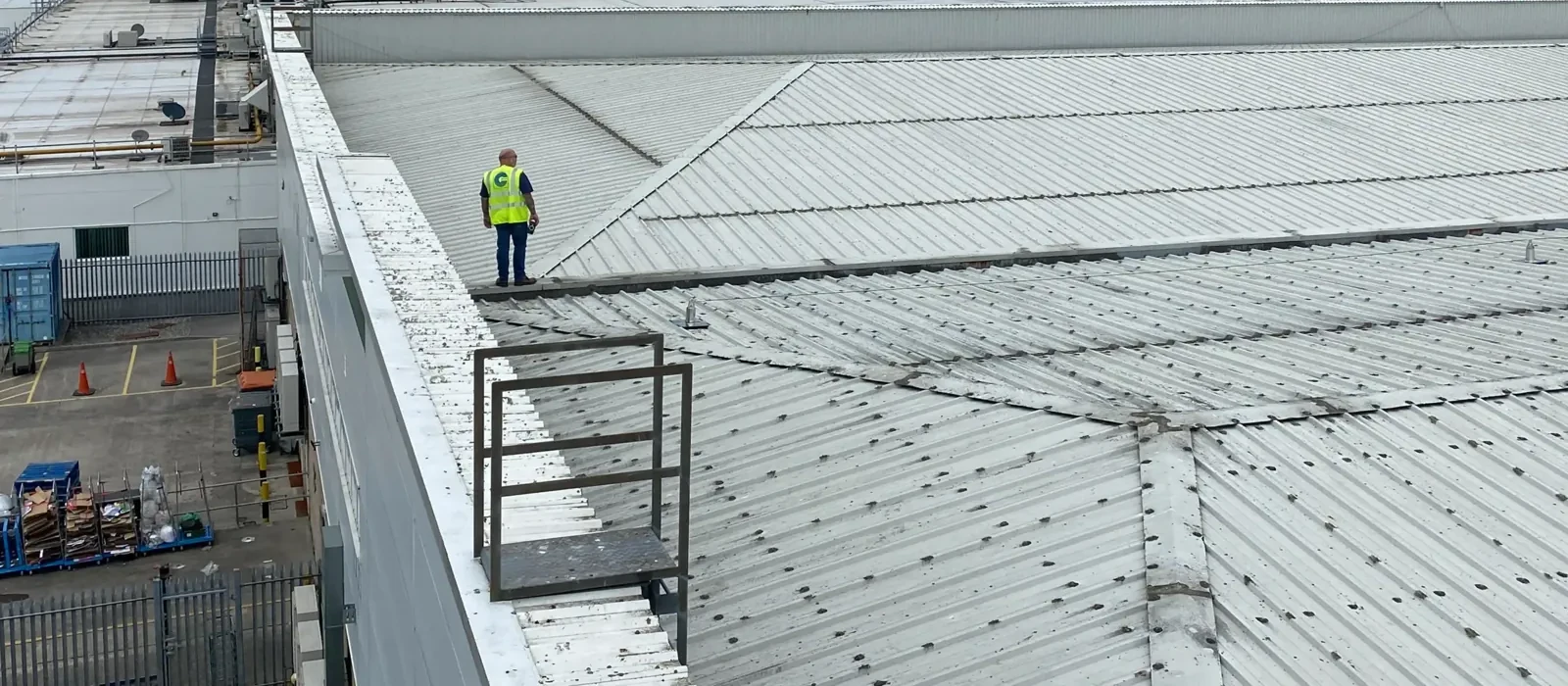
Along River Drive in Davenport, IA, a roof call can start that way. U.S. 61 Business follows the road beside the Mississippi through industrial areas and waterfront districts, so we do not assume one building type. We go up with whoever holds the roof hatch key and read what is actually overhead: membrane, metal or older built-up, how it drains, and where the water has been traveling. Then you get photos and a plain recommendation.
The River and the Roof
A roof near the Mississippi works under two kinds of water. One falls from the sky. The other comes up from the ground, and it is a separate problem with a separate paperwork trail.
Davenport learned the second kind in April 2019, when a temporary barrier at River Drive and Pershing Avenue failed and the water that followed stood about 6 feet deep across roughly 15 square blocks of downtown. The river crested at a record 22.7 feet. Davenport is the largest city on the Mississippi without a permanent flood wall or levee, so the riverfront relies on temporary barriers and the river forecast.
For a roof, that history changes the questions we ask. Is the mechanical equipment up on the roof or down below? Did drying out the lower floors push moist air up into the ceiling and deck? A flooded building still has to stay dry from above while the cleanup runs.
The First Walk Along the Waterfront
Same order every time, because the order catches things.
- Drains and scuppers first. Debris, leaf litter and ice at a drain explain more leaks than torn membrane does.
- Perimeter edge metal and coping, checked by hand for movement.
- Seams and flashings at walls, parapets and curbs.
- Penetrations: vents, conduit, exhaust stacks, skylight curbs.
- The deck underneath, from the inside, wherever a ceiling is stained.
On a building that shares a roof between tenants, we ask for a tenant notice before we cross a suite. On an industrial site we ask about the production schedule and badge in at the gate. Every commercial roof inspection ends with a written report: photos, a marked roof plan and a ranked list of fixes.
Humidity, Condensation and Wet Insulation
Riverfront buildings face flood exposure below grade, while condensation in the roof assembly follows a different path. Warm, damp air from inside a building rises, meets a cold deck in January and condenses. The drip looks like a leak. It is not, and a patch will not stop it.
We separate the two by checking the stain pattern against the weather. A leak follows rain and thaw. Condensation follows cold snaps and shows up along fasteners, metal decking ribs and around exhaust fans.
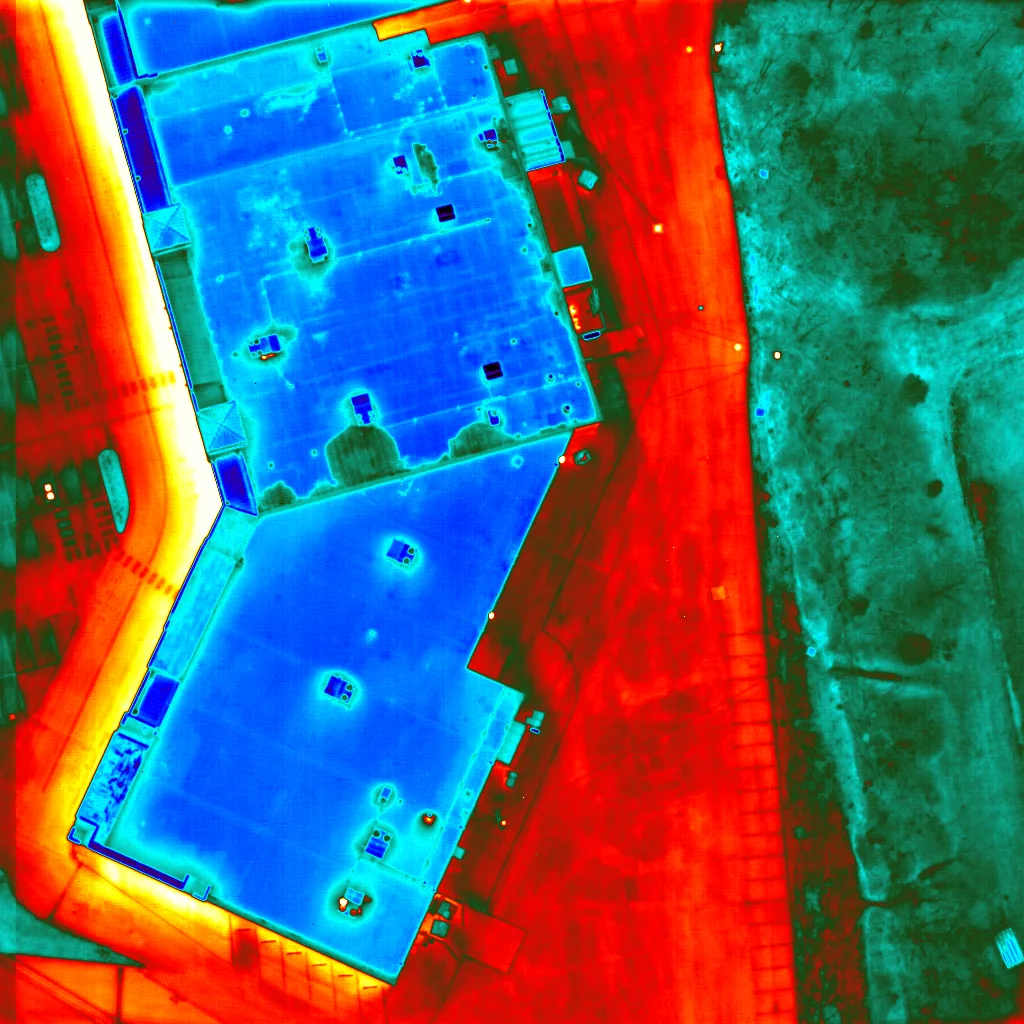
When the evidence is unclear, an infrared moisture survey run at dusk shows where the insulation is still holding heat from water. That tells you how much of the roof is wet before anybody writes a replacement scope.
Derecho Edges and Winter Ice
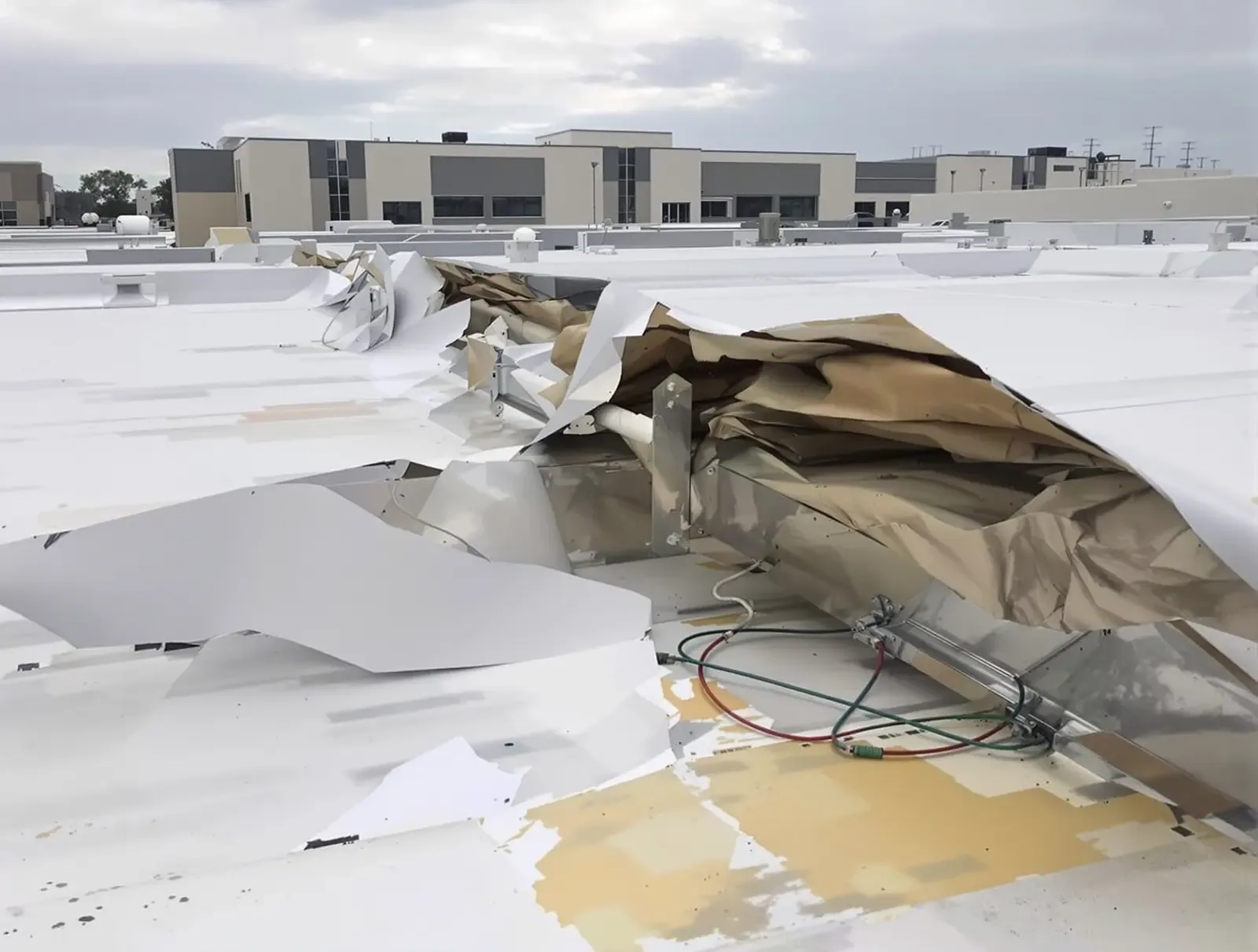
Wind finds the edges first. The August 2020 derecho blew 86 mph across Davenport Municipal Airport, and roofs from Davenport through Bettendorf and the rest of Scott County took heavy damage from winds that stayed damaging for 30 to 60 minutes. Coping, cleats and perimeter flashing are the first things we test by hand, and a wind damage repair starts there.
Winter is slower and just as hard on a low-slope roof. Davenport sees about 30.7 inches of snow a year on its own records, and the Quad Cities average over 36 under the 1991-2020 normals. Records here run from 111 F down to -29 F. That swing opens seams and cracks old sealant. Meltwater that cannot reach a drain freezes into a ridge, and the next thaw backs up behind it.
Repair, Restore, Recover or Replace
Repair fits a roof with sound insulation and a few failed details. Coating restoration fits a membrane that is weathered but dry underneath. A recover fits a dry roof with one layer and enough insulation value to keep. Replacement fits wet insulation, a failed deck or a membrane past patching.
Cost moves with a handful of things: how much of the insulation is wet, what the deck looks like once exposed, how the materials reach the roof, whether tenants stay in place, and what the season allows. The adopted code matters too. In Davenport the 2021 IBC and 2021 IEBC apply with local amendments, and a tear-off triggers insulation and drainage requirements that a patch does not.
Roof Damage and Flood Damage on the Same Claim
After a river event, adjusters sort losses into buckets. Water that came up through the ground is one bucket. Wind, hail and rain that entered through the roof are another.
We write up roof damage on its own: dated photos, a marked roof plan, moisture readings and a description of what the weather did. If your carrier is also reviewing a ground-floor loss, you can hand the adjuster a roof file that stands apart from it. Keeping the roof on its own pages is the first rule of insurance claim documentation.
The Handoff
When the work is done, you get after photos matched to the before set, a short note on what changed, and a list of items to watch. Near Downtown Davenport or the Brady Street corridor, we plan deliveries around tenant traffic. The work order records access, staging and the next inspection date.
Send the Work Order or Set a Walkthrough
Send the work order, a photo of the stain or the address of the building. We will set a walkthrough that fits your tenants and your production schedule, then come back with photos and a plain recommendation.
Questions About River Drive Waterfront
Our lower level took water and the ceiling upstairs is stained too. How do we know whether the roof is involved?
Check the timing first. A stain that appears during rain or a thaw, while the lower level stays dry, points to the roof. A stain that showed up as the building dried out points to moisture from below or to condensation. We confirm it with a walk, a moisture meter reading at the stain and a look at the deck from the inside. You end up with a note that says which claim each problem belongs to, so the adjuster is not guessing.
The building has an older built-up roof near the river. Can it be coated, or does everything have to come off?
Coating works when the membrane is weathered but the insulation underneath is dry. We confirm that with core samples or an infrared survey before anyone prices a coating. If the survey shows wet insulation in patches, we cut out and replace those areas first, then coat. If most of the field is wet, coating only hides the problem and the scope turns into a replacement.
A tenant keeps seeing drips in January but nothing in the spring rains. Is that a leak?
Often it is condensation. Warm interior air hits a cold deck, drops water and freezes, and the thaw makes it look like a roof leak. We look for the drip pattern along fastener lines, exhaust fans and ductwork, then check the air barrier and the ventilation in the space. Sealing the roof surface will not fix it, so we tell you early rather than charge for a patch that cannot work.
Part of the roof can only be reached through a tenant suite. How do you arrange access?
Send us the lease contact and the roof hatch key holder. We schedule the walk around the tenant, give them written notice of the day and time, and keep the route clear and covered. Where a hoist or crane lift is possible, we use it so the tenant sees less foot traffic inside.
We patched after the August 2020 derecho and never went back. What could still be wrong?
Edge metal that moved but did not fail, fasteners that backed out under repeated wind loading, and seams that lifted slightly are the usual suspects. None of these show from the ground, so we start at the perimeter and then walk the field. A written report with photos gives you a starting list and a sense of whether the roof needs a few more repairs or a bigger plan.
Talk to a Davenport Commercial Roofer
Send the work order, the building address or a few photos of what you are seeing. We will set a walkthrough, go up with whoever has the hatch key, and tell you plainly what the roof needs.