
Roof Drains, Scuppers and Ponding Correction in Davenport, IA
Roof drains, scuppers, crickets and ponding correction for commercial roofs in Davenport, IA, built for river-valley rain, snowmelt and refreeze.
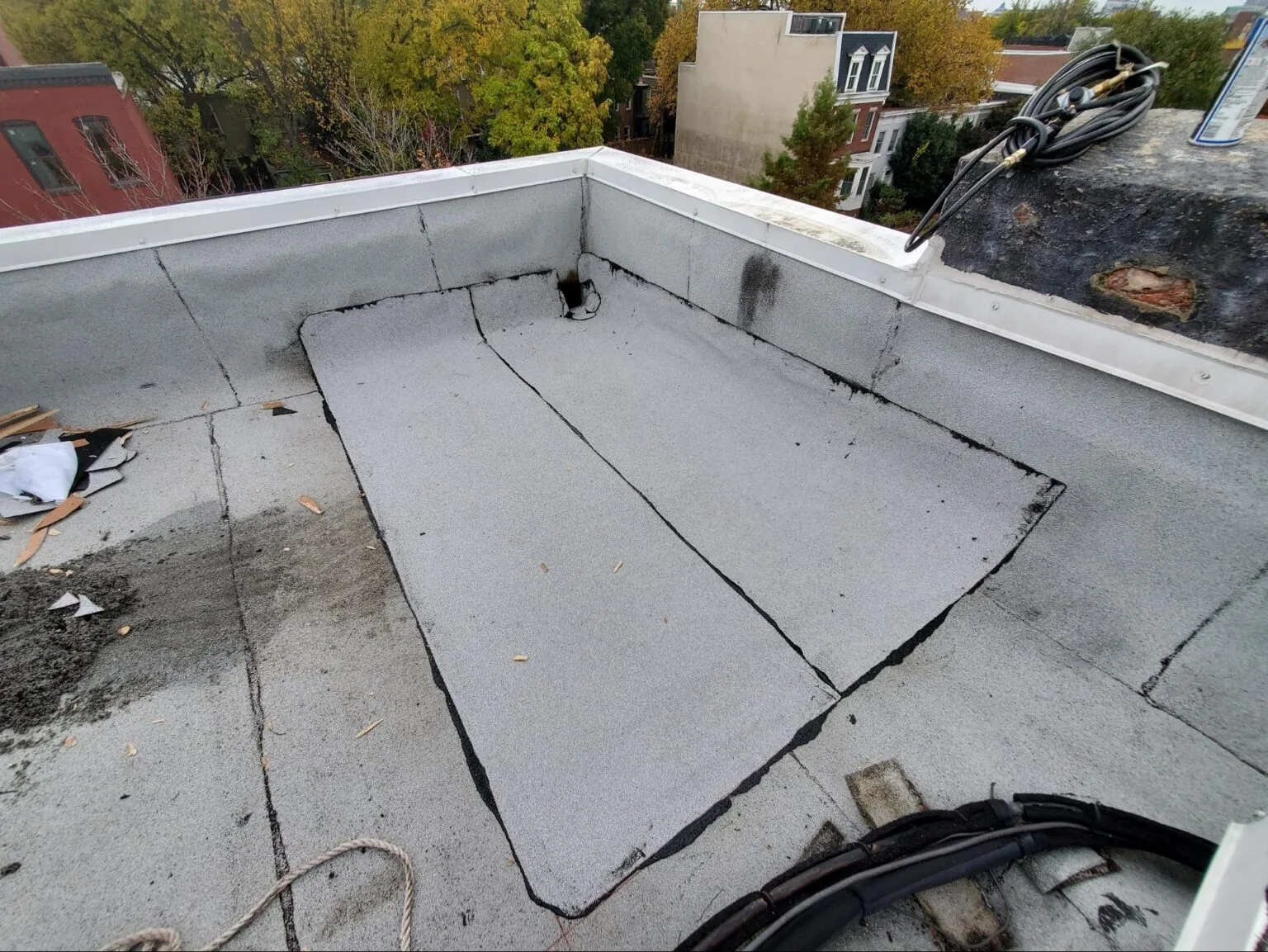
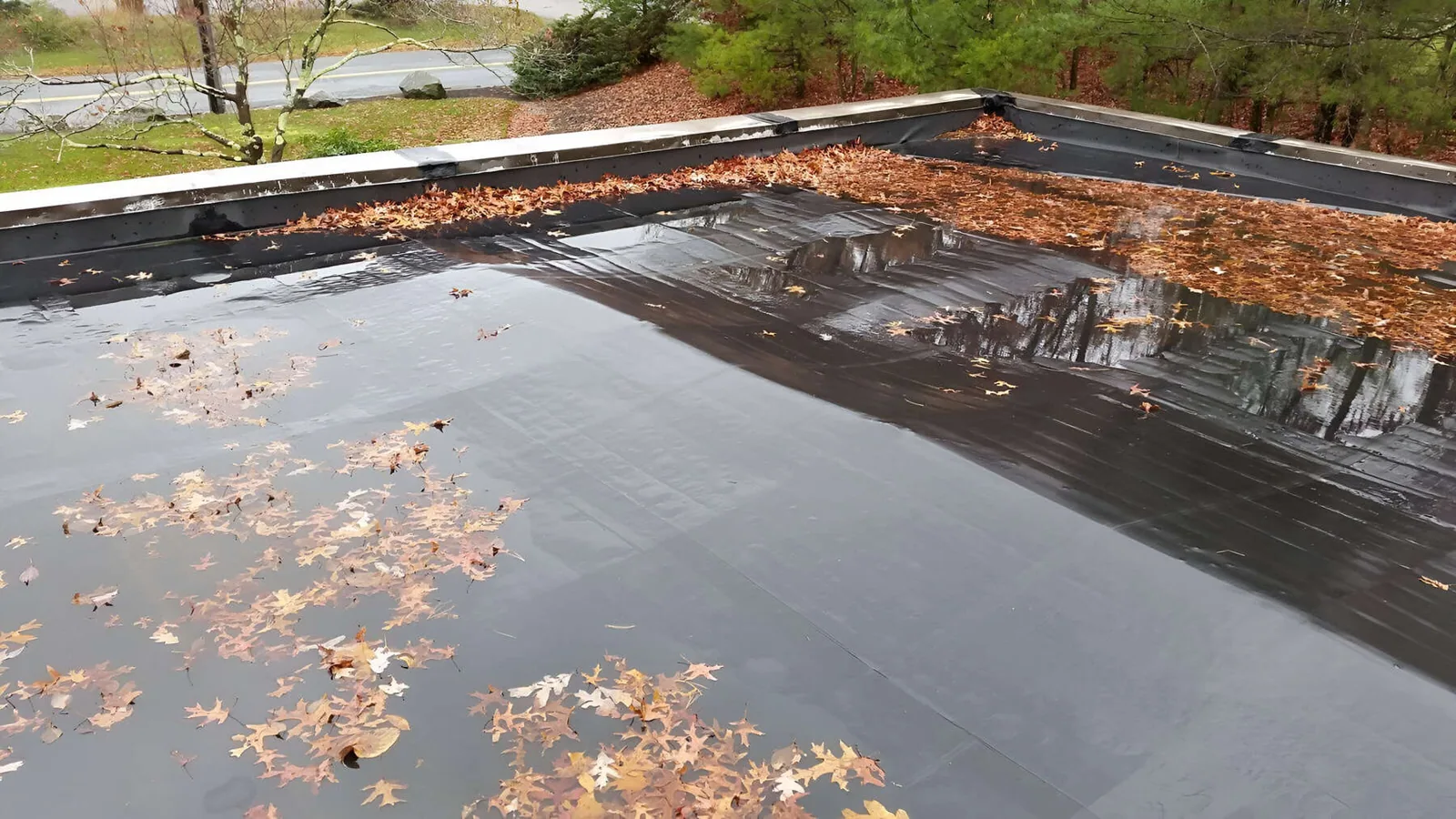
There is a puddle by the northeast drain. It shows up after every rain and it is still there on Monday. Somebody on the maintenance crew has stopped mentioning it.
That puddle is the roof telling you something. Water that sits for days weakens seams, grows algae, and adds weight over the same bay every time. In Davenport, IA the problem is rarely only rain. Snowmelt, refreeze and leaf-fall all hit the same few low points, and the low points fail first. Getting water off the roof, and keeping it off, is the job.
Reading the Drain Bowl
We start at the drain because the drain tells the story. Is the bowl clean? Is the clamping ring tight? Is the membrane flashed to the bowl with a proper seal, or has it pulled away? Is the strainer dome whole, and is the sump low enough that water actually finds it?
A drain set high, an inch above the surrounding membrane, will never empty its area. A drain with a cracked bowl leaks into the building below, and the stain shows up in the ceiling tile two bays over. Both of these look minor from the hatch and both are cheaper to fix when the roof is dry. We replace drain bodies, rebuild the flashing, and set the sump so the membrane slopes toward it.
Scuppers and Overflow Openings
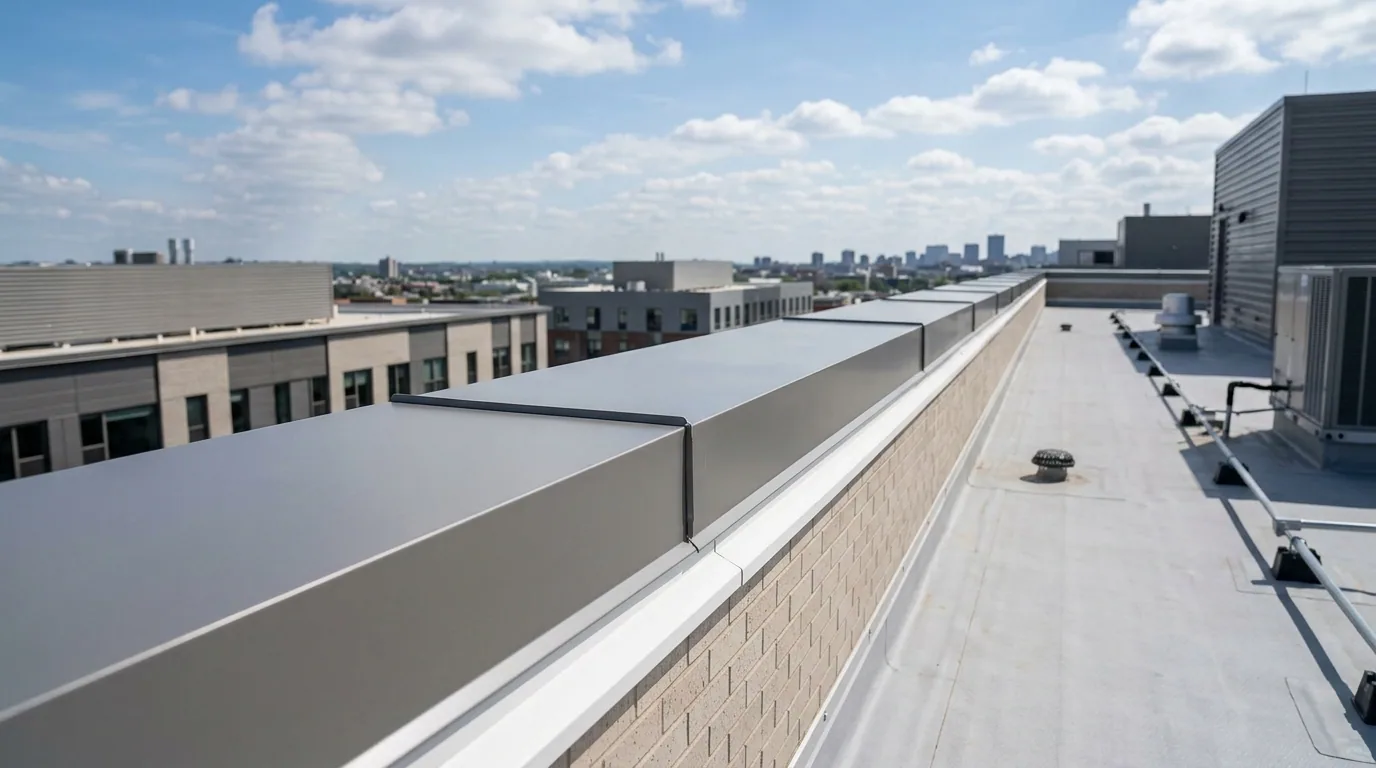
On roofs with parapets, scuppers carry water through the wall. They also carry the risk. A scupper that is too small, too high, or choked with debris sends water back across the roof, and a blocked primary drain with no working overflow can load a roof with several inches of water in a hard rain.
We check the scupper opening, the liner, the sealant at the wall and the leader or downspout that follows. We also confirm that an overflow path exists, set low enough to relieve the roof before the load becomes dangerous. The edge metal and gutter details around those openings are part of the same inspection, because a loose liner is a leak waiting for the next thaw.
Crickets, Saddles and Tapered Fixes
Not every wet spot is a drain problem. Sometimes the roof was built with a flat span between drains, or a rooftop unit blocks a path, or the deck has settled. Water sits because it has nowhere to go.
A cricket is a small tapered ridge that sheds water around an obstacle, such as the back of a curb or a long run of equipment. A saddle does the same at a valley. For larger ponding areas, tapered insulation builds the missing slope into the roof. We measure the low points with a level or laser, map the water depths, and size the correction to the problem. Some fixes take a day. Some are part of a bigger plan, and then we say so.
Snowmelt, Refreeze and Heat Tape
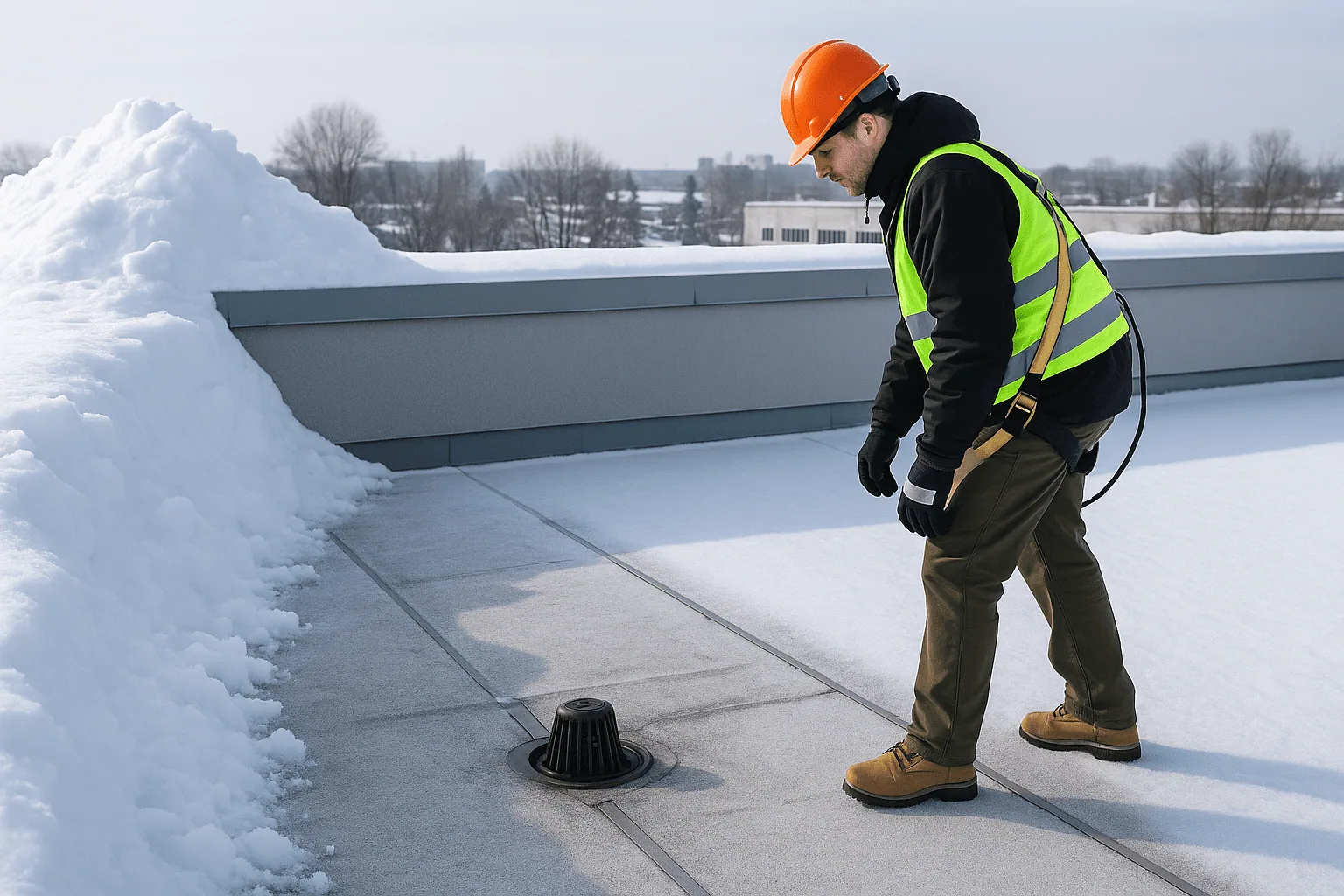
Three feet of snow is an ordinary Quad Cities winter, and the melt does not move at the same pace as the day. Water runs toward a drain in the afternoon, then freezes in the bowl overnight. The next day's melt has nowhere to go and spreads across the membrane.
That is why ice at a drain explains so many January leaks. Where a roof has a long record of freeze-ups, we look at heat cable or heated drain bodies for the worst spots, and we keep the strainers clear before the first cold snap. A plan for snow and ice roof damage is mostly a drain plan, and walking the roof in November does more than walking it in February.
When Ponding Is a Real Problem
Some ponding is normal. A shallow film that dries within a day or two after rain usually does no harm. Water that stays deeper, or remains for several days, is another matter.
Standing water adds weight, speeds up membrane aging, and invites algae and debris that make the surface worse. It also leans on seams and can pull a loose flashing detail open. Ponding water repair always begins with the question of where the water is meant to go. If a drain is blocked, we clear it. If the slope is missing, we add it. If the structure has deflected enough to trap water in the middle of a bay, the building engineer gets a call before we set a single panel.
Big Buildings, Big Drainage Areas
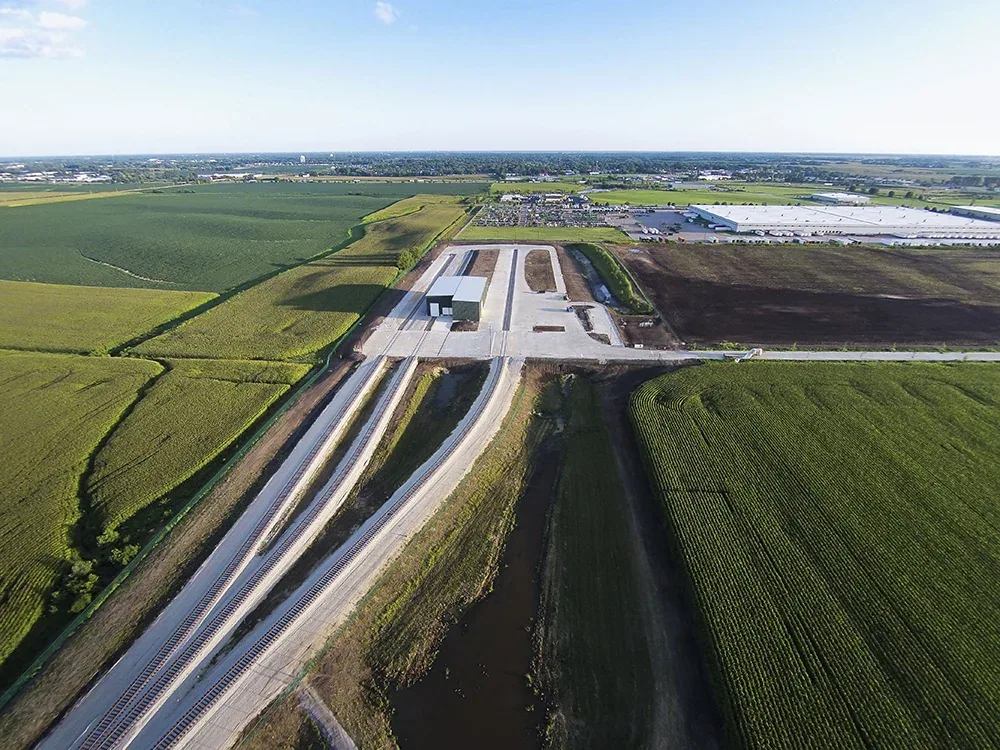
Drainage scales with the roof. A single interior drain can serve a very large area of membrane, and on a big low-slope building every drain depends on its neighbors. In the Eastern Iowa Industrial Center, where the roofs on manufacturing and warehouse buildings are mostly low-slope, we map each drain to the area it serves and note any that carry far more than their share.
Where retail, apartments and offices line Kimberly Road, rooftop units and their curbs can block the water paths between drains. We record every one of those obstacles on the roof plan you keep.
Drainage review starts with the route water takes after it leaves the roof field. We check strainers, bowls, leaders, overflow scuppers and the visible path below for signs of blockage or backup. A drain can be clear while the surrounding sump holds water because of insulation compression or a low deck. That distinction changes the repair: cleaning restores flow, while correcting a low area may require tapered insulation or structural review. Record the condition before and after service.
Send the Work Order With the Puddle Photo
A photo of the standing water and a note about where it is on the roof is enough to start. We will set a walkthrough, find the cause, and give you a plain recommendation on the fix.
Questions About Roof Drains, Scuppers and Ponding Correction
We have a drain that backs up every spring. Is it a roof problem or a plumbing problem?
Often it is both. The roof side is the bowl, strainer and surface around it, which we clear and check. The plumbing side is the pipe below, which a plumber can camera and jet. We will tell you when the blockage sits in the pipe so you can call the right trade instead of paying twice.
Can we add a drain to a roof that already has ponding?
Frequently, yes, though it takes a plumber and sometimes an engineer. The new drain needs a pipe path, a connection to storm drainage and enough fall for the water to reach it. We scope the roof side and coordinate with your plumber on the rest. Sometimes tapered insulation costs less than the new pipe run.
How big does a scupper need to be?
Size comes from the roof area it drains and the rainfall rate in the plumbing code, and from where the overflow has to relieve. We do not guess from a photo. Send us the roof plan or let us measure on site, and the calculation goes into the proposal so your building department can review it.
Do heat cables really help with ice at a drain?
They help where the roof has a pattern of freezing at the same low points. They are not a cure for a poorly sloped roof, and they use power while they run. We suggest them for the worst two or three drains, not the whole roof, and pair them with clean strainers.
How often should drains be cleaned?
Twice a year is the floor for most buildings, and more often under trees or beside a loading area. Fall cleaning matters most since leaves and grit gather there, and a spring visit catches what the winter dropped. Roofs under mature trees collect leaf litter faster than open sites.
Talk to a Davenport Commercial Roofer
Send the work order, the building address or a few photos of what you are seeing. We will set a walkthrough, go up with whoever has the hatch key, and tell you plainly what the roof needs.