
Army Installation Roofing in Davenport, IA
Roof repair, replacement and maintenance for Army installation buildings near Davenport, IA, planned around base access, badges and mission schedules.
A work order comes down from a building manager on Rock Island Arsenal. Water stained the ceiling tile in the east bay after the last thaw, and the manager wants a roof person on the schedule before the next front. Nothing unusual, except that every step between that order and the first ladder has a rule attached.
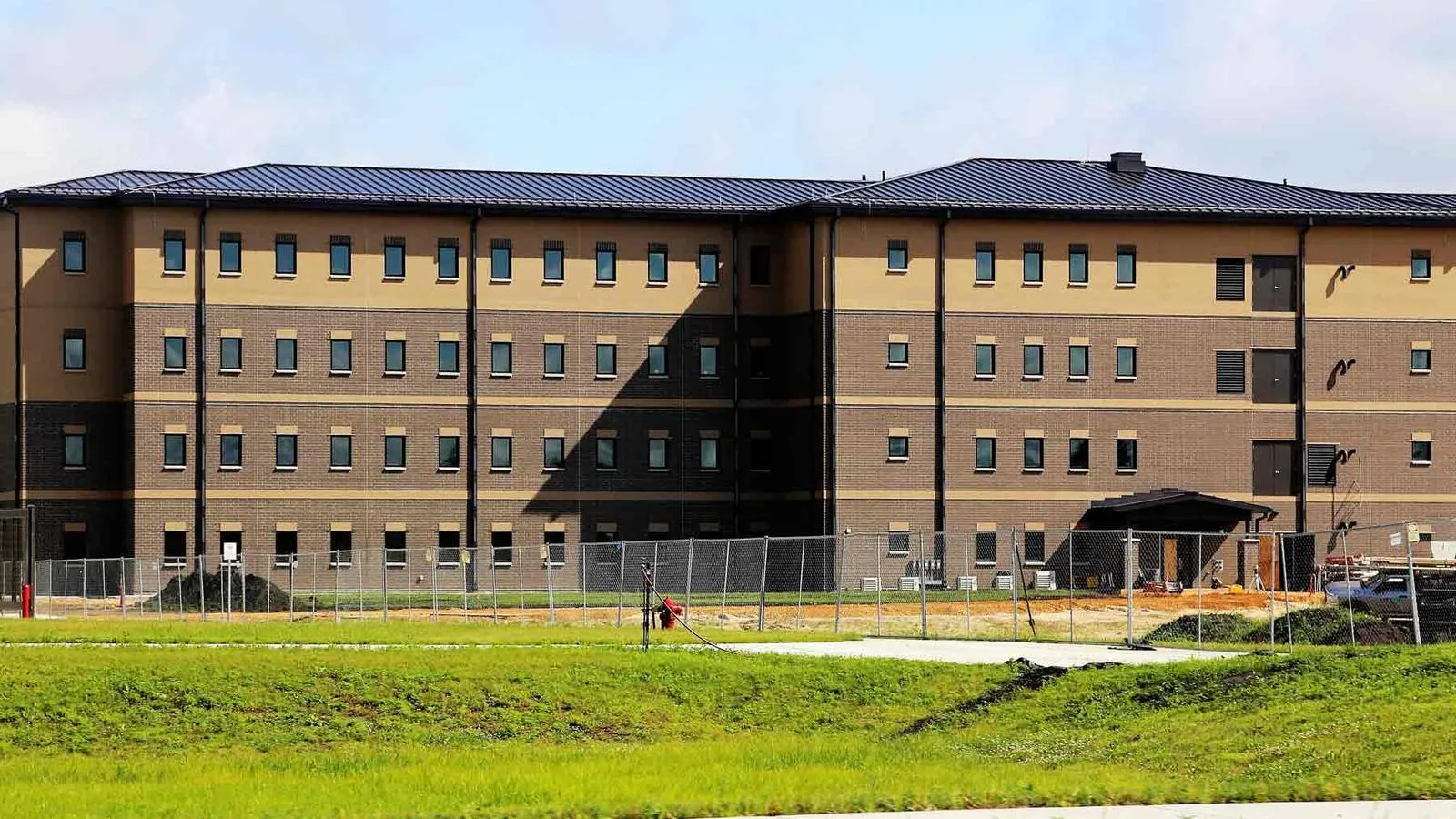
Army installation roofing in Davenport, IA is a facilities job with a gate in front of it. The first step is the usual one, a walkthrough with the building's key holder leading the way up. The difference is the paperwork up front. Names go in for badges, vehicles get listed, and the work window is set around the mission calendar before anybody carries material up. After that, the roof is a roof. Find the water, trace it, write it up plain, and hand the manager a ranked call: patch it now, keep an eye on it, or budget for the larger job.
Limestone Shops and Production Halls
The Arsenal covers about 946 acres of island between Davenport and Rock Island, Illinois, and its buildings do not match each other. The original nineteenth-century limestone shops were named a National Historic Landmark in 1989. Roofing there means working beside historic masonry, where the roofline is part of what is being protected.
On historic masonry the edge is where a building gives up water. Copings, gutters and wall flashings take the weather, and the stone behind them takes whatever the flashing lets through. We look hard at the joints between metal and masonry and at any spot where a gutter has dumped on one course of stone for years. Fastening into stone is a decision for the preservation reviewer, not the roofer.
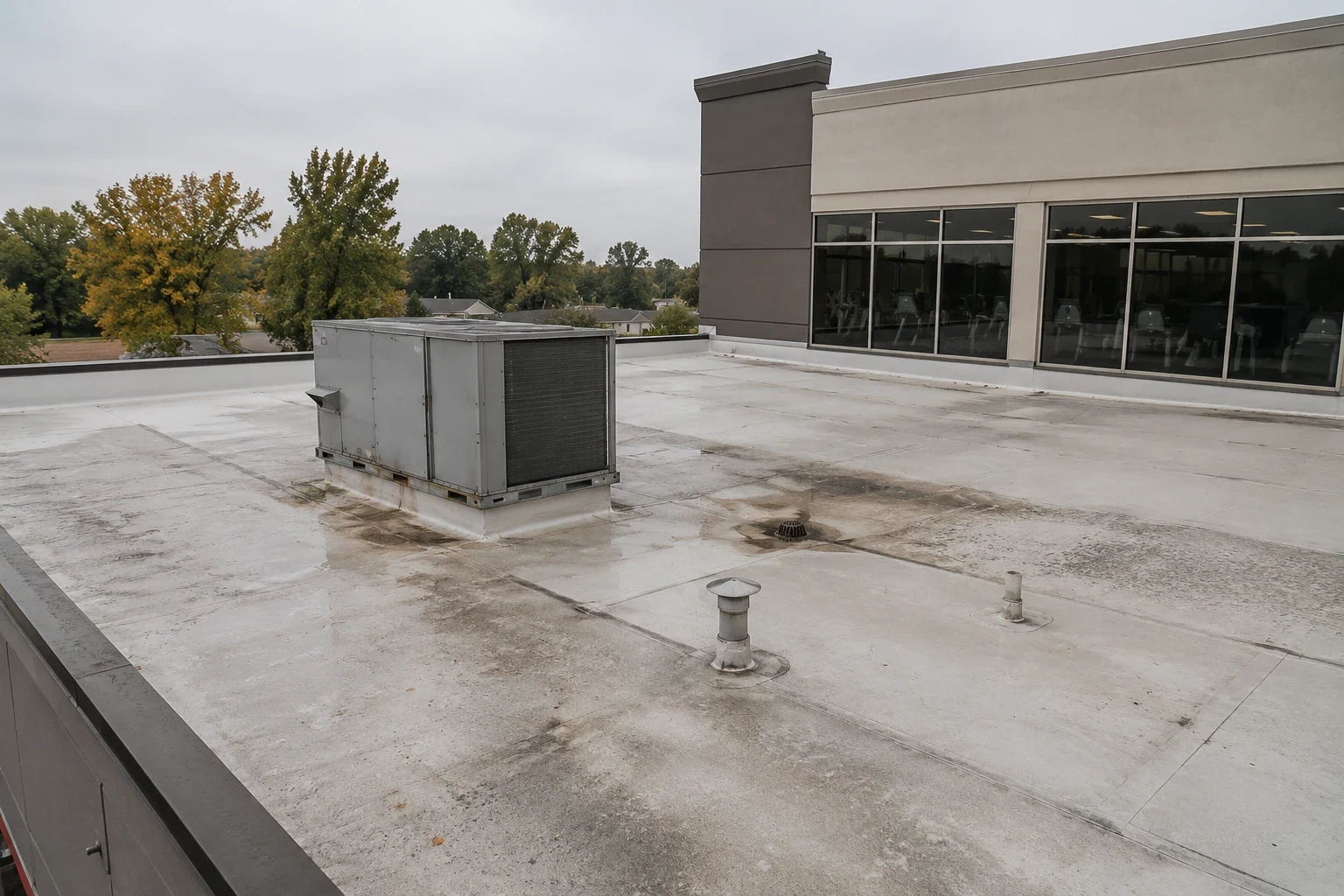
The Joint Manufacturing and Technology Center is a different kind of building. It runs a foundry and large manufacturing halls, and a roof over a foundry works under heat and process exhaust that an office roof never sees. Work on its rooftop equipment curbs and supports starts with a plain list of what sits on the deck and what it puts out.
Wind Off the River
An island roof has open water on every side. When the August 10, 2020 derecho crossed the area, damaging winds blew for half an hour to an hour across Scott County, and Davenport Municipal Airport logged an 86 mph gust. On July 15, 2024 a second derecho pushed winds up to 100 mph across the region.
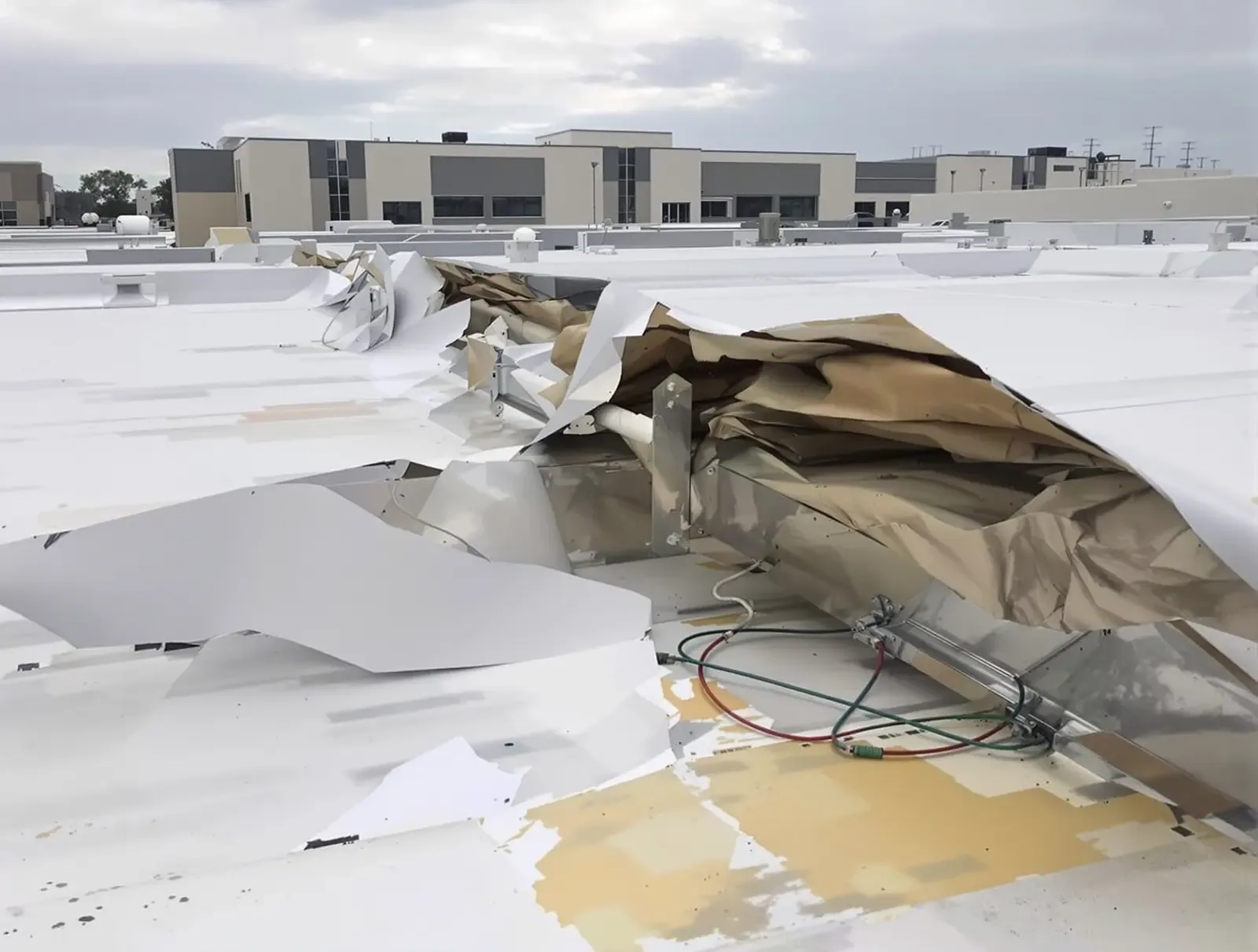
Roofs patched fast after those storms often carry hidden damage: a lifted edge strip, a creased sheet at a corner, a fan housing that shifted half an inch. Winter finds each one. Snow totals more than 36 inches in a typical Quad Cities winter, Davenport records run from 111 F down to -29 F, and a seam that opened in July gets worked wider by every freeze. Repair on a wind-damaged roof begins at the perimeter and moves inward.
Badges, Escorts and Photos
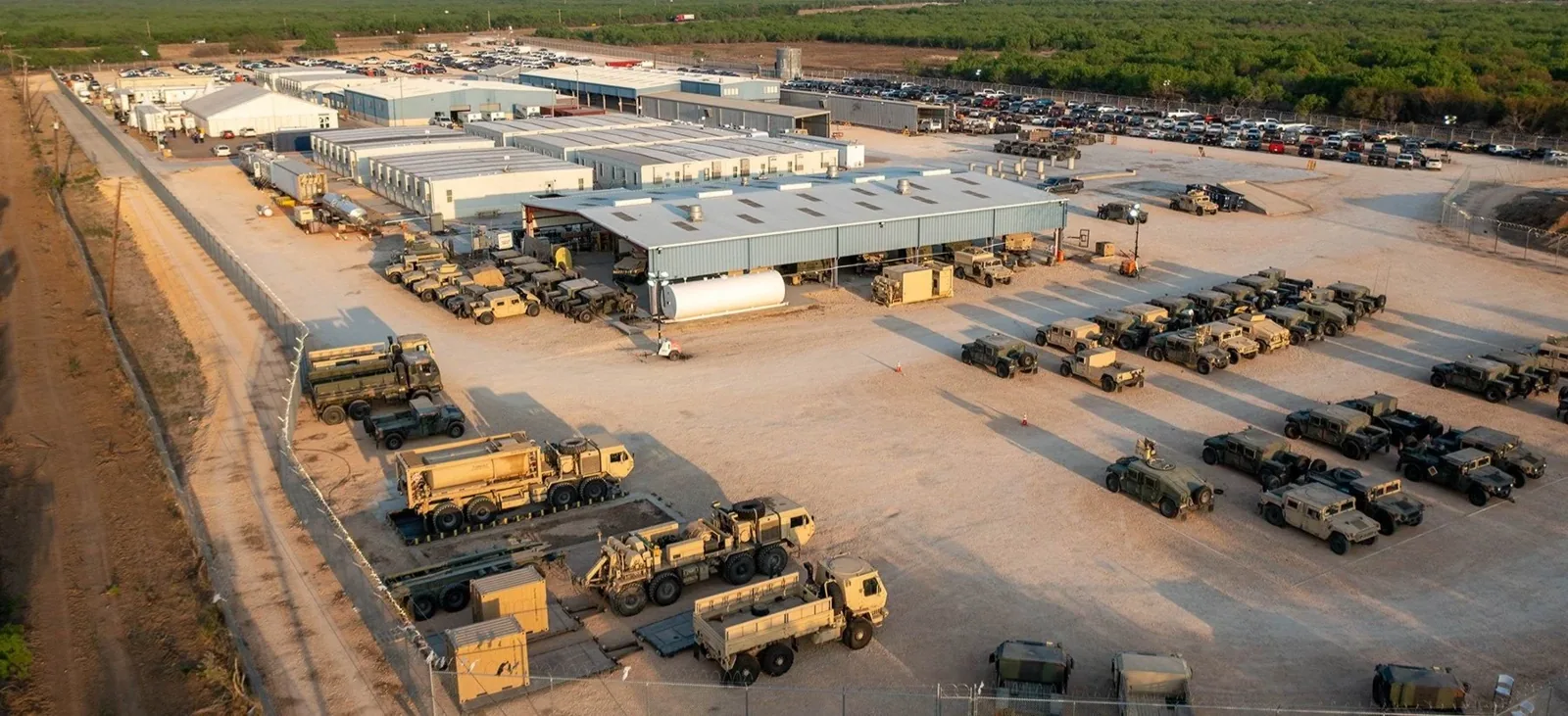
Installation access runs on its own schedule. Expect a background check, a badge for each person who goes up, a vehicle inspection at the gate, and an escort until the badges clear. Ladders, lifts and tools get counted in and out.
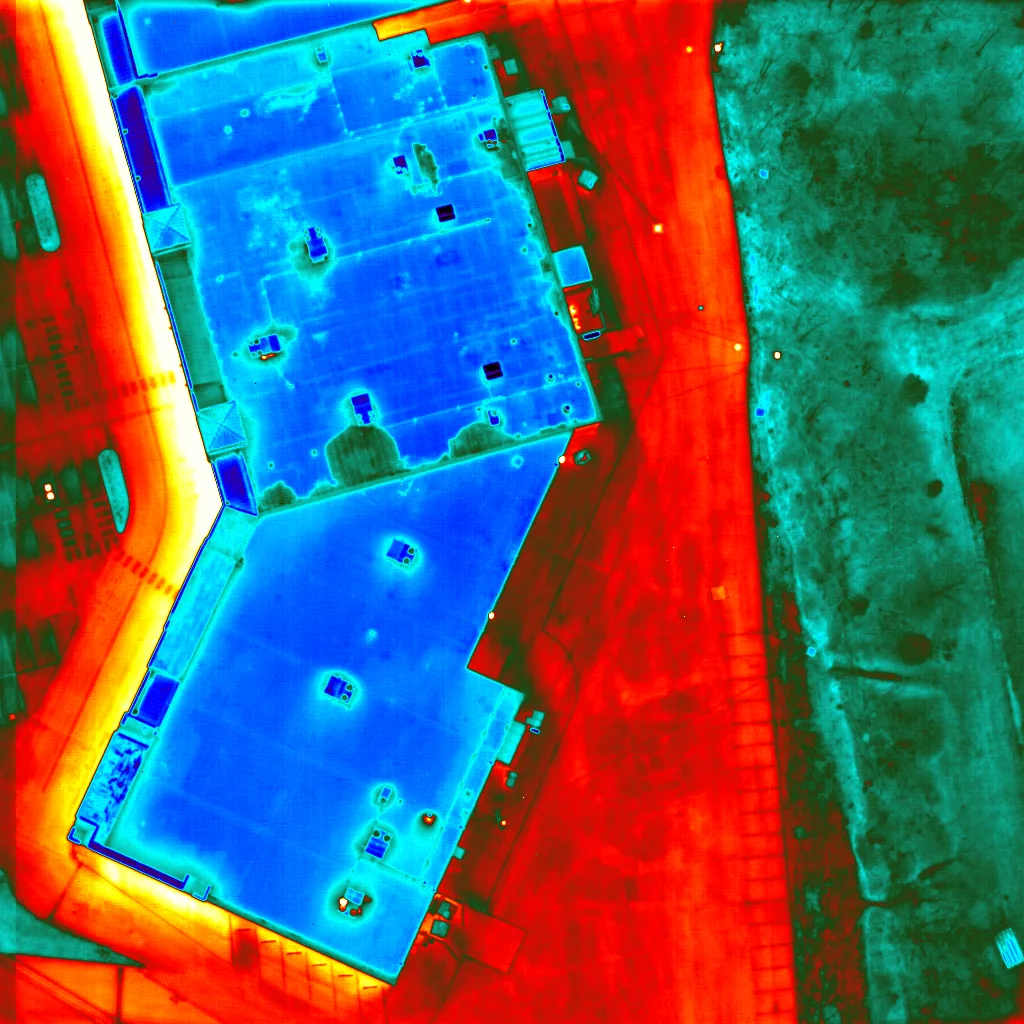
Photos are how we report, so we ask early what may be photographed. A drone is a separate question from a phone camera. Where flight is not allowed, we go hands-on with a moisture meter and a handheld infrared scan and report from the deck. The rules differ building to building in military installation roofing, so the host sets them and we work inside them.
Tenant Calendars
More than 80 tenant organizations share the island, among them Army Sustainment Command, First Army, Army Contracting Command and the Army Corps of Engineers Rock Island District. The work order routes through the building owner, so we ask who signs, who holds the hatch key and who has to be warned before the roof gets loud.
We set tear-off and hot work for the quiet hours, send a tenant notice a few days ahead, and keep one door and one route open for the people inside. A clinic such as the Woodson Health Clinic in Building 110 calls for more than that: dust control and short noise windows. Where people sleep under the work, as in barracks and unaccompanied housing, the quiet window shrinks again.
Building to the UFC
Federal roof work follows the Unified Facilities Criteria for roofing, and the spec usually names the system, the insulation, the cover board and the wind uplift rating the assembly has to meet. Our job is to build to it, price what it calls for, and say early when a drawing detail will not hold up through a Davenport winter.
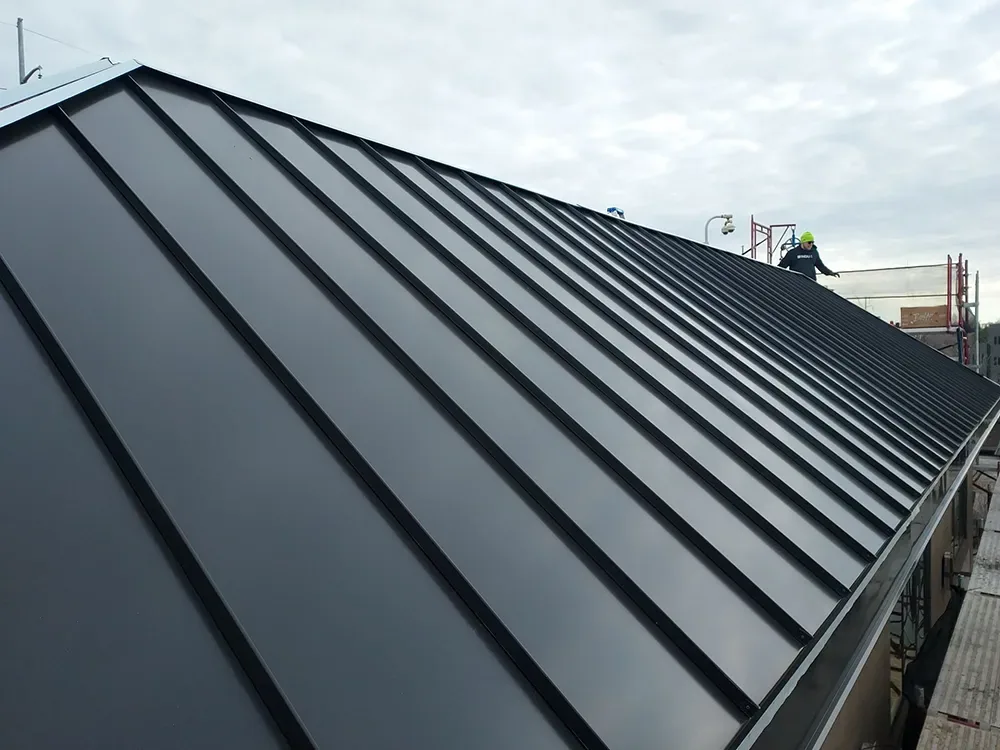
The submittal list is where schedules slip. Product data, shop drawings for edge metal, the tested assembly and the installer information all want to be in before the first pallet is lifted. We keep that list short and moving. Systems the spec might call for include standing seam metal, and we treat the choice as an assembly decision: deck, insulation, board, membrane, edge. Where an old roof is wet under a good-looking surface, an infrared moisture survey sets the limits of the tear-off before anyone prices it.
The Handoff
When the roof is done, the manager gets a package: photos by area, the as-built roof plan, drain and curb locations, and any manufacturer paperwork the spec requires. The next person to inherit that building should be able to find a drain without a flashlight.
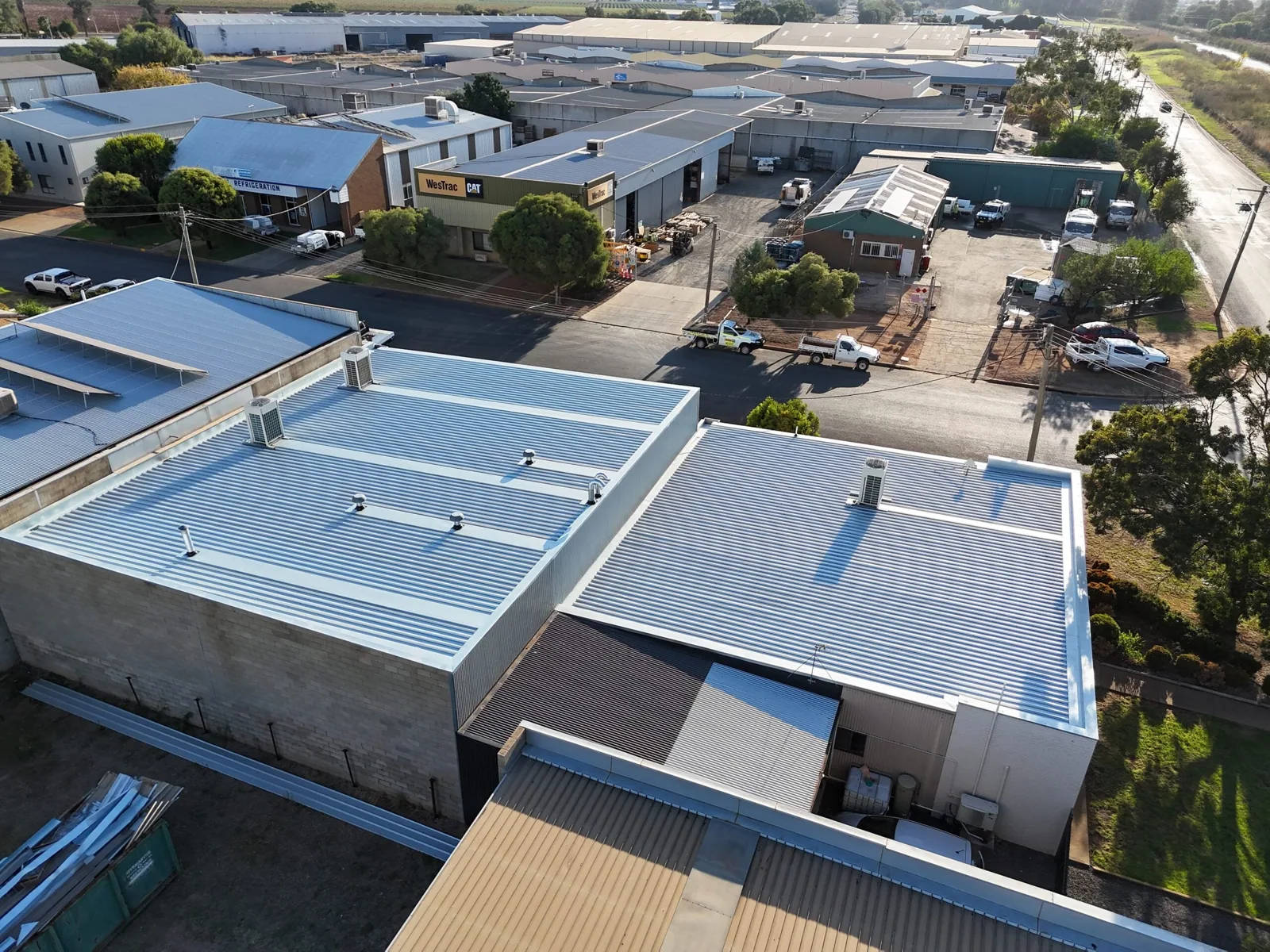
Then the roof goes on a cycle. A fall walk before the freeze, a spring walk after the thaw, and a call after any storm with damaging wind. That rhythm is cheaper than the emergency version, and preventive roof maintenance keeps the capital plan honest. A manager with several roofs on the island can rank them for the next funding cycle from written condition reports. If a roof opens up at 2 a.m. on a holiday, somebody answers, and the work order goes in the same way as any other.
Hangars add equipment-clearance and long-span considerations; scope aircraft hangar roofing before work.
Send the Work Order and the Badge List
Send us the work order, the building number and the name of whoever holds the roof hatch key. We will set a walkthrough once the gate paperwork clears, go up with your facilities contact, and come back with a plain recommendation for each roof.
Questions About Army Installation Roofing
The building manager asked for a roof report before any funding is requested. What should be in it?
Photos keyed to a roof plan, so a reader in another office can see where each problem sits. Add moisture readings, drain and curb locations, the roof type and its apparent age, and a repair, watch or replace call for each area. A report that ranks roofs by risk is more useful to a funding office than one that lists every defect with equal weight. Ask for repair cost by area instead of one lump figure, since the money usually moves in pieces.
Some of the older shop buildings are historic limestone. Can new roofing touch the walls?
Keep the new work off the stone wherever the detail allows. Counterflashing can be set into reglets or joints already cut for it, and a coping can lap over the wall instead of being fastened into it. If a new cut into masonry cannot be avoided, put the drawn detail in front of the preservation reviewer before anyone picks up a grinder.
How early should the badge request go in for the crew?
As soon as the scope is agreed, not when the material ships. Vetting runs on its own clock, and an unbadged crew spends the day waiting at the gate or standing under escort. Send the list of names with vehicle plates and the equipment that will ride in, and ask whether deliveries need a separate window. A late badge costs a roofing day, and in a Davenport winter roofing days are scarce.
Two derechos, August 2020 and July 2024, crossed the area. What should we look for on roofs patched after the first one?
Edges first, then penetrations, then seams. Lifted edge metal and creased membrane at corners hide in plain sight, and a patch made in a hurry may sit over wet insulation. Run an infrared scan on a clear evening after a warm day and compare the wet areas to the patch locations. If the patch sits inside the wet zone, the patch was never the fix.
Talk to a Davenport Commercial Roofer
Send the work order, the building address or a few photos of what you are seeing. We will set a walkthrough, go up with whoever has the hatch key, and tell you plainly what the roof needs.