
National Guard Armory Roofing in Davenport, IA
Roof repair and replacement for National Guard armories and readiness centers in Davenport, IA, scheduled around drill weekends, crane bays and storm season.
Monday after drill weekend, the full-time staff finds a wet patch at the edge of the drill floor. Boots crossed it all weekend, so nobody can say how long it has been there. The facilities lead sends a photo and a work order and asks for someone who can get on the roof without shutting down the next training day.
National Guard armory roofing in Davenport, IA starts with a note like that. The Davenport Readiness Center sits on West Kimberly Road, and the one-story building holds a drill hall, classrooms, a kitchen, a fitness center and vehicle work bays. Each of those rooms asks something different of the roof above it. A walkthrough comes first: you point out where the water showed, the key holder takes us up, and you leave with dated photos and a straight call on the roof before the next drill weekend.
Drill Hall, Kitchen and Bays
The center replaced two outdated armory buildings from 1916 and 1952 near Brady Street. The new building covers 87,000 square feet on a 37-acre site, all on one floor. One story means every room sits directly under the roof, so a single bad flashing can reach a classroom or the drill floor.
Each use pulls a different failure. The kitchen puts grease and steam through its exhaust fans, and grease softens some membranes over time. A fitness center puts humid air up against the deck, and in January that moisture can condense on cold decking. The vehicle bays include a maintenance bay with an overhead crane, which means the structure over that bay has to be checked before anything heavy goes on the roof. Any new unit set on a rooftop equipment curb gets the same check.
Drill Weekends and Full Houses
The center can hold more than 1,300 soldiers at one time. On a full weekend the halls, the drill floor and the exits are all in use, and a lift or a roof hatch is the last thing anyone wants in the way. When the unit trains on weekends, the weekdays are usually the quiet window, and the full-time staff can tell us which days are truly empty.
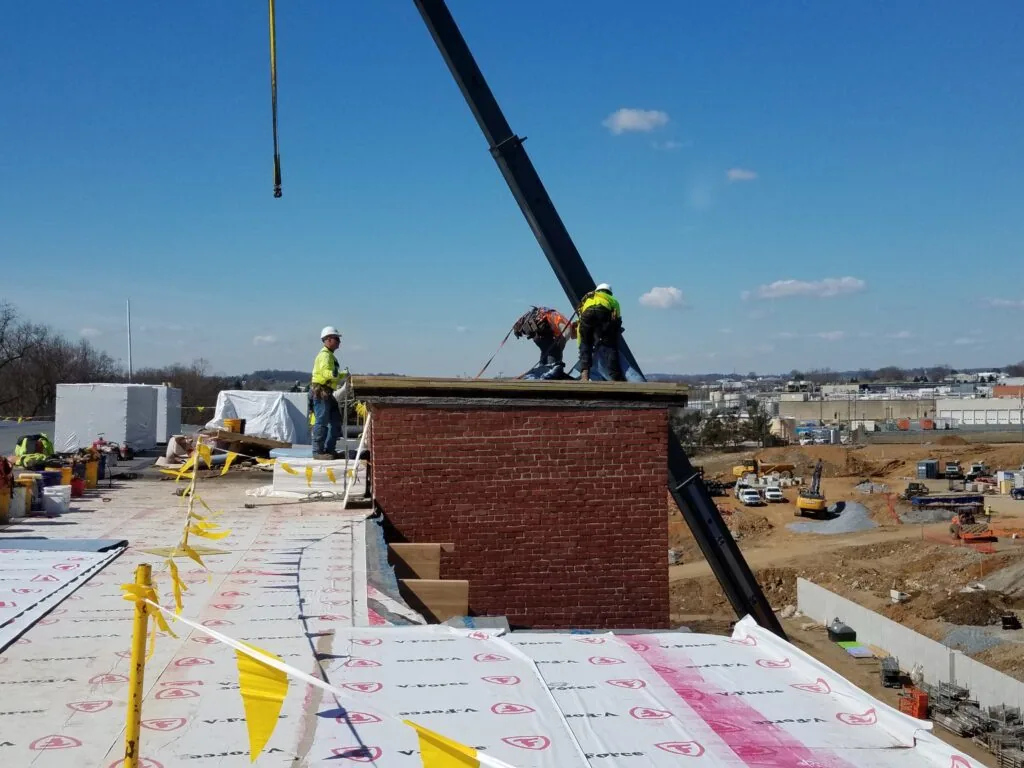
We plan reroofing on an occupied building in sections. One wing opens, dries in and closes before the next one starts. Material stages away from fire lanes and bay doors, and the crew keeps a clear route to the nearest exit. A training weekend gets a stand-down: no open roof, no lifts parked over doors, no wet insulation waiting under a tarp. Monday morning, we look at the finished section again before anything new comes off.
Storms Along Kimberly Road
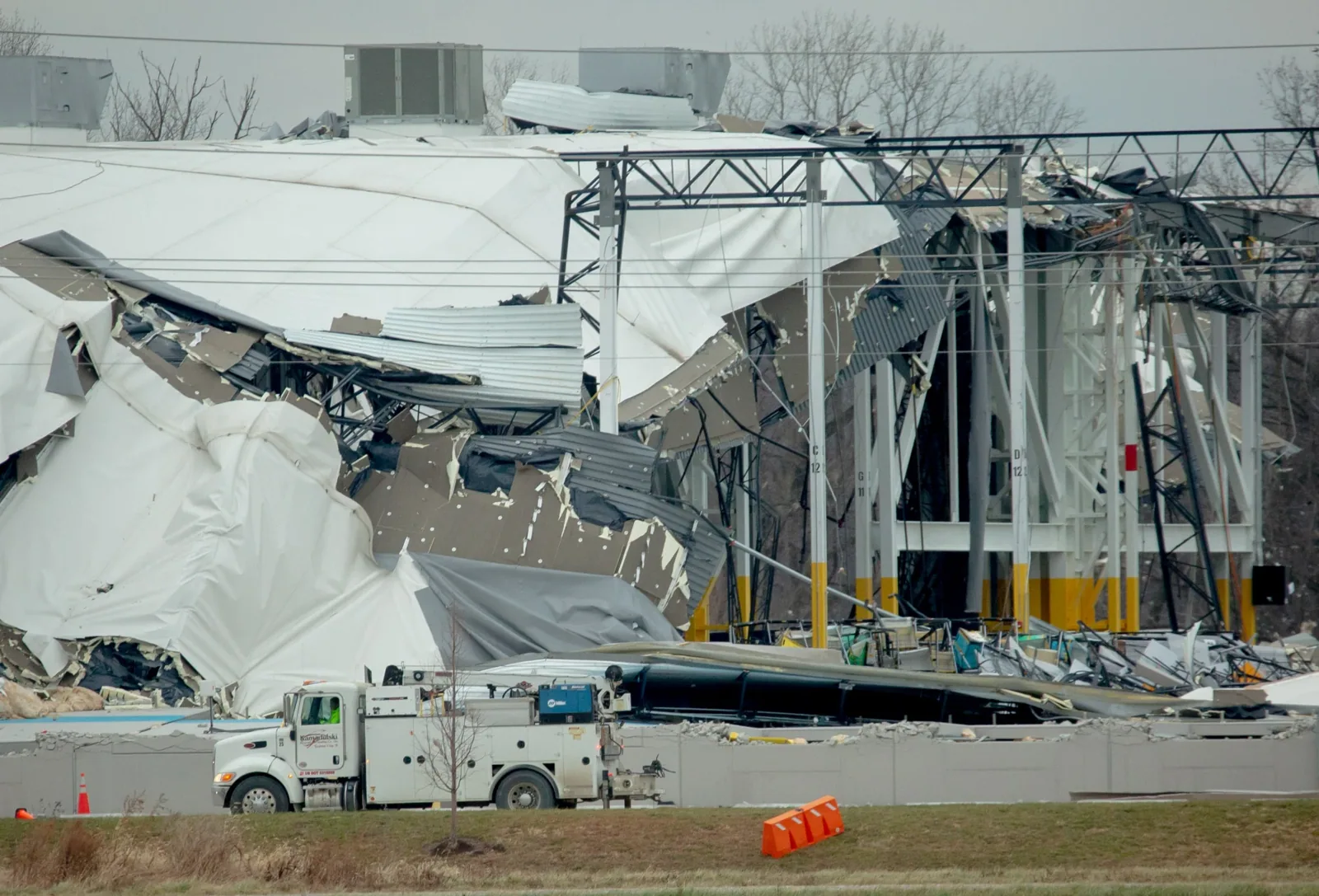
West Kimberly Road is part of a commercial arterial that runs about 6.1 miles through central Davenport, from I-74 to I-280, and the Kimberly Road corridor has taken its share of weather. The July 11, 2025 EF-2 tornado, with estimated 120 mph winds, ended near Kimberly Road and Fairmount Street after a seven-mile path that began southeast of Blue Grass. That storm is a fair measure of what a roof on this road is asked to survive.
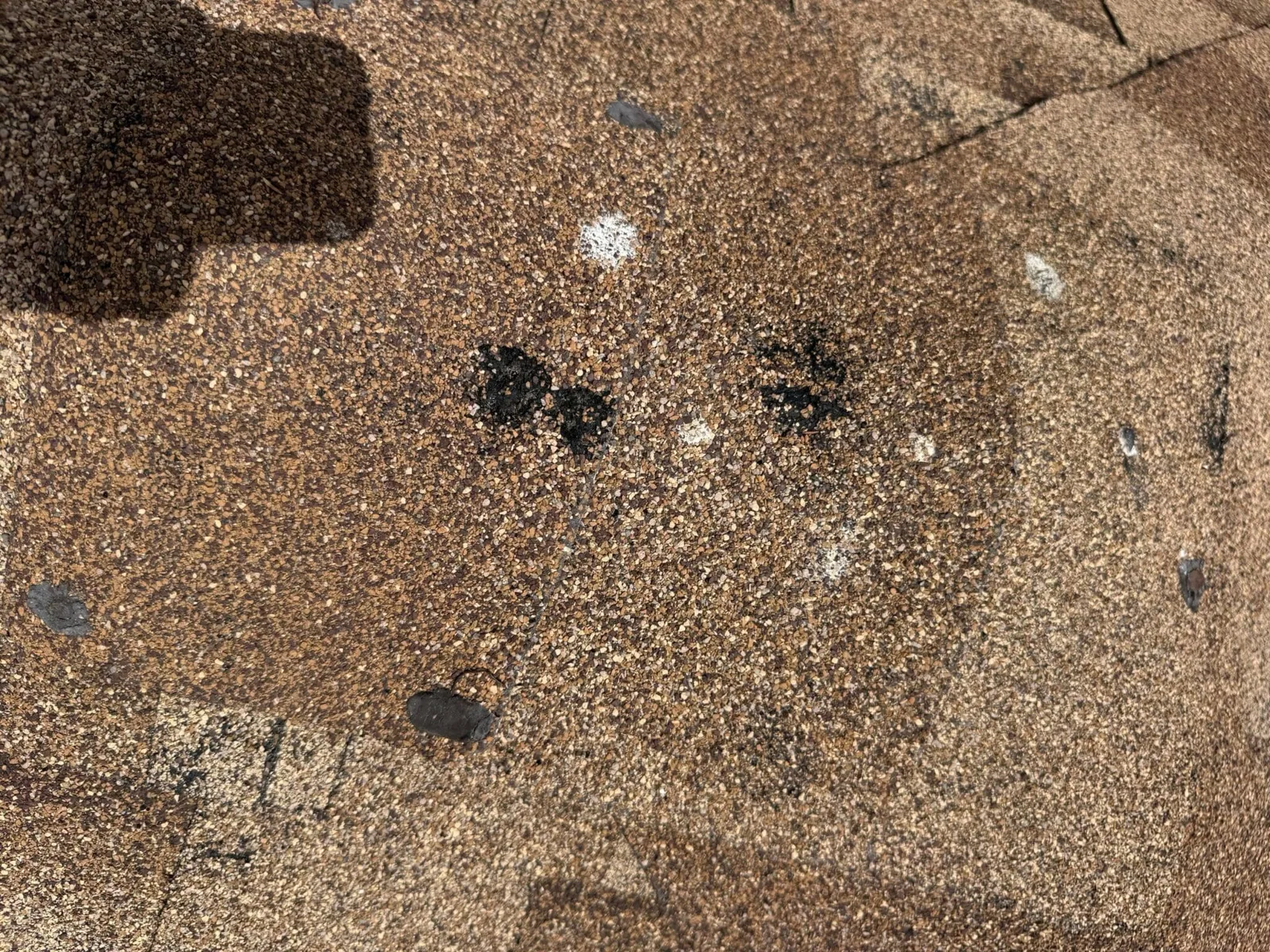
Hail is the quieter problem. It shows up often. Since 2004 a ring of 10 miles around the city center has logged 133 reports, among them baseball-size stones on April 4, 2023. Hail bruises membrane, cracks rooftop unit housings and dents edge metal, and the damage often waits for winter to leak. After a warning or a hailstorm we walk the roof. Tornado damage repair starts with debris, punctures and edges. Hail damage repair starts with a close look at the membrane surface and the unit housings.
Helicopters at the Airport
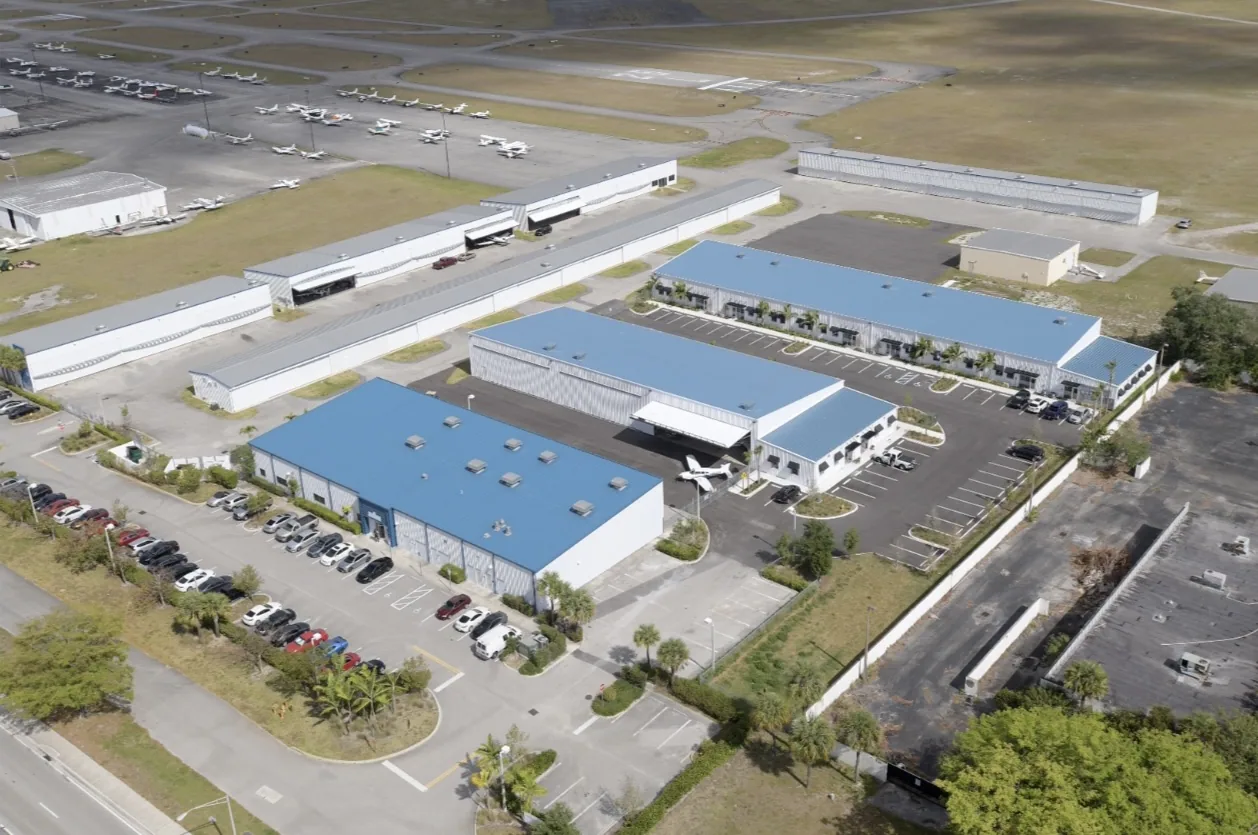
Chinooks and Lakotas fly from Davenport Municipal Airport, where an Iowa Army National Guard armory serves the 1/109th Aviation Battalion. The field covers 764 acres about 7 miles north of downtown. In the August 10, 2020 derecho it clocked an 86 mph gust, the highest official reading in the immediate Quad Cities.
A roof near a helicopter ramp needs tight edges, clean surfaces and no loose ballast, because downwash from large rotors will move anything that is not fastened. Work near the flight line adds its own checks: tools counted, debris swept, lifts kept inside the limits the airport sets. The same cautions apply on military hangar and maintenance facility roofs, and any lift or crane at Davenport Municipal Airport has to stay inside the airport's limits.
Snow, Drains and Thaw
January alone brings about 10 inches of snow, and the Quad Cities average over 36 inches a year. On a low-slope roof that weight sits until a thaw, and the thaw has to find a drain that is not full of ice. Drains clog with leaves in fall and freeze solid in winter, and scuppers fill from the bottom. We walk them in November and again in March, because a drain cleared in March saves a ceiling in April.
Temperature swings do the rest. The thermometer here has gone from 111 F to -29 F, and a membrane that is tight in July pulls at every seam in January. Open seams, split flashing at the wall and cracked sealant at penetrations are the repairs we see first after a hard winter.
Paper for the Next Budget
A roof request that goes up the chain needs paper. You get dated photos for each area, a roof plan with the drains and curbs marked, and a ranked list: fix now, carry another year, put in the plan. Public agencies and the units that work with them usually need that ranking to justify a budget line, and a written roof condition report carries more weight than a phone estimate.
Guard facilities generally follow the Unified Facilities Criteria for roofing, and we build to whatever spec the project names. If a roof opens after a storm, document the affected rooms, secure the area and route the work order through the facility's designated contact.
For a facility with a different access profile, compare the coordination needs in aircraft hangar roofing.
Send the Work Order Before Drill Weekend
Send us the work order, a photo of the wet spot or the name of the building. We will set a walkthrough around your training calendar, go up with your facilities contact, and come back with a plain recommendation for each roof.
Questions About National Guard Armory Roofing
Weekdays are quiet but the building fills on drill weekends. When is the right time to tear off a section?
Early in the week, so the section is dry, inspected and closed before the next training weekend. Ask the full-time staff which weekdays are empty, since units differ. We keep each opening small enough to close by evening, and we plan nothing that leaves insulation exposed on a Friday.
We have a maintenance bay with an overhead crane. Does that change the roof plan?
It changes the load check, not the membrane. The crane rails may be tied into the same framing as the roof, so have the engineer confirm what the structure can carry before new equipment goes up, and keep staged pallets of insulation off that bay. Then watch the penetrations for exhaust and the door headers, which are where water usually gets in.
Hail came through in April. How soon should a roofer look, and what should we ask for?
Before the next hard rain, and certainly before winter. Ask for a close look at the membrane surface, the rooftop unit housings and the edge metal, with dated photos and something for scale beside each dent. Keep the photos together in one folder for whoever handles the claim, so the date of loss is not argued later.
We manage several buildings on a small budget. How do we choose which roof to fund first?
Fund the roof that leaks into occupied space or over equipment first, then the one with the oldest patches stacked on it. A moisture survey sorts them fast: a dry roof with cosmetic problems can wait a year, while a wet one cannot. Put the rest in the capital plan with a rough year beside each.



Talk to a Davenport Commercial Roofer
Send the work order, the building address or a few photos of what you are seeing. We will set a walkthrough, go up with whoever has the hatch key, and tell you plainly what the roof needs.