
Military Hangar and Maintenance Facility Roofing in Davenport, IA
Roof repair, metal retrofit and replacement for military hangars and aircraft maintenance buildings in Davenport, IA, planned around the flight line.
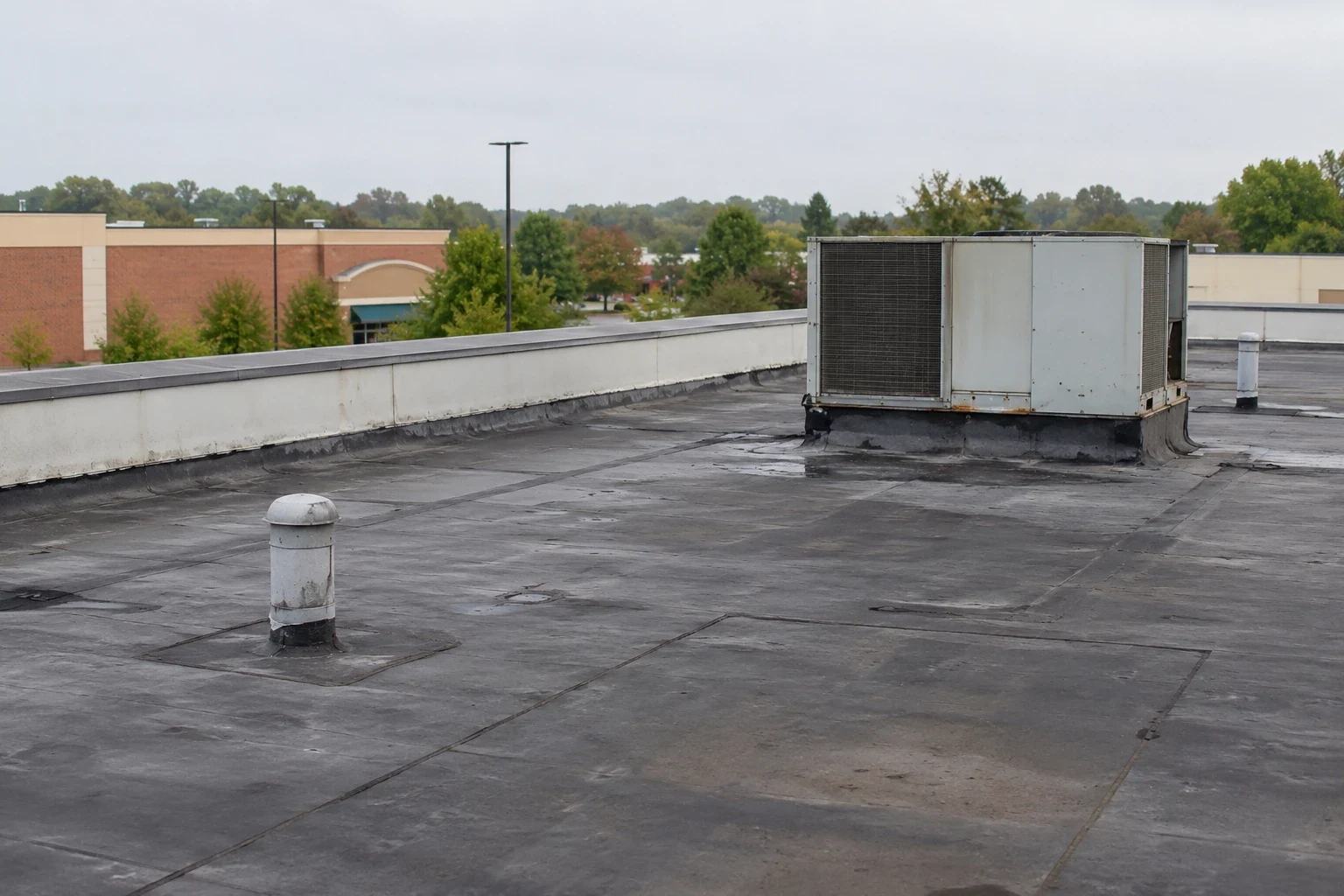
Water is dripping onto a work stand in the maintenance bay. The shop supervisor moved the stand, set a bucket under the drip, and sent a photo to facilities with a note about the helicopter due in that bay on Thursday. Whatever happens on the roof has to happen around that aircraft, and around the next one after it.
Military hangar and maintenance facility roofing in Davenport, IA is a coordination job wrapped around a roofing job. The walkthrough comes first. Whoever has the hatch key leads us up. We follow the water through the roof while the shop keeps working underneath, and the same day you have photos and a clear call on the roof: patch it, keep watching it, or schedule the larger job.
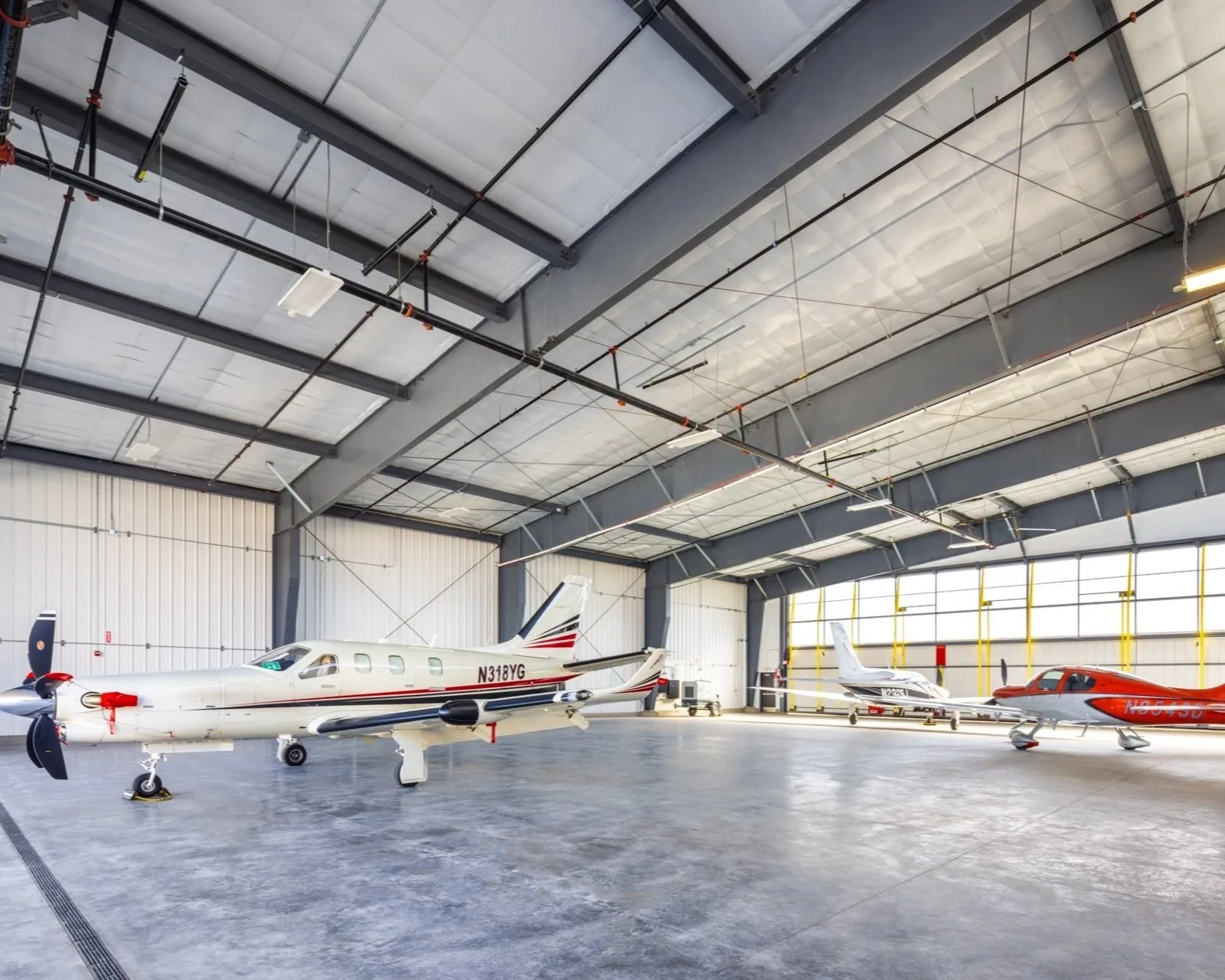
Long Spans Over Open Floors
A hangar is one big room. There are no interior walls to stop a leak and few columns to hold up the roof, so a drip can land on a wing, a rotor head or a tool crib. The roof over that room covers long distances, and long spans flex under snow and wind. Deflection leaves shallow low spots that hold water for days after a storm, and standing water finds every weak lap and fastener.
Davenport Municipal Airport has hangars of its own: a 20,000 square foot hangar attached to the terminal and a separate 12,000 square foot one. Over 36 inches of snow falls on the Quad Cities in a year, about 10 of it in January, and that load sits on a roof until a thaw. We start at the low spots and the drains, then work toward the edges. A civilian aircraft hangar roof runs into many of the same problems.
Door Ends and Wind
A hangar with its doors open behaves like a building with a hole in it. Wind that enters through a large door opening pushes up on the roof from below while it pulls from above, which is why engineers treat such a building as partially enclosed. The roof edge and the door head take the worst of it.
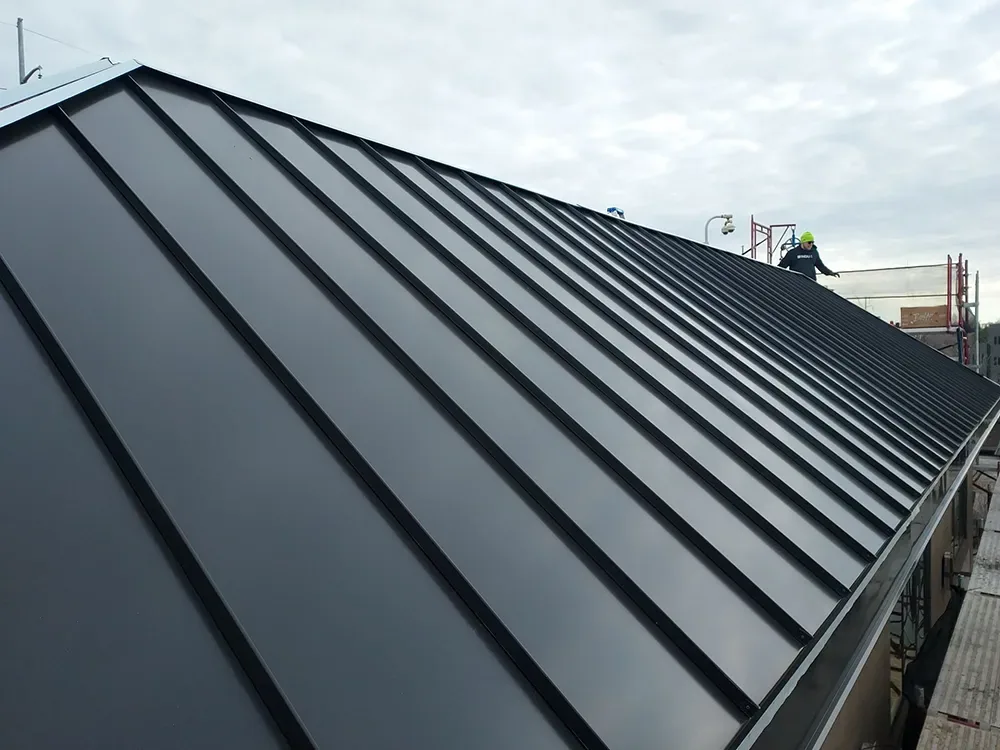
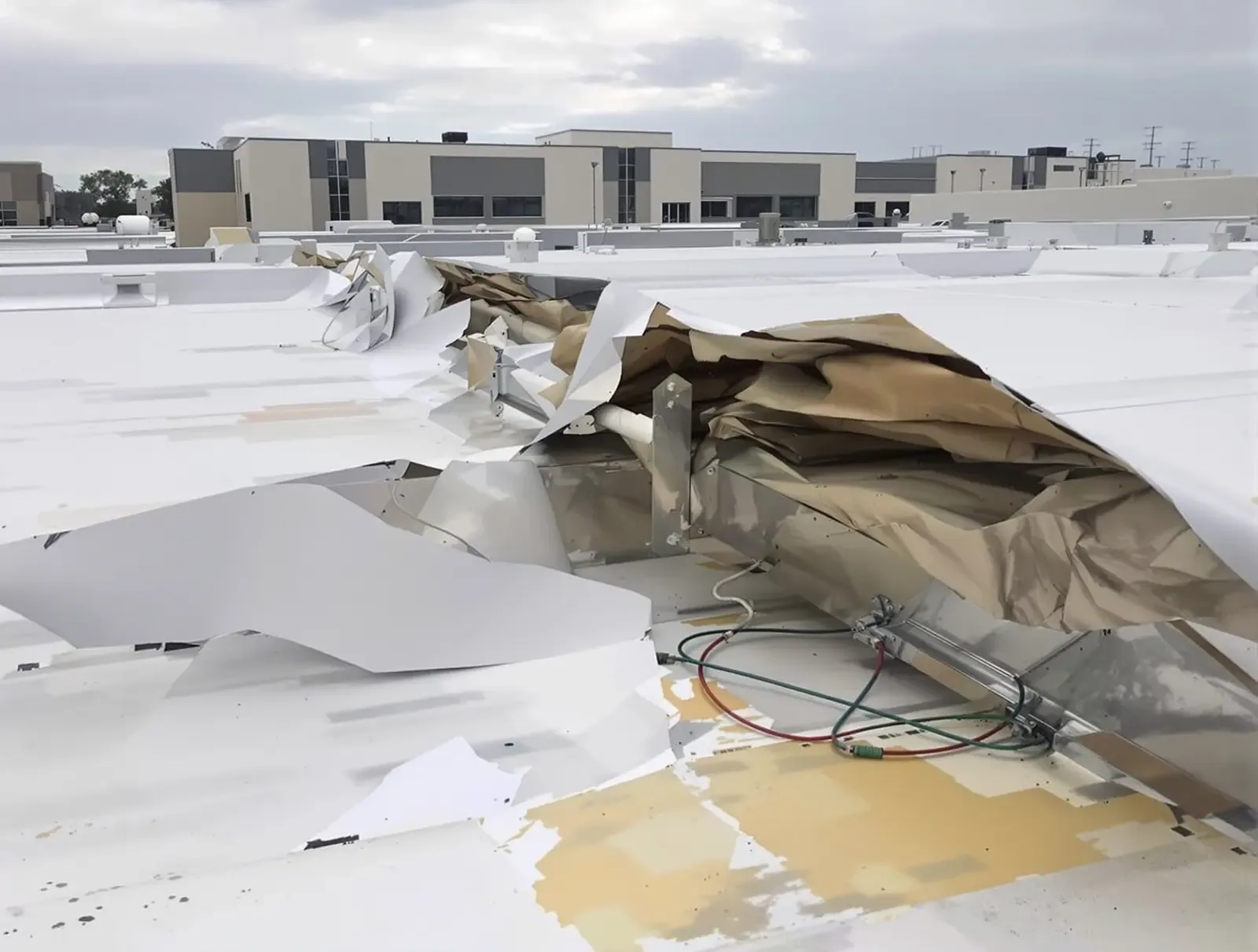
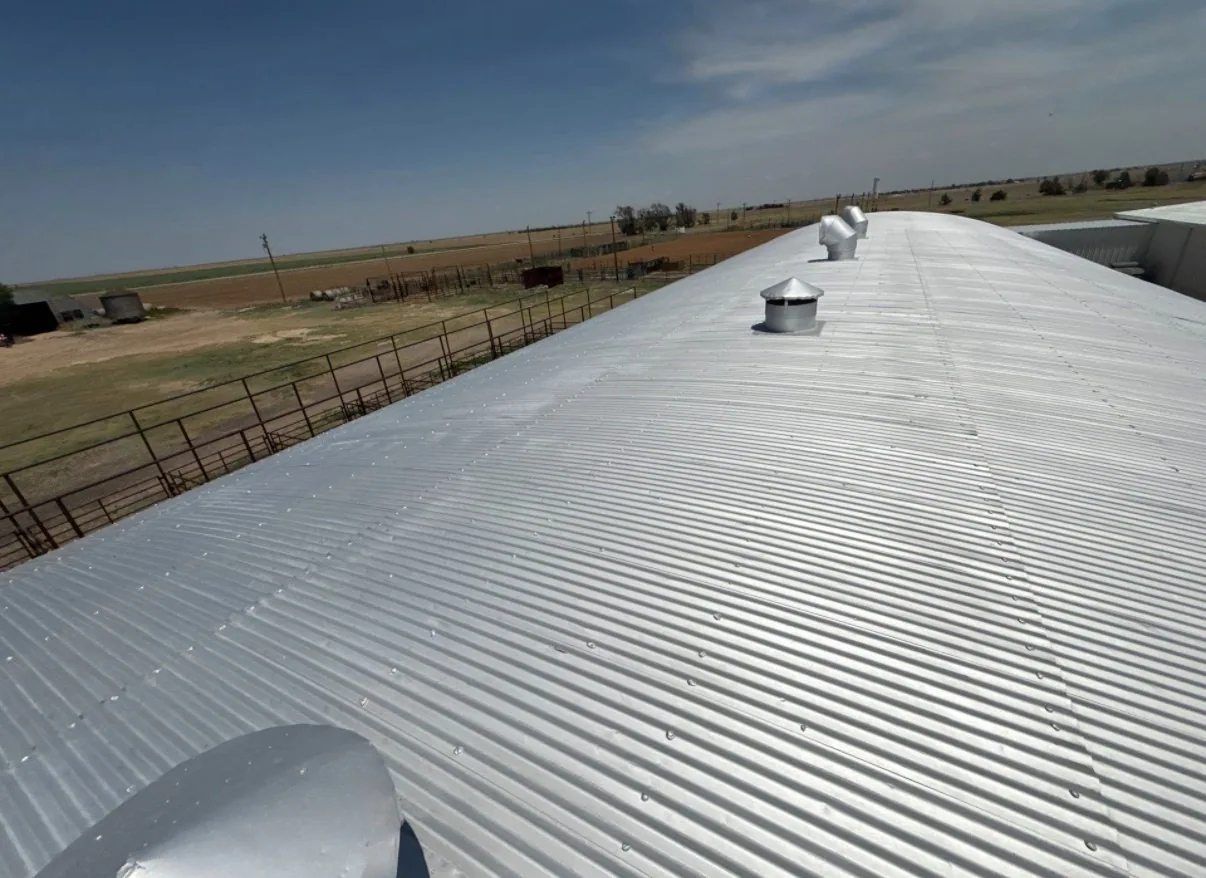
On August 10, 2020, the Davenport airport clocked an 86 mph gust, the top official number in the area that day, and Quad City International Airport, south of Moline, logged 79 mph. A July 15, 2024 derecho reached up to 100 mph across the region. After storms like those we check door-head flashing, edge metal, panel laps and fasteners first, because metal panels with lifted edges or backed-out fasteners leak long before they blow off. Sound old metal can often take a metal roof retrofit instead of a tear-off, and new work usually means standing seam metal. Wind damage repairs start at the perimeter.
Risers, Fans and Condensation
A hangar roof carries more than weather. Sprinkler risers, suppression lines, exhaust fans, high-bay lights and smoke vents pass through the deck, and each penetration is a flashing someone has to maintain. Wet insulation and corroded fittings do not mix with fire suppression, so keeping leaks out of the assembly protects more than the aircraft.
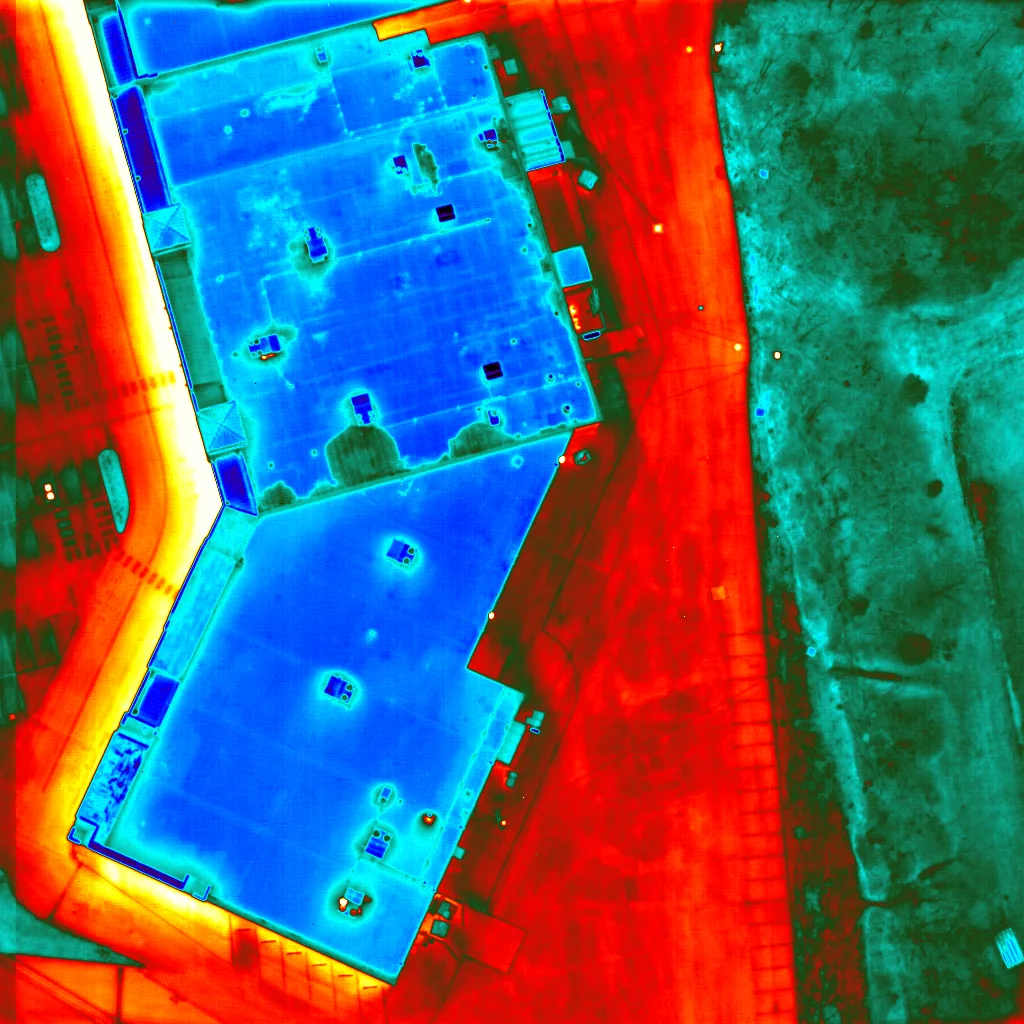
Interior condensation is the other common impostor. A cold hangar shell sweats in a Mississippi River summer and again in January, and the drip looks like a leak. We use an infrared moisture survey to tell the two apart before anybody tears into a roof that is dry.
Flight Line Rules
Roof work near an airfield adds a second set of rules. Cranes and tall lifts near a runway need advance notice to aviation authorities, and the airport manager sets limits on equipment height and position. Debris on a ramp is a hazard to aircraft, so we sweep, net loose material and count tools out at the end of every shift. Inside, aircraft and equipment under the work area get moved or covered, and fume-producing work stays away from fuel and parts rooms.
At Davenport Municipal Airport, military flights were about 2 percent of 2022 operations, and 12 military aircraft were based there as of March 2023. A roof crew shares the field with civilian traffic, so the airport schedule matters as much as the unit schedule. Where the hangar sits on an installation, base access, badges and escorts apply on top.
Shops Beyond the Hangar
Maintenance facilities are not only hangars. Shop bays, wash bays, paint rooms, parts storage and battery rooms put oils, solvents and exhaust against the roof, and some membranes handle that better than others. KEE was made for greasy, chemical-laden exhaust, so it is a natural first price over a shop.
The Davenport Readiness Center has vehicle work bays and a maintenance bay with an overhead crane, while the Joint Manufacturing and Technology Center keeps a foundry going inside Rock Island Arsenal, along with big manufacturing halls. The two show how varied the shop buildings are in this area. The right membrane follows the exhaust, not the label on the building.
Repair, Restore or Replace
Older roofs offer three paths. Repair what leaks and watch the rest. Restore the surface with roof coating restoration when the substrate is dry and sound. Or retrofit or replace the whole assembly.
Cost moves with access, how much of the hangar must stay in service, how many door ends and edges there are, fall protection along long open edges, and how much of the existing assembly is wet. Timing moves with the aircraft: a retrofit can be staged so the hangar never loses more than one section at a time. We write each of those into the recommendation, so the maintenance officer can set the cost of waiting beside the cost of acting.
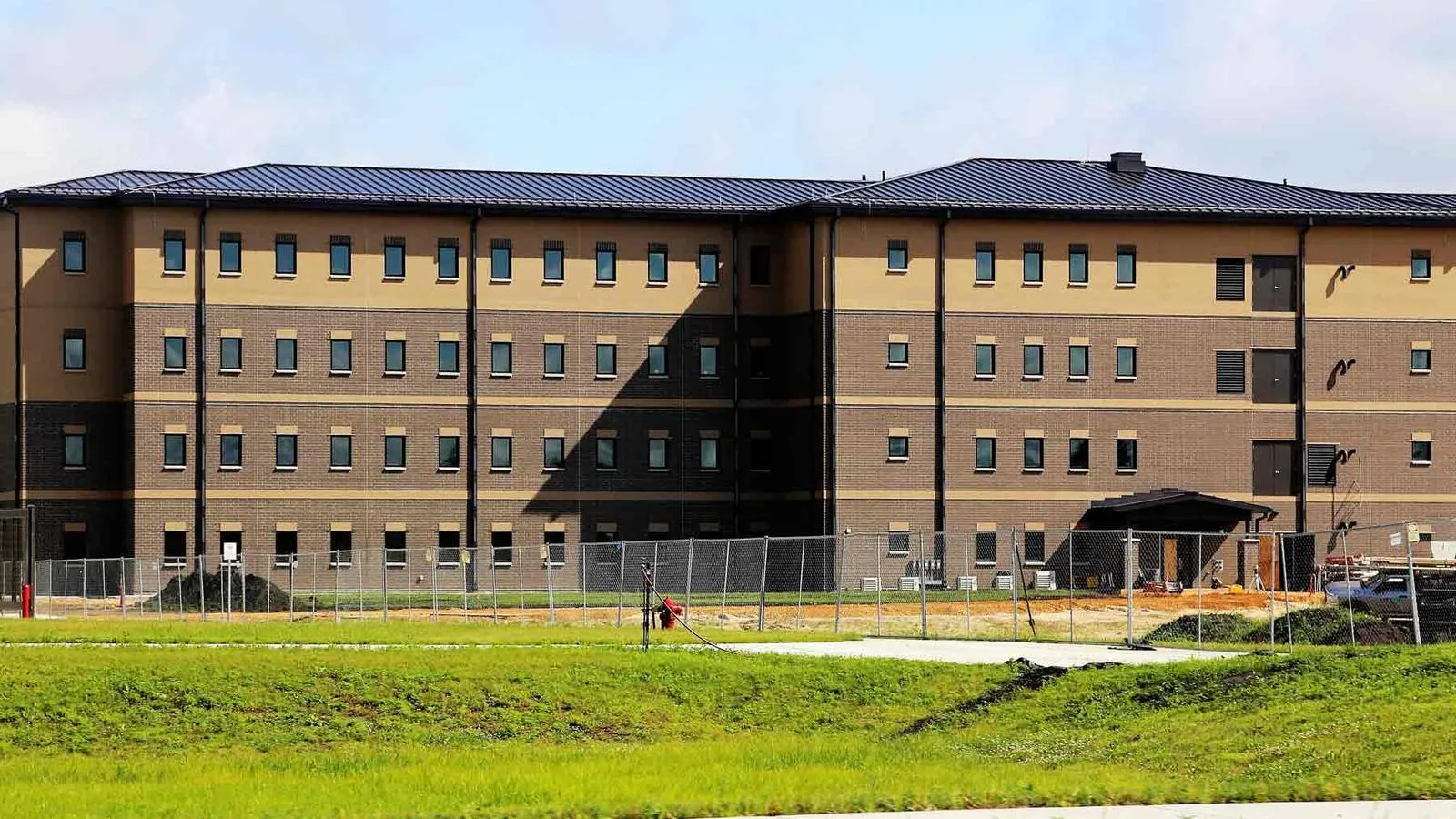
For another secure facility with phased access needs, compare the coordination plan for military barracks roofing.
Send the Work Order and the Aircraft Schedule
Send us the work order, a photo of the drip and the days the bay has to stay clear. We will set a walkthrough with your facilities lead, go up with the hatch key holder, and come back with a plain recommendation.
Questions About Military Hangar and Maintenance Facility Roofing
Aircraft stay in the hangar during the work. How are they protected from debris and drips?
Move what can move. Whatever stays gets covered, and where the roof is opened we hang a catch layer under the deck. We open small sections, close them before the shift ends and before weather arrives, and vacuum or net debris before the crew leaves. The shop should pull parts and open tool boxes out of the work zone ahead of time.
Our hangar roof is standing seam metal and leaks at the panel laps. Do we need a new roof?
Not automatically. Failed sealant at laps, backed-out fasteners and a few loose clips can be repaired. Leaks scattered across many panels, rust at the seams or sagging sections point to a retrofit. A moisture scan and a close look at the clips will tell you which one you have.
A crane on the airport needs clearance. Who do we call first?
The airport manager, before the lift is booked. Ask what height and location limits apply, whether notice to aviation authorities is needed, and which hours the runways are quietest. We plan material loading so the crane is on site for hours, not days.
We see drips in January but dry ceilings after summer storms. Is that condensation or the roof?
Check both before you spend money. Condensation shows up on cold days with humid air inside and often forms along steel and at the underside of the deck. A roof leak follows rain or melt and leaves a stain with a track back to a seam, a penetration or an edge. Photos of the drips with dates make the pattern clear.

Talk to a Davenport Commercial Roofer
Send the work order, the building address or a few photos of what you are seeing. We will set a walkthrough, go up with whoever has the hatch key, and tell you plainly what the roof needs.