
Commercial Roofing in Le Claire, IA
Commercial roof repair, restoration and replacement in Le Claire, IA, planned around shop hours, riverfront visitors and Quad Cities derecho and winter weather.
Picture the work order: a photo of a wet ceiling tile, an address near the Le Claire riverfront, and one line asking whether the roof is the cause. A shop that takes visitors is a different job from a back-room warehouse, because the people underneath the leak are customers, and nobody wants a bucket sitting by the register.
Le Claire is one of the Quad Cities communities on the Mississippi, with Lock and Dam 14 carrying commercial barge traffic on the river and a riverfront retail area that draws tourists. We repair, restore, recover and replace low-slope and metal roofs on commercial buildings in that kind of setting, and we plan the work so the doors stay open. The first step is always a commercial roof inspection that finds out what is actually wrong before anyone prices a fix.
Roofs Over Customers
Antique Archaeology and the Buffalo Bill Museum draw tourist traffic to the riverfront retail area, and that changes how a roof job gets planned. Before a lift goes up, we ask who holds the roof hatch key, whether access runs through a stockroom, a stairwell or an exterior ladder, where customers come in, and where a lift can stand without blocking that door.
On a building that takes visitors, the work plan starts at the entrance. A marked staging area, debris control and a clear path for the public come before the first fastener. Tear-off and loud stages go into the hours when the shop is closed or slow, and the owner picks those hours, not us. We also ask what sits directly under the weak spot. A leak over a display wall is a more urgent call than a leak over a stock shelf, and the schedule should reflect.
Weather From the Metro Record
The storms documented at Davenport, IA belong to the same Quad Cities metro as Le Claire, and they are the right starting point for a roof here. Davenport Municipal Airport clocked 86 mph in the August 2020 derecho, and the derecho of July 2024 carried damaging winds that reached 100 mph. Wind like that lifts edge metal and coping, loosens fasteners and works on seams long before a ceiling shows anything.
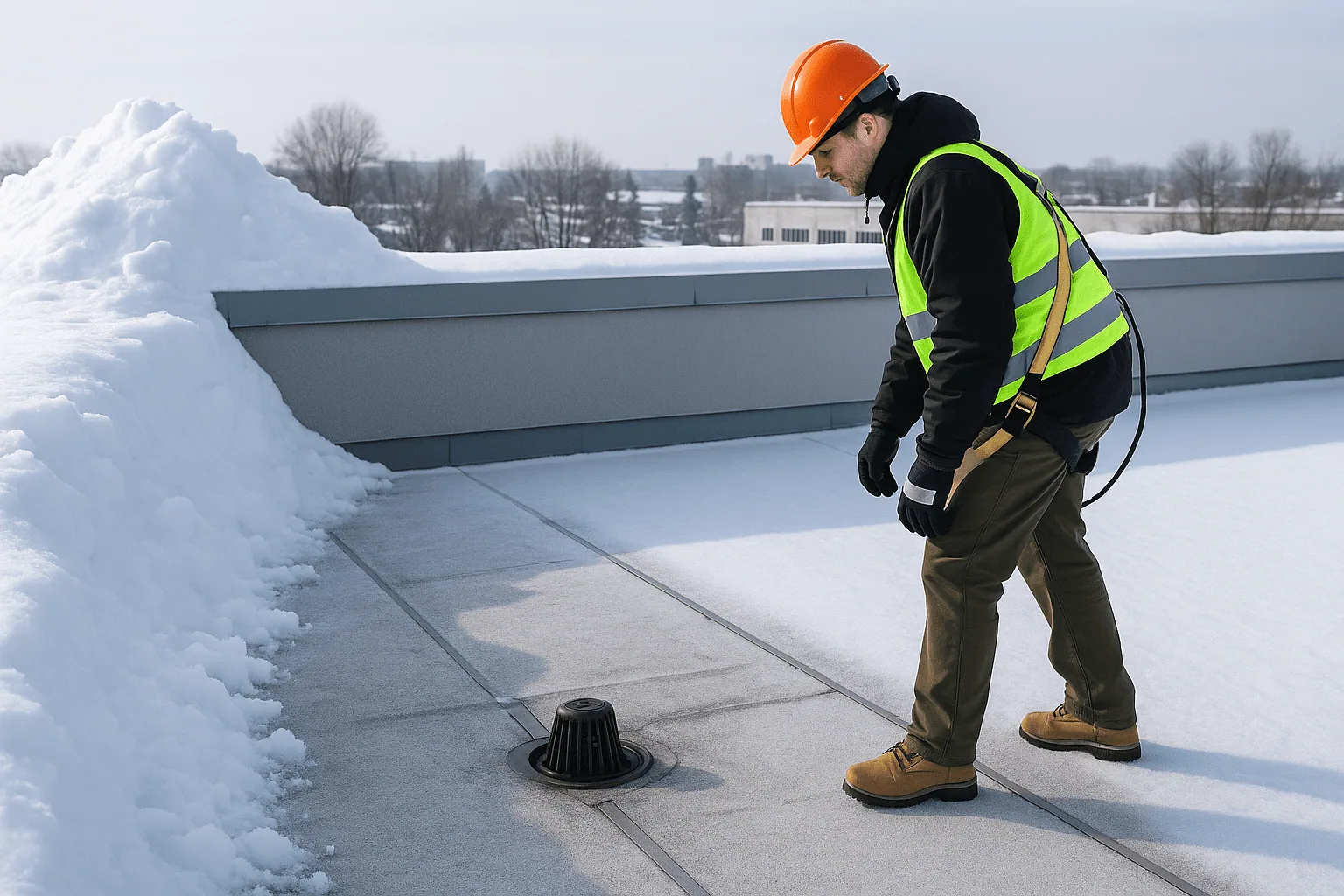
Winter is the other half of the year. Snowfall across the Quad Cities totals more than 36 inches in an average year, and January is the heaviest month at roughly 10 inches. Snow melts on the warm part of a roof, runs to the drains and freezes again overnight. A drain packed with ice sends water back across the membrane, and the leak appears at a spot nowhere near the drain. Diagnosing snow and ice roof damage starts with where the water was standing, not where it came through.
Growth and the Missing Roof File
Le Claire grew 65.4 percent between 2000 and 2020, to 4,710 residents, one of the fastest-growing Quad Cities communities. In a growing town buildings change hands, tenants turn over and the paperwork for a roof gets lost between owners. So we ask for the roof file first: any install record, warranty papers, repair invoices and the name of whoever last went up there.
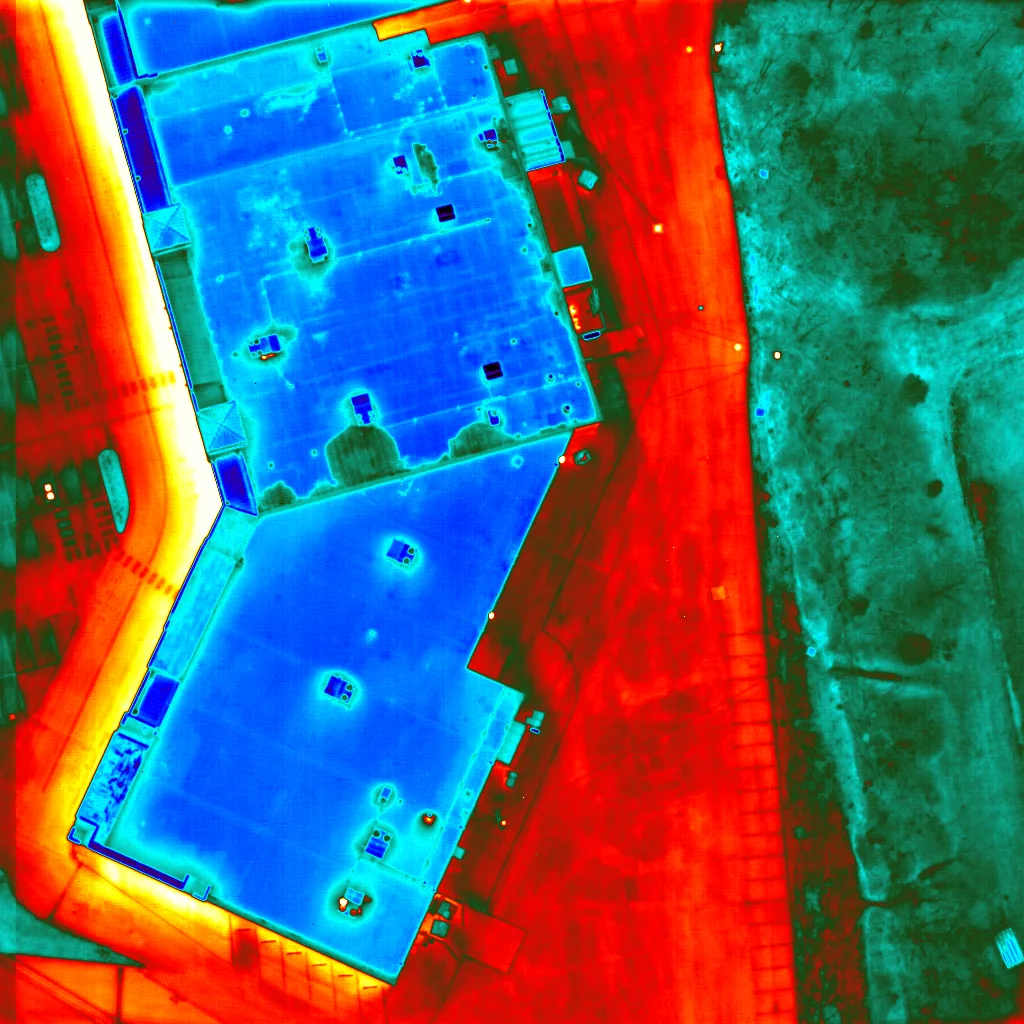
When there is no file, we build one. A walk, photos of every penetration and, where it makes sense, an infrared moisture survey give a new owner or property manager a starting point. For a buyer closing on a commercial building, a due diligence roof survey before the closing date gives the buyer, the lender and the seller one set of facts.
What We Check on the First Walk
We go up with whoever has the key, and we work in a set order so nothing gets skipped. Drains and scuppers come first, because clogged outlets cause more trouble than most torn membrane does. Then we look at the following:
- Seams and field laps, for lifting, shrinkage or open edges
- Flashings at walls, curbs and pipes, where movement opens gaps
- Rooftop units and their curbs, including condensate lines that dump onto the membrane
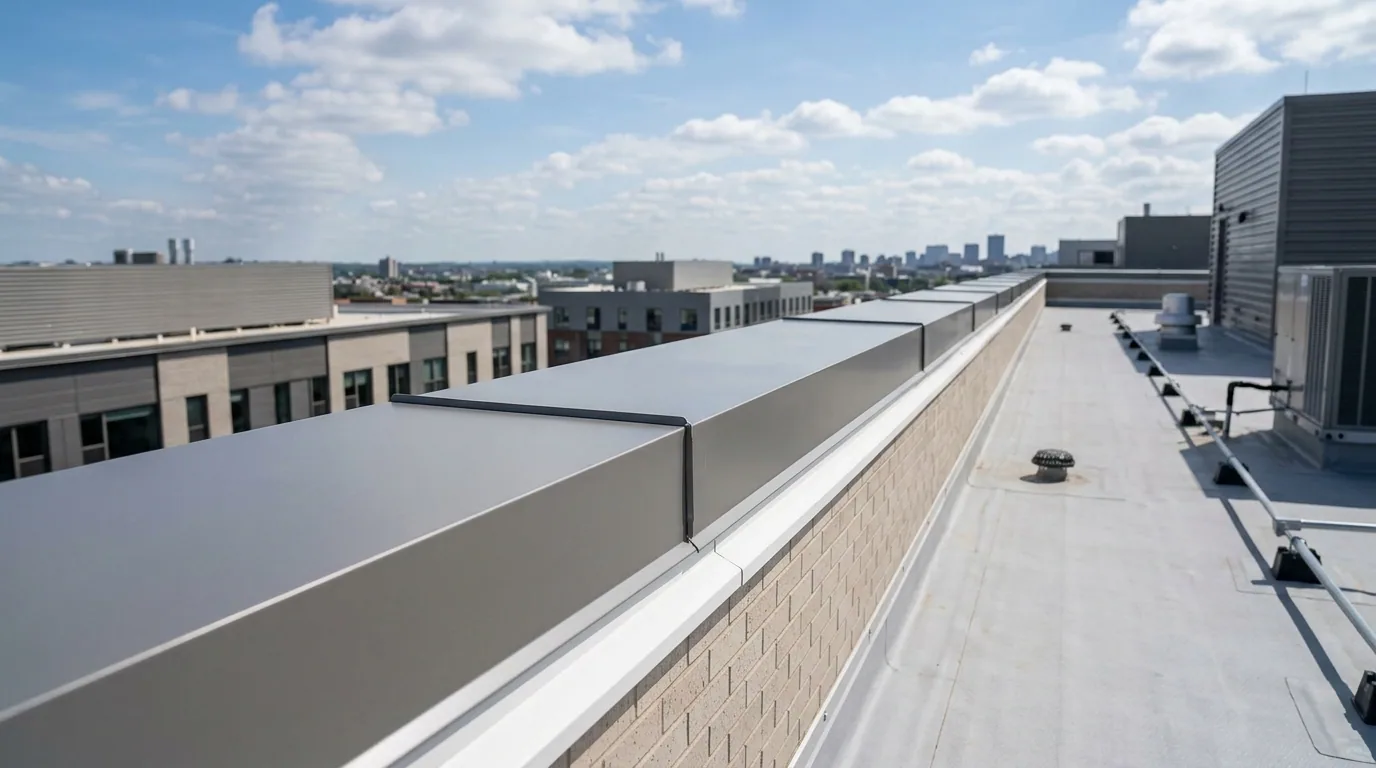
- Perimeter edge metal and coping, for loose or missing fasteners
- Soft or spongy spots underfoot, which point to wet insulation
You get photos the same day. A written roof condition report puts each finding, its location and a plain recommendation on paper so a landlord and a tenant read the same facts.
Choosing the Scope
Four options cover most roofs. A repair fixes a defined failure and buys time. A coating restores a membrane that is sound underneath but worn on top, and roof coating restoration only works when the insulation below is dry. A recover adds a new system over the old one when the existing roof can carry it. A full replacement removes the old system and starts clean.
Several things move the price and the calendar. Wet insulation has to come out, whatever the surface looks like. Roof size and the number of penetrations change labor. Access matters, since a roof reached through a tenant suite takes longer than one with a ladder on the outside wall. We lay out the options in writing so the owner can compare them, and we say which one we would pick and why.
After the Crew Leaves
A finished job should leave a paper trail. We hand over the photos, the scope that was done and a list of anything we saw but did not touch. It tells a property manager what to watch and what to budget for next year.
Then comes upkeep. A twice-a-year check, once after the leaves fall and once after the last freeze, catches the small problems while they are still small. A preventive roof maintenance visit clears drains, looks at seams and flashings, and records what changed since the last walk. The same routine fits buildings in Bettendorf and across the Quad Cities.
For portfolios with more than one occupied property, record access and tenant hours at each address. In the Village of East Davenport, tighter streets can shape where crews stage and how tenants are notified.
Send the Work Order or Set a Walkthrough
Send us the address, a photo of the stain and the hours your shop is quietest. We will set a walkthrough that fits your customers and your schedule, then come back with photos and a plain recommendation.
Questions About Le Claire
The leak is over the sales floor of our riverfront shop. Do we have to close while you work?
Usually the repair can happen from the roof side without closing the shop, as long as the access route stays off the customer path. A full replacement is a bigger conversation. We would split it into sections, work them in the quiet hours you choose and keep the entrance clear.
We just bought a building in Le Claire and the seller left no roof paperwork. Where do we begin?
Begin with a walk and a set of photos, then decide whether a moisture survey is worth it. A survey shows wet insulation that a visual check will miss, and it gives you a baseline to hold against later. We would also ask the seller and the previous property manager for any invoices or warranty letters, since even a partial record helps us read the roof.
Our ceiling drips in January but never in the spring rains. Is the river to blame?
Probably not the river. Winter drips usually come from ice at a drain, melting snow finding a seam, or warm indoor air condensing under a cold deck. Spring rain runs off before it finds the weak spot. We look at the drains and the underside of the deck, and we check whether the exhaust fans are dumping moist air where it should not go.
We patched an edge after the 2020 derecho and never went back. How do we know it is still holding?
You do not, until someone looks at it. Patches over edge metal can loosen with every freeze and thaw, and the original wind damage may have shifted metal past the patch. We would pull the old repair apart on the walk, check the fasteners around it and photograph what we find.
Who needs to be on the roof with you for the walkthrough?
One person who can open the roof hatch or point to the ladder is enough. If tenants share the building, a short notice a day ahead keeps everyone comfortable with people moving above them. Bring the roof file if one exists, and tell us where the water has shown up.

Talk to a Davenport Commercial Roofer
Send the work order, the building address or a few photos of what you are seeing. We will set a walkthrough, go up with whoever has the hatch key, and tell you plainly what the roof needs.