
VA Medical Center and Clinic Roofing in Davenport, IA
Roof repair and replacement for VA medical centers and veteran clinics in Davenport, IA, with infection control, quiet hours and badge access in the plan.
Radiology reports a stained ceiling tile over the waiting hall. It was dry on Monday. The clinic manager wants to know whether the imaging room next to it is at risk, and who has to be told.
VA medical center roofing in Davenport, IA begins with that call, and it begins with a walkthrough. In Davenport, the Quad Cities VA Clinic provides primary care, mental health, radiology, physical therapy and other outpatient services, and each of those has its own reason to keep water out and noise down. With the key holder on the ladder behind us, we trace the leak and send photos with a status: urgent, stable for now or due for the capital list.
What Sits Under the Roof
Primary care, mental health, radiology and physical therapy all ask different things of the ceiling above them. Imaging equipment does not tolerate water, so a drip over an imaging room is a shutdown, not a stain. Counseling rooms need quiet, and nobody in a session should hear a tear-off over the ceiling. We map what sits under each roof area before we plan a single repair.
A medical office building has the same mix at a smaller scale. A hospital adds inpatient floors, labs and operating rooms, and the questions climb with every floor.
Infection Control Before Tear-Off
Healthcare construction starts with an infection control risk assessment, and a roof job is not exempt. Dust, insulation debris, mold spores and odors travel through ceilings and air intakes into the rooms below, and the people in those rooms are patients. We shield or shut intakes near the work, bag debris and haul it down a set route instead of dropping it, and keep wet material off the roof overnight.
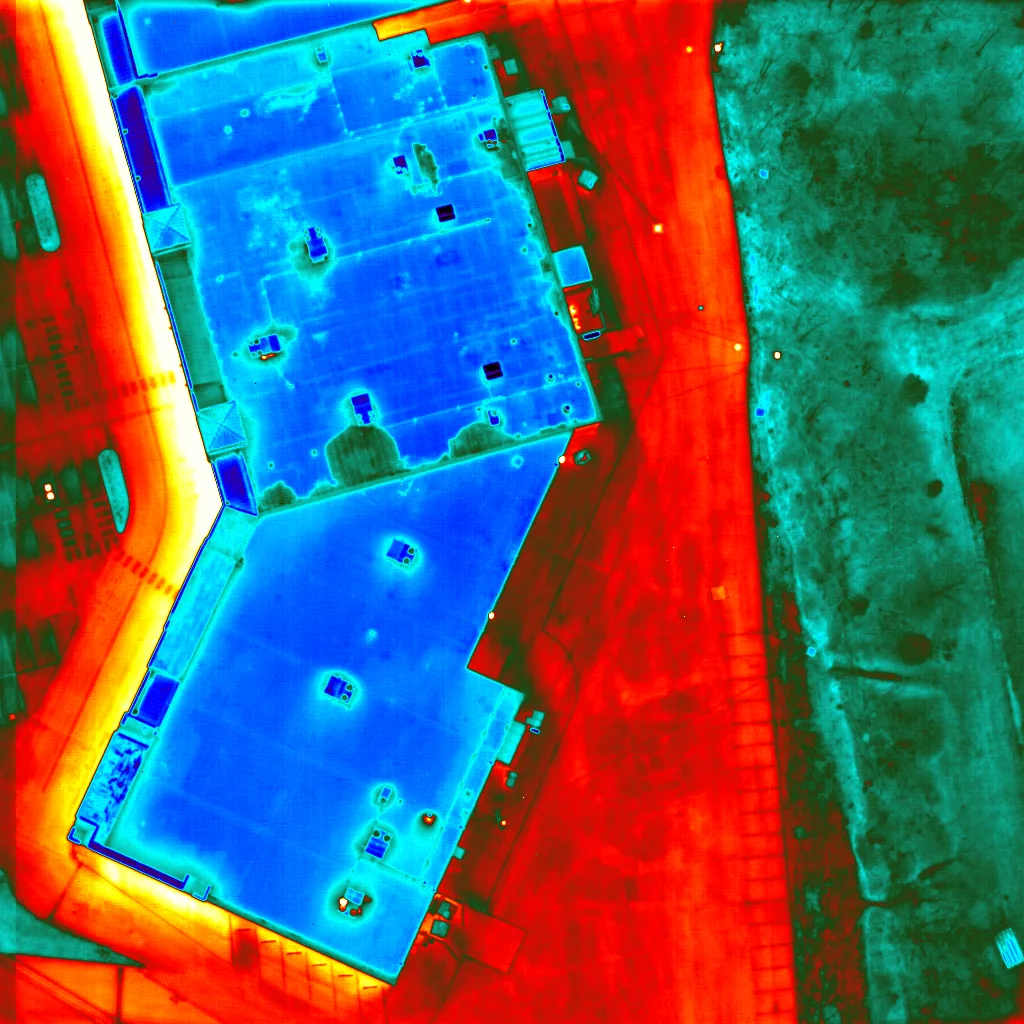
If a leak has been wet for a while, the ceiling below may need testing before new tile goes up. An infrared moisture survey outlines the wet zone on a floor plan, which lets the infection control team close off that zone alone. Hot asphalt and strong adhesives get weighed against the hallway underneath, and heat-welded sheets with low-odor adhesives are the usual answer.
Quiet Hours and Badges
Outpatient clinics run on weekday appointments, which leaves evenings and weekends as the natural window for loud work. We plan tear-off and lift work for those hours, and we put a tenant notice in staff hands early so the front desk can tell patients. Mental health appointments are the sensitive ones. A sudden bang over a counseling room can undo a session, so loud work sits well away from them.
Federal buildings add a badge and escort layer. Names go in ahead, vehicles are listed, and the crew checks in at the desk like any visitor. Patients keep their entrance and their parking, and fencing and a spotter cover the path when material goes up. Reroofing an occupied building works because everyone inside knows the schedule.
Storm Season and Rooftop Air Handlers
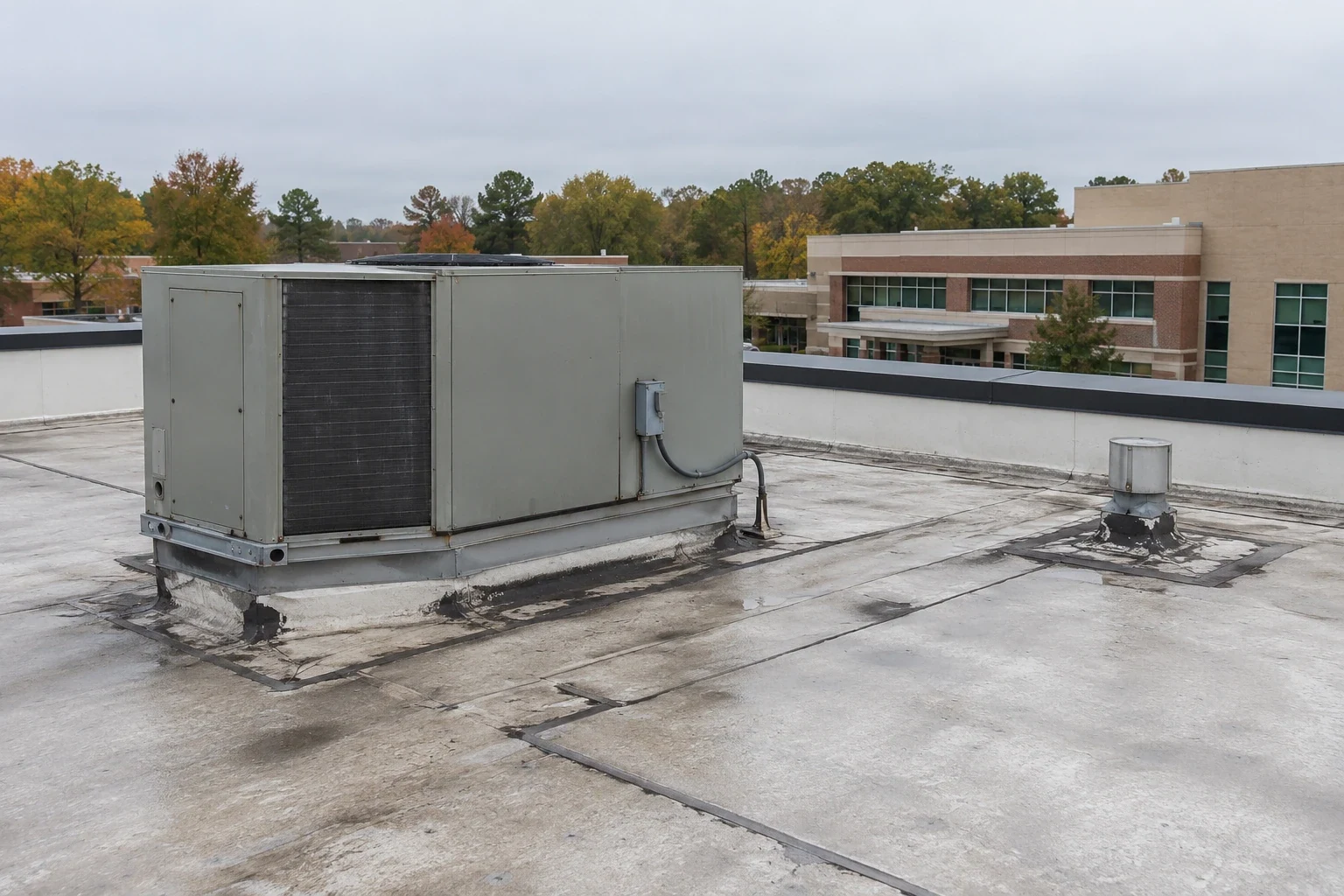
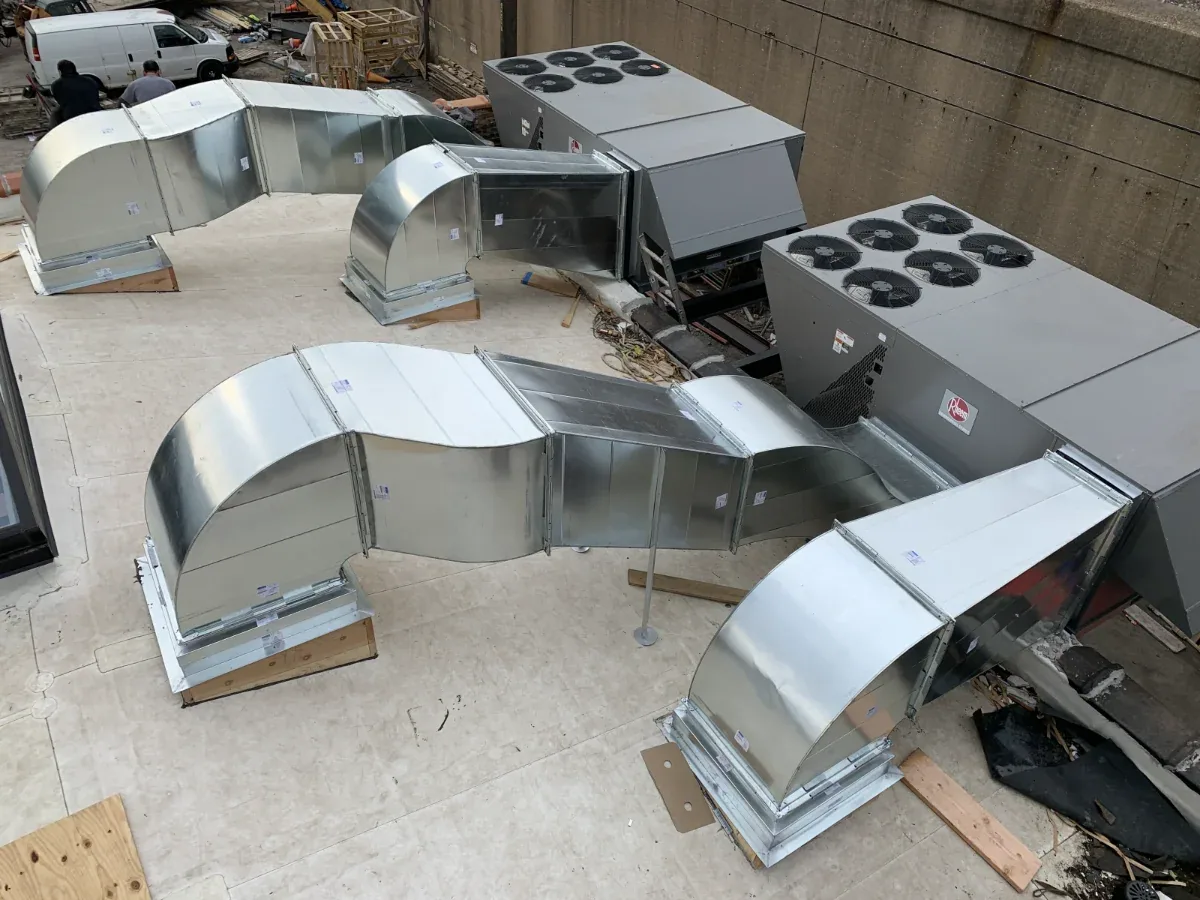
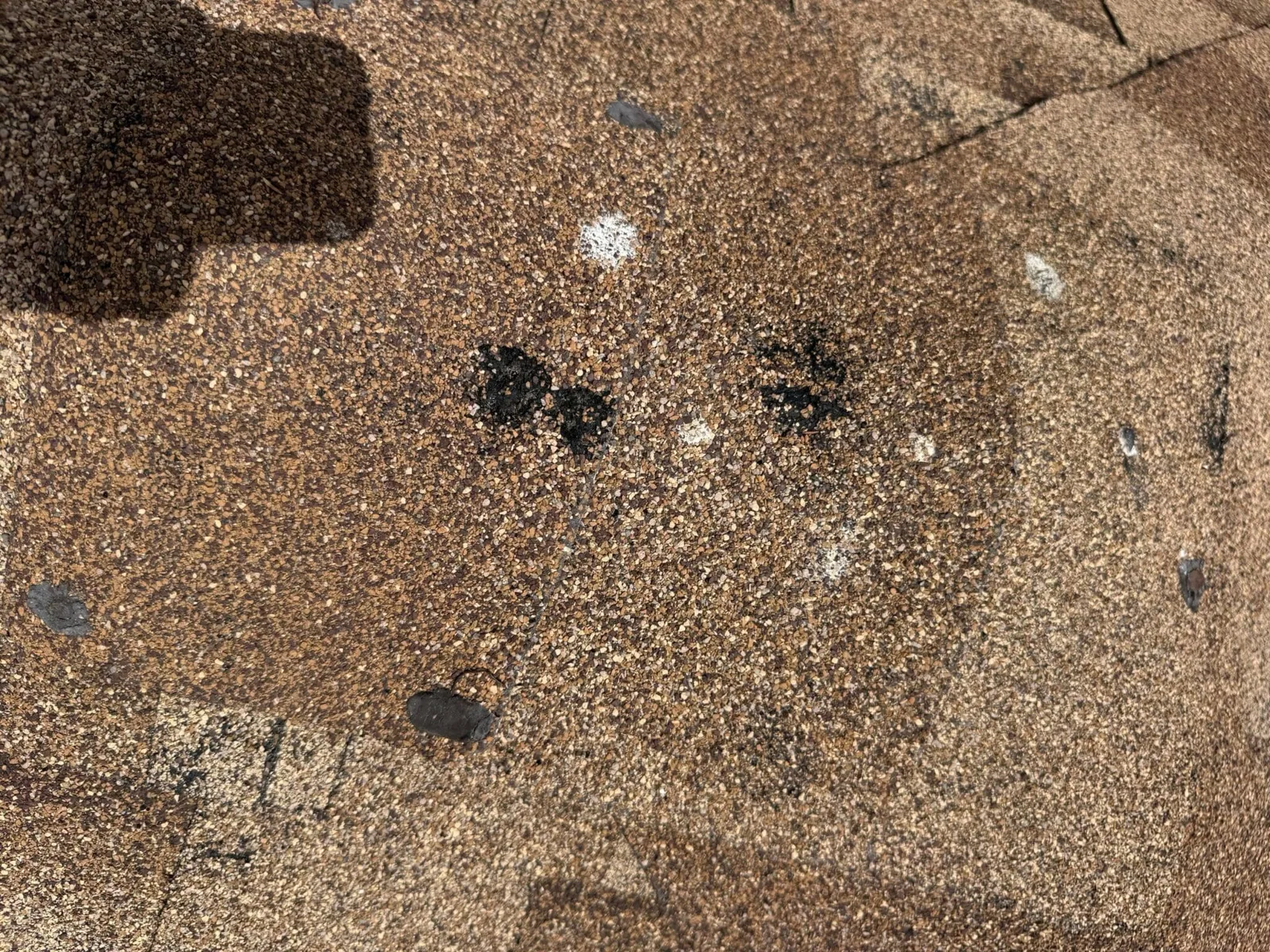
Medical buildings carry heavy rooftop air handling, and those units are where hail does its quiet damage. Hail is a regular visitor. The local hail log holds 133 reports near the city center since 2004, including 2.5 inch stones on April 4, 2023. Hail dents coil fins and housings, and the damage later shows up as weak cooling in a clinical space.
Derechos hit the wind side. The August 10, 2020 derecho put a 79 mph gust at Quad City International Airport and 86 mph at Davenport Municipal Airport, and on July 15, 2024 another brought damaging winds of up to 100 mph. After either, walk the roof for shifted units, torn curb flashing and lifted edges. A shifted unit gets reset on its curb and supports with the flashing rebuilt around it, and hail damage is read at the membrane surface and the coils. Winter finishes the job: records here reach -29 F, and a frozen drain turns a thaw into a leak.
Membranes for Clinics
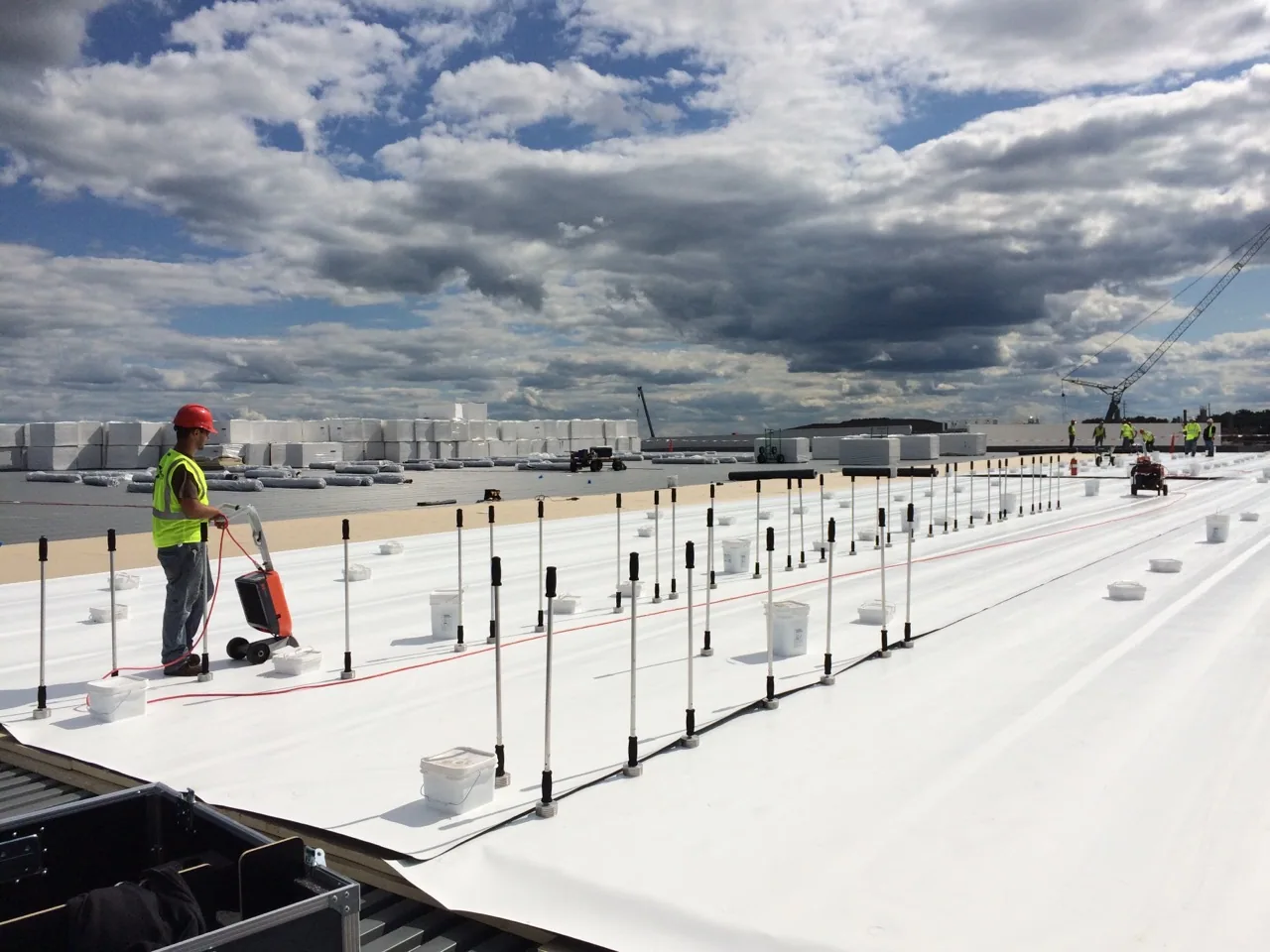
Healthcare owners often choose a white, reflective single-ply, and PVC earns its price where exhaust from labs, kitchens or generators lands on the roof. A plain TPO sheet works elsewhere. Under the membrane sits insulation with a cover board that takes hail and foot traffic, and walk pads lead from the hatch to the rooftop units so maintenance does not wear a path into the sheet.
Cost moves with access, how much of the building stays open, infection control measures and tear-off depth. Timing moves with the weather. We put each of those in the recommendation beside the cost of waiting. We also mark the units above the most sensitive rooms, note the nearest drains and identify any area where temporary protection must remain until the final inspection. That map gives engineering, infection control and the clinic manager one shared view of the work and its limits. We name the daily closeout contact. We also mark the daily closeout point, the route for debris and who receives the photo log if a weather hold interrupts the sequence.
The Handoff
The facility manager receives labeled photos, a roof plan with every drain, curb and intake marked, and a ranked list across buildings. Sites that serve veterans range from the Quad Cities VA Clinic, with radiology on site, to the Quad Cities Vet Center in East Moline, Illinois, and the quiet-hours question follows them all.
Healthcare systems that hold several sites need the same ranking, building against building. If a roof opens after a storm, the facility's contact can document the affected area and coordinate temporary protection around clinical operations.

Send the Work Order and the Floor Plan
Send us the work order, the clinic address and a floor plan marking imaging and counseling rooms. We will set a walkthrough with your facilities lead, go up with the hatch key holder, and come back with photos and a plain recommendation.
Questions About VA Medical Center and Clinic Roofing
Radiology had a stain over the waiting hall. How do we tell whether the imaging room next door is at risk?
Open the ceiling above the stain and look, then run a moisture scan on the roof above both rooms. Water travels along the deck and the insulation, so the wet area may reach well past the stain toward the imaging suite. Mark the scan results on the floor plan and share them with the infection control lead, and with the equipment vendor if the readings touch the suite.
Patients keep coming during the work. Which parts of the job stay off limits during appointment hours?
Anything loud, anything with an odor, and any lift over an entrance. Tear-off, hot work and heavy hauling go to evenings and weekends, and crane picks or material hoisting wait until the lot is empty. Quiet tasks such as inspection, layout and small flashing repairs can run in the day with a spotter at the door.
Our rooftop units were dented by hail in April. Is that roof damage or equipment damage?
Both, and the paperwork should separate them. Membrane bruises, torn seams and bent edge metal belong to the roof. Crushed coil fins and dented housings belong to the equipment. Photograph each with a scale beside it and list the date of the storm, so the building owner and whoever handles the claim are looking at the same record.
What does a mental health clinic need from a roof crew that a primary care clinic does not?
Predictability. Ask the staff which rooms hold counseling sessions and when, keep the loud work away from those hours, and give the clinic one contact who can call a stop if a patient is struggling. A posted schedule is easier on people in treatment than surprise noise over the ceiling.


Talk to a Davenport Commercial Roofer
Send the work order, the building address or a few photos of what you are seeing. We will set a walkthrough, go up with whoever has the hatch key, and tell you plainly what the roof needs.