Commercial Roofing in East Moline, IL
Roof repair, maintenance and replacement for East Moline, IL plants, distribution buildings, restaurants and a hospital, planned around interstate trucking.
The driver mentions it at the dock door: water on the floor, third bay from the end. By the time the dock lead sends a photo, a pallet is already wet and the trailers are still backing in.
That is how roof problems reach the people who run East Moline, IL buildings. Interstates 74, 80, 88 and 280 all serve the city, which puts large distribution and manufacturing buildings within quick reach of the highway. John Deere Harvester Works, described as one of the largest combine factories in the world, employs about 1,300. The Bend is a 132-acre dining, retail and entertainment development, and Illini Hospital employs about 700. We start each job with a work order and a walkthrough, and we go up with whoever holds the roof hatch key.
Heavy-Equipment Plants and What Settles on the Roof
Plants that build heavy machinery can put things on a roof that a warehouse never sees: metal dust, welding smoke, paint-booth exhaust and heat from ovens. We look for all of it.
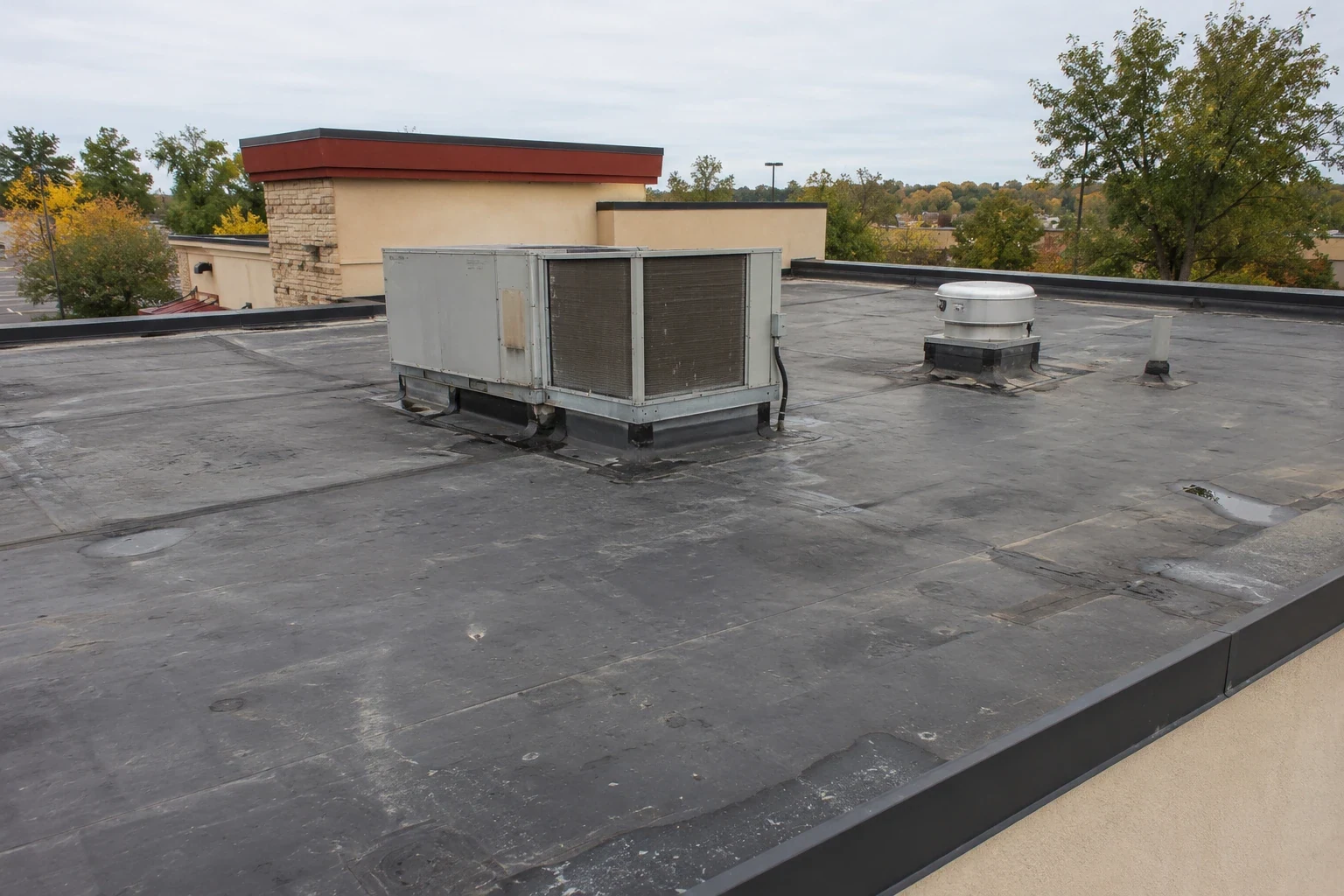
We check how each of those paths meets the membrane. Exhaust stacks get a close look at the flashing and the surface around the discharge. Skylights and smoke vents are checked for cracked gaskets. If a plant runs overhead cranes, we ask where the crane rails and structural supports tie into the roof, because movement there stresses the deck. On a manufacturing plant roof we walk those penetrations first and then the field.
Metal dust and debris also clog drains. We clear the strainers and look for ponding around every outlet.
Distribution Buildings and Dock Schedules
Four interstates give East Moline buildings a quick route to trucks and customers. For the roof, that means dock traffic and tight schedules.
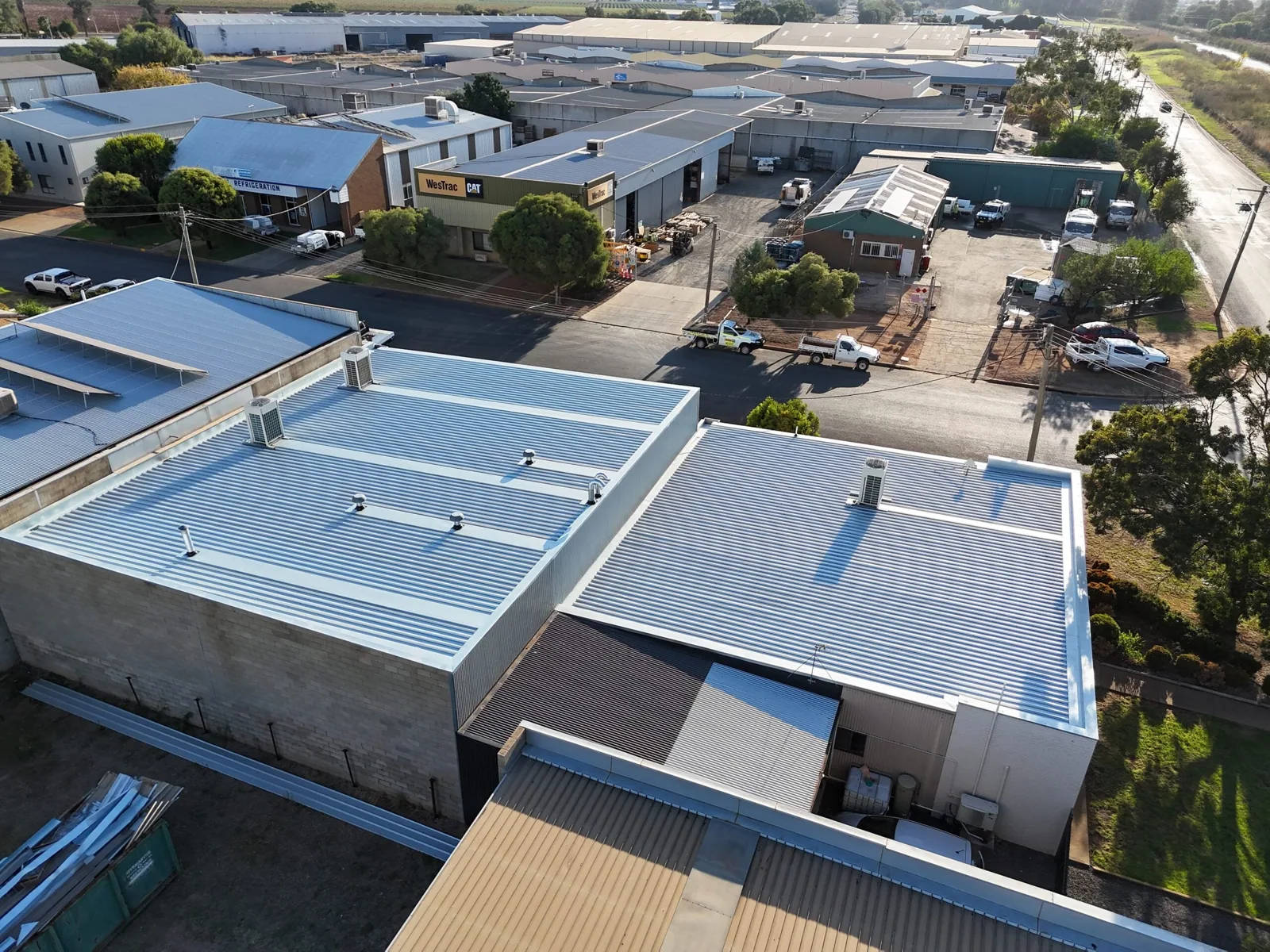
On a distribution building, the first question is where the water is coming in relative to the racking. A leak over stock is an emergency. A leak over an empty aisle can wait for a planned repair. We walk the roof with the inventory plan in hand and mark the high-risk bays. Then we plan repairs by bay, staging the work so the dock doors stay open and the trucks keep moving.
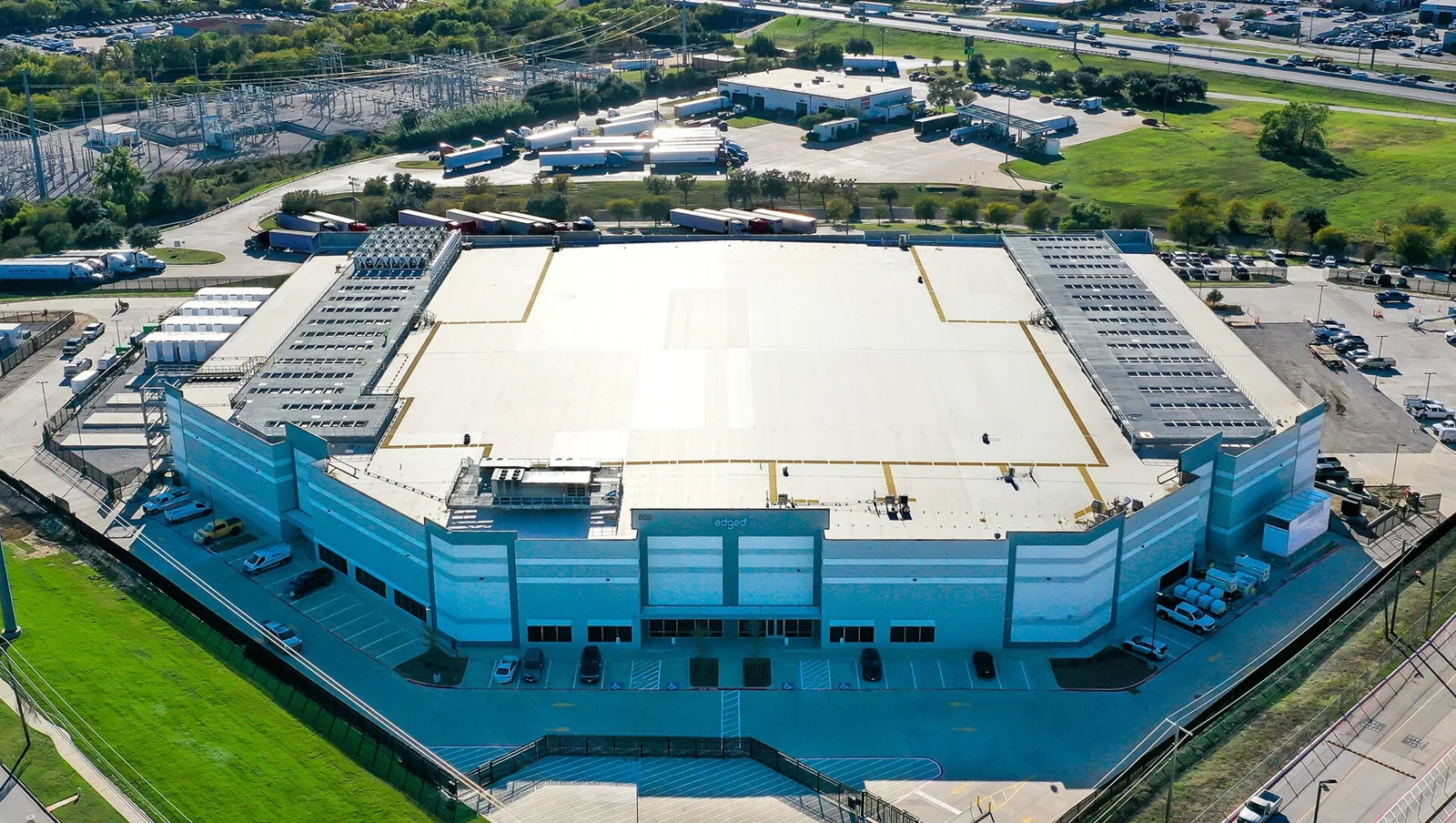
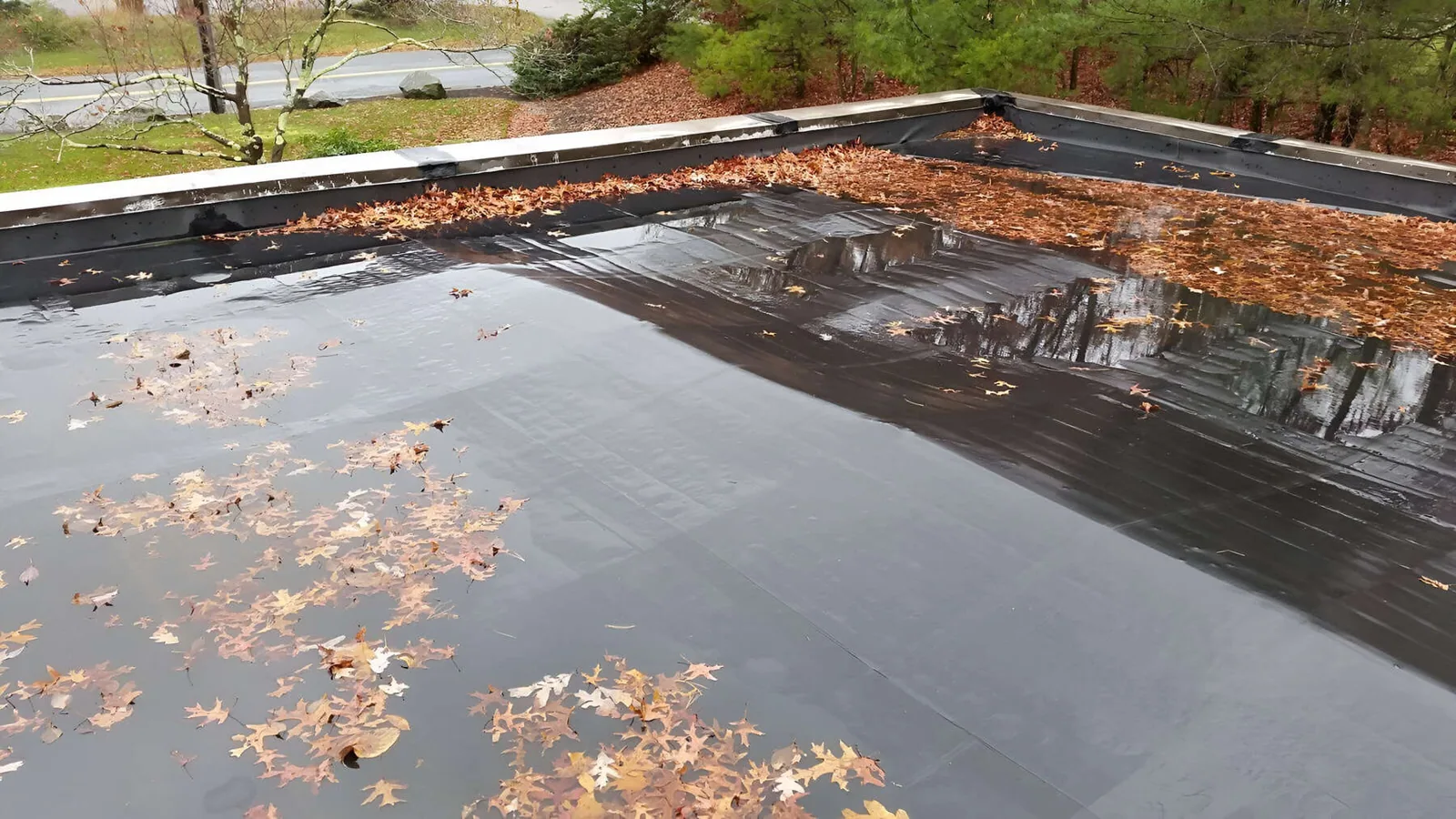
Drainage is the other big item. Long low-slope roofs shed water to a limited number of drains and scuppers, and when one clogs, the water backs up across the field. On a distribution center roof we trace each of those paths, and standing water that has already damaged the surface becomes a ponding water repair.
Restaurant and Retail Roofs at The Bend
A development of dining, retail and entertainment on 132 acres puts a kitchen exhaust on the roof wherever there is a restaurant. Grease collects around exhaust fans, drips onto the membrane and attacks some materials. We check every fan, look for grease buildup and recommend a grease-resistant membrane or protective pads around them.
Multi-tenant roofs also raise the question of who owns which curb. A landlord holds the roof, tenants hold the units, and a new opening cut by a mechanical contractor can become a leak. We map every penetration to its tenant and note its flashing condition. A restaurant roof gets work scheduled in the off-hours, with fresh-air intakes covered and patios and entrances protected from debris.
Illini Hospital and Healthcare Roofs
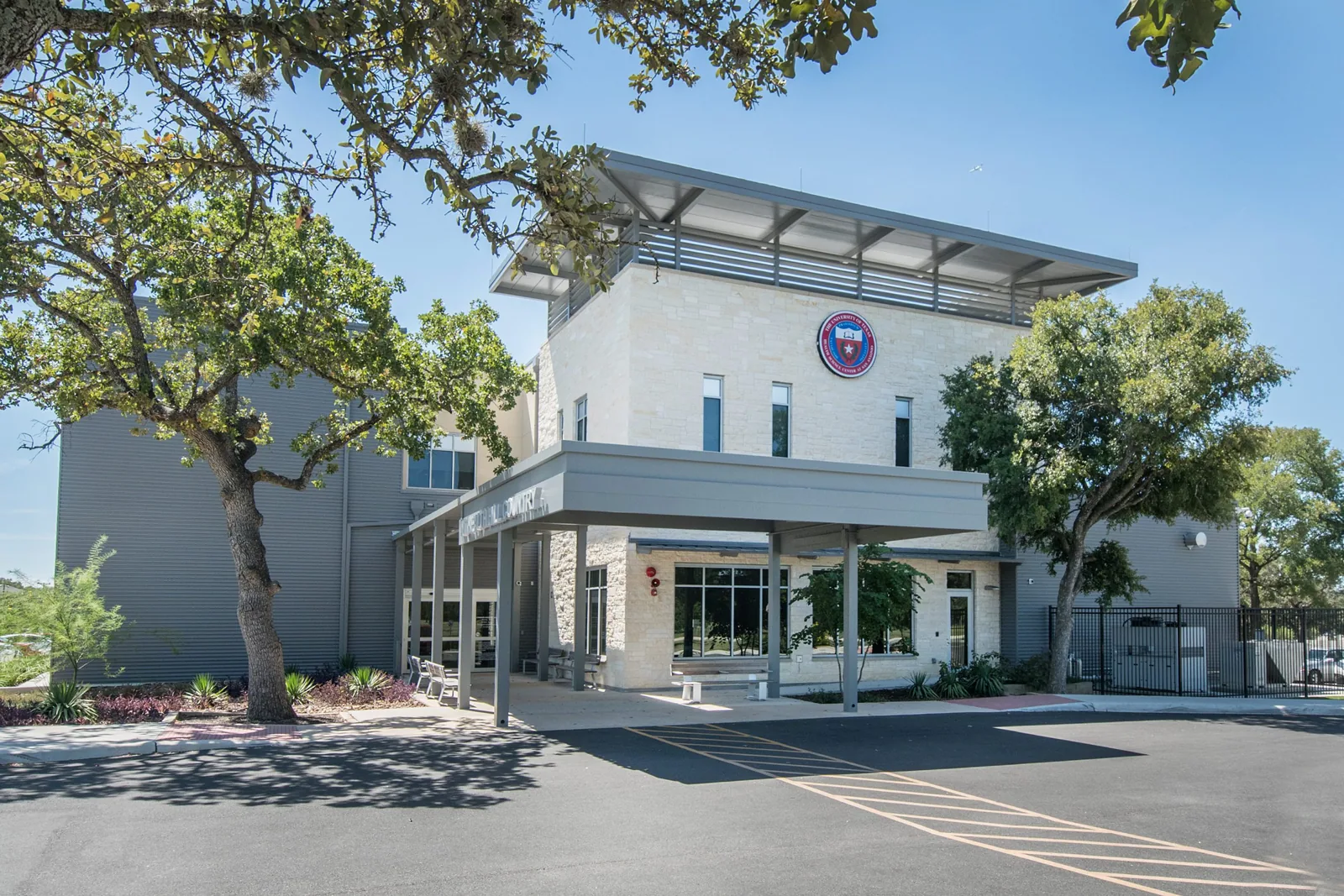
Illini Hospital employs about 700 people. Any hospital roof comes with rules that a warehouse roof does not have: infection control, protected air intakes, quiet near patient areas and a clear plan for water that reaches an occupied floor.
We walk the roof with engineering and safety before we cut or lift anything. We note the location of every intake and exhaust, mark where equipment cannot be shut down, and agree on the days when heavy work is allowed. The goal is a roof that stays dry and a building that does not notice we were there. For healthcare systems with more than one site, the walkthrough and the report follow the same format across buildings.
Derecho, Hail and Winter
East Moline shares Quad Cities weather. The August 2020 derecho gusted to 79 mph at Quad Cities International Airport and 86 mph at Davenport Municipal Airport, and the July 2024 derecho peaked at 100 mph. Davenport's center has 133 hail reports within 10 miles since 2004, the largest a 2.5 inch stone on April 4, 2023. The hail count is Davenport's, and we treat it as a measure of regional risk.
We look at edge metal, coping and fasteners after wind, and at insulation facers, unit fins and flashing after hail. Snow adds up to over 36 inches a year across the Quad Cities, so drains and scuppers get checked before and after winter. A roof drain and scupper check before winter heads off the worst leaks.
What Moves the Price and the Calendar
A few things decide it. The first is how much insulation is wet, which we confirm with an infrared survey. The second is the number of penetrations and curbs. The third is access: where the lifts go, how trucks reach the roof and how long the dock can be partly blocked. The fourth is the weather, since membrane work wants dry, mild days.
For owners who manage several buildings, a preventive maintenance program spreads the work across seasons. Owners who also hold property in Moline or in Silvis can bundle follow-up visits into the same trip.
Send the Work Order or Set a Walkthrough
Send us the work order, a dock photo or the building address. We will schedule a walkthrough around your trucks, tenants or patients and give you a plain recommendation with photos.
Questions About East Moline
A leak showed up over the third bay but the stock is still dry. How fast do we need to move?
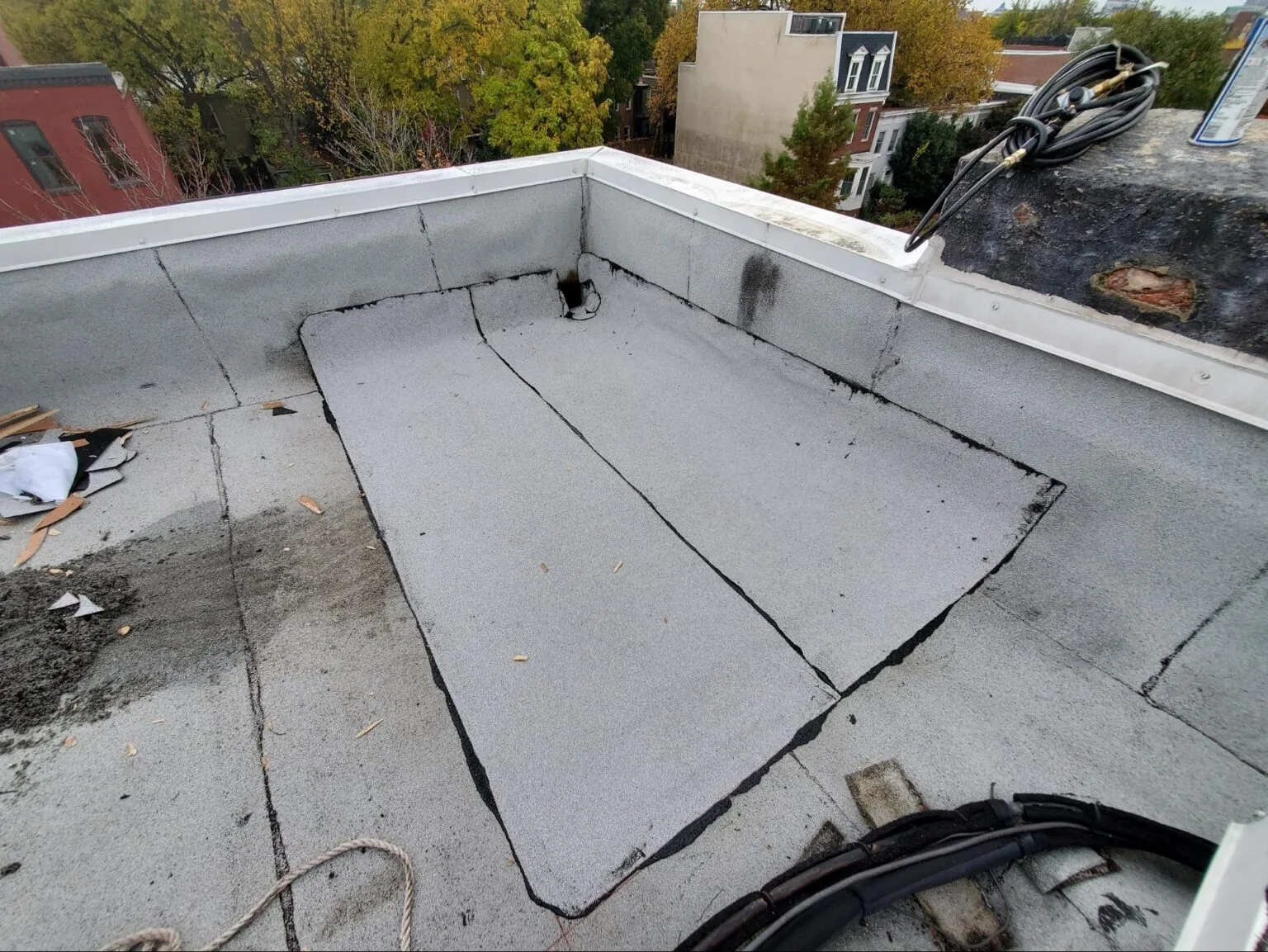
Move stock out of the line of the leak today, and call us while you do. Water over product is the expensive kind, so a temporary repair comes first. We go up, find the opening and seal it, then check the insulation for moisture before we write up the permanent fix. You get the photos and a plan within a day.
Metal dust and welding smoke settle on our roof. Does that wear the membrane faster?
Grit scours the surface when crews or wind move it, and some residue holds moisture against the membrane. We look at the surface near stacks and exhaust fans for pitting and chalking, and we check that drains are not filling with debris. Regular sweeping and a yearly walk keep it manageable. If wear is advanced, a coating or a new membrane section is the next option.
Several restaurant tenants share one roof. How do we assign responsibility for grease damage?
Map the exhaust fans to the tenants and photograph the surface under each. That puts facts on the table. Tenants whose fans are leaking grease can be asked to add grease containment or maintenance. The landlord can ask us to install protective pads or a resistant membrane area. Lease terms vary, so the roof plan gives both sides a shared reference.
We are replacing a rooftop unit on a hospital building. What should the roofing side know?
Share the new unit's dimensions, weight and curb height before the order is placed. A bigger unit may need a taller curb or added framing, and the old flashing will not fit. We coordinate the lift, re-flash the curb and test the seams. The work gets done in the hours engineering approves, with intakes protected.
Our distribution building is ten years old and has never had a roof visit. Where do we start?
A baseline walk. We photograph every drain, seam, flashing and penetration, record the condition and map any wet spots. That baseline is the reference for every later visit, and it shows quickly whether the roof is aging as expected. A building that age usually needs small repairs, not big projects, and early repairs keep it that way.
Talk to a Davenport Commercial Roofer
Send the work order, the building address or a few photos of what you are seeing. We will set a walkthrough, go up with whoever has the hatch key, and tell you plainly what the roof needs.