
School Roofing in Davenport, IA
Summer-window roof repair, recover and replacement for K-12 school buildings in Davenport, IA, planned around bell schedules, bids and the first snow.
The last bus pulls out on a Friday in late May, and by Monday the facilities director has a punch list with four roofs on it. Two leaked during the spring thaw. One has a gym ceiling stained brown. One has not had anybody on it since before the last principal retired.
School roofing in Davenport, IA runs on that calendar. The buildings sit mostly empty for a short stretch, the crews have one window, and everything put off during the year suddenly needs a price. We start by walking the roofs with whoever holds the hatch keys, then sort the list three ways: fix now, carry another year, or move into the capital plan.
Summer Is the Window
Material lead time drives a school schedule harder than the roof work does. A membrane order placed in April arrives when crews are free. The same order placed in June may not. We ask for the walkthrough early enough that the scope, the bid and the board vote all land before the last day of class.
Winter sets the back end of the window. January is the snowiest month here and a normal winter drops more than three feet, so a tear-off that slips into November risks an open deck under the first real snowfall. Finish dates are counted backward from the first hard freeze, not forward from the date the board approves the contract.
Storm season runs through the same weeks. The August 2020 derecho and the July 2024 derecho both arrived in summer, when a school building holds few people and a leak can run for days before anybody looks up.
Gyms, Cafeterias and Mixed Roof Levels
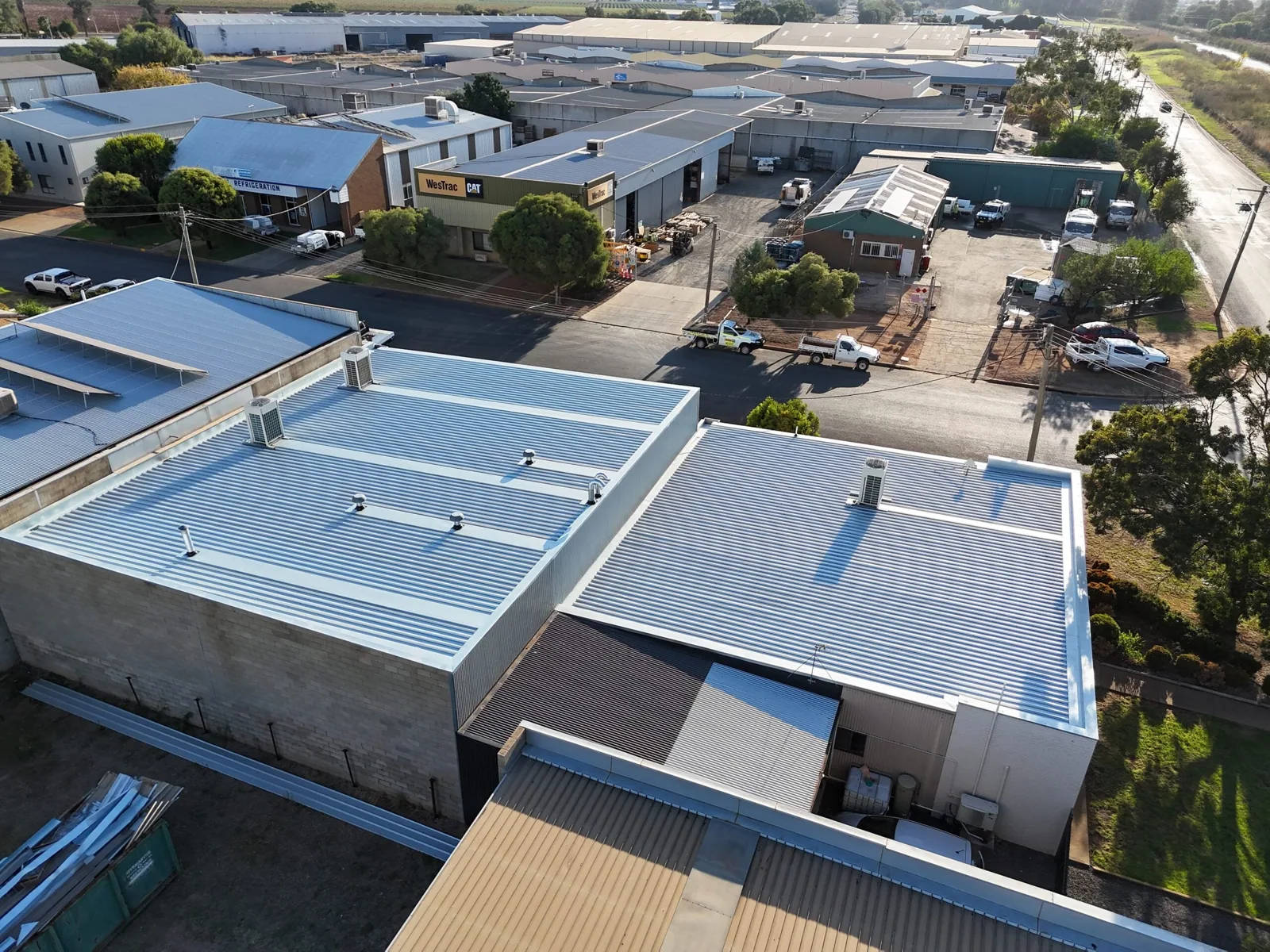
A school is rarely one roof. The classroom wing is low, the gym and auditorium stand taller, and the cafeteria and kitchen carry their own exhaust fans.
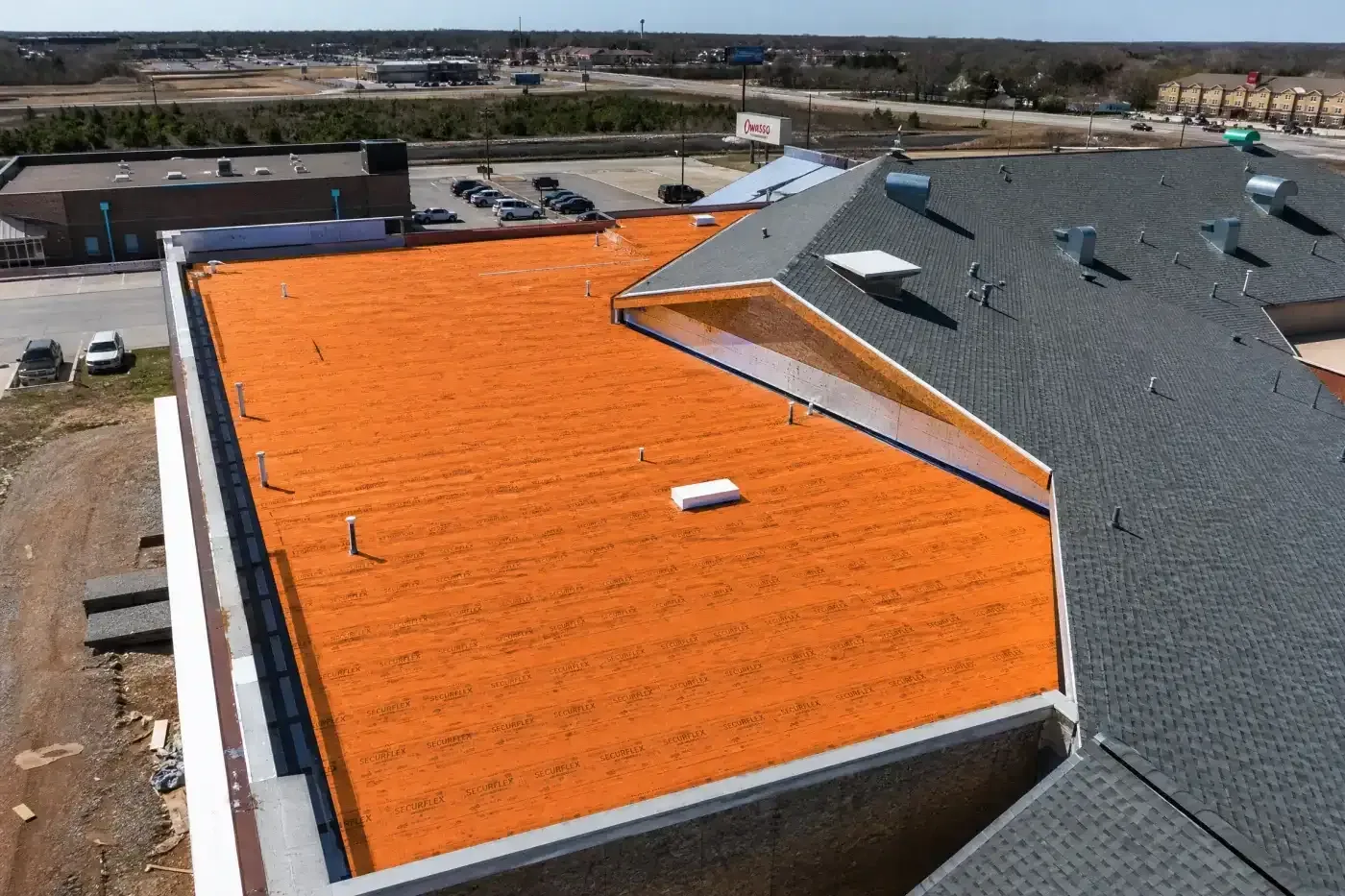
The trouble spot is usually where a tall wall meets a low roof. Wind-driven snow piles up against that wall, then melts, and the counterflashing takes the load. If the flashing is stiff or pulled loose, the water runs behind it and shows up as a stain on the gym ceiling, a long way from the real defect.
- Gym and auditorium: wall flashing, high drains and long seams that flex with the temperature.
- Classroom wings: drains, roof hatch curbs and the rooftop units over each hallway.
- Kitchen and cafeteria: grease on the membrane near exhaust fans, which softens some materials over time.
Students, Fumes and Fencing
Summer programs, athletic camps and custodial crews still use these buildings. The roof job has to share the site with them. We agree on one staging area away from bus loops, playgrounds and the doors that stay in use, and we fence it. Nothing gets hoisted over an entrance that is open.
Fumes get the same attention. Adhesives, primers and hot work send odors toward air intakes, and a classroom that smells like solvent on the first day of school is a phone call nobody wants. We ask the building engineer where the intakes are, cover the ones near the work, and pick the attachment method with that in mind.
Older school roofs also deserve a lab sample before tear-off. Flashing mastic and some old felts can contain asbestos, and the time to learn that is before the first cut, not during demolition.
Snow Load and Ice Over Entrances
The thermometer here has swung from 111 F to -29 F on record, and a roof that lives through that range works its seams every year. Ice at a drain backs water under the membrane. Snow sliding off a sloped metal canopy lands where children walk.
Where a standing seam canopy or metal roof sheds over a doorway, snow guards keep the load on the roof until it melts in place. We check them each fall. Frozen drains and ponding after a thaw are snow and ice damage in the making, and a fall visit under a preventive maintenance schedule keeps the drains clear before the cold sets in.
Hail belongs on the list too. Hail reports near the city center number 133 since 2004, and one April 2023 storm dropped baseball-size stones. Old, brittle membrane breaks under a stone that new membrane would shrug off.
Bid Paper and Code Review
A public district buys a roof on a written scope, and the bid is only as good as the scope behind it. We build ours from core cuts and photos, so the number of layers, the insulation condition and the deck type are known before anyone prices the job. Surprises found after the contract is signed turn into change orders and board agenda items.
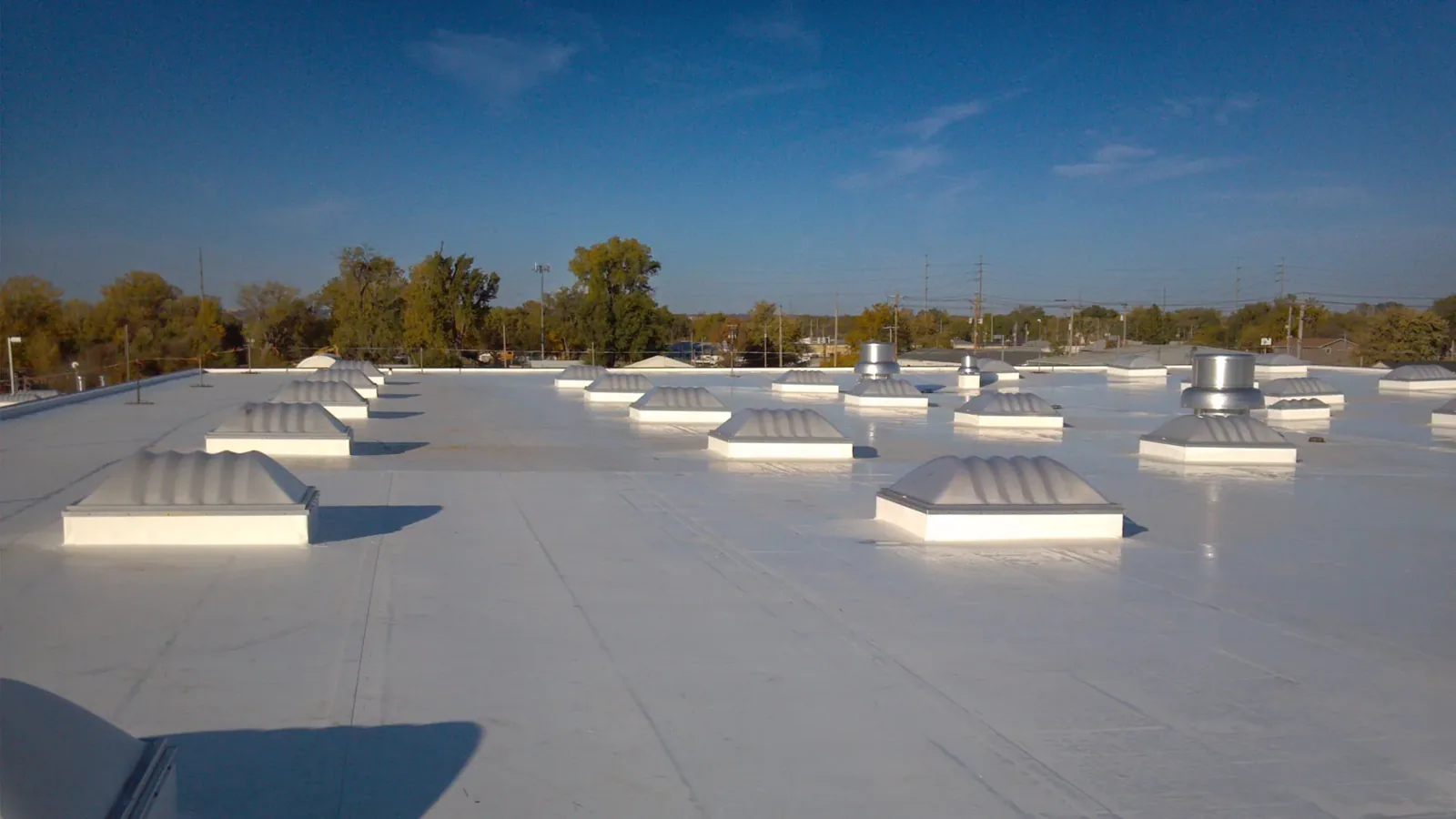
Davenport reroofs fall under its 2021 building code and existing-building code, amended locally, and Iowa's energy code rides along with both. A tear-off to the deck usually pulls the energy rules into the job, so insulation thickness belongs in the scope and the budget. A recover over a dry roof can avoid some of that, but only when a moisture survey backs it up. If the numbers say the old system is done, a new TPO system is the usual answer for flat school roofs.
Phasing Across Several Summers
Few districts can fund all their roofs at once. A multi-year plan ranks the buildings by condition and consequence: which roof leaks into a classroom, which sits over a server closet, which still has life in it. We pull the condition data into one report, and the plan moves from the worst roofs to the best.
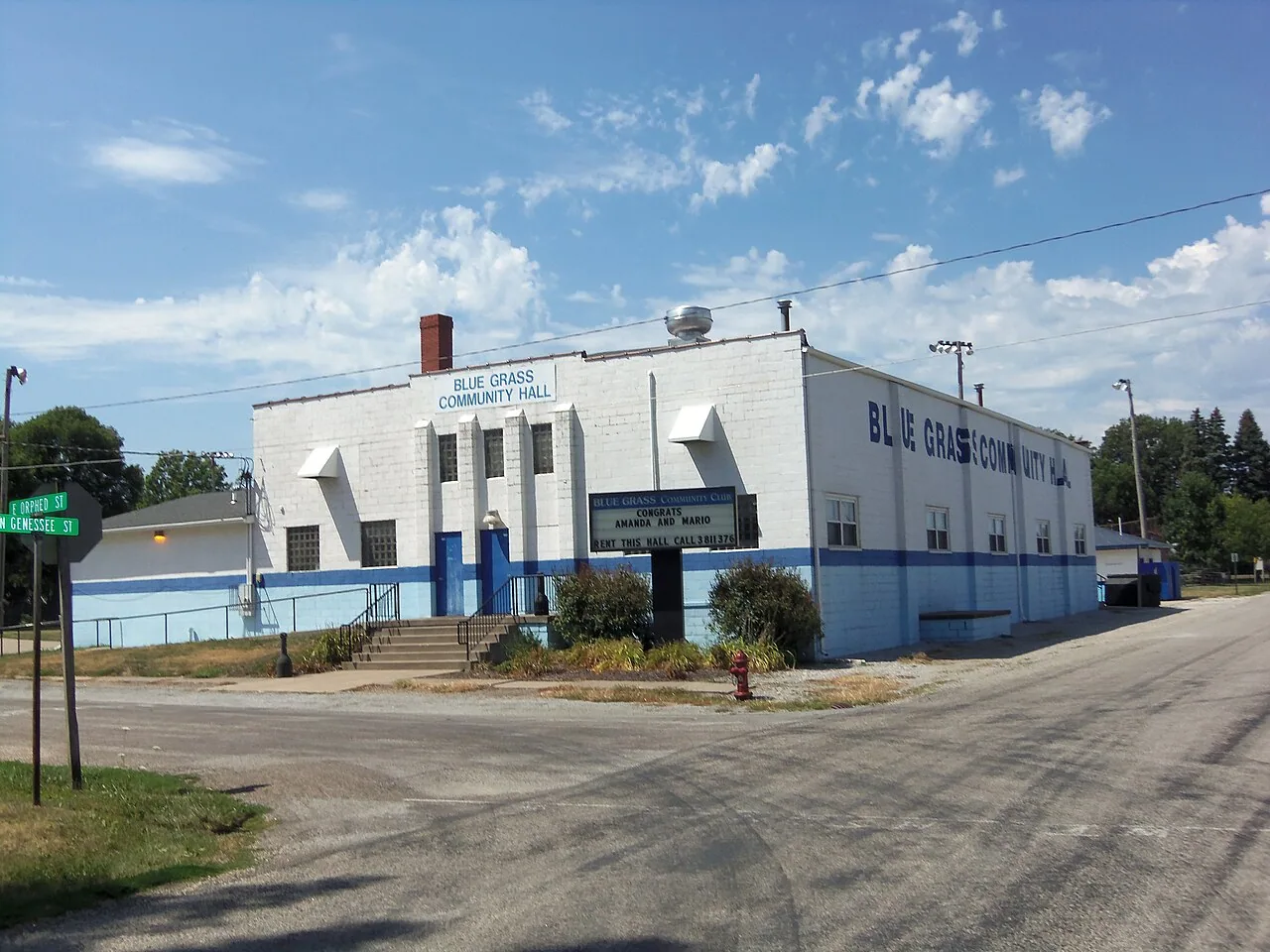
The same approach reaches past Davenport Community School District. Blue Grass students attend Davenport schools, with Davenport West High School serving that area, and the July 11, 2025 EF-2 tornado started southeast of Blue Grass before crossing the city on a seven-mile path. North Scott Community School District has its administrative offices in Eldridge, and every district in the metro shares the same weather.
A roof capital plan turns survey notes into a ranked list with timing, so the facilities office can put a number next to each building. That is how school districts with several buildings spread the spending, and the same survey habits carry over to a college campus or a hospital.

Send the Work Order or Set a Walkthrough
Send us the work order, the last roof report or a list of the buildings that worry you. We will set a walkthrough with your facilities lead, go up with the hatch key, and come back with a plain recommendation for each roof before the school year ends.
Questions About School Roofing
We have several buildings and money for one roof this summer. Which goes first?
Pick the roof that has leaked into occupied space more than once, then confirm it with a moisture survey before you commit. A repeat leak in the same corner usually points to wet insulation or a failed flashing, and both get worse every winter. If two roofs tie, take the one over rooms you cannot easily close. Everything else goes on a watch list with a fall and spring visit.
Can summer work finish before staff come back in August?
For a single wing or a gym, usually yes. A large school with several levels is better split into two phases, with the second finishing the following summer, so the crew is not racing the calendar. Lead times matter more than crew size. If the material is ordered in spring and the tear-off starts the week after class lets out, a single-building job has weeks to spare before staff return.
The board wants a recover instead of a tear-off to save money. Is that fair?
Sometimes it is. It only works if the existing insulation is dry, the deck is sound and the code allows another layer. Core cuts and an infrared survey answer all three before anyone votes. If the survey finds wet insulation, the wet sections come out either way, and the board is better off hearing that in May than discovering it in July.
A gym roof leaks only after snow melts off the high wall. Where do we look?
Start at the flashing where the high wall meets the low roof, and check the drains downstream of it. Drifted snow melts slowly there and sits against the termination for days, so a small gap gets a lot of water. The drain nearest the wall also tends to ice over first. A repair at the flashing plus a cleaned drain often clears the problem.



Talk to a Davenport Commercial Roofer
Send the work order, the building address or a few photos of what you are seeing. We will set a walkthrough, go up with whoever has the hatch key, and tell you plainly what the roof needs.