
Government Building Roofing in Davenport, IA
Roof repair and replacement for city, county and municipal buildings in Davenport, IA, with written scopes for bidding, secure access and public-hours planning.
The work order says water on the floor of the records room. The facilities supervisor has already moved the bottom shelf, and the board meets in nine days. Somebody has to say what the roof needs and what it will cost, and put it in a form a commissioner can read.
A public-building roof problem in Davenport, IA tends to arrive the same way: a leak, a calendar and a paper trail. We start with a walkthrough, going up with the person who keeps the hatch key. You get photos the same day, a written scope and a straight answer on the roof: patch it, monitor it, or put the larger project on the capital list.
Records, Counters and Courtrooms
What sits under a government roof is often irreplaceable: paper records, evidence, servers, voting equipment, a clerk's counter that has to open at eight. A drip that would be a nuisance in a warehouse is a loss of public record here.
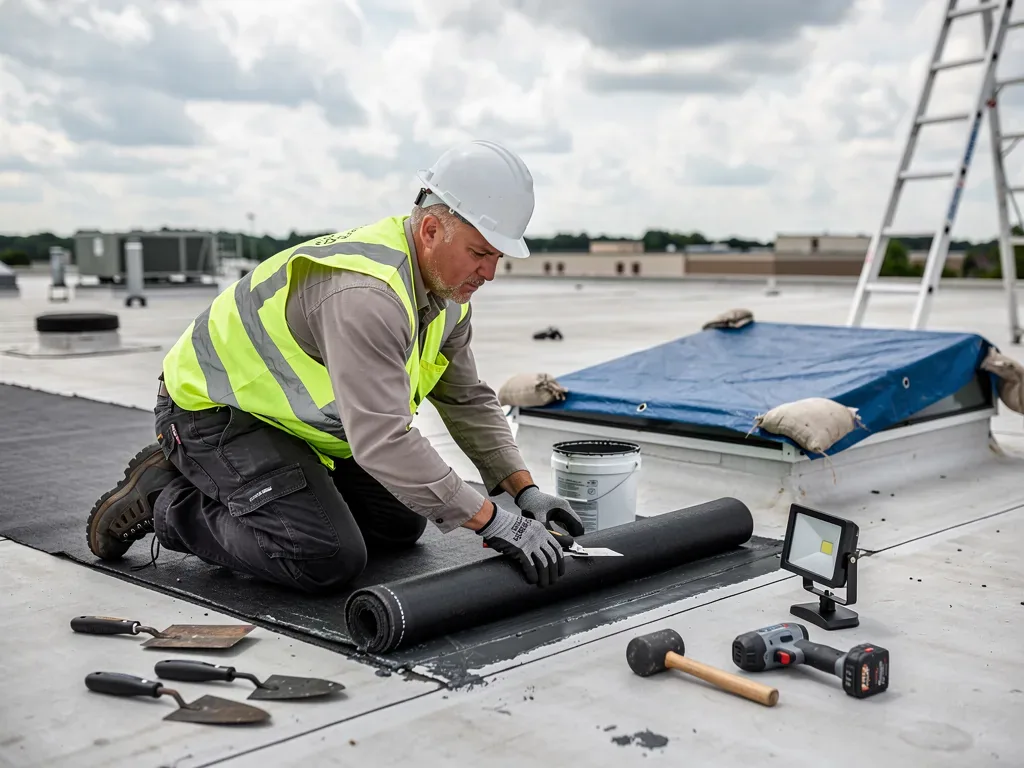
The first hour is about the openings and the contents. We find where the water is coming in and dry it in, with a temporary cover if the weather is still moving. We tell you which rooms sit under the wet area, because roof water runs along the deck and insulation before it shows up on a ceiling. Staff then decide what to move, cover or box. Photos taken on the roof and at the ceiling go in your file the same day, which helps with a claim and with any later records request about what happened.
Courthouse-Era Roofs and Current Code
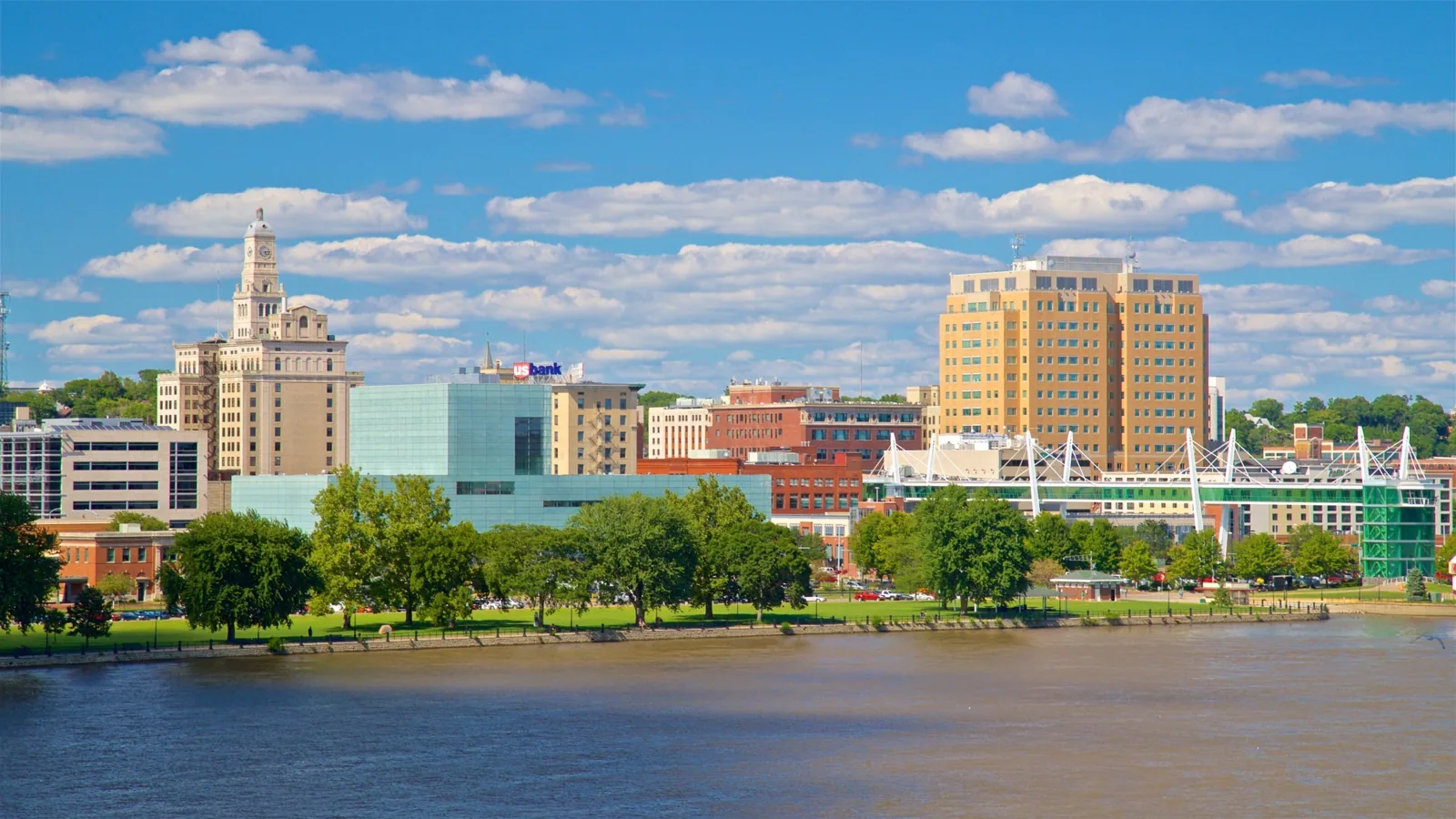
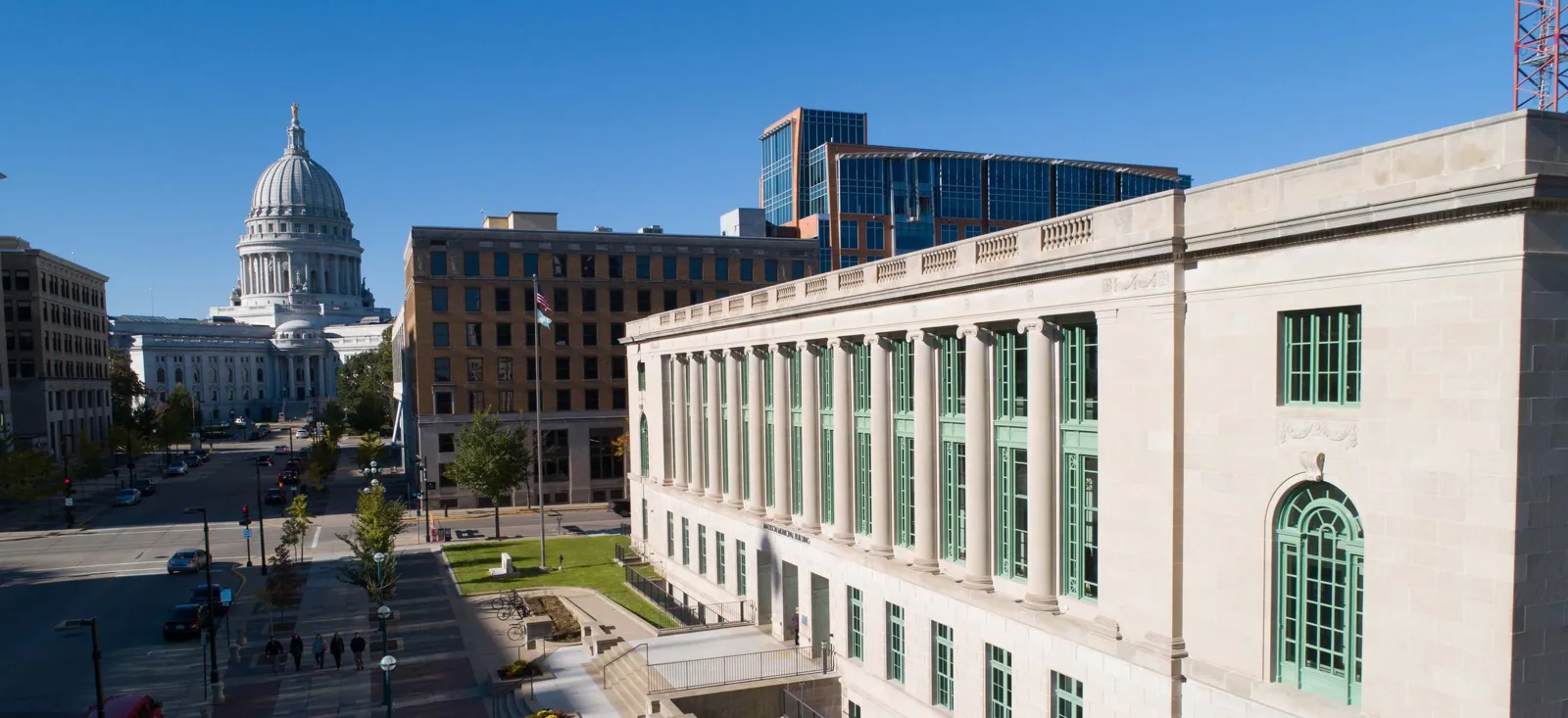
The commercial historic district downtown spans 49 acres from 2nd to 5th Streets and went onto the National Register of Historic Places in 2020. Its 33 contributing buildings include the 1895 City Hall and the Scott County Courthouse. A building in a district like that can bring extra review into any change that alters its look, so we ask early who approves materials, coping profiles and color before a bid goes out.
The code side is clear. The city's adopted rules are the 2021 IBC and 2021 IEBC with local amendments, along with the 2021 International Fire Code and the Iowa energy code. A replacement has to meet those: insulation levels, wind resistance, edge details, fire rating. Our job is to put the requirements in the scope, so every bidder prices the same roof. Roof work in the downtown Davenport core can have to fit those two sets of rules together.
Written Scopes and Public Bidding
A public owner buys by specification. The scope has to be specific enough that three bidders land close together, and it has to say what happens when the roof turns out worse than expected.
The pieces we write into a scope:
- A condition report with photographs, core locations and moisture readings, so every bidder starts from the same facts.
- Unit prices for wet insulation and deck repair, so a surprise under the membrane is priced before it is found.
- Edge, drain, curb and flashing details drawn once, not left to each bidder's habit.
- Submittal, warranty and closeout requirements stated plainly.
Anyone can then compare bids line by line. When the board votes, the number it approves is the number the roof costs, except where the unit prices apply. A roof condition report written this way can be attached to the bid packet as-is.
Jails, Detention and Controlled Access
On October 6, 2016 a tornado tore a path out of Credit Island in southwest Davenport and over I-80 at Middle Road in Bettendorf, and the roof of the Scott County Jail was damaged. It is a fair reminder that secure buildings take weather like any other, and that their roofs need work on a secure schedule.
Work on a detention or controlled-access building follows rules written by the owner. Crew members are named in advance and checked. Tools and fasteners are counted in and out, and nothing is left on the roof overnight that could be picked up. Escorts decide when the crew moves, and cranes and hoists pause during counts and transfers. We ask for those rules during the walkthrough, plan around them and put them in writing, so the owner's security staff and the contractor read the same plan.
Weather and the Public Record
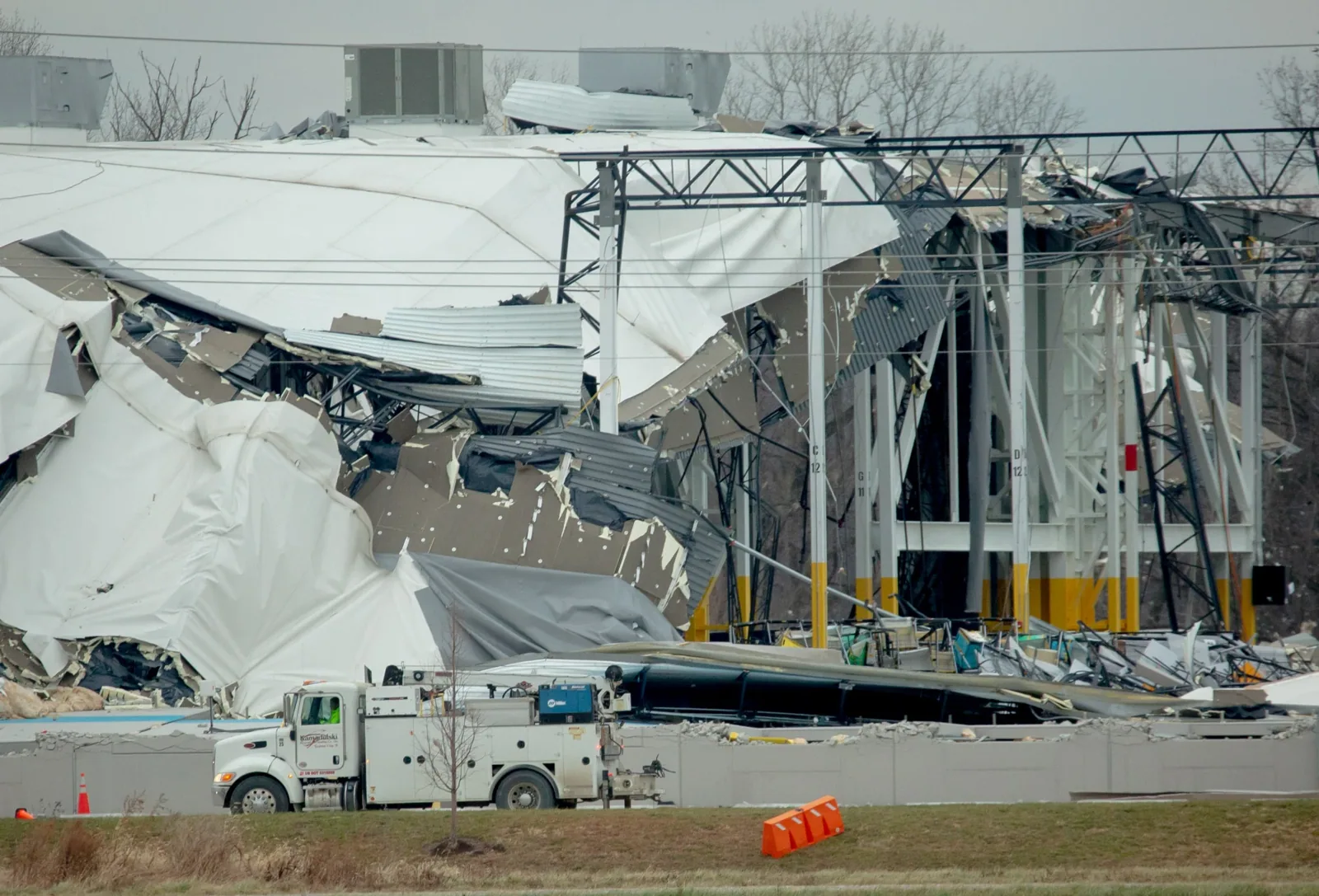
Public buildings sit in the open. The August 2020 derecho produced an 86 mph gust at Davenport Municipal Airport, and the peak winds of the July 2024 derecho reached 100 mph. Hail reports within 10 miles of the city center number 133 since 2004, and the stones on April 4, 2023 measured 2.5 inches. A tornado damage repair on a public building also has to survive an audit of the paperwork.
After a storm we write down the date, the walk and the findings. Photos carry the date, drawings mark where each item sits, and the report separates storm damage from age. An insurer, a risk pool or an emergency-management office can then read exactly what happened, and the board can see which part of the repair is an emergency and which is a capital decision.
One Plan for Many Roofs
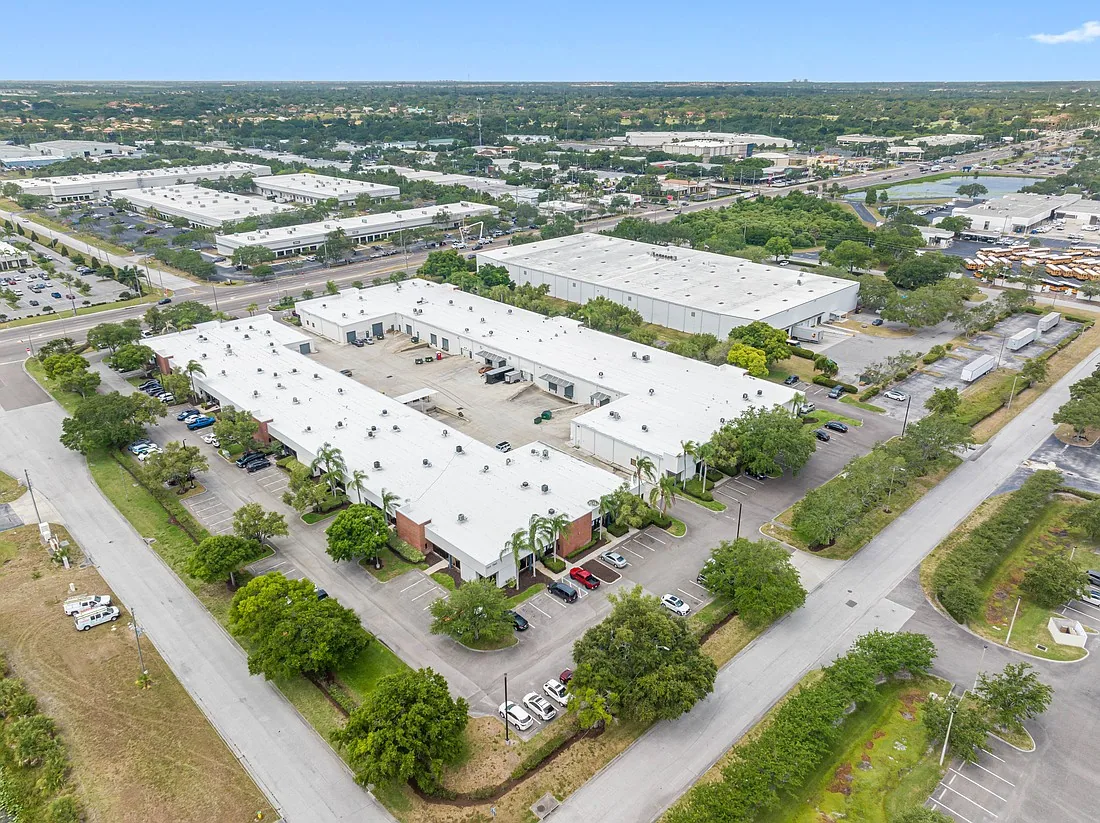
Cities and counties hold a long list of buildings: offices, public-works garages, fire stations, libraries, park shelters. Each ages at its own pace, and the budget does not care about.
A condition rating on every roof, with a repair, plan or replace label, gives the finance office an order to follow. A garage roof with one leaking seam gets repaired. A courthouse roof with wet insulation gets scheduled. A multi-site roof program spreads the spending over several years so the board does not face all the replacements at one meeting. The same method serves public agencies, a neighboring school district and an office building the city leases.
Send the Work Order or Set a Walkthrough
Send us the work order, the address or a photo of the wet ceiling. We will set a walkthrough around public hours and come back with a written scope your board can read.
Questions About Government Building Roofing
Our board meets once a month and the roof is leaking now. How does an urgent repair get approved in time?
Split the problem in two. The dry-in, which stops water and protects the contents, is an emergency that most administrators can authorize under their own purchasing rules. The permanent repair goes to the board with a written scope and a number. We write the emergency work up with photos so the file shows why it was done before the vote.
The bid has to go out before we know whether the insulation is wet. How should the scope handle it?
Ask for unit prices. Each bidder quotes a price per square foot for replacing wet insulation and per linear foot for deck repair, and the quantity gets settled after the tear-off is open. A moisture survey and a few cores before the bid reduce the unknowns, so the unit prices apply to small areas, not half the roof.
The clerk's counter stays open to the public. How do you keep people clear of the work zone?
Ground protection starts at the walk and the entrance, with barricades, covered walkways and a flagger when lifts are moving. Material staging goes on the side with no public access. Loud tasks are scheduled for hours the office names, and the crew leader checks in with the front desk each morning so staff know who to call.
A building in the historic district needs new coping. Who signs off on the material?
Ask whoever reviews exterior changes for that building before the bid is written, and bring them a sample and a section drawing. We prepare the profile, the metal type, the fastening and the color options, so the reviewer sees exactly what will be installed. A drawing approved first saves a stop-work call later.
How should a storm be documented for the insurer or the risk pool?
Take dated photos of the roof, the ceiling and the contents the same day, and keep every invoice for emergency work. We add a roof plan marking each bruise, tear and lifted edge, plus a short statement separating storm damage from wear. Send both to the adjuster together, so one package answers every question.
Talk to a Davenport Commercial Roofer
Send the work order, the building address or a few photos of what you are seeing. We will set a walkthrough, go up with whoever has the hatch key, and tell you plainly what the roof needs.