
Commercial Roofing in Eldridge, IA
Commercial roofing in Eldridge, IA for industrial park buildings and district offices, with walkthroughs set around production schedules and written scopes.
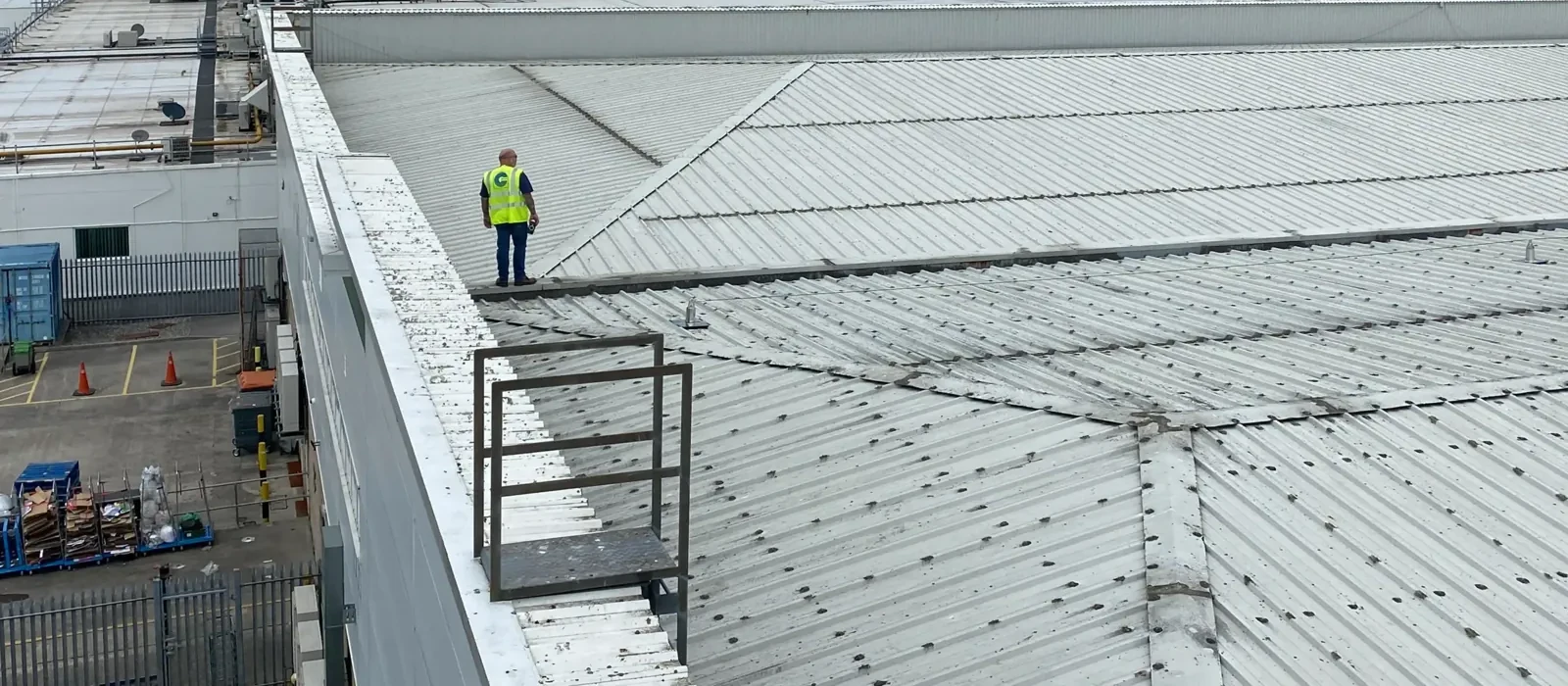
The plant manager meets us at the side door with a hard hat and a short list. Water stains over the break room. A rooftop unit that rattles. A drain nobody can reach without the tall ladder. We sign in, grab the roof hatch key and go up.
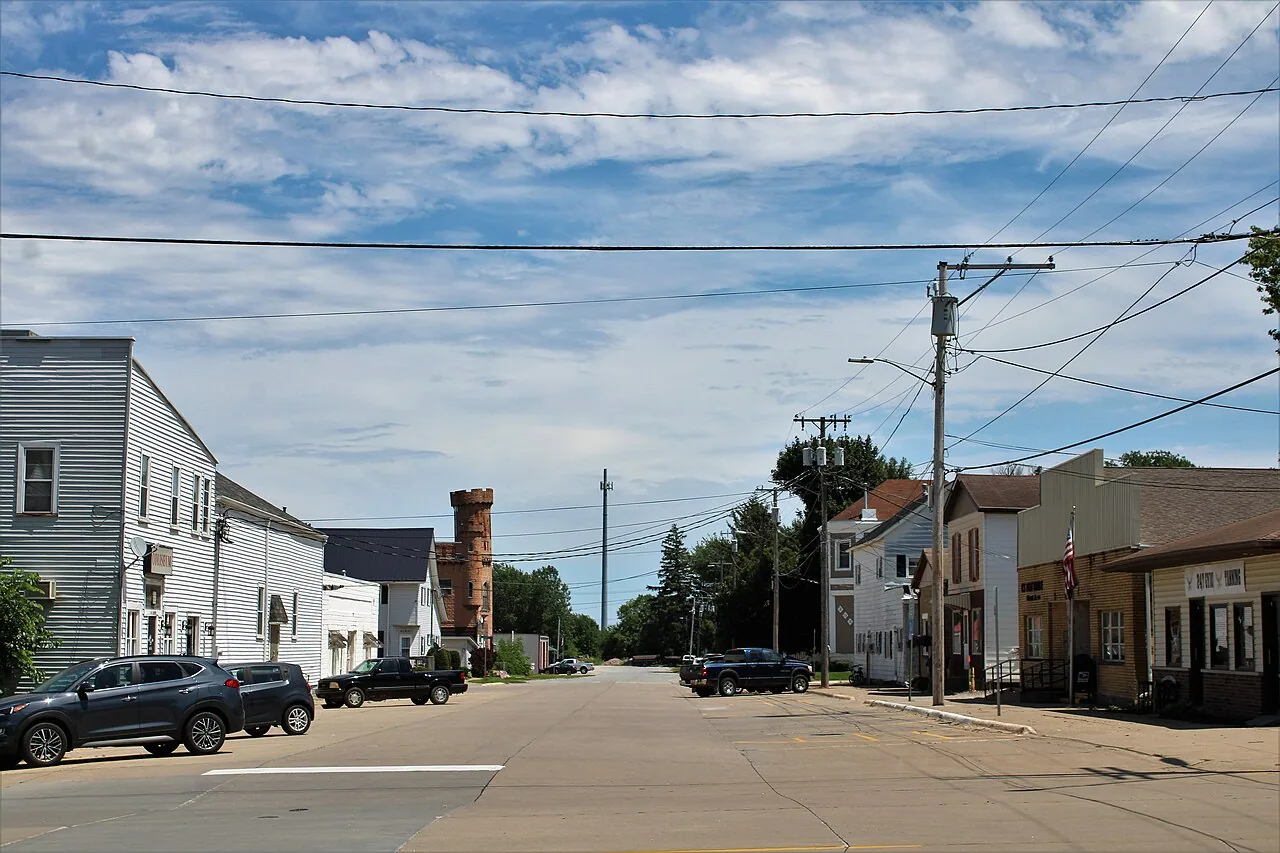
Eldridge, IA lies along U.S. Route 61 north of Davenport and counted 6,726 residents in 2020. Starting in the late 1960s the city set up industrial parks to bring in business, and the North Scott Community School District keeps its administrative offices here. That points to two kinds of roof owner here: those with working buildings in industrial parks, and a public school district that buys roof work by written scope. We approach both with a commercial roof inspection and a plain report.
Industrial Park Buildings, Read One at a Time
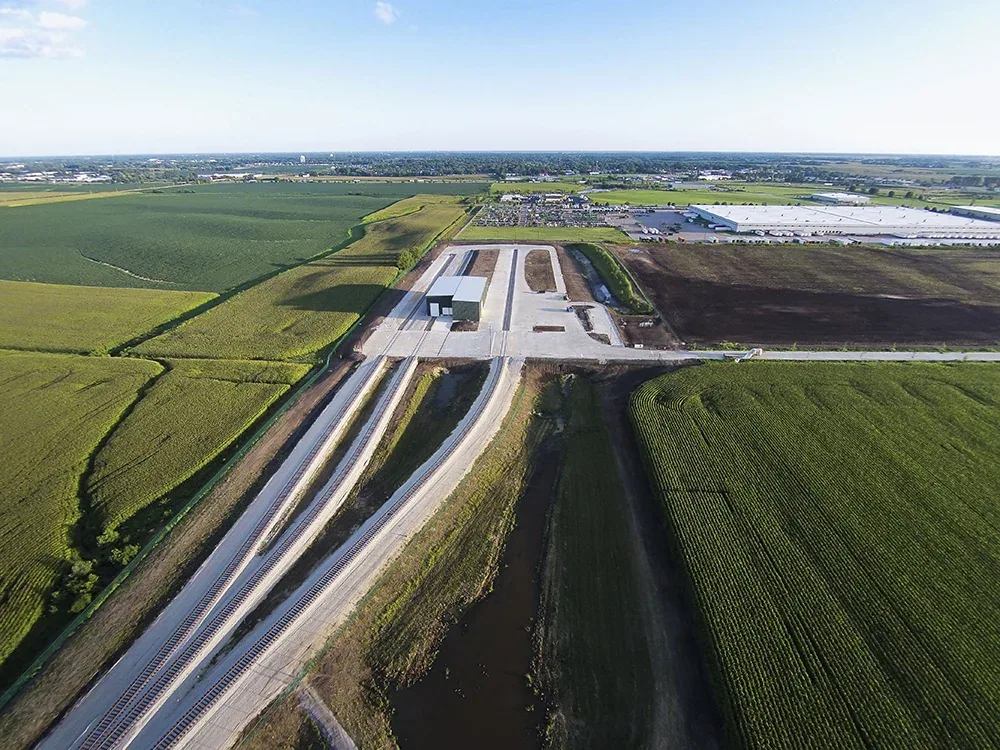
Industrial parks that the city began creating in the late 1960s can hold buildings put up in different decades. We never assume the roof next door matches the one we are standing on. Each building gets its own core samples, its own drain check and its own list of repairs.
What we look at depends on the building. In a manufacturing plant, exhaust fans, make-up air units and process vents punch through the roof, and each one adds a flashing detail. In a flex industrial building, a new tenant's fit-out can add rooftop units, and old curbs and abandoned penetrations stay behind. Each one is a likely leak point.
The first-walk report names every opening, every wet area and every drain, with photos, so your maintenance lead can see the roof without climbing up.
Second Shift and the Production Schedule
A roof over a running plant is a scheduling problem first. We ask for the production calendar, shift changes and any process that cannot tolerate dust, noise or hot work above it. Torch-applied systems stay away from areas with flammable material below. Adhesive odors stay away from air intakes.
Access follows a short checklist. Who badges the crew in? Where do trucks stage so the dock keeps moving? Who owns the roof hatch key on second shift? Each answer goes in writing before the first delivery.
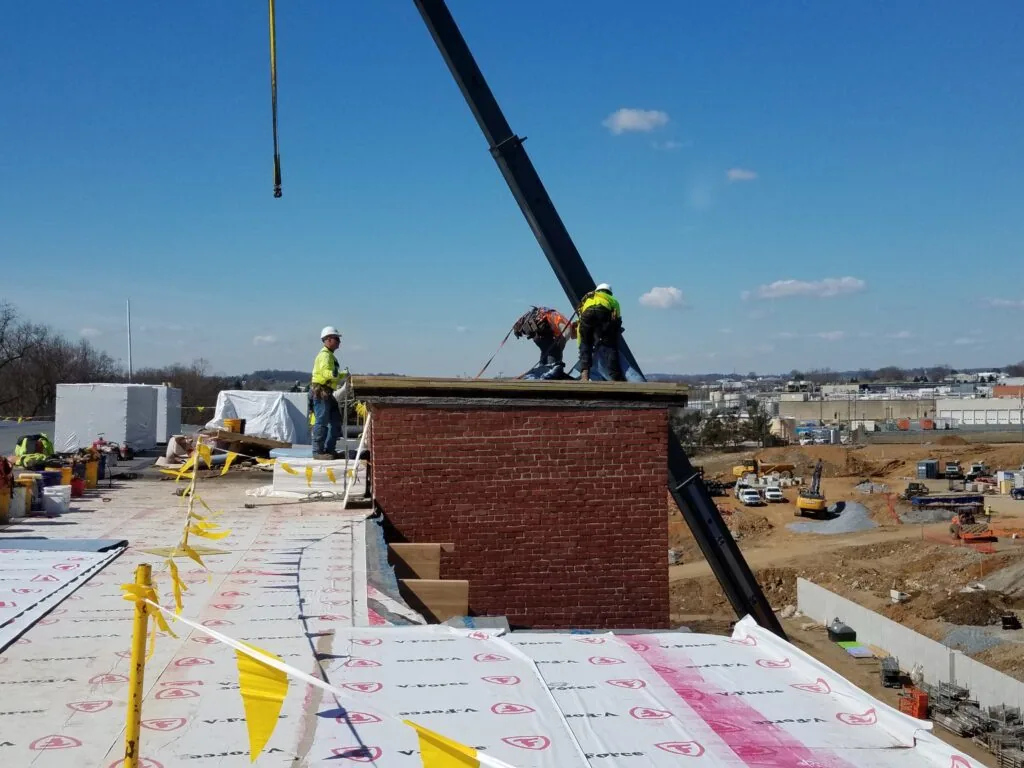
Tear-off is done in sections that can be dried in the same day, with temporary tie-ins at the end of every shift. A daily handoff to the plant manager says what is open, what is closed and what happens tomorrow. That is how occupied building reroofing stays out of the way of production.
Buying Roof Work for a District Office
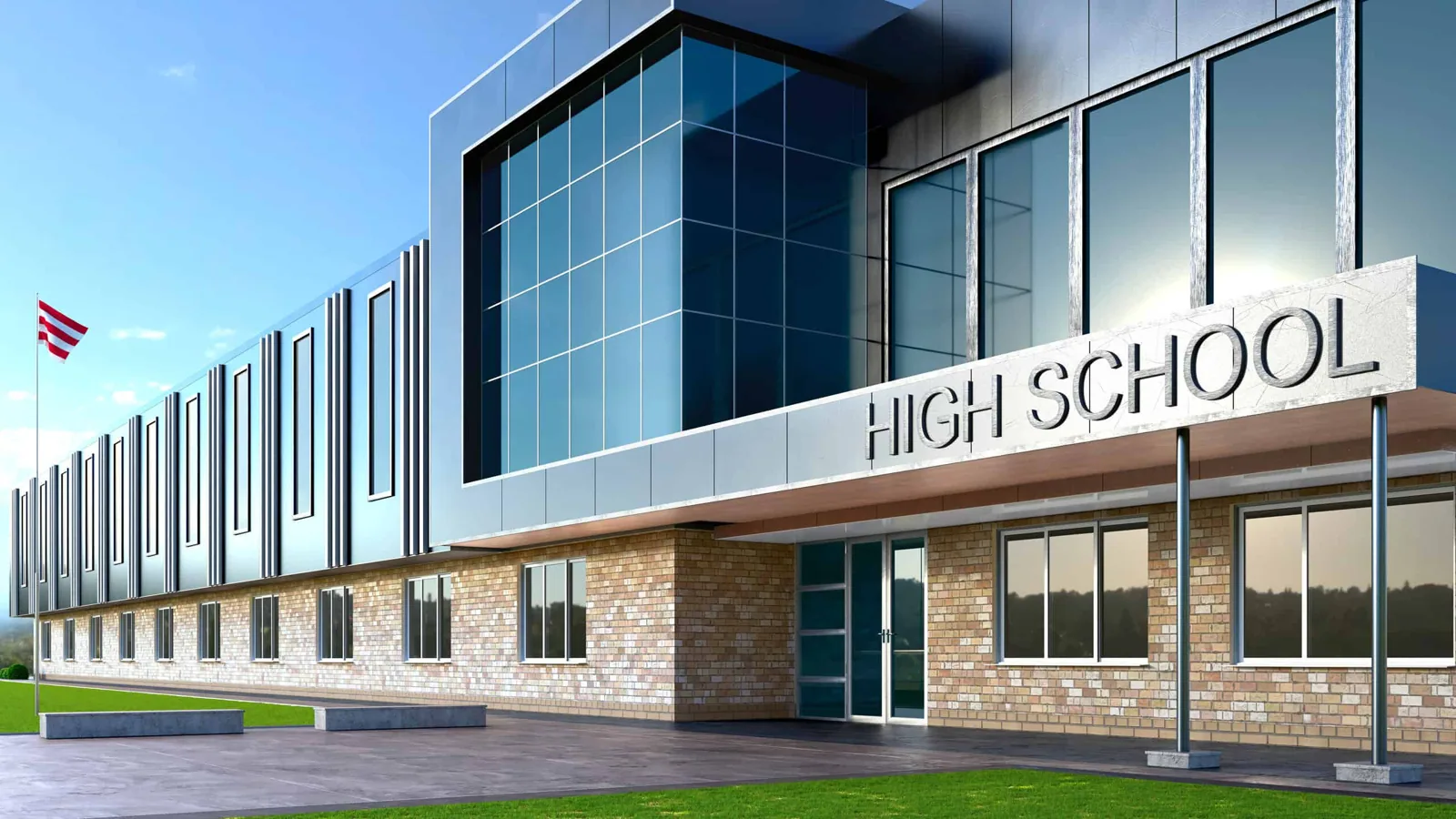
The North Scott Community School District has its administrative offices in Eldridge. A district's administrative offices are not a classroom wing, but a public owner buys roof work in a particular way, and the process affects the roof plan. A board needs a written scope, photographs of the problem, a clear price and a schedule that avoids public meetings and staff hours.
We build that package. The inspection report lists the findings by urgency. Each option, from repair to restoration to replacement, gets its own scope and a cost driver list, so the board can see what it is choosing. For a public owner with more than one building, a written condition report ranks which roof goes first. The same format suits any of the school districts that buy roof work, with summer and school-break windows in mind.
Derecho Winds on a Flat Roof
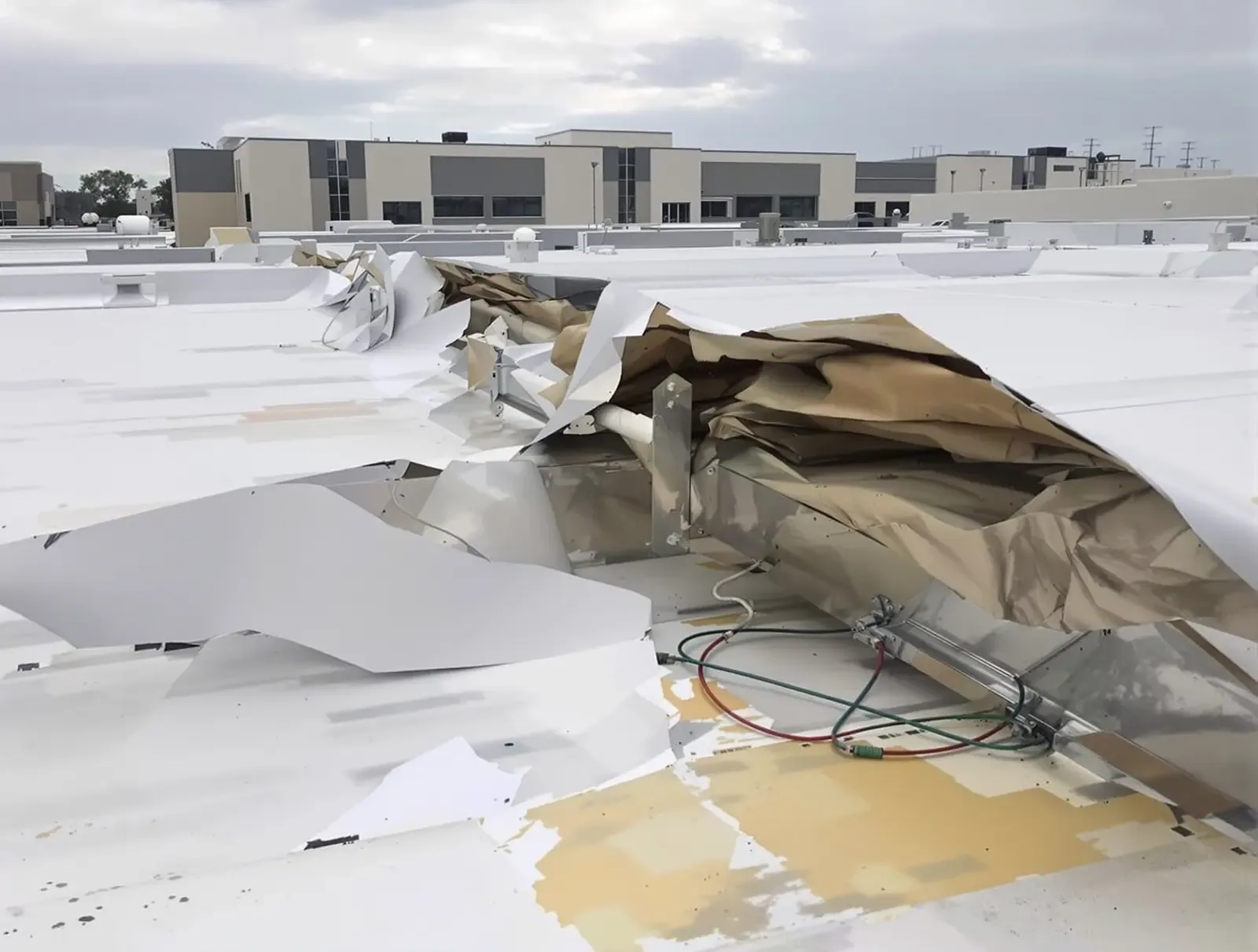
Damaging winds from the August 2020 derecho blew for 30 to 60 minutes around Davenport, and forecasters at the Weather Service documented heavy roof damage in Davenport, in Bettendorf and across Scott County. A July 2024 derecho followed, with gusts to 100 mph over the region. Long wind events pull on edges and fasteners again and again.
After a storm we check the perimeter metal first, then laps, curbs and rooftop units, and the fastener pattern in the corners. Look for membrane that has lifted from the deck, loose coping and debris caught against walls. A fast wind damage repair prevents a small lift from becoming a long tear, and a photo file taken the same day helps with an insurance claim. The same questions apply at the Eastern Iowa Industrial Center in Davenport.
Snow Drifts at the Rooftop Units
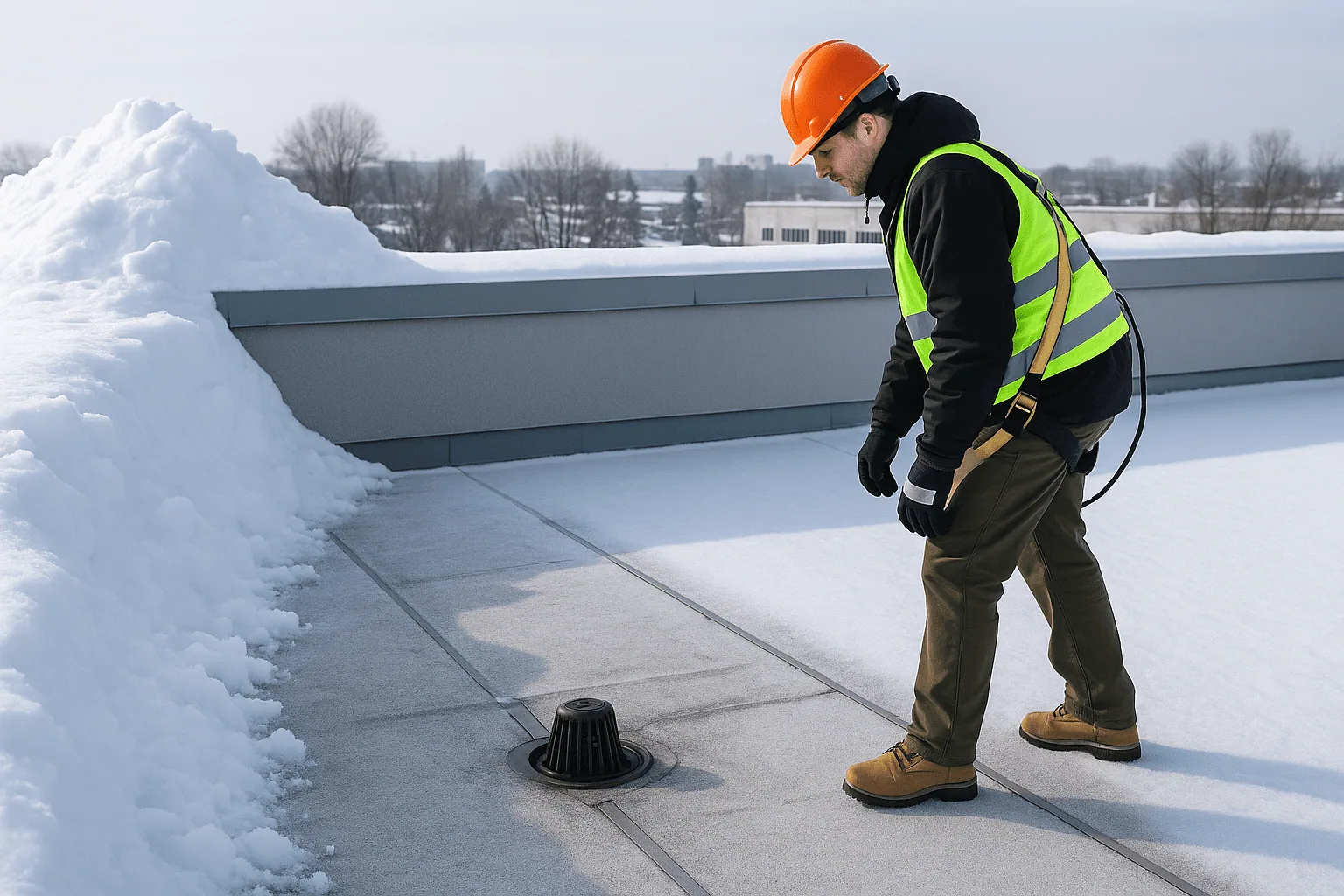
The Quad Cities average more than 36 inches of snow a year, and Davenport records run from 111 F down to -29 F. On an industrial roof with rooftop units, snow drifts behind each unit and against every parapet. The drift melts from underneath, and the water runs along the roof until it finds a seam.
We look for stains behind units and at the base of walls, then check the drains downslope. Where ice is building at an outlet, we clear it and plan a permanent fix. If a building has already taken winter damage, a snow and ice roof damage repair comes first, and the larger scope follows in better weather.
Deliveries Along Route 61
With Eldridge on U.S. Route 61, material trucks have a main road to work from. Finding a place to stand a hoist is the harder question. In a park with shared drives and busy docks, we choose the lift spot and the staging area together with the tenant. In Davenport, U.S. 61 Business runs through town as the Brady Street corridor, and the same access questions apply there.
Cost and timing follow a short list: how much insulation is wet, what the deck looks like, how many openings the field carries, and how long each section can stay open. A moisture survey answers the first, cores answer the second, and a written scope answers the rest. Code editions are set city by city, so we confirm Eldridge's before we price a replacement.
Set the Walkthrough
Send us the building address, the shift schedule or the board date, and we will set a walkthrough that fits. You get photos and a plain recommendation.
Questions About Eldridge
A tenant added rooftop units over the years. How do we know which curbs still need to be there?
Walk the roof with the tenant's maintenance contact and match each curb to a working unit. Anything abandoned gets capped and flashed or removed. We photograph each opening and mark it on a plan, so the next fit-out starts from a clean record.
Production cannot stop for a day. What can a reroof look like on a running line?
It looks like sections. We tear off and dry in a small area, move on, and repeat. Hot work stays away from sensitive areas, intakes are protected, and a plant contact gets a handoff each day. The roof is open only as long as it takes to close it.
Our board meets monthly and wants three options. How much detail do we need?
One page per option is enough: the scope, the cost drivers, the schedule and the risks of waiting. We add photos and a moisture map. A board can then compare a repair with a replacement without reading the whole inspection.
The park has older buildings. Does age alone tell us to replace?
No, because a sound membrane over dry insulation can run longer than the calendar suggests. Age tells us to look harder. Cores and a moisture scan show the real condition, and the answer might be a coating or a targeted repair instead of a tear-off.
We missed the derecho damage on the first walk. Can a claim still be documented?
Often yes, if the evidence has not been covered up. We inspect, photograph lifted metal, creased membrane and fastener pull-out, and write the findings in a report your insurer can read. The earlier you call, the cleaner the record.
Talk to a Davenport Commercial Roofer
Send the work order, the building address or a few photos of what you are seeing. We will set a walkthrough, go up with whoever has the hatch key, and tell you plainly what the roof needs.