
Johns Manville Commercial Roofing in Davenport, IA
Johns Manville TPO, PVC, EPDM, built-up and modified bitumen roofing with polyiso insulation for Davenport, IA plants and industrial buildings.
The January gas bill for the press building keeps climbing. Facilities has checked the make-up air units and the doors. Nobody has looked at what sits between the ceiling and the sky.
That is where Johns Manville starts the conversation. JM is a roofing manufacturer and an insulation manufacturer at once, so its systems are drawn from the deck up: polyiso boards, cover boards, and a choice of membranes on top. For a plant, warehouse or institution in Davenport, IA, that makes the assembly easy to specify as one package. We install JM systems, repair the ones already installed, and sort out which layer is failing before anyone orders anything.
Polyiso First, Membrane Second
Most of a JM roof is not the part you see. The polyiso insulation sets the thermal value, and the cover board over it protects that value from foot traffic and hail. The membrane is the weather skin on top. When the insulation gets wet, its performance drops, and the gas bill climbs while the roof still looks fine from the ground.
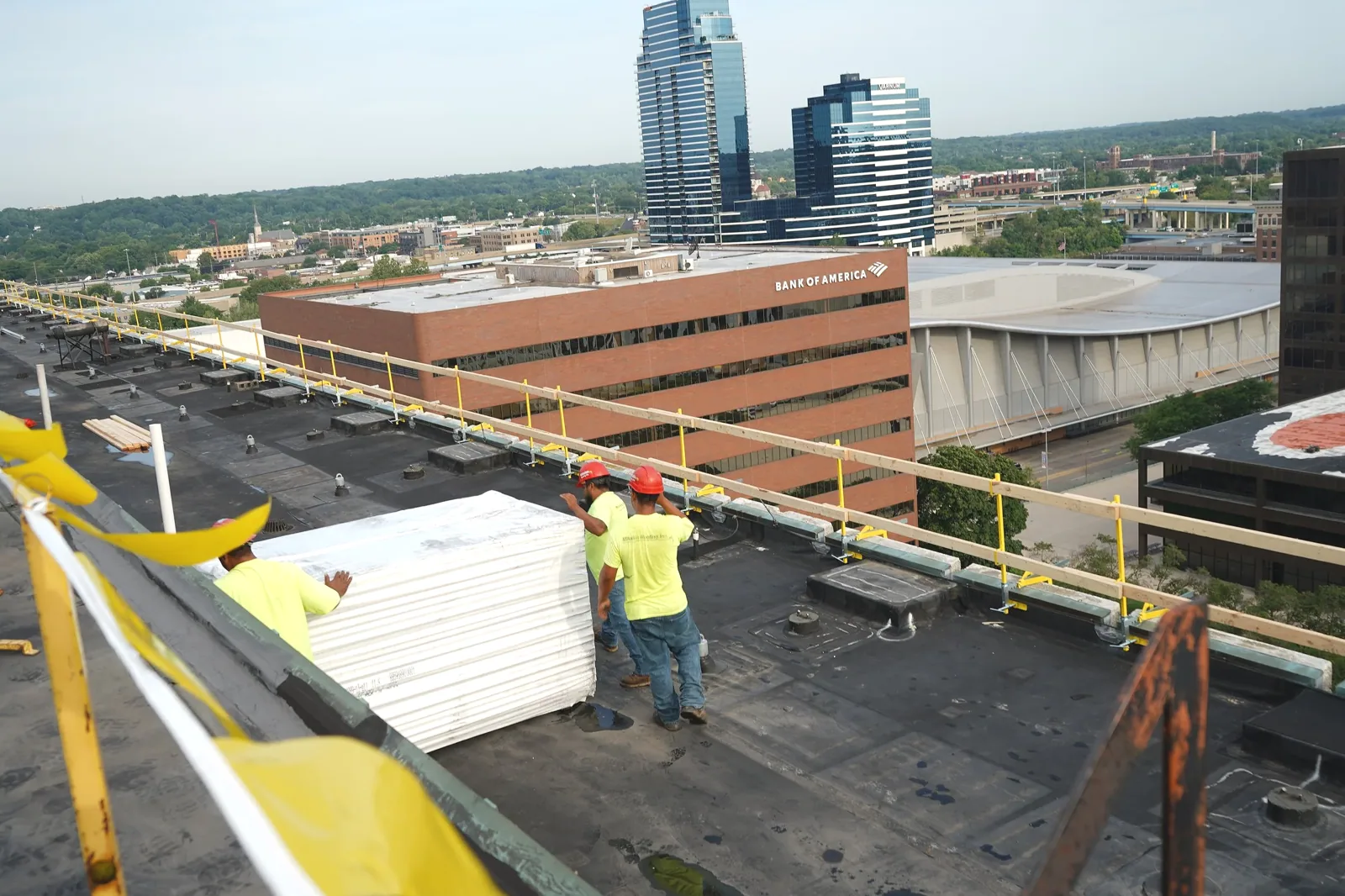
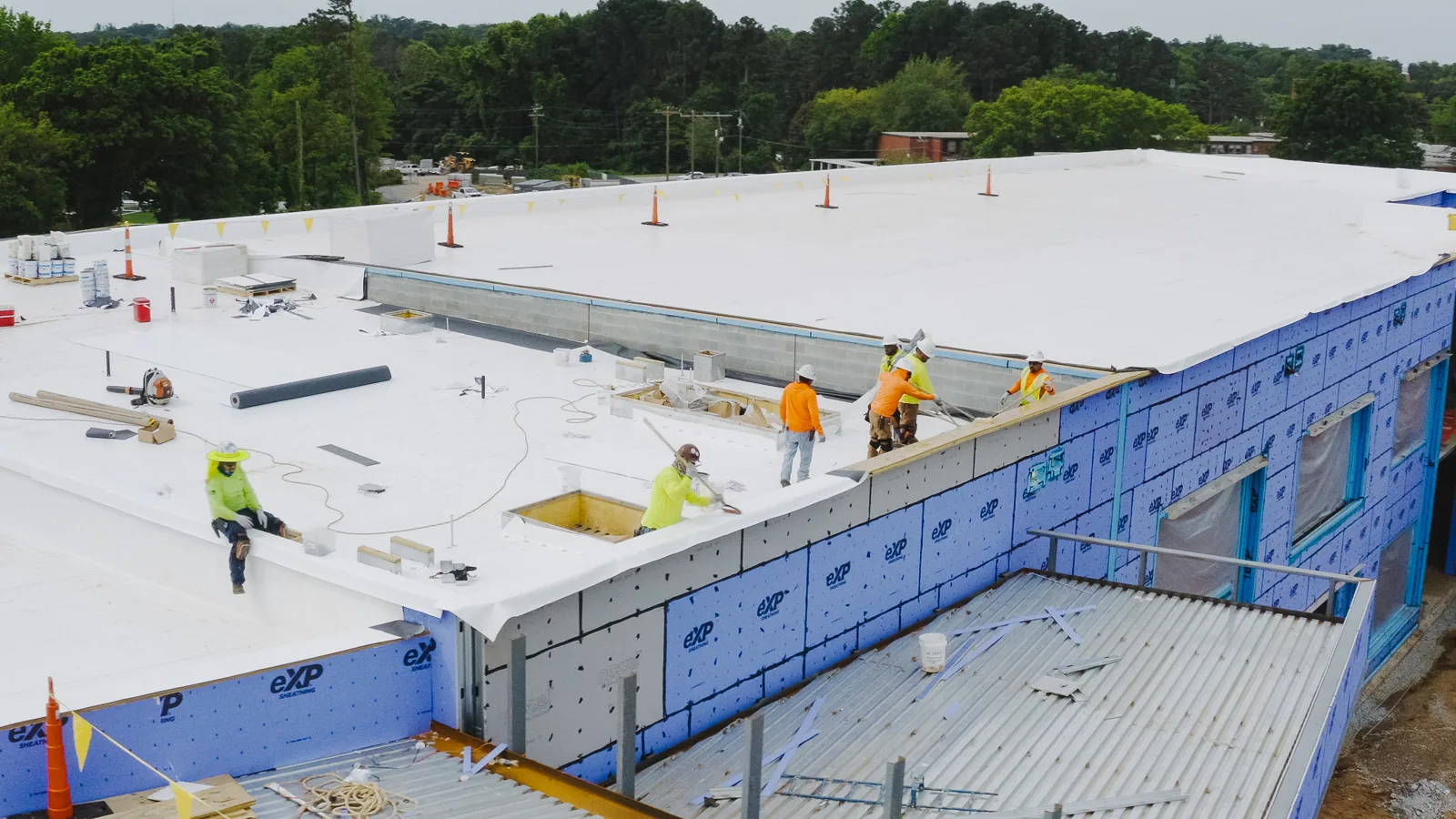
So the first step in a JM scope is the insulation: what is there, what is wet, what the new assembly needs. Boards go down in staggered layers with joints offset, which stops heat from slipping through a seam. Tapered pieces are cut to move water toward drains. A good insulation and cover board package costs more in materials and saves it back in energy and in fewer wet-roof calls.
Single-Ply Choices
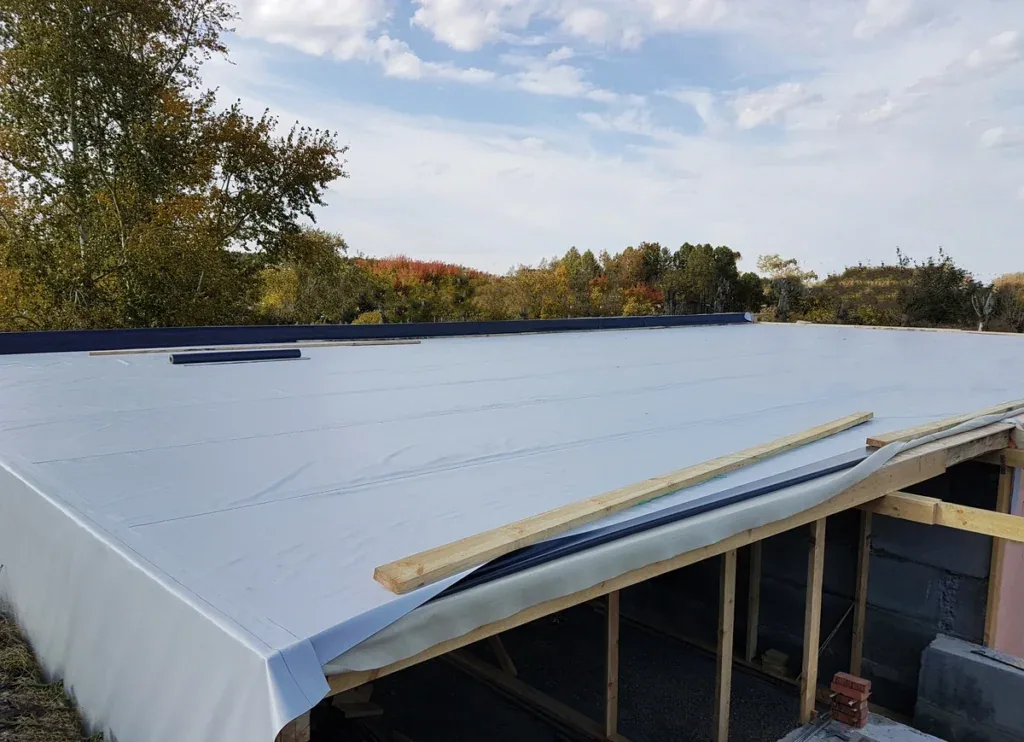
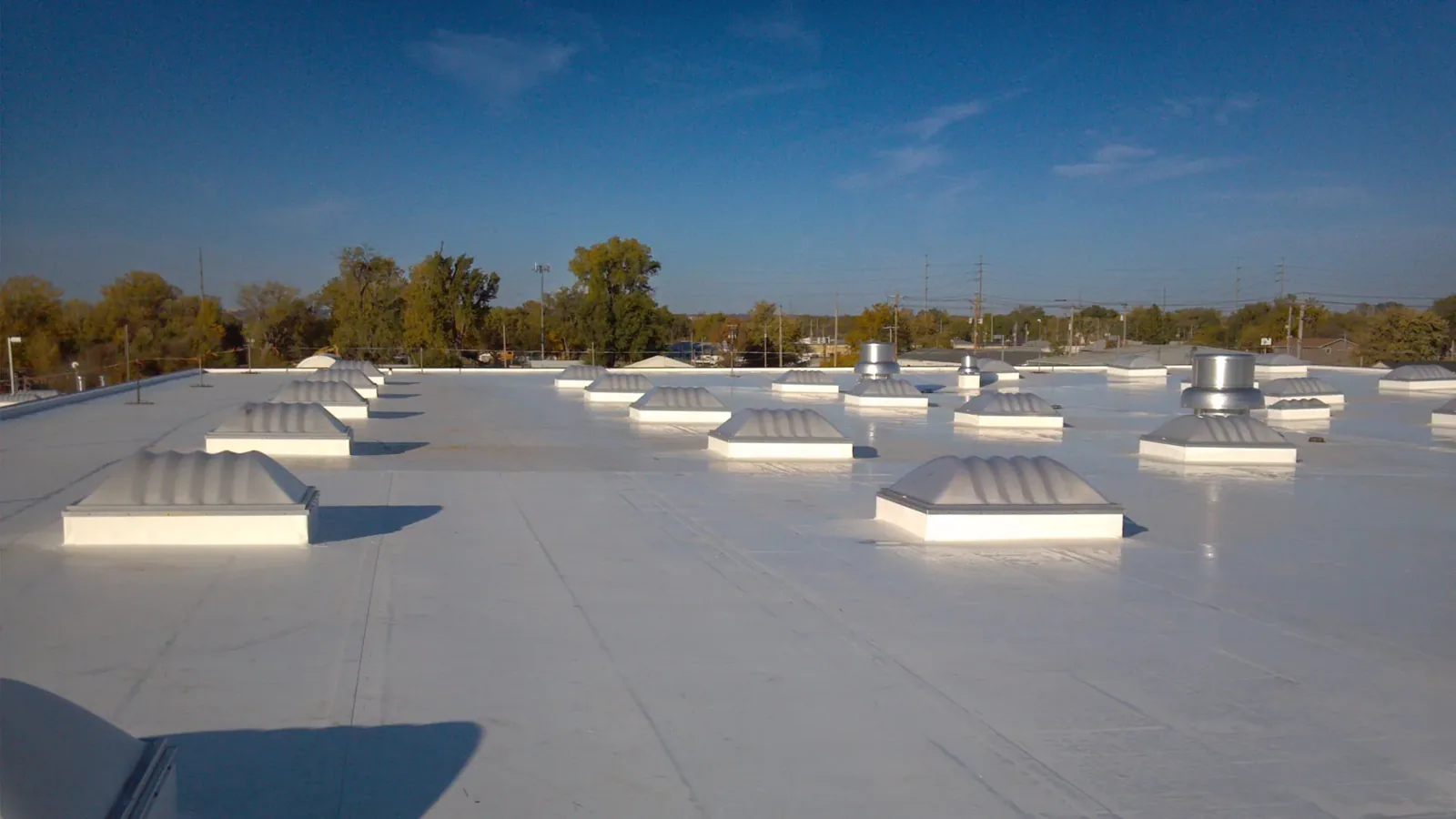
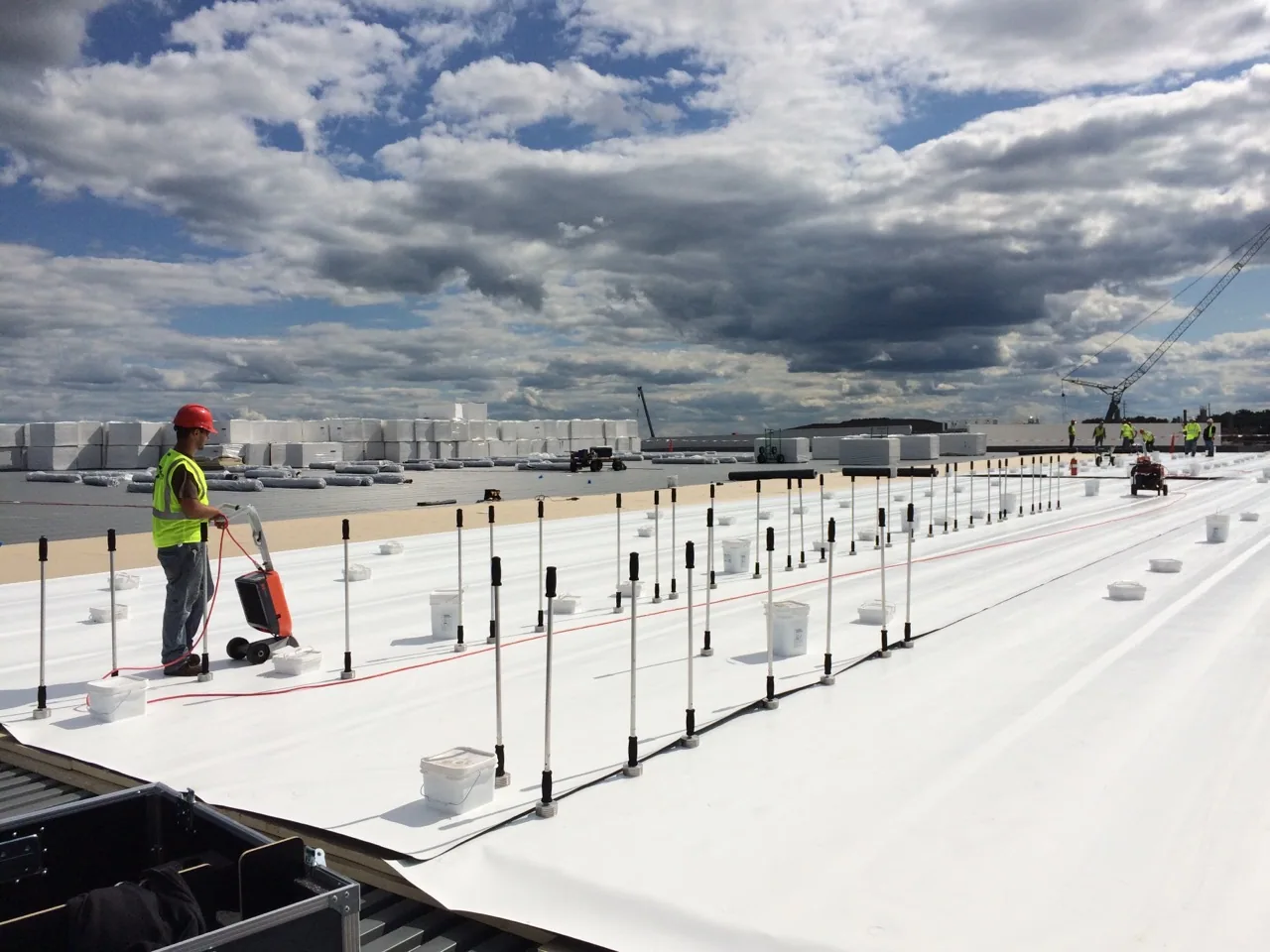
JM sells the three common single-ply sheets, the same trio Carlisle SynTec offers. TPO is the general-purpose white choice for warehouses and offices. PVC goes where fats and fumes reach the roof. EPDM is the rubber option, strong against hail and cold. Each can be mechanically fastened, fully adhered or, for EPDM, ballasted.
None of them is better in the abstract. A sheet that works over a warehouse with no rooftop exhaust is wrong over a foundry. We write down what is on the roof, what comes out of the stacks, who walks it and how big the drainage areas are, and then match the sheet. That writing goes to the owner with the bid.
Built-Up and Modified Bitumen Lines
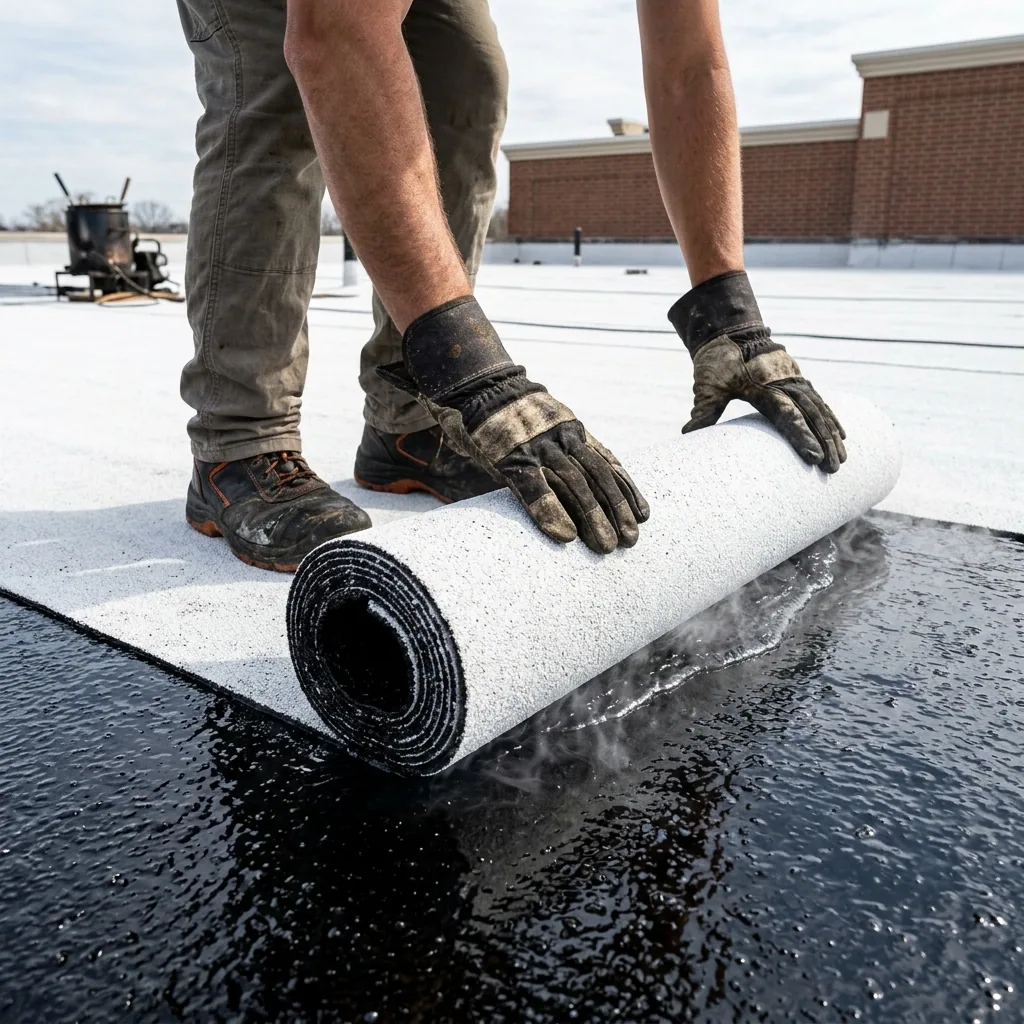
Plenty of owners still want a layered asphalt roof, and JM supports that with built-up and modified bitumen products. Layers of reinforcing fabric are bonded with hot asphalt or cold adhesive, and a cap sheet or gravel surface finishes the roof. Redundant plies mean a puncture at one layer does not necessarily become a leak.
These roofs are heavy, slow and hot to install. Kettles need a fire watch, a safe spot on the ground, and no air intakes nearby. They also last in places where the membrane gets pounded by mechanics, equipment and snow crews. Soprema is another maker with a deep mod bit line, and the two are worth pricing against each other on a layered roof.
Heat, Dust and Condensation at the Plant
Manufacturing is the largest industry in the Quad Cities, employing nearly 30,000 people. John Deere Davenport Works employs about 1,000 people and builds machines such as articulated dump trucks. Arconic's Davenport Works makes aluminum sheet and plate and, in September 2025, commissioned a new high purity aluminum facility. The aluminum rolling mill Arconic runs in Riverdale employs about 2,000 people. Rock Island Arsenal is another case: the foundry and big production halls of its Joint Manufacturing and Technology Center are a different animal again.
Plants like those put real loads on a roof. Process heat bakes the membrane around stacks, fine dust settles on white surfaces, and humid air from the production floor condenses on cold decks in the shoulder seasons. We look for staining around exhausts, wet insulation near penetrations and bubbled seams where steam vents. On the right plant roof a layered system or a chemical-resistant sheet is worth the money.
The Energy Line in the Code
Roof work in Davenport falls under the 2021 model codes the city adopted for new and existing buildings, amended locally, along with the state energy conservation rule, Iowa Rule 661.303. When a roof assembly is opened for replacement, the new insulation level generally has to meet what is in force, and that can mean more thickness than the old roof had.
More thickness changes more than the R-value. Flashings and parapets have to rise to hold it, drains may need a taller sump, and rooftop-unit curbs sometimes have to be raised. We figure those in the first walkthrough and not in a change order. The 30.7 inches of snow in a typical Davenport year, and a record low of -29 F, make good insulation pay back in winter, not only summer.
Surveying and Repairing JM Roofs
On an existing JM roof we start with a moisture scan. An infrared survey run at dusk shows which insulation holds heat from a wet spot, and cores confirm it. The map tells the owner whether a repair, a recover or a replacement is the right answer.
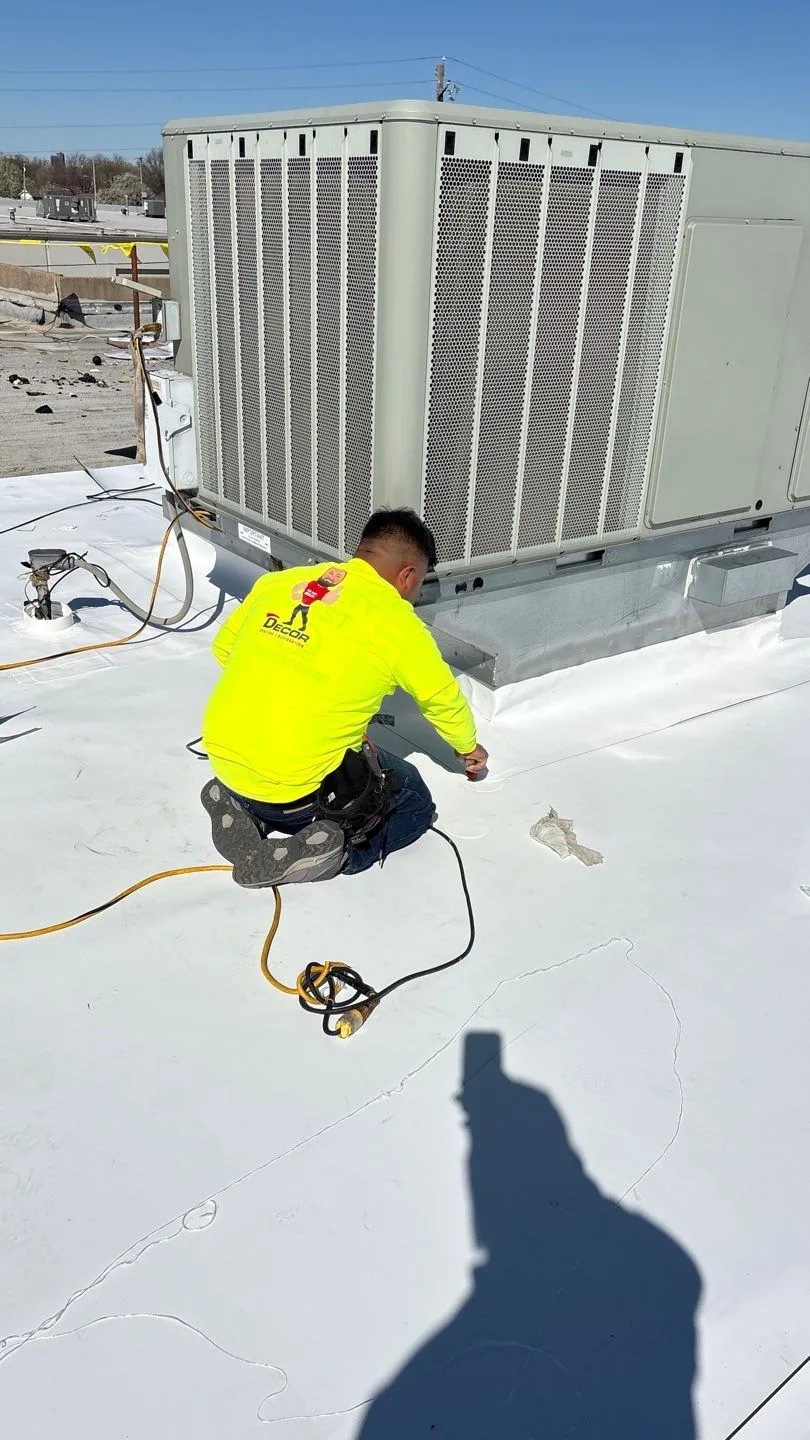
Repairs are simple when the work is matched to the membrane: weld patches on thermoplastic, tape and primer on EPDM, and fabric and asphalt or cold adhesive on layered roofs. We keep the photos, the core logs and the moisture map together, and they travel with the building file. If a manufacturer warranty is in force, we read it before cutting anything.
Send the Work Order
If the gas bill, the ceiling tiles or the maker's paperwork has you asking about the roof, send us the work order. We will set a walkthrough around your production schedule and give you a plain recommendation.
Questions About Johns Manville Commercial Roofing
The energy auditor says our roof insulation is thin. Can we add thickness without tearing the roof off?
Sometimes. A recover over dry, sound insulation can add new polyiso and a fresh membrane, provided the deck can carry the weight and the building has not already had two roof applications. We cut cores first to see if the existing boards are dry, then price the recover and a full replacement side by side. If water is in the old insulation, tear-off is the only honest answer.
Why would anyone still choose a built-up roof over a single-ply?
For redundancy and abuse. Multiple plies of asphalt and fabric tolerate mechanics, equipment drag and snow removal better than a thin sheet, and a nick in one layer rarely reaches the deck. The costs are weight, hot work and a longer install. Where a roof sees steady foot traffic or heavy equipment, owners accept that trade.
How does infrared tell wet insulation from dry?
Wet insulation holds the day's heat longer than dry insulation. After sunset, a scan shows warm patches where the roof is slowest to cool, and we mark them for coring. Overcast days, standing water and gravel can blur the picture, so we only treat a pattern as real once a core confirms it.
Our plant has a warranty paper from the maker on file. Do repairs void it?
Read it before the first cut. Most makers want repairs done with approved materials and written up, and some want to be told about any work. We can follow the maker's detail drawings and document each repair with photos. If the paper names a required inspection or notice, we put that date on the calendar.
We have a Deere supplier building with a flat metal-deck roof. Where do we start?
Start with the deck and insulation, since those decide the scope. Send us the roof plan or the age of the last work, and we will schedule a walkthrough around your shift. We check drains, curbs, edges and any area under a process stack, then give you a recommendation in writing.
Talk to a Davenport Commercial Roofer
Send the work order, the building address or a few photos of what you are seeing. We will set a walkthrough, go up with whoever has the hatch key, and tell you plainly what the roof needs.