
Commercial Roofing in Riverdale, IA
Industrial roof repair, recover and replacement in Riverdale, IA, planned around production schedules, process exhaust and construction beside working plants.
Second shift hands off at three. The plant manager wants the roof crew either gone or quiet before the first bell, and he wants to know who is carrying the roof hatch key.
That is how an industrial roof job in Riverdale, IA gets scheduled. Riverdale is a compact city of about 2.21 square miles, wrapped by Bettendorf on three sides and the Mississippi on the fourth, with U.S. 67 running through. The Arconic aluminum rolling mill there employs about 2,000 people. We work from the plant manager's side of the desk: a work order, a badge in at the gate, a safety talk, a look at the production schedule, and a roof walk that stays out of the way of whatever is running.
Plant Roofs and Process Exhaust
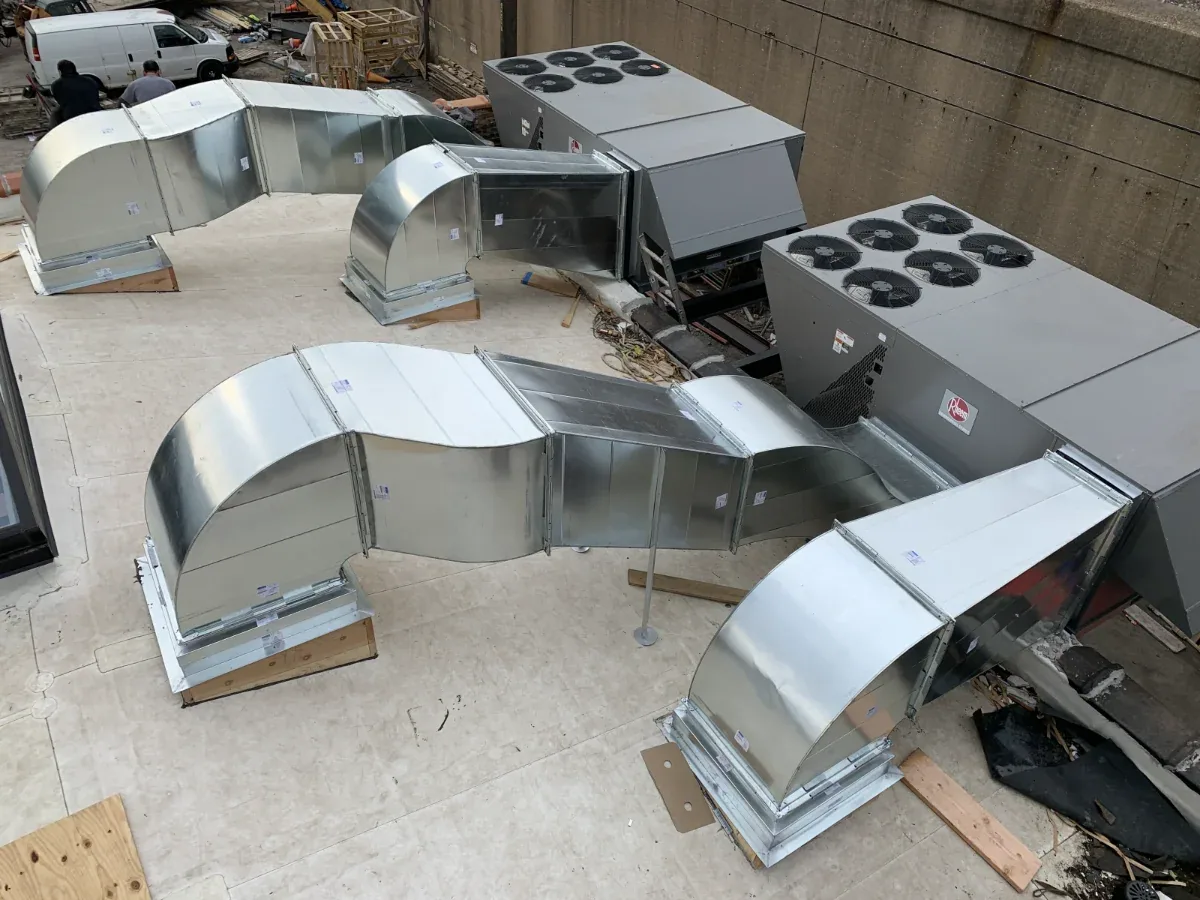
A roof over heavy industry has more going on than a roof over a warehouse. Stacks, ventilators, make-up air units and exhaust curbs all poke through it, and each one is a place where flashing can fail or residue can collect.
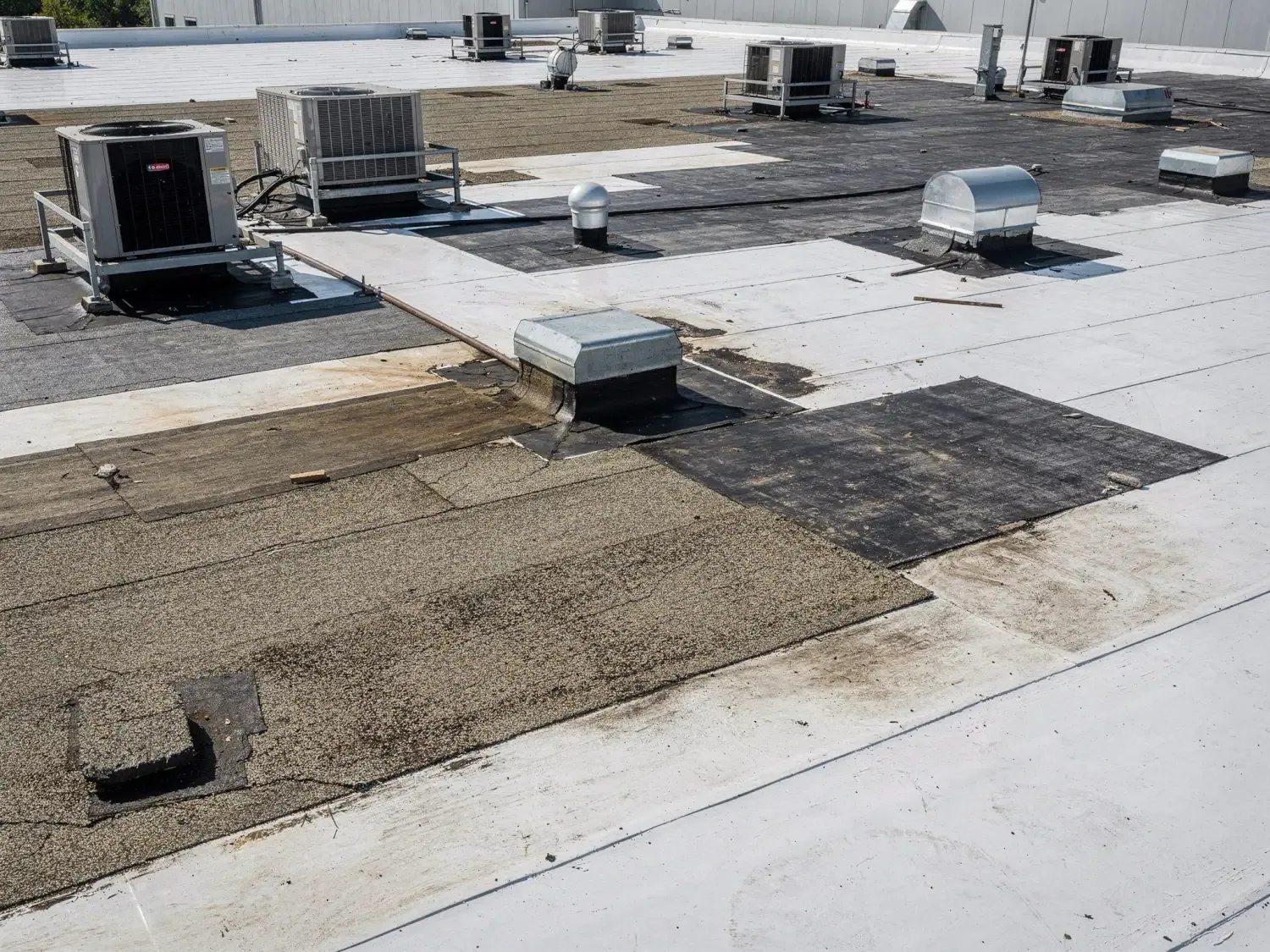
On a first walk at any plant with process exhaust, we map the penetrations before we look at the field of the roof. We note which ones discharge hot air, which ones throw particulate and which ones drip condensate onto the membrane. The membrane under a discharge point wears faster than the rest, and a roof that looks sound 40 feet away can be thin right at the stack. When a unit is replaced, its curbs and supports get raised and re-flashed to match.
Then we check the drains, because the field of a big low-slope plant roof sheds a lot of water to a few outlets.
Construction Date Versus Roof Age
Alcoa built the Riverdale mill between 1946 and 1948. That date tells you about the plant. It tells you almost nothing about the roof over any one section of it.
Plants that have run for decades grow additions, lose old wings and get reroofed a section at a time. The roof over the main hall can be a different age and system from the roof over the office block or the dock. We take a few core cuts to read the layers, check the insulation for moisture and record what each section is made.
That record becomes the map for the roof capital plan. The plant manager can see which sections need attention this year, which can wait and which should be recovered rather than replaced. A mixed-age roof is common in industrial plants, and the plan treats it as several roofs rather than one.
New Construction Next to an Existing Roof
In September 2025, Arconic commissioned a new high purity aluminum facility at its Davenport Works, backed by $45.5 million of federal Defense Production Act funding. When new buildings go up beside working plants, existing roofs take a beating from the construction traffic that comes with them.
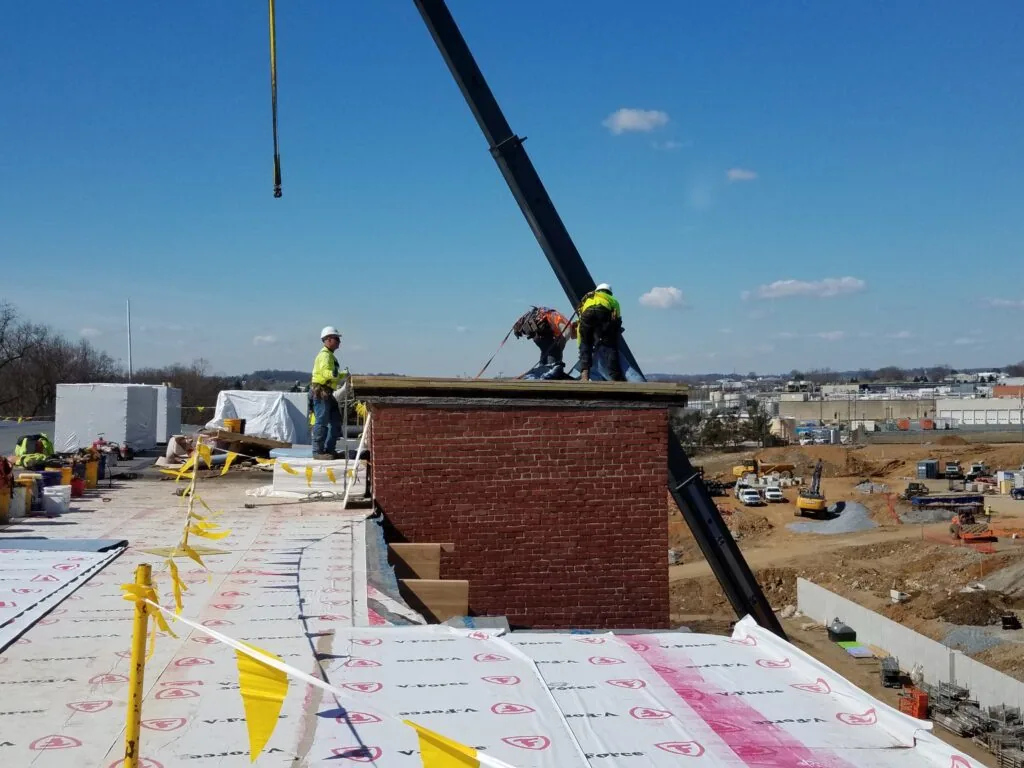
We flag three risks to plant managers in that situation. First, foot traffic and material staging on a roof that was never meant for it. Second, new walls that tie into old ones and need clean flashing so the joint does not leak. Third, cranes and lifts that drop debris onto older membranes. A pre-construction survey of the adjacent roof with dated photos protects both the owner and the contractor if a question comes up later.
If a roof needs to carry temporary loads, we recommend protection boards and marked walkways before anyone starts.
Second Shift, Badges and Hot Work
Access on an industrial site follows a routine, and we keep to it.
- Work order and scope signed off by the plant manager.
- Badge in at the gate, safety orientation, and roof access by ladder or roof hatch.
- Fall protection set up before anyone steps near an edge or a skylight.
- Lockout coordination for any unit or exhaust we may need to shut down.
- Hot work permit review, so the roofing method matches what the safety office will allow.
For plants that run around the clock, we plan the loud and disruptive tasks for the hours that suit production, and save the cleanup for the quiet windows. On an occupied building reroofing job, these agreements go in writing before the first day.
River Weather and Winter Load
The Mississippi puts humidity into the air, and the air finds its way to the roof deck. In winter, moist air from inside a heated plant meets a cold deck and condenses. The drip looks like a leak but behaves like weather, appearing on cold mornings and fading in a thaw.
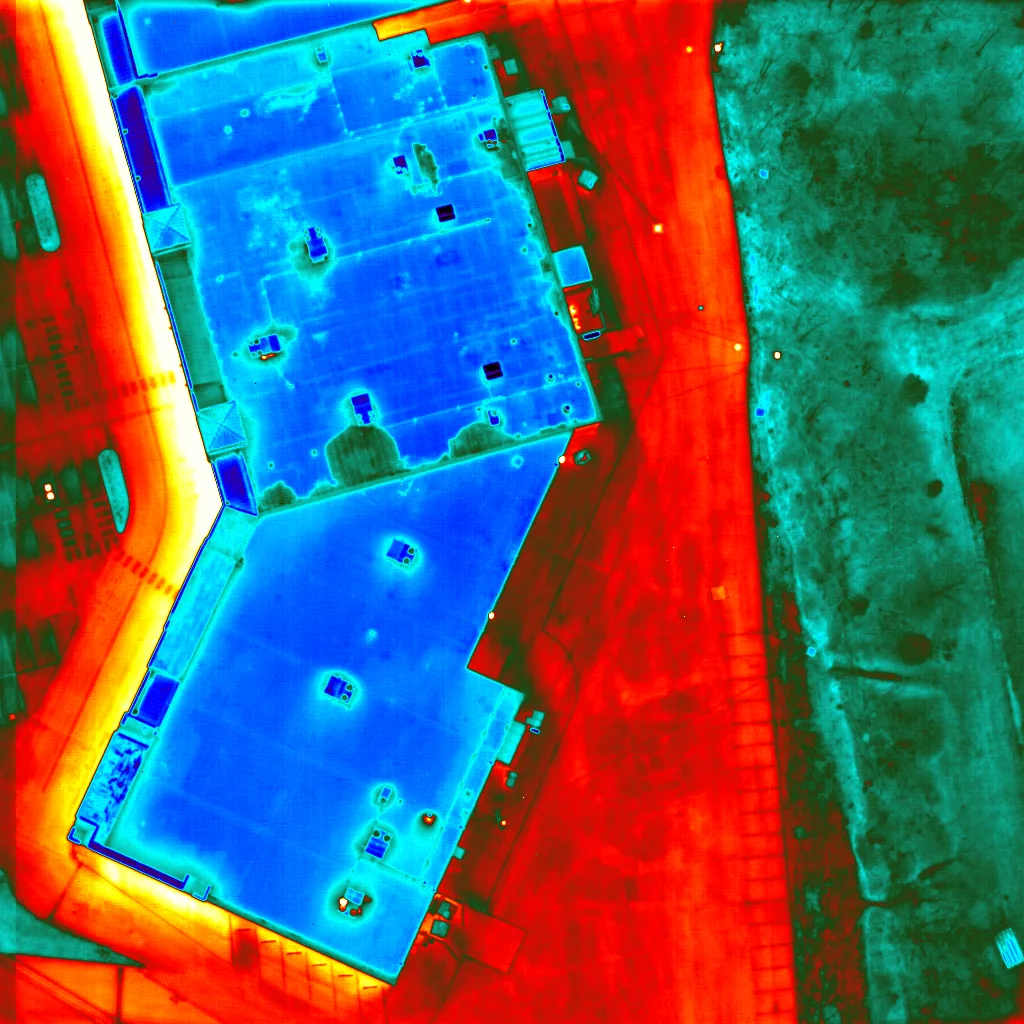
Davenport Municipal Airport read 86 mph in the August 2020 derecho, which damaged roofs across Davenport, Bettendorf and Scott County. Snow adds its own stress: the Quad Cities average over 36 inches a year, with January the snowiest month at about 10 inches. We check the drains and edge metal before and after each season, and an infrared moisture survey is the quickest way to find trapped water in a large flat roof.
Repair, Recover or Replace on a Plant Roof
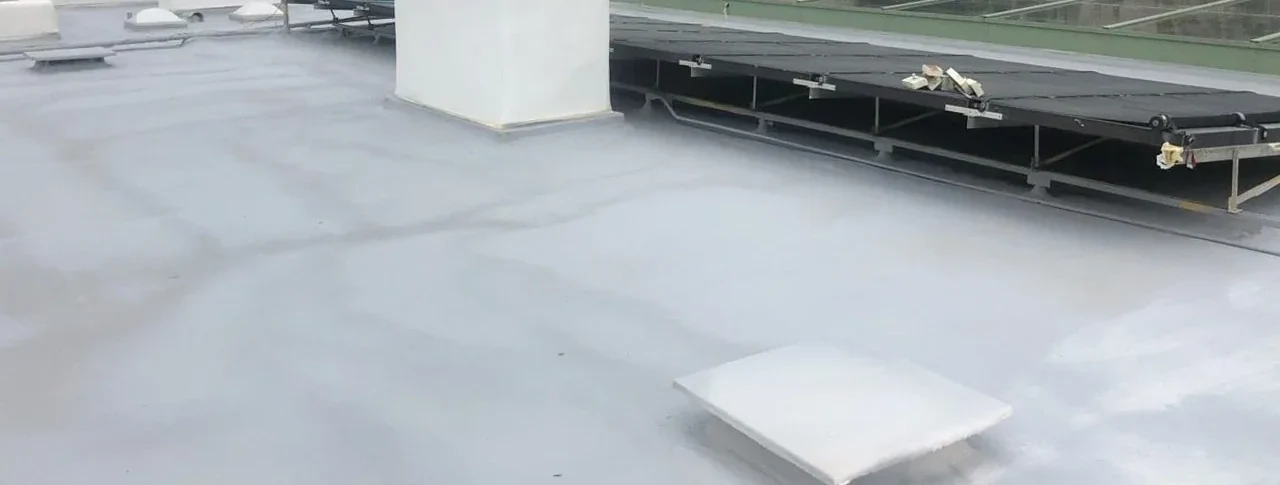
Where a plant roof has a single layer, mostly dry insulation and a deck in good shape, that is the case for a recover, with new membrane over the old after the wet insulation is cut out. It saves tear-off time and keeps debris out of the production area below.
When the deck is damaged or the insulation is soaked through, we plan replacement in phases so the plant can keep running. Cost follows the area, the number of penetrations, the amount of wet insulation, the lift and staging plan, and the weather window. On older buildings, a metal roof retrofit over the existing roof is sometimes worth pricing. Owners who also hold buildings in Bettendorf or the Eastern Iowa Industrial Center can fold those roofs into the same walkthrough rhythm.
Send the Work Order
Send the work order, the plant address and the name of whoever badges us in. We will set a walkthrough on a schedule that suits production and come back with photos and a plain recommendation.
Questions About Riverdale
A new building is going up next to our plant. What should we do about the existing roof?
Walk it and photograph it before the construction starts. We record the condition of the membrane, the flashing and the drains, and note any areas that are already weak. During the work, restrict roof access, put protection boards on any path the trades will use and keep debris off the surface. Afterward, we walk it again and compare. That record settles who owns any damage.
Our safety office will not allow open flame on the roof. What are the options?
Ask which hot work they actually restrict. Torch-applied modified bitumen is the usual concern, but there are other systems that do not need a flame: TPO, PVC and EPDM are mechanically attached or adhered, and modified bitumen can be installed with cold adhesive or self-adhering sheets. Tell us the policy and we will scope a system that fits it, and we write the method into the work order.
The plant has exhaust stacks that leave residue on the roof. Which membrane holds up near them?
We ask for the exhaust specs first, because what the stack discharges decides the answer. Grease and certain chemicals attack some membranes faster than others, and heat softens some more than others. For many plants, a chemical-resistant membrane such as PVC or KEE goes around the stacks, while the rest of the roof uses what suits the budget. We also design a walkway pad so service workers stay off the bare membrane.
The plant dates from the 1940s. How do we find out what is on the roof?
Core cuts and an infrared survey. The cuts show the layers, the insulation type and whether any of it is wet. The survey shows where moisture is hiding. Together they tell you how many roofs you really have and which section to deal with first. We then draw a roof plan that records each section by age, material and condition.
We have several sections of different ages. How do we budget replacement without a big one-time hit?
Treat it as a program. Rank the sections by risk: wet insulation and failing seams first, sound but aging sections last. Set up a maintenance routine so the good sections stay good, and replace or recover one section at a time. A roof capital plan puts that order on paper so finance can see what is coming and when.
Talk to a Davenport Commercial Roofer
Send the work order, the building address or a few photos of what you are seeing. We will set a walkthrough, go up with whoever has the hatch key, and tell you plainly what the roof needs.