
Carlisle SynTec Roofing in Davenport, IA
Carlisle SynTec EPDM, TPO and PVC roofing for Davenport, IA plants and warehouses: adhered and fastened systems, wind, install on a working site and repair.
The maintenance planner at a distribution building near I-80 keeps one binder for the roof. The first tab holds a closeout letter with a Carlisle SynTec logo at the top. The planner wants to know what that logo means for repairs, and what it would mean for the next roof.
Carlisle SynTec is a major name in single-ply. It makes Sure-Seal EPDM, Sure-Weld TPO and Sure-Flex PVC, plus the insulation, adhesives, flashings and accessories that go with them. For a plant or warehouse in Davenport, IA the real work is picking among those sheets and attaching one so it survives the weather. We install Carlisle SynTec systems and repair the ones already overhead.
Three Sheets, One Set of Details
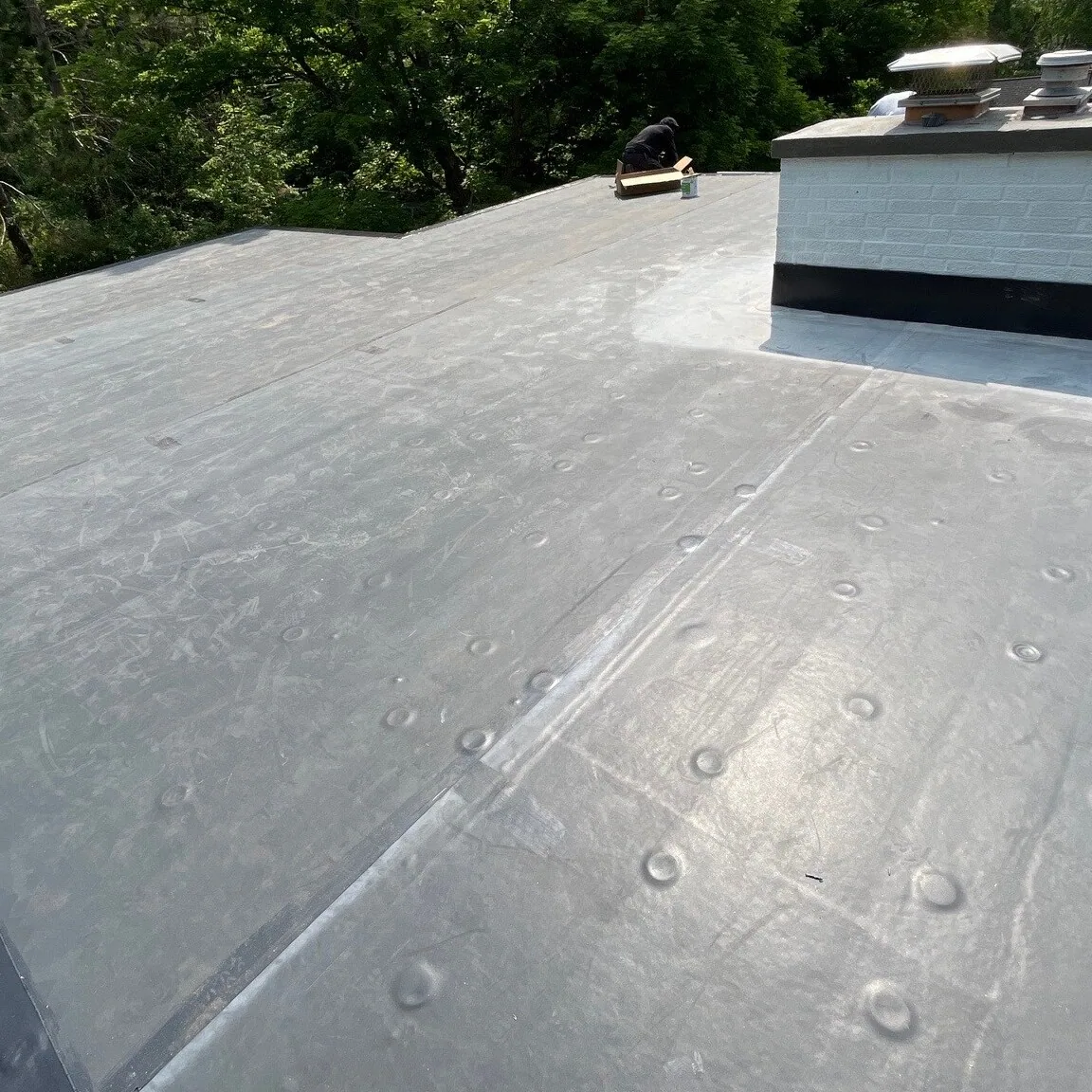
EPDM is the black or white rubber sheet. TPO is the white thermoplastic with hot-air welded seams. PVC is the same welding idea with a chemical-resistant formulation. All three come in several thicknesses and can be fastened, adhered or, for EPDM, ballasted with stone. The choice follows the building: what is under the roof, how much traffic crosses it, and how the deck is built.
Having one maker behind all three simplifies things when a plant has different needs on different buildings. A fan-heavy production wing can take PVC, while the warehouse next to it takes TPO, and both are built from one maker's detail drawings and accessory line. Versico is a sister brand under the same parent, and its systems are similar in concept but carry their own details.
Sure-Weld TPO and the FleeceBACK Option
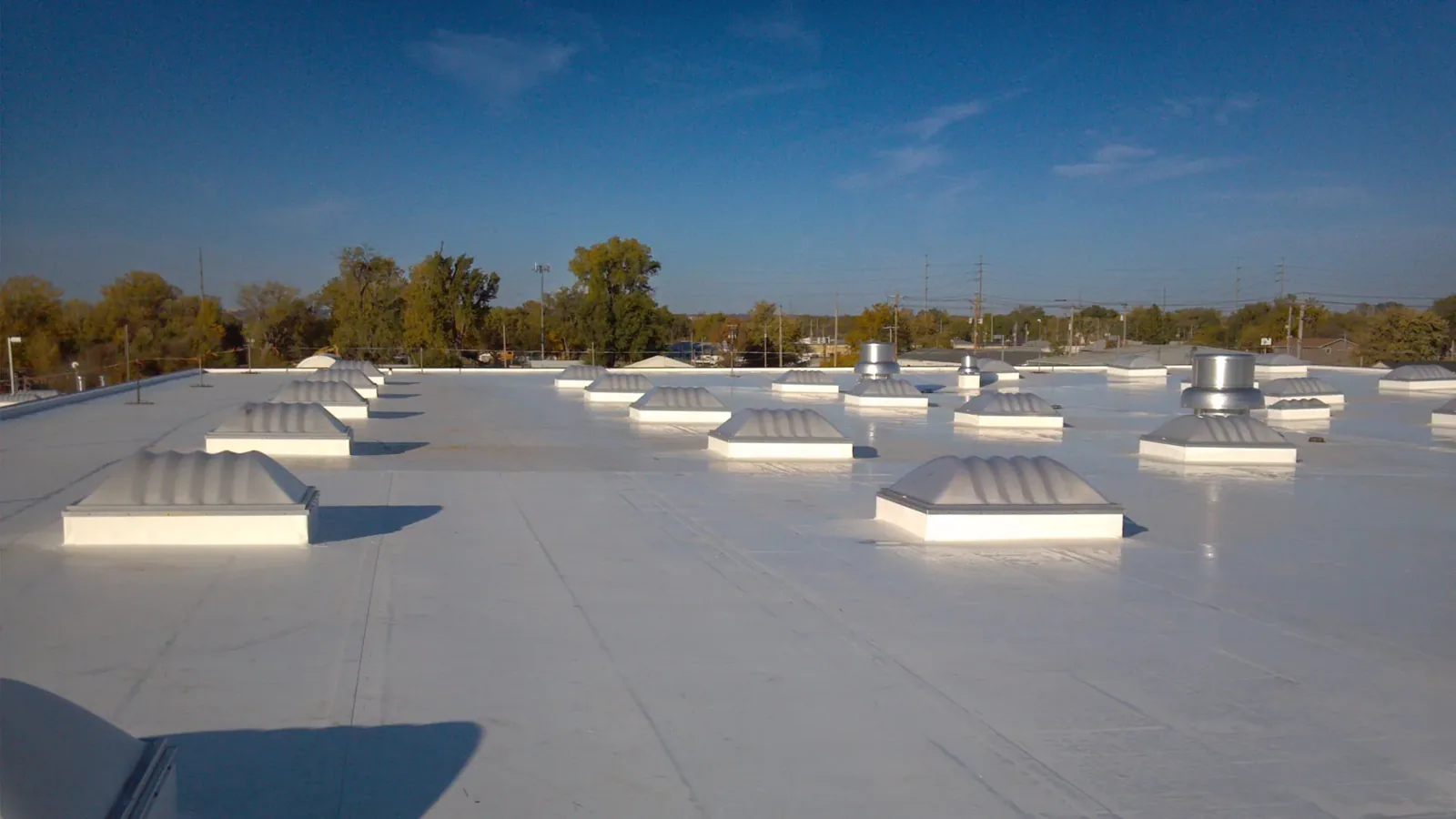
On a large flat roof, TPO from Carlisle is usually the first sheet we price. Wide rolls mean fewer seams per acre, and every seam is welded by machine along the field and by hand at the details. GAF and Holcim Elevate make competing TPO lines, and we price them side by side when asked. We run a seam probe along each weld and cut test strips where the specification calls for them.
FleeceBACK is the adhered variant. The membrane has a fleece layer bonded to its back, and it goes onto the insulation with a low-rise foam or a bonding adhesive instead of fasteners. That keeps the deck free of hundreds of penetrations and gives a smoother finish. It also needs a dry substrate and a decent temperature, which in the Quad Cities means spring through early fall. For colder months, the mechanically fastened sheet keeps work moving.
Sure-Seal EPDM Over Insulation or Stone
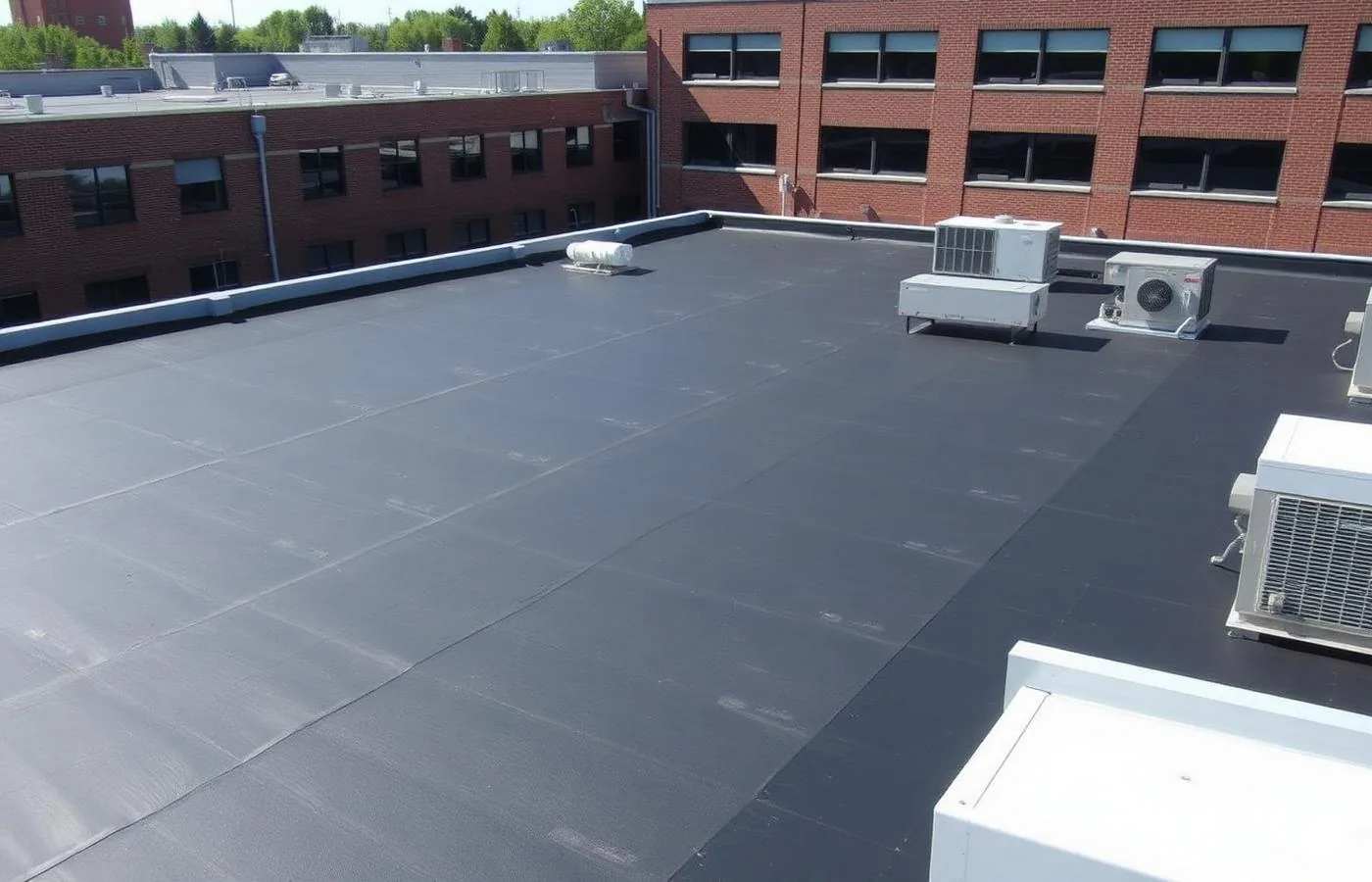
EPDM has the longest record of the three. It is a cured rubber that stays flexible far below freezing, which suits a city where the thermometer has dropped to -29 F. Seams are joined with tape or adhesive rather than heat, so a crew can work a seam in a cold shoulder season more easily than it can weld thermoplastic.
Hail is where EPDM earns its keep. The rubber stretches and recovers, so a 2 inch stone like the one logged on April 7, 2020 is less likely to crack it than a stiff sheet. The weak points are the seams and the flashings, not the field of the sheet. Oils and animal fats attack EPDM, so a roof with kitchen or process exhaust usually belongs to PVC. Ballast, fully adhered and mechanically attached EPDM roofing each have a place.
Wind After the August 2020 Derecho
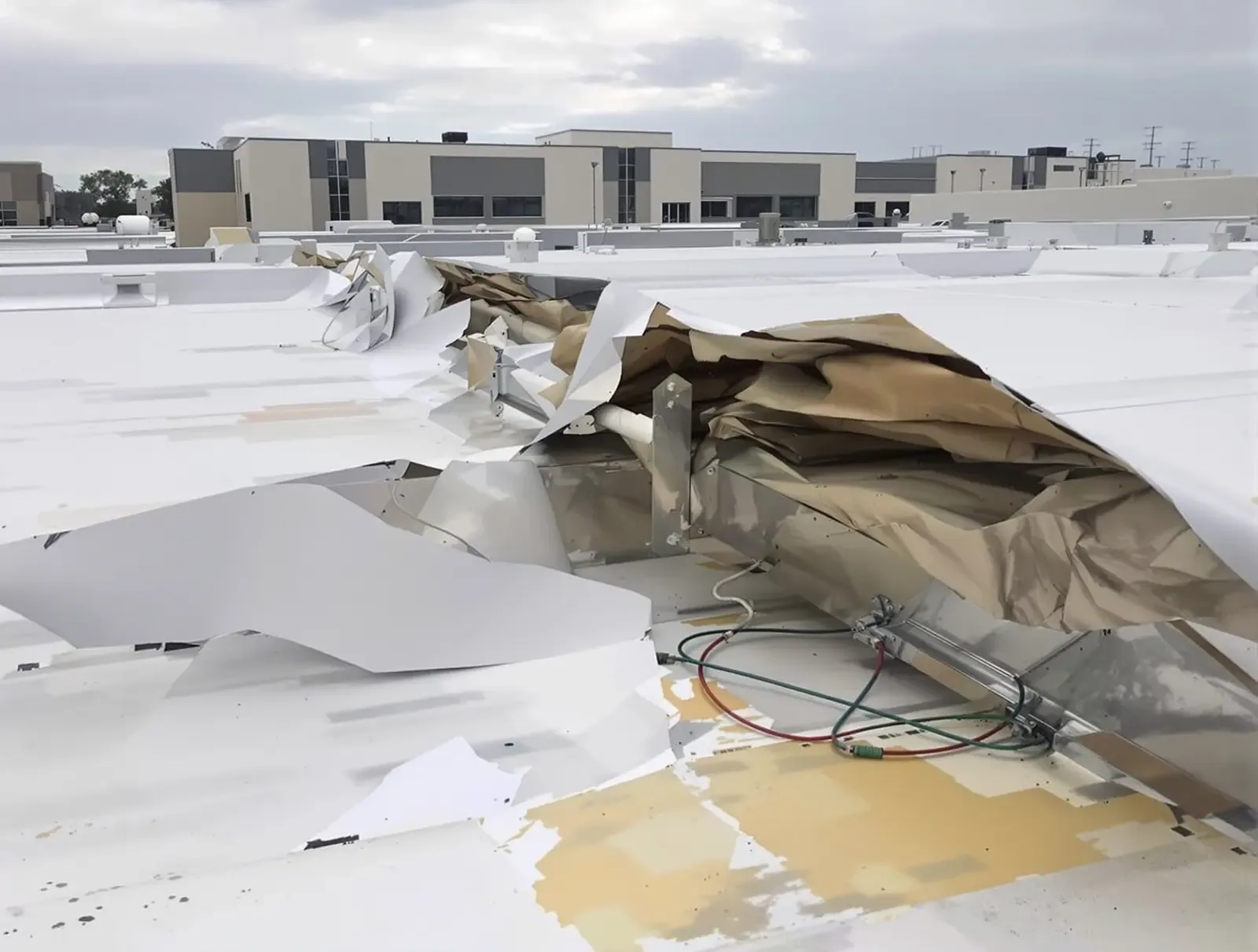
The derecho of August 10, 2020 sent an 86 mph gust across Davenport Municipal Airport, and the National Weather Service recorded damaging wind lasting thirty to sixty minutes over the area. A gust lasts seconds; a half hour of it works every fastener and every edge. A roof that was already marginal has little left to give in a storm like.
Wind uplift on a Carlisle roof is a tested assembly. The deck, insulation, fasteners or adhesive, and membrane are all part of the rating, so substituting one piece changes the answer. The perimeter and corner zones need extra fasteners or a thicker adhesive pattern, and the edge metal has to be tied to the wall with continuous cleats. We follow that detail sheet, then check the finished edge by hand before we leave. After a storm, wind damage repair starts at the corners.
Rail Docks, Rooftop Fans and Second Shift
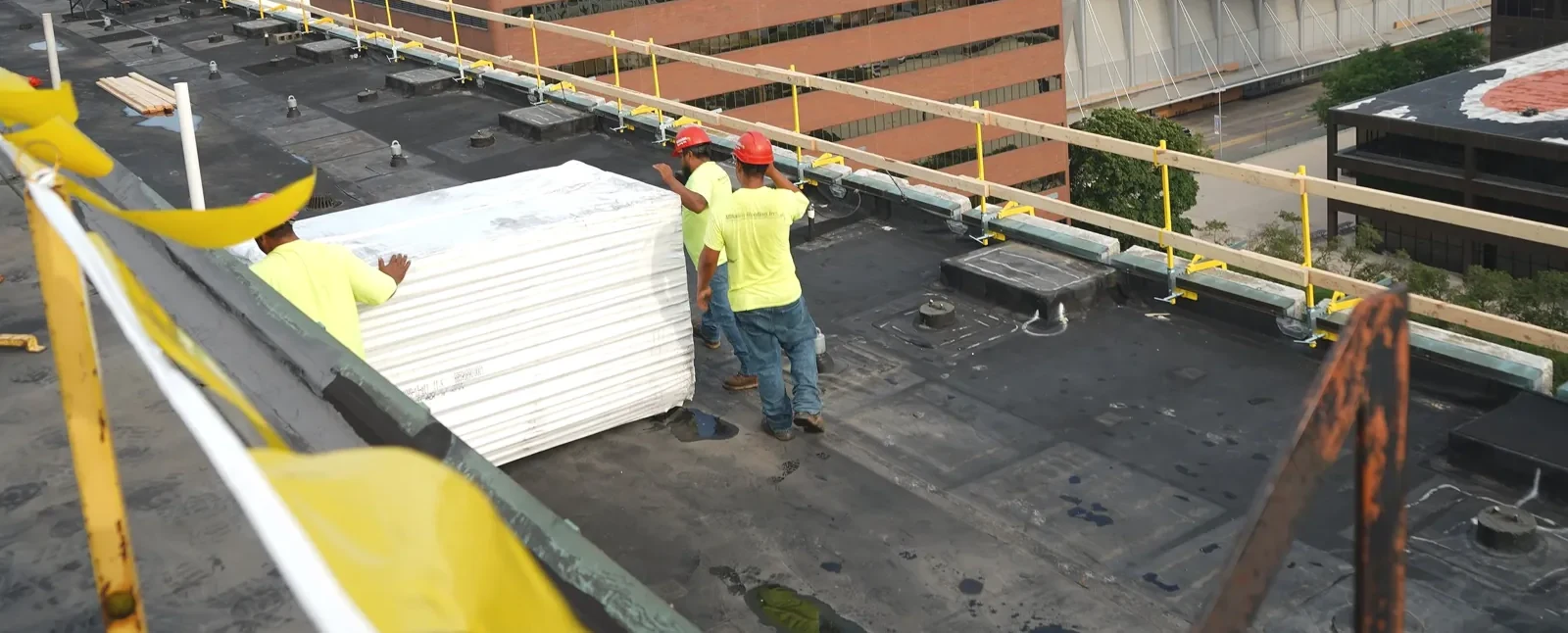
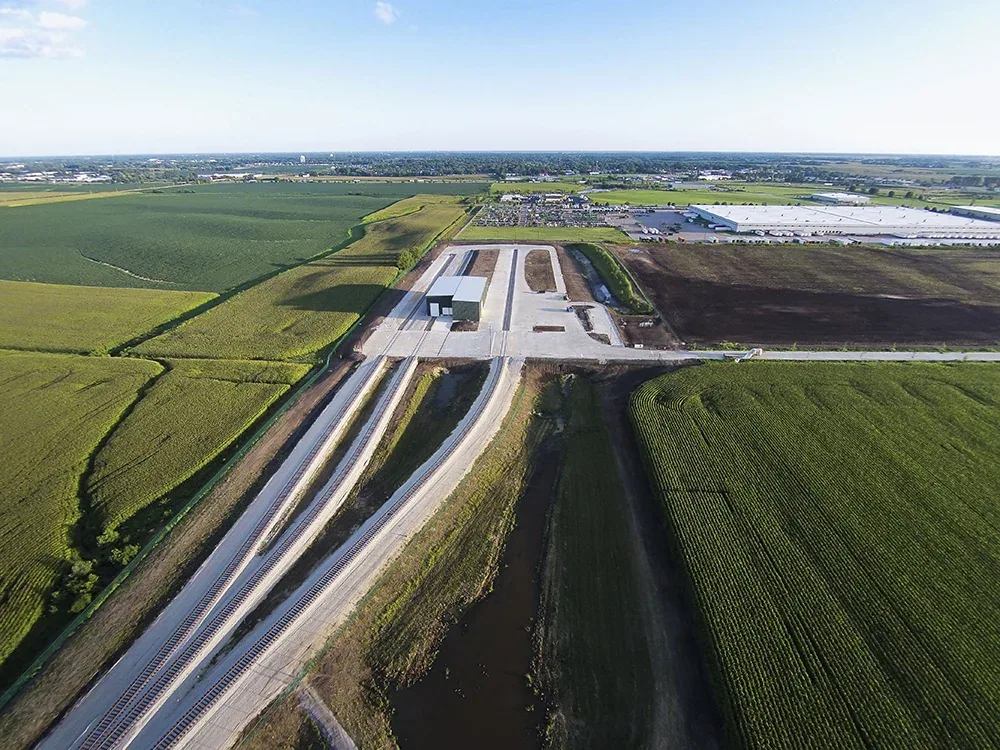
The Eastern Iowa Industrial Center has Sterilite's plant beside it with about 2,000,000 square feet of warehouse space, Amazon's fulfillment center in the industrial center, and a rail transload facility with truck and rail cross-docks. On a building that runs second shift or weekends, a roof crew gets a badge, a safety talk, and a walkthrough of the production schedule before the first load goes up.
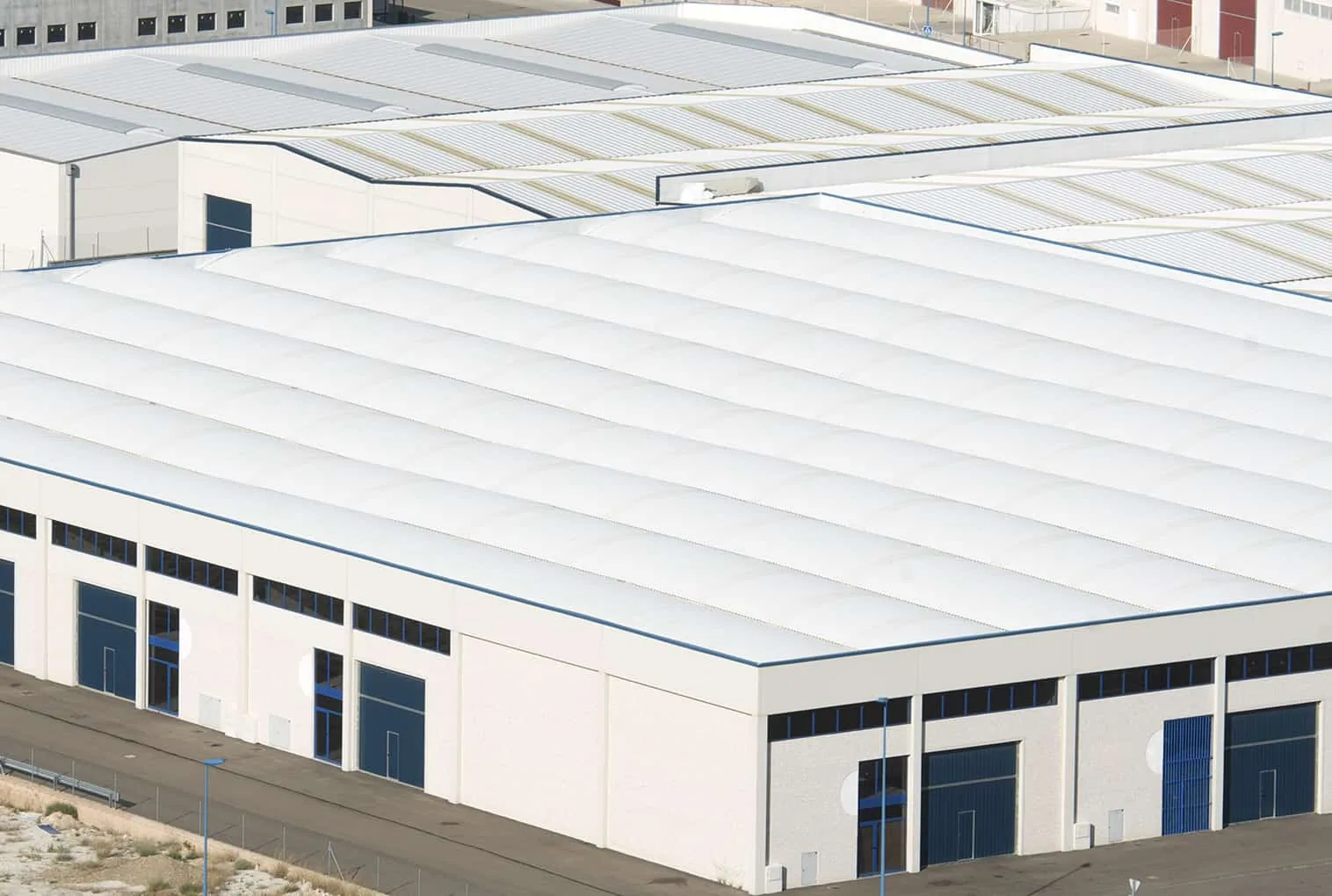
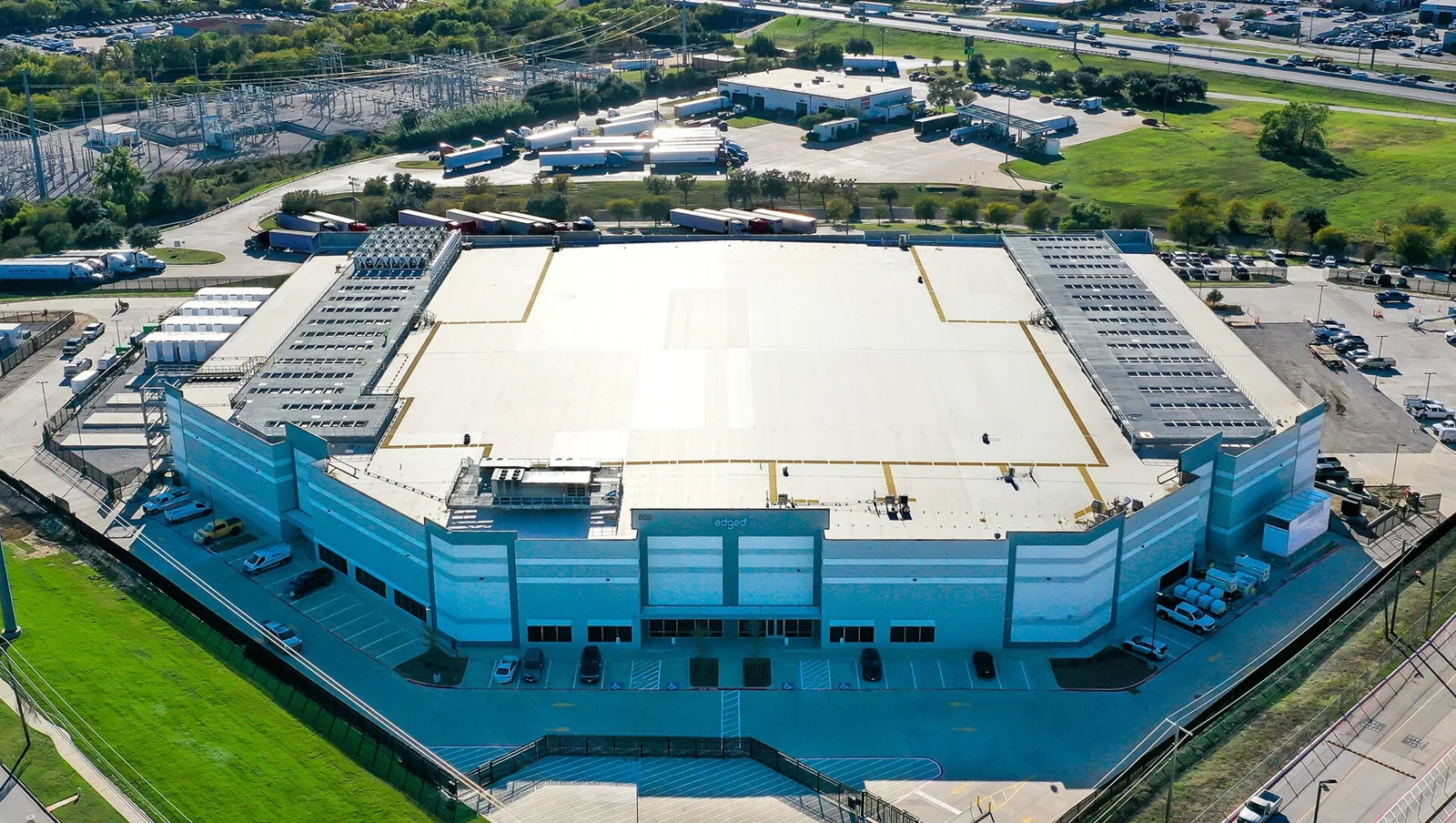
We stage materials away from truck courts, keep a spotter on the ground during crane picks, and cut the work into sections the crew can dry in each day. Walkpads go to every rooftop unit and hatch, since mechanics will walk those routes for years. Wide low-slope roofs, such as those at the Eastern Iowa Industrial Center and on other distribution buildings, are the natural home for a wide-roll single-ply.
Maintaining a Carlisle Roof You Already Have
Most EPDM trouble starts at the lap. Old splice tape lets go, a corner gets cut by a wheelbarrow, or a pipe boot cracks in the sun. We clean the membrane, apply primer, and set a patch or cover strip on the cleaned surface. TPO and PVC get a hot-air weld after a test strip proves the old sheet will take it.
When the problem is bigger than a repair, a recover may let you keep the working insulation and add a new membrane. Cores and a moisture scan tell us if that works. Between storms, a routine roof repair visit clears drains, tightens flashing and keeps the file current for the maker's inspector.
Send the Roof Plan or Set a Walkthrough
Email the closeout letter, the work order or just the address of the building. We will go up with your maintenance lead, check what the sheet is doing, and hand you a plain recommendation. For storm damage, send the work order and photos so the roof condition and access needs can be reviewed.
Questions About Carlisle SynTec Roofing
We run second shift and weekends. Which Carlisle attachment is quietest and least disruptive over the production floor?
Adhered FleeceBACK is quietest, because the crew rolls the sheet into foam or adhesive and skips most of the fastener drives. It does need dry insulation and mild weather, so book it for warm months and keep a fastened option for the shoulder season. Noisy tear-off and crane picks go on the day shift schedule you pick, and the operations team signs off on it.
Does a Carlisle roof need to be re-roofed when the warranty ends?
Not by the calendar. A membrane that is dry, welded or seamed tight, and free of soft insulation can keep going well past the term printed on the paper. We pull cores and run a moisture scan near the end of coverage, then price a repair, a coating or a recover next to a replacement so your capital planner has real numbers.
Black EPDM or white TPO for a big warehouse: which is the better call?
For most conditioned buildings, lean toward white TPO, since the reflective surface lowers the heat load and the welded seams are strong. Pick EPDM when hail is a bigger worry, when the roof is ballasted already, or when your crew prefers repairs with tape and primer. Ask for a side-by-side bid that includes insulation thickness.
What happens to the membrane if a rooftop unit gets changed out by crane?
Plan the crane day before the unit shows up. We lay protection boards on the swing path, set temporary curb covers, and check the membrane under the lift area afterward. A mechanical contractor who disturbs flashing should notify you the same afternoon, because a loose counterflashing at a curb is the quick way for rain to reach the ceiling below.
Talk to a Davenport Commercial Roofer
Send the work order, the building address or a few photos of what you are seeing. We will set a walkthrough, go up with whoever has the hatch key, and tell you plainly what the roof needs.