
Skylight, Curb and Penetration Flashing in Davenport, IA
Skylight, curb and pipe penetration flashing for commercial roofs in Davenport, IA: rebuilt terminations, new boots and sealed curbs that take winter movement.
The HVAC contractor left around four. By Monday there is a gap at the corner of that curb you could slide a pencil into, and a bucket under the ceiling grid in the break room.
Nobody did anything wrong on purpose. Every opening in a roof is a place where the membrane has to stop, turn up a wall and be sealed to something that moves differently than the roof does. That is a lot to ask of a bead of sealant. In Davenport, IA, with winter cold and summer heat pulling on those joints twice a day, the details around skylights, curbs and pipes fail long before the field of the roof does.
Skylights: Glazing, Curb, Counterflashing
A skylight is a window set into a roof, and it leaks like three different assemblies. The glazing can fail at the gasket. The curb can fail at the base flashing. The counterflashing can fail where it meets the curb.
We sort out which one is at fault before we propose anything. Condensation inside a dome is not a roof leak, but a drip at the curb corner is. For older acrylic domes that have yellowed or cracked, the best fix is often to replace the unit and rebuild the curb and flashing at the same time, instead of caulking around a unit that is at the end of its life.
Skylights are also a fall hazard. Crews working near them use covers or screens, and we ask facilities to tell us about any that are not rated to carry a person.
Pipe Boots, Vents and Stacks
Round penetrations are the most common small leaks on a roof, and they are cheap to fix when found early. A rubber boot cracks in the sun. A metal collar loses its sealant. A pipe that moves with the building rubs a hole in its own flashing.
We replace boots with products that match the pipe size and the roof system, using pre-molded flashings for single-ply membranes and field-built details for modified bitumen and built-up roofs. For stacks that carry heat, we confirm the clearance and the material first. Groups of closely spaced pipes get a sealed pitch pan or a custom flashing, since a single boot per pipe will not fit. Each one is photographed before and after.
Curbs Under Rooftop Units
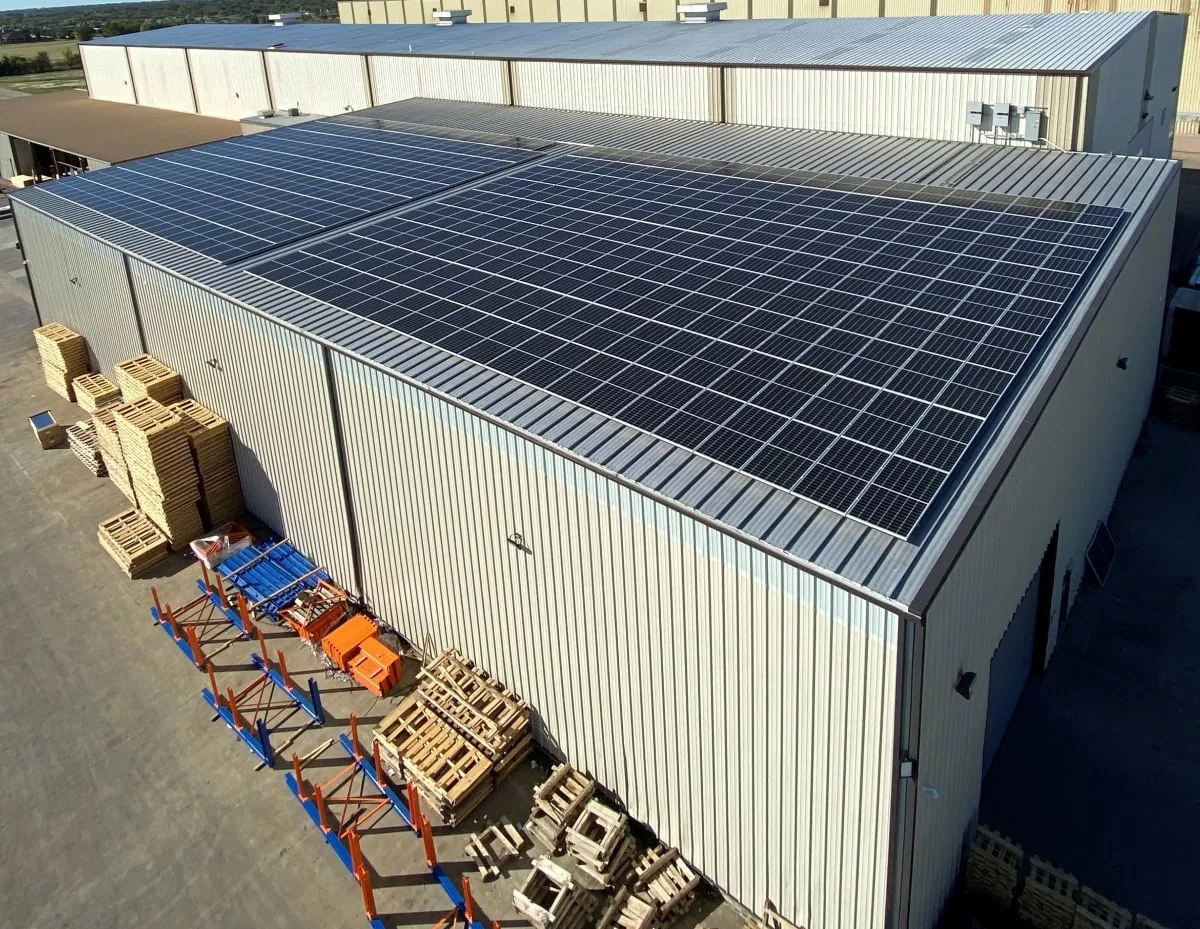
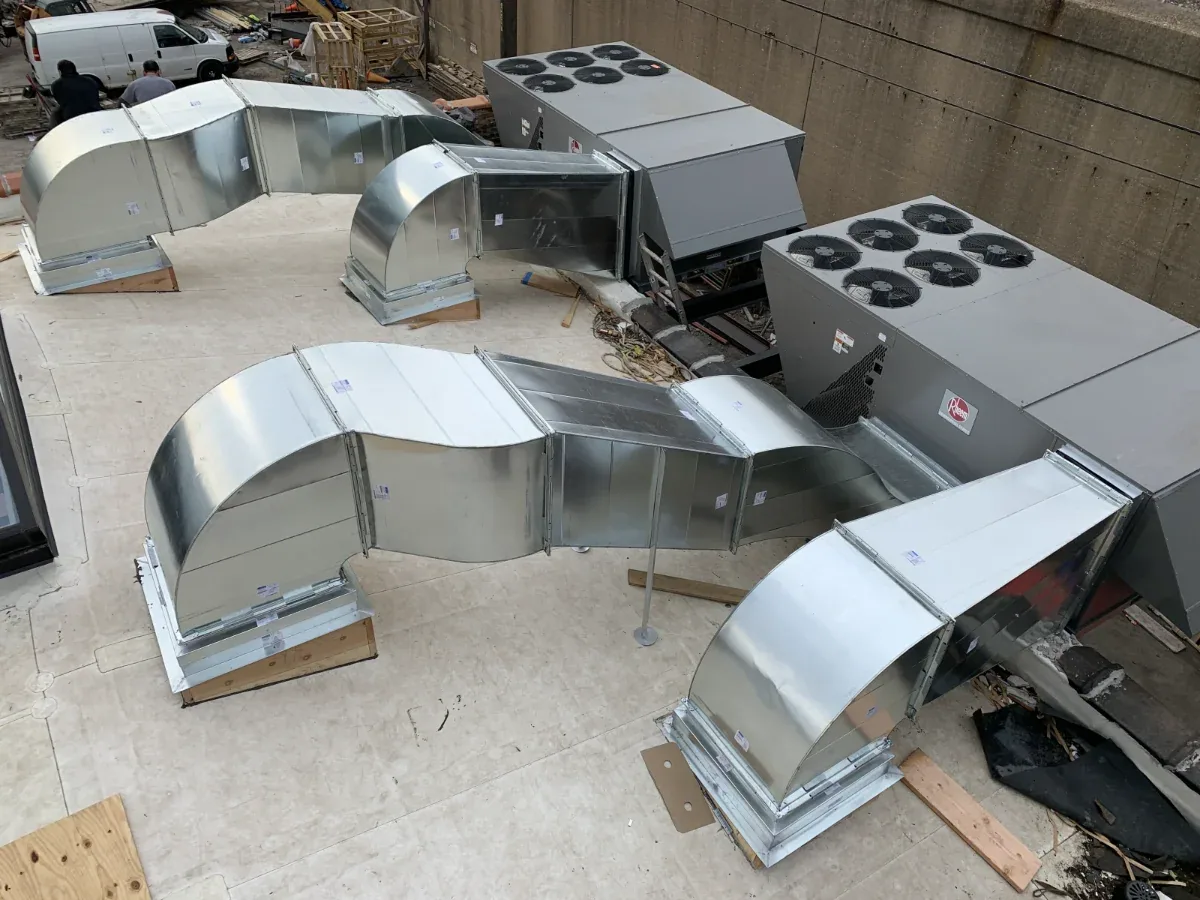
Rooftop units sit on curbs, and curbs are where roof and mechanical trades meet. The curb has to be tall enough, the base flashing has to go up it, and the counterflashing has to cover the top edge. Utilities, refrigerant lines and electrical conduit then cross the curb or the roof beside it.
When units are changed out, the curb often needs to be reset or raised, and the flashing has to be rebuilt to match. We coordinate with the HVAC contractor on that, so the new unit lands on a curb we have already prepared. On a larger project those details repeat at every unit, which is why rooftop equipment curbs and supports are planned as a set.
Movement, Sealant and Winter
Sealant is a maintenance item, not a fix for life. It hardens, shrinks and cracks as it ages, and the cracks open first at corners, where two surfaces meet and move apart.
Davenport roofs go from a record 111 F to a record -29 F, and every curb and pipe flexes through that range. Metal moves differently from membrane, and membrane moves differently from the deck. We choose sealants rated for that movement, tool them correctly and inspect them on the maintenance walk. Where a joint has failed three times, we stop resealing and change the detail, usually by adding a termination bar, a counterflashing or a taller curb so the water has no path.
Finding the Opening That Leaks
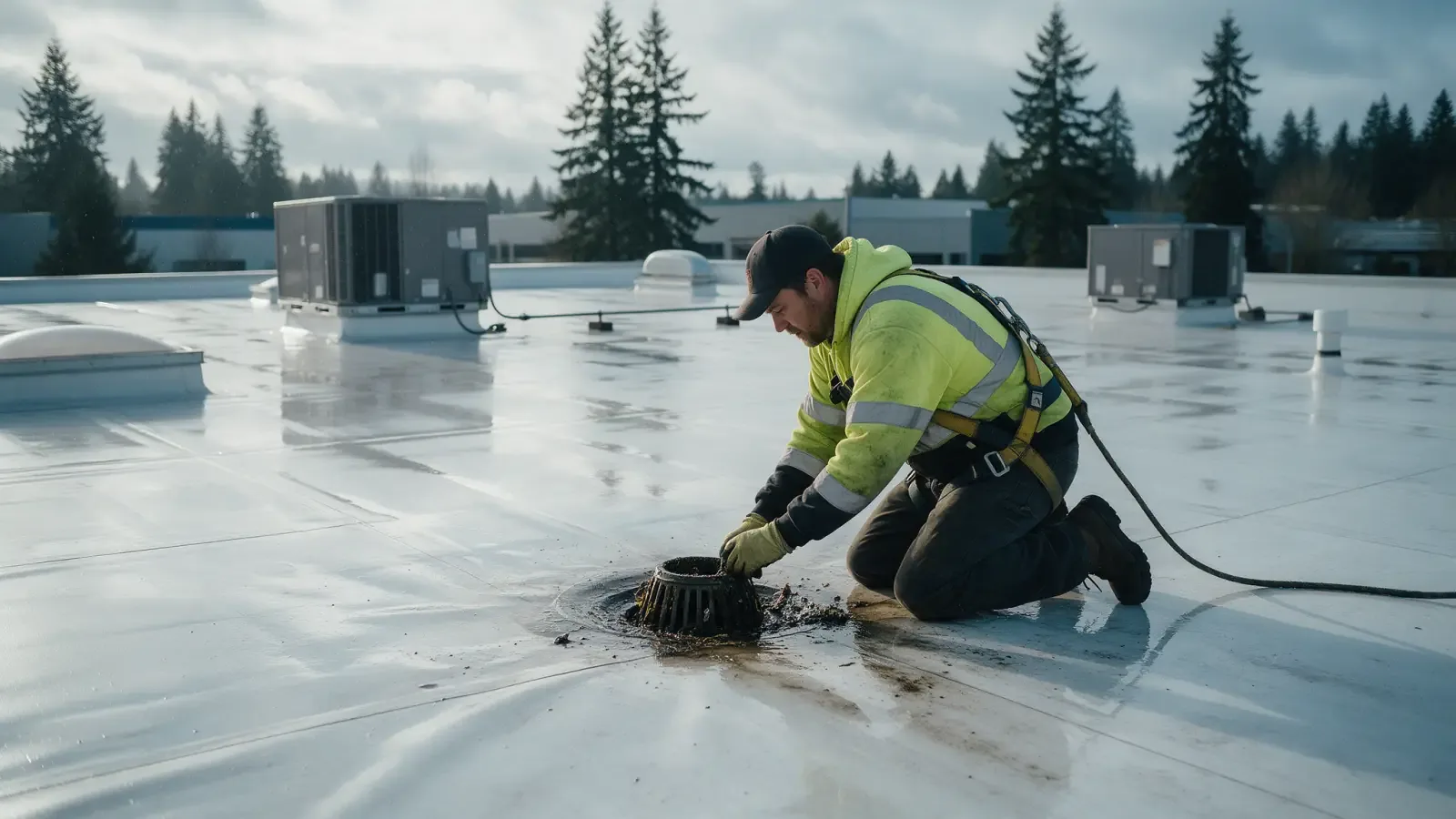
A roof with many penetrations has many suspects. Water that appears under a skylight can come from a rooftop unit ten feet away. We use a systematic process: dry the area, wet each suspect one at a time from the bottom up, and watch the interior while a second person holds the hose.
For stubborn leaks, an infrared scan on a cool evening shows where moisture has traveled. The process is the same one we use for general commercial leak repair, adjusted for the density of openings. By the time the work order closes, we can tell you which opening leaked, why it failed and what changed to stop it.
Where the Openings Pile Up
Buildings with heavy mechanical systems have the most penetrations per square foot. Hospital roofs and clinic roofs tend to carry exhaust fans, air handlers and plumbing stacks in close company, and Genesis Health System, headquartered in Davenport, runs six healthcare locations. Palmer College of Chiropractic has its main campus on the Brady Street corridor, and institutional buildings of that kind usually carry ventilation and exhaust of their own.
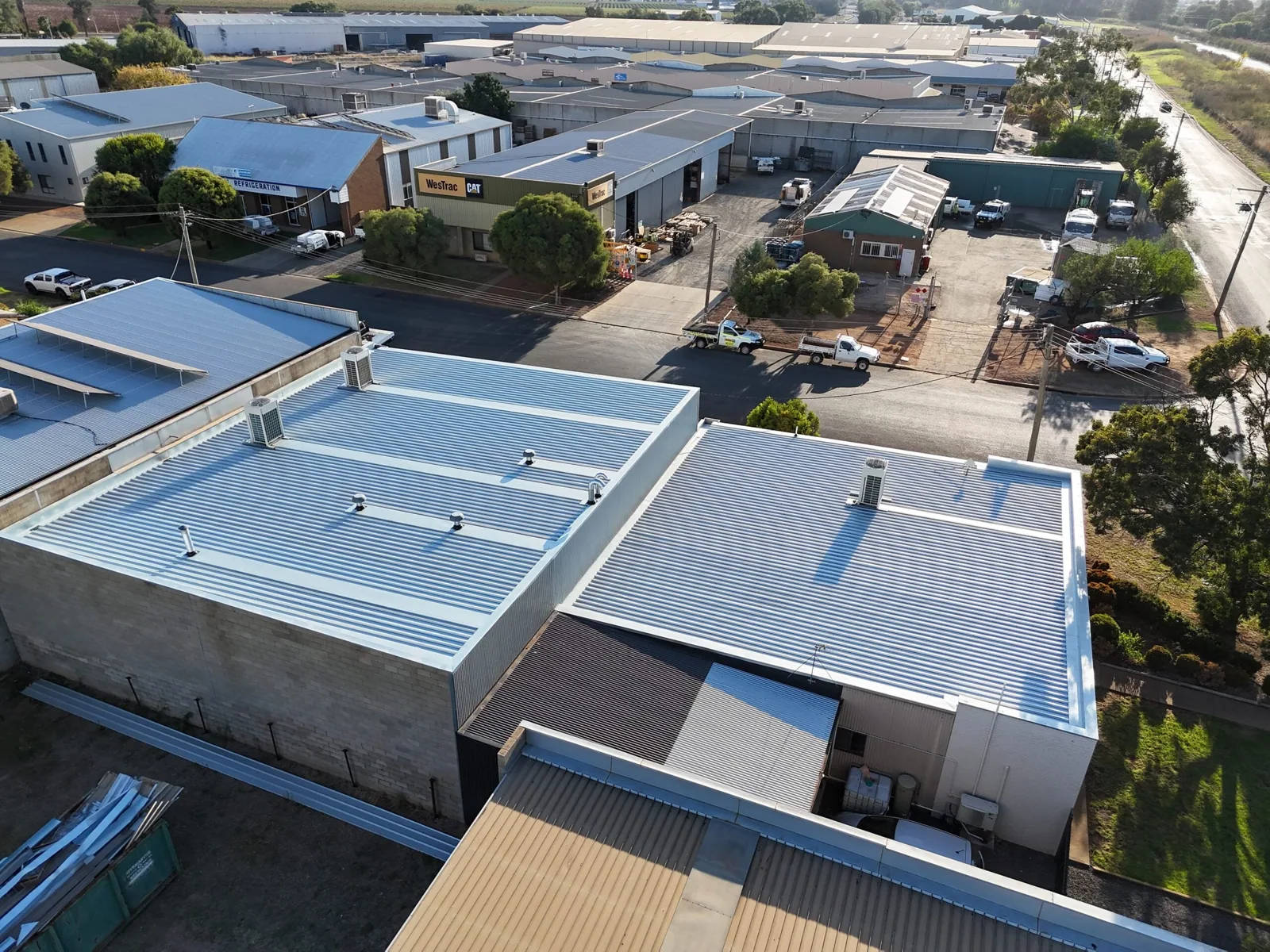
Retail and office roofs along Kimberly Road, a corridor of retail, apartments and offices, can pick up a new opening each time a tenant changes, and the roof plan does not always follow. We build a penetration map for each building and keep it with the maintenance records, so the next tenant improvement starts from the real roof.
A skylight leak can originate at the curb, the glazing frame or a nearby roof seam. We check the height of the curb against expected water level, inspect corners for open joints and confirm the membrane turns up continuously. Sealant alone is not a durable substitute for a properly integrated flashing. Where replacement is planned, coordinate the opening, fall protection and interior protection before removing the unit. The closeout should show the completed curb detail and confirm that the drainage path stays open.
Send the Roof Plan, Mark the Openings
Send a roof plan, or a photo of the curb, skylight or pipe that worries you. We will set a walkthrough, tag every opening, and give you a repair list in order of risk.
Questions About Skylight, Curb and Penetration Flashing
A tenant wants to add a vent through our roof. What should we require?
Ask for the location on a roof plan before any cutting, and let us review it. The opening should sit away from drains and seams, and the flashing should be a manufacturer-approved detail. We install the flashing, and the tenant's contractor installs the equipment, so the warranty and the leak responsibility stay clear.
Our skylights are original to the building. Replace or repair?
Check the glazing first. If the domes are yellowed, crazed or sagging, replacement is the cleaner choice, and the curb and flashing get rebuilt at the same time. If the glazing is sound and only the base flashing leaks, a flashing repair can buy several years. We will photograph both options so you can compare.
Why does the same pipe boot keep leaking after we reseal it?
Because sealant is treating a symptom. Either the boot has split from sun exposure, the pipe is moving, or the flashing was never the right size. Resealing resets the clock for a season. Replacing the boot, or changing the detail, ends the cycle.
Can a leak at a curb damage the insulation under the unit?
It can, and it tends to be worse there because the curb funnels water down into the deck opening. We core near the curb to check the insulation, and if it is wet, we cut it out and replace it as part of the repair. Leaving it behind invites mold and corrodes the deck.
How much notice does the HVAC contractor need to give you?
A week or two is a comfortable window for planned unit swaps, and less is workable if the weather and our schedule cooperate. Tell us the unit size, curb dimensions and crane date. We will have the flashing materials staged and a crew ready to set the curb or seal the new one right after the lift.

Talk to a Davenport Commercial Roofer
Send the work order, the building address or a few photos of what you are seeing. We will set a walkthrough, go up with whoever has the hatch key, and tell you plainly what the roof needs.