
Commercial Roofing in Muscatine, IA
Commercial roof repair, coating and replacement for Muscatine, IA plants and offices, scheduled around shutdowns, second shift and process exhaust.
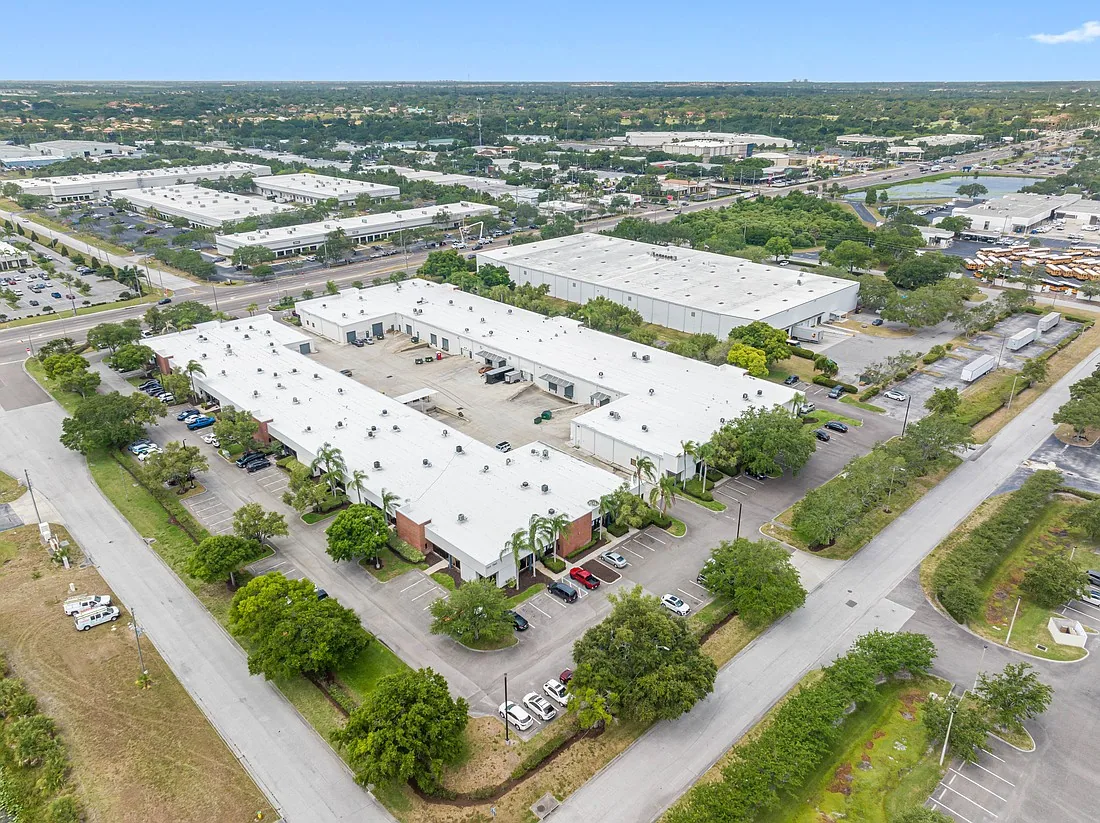
A maintenance planner opens the shutdown calendar next to last year's roof report and counts the weeks. That is how roof work gets decided at a manufacturing plant: not by season alone, but by when the line can stop and who has to sign for the hot work. Muscatine's employers include HNI Corporation (HON and Allsteel office furniture), Bridgestone Bandag, Heinz, Grain Processing Corporation and a Bayer plant, and a roof over any plant with a production schedule gets planned this way.
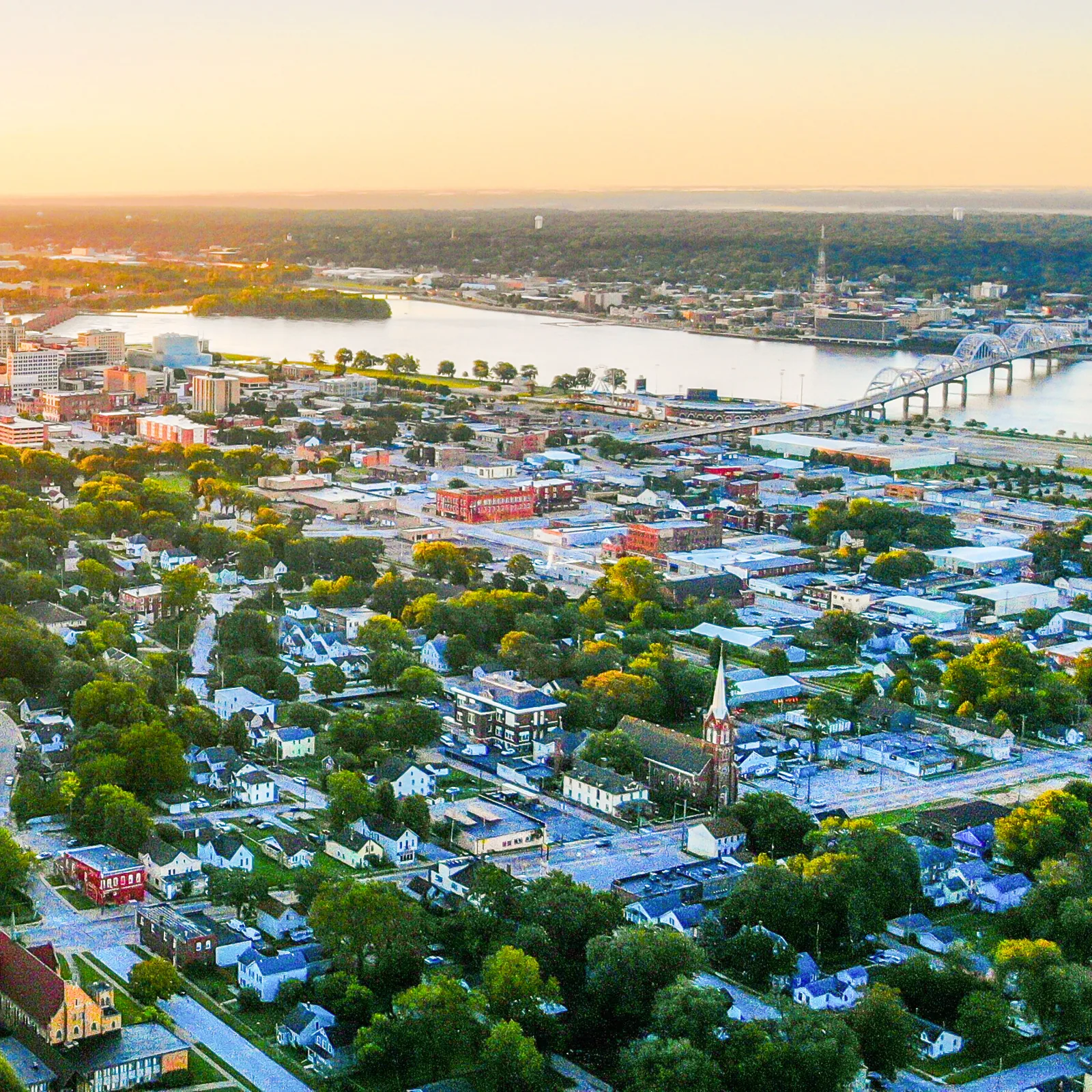
Muscatine sits about 25 miles from the Quad Cities, with U.S. Highway 61 running up to Davenport, IA. On a plant roof here the order is the same as anywhere a line is running: access, badge, safety talk, then the roof. Repair, coating, recover or tear-off is decided after that walk, not before it. A manufacturing plant roof is a working part of the building, with exhaust, equipment and people underneath.
Process Exhaust and the Membrane
Every plant vents something different through its roof, so we ask before we assume. The questions are simple. Are there stacks or fans that discharge heat, steam, oil mist or chemical vapor? Where does that discharge land? What is the membrane made of, and is it rated for what falls on it?
These details decide the repair. Some membranes soften under oil or solvent vapor, while others hold up. PVC and KEE are the systems we look at first when a roof sits near grease, fats or chemical exposure, since they resist many of those materials. A plant up the highway in the Eastern Iowa Industrial Center gets the same questions. We check the area around every stack for blistering, discoloration and soft membrane, and we ask for the product data on whatever lands there. If the discharge has changed over the years, the roof around it may be aging faster than the rest.
Shutdown Windows and Hot Work
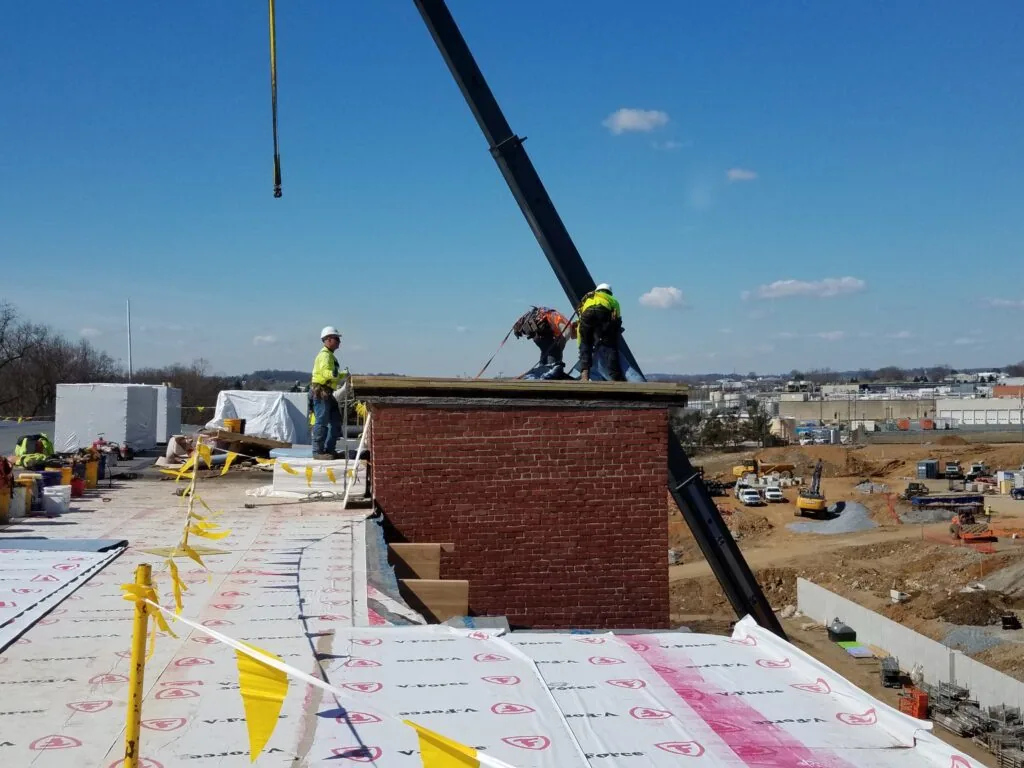
At a plant, the work order is only half of the job. The other half is the permit. Hot work, lockout, fall protection, rooftop access over live equipment and fire watch all need a plan before the crew sets up. We prefer systems that avoid open flame where the building allows it, and we write the permit steps into the schedule so the plant manager sees them early.
Second shift complicates things in a useful way. A roof over a production area can be worked in sections, in the hours when that area is quiet, while other lines keep running. A written plan lists who gets a badge, where the crew parks, which doors stay clear and who calls us if a rooftop unit trips. The approach we use for occupied building reroofing applies directly: protect what is underneath, keep the path clear and finish each section before the weather turns.
The Drive on U.S. 61
Twenty-five miles is not far, but it matters at three in the morning. When wind peels a roof, or water arrives on a weekend, the response has to move without waiting for a Monday dispatch. Emergency roof repair covers active openings with a temporary dry-in plan, and the distance from Davenport is part of how site access and materials are planned.
The storm record up the highway sets the checklist. In August 2020 a derecho sent an 86 mph gust across Davenport Municipal Airport, a July 2024 derecho pushed winds up to 100 mph across the region around the Quad Cities, and a normal Quad Cities winter piles up more than 36 inches of snow. After weather like that, a Muscatine roof gets three checks first: ice at the drains, edge metal that has loosened, and rooftop equipment that has shifted on its curb.
One Owner, Several Roofs
Musco Lighting, Stanley Consultants, The Raymond Corporation and HNI all employ people in Muscatine. Where one owner holds more than one building, every roof belongs on the same capital plan: one condition rating across all of them, one repair history, and a budget that spreads over years instead of landing in a single bad winter.
That is what roof capital planning is for. We rate each roof, rank the work by urgency and cost, and show which roofs can be repaired for a few more years and which should move to replacement. A multi-site roof program adds a maintenance schedule so every roof gets the same attention. The plant manager gets a clear list, and finance gets a number to plan against.
What We Check Before Quoting
We walk the roof with the plant manager or the building engineer, and we start with three things:
- Drains and overflow scuppers, which clog with debris and ice
- Penetrations and curbs for exhaust fans, make-up air units and process stacks
- Membrane surface, seams and flashing, for blisters, ridges and open laps
Infrared scanning follows on any roof with a history of leaks, since moisture under a dry membrane is how a manufacturing roof ends up with a failed deck. If the schedule prevents a walk with the building owner, a drone pass can give a first set of photos before we get on the surface.
Cost and Timing Drivers
On an industrial roof the biggest cost drivers are usually below the membrane. Wet insulation, deck repair and coordination with plant operations add time and material beyond the visible surface. The work itself moves with roof size, the number of penetrations and how many sections the plant allows at one time.
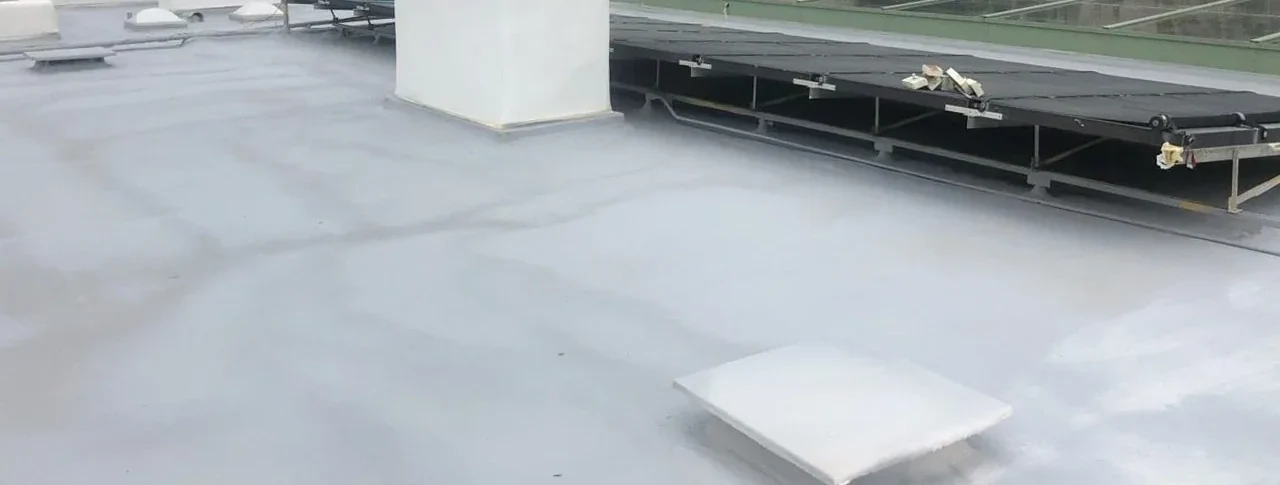
A coating can extend a membrane that is sound underneath, but only after a moisture scan confirms the insulation is dry. Where the insulation is saturated, the right answer is replacement, and we say so in writing with the reasons. A preventive roof maintenance program keeps the next bad winter from forcing that choice early.
Send the Work Order or Set a Walkthrough
Send the work order with the address, a photo of the leak and your next shutdown window. We will set a walkthrough that fits your production schedule, then come back with photos and a plain recommendation.
Questions About Muscatine
Our plant runs three shifts. How do you work a roof over live production?
We work in sections and match each one to a quiet window on the floor below. Before the crew goes up we agree on badges, parking, lockout steps and the rooftop units that cannot be shut down. A written plan lists the contact on each shift. If a section is not ready to close by quitting time, we make it watertight before we leave.
A process vent discharges near one corner and the membrane there looks different. Is that a concern?
It deserves a closer look. Heat, oil or chemical vapor can age a membrane faster in one spot than anywhere else on the roof. We would test the area for softness, check the flashing around the stack and ask what the vent discharges. Replacing just that area with a resistant material is sometimes the cheapest fix.
We have several buildings on one site. Should we replace all the roofs at once?
Rarely. A condition survey ranks the roofs, and the worst ones go first. The others can be repaired or coated and scheduled for later years. Spreading the work smooths the budget and keeps production disruption short. We would put the ranking in a table you can hand to finance.
How fast can a crew reach Muscatine after a storm?
Share the roof location and membrane type so the access plan and temporary materials can be matched to the building. The drive down U.S. 61 belongs in the dispatch plan alongside roof access and the scope of the opening. The first goal is a watertight roof. The permanent repair gets its own date once the photos are reviewed.
What do you need from us for a first quote?
The address, a photo of the leak or the stain, and the roof's installation date if you know it. A past roof report is a bonus. We will arrange a walk with someone who holds the roof hatch key, then send photos and a plain recommendation.
Talk to a Davenport Commercial Roofer
Send the work order, the building address or a few photos of what you are seeing. We will set a walkthrough, go up with whoever has the hatch key, and tell you plainly what the roof needs.