
Commercial Roofing in Hampton, IL
Commercial roof repair, inspection and replacement in Hampton, IL, for historic mercantile and small commercial roofs, with round-the-clock storm response.
A customer steps around a bucket on the way to the counter, and the shop owner pretends not to see it. The work order goes in that night. In Hampton, IL, a Mississippi River town in Rock Island County, a small commercial roof problem can start just like that: a drip, a bucket, and a question about whether the roof can wait.
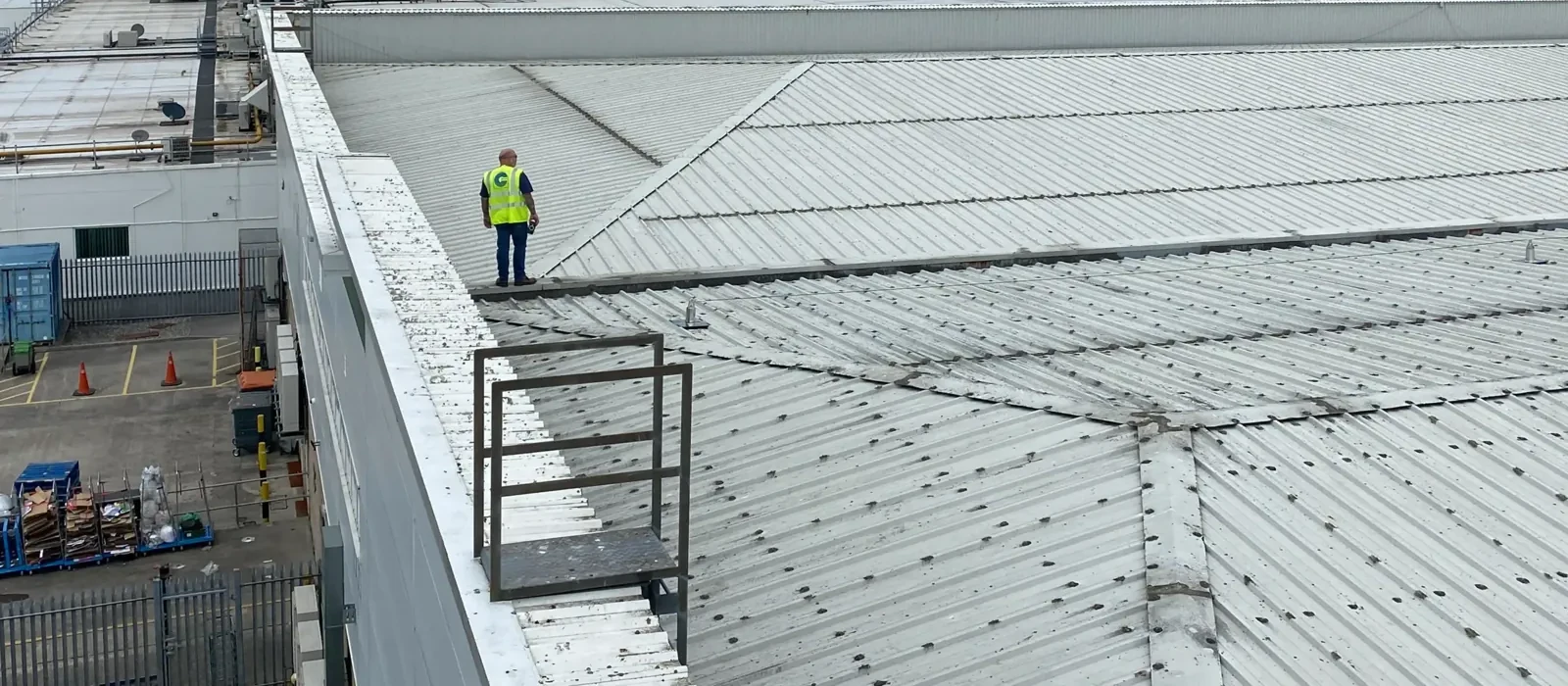
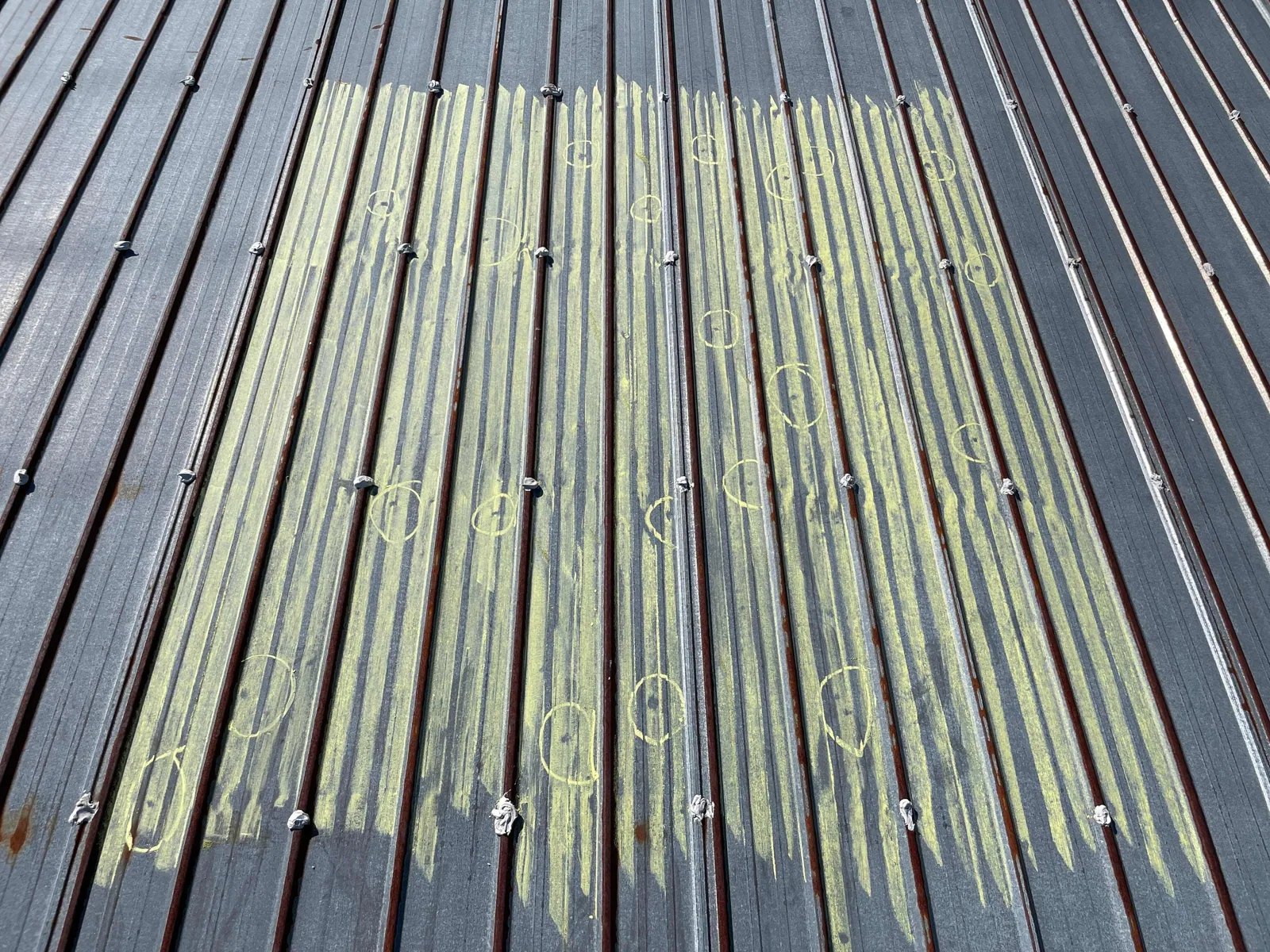
Low-slope and metal roofs are what we work on, and every job begins on foot. You tell us where the water showed up. We go up with you or with whoever has the roof hatch key, check the drains first, then the seams, the flashings and the curbs, and send photos the same day. The answer is short: fix it, watch it, or plan the larger replacement. A written commercial roof inspection puts it on paper.
Old Mercantile Buildings and What Sits on Top
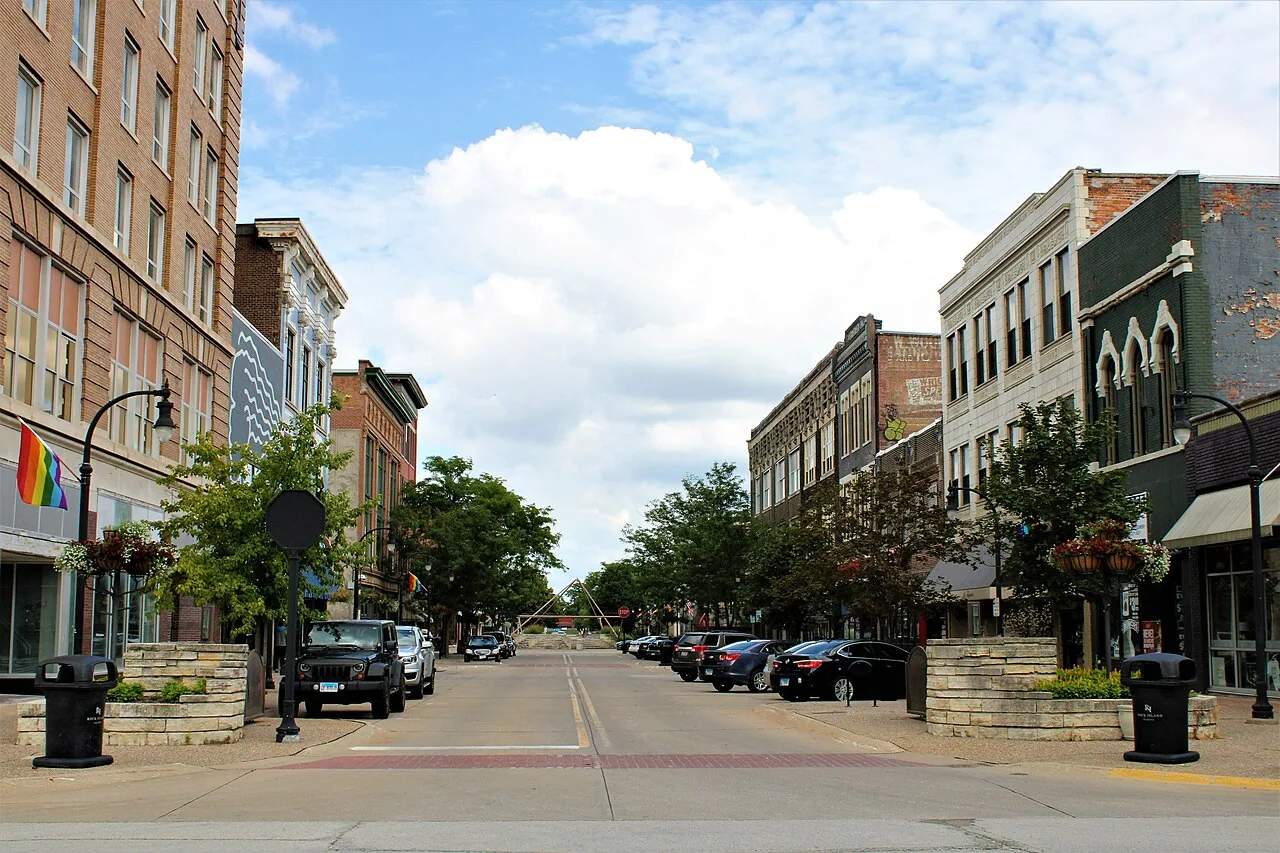
Hampton has Black's Store, an early mercantile building on the National Register of Historic Places. A building of that era raises a set of roof questions, and this is the list we bring to any older commercial building with a parapet and a low-slope roof.
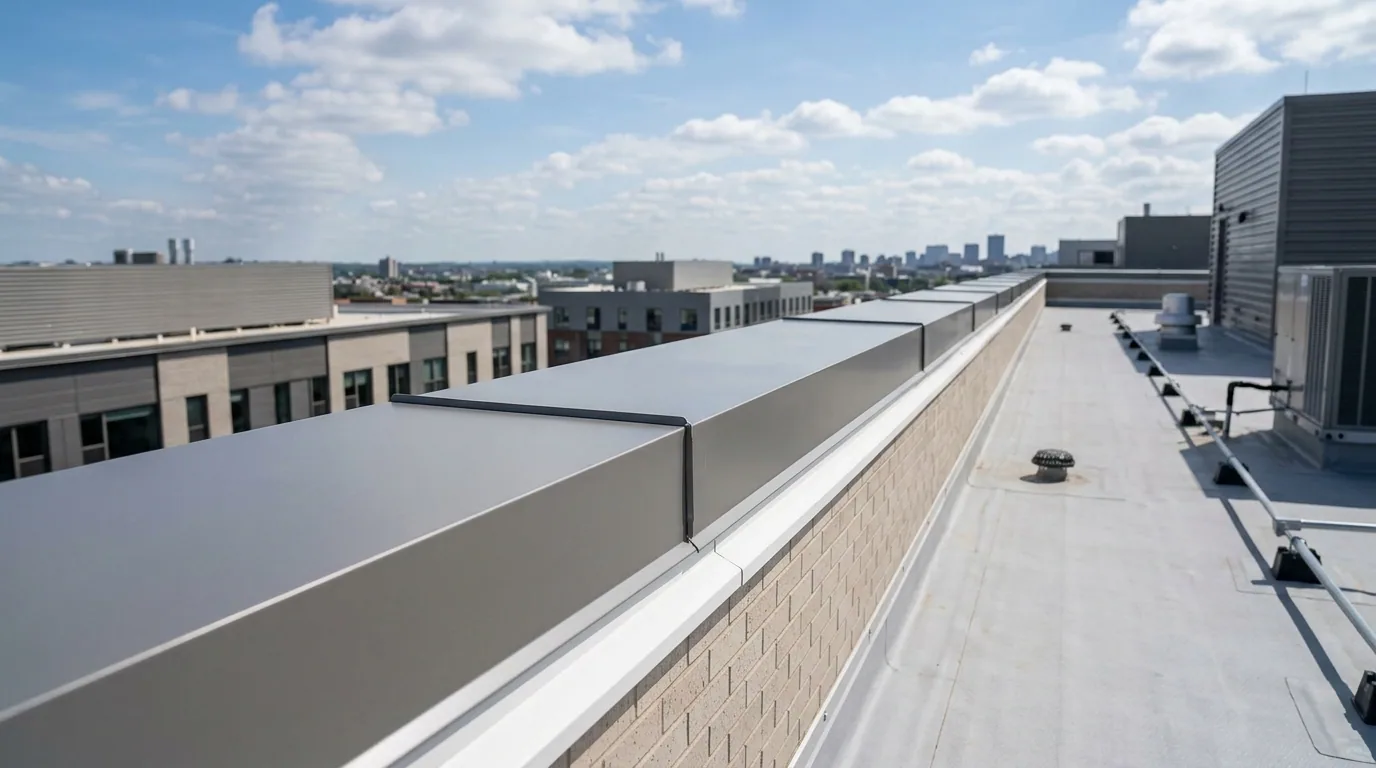
The list starts at the wall. A cracked cap, open mortar joints or a loose counterflashing lets water run down inside the masonry. Then the deck. An older wood deck can hold moisture for years, and soft spots, rotted nailers and stained rafter ends show up only when someone probes them. We also check chimneys, old vent stacks and abandoned penetrations, because a capped pipe that nobody remembers can leak as well as an active one. A coping and edge metal repair often ends a leak that looked like a membrane failure.
Preservation Rules and Visible Work
When an owner uses historic tax credits or public funding on a restoration, the exterior work may need review. A roof that can be seen from the street, such as a cornice, a parapet cap or a visible metal edge, gets the closest attention. Ask early which materials, colors and profiles are acceptable, and write the answer into the scope.
Review rules do not change what the roof needs. They change what goes on it. A modern low-slope membrane can sit behind a historic parapet without showing, as long as the flashing and cap are detailed correctly. We prepare a written scope with photos and drawings of the key details, so a reviewer sees the same plan the crew builds. Where a building is not under review, the same detailing still pays off, because masonry walls and roof membranes move at different rates.
Condensation on a Cold Deck
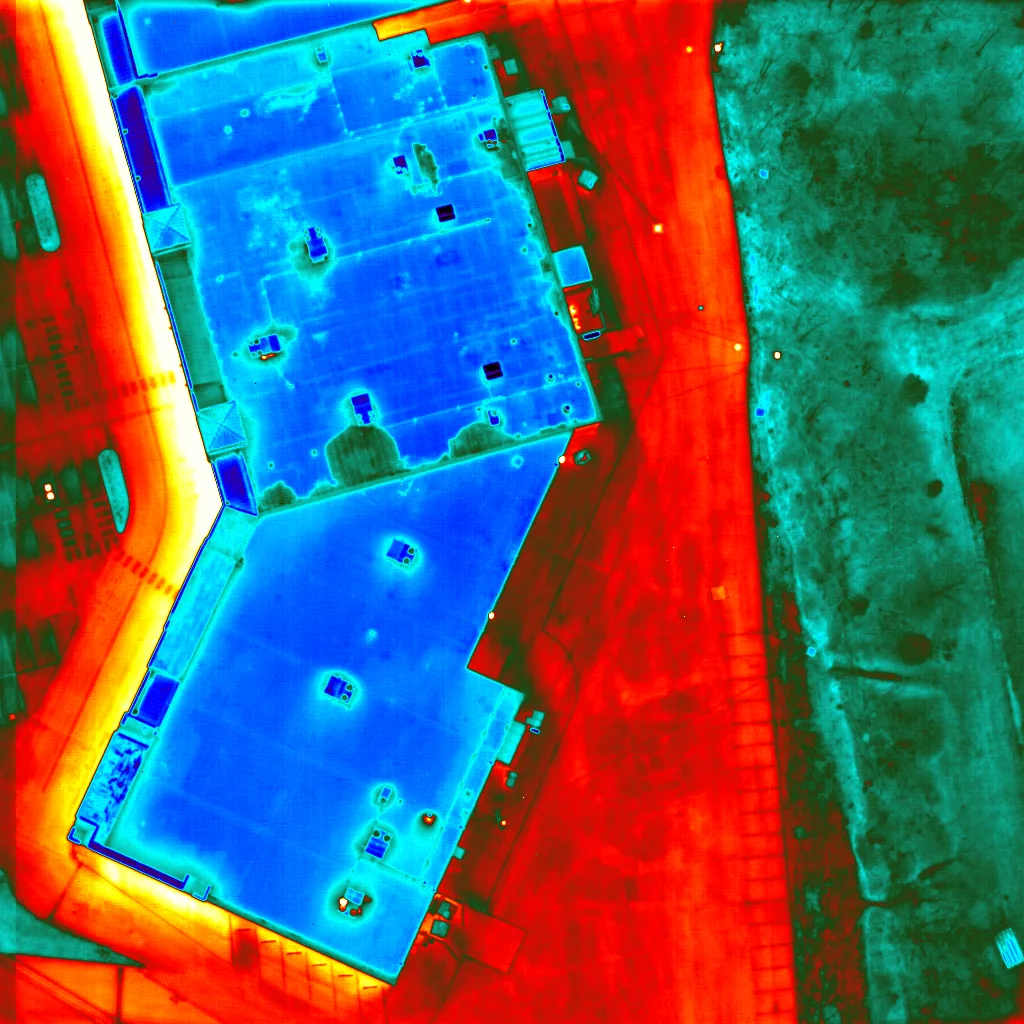
A cold deck is a winter problem anywhere in the metro. Warm, moist air from inside the building meets that deck and condenses on the underside. The stain appears on the ceiling and looks like a leak. An infrared scan and a moisture reading show whether the water came from the sky or from the room below.
If insulation is wet, the answer is different. Wet insulation loses much of its value, and wet materials lead to rot in old wood decks. An infrared moisture survey maps the damp areas without cutting a single hole. Then we repair or replace only the affected sections. For a small building that approach keeps the cost in proportion, and it ends the argument about whether to patch or start over.
Derecho Edges and the Metro Record
In the August 2020 derecho the gauge at Davenport Municipal Airport showed 86 mph and Quad City International Airport read 79, and the weather service logged extensive roof damage from Davenport and Bettendorf through the rest of Scott County. A second derecho in July 2024 carried damaging winds up to 100 mph across the region.
A storm like that moves things. Edge metal shifts, flashing lifts, rooftop vents get knocked loose. A walk within a few days of a big wind event finds the loose pieces while they are still easy to fix. We take dated photos of every find, and if an insurer is involved, our roof insurance claim file lays out the damage in order.
Customers Under the Work Zone
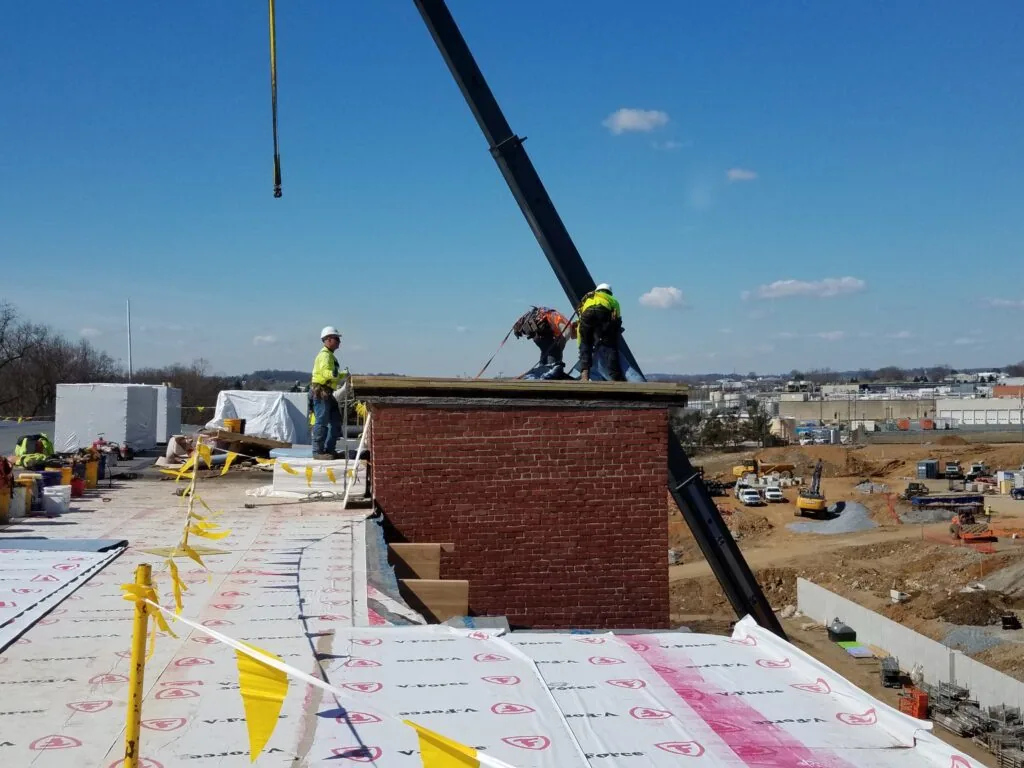
Quad Cities MetroLINK Route 10 connects Hampton to the rest of the metro. Where a shop or office draws riders and walkers to its door, the roof crew has to keep that door safe. We set up protected walkways, rope off the drop zone below the work area, and place the dumpster and material staging away from the entry.
We do the noisy work, tear-off and fastening, in the hours with the fewest customers, and we tell tenants the day before. For a building that stays open, occupied building reroofing means working in sections, sealing each one before we leave, and keeping the roof dry overnight. A small crew on a small roof can finish a section by the end of the shift. Larger jobs get a written schedule you can post for staff.
When a job needs street-side staging, agree on the lift location and delivery window before mobilization. In Downtown Davenport, narrow access can make those details especially important.
Hampton owners can use a post-storm walk to turn a weather call into a prioritized work order. We photograph the roof by section, check the exposed perimeter first and then inspect seams, flashing and rooftop attachments. If the interior stayed dry, that is worth recording too, but it does not prove hidden details are intact. The report marks any area that could not be reached and gives the next inspection a consistent route, so a later change is easy to recognize.
Send the Work Order or Set a Walkthrough
Send the address and the work order, or tell us which wall or ceiling shows the water. We will go up, take photos and give you a plain recommendation.
Questions About Hampton
Our old brick building has a wood roof deck. How do we know it is sound before new membrane goes on?
Probe it. We cut small test cores, press a screwdriver into the deck at the low spots, and check the nailers and rafter ends along the walls. Dry wood stays hard. Soft wood or dark staining tells us to replace boards before the membrane goes down. The photos show you exactly where the bad wood is.
Customers walk right under the area you will be working. How do you protect them?
We rope off the drop zone, build a covered walkway at the entry if the work is above it, and keep material and the dumpster away from the door. Noisy work happens in the quiet hours. We also post a short notice at the entrance so nobody is surprised.
A metal retrofit over an old flat roof sounds good for a small building. Is it worth it?
Sometimes. A metal retrofit goes over the existing roof on framing or purlins, so there is no tear-off and the building stays dry. It makes sense when the structure can carry the framing and the owner plans to keep the building for years. For a very small roof, a new membrane or a coating may cost less.
We have one bid for patching and another for replacement. How do we choose?
Ask both bidders for core results and a moisture scan. If the insulation is wet across a wide area, patching only postpones the replacement and often costs more in the end. If the damage is local, a repair and a plan for the next few years is a good answer. The data should settle it, not the price.
How soon after a derecho should the roof be checked?
Within a few days, before the next rain. Wind lifts edge metal and opens seams without leaving a visible mark inside. We walk the perimeter, the rooftop equipment and the flashing, and photograph each find with the date. Even if nothing turns up, the dated photos help if a problem appears later.

Talk to a Davenport Commercial Roofer
Send the work order, the building address or a few photos of what you are seeing. We will set a walkthrough, go up with whoever has the hatch key, and tell you plainly what the roof needs.