
Senior Living Roofing in Davenport, IA
Roof repair, recover and replacement for senior living communities in Davenport, IA, planned around residents, meal service, quiet hours and fresh-air intakes.
The administrator calls just after breakfast service. A ceiling tile in the east wing has a brown ring on it, and a resident's daughter has already asked about it at the front desk. Nobody in the building wants to guess where the water came in.
A senior living roof sits over people who live there around the clock, so the work is planned differently from a plant or a warehouse. For a community in Davenport, IA, we start with a work order and a walkthrough with whoever runs maintenance. Photos come the same day, along with a straight call: fix it now, track it, or schedule the larger job.
The Rooms Under the Wet Spot
Water on a commercial building is a repair problem. Water over a resident's bedroom is also a care problem, and the order of work reflects.
First we find which rooms sit under the wet area. Roof water travels along the deck and the insulation, so the stain on the ceiling is rarely directly below the opening. We trace it back across the roof and tell you which rooms and corridors could be affected, so your staff can decide who moves. That decision stays with the administrator and the nurse on duty. Ours is to stop the water entering, usually with a temporary dry-in the same day, and to tell you whether the insulation above the ceiling is wet. Wet insulation is the part that grows into a mold complaint a month later.
Where Pitched Meets Flat
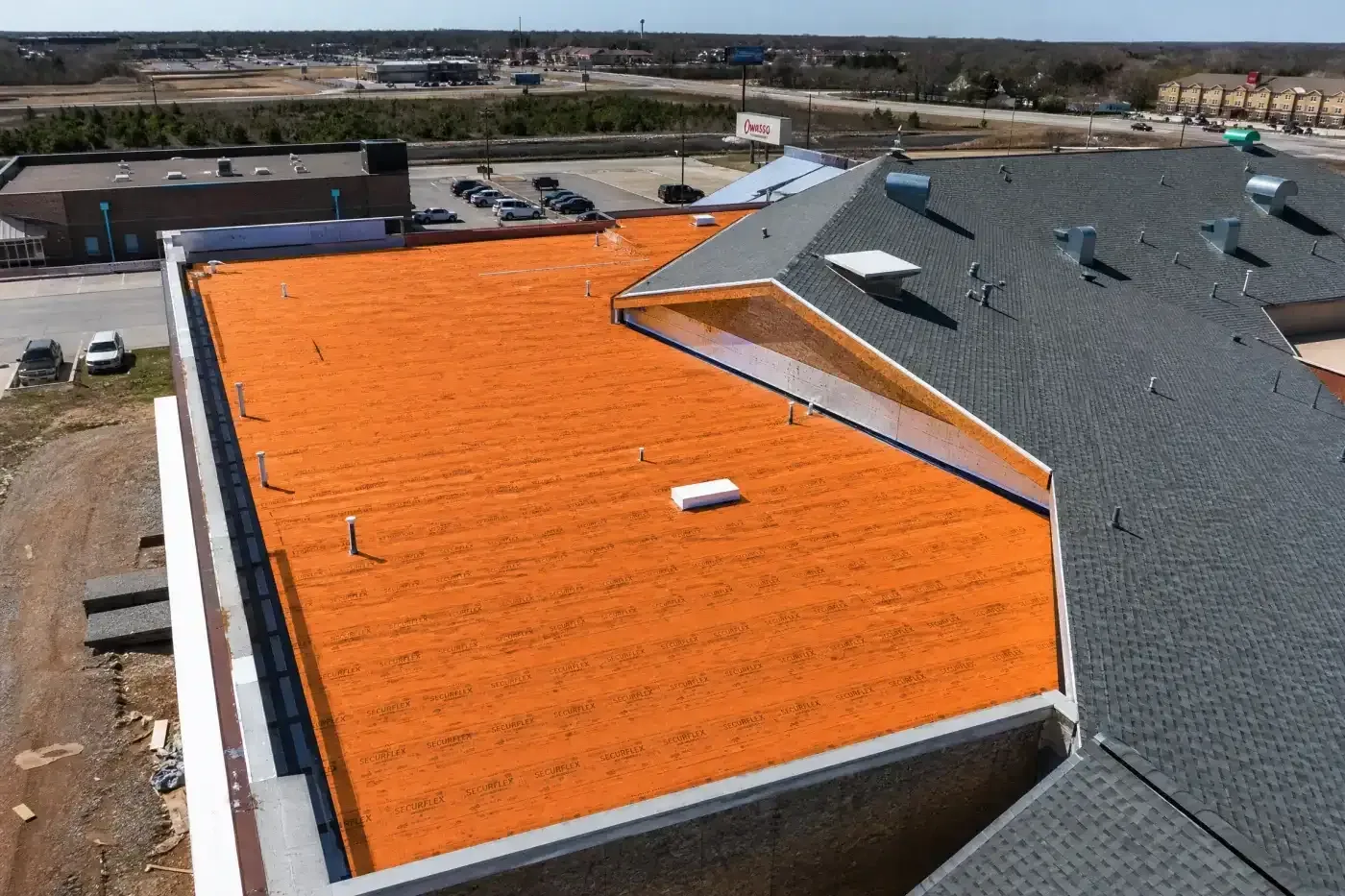
Many care communities mix building shapes. A pitched wing may connect to a flat roof over the dining room, the kitchen, a covered entrance for drop-off, or a link between two buildings. We cannot tell from the street which pieces are which, so the walk covers every level.
The leaks tend to start where the shapes meet. A wall flashing runs up from the flat roof into siding or masonry, and that joint moves with every freeze and thaw. Davenport records have swung from 111 F to -29 F, and the transition takes the strain. We look at the counterflashing, the sealant lines and the lowest corner where water leaves the pitched slope and lands on the membrane.
Noise, Odor and Hot Work
Residents nap, eat on a schedule, see therapists and sit by windows. A roof crew can disturb all of that without trying.
We plan around it:
- Loud tear-off and fastening are set for the hours your staff names, away from meals, rest periods and visits.
- We ask where the fresh-air intakes sit before choosing a method, because fumes from adhesives and hot asphalt can be pulled straight into corridors.
- Where an intake is near the work, we choose cold-applied or mechanically attached systems and cover or relocate the pickup point.
- Open flame is a last choice, with a fire watch and a call to whoever manages the alarm panel.
A short resident notice goes up before the first day, so nobody is surprised by a ladder outside a window.
After the Wind: Kimberly Road to Bettendorf
The July 11, 2025 tornado crossed Davenport on a seven-mile path that ran through Emeis Park and ended near Kimberly Road and Fairmount Street, with estimated winds of 120 mph. A community near the Kimberly Road corridor or along that line needs a roof walk after the storm, even if the siding looks clean.
Wind is only part of it. The October 2016 tornado that crossed I-80 near Middle Road in Bettendorf did widespread roof damage in dense building stock with mature trees, and the 2020 derecho kept damaging winds over Davenport, Bettendorf and Scott County for 30 to 60 minutes. Limbs and flying debris puncture membrane in places no one looks. We check for punctures, lifted edge metal and loosened flashing, then photograph it all for the adjuster. If water is already in a wing, our emergency roof repair crew covers the opening first.
Sign-In, Escorts and Safe Routes
The crew checks in at the front desk, every day, and wears whatever badge or lanyard your policy asks for. Someone from maintenance escorts us to the roof hatch or the exterior ladder, and we stay out of resident areas unless the work order says otherwise.
Ladders and lifts go where they will not block an entrance, a patio door, an ambulance bay or the route a walker takes to the garden. Material staging stays off the walkways. Covered walkways under the work zone are closed or protected for the day, never left half-done. In secured memory-care wings we ask the staff to walk the crew through the exits and doors first, so a gate left open does not become a bigger problem than the roof.
Repair, Recover or Replace
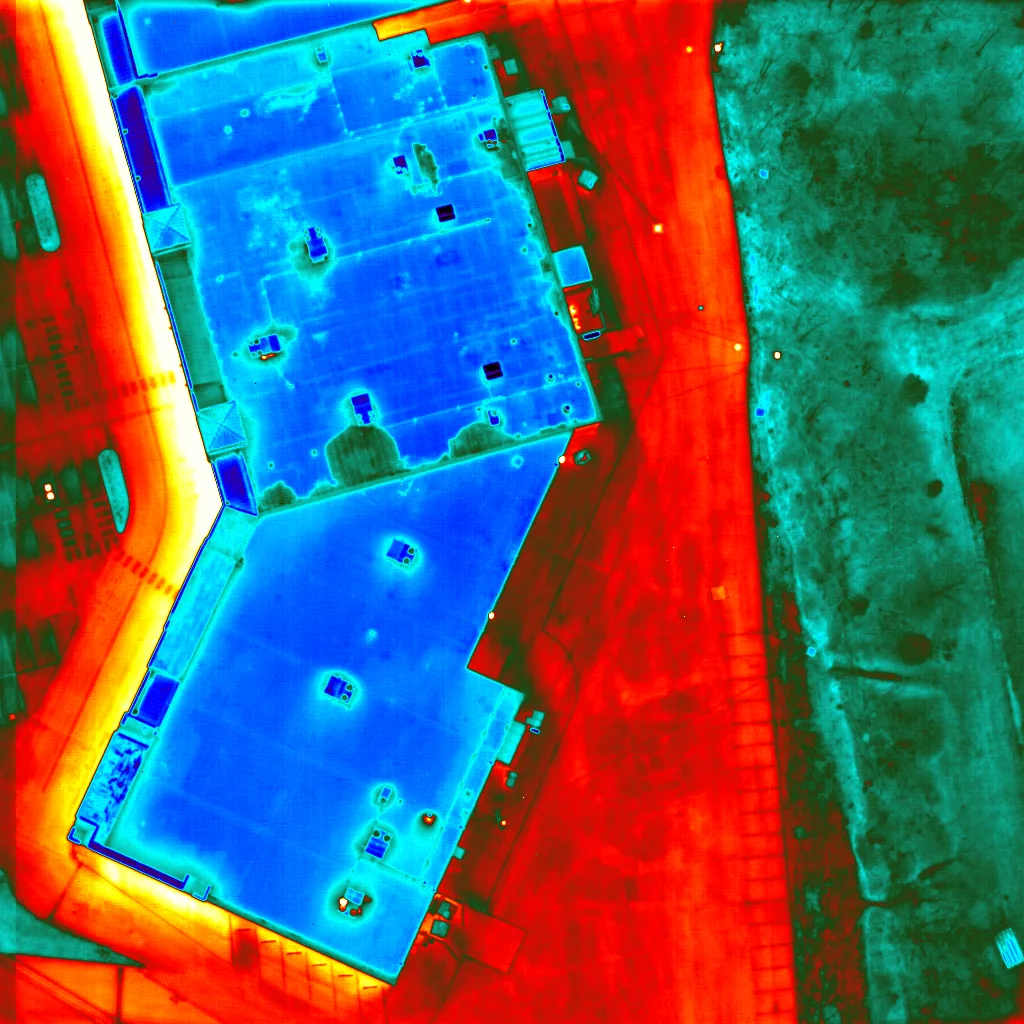
The answer comes from what the insulation holds. An infrared moisture survey maps the wet areas, and a few core cuts confirm them. If the damage is local, we repair it. If the layers are dry but worn, a recover adds a new membrane without a tear-off, which cuts the noise and dust a community has to live with. If the insulation is saturated across the field, the roof comes off.
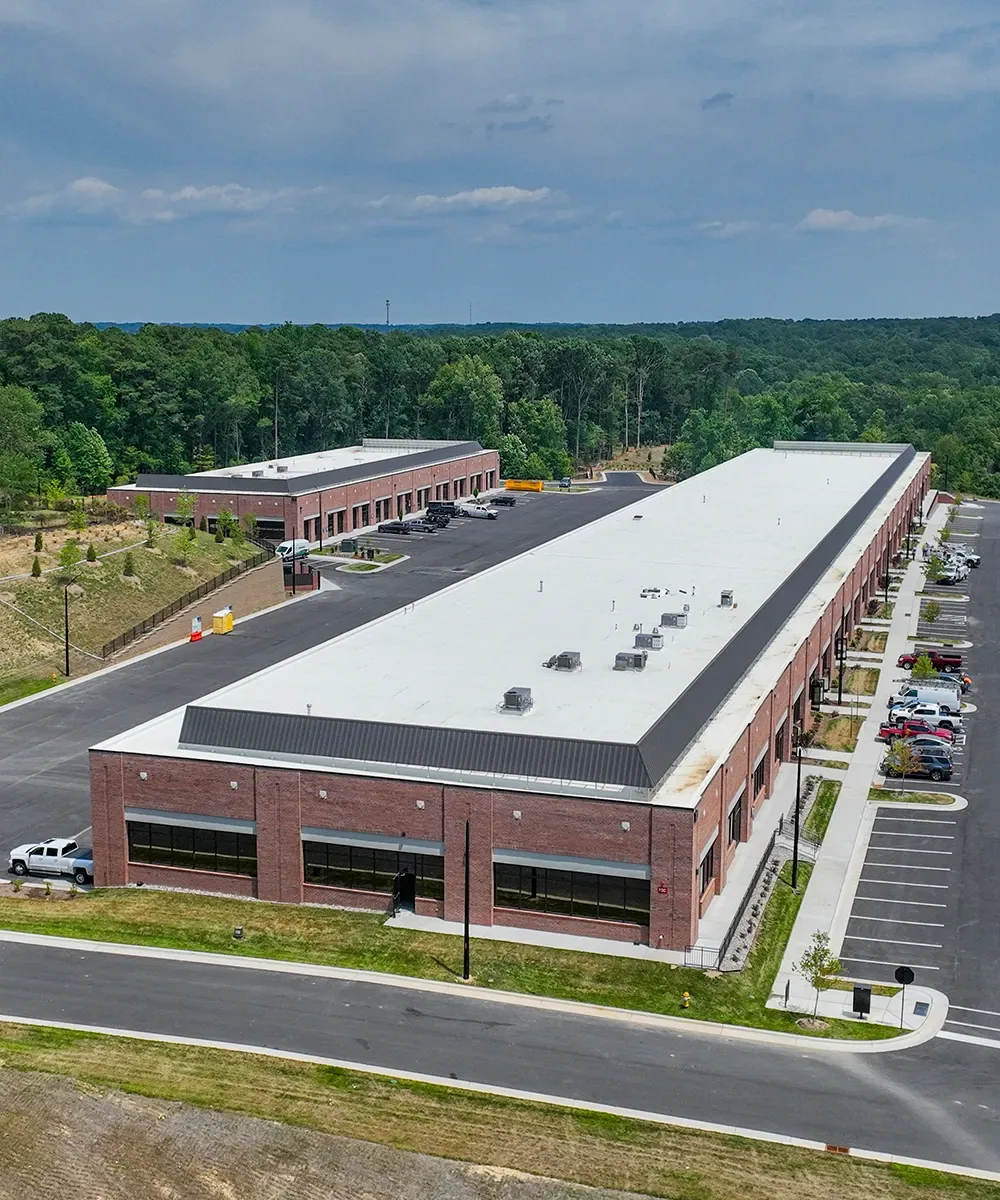
A replacement has to meet the city's adopted codes, which include the 2021 International Building Code and the 2021 edition for existing buildings, both amended locally. Cost follows the number of drains, curbs and kitchen vents, the roof levels, the insulation depth and how much the schedule has to bend around residents. An owner who also holds apartment buildings can often fold them into the same plan.
What You Keep After Handoff
When the roof is done you get a written close-out with photos of the finished work, the drains and the flashings, and a short list of what to watch. Hand it to the regional operations lead, the owner or an inspector, and it tells the same story to each. An owner whose portfolio also includes a medical office building can keep one record format across both.
The best next step is a calendar entry. A spring and fall walk under a maintenance plan keeps the drains open before the heavy snow, which
Send the Work Order or Set a Walkthrough
Send us the work order, a photo of the stained ceiling or the address of the community. We will set a walkthrough around your meal service and quiet hours, and come back with a plain recommendation.
Questions About Senior Living Roofing
A resident's room is wet right now. What happens in the first hour?
Call us and ask the front desk to keep that room closed. We send a crew to find the opening and dry it in, using a temporary cover if the weather is still bad. While they work, your staff can place buckets, shift furniture and decide who moves. We tell you which neighboring rooms could be wet above the ceiling, and a photo set goes to the administrator before the crew leaves.
Can the loudest work be scheduled for when most residents are out at activities?
Tell us the schedule at the walkthrough and we build the days from it. Tear-off, power fastening and crane picks go into the windows your staff picks, and quieter tasks like flashing and seam welding fill the rest.
Our dining room has a small flat roof with kitchen exhaust fans on it. Does that change the repair?
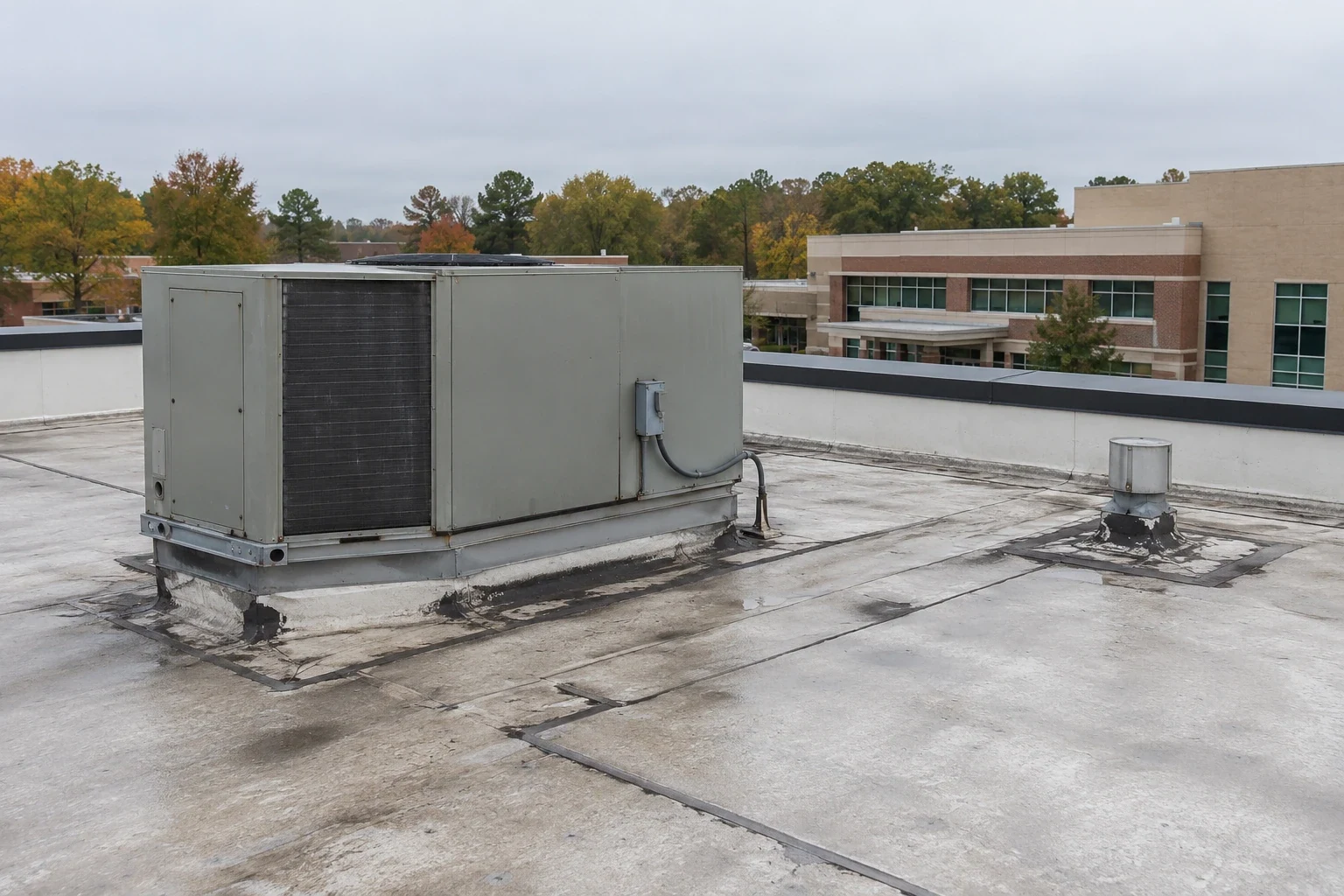
It does. Fat and moisture from the hoods collect on the membrane near the fans, and some roofing materials soften under grease. We check the curbs, the grease containment and the flashing around each fan before choosing a membrane. The kitchen may also need to run during the work, so we plan the hours around the cooks, not the other way around.
Who answers when a family member asks about the work?
Your administrator does, and we help with the facts. We give you a one-page summary with the dates, the areas affected and what residents will hear. Our crew leader introduces himself or herself to the front desk each morning, so staff know who to ask if a door or a hallway needs attention.
A tornado passed within a few miles and our flat roof looks fine from the parking lot. Is a walk still worth it?
Yes, because the lot view hides most of the damage. Lifted edge metal, a creased sheet near a drain and a scuffed seam show up only on the roof. The photos give you a dated record if a leak shows up later or the insurer asks what the roof looked like after the storm.
Talk to a Davenport Commercial Roofer
Send the work order, the building address or a few photos of what you are seeing. We will set a walkthrough, go up with whoever has the hatch key, and tell you plainly what the roof needs.